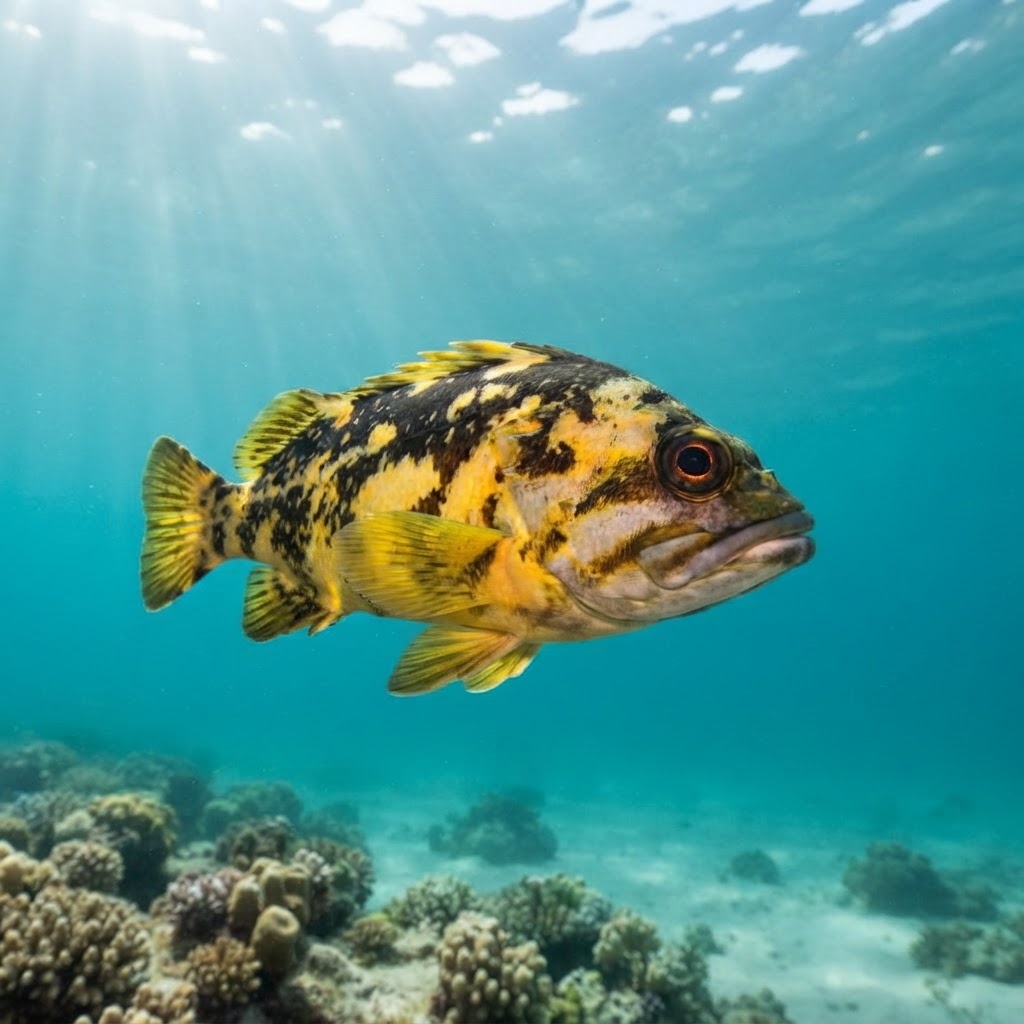
Sebastes chrysomelas
Spot this mottled rockfish tucked into rocky reefs across California, comfortable in cool 12-19C water year-round.
Safety warning
Its dorsal, anal and pelvic fin spines carry venom glands, and a puncture from resting a hand on the wrong ledge can cause sharp, lasting pain. Keep hands off rocky crevices and look before you steady yourself on a reef where one might be tucked in.
If you're stung
Venomous spinesGeneral first-aid guidance, not a substitute for professional medical care. In an emergency, call your local emergency number.
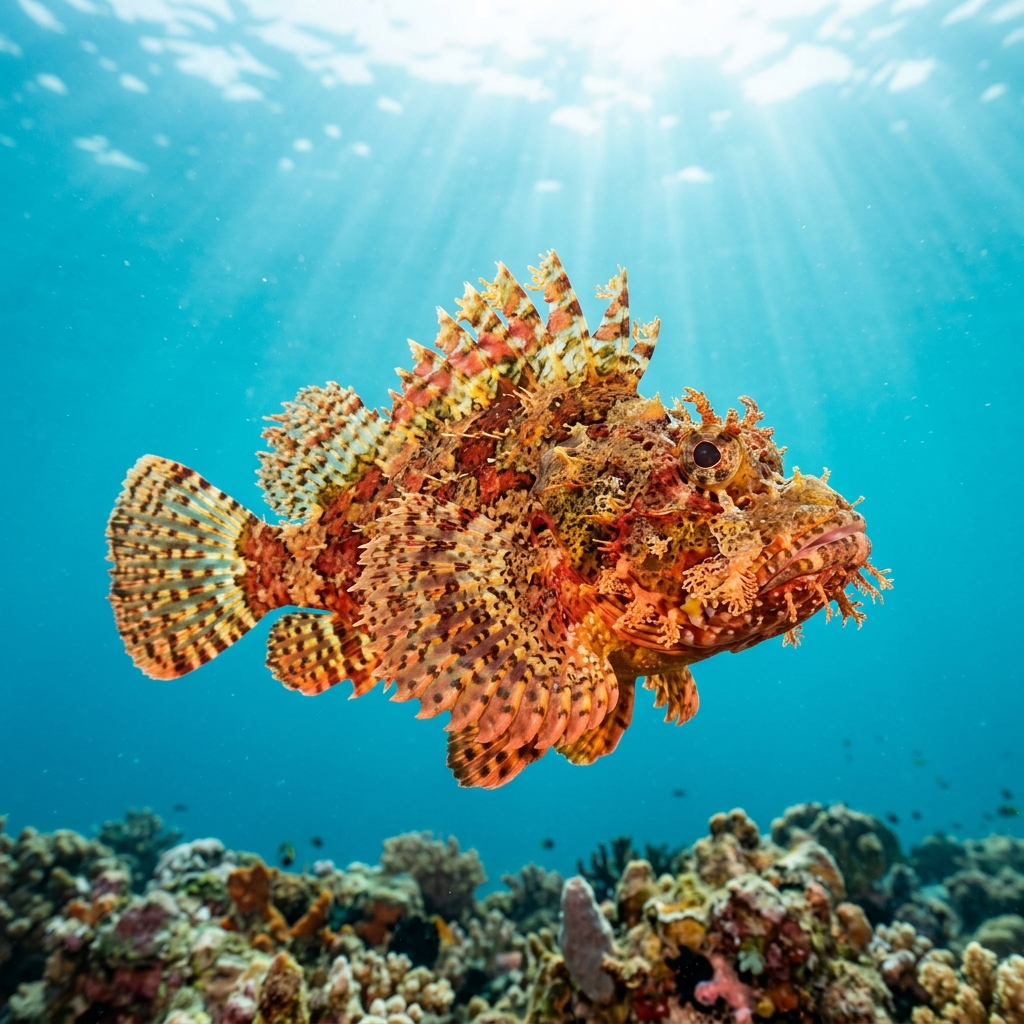
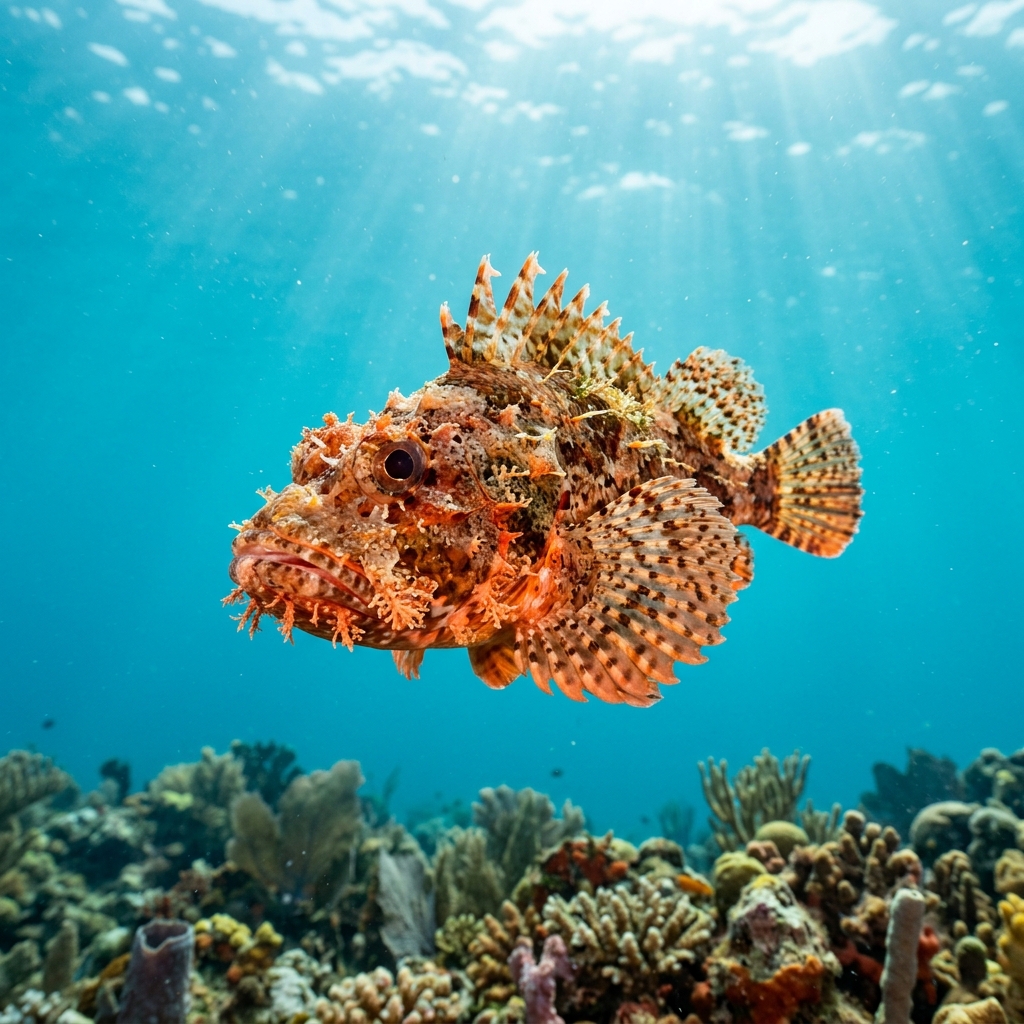
Squat, heavy-bodied fish to about 27 cm, mottled in blotches of black and dull yellow that break up its outline against rock and algae. Look for the spiny, slightly humped dorsal profile typical of rockfish and a wide mouth built for ambush. It usually sits motionless on or wedged into a rocky ledge rather than swimming in the open, which is often the biggest identification clue.
Expect to find it parked motionless on a rocky ledge or wedged into a crevice, relying on its mottled colouring to disappear against the substrate rather than swimming off. Divers typically have to look closely along rock walls and boulder fields to pick it out, since it won't move much even when approached. It tends to hold its ground rather than bolt, making a slow, careful scan of the reef the best way to spot one.
Like other rockfish, it likely lives far longer than its modest size suggests, with many members of the genus known to reach decades of age, a slow-growing, long-lived strategy that's unusual for a fish this small.
No clear seasonal pattern shows up in the sightings, and its temperature niche of roughly 12.4 to 19.0C spans California's cool-water diving conditions most of the year, so it's a reasonable year-round find on the right reef.
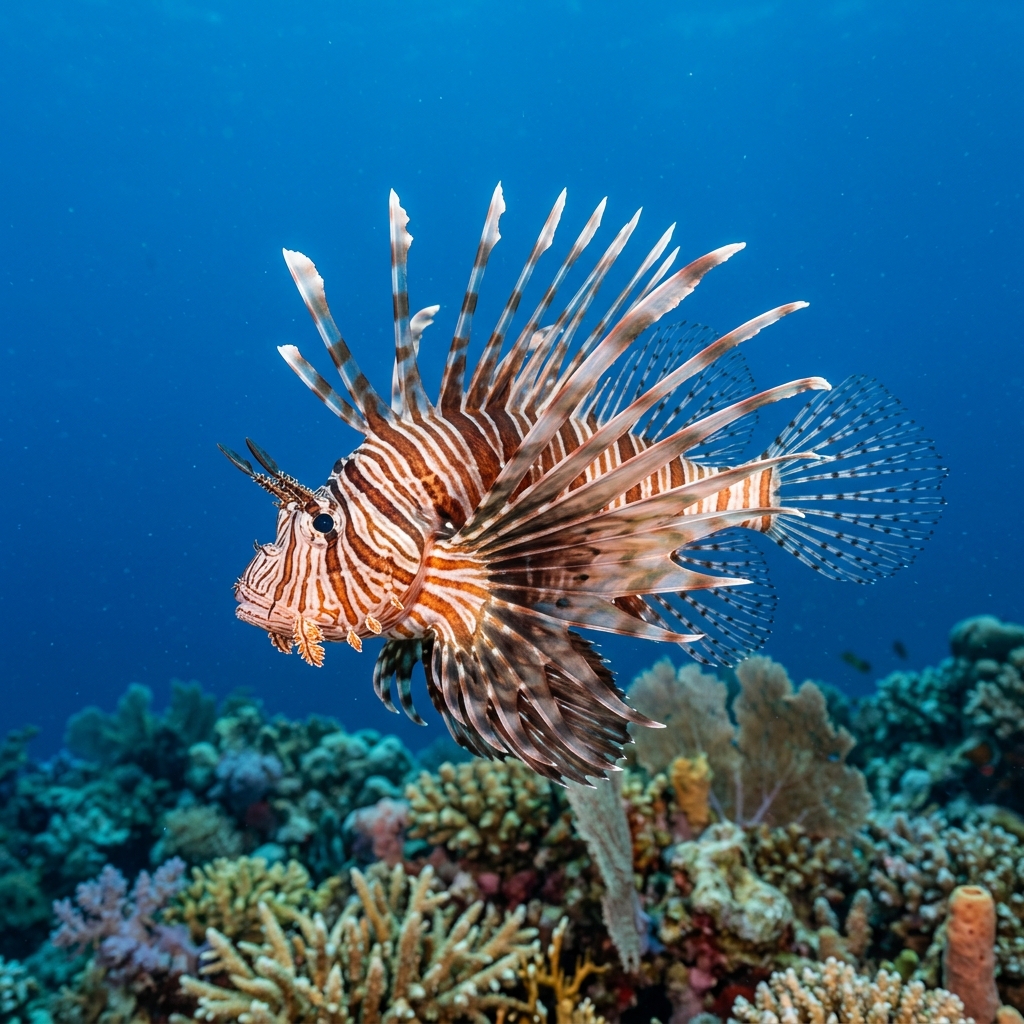
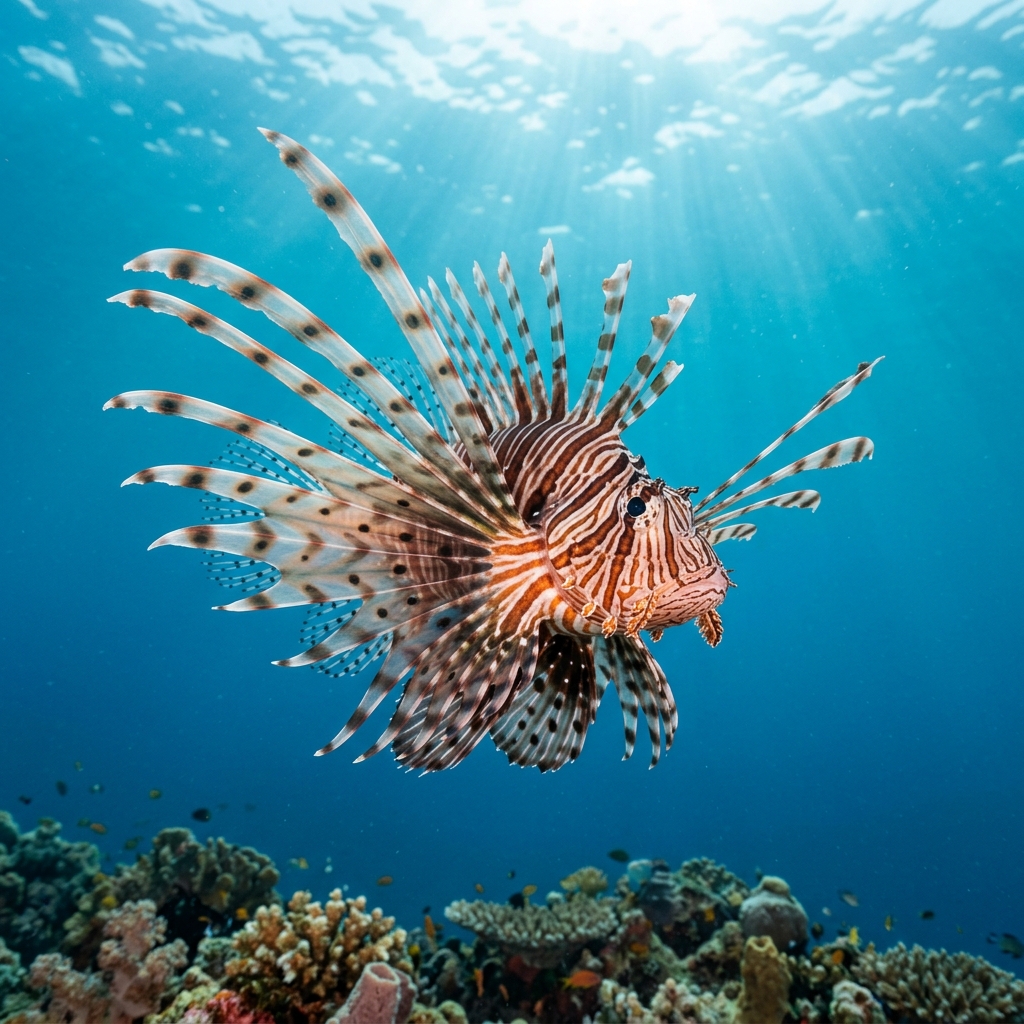
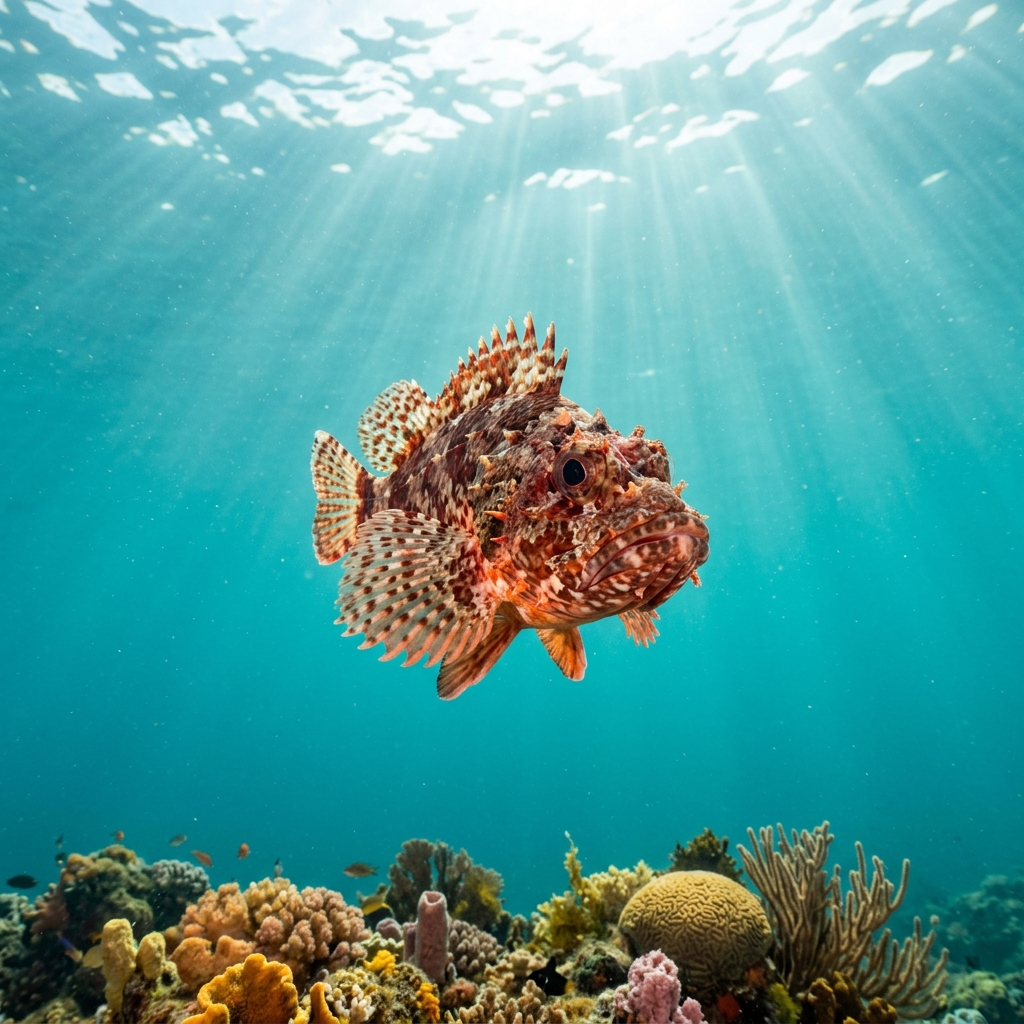
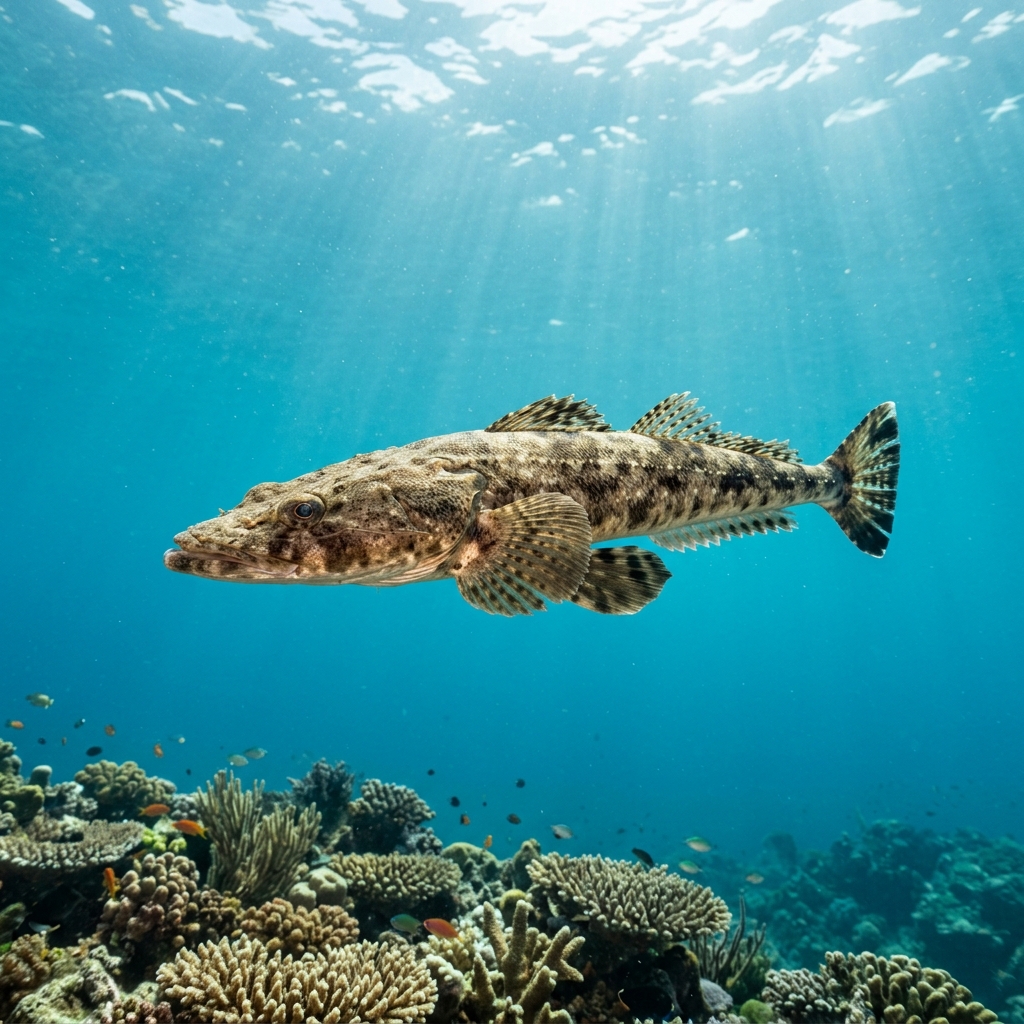
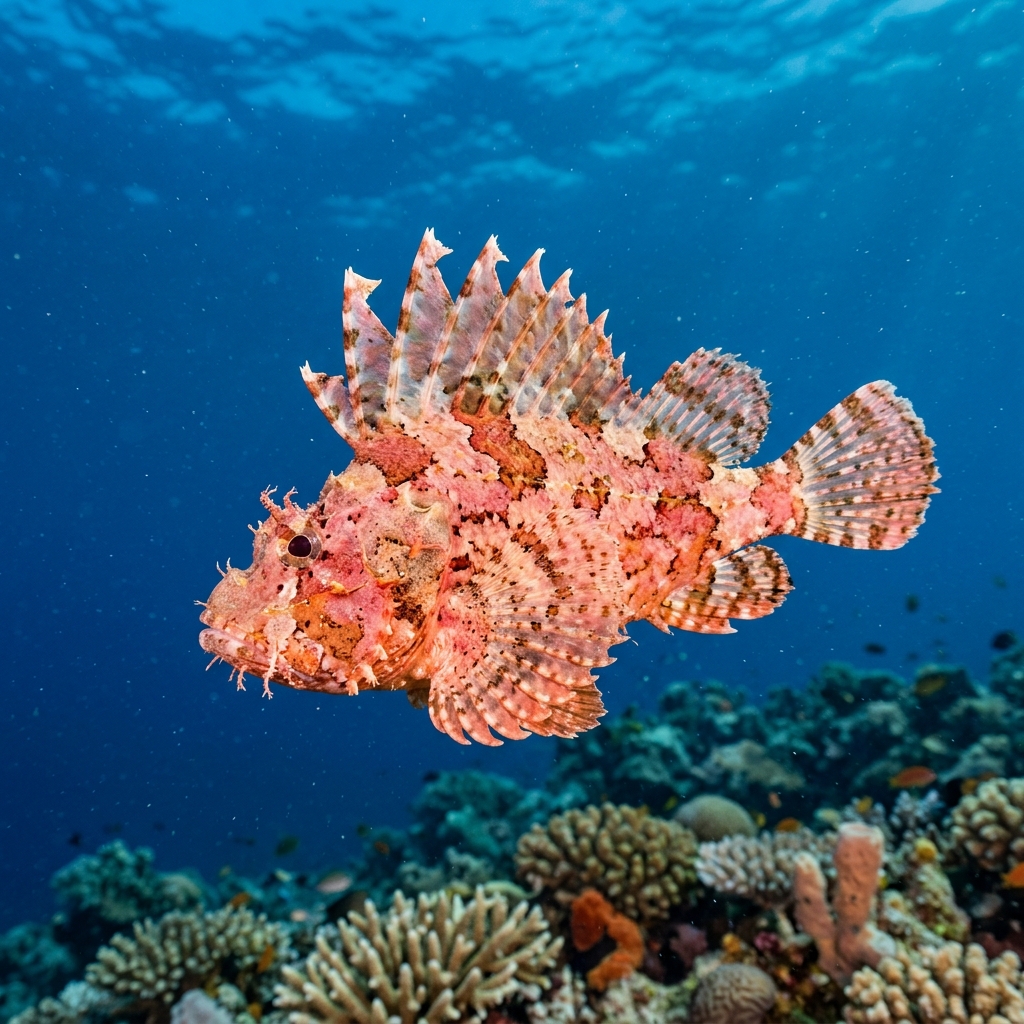
Reef neighbours a diver could mistake it for. Use the identification notes above to tell them apart.
California is the place for this one, with sightings logged along rocky reef sites throughout the state, most commonly reported as an uncommon find rather than a guaranteed one. All logged sightings in the data come from California, so it's effectively a California speciality among divers.
Mapping where Black-and-yellow Rockfish is logged…
California is the reliable place to find them, logged across rocky reef dive sites throughout the state. They're an uncommon but consistent sighting for divers who take time to scan rock ledges and crevices.
There's no strong seasonal pattern in the sightings, and their temperature range of about 12.4 to 19.0C covers much of California's diving calendar, so they can turn up year-round.
Yes, their fin spines are venomous and can deliver a painful sting if touched or if a diver braces a hand against a crevice where one is hiding. They aren't aggressive, so the risk comes from accidental contact, not attack.
Look for a stocky, spiny-finned fish around 27 cm with a mottled black and yellow pattern that blends into rocky, algae-covered ledges. It sits still rather than swimming openly, which combined with its colouring makes it easy to miss.
They typically reach about 27 cm, a modest size that fits their habit of wedging into tight rocky crevices rather than roaming open water.
Site and sighting data is aggregated from diver logs, iNaturalist and GBIF. For taxonomy and conservation status:
Madeira Rockfish
2,773 sites