Felimida clenchi
Spot this vivid nudibranch on Colombia's Caribbean coast year-round in warm 24.5-30.5C reef water. Here's where and how to find it.
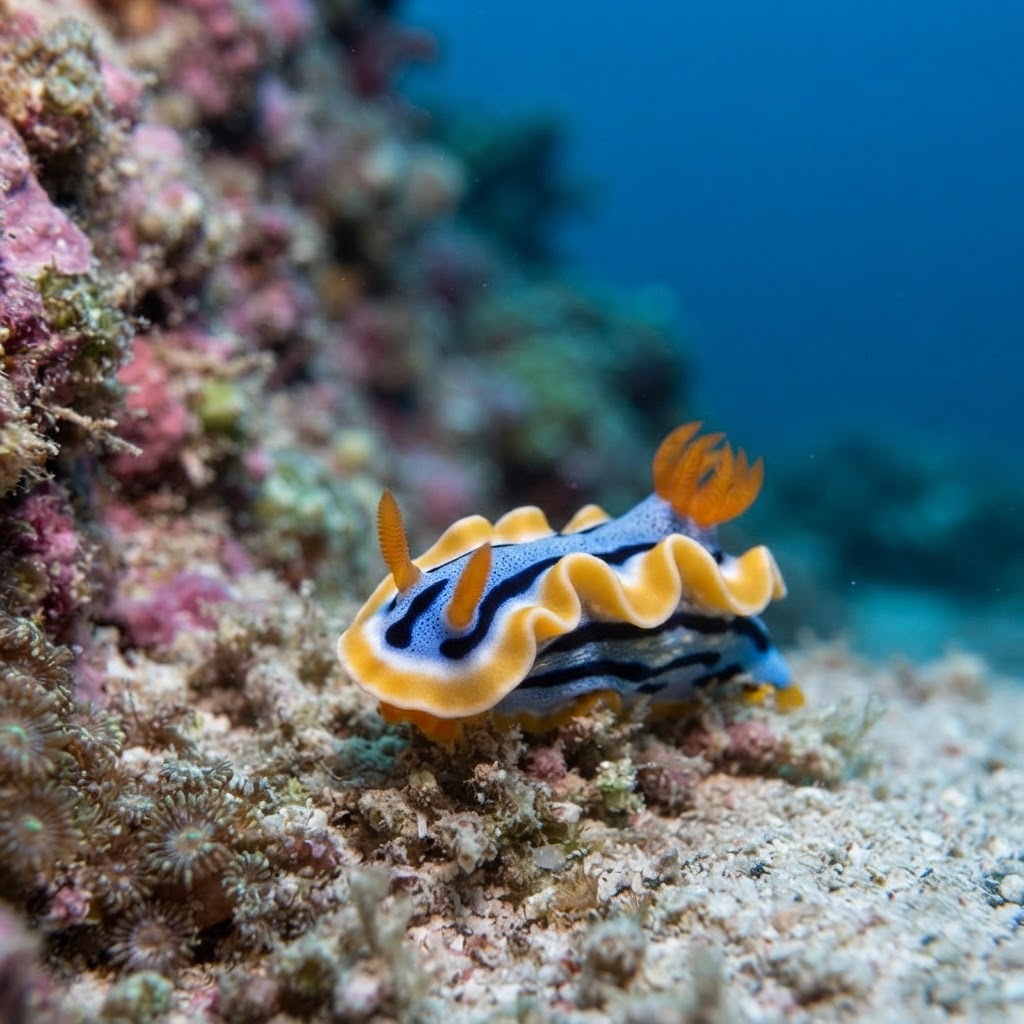
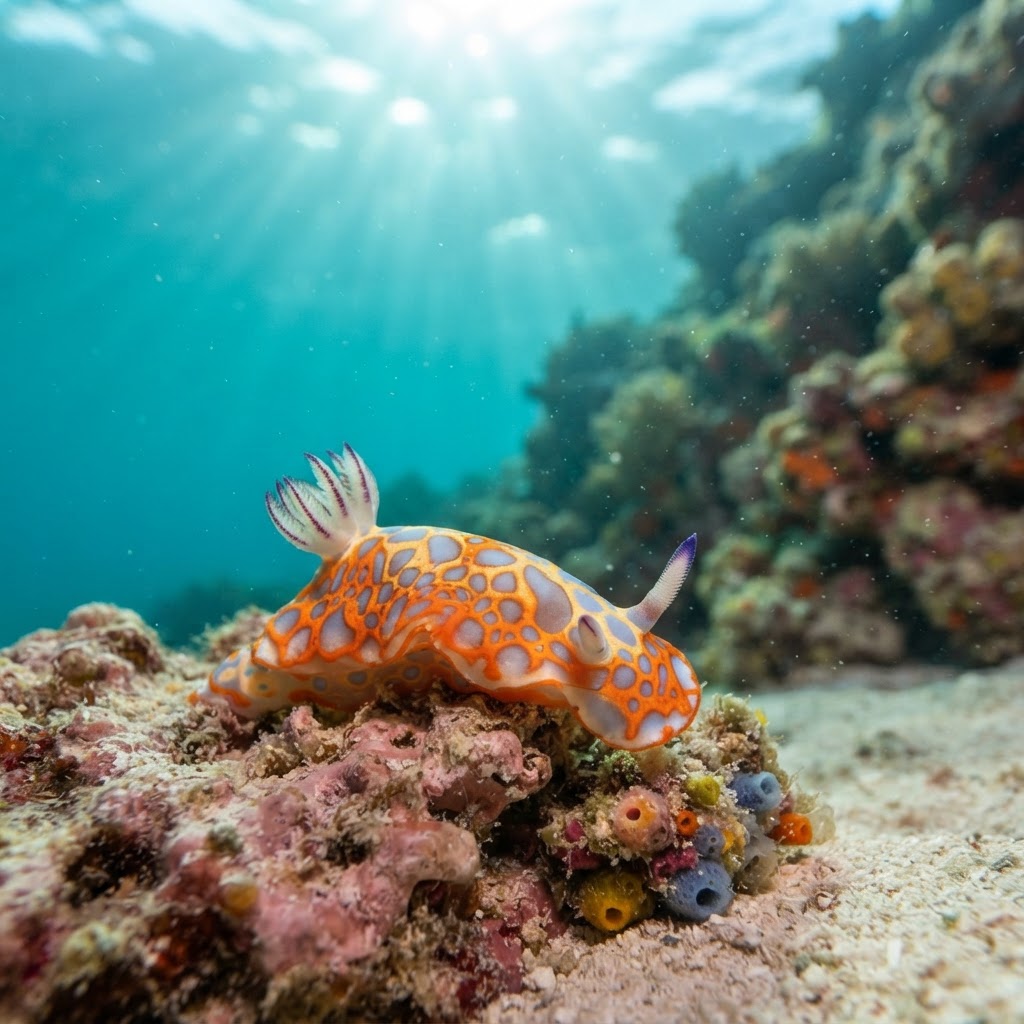
A small, oval-bodied nudibranch with a mantle in shades of purple to blue, usually rimmed with a bright yellow or orange border that runs the full length of the body. Look closely and you'll spot the pair of rhinophores (sensory tentacles) at the front and a rosette of feathery gills near the tail, both often tipped in a contrasting colour. It moves slowly across rock, rubble and sponge-covered surfaces, so once you've clocked the colour pattern it's easy to hold in your torch beam or lens.
Divers typically find it grazing slowly over rubble, sponge patches and low reef structure, feeding on the sponges and encrusting organisms that make up a chromodorid's diet. It shows no real reaction to divers beyond continuing its unhurried crawl, which makes it a cooperative subject for close-focus photography. Most sightings come from daytime dives on shallower reef sections rather than open water or deep drop-offs.
Like other chromodorid nudibranchs, it likely stores distasteful or toxic compounds absorbed from the sponges it eats, which is thought to explain the bold, high-contrast colouring that warns off potential predators.
There's no clear seasonal pattern in the sightings, and with a comfortable range of 24.5 to 30.5C, warm Caribbean reef water suits it all year. Plan around good visibility and calm conditions rather than a particular month.
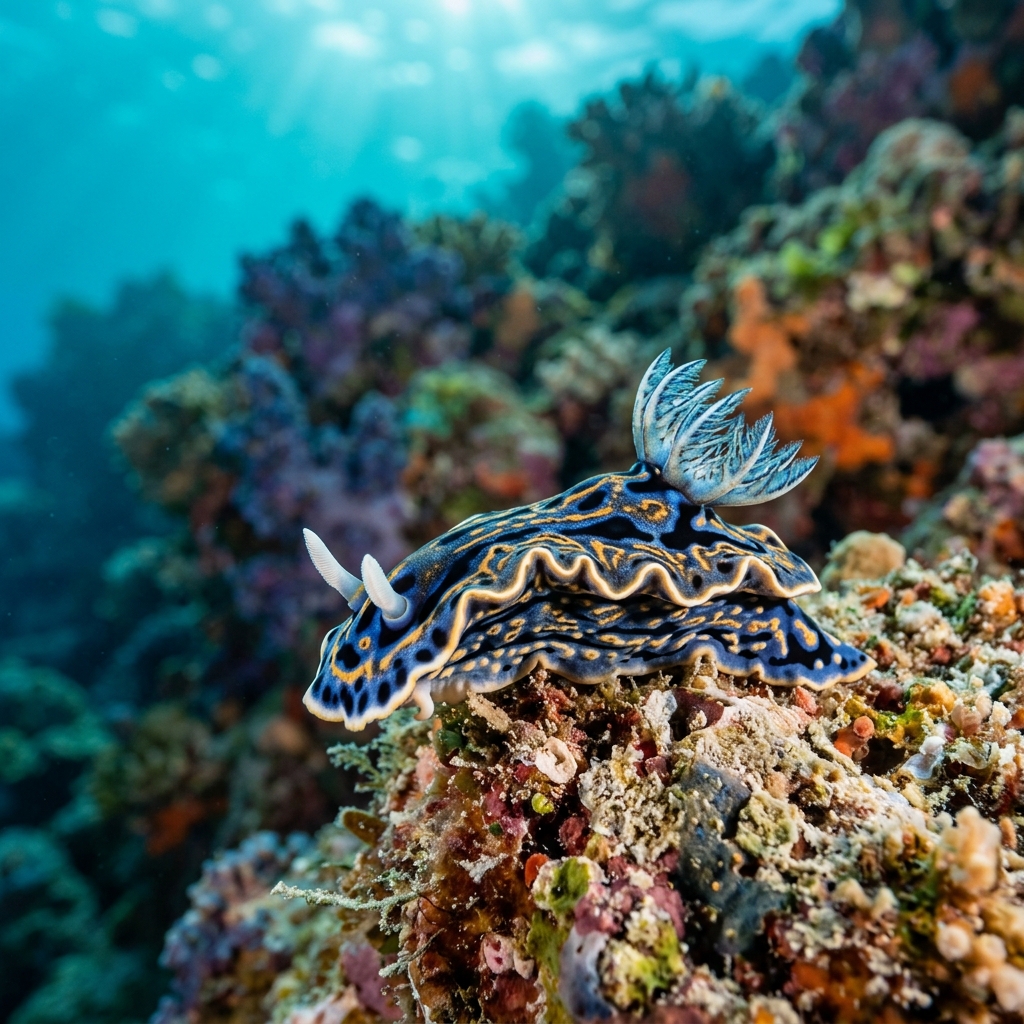
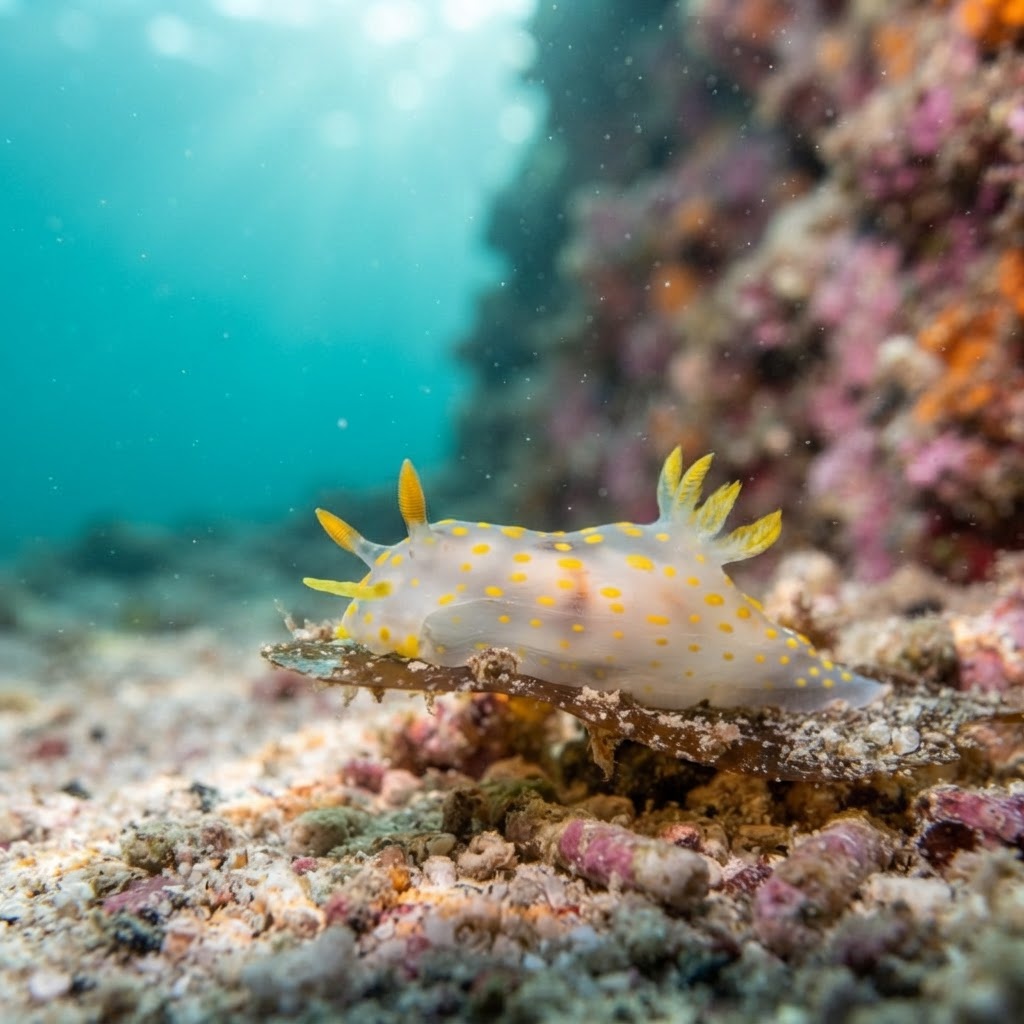
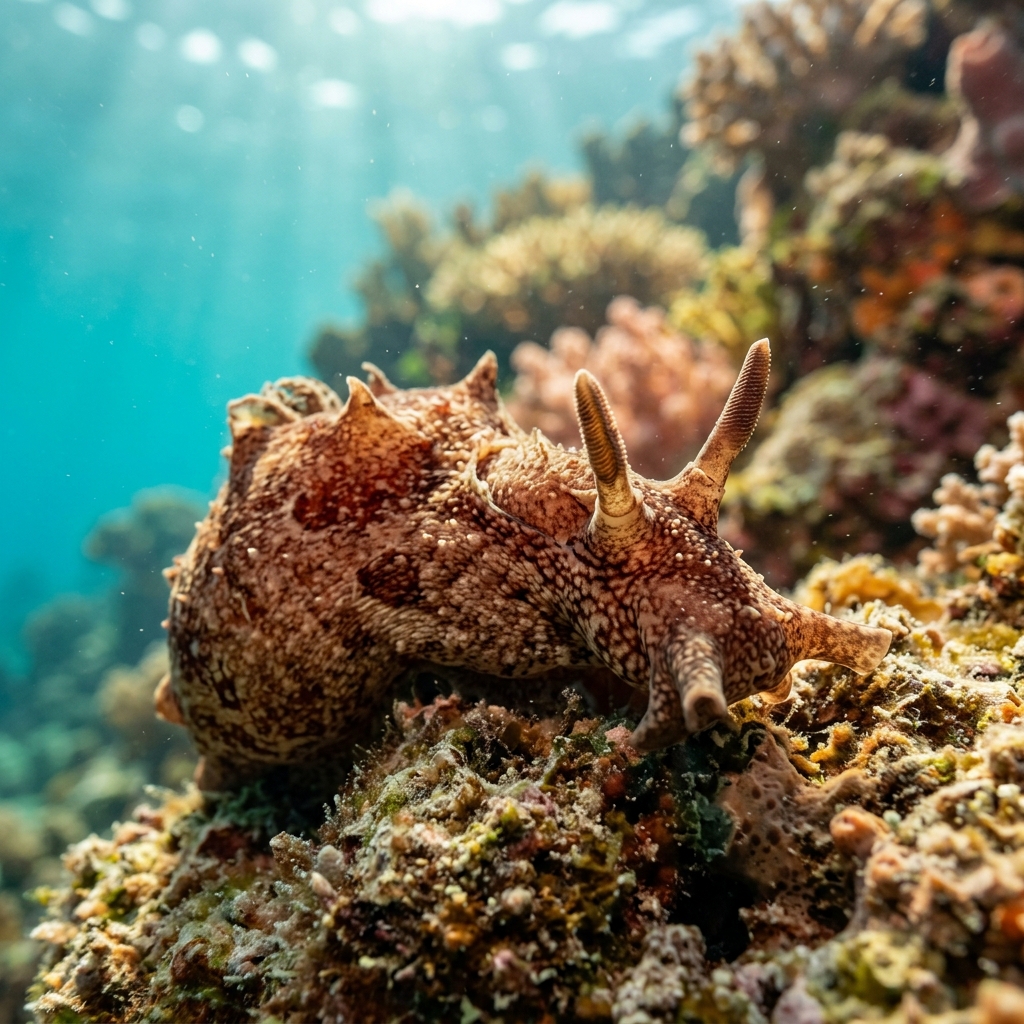
Reef neighbours a diver could mistake it for. Use the identification notes above to tell them apart.
This is very much a Caribbean find, most reliably logged along Colombia's Caribbean Coast, where it turns up at more sites than anywhere else in the data. It's also a steady sighting around Guadeloupe, particularly in the Îles des Saintes and Basse-Terre, and shows up with some regularity in Antigua and Barbuda.
Mapping where Bill Clench's Doris is logged…
It's most reliably found along Colombia's Caribbean Coast, with steady sightings also reported around Guadeloupe's Îles des Saintes and Basse-Terre, and in Antigua and Barbuda.
Sightings don't show a strong seasonal pattern, and warm water between roughly 24.5 and 30.5C keeps it comfortable on Caribbean reefs throughout the year, so it's a reasonable year-round target.
Look for a small oval nudibranch with a purple to blue mantle edged in a bright yellow or orange border, moving slowly over rubble and sponge-covered surfaces. The contrasting rhinophores and gill tuft near the tail help confirm the ID.
No, it poses no risk to divers. It's a slow-moving, harmless nudibranch that can be observed and photographed up close without any safety concerns.
It grazes on sponges, and like related chromodorids it's thought to absorb chemical defences from its food that make it distasteful to predators, which likely explains its bold warning colours.
Site and sighting data is aggregated from diver logs, iNaturalist and GBIF. For taxonomy and conservation status:
Light-spotted Aegires
3,168 sites