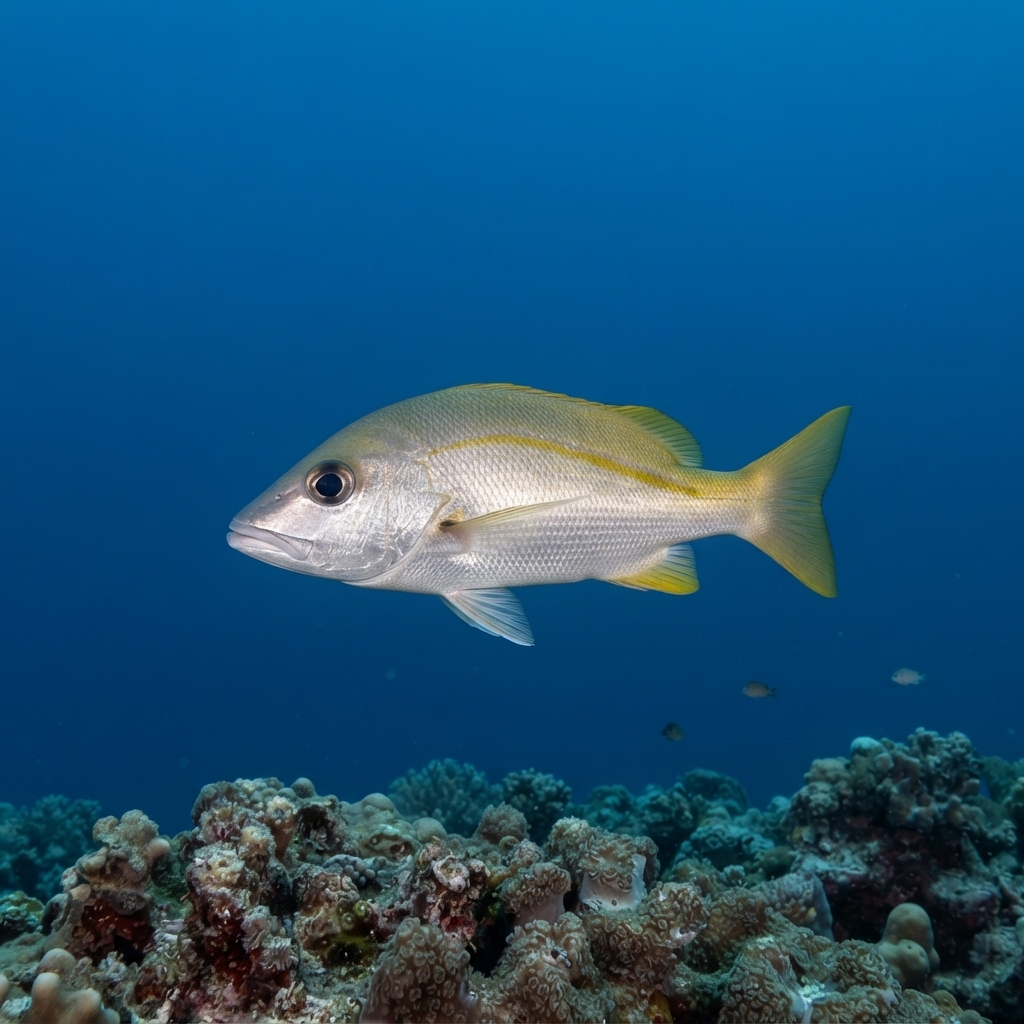
Lutjanus lutjanus
Yellow-flanked and reef-loving, bigeye snapper turn up on almost half the dive sites in Sabah and Koh Phi Phi year-round in warm water.
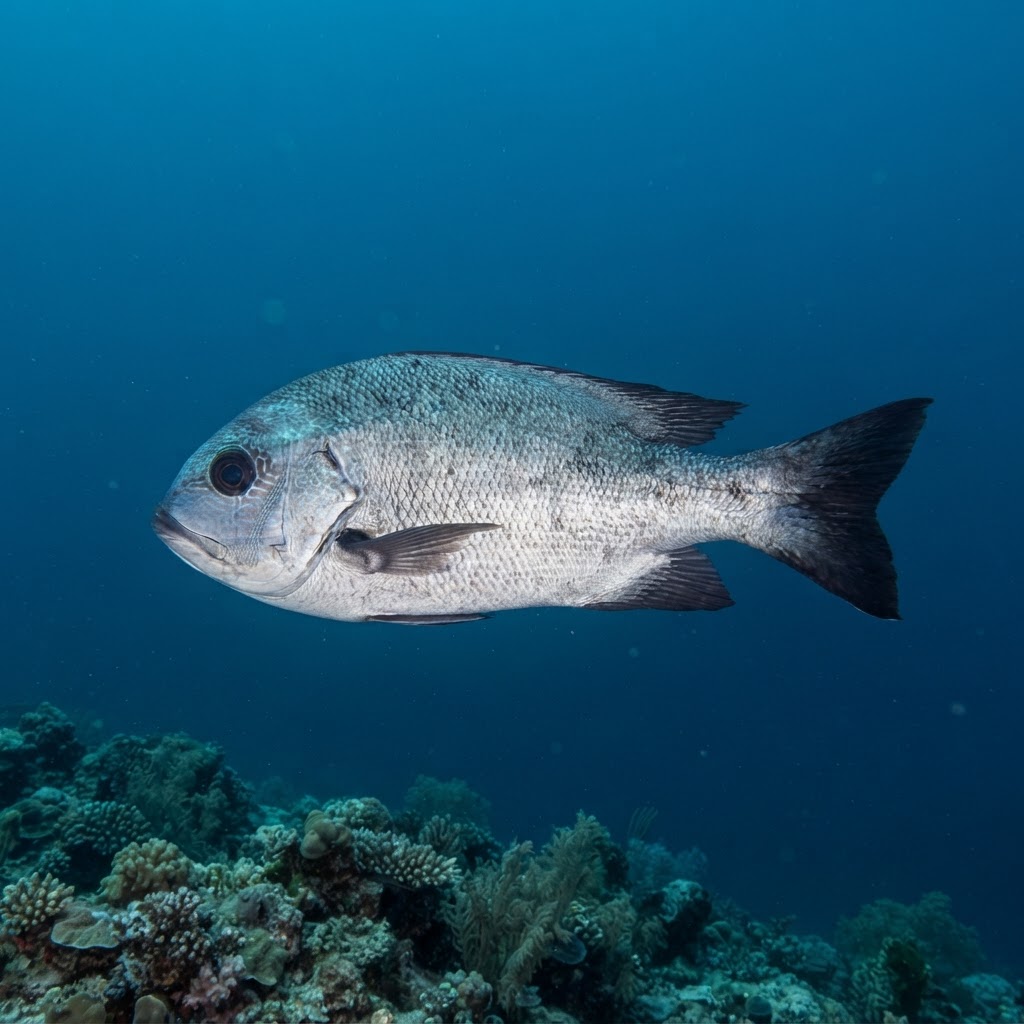
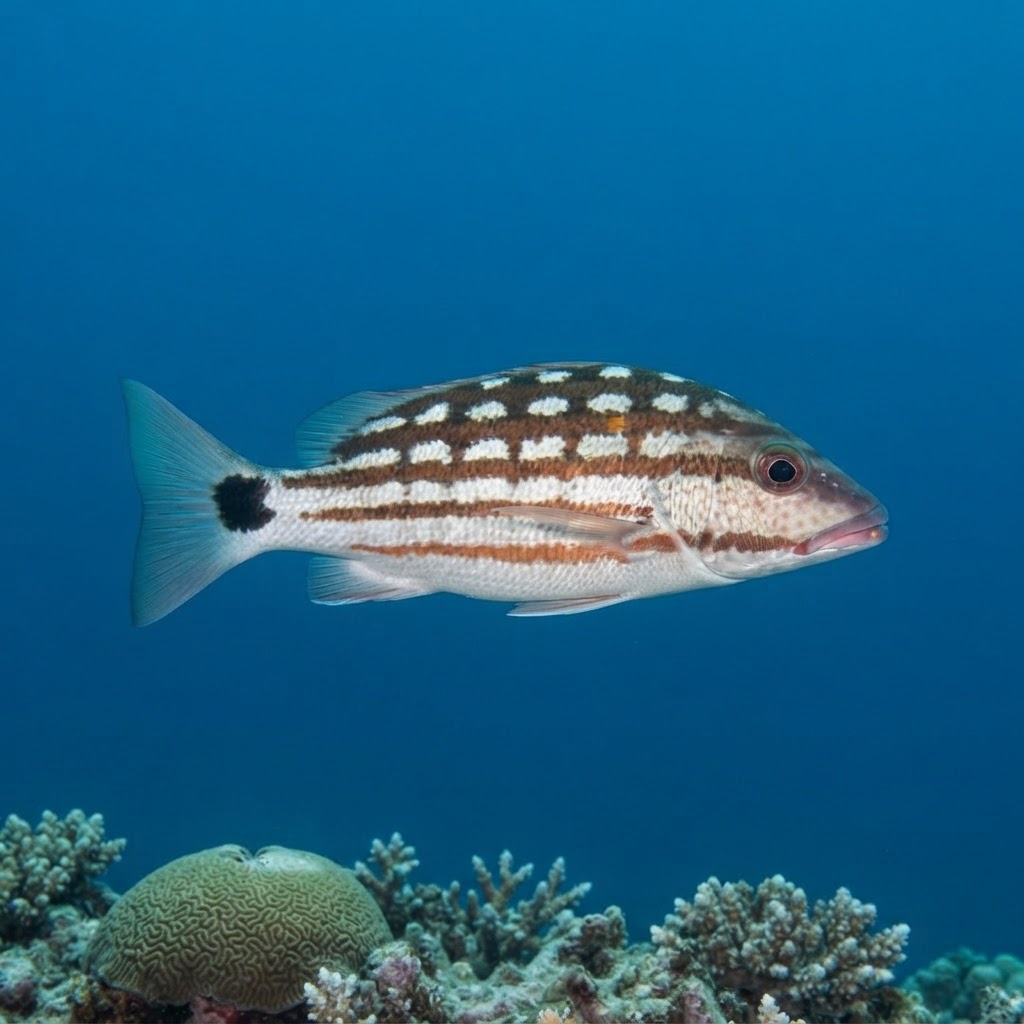
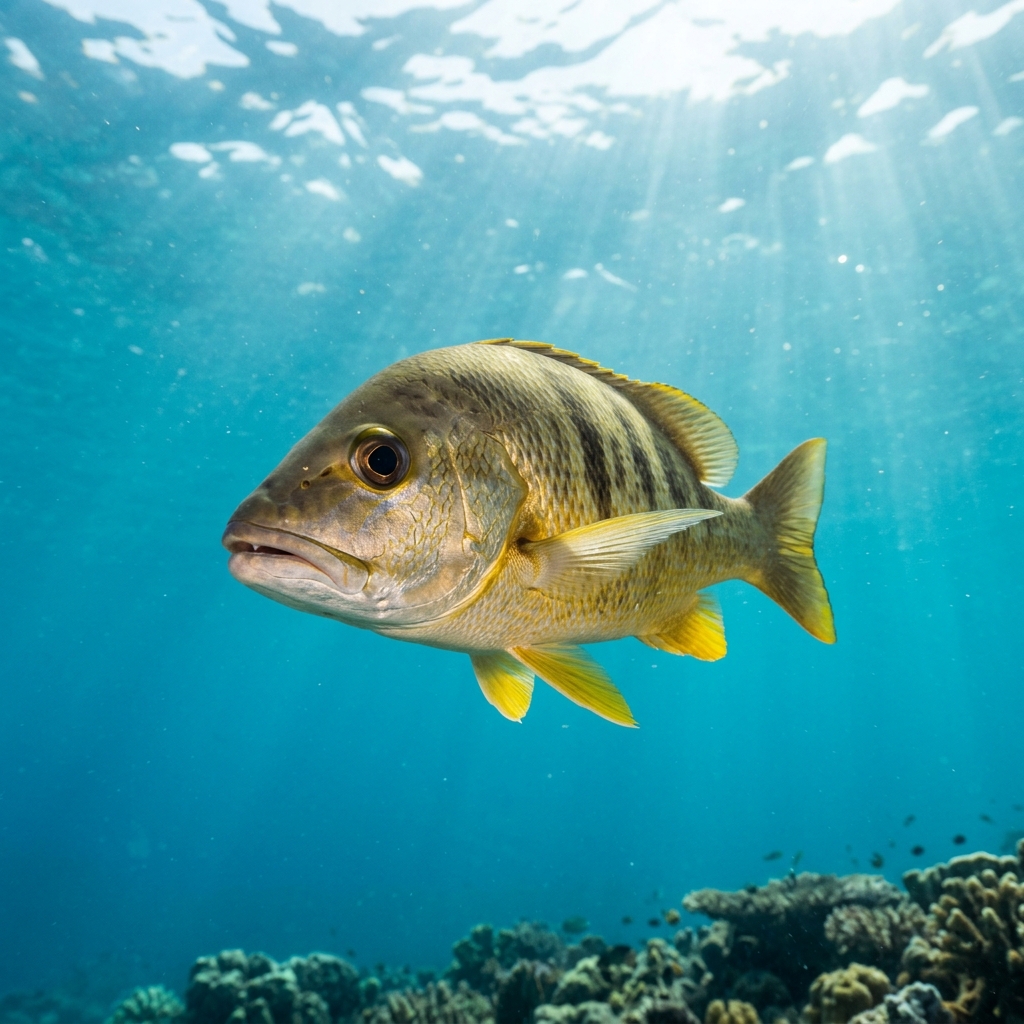
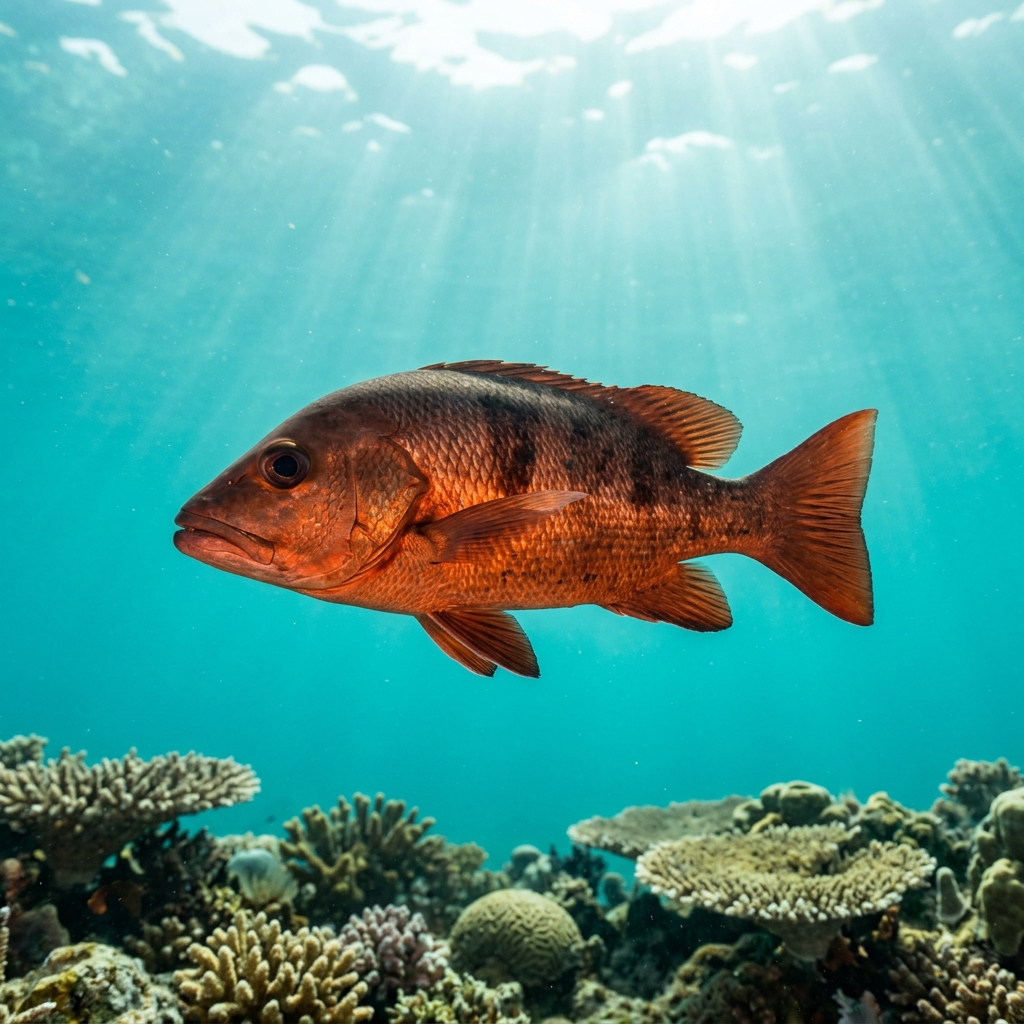
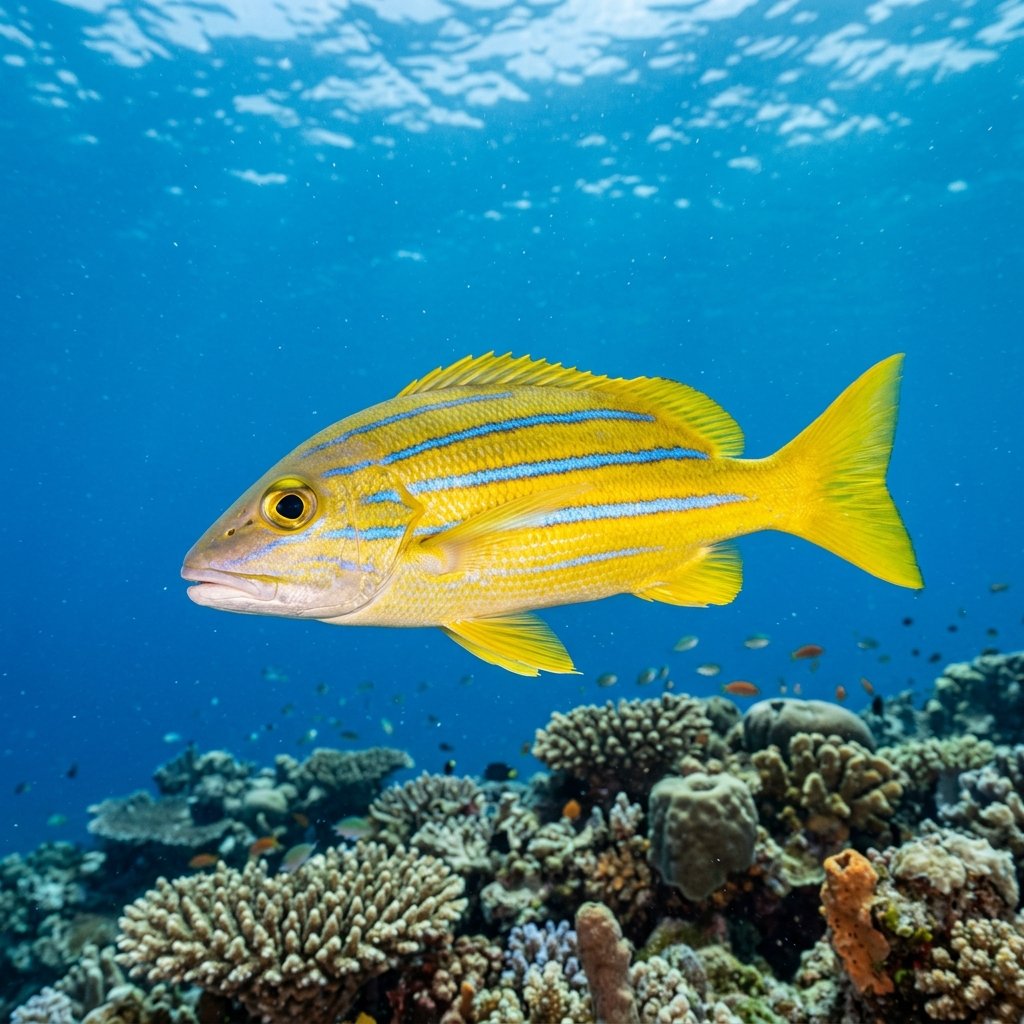
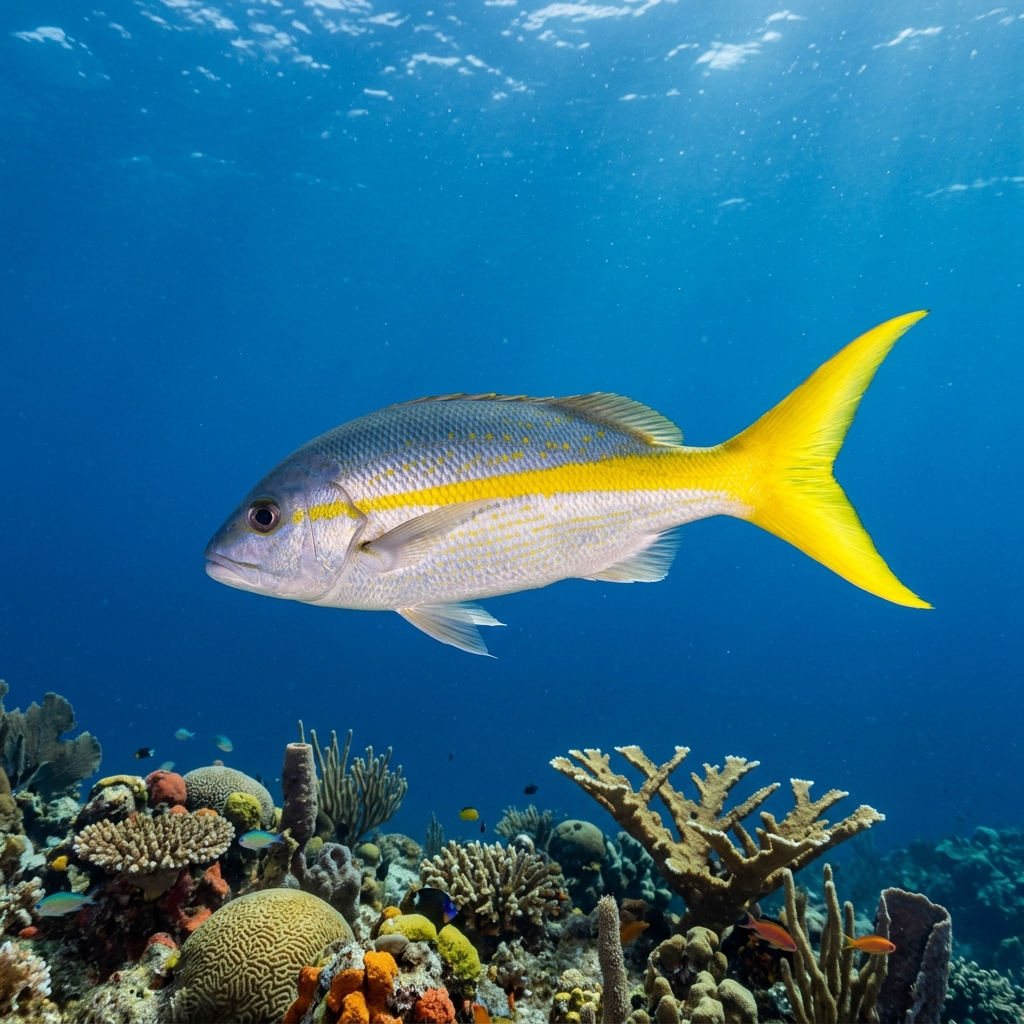
Look for a slim, silvery body washed with yellow along the back and a faint yellow stripe running down the flank, set off by noticeably large, dark eyes that give the species its name. It tops out around 24 cm, so on the reef you're usually looking at a fish shorter than your forearm, often holding in loose groups just off the bottom. The tail and fins carry a light yellow tint that helps separate it from plainer silvery reef fish at a glance.
Divers typically find bigeye snapper hovering in small, loose groups over reef flats and slopes, hanging just above the structure rather than tucked into it. They're unbothered by divers, holding position or drifting slightly off as you pass rather than bolting for cover. Most sightings come from daytime reef dives, where they mix in with other small reef fish rather than forming the tight, purposeful schools seen in some other snapper species.
Like most snappers, bigeye snapper feed mainly after dark, ambushing small fish and crustaceans, which is why daytime encounters usually show them resting or loosely grouped rather than actively hunting.
No clear seasonal pattern shows up in the sightings, and with a comfortable range of roughly 25 to 29 C it stays on tropical reefs across Southeast Asia and the western Pacific all year, so any month works.
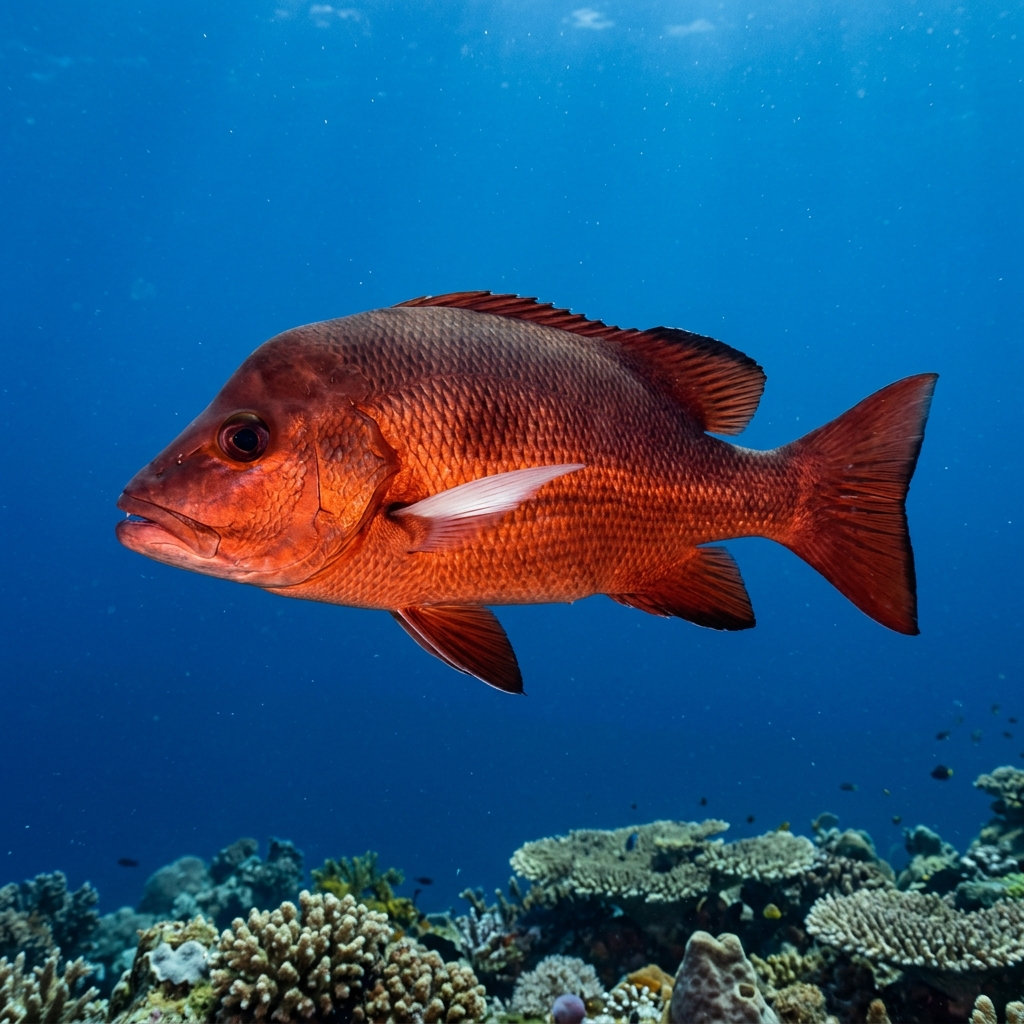
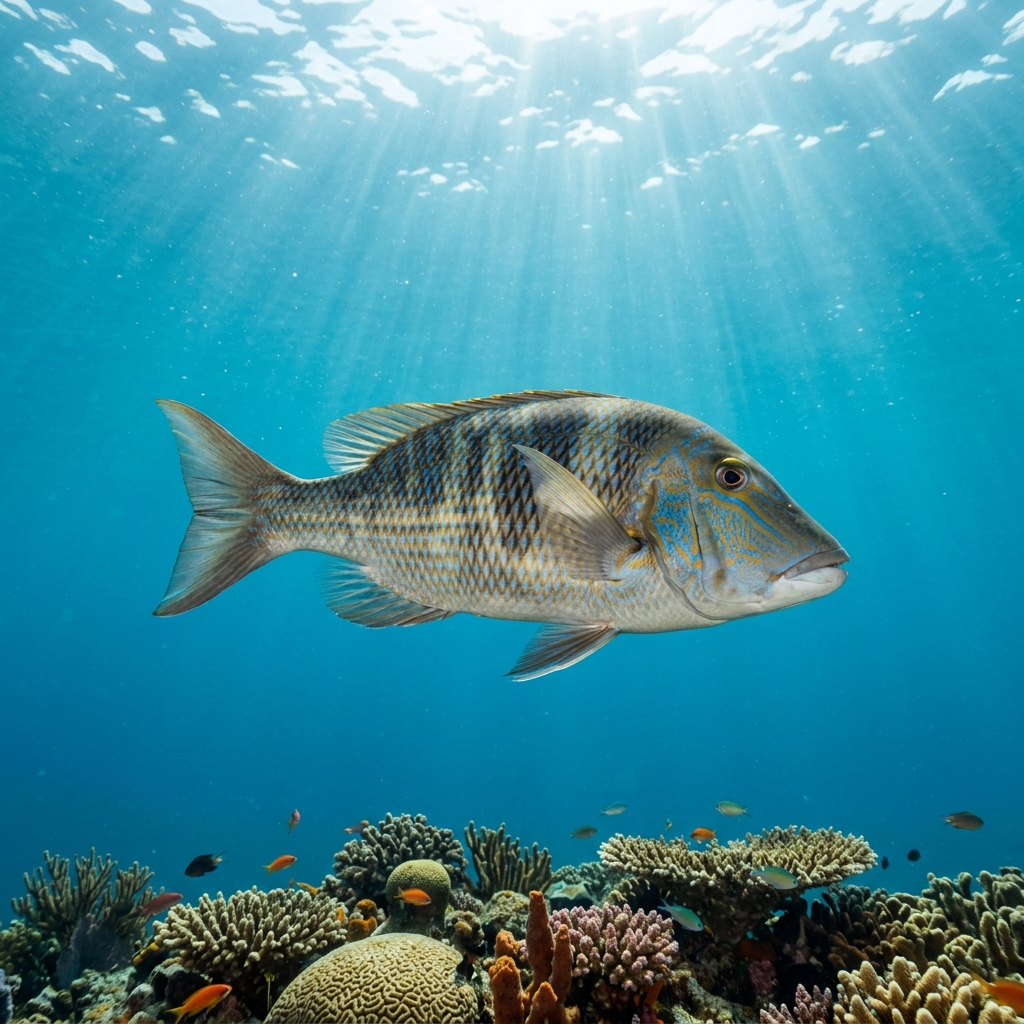
Reef neighbours a diver could mistake it for. Use the identification notes above to tell them apart.
Most reliably logged in Malaysia, especially Sabah, and in Thailand around Koh Phi Phi and Phuket, with strong numbers also coming out of Palawan in the Philippines and West Papua and Raja Ampat in Indonesia. It's an uncommon-but-steady sighting rather than a headline fish at most of these sites, so expect a few individuals mixed into a reef scene rather than a dedicated dive for them.
Mapping where Bigeye Snapper is logged…
Sabah in Malaysia and Koh Phi Phi and Phuket in Thailand are the most consistent spots, with good numbers also reported from Palawan in the Philippines and West Papua and Raja Ampat in Indonesia.
There's no strong season in the data, and the species sits comfortably in 25 to 29 C water, so it's a year-round sighting on tropical reefs rather than a seasonal target.
Check for a slim silvery body with a yellow-tinged back and a faint yellow stripe along the flank, plus unusually large dark eyes. It reaches about 24 cm and is usually seen hovering in small loose groups just above the reef.
They grow to around 24 cm, a modest, forearm-length fish rather than one of the larger snapper species.
No, they're not considered dangerous to divers and generally hold position or ease away calmly as you approach.
They're mostly night feeders, hunting small fish and crustaceans after dark, so daytime dives usually show them resting or loosely grouped over the reef rather than actively feeding.
Site and sighting data is aggregated from diver logs, iNaturalist and GBIF. For taxonomy and conservation status:
Bluestriped Snapper
2,054 sites