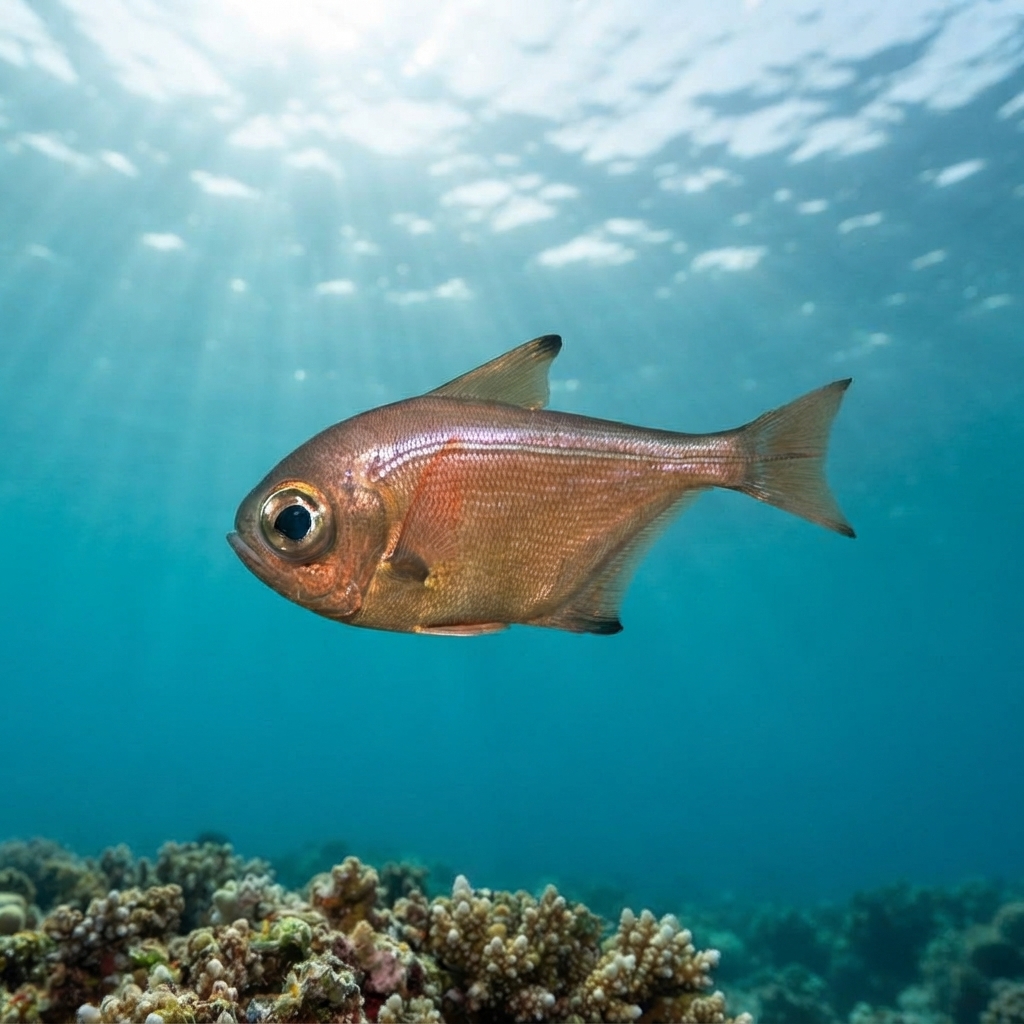
Pempheris adspersa
Small copper-eyed schooling fish tucked under North Island ledges, most reliably logged in waters around 16 to 18°C year-round.
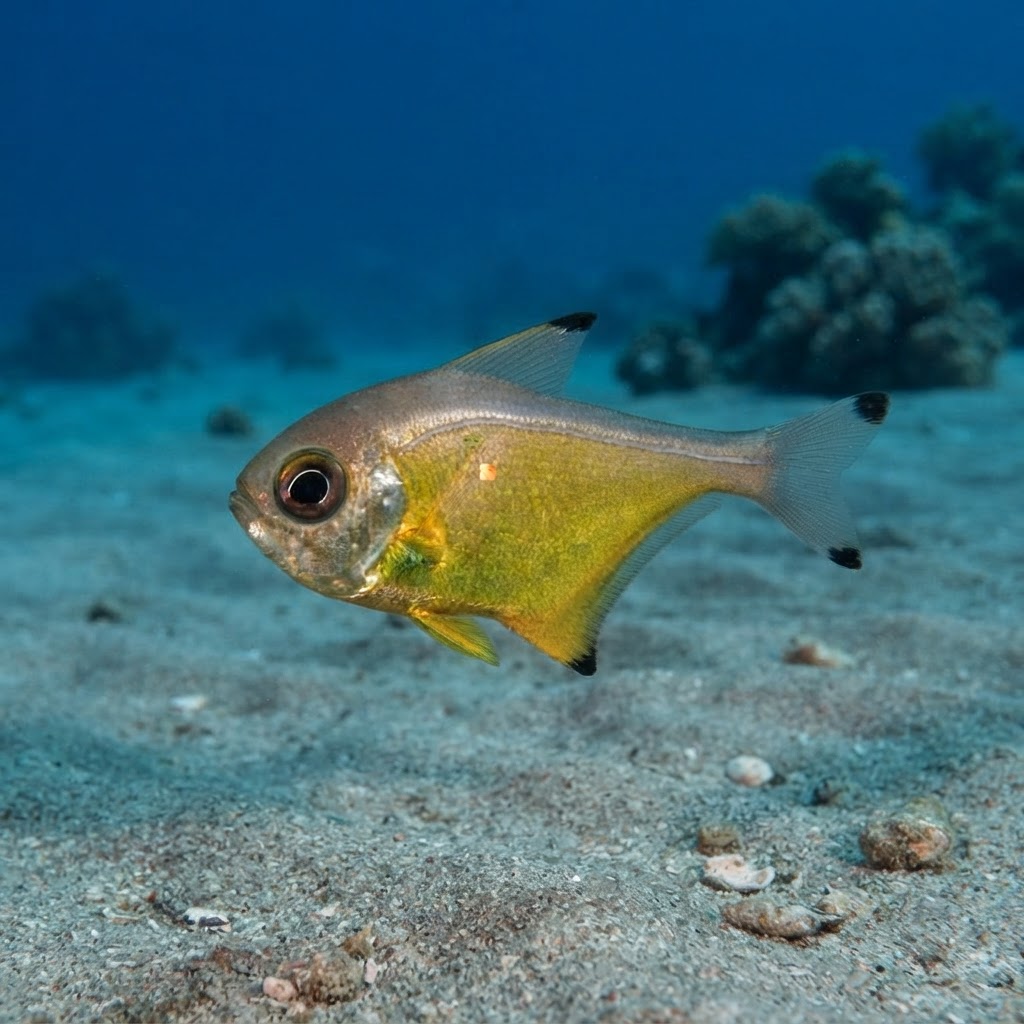
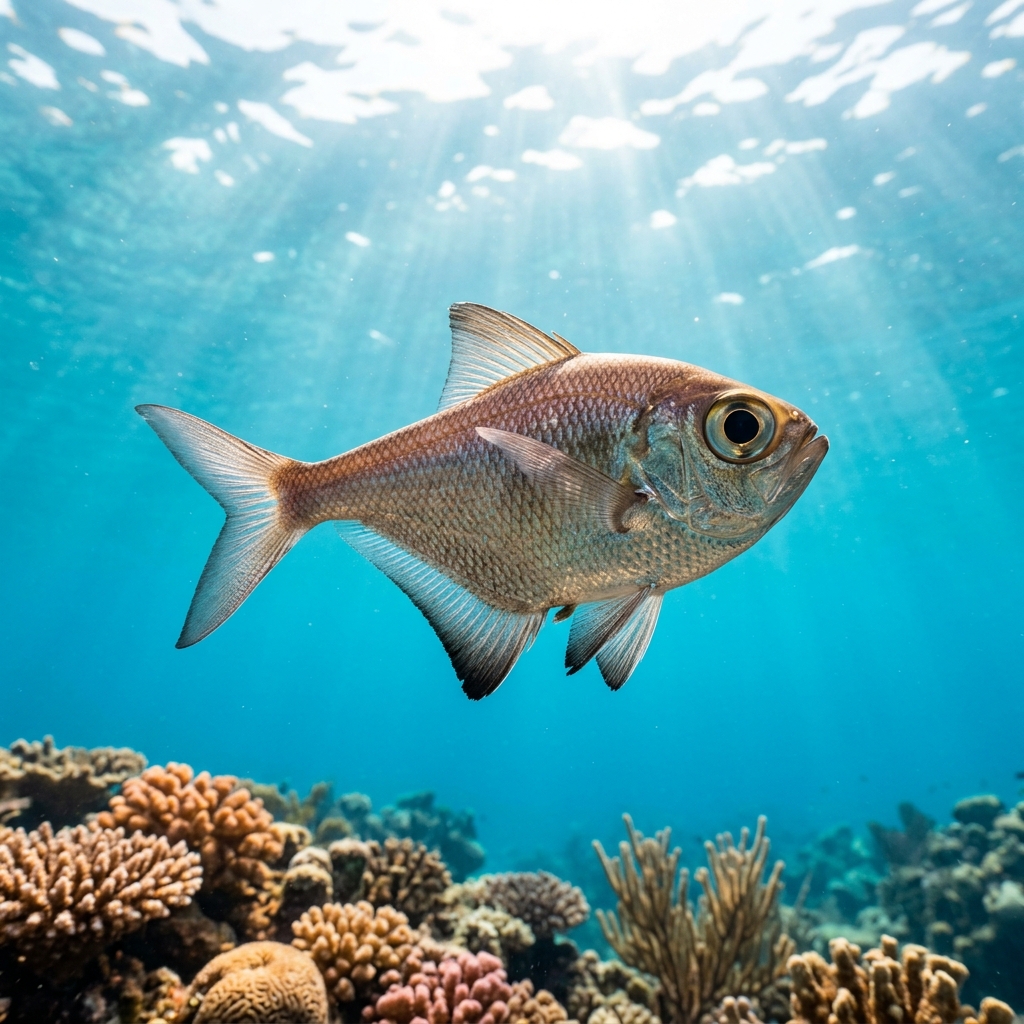
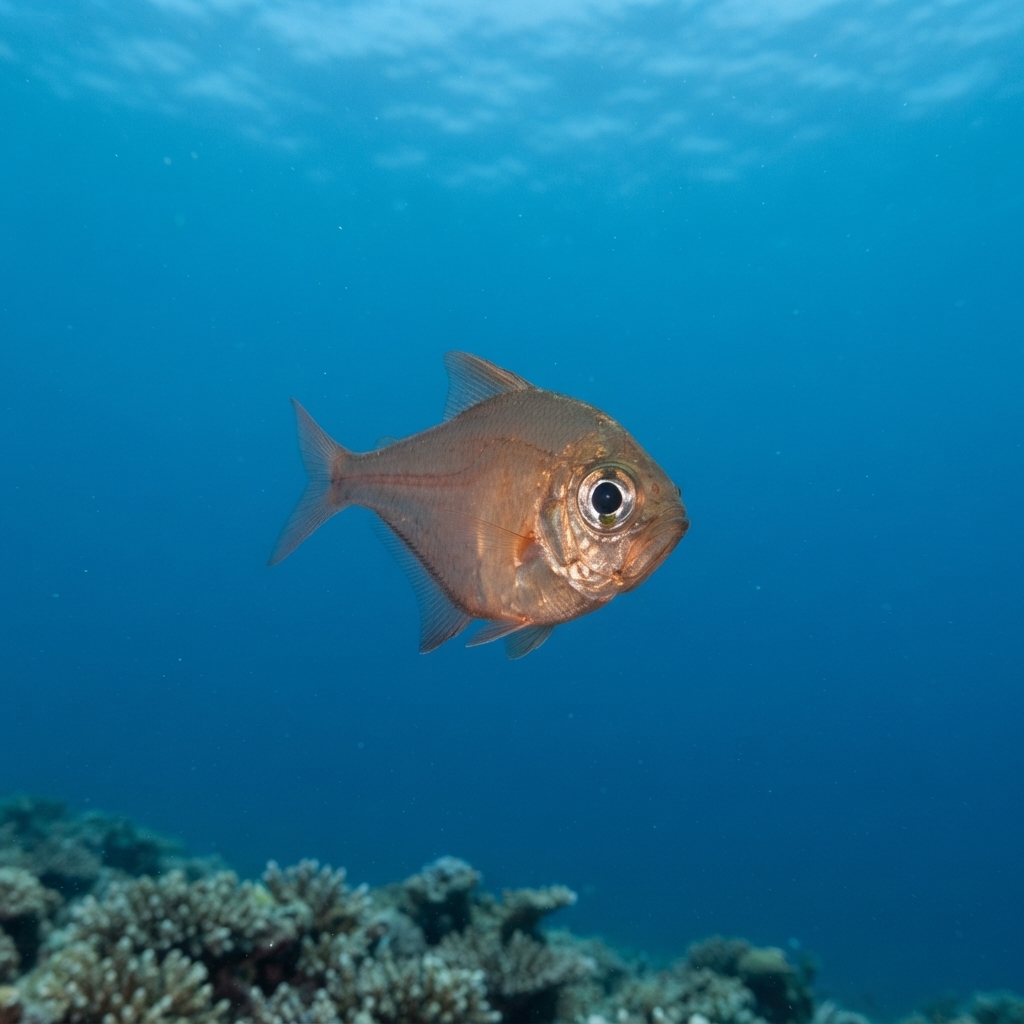
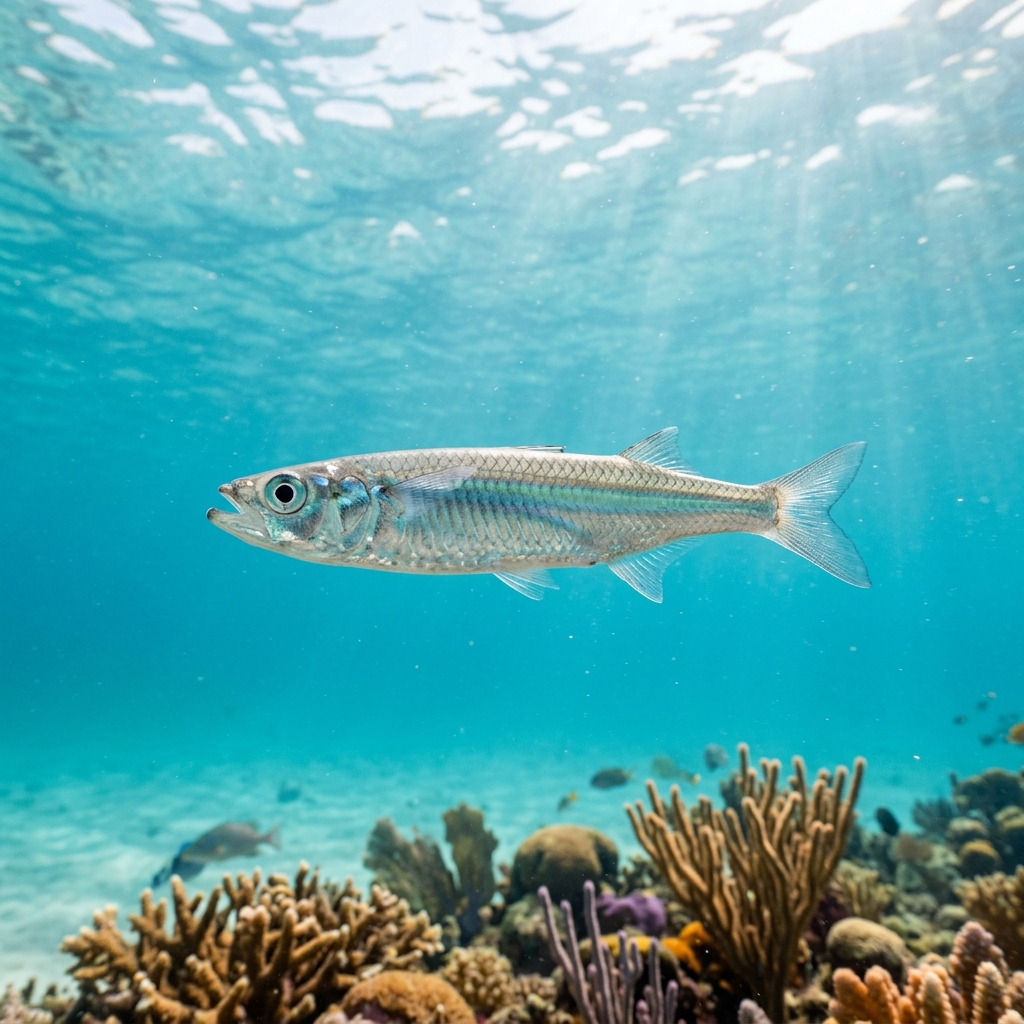
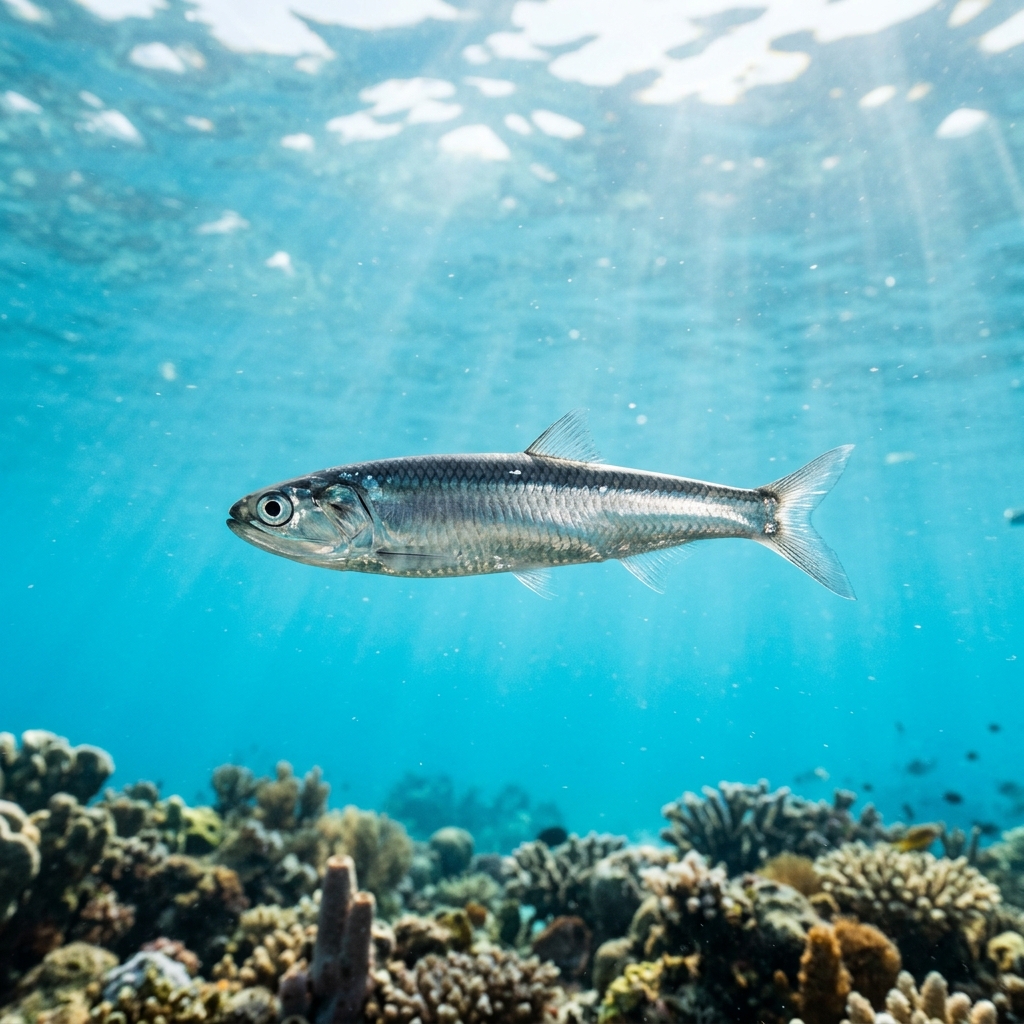
A compact, deep-bodied little fish, around 11 cm, in coppery orange-brown with a silvery sheen along the flanks. The name gives away the best clue: eyes that look oversized for the body, useful for the low-light ledges and overhangs it favours. It typically shows up in tight schools rather than alone, packed close together with bodies angled the same way.
Divers usually find it packed into schools tucked under rock overhangs, ledges, and inside small caves, staying tight to cover rather than out in open water. It tends to hold its position as divers pass, more interested in staying shaded than in fleeing, which makes it an easy fish to get a steady look at once you spot the school. Most sightings are logged as uncommon, so it takes a bit of ledge-peeking to find one, but when you do it's rarely just a single fish.
Schooling tight under overhangs by day and dispersing to feed at night is a classic strategy among small reef fish that rely on numbers and shade rather than speed to avoid predators.
Sightings don't show a clear seasonal pattern, and with water temperatures logged between 16 and 18.3°C, it seems to be a year-round resident rather than a seasonal visitor. Plan around general North Island dive conditions rather than a particular month.
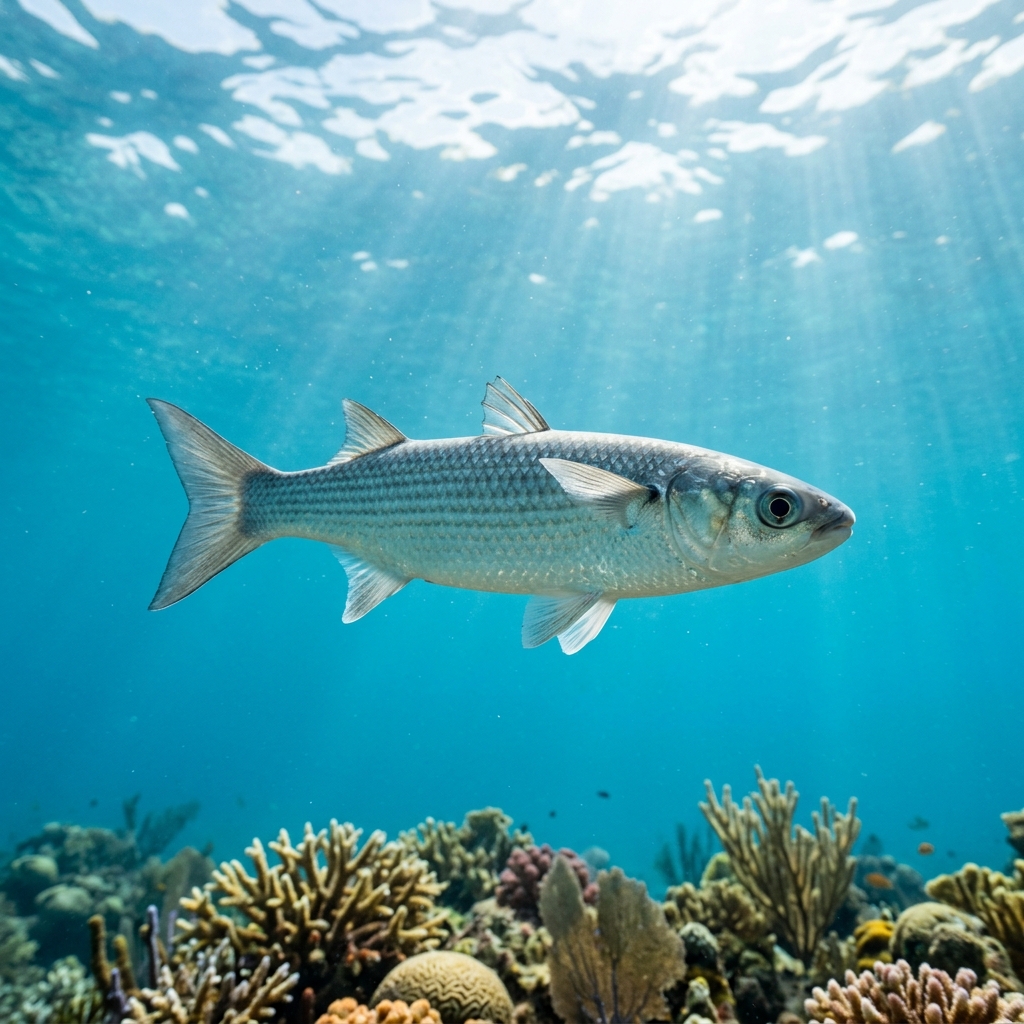
Reef neighbours a diver could mistake it for. Use the identification notes above to tell them apart.
This is a North Island, New Zealand fish through and through, logged consistently across dive sites there and nowhere else in the current data. Look for it under ledges and in caves on reef dives around the North Island rather than open sand or pelagic-facing sites.
Mapping where Bigeye is logged…
Almost all logged sightings come from the North Island of New Zealand, where it shelters under ledges and in small caves on reef dives. It hasn't been reported as a reliable sighting outside New Zealand in current data.
There's no strong seasonal pattern in the sightings, so it's considered a year-round fish in its North Island habitat, sitting comfortably in water around 16 to 18°C.
Look for a small, copper-brown, deep-bodied fish around 11 cm long with noticeably large eyes, usually seen packed into a school under a ledge or cave rather than swimming alone in open water.
They're a small species, typically topping out around 11 cm, so a whole school will still fit easily within the shadow of a single ledge.
No, they pose no risk to divers. They're a harmless, shy schooling fish that mostly just holds still under cover as you swim past.
Site and sighting data is aggregated from diver logs, iNaturalist and GBIF. For taxonomy and conservation status:
Anchovy
2,433 sites