Beringraja binoculata
Rare but real: big skates turn up on cold Pacific Northwest dives from 3 to 11C, most often logged in Washington and British Columbia waters.
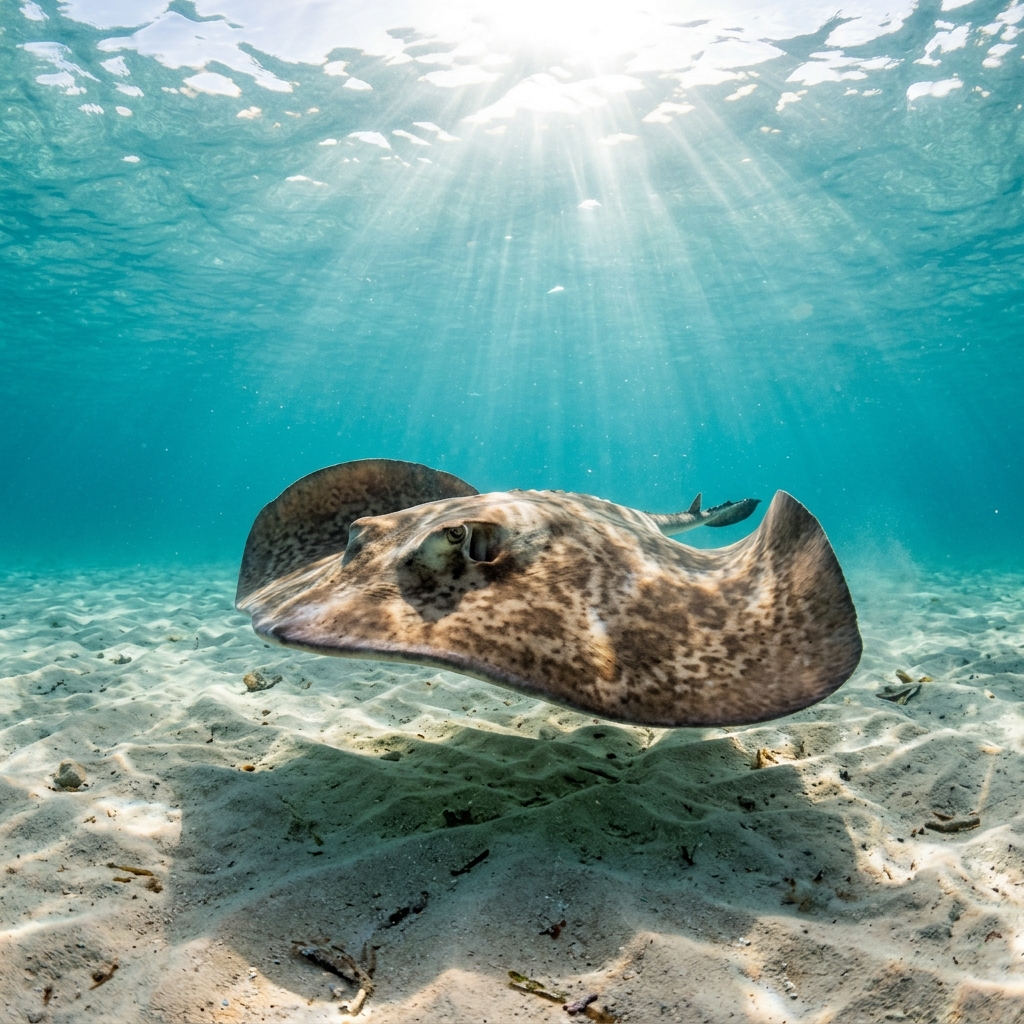
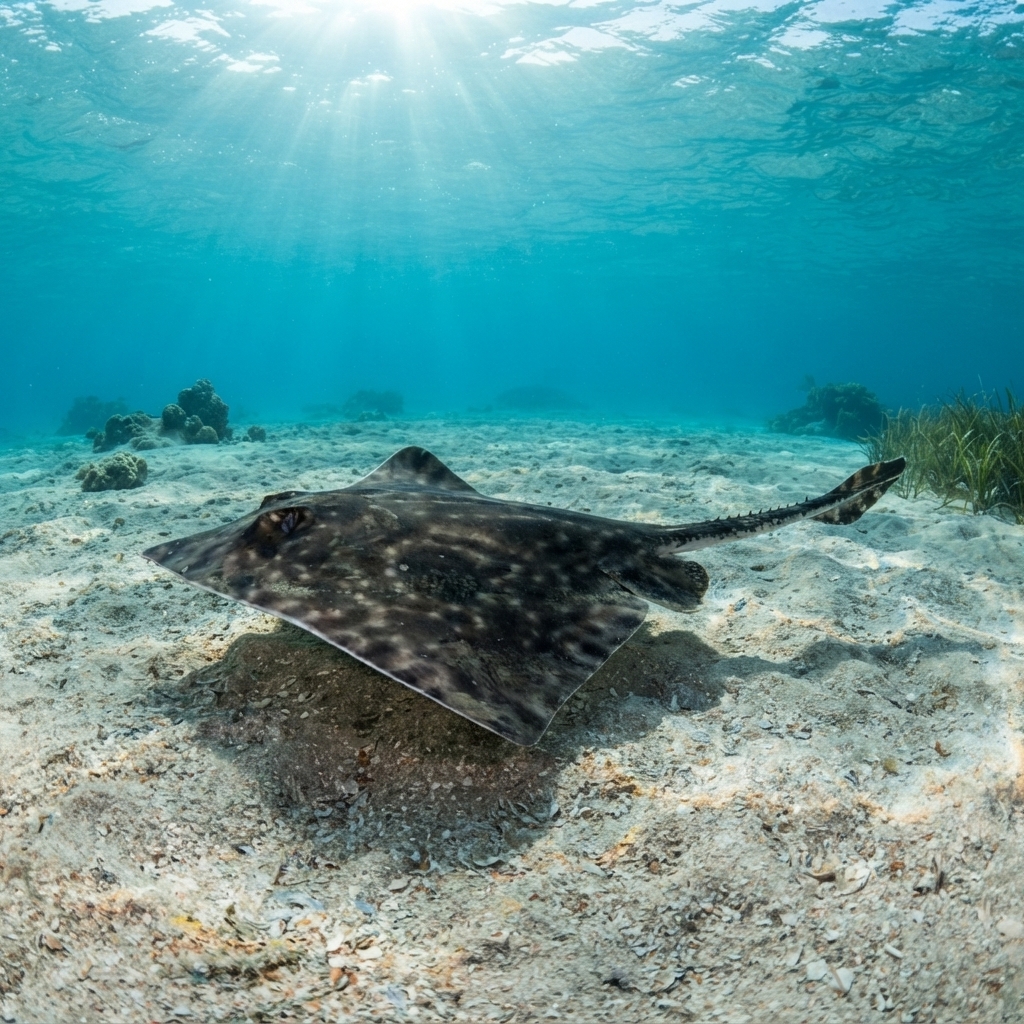
Look for a huge diamond-shaped body, often over a metre and a half across, lying flat on sand or mud. The skin is mottled grey-brown, and the giveaway is a pair of large dark eyespots (ocelli) near the base of the pectoral wings, ringed in lighter tissue. A long, thin, whip-like tail trails behind, distinctly slimmer than the body itself.
Expect to find it lying still on sand or mud, often half buried, rather than swimming in open water. It is logged as rare to uncommon at most sites, so a sighting usually comes from scanning flat, featureless bottom carefully rather than spotting movement. When approached it tends to stay put or glide off low over the substrate instead of bolting.
It lays large, rectangular egg cases on the seafloor, among the biggest produced by any skate species, so an empty case on a sandy bottom is sometimes the only sign one has been through the area.
No clear season shows up in the data, and with a temperature niche running from about 3.4 to 10.8C, conditions stay cold and stable enough for year-round sightings in the Pacific Northwest. Divers log it across the calendar rather than in a tight window.
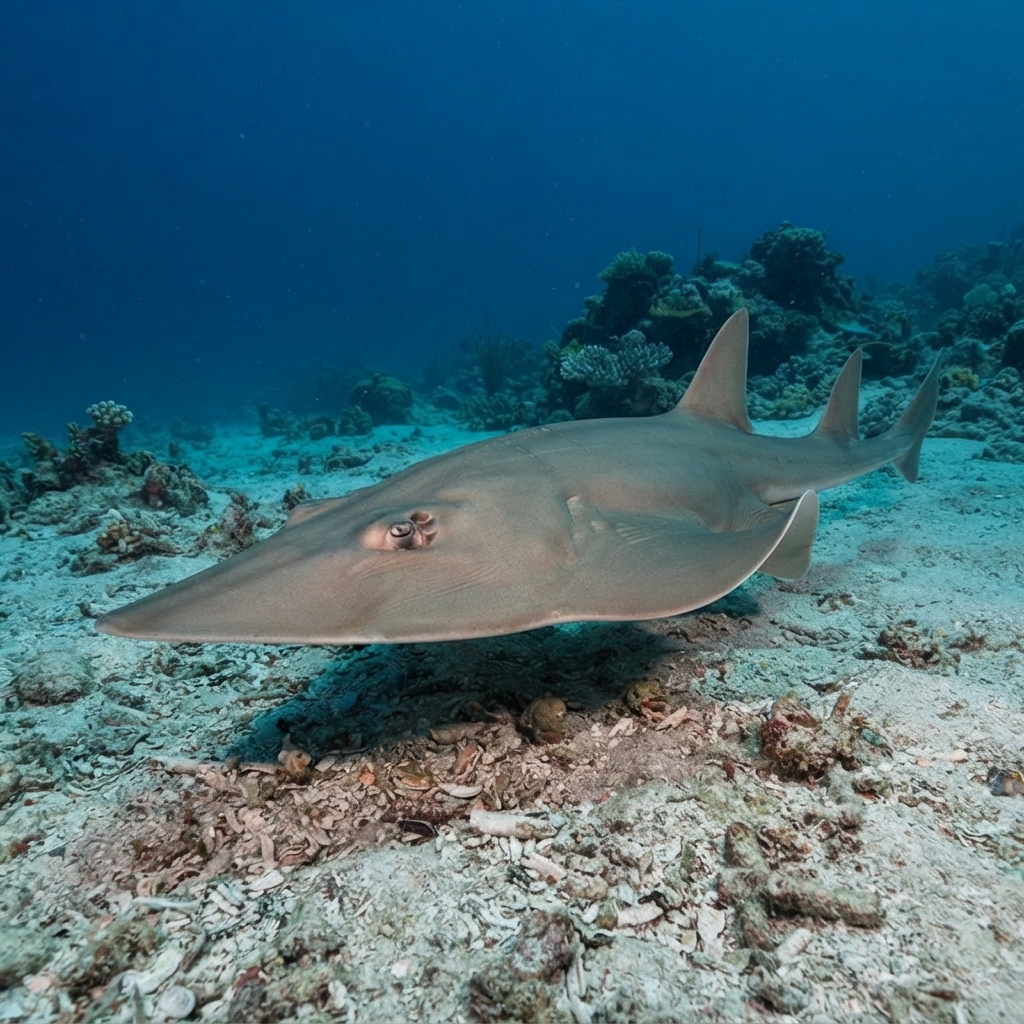
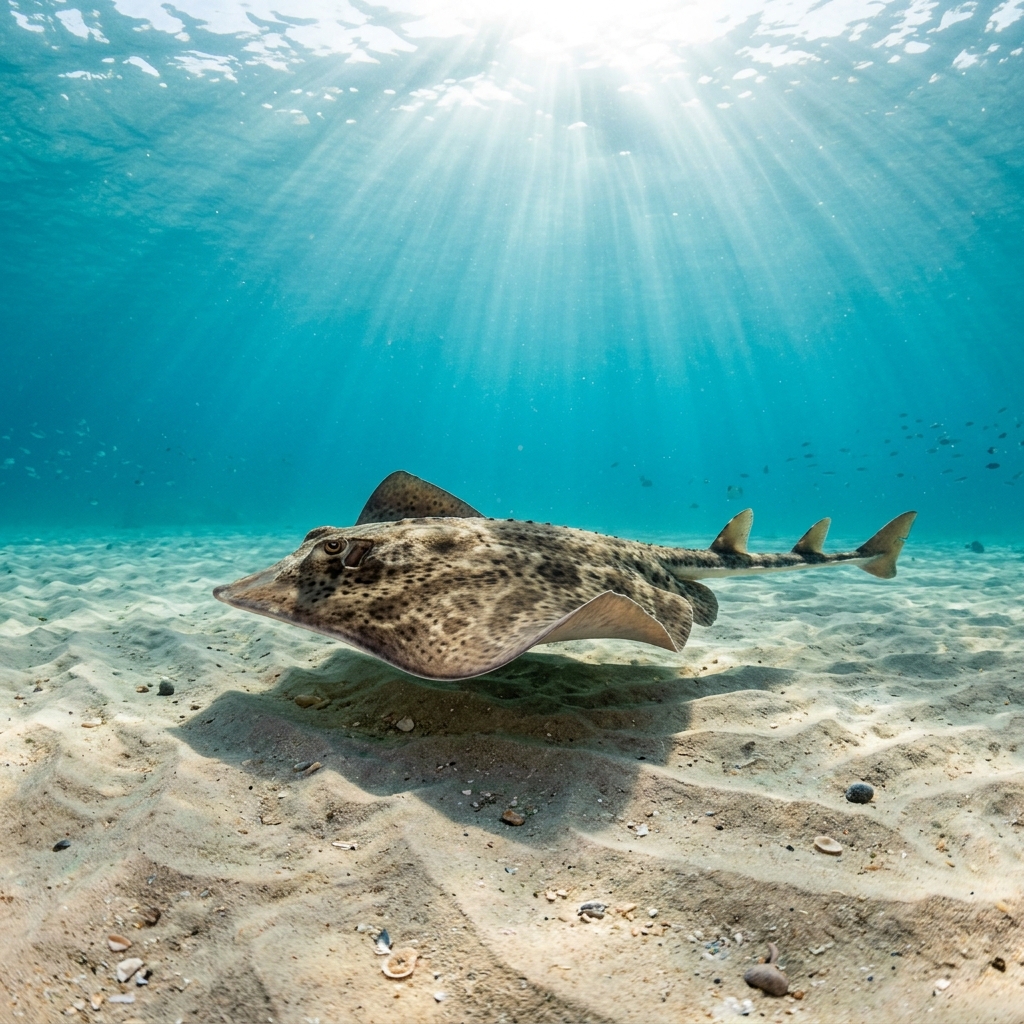
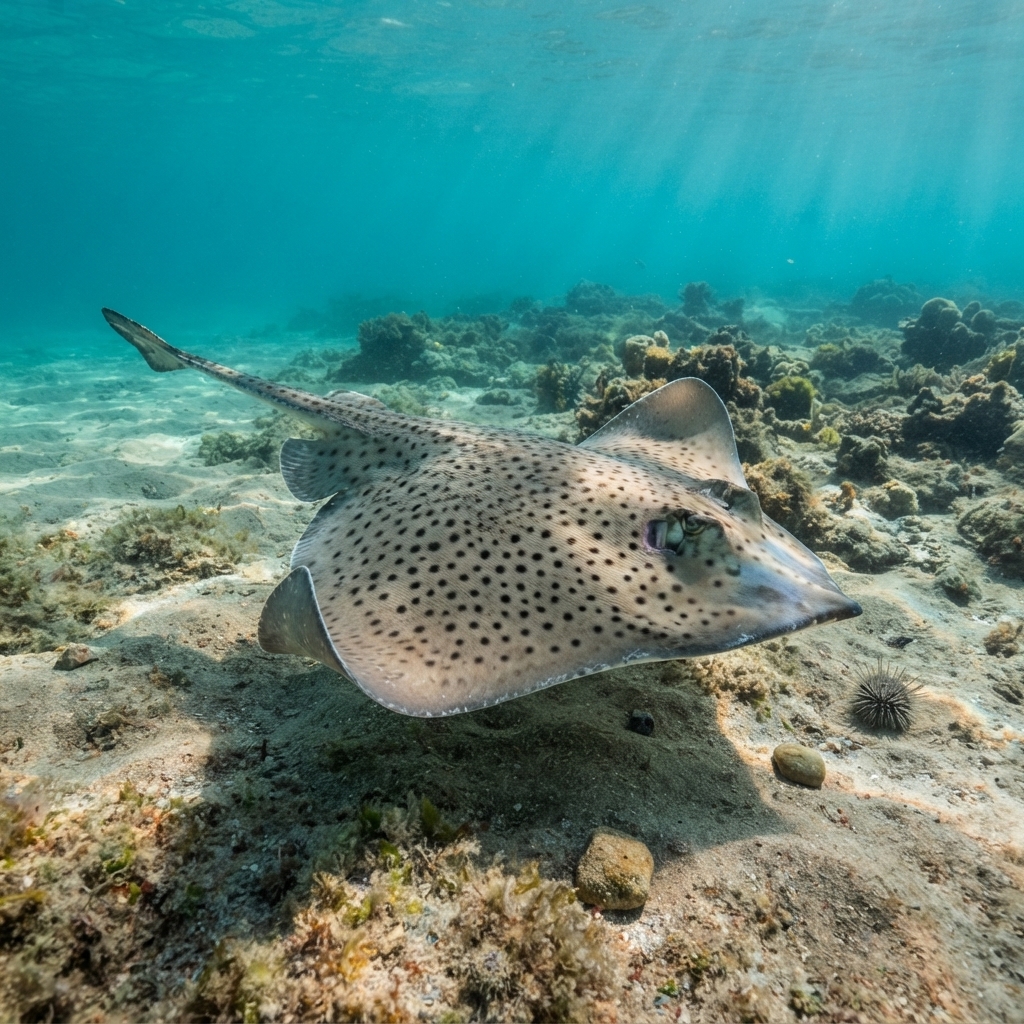
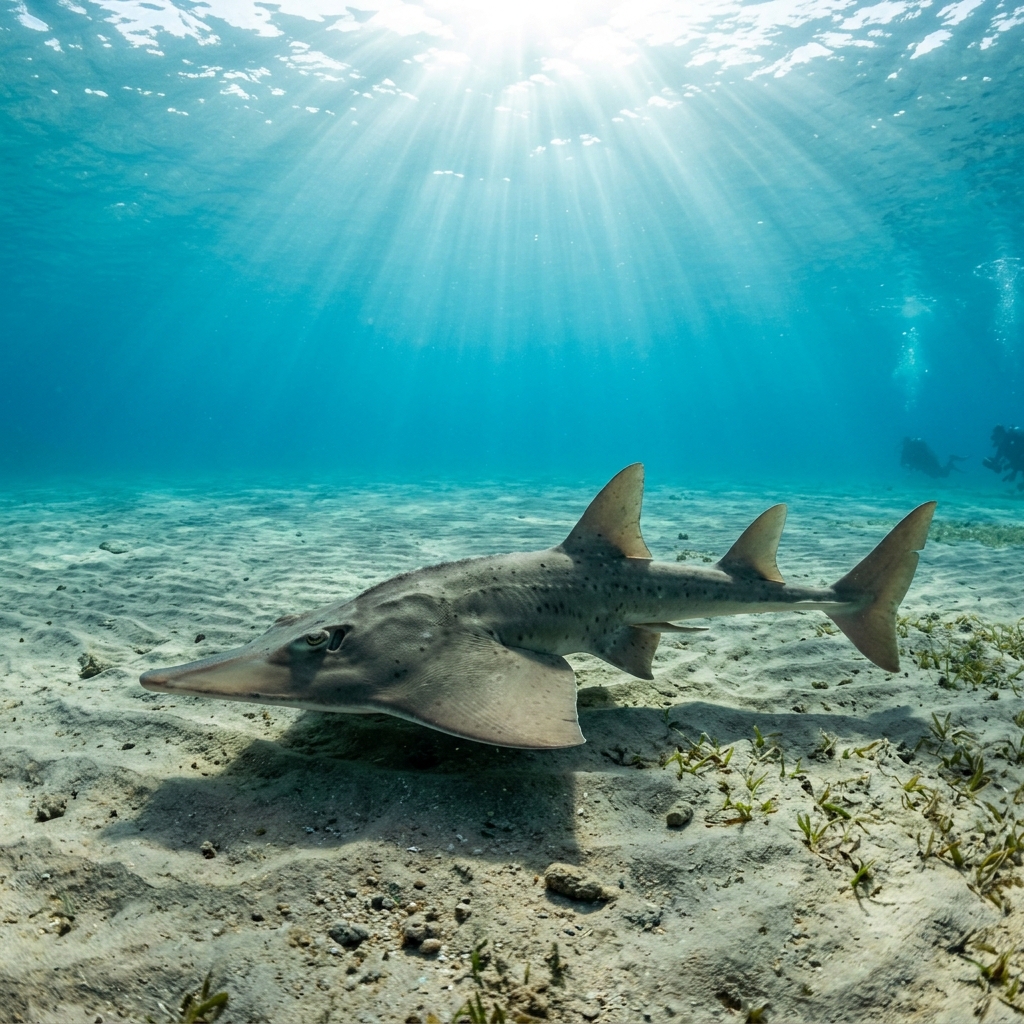
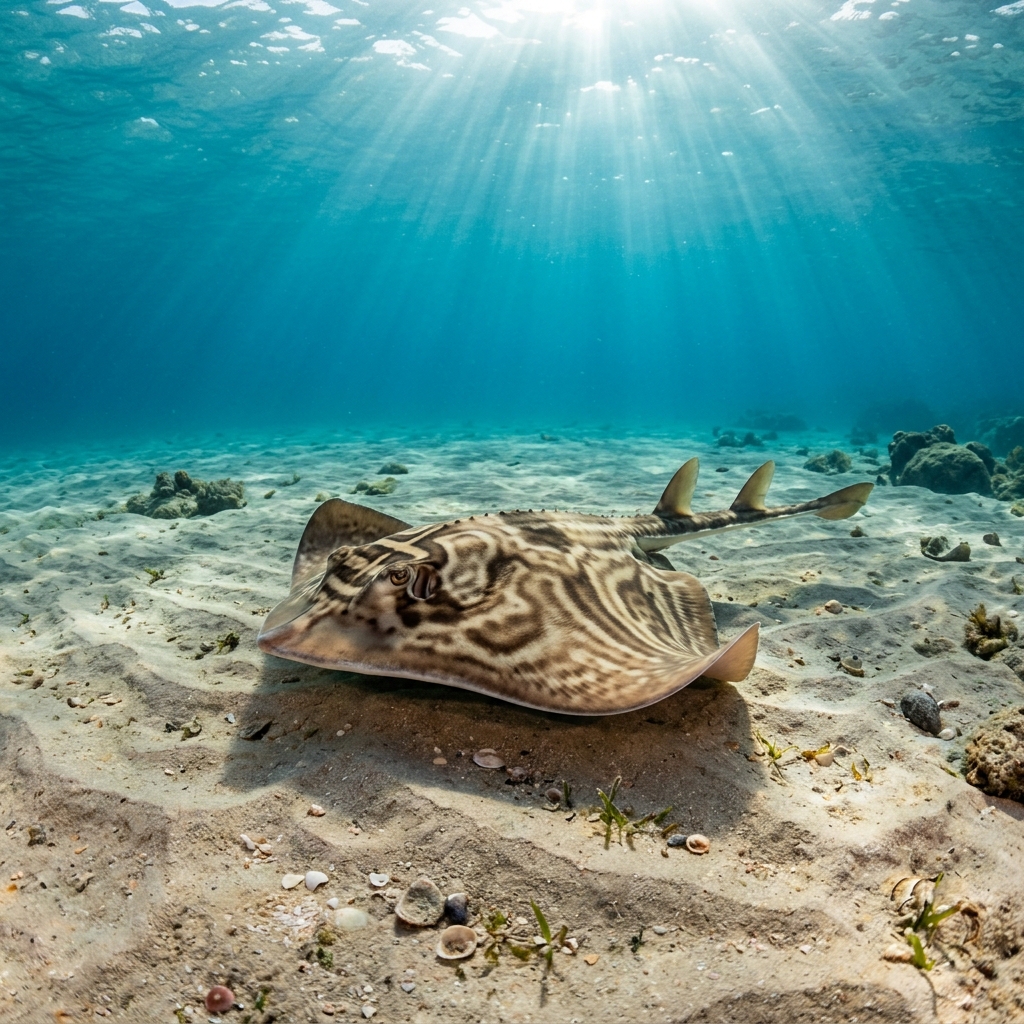
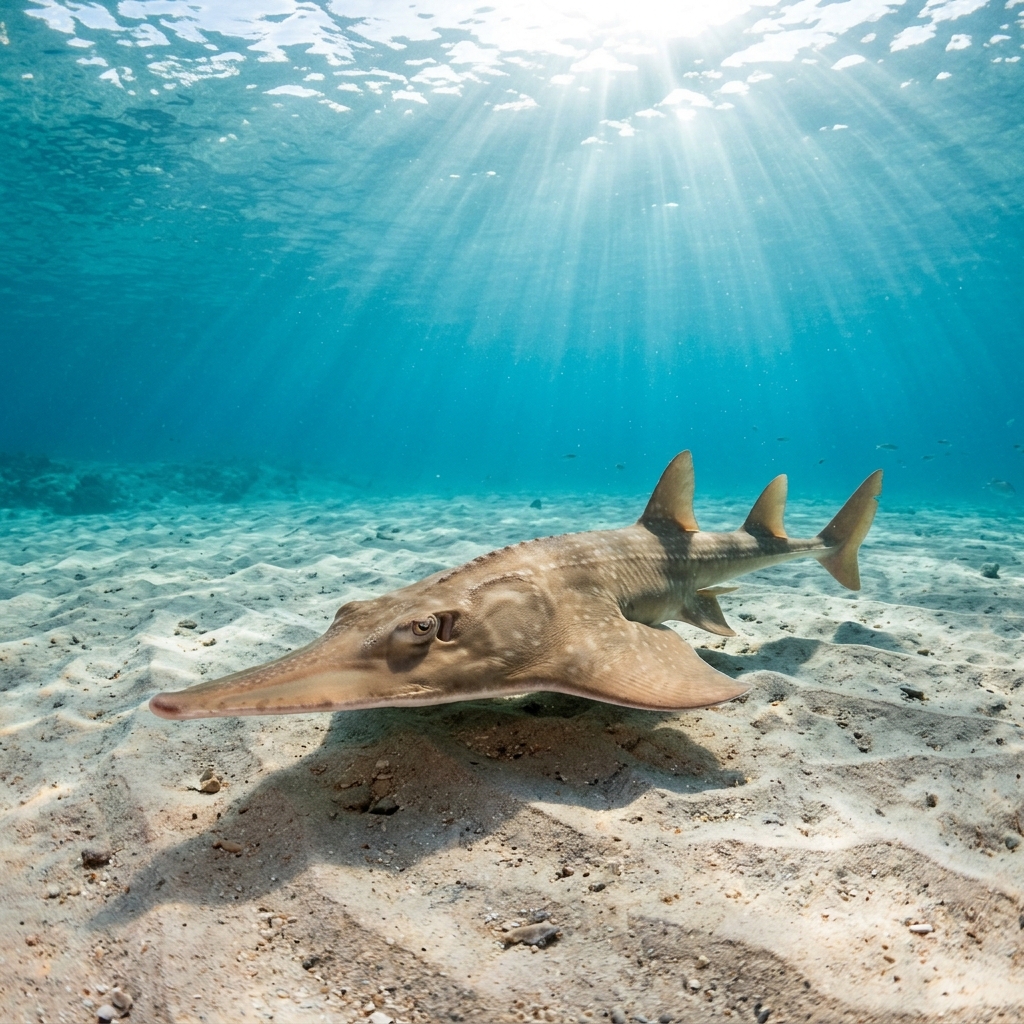
Reef neighbours a diver could mistake it for. Use the identification notes above to tell them apart.
Most reliably logged in the Pacific Northwest of the United States, particularly around Washington, with a smaller but consistent showing in British Columbia, Canada. Sightings across both regions are on cold, silty or sandy bottoms rather than reef structure.
Mapping where Big Skate is logged…
The strongest logs come from the Pacific Northwest in the United States, especially Washington, with additional sightings in British Columbia, Canada. Both regions have cold, sandy or muddy bottoms where it rests.
There is no strong seasonal pattern in the sighting data, and the cold water it prefers (3.4 to 10.8C) is present year-round in the Pacific Northwest, so sightings happen across all months.
Look for a large flat diamond-shaped body on sand or mud, mottled brown, with a pair of dark eyespots near the base of the pectoral wings and a thin whip-like tail. It rarely swims openly, usually lying still on the bottom.
They are one of the larger skate species divers encounter, typically reaching around 171cm across, with the body forming a broad diamond shape and a long slender tail extending well beyond it.
No, they pose no danger to divers. They are bottom-dwelling and tend to stay still or move away calmly rather than react defensively when approached.
They produce some of the largest egg cases of any skate, rectangular capsules laid directly on the seafloor. Finding an empty case on sand is often a diver's only clue one has passed through.
Site and sighting data is aggregated from diver logs, iNaturalist and GBIF. For taxonomy and conservation status:
Halavi Guitarfish
412 sites