Raja montagui
Cold-water diving encounter: spotted rays turn up rarely but reliably around Northern Ireland's chilly 7-16°C waters, year-round.
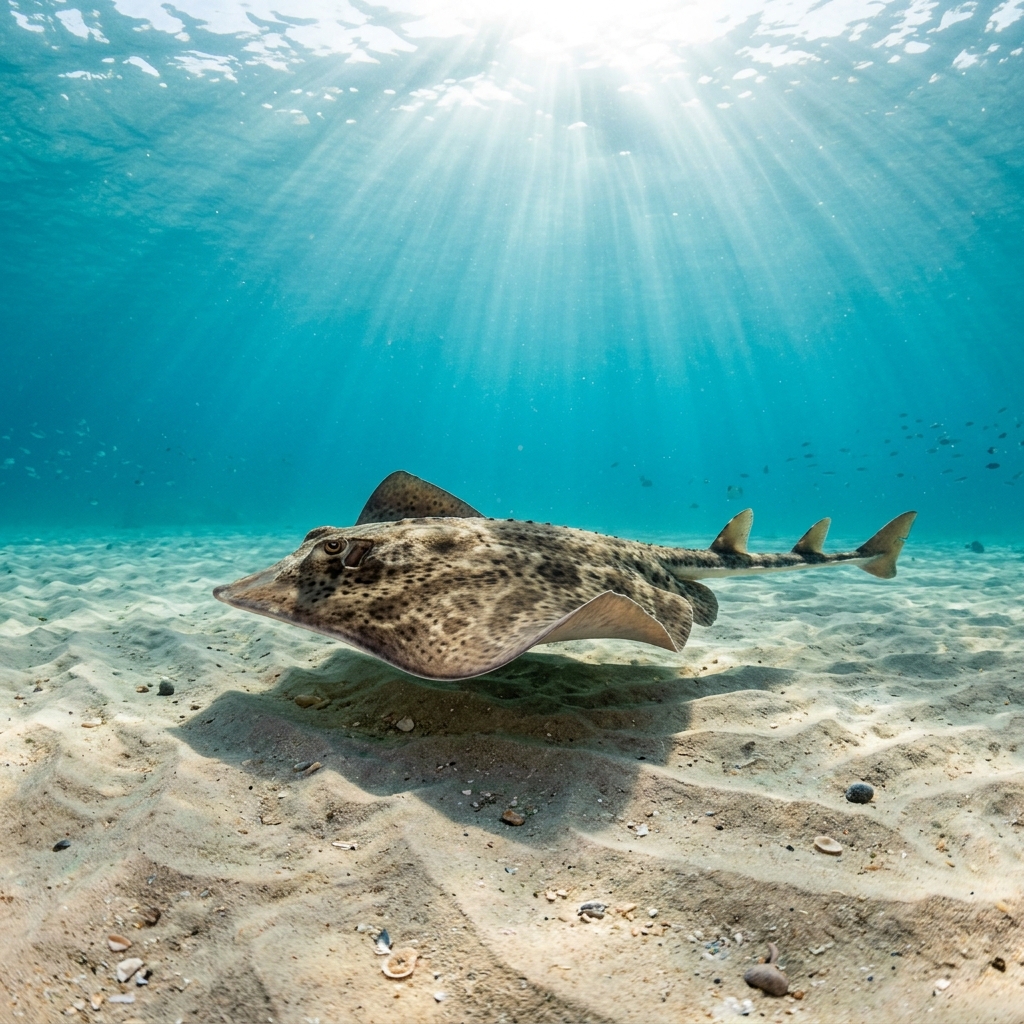
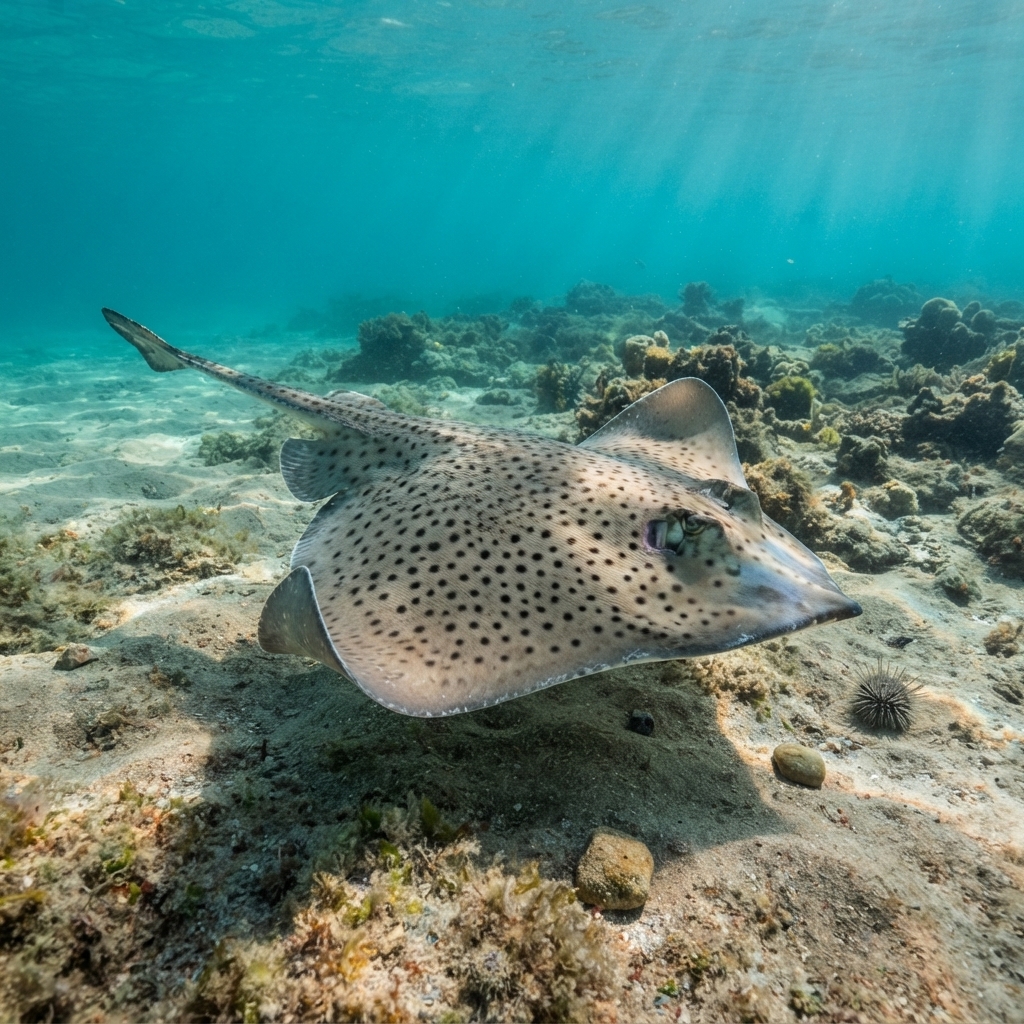
Look for a diamond-shaped body around 71 cm across, sandy to greyish-brown on top with a scatter of small, distinct dark spots (unlike the blotchy or vermiculated patterns on some related skates). The underside is pale and the tail carries small thorns along its length. It usually lies flat and still on sand or gravel, only the eyes and spiracles breaking the surface, so the spot pattern is often your best clue at a distance.
Divers most often find spotted rays lying motionless on open sand or mixed sediment, sometimes half-buried with just the eyes showing. They tend to sit tight rather than bolt when approached, so a slow, low approach along the bottom gives the best chance of a close look before they eventually flick off with a few beats of the pectoral fins. Expect single individuals rather than groups, and check sandy patches near reef edges or gravel flats rather than open rock.
Spotted rays lay tough, rectangular egg cases on the seabed, often called mermaid's purses, which sometimes wash up on beaches near the sites where the adults are seen diving.
Sightings don't show a clear seasonal pattern, so treat this as a year-round species wherever it's found. Its temperature niche of 7 to 16°C matches the cold, temperate water typical of UK, Irish and Portuguese dive sites in most months.
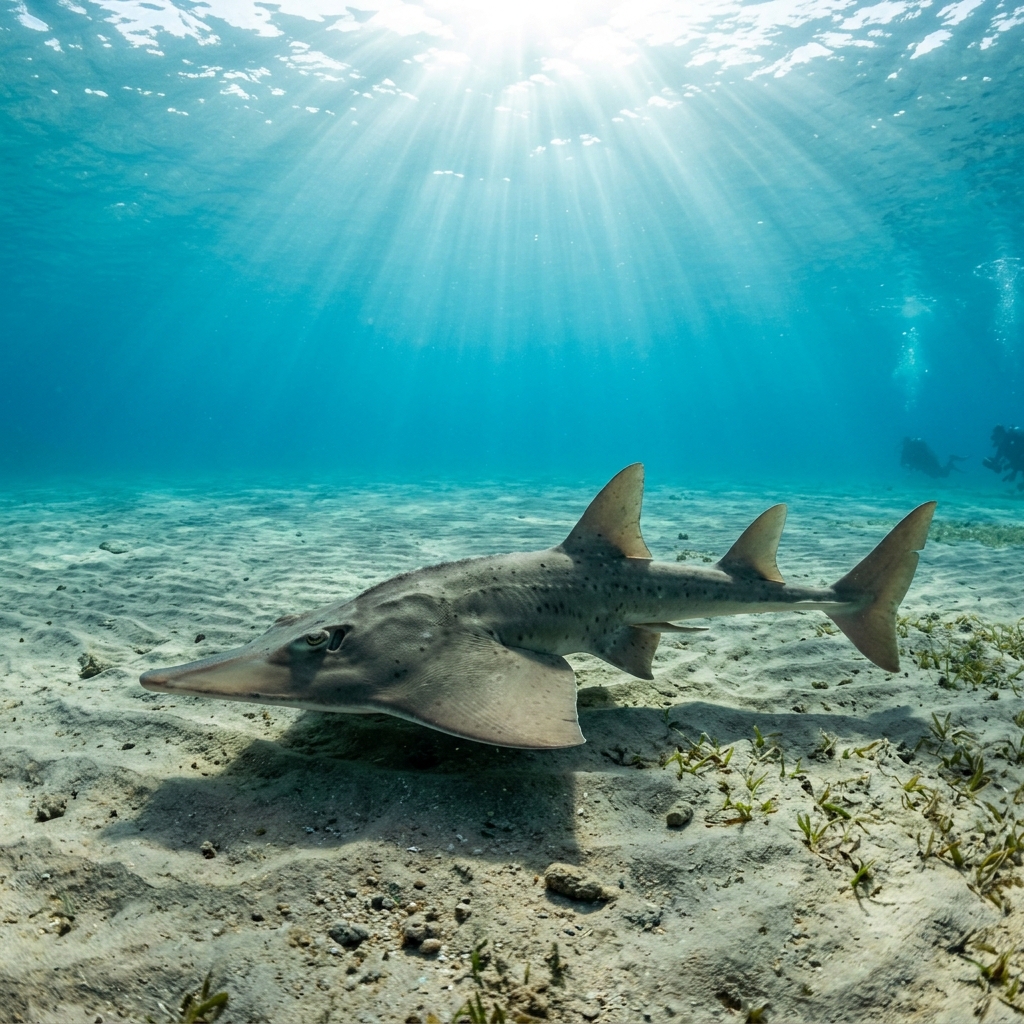
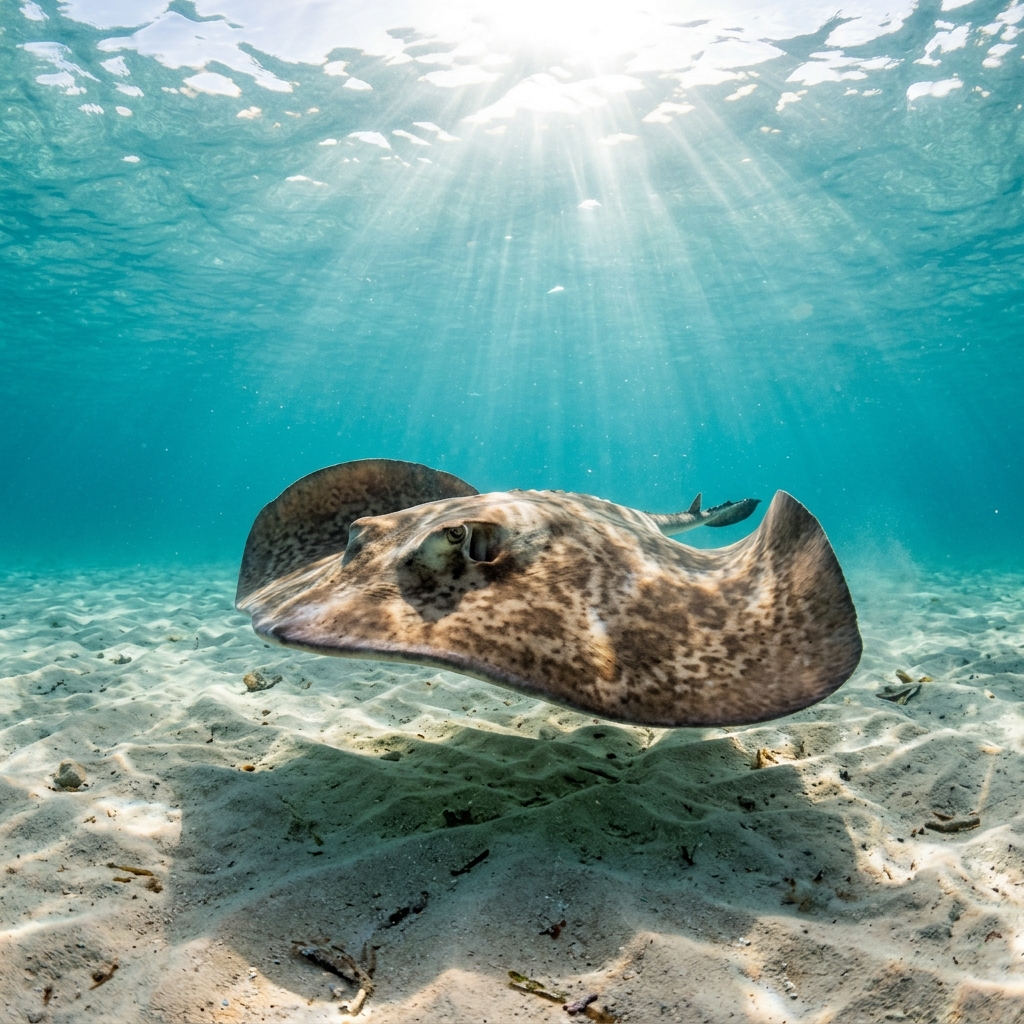
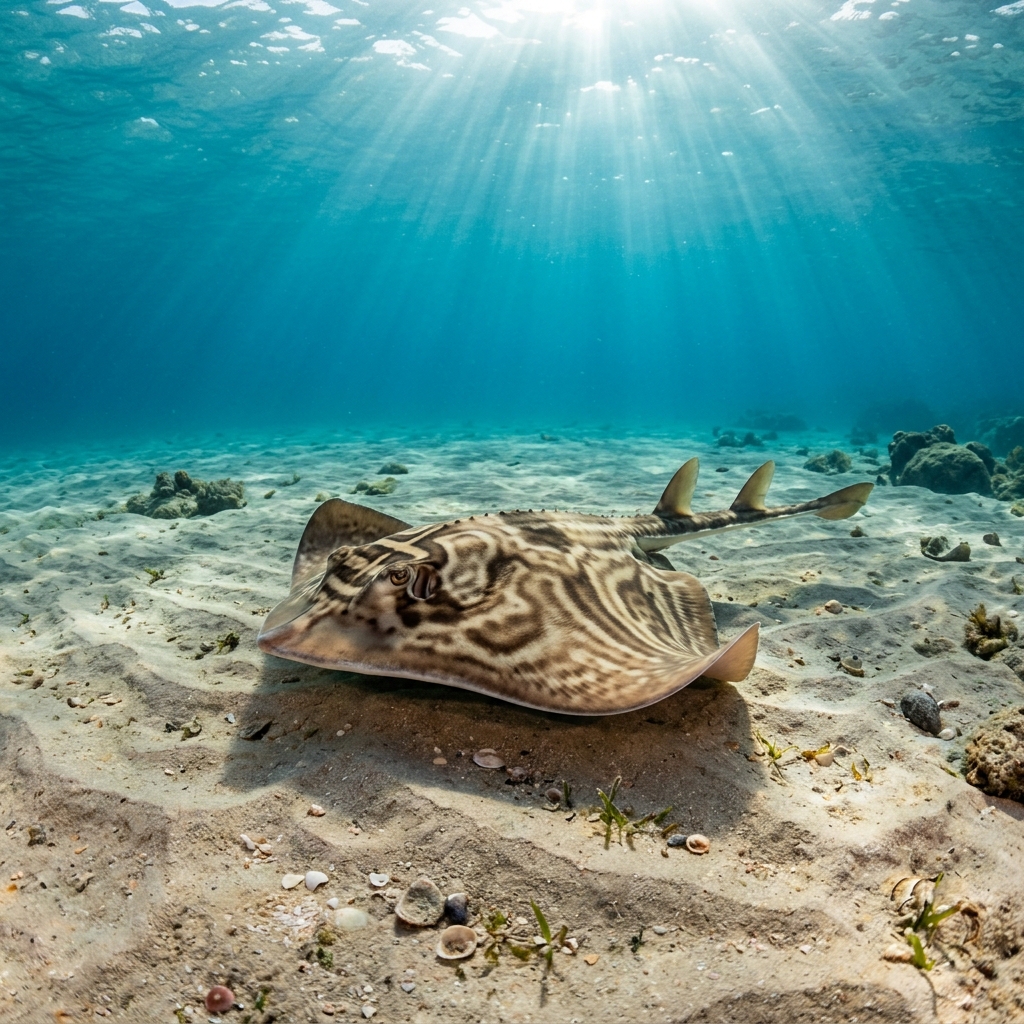
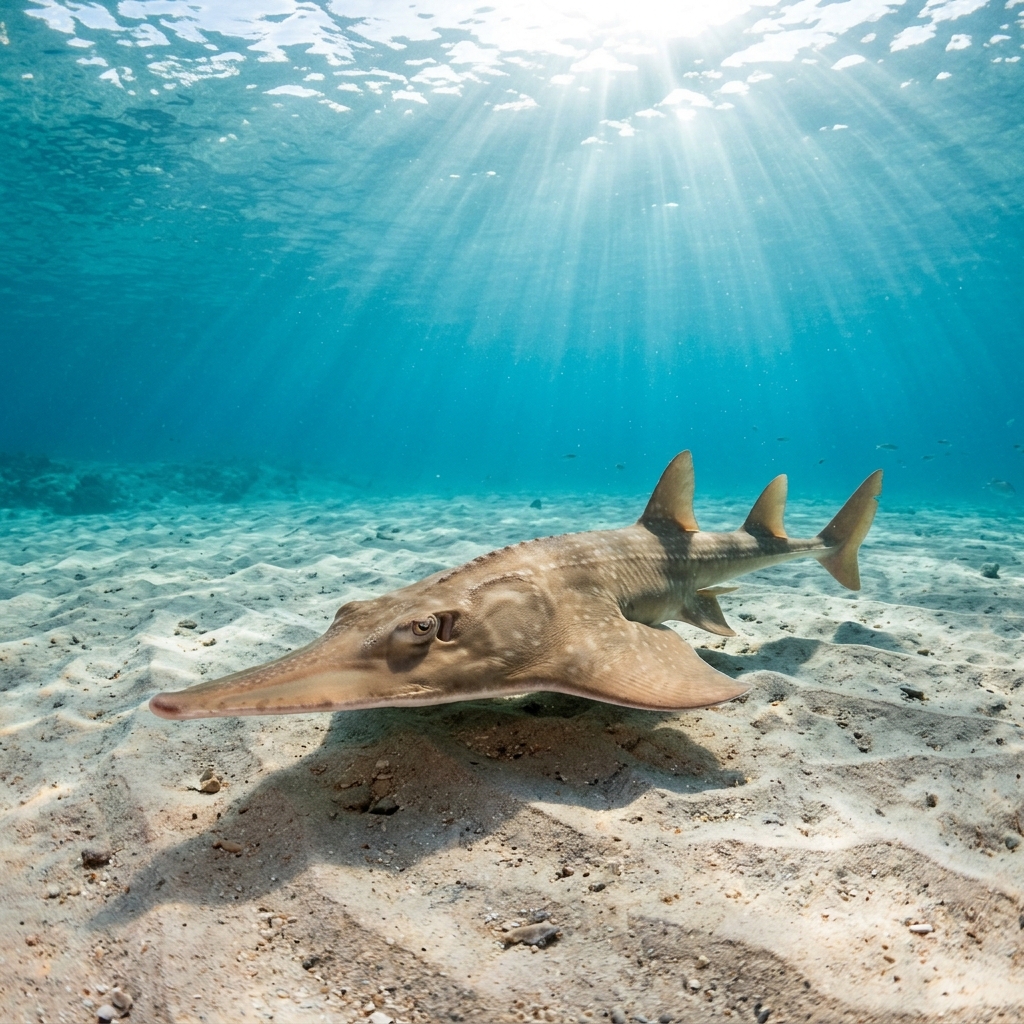
Reef neighbours a diver could mistake it for. Use the identification notes above to tell them apart.
Most consistently logged around Northern Ireland, with further sightings across England, so the UK is by far the strongest bet for this species. Smaller numbers turn up on the Lisbon Coast in Portugal and in Donegal, Ireland, giving divers a second option on both sides of the Irish Sea and down into Iberian waters.
Mapping where Spotted Ray is logged…
Northern Ireland is the strongest area for spotted ray sightings, with further records around England, Portugal's Lisbon Coast, and Donegal in Ireland. It's logged as rare to uncommon at most sites, so treat any sighting as a bonus rather than a guarantee.
There's no strong seasonal pattern in the sighting data, so they're considered a year-round species at the cold-water sites where they're found. Water temperatures of 7 to 16°C suit them across most months in the UK, Ireland and Portugal.
Look for a diamond-shaped body about 71 cm across, sandy-brown with small distinct dark spots scattered over the back. It typically lies still on sand or gravel, with only the eyes and spiracles visible above the seabed.
They typically reach around 71 cm across, making them a modest-sized ray easily mistaken for a smaller skate at a glance.
No, spotted rays are not considered dangerous to divers. They're generally still and unbothered by a careful approach, so there's no real risk beyond the usual courtesy of not crowding or touching them.
Site and sighting data is aggregated from diver logs, iNaturalist and GBIF. For taxonomy and conservation status:
Halavi Guitarfish
412 sites