Parupeneus barberinoides
Sighted at reef sites across the Visayas and Western Australia, this two-toned goatfish shows up on tropical reefs year-round in 25-29C water.
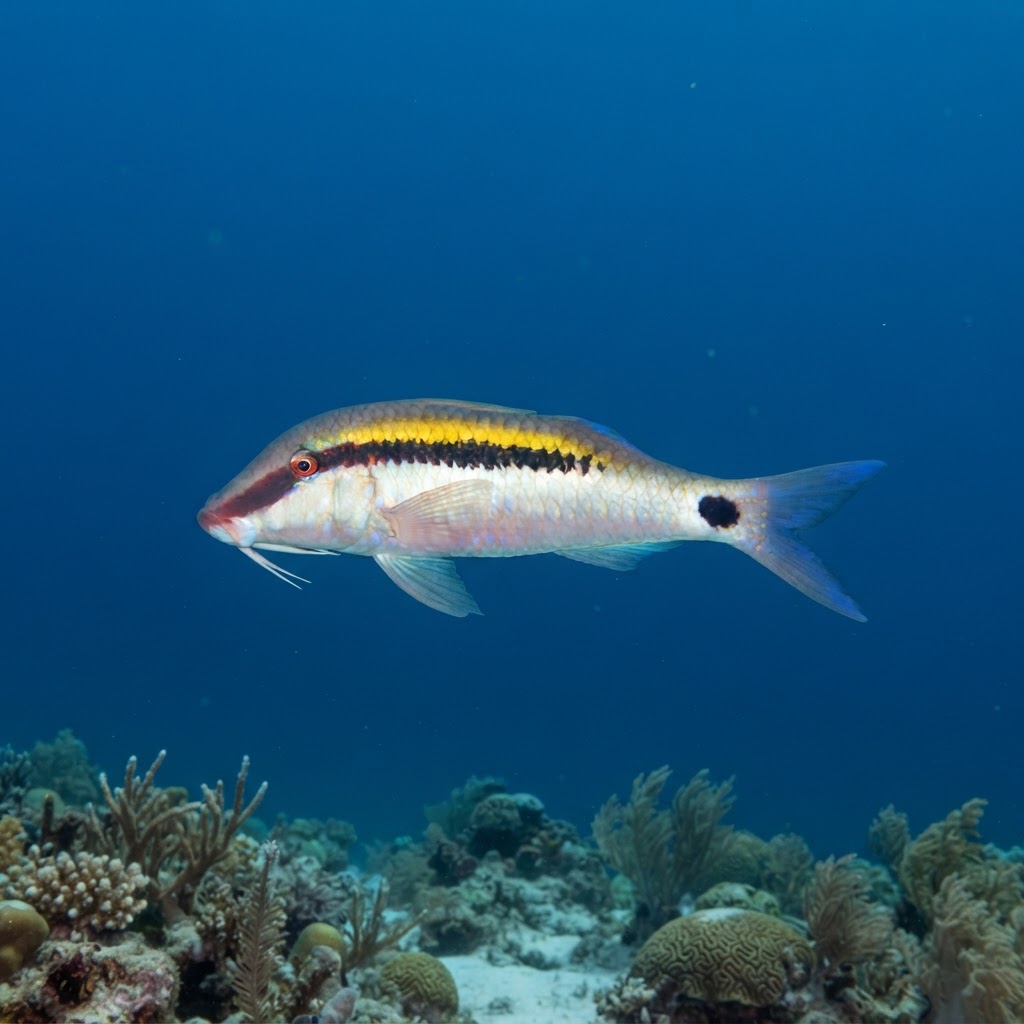
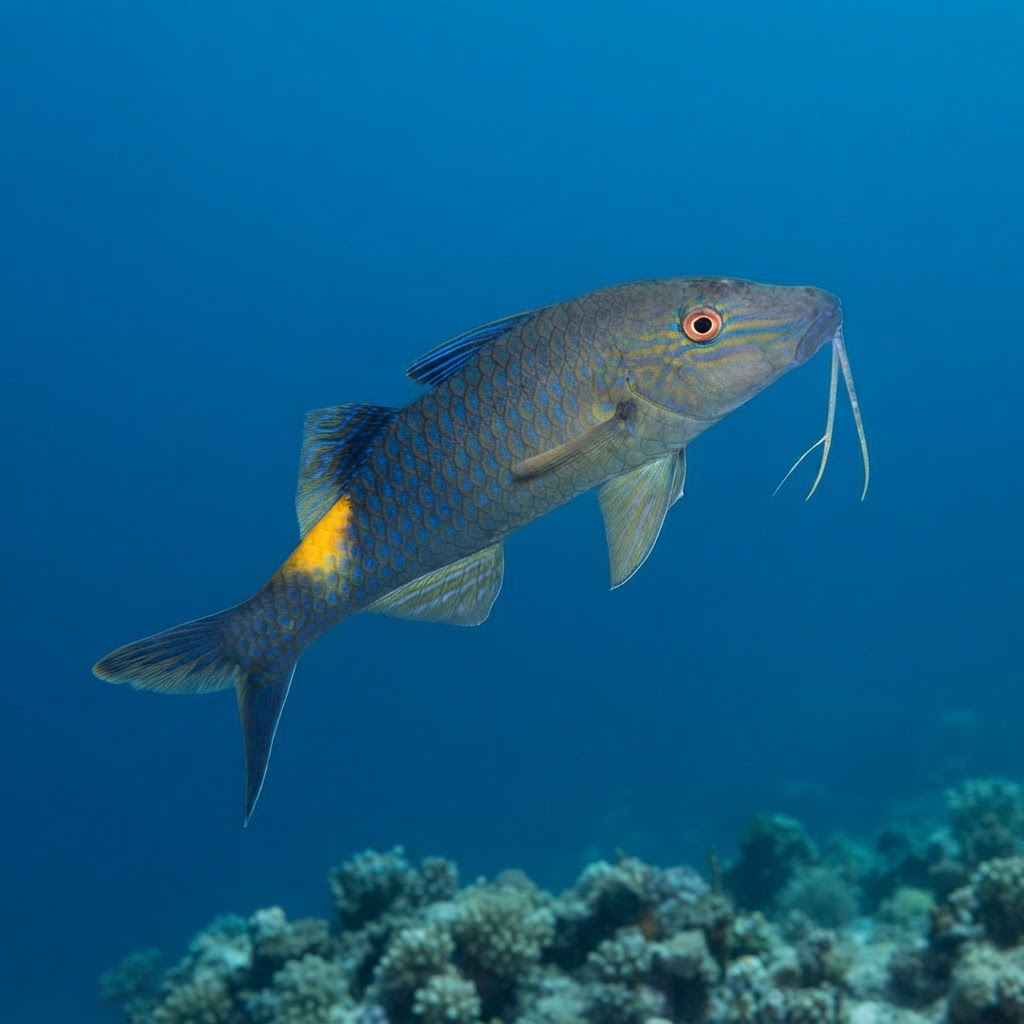
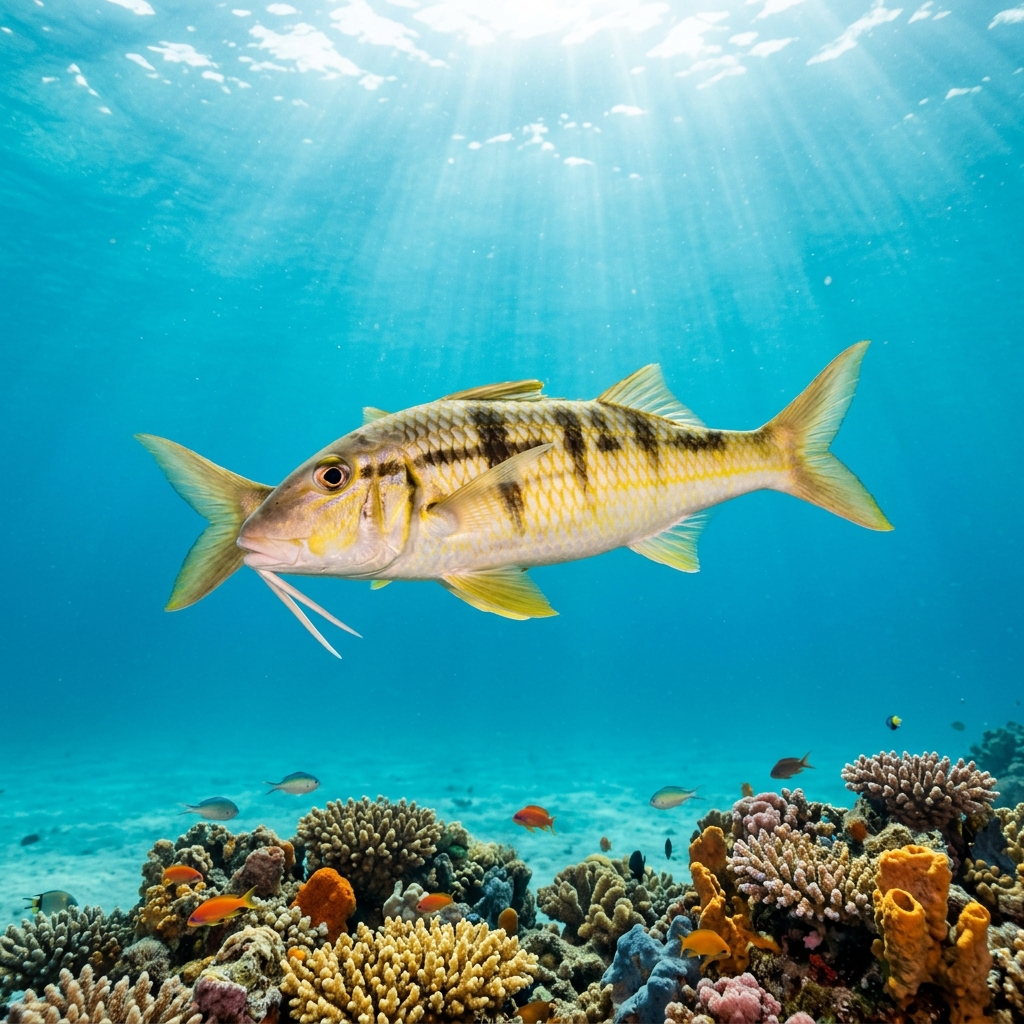
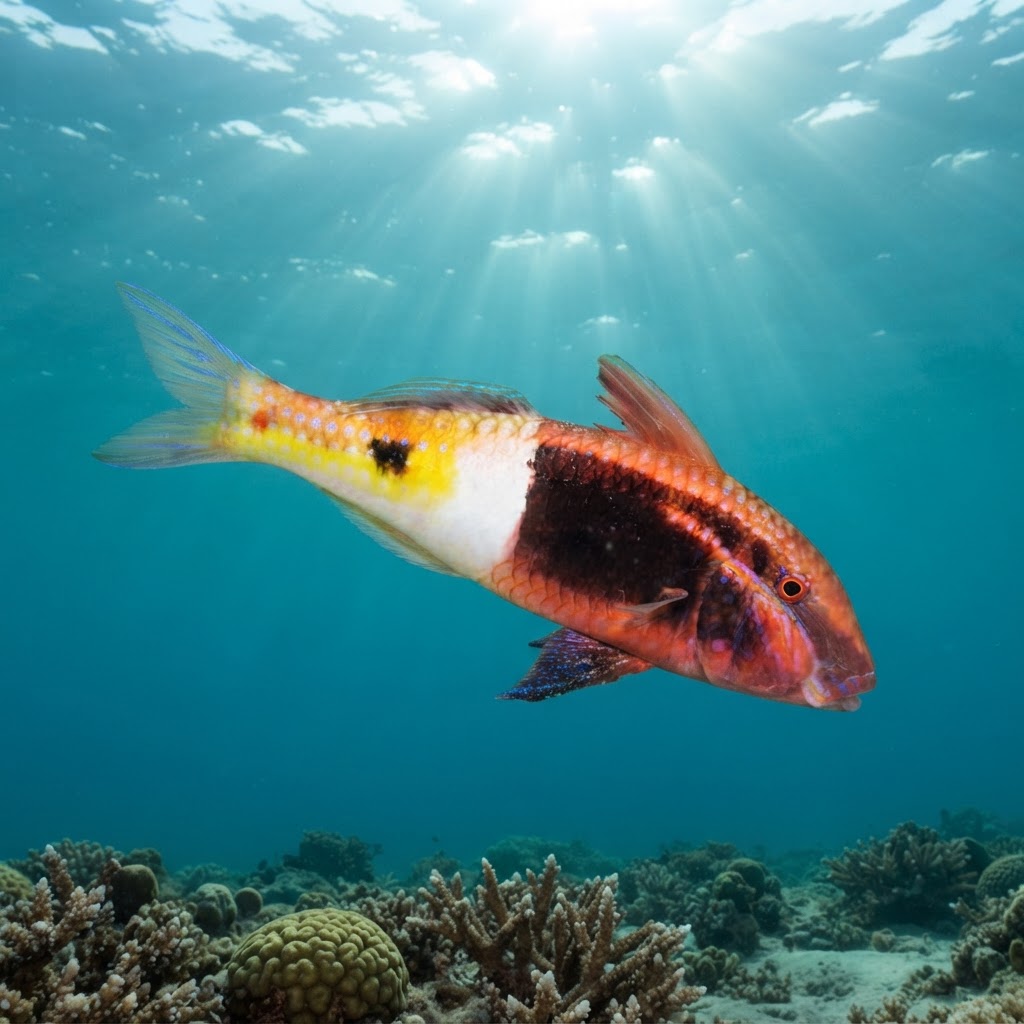
Grows to around 21cm and shows a sharp two-tone split: a dark brown to blackish front half giving way abruptly to a pale yellow or cream rear half and tail. A pair of long chin barbels (the goatfish trademark, used to probe sand for food) gives away the family even before the colour pattern registers. It swims low over the reef, often solo or in a loose pair, rather than schooling.
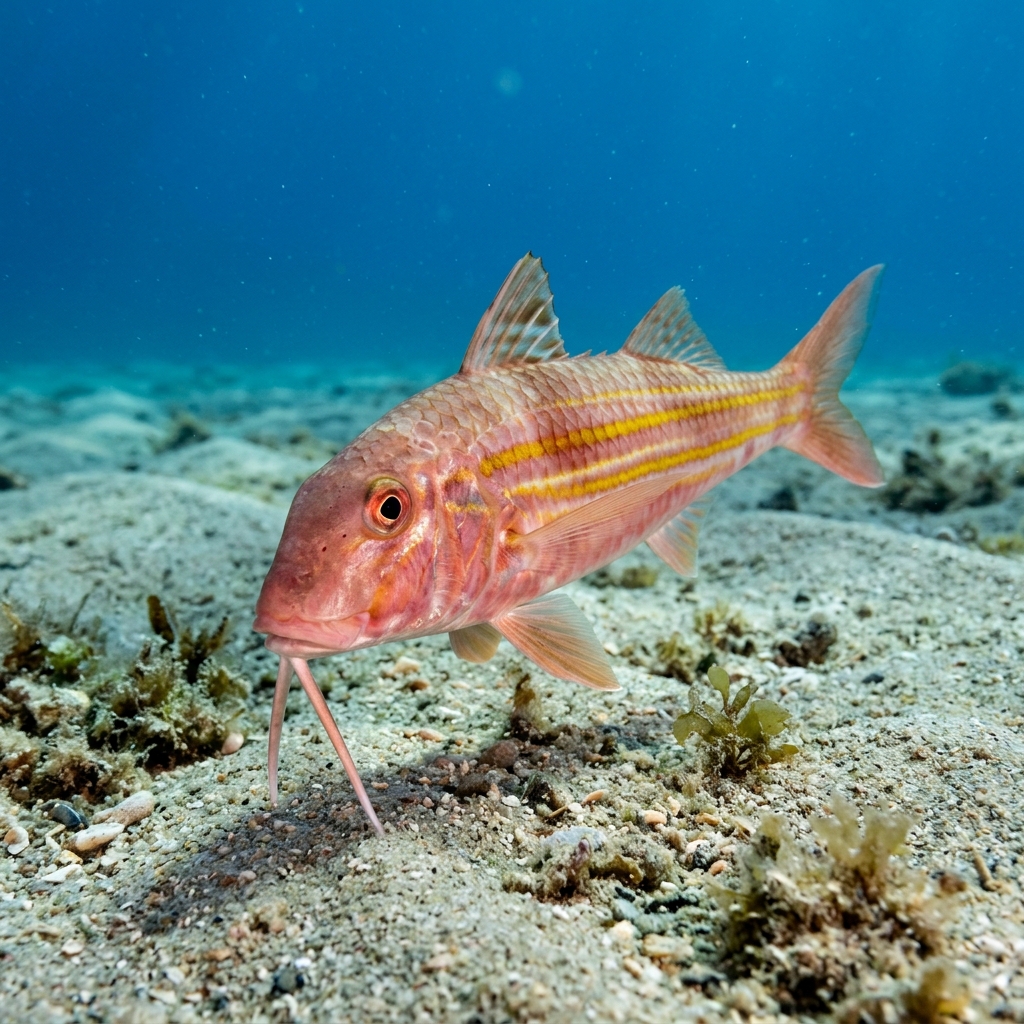
Look for it hovering just above sand patches, rubble, or the base of coral heads, sweeping its barbels through the substrate to root out worms and small crustaceans. It's generally unbothered by divers, holding its position or drifting off a short distance rather than bolting, which makes for easy close observation if you keep your movements slow. Most sightings are during the day, usually as single fish rather than in groups.
Those chin barbels are packed with chemical and touch sensors, letting it detect buried prey in sand before it even sees it, then it flicks the barbels aside and strikes.
No clear seasonal pattern shows up in sighting data, and its comfort range of roughly 25 to 29C matches tropical reef water all year, so any month works for a dive trip built around finding it.
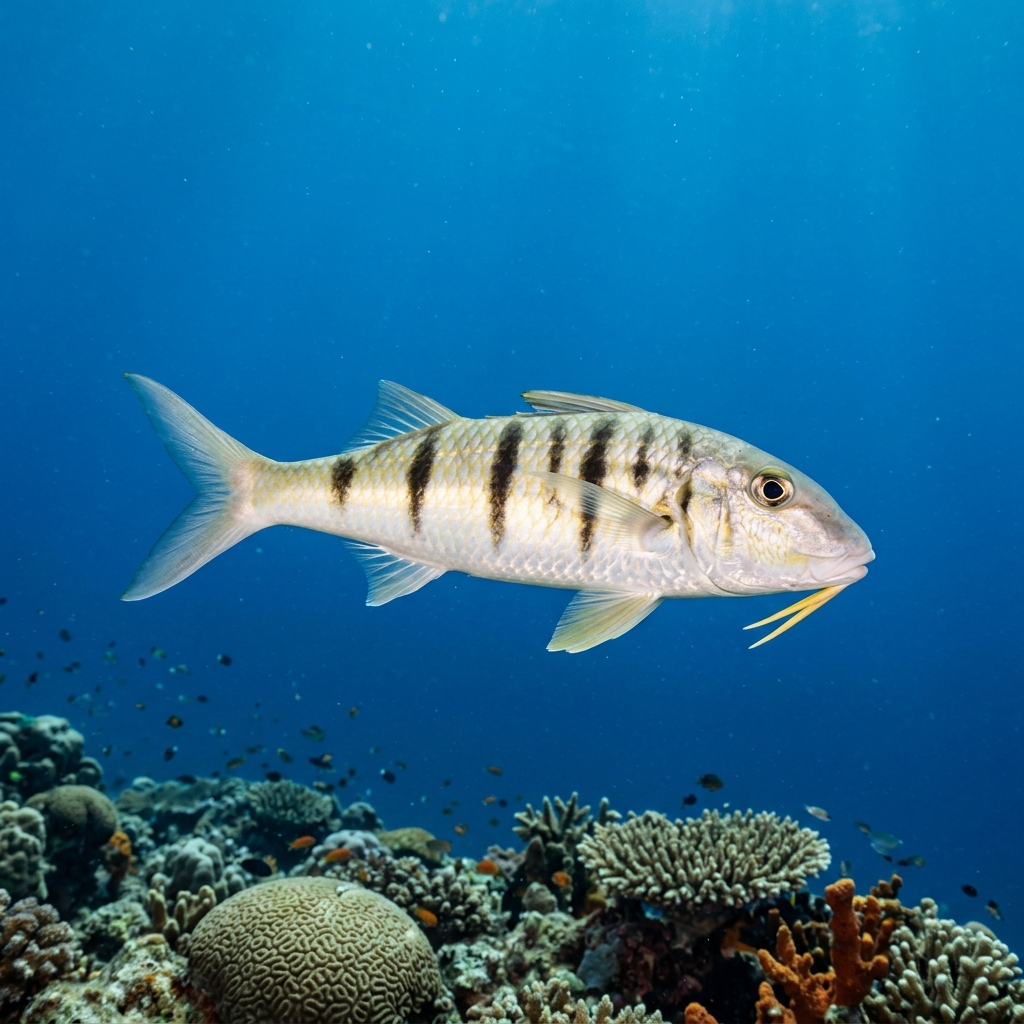
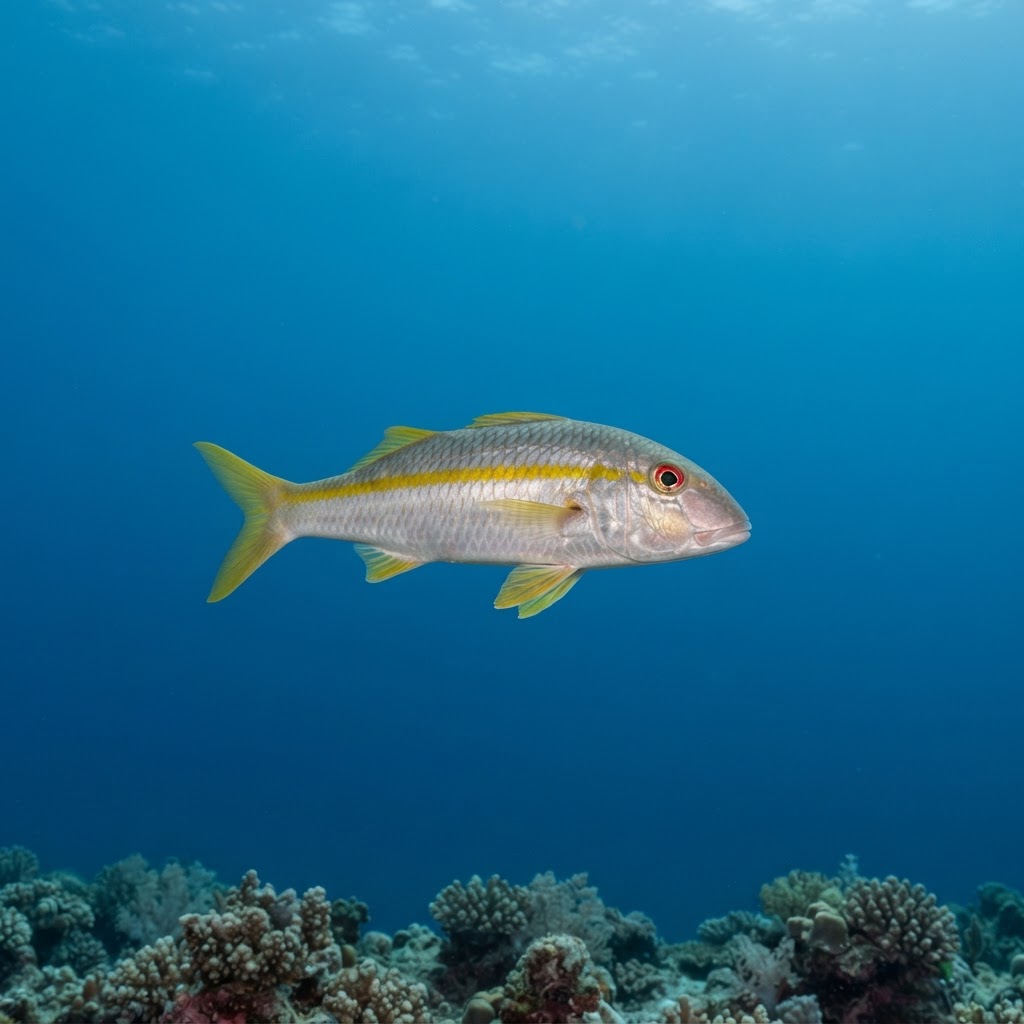
Reef neighbours a diver could mistake it for. Use the identification notes above to tell them apart.
Most consistently logged in the Visayas region of the Philippines, with a solid secondary population off Western Australia. Occasional sightings also come from Kenting in Taiwan and Nha Trang in Vietnam, so it turns up across a fair stretch of the Indo-Pacific if you're looking on the right reef structure.
Mapping where Bicolor Goatfish is logged…
The Visayas region of the Philippines is the most reliable spot, with a good secondary population around Western Australia. Smaller numbers of sightings come from Kenting, Taiwan and Nha Trang, Vietnam.
There's no strong season in the sighting data. It sits comfortably in 25 to 29C water, which describes tropical reefs year-round, so it's a fair bet on any month of dive trip.
Look for a fish around 21cm with an abrupt colour break: dark brown to black front half, pale yellow back half and tail, plus a pair of long barbels under the chin used to probe the sand.
They typically reach around 21cm in length, a modest reef fish size that keeps them easy to overlook against rubble and sand patches.
It hunts using its chin barbels rather than its eyes, sweeping them across sand and rubble to sense buried prey by touch and chemical cues before striking.
Site and sighting data is aggregated from diver logs, iNaturalist and GBIF. For taxonomy and conservation status:
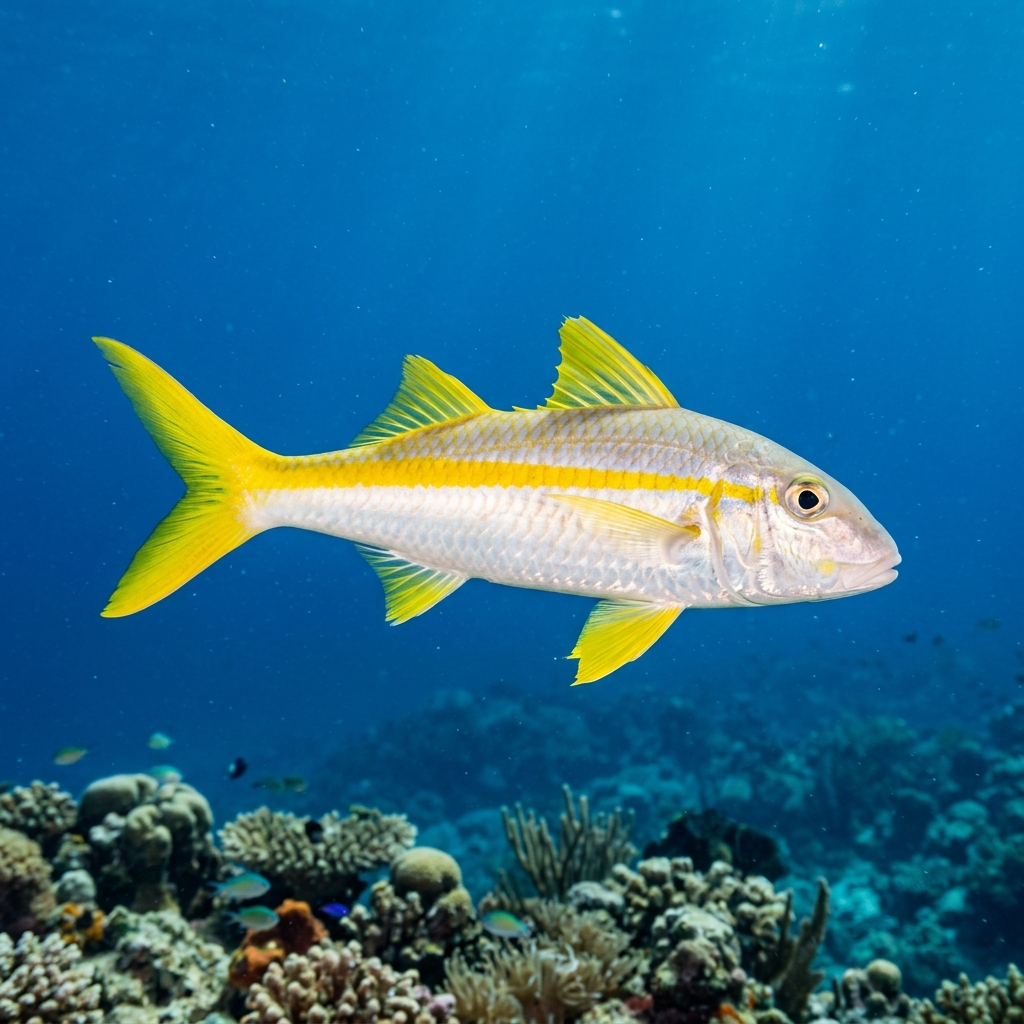
Yellowfin Goatfish
2,241 sites