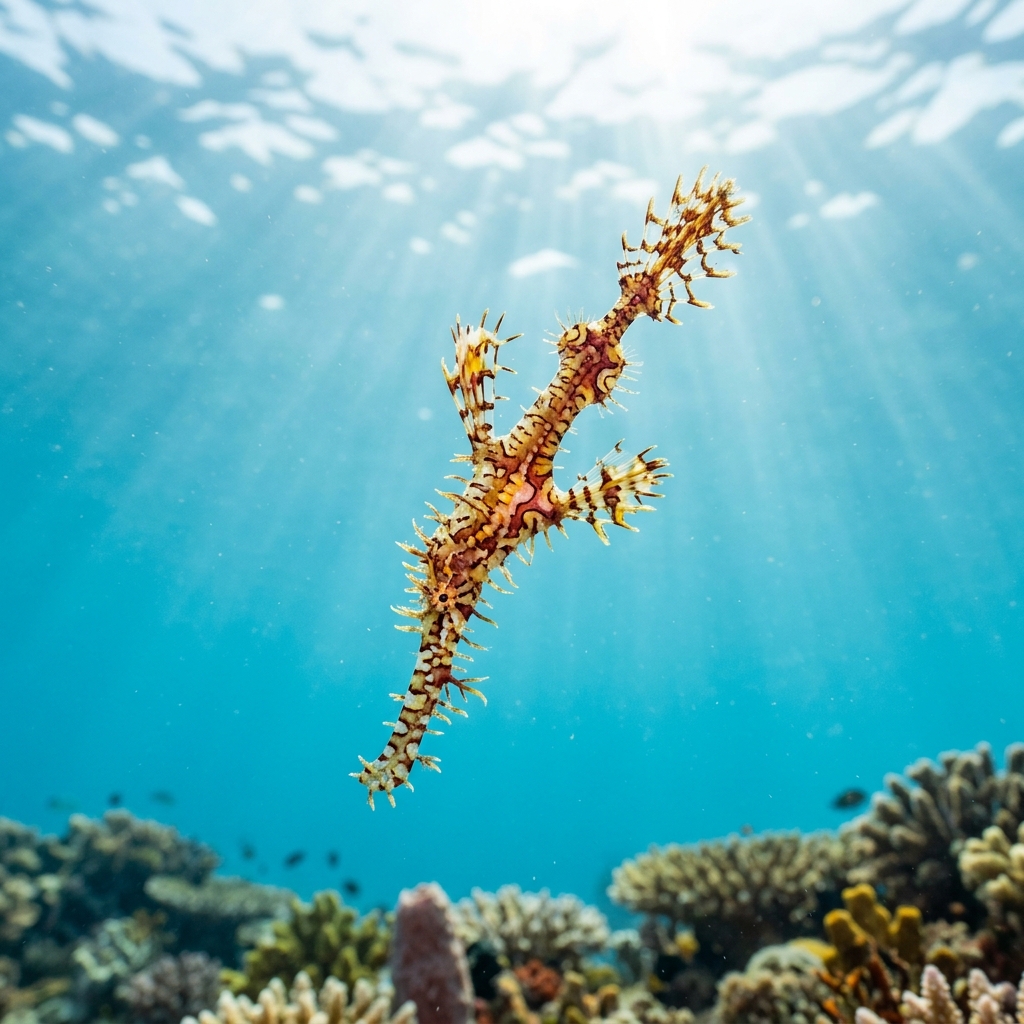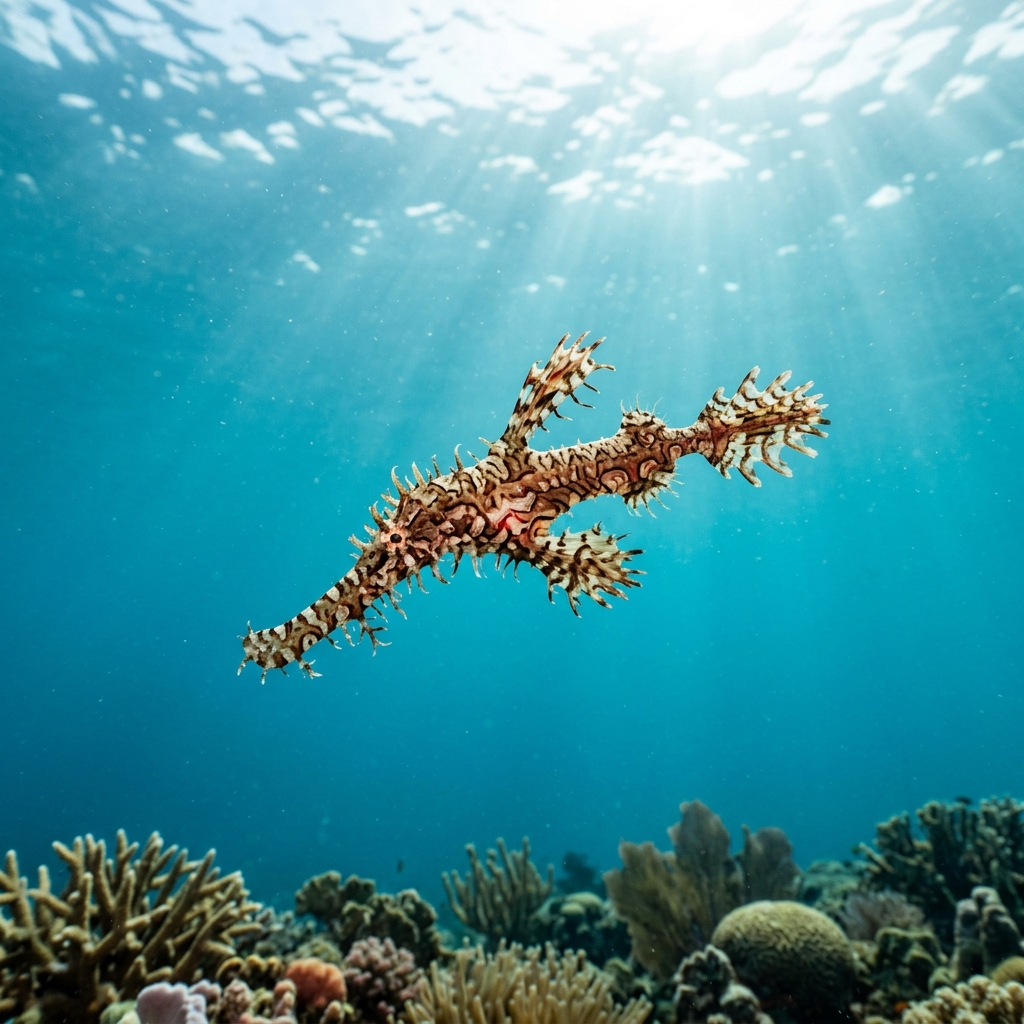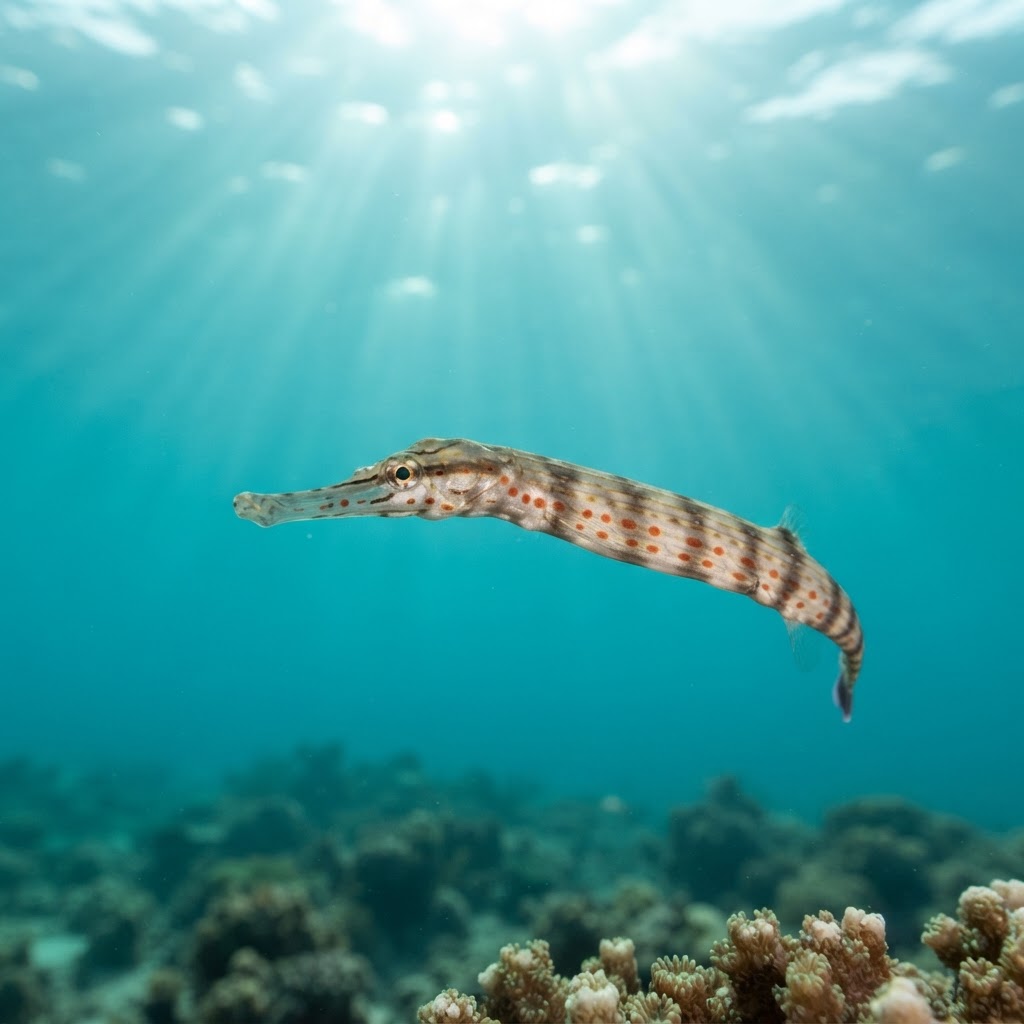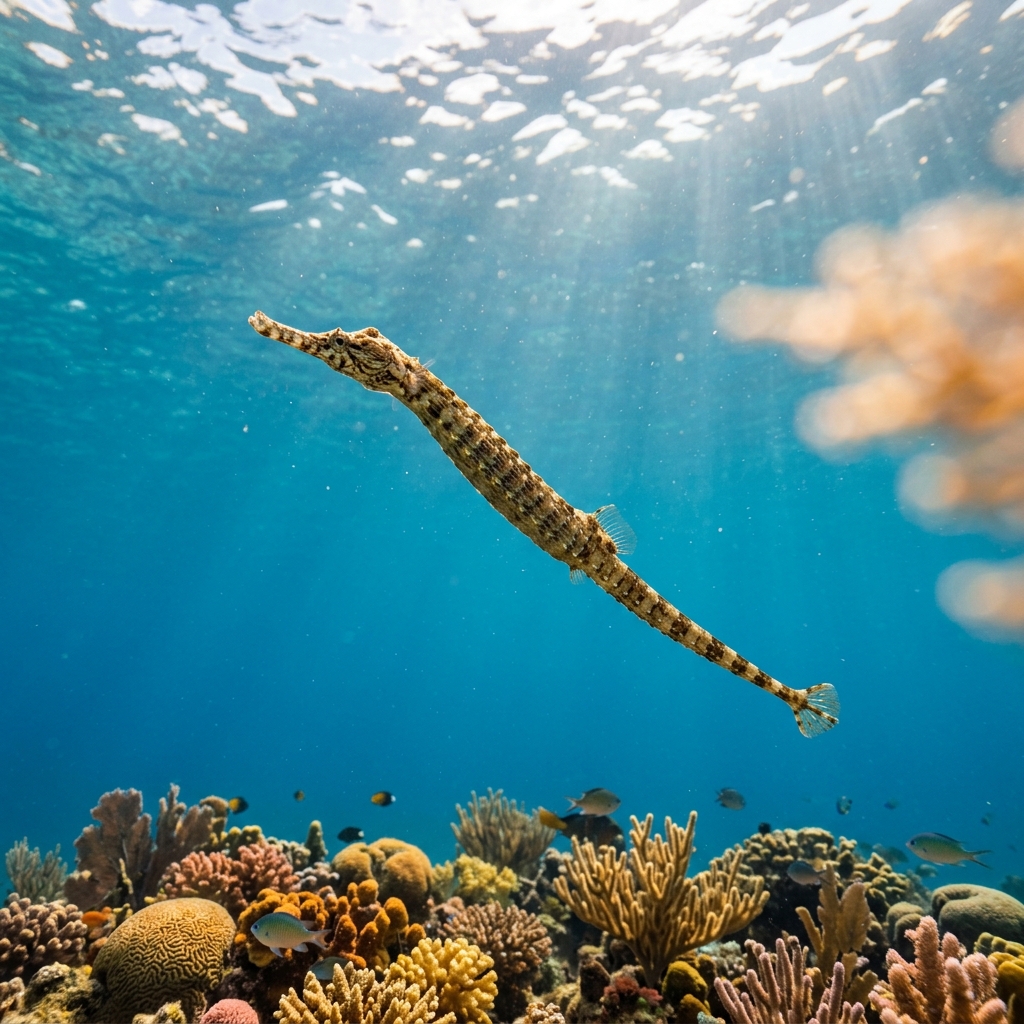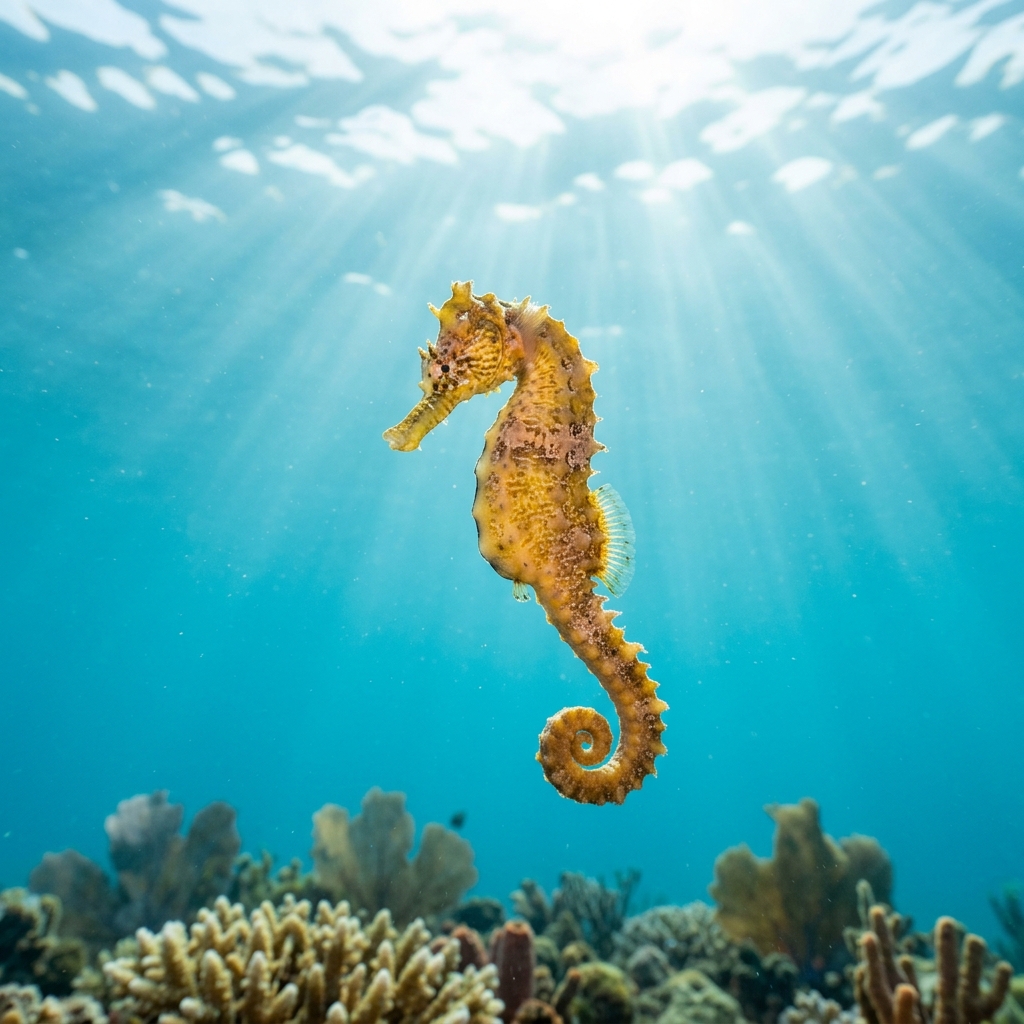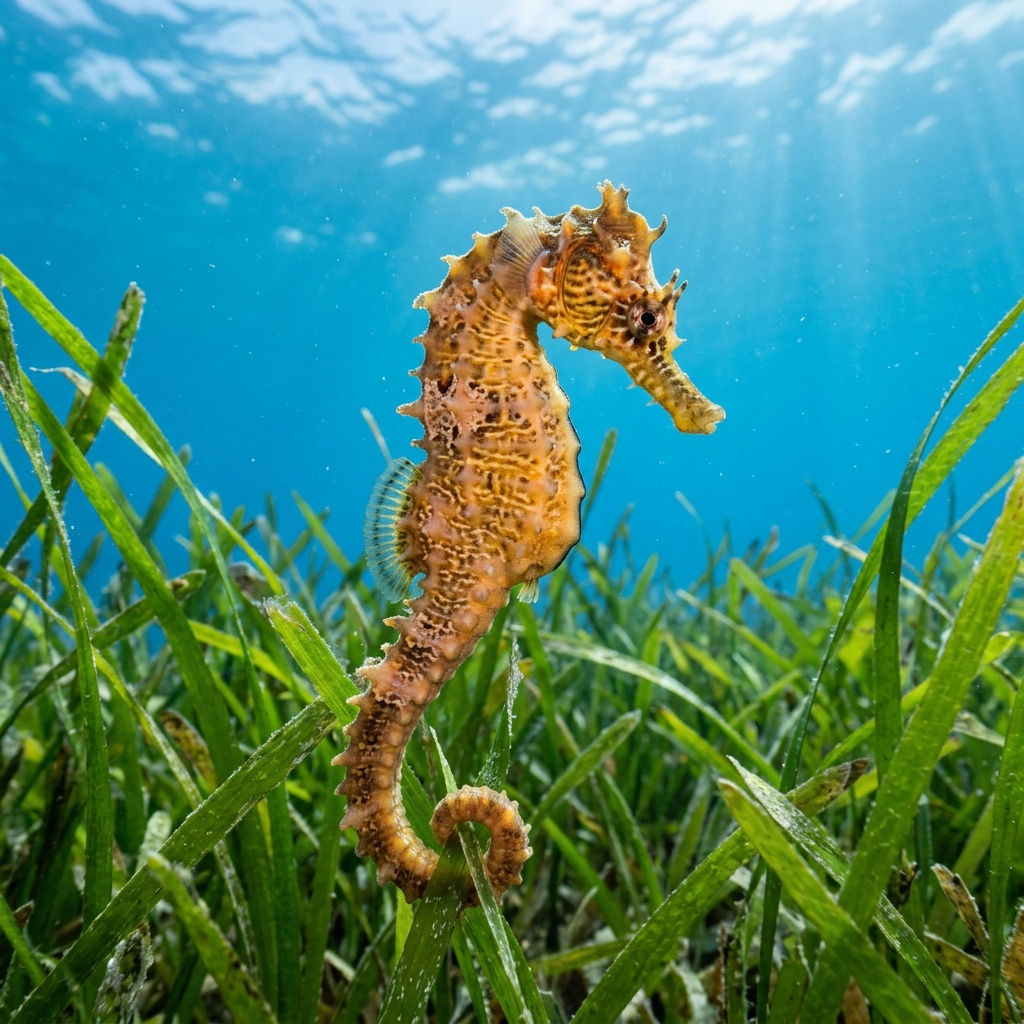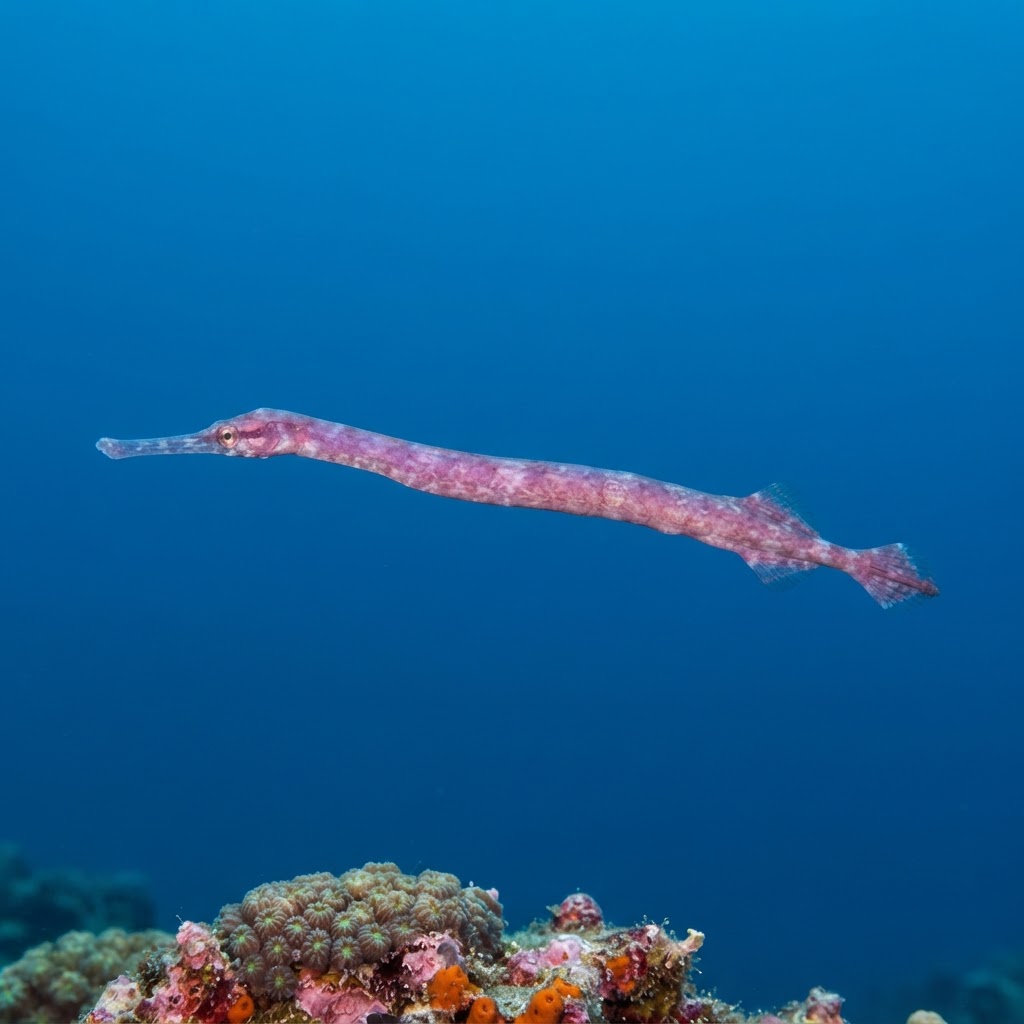
Trachyrhamphus bicoarctatus
Long, sand-coloured pipefish found bent among rubble in Sulawesi and the Visayas, year-round in 25-29C reef water.
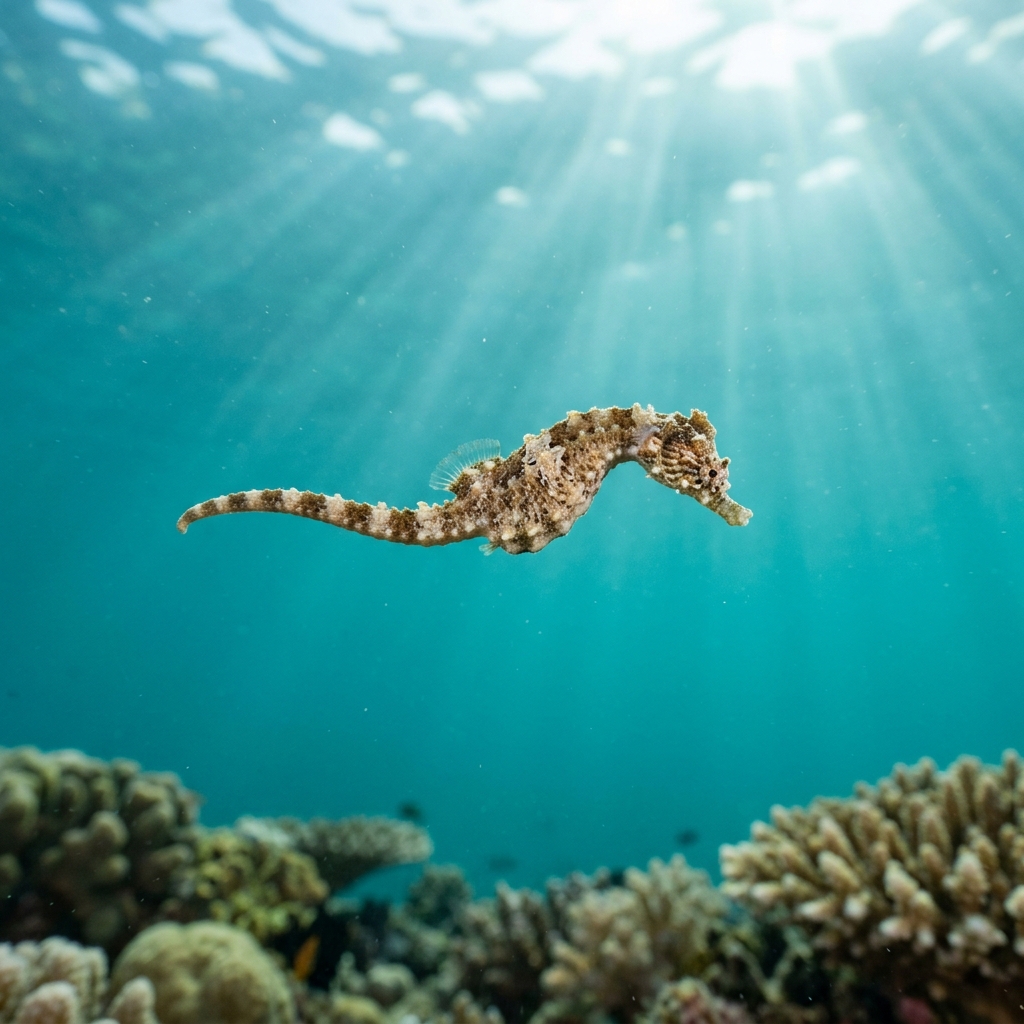
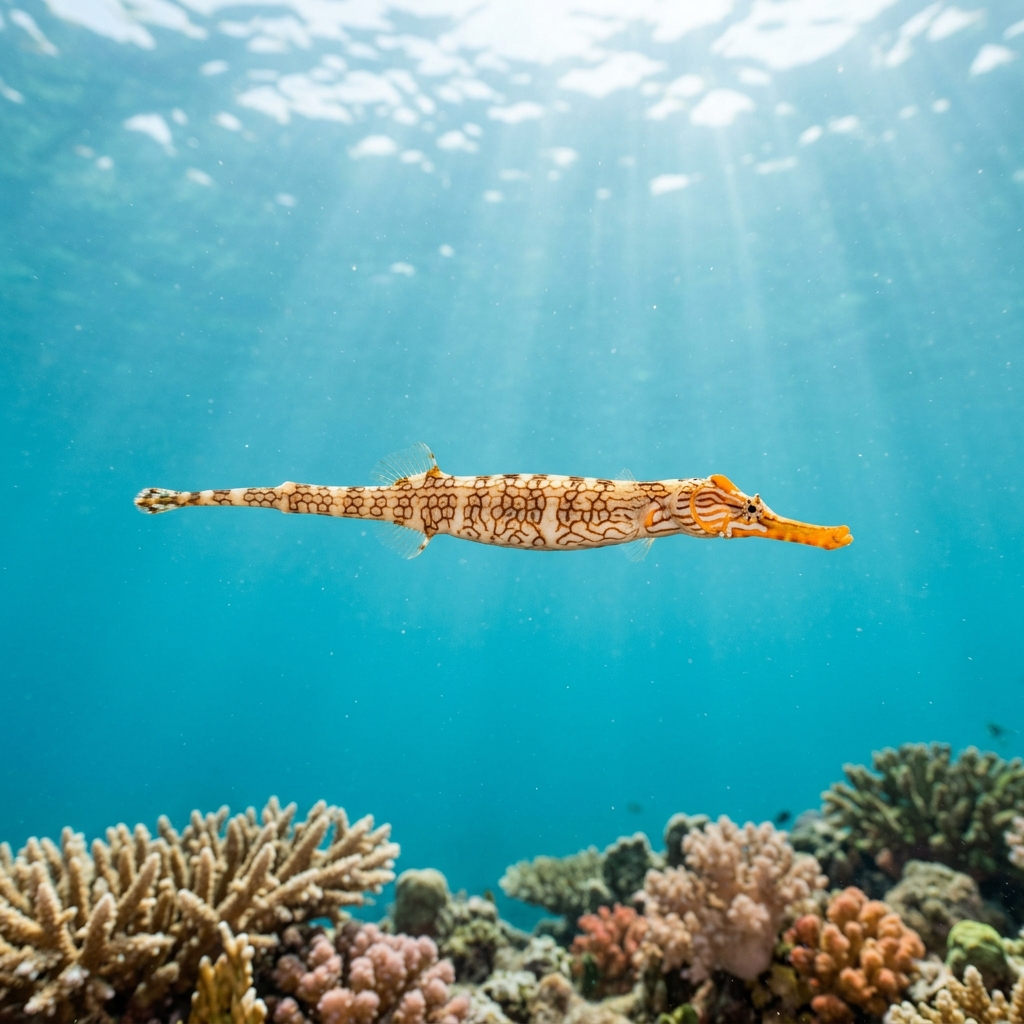
Grows to around 28 cm but reads as a thin, stick-like length on the seafloor rather than a fish shape, usually mottled brown, grey or sandy in colour to match rubble and weed. The body carries a distinctive kink or bend partway along its length, which is where the common name comes from and the easiest single feature to key on. It tends to lie motionless along the substrate rather than swim upright like a seahorse, and the long tapering snout is a giveaway once you spot the outline.
Divers mostly find it lying still along sand, rubble or weedy patches near the reef base, relying on its stick-like shape and dull colouring to blend in rather than fleeing when approached. It's a slow, deliberate mover, drifting or shuffling short distances rather than darting, which makes it easy to overlook but easy to photograph once found. Most sightings are on gentle daytime dives over mixed rubble-and-sand terrain rather than open water or steep walls.
Like all pipefish, males brood the eggs, carrying the fertilised clutch on the underside of the body until the young are ready to disperse.
No clear seasonal pattern shows up in the sightings data, and with a comfortable range of 25 to 29.1C it's present on these reefs year-round, so any month works if you're diving the right sites.
Reef neighbours a diver could mistake it for. Use the identification notes above to tell them apart.
Most reliably logged in Indonesia, especially Sulawesi, Nusa Tenggara and Bali, and in the Philippines across the Visayas and Luzon. It also turns up with a solid presence at Mafia Island in Tanzania and in Egypt's Red Sea Riviera, with smaller numbers reported from Singapore, Australia and Hong Kong.
Mapping where Bentstick Pipefish is logged…
Sulawesi and Nusa Tenggara in Indonesia and the Visayas and Luzon in the Philippines are the most reliable regions, with additional sightings at Mafia Island in Tanzania and Egypt's Red Sea Riviera.
There's no strong seasonal signal in the data, and warm 25-29C water year-round means they're a fair target on any month's dive trip to these regions.
Look for a long, thin, mottled brown body lying still on sand or rubble, with a visible kink or bend partway along its length. It doesn't swim upright like a seahorse and relies on staying motionless to avoid notice.
They reach around 28 cm, which underwater reads as a long slender stick rather than a typical fish body shape.
No, they pose no threat to divers and simply rely on camouflage and stillness rather than any defensive behaviour.
Yes, males brood the fertilised eggs on the underside of the body until the young are ready to hatch and disperse, a trait shared across pipefish and seahorses.
Site and sighting data is aggregated from diver logs, iNaturalist and GBIF. For taxonomy and conservation status:
Seahorse
1,346 sites