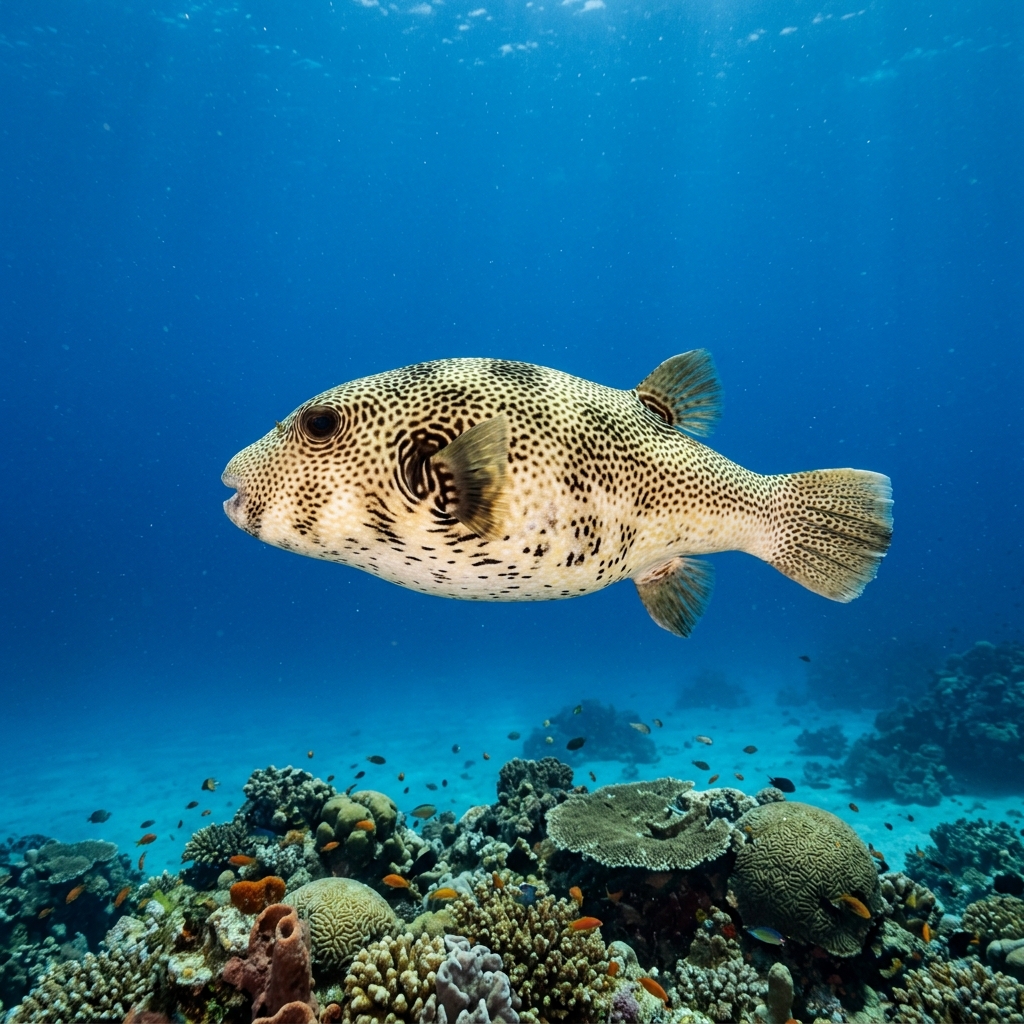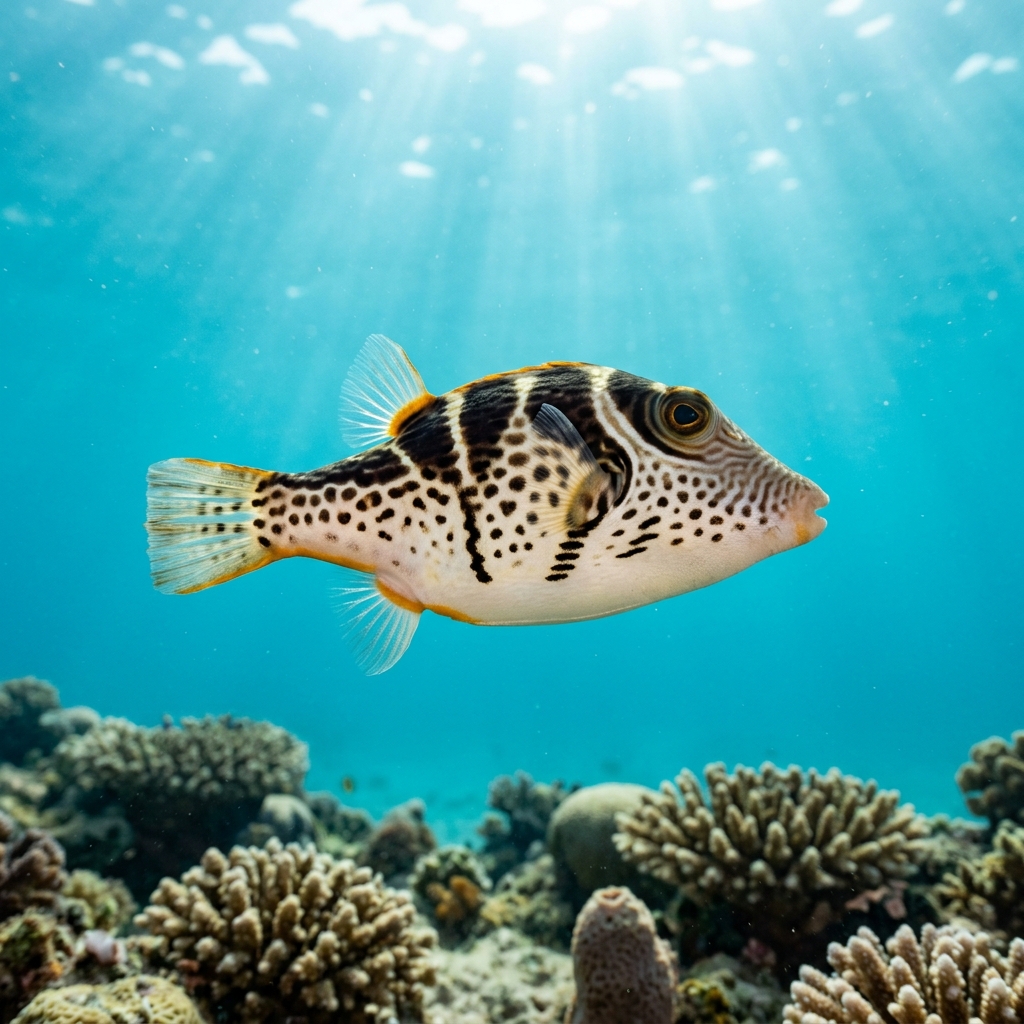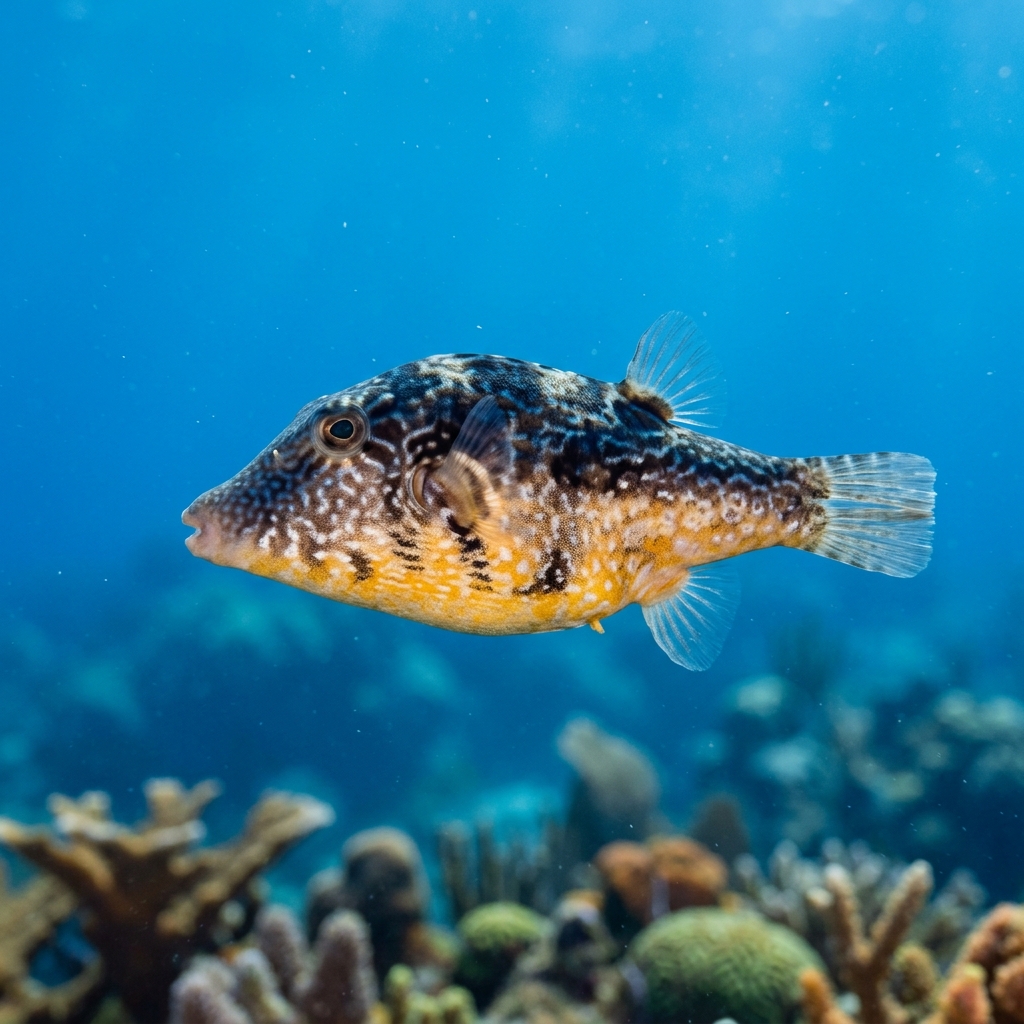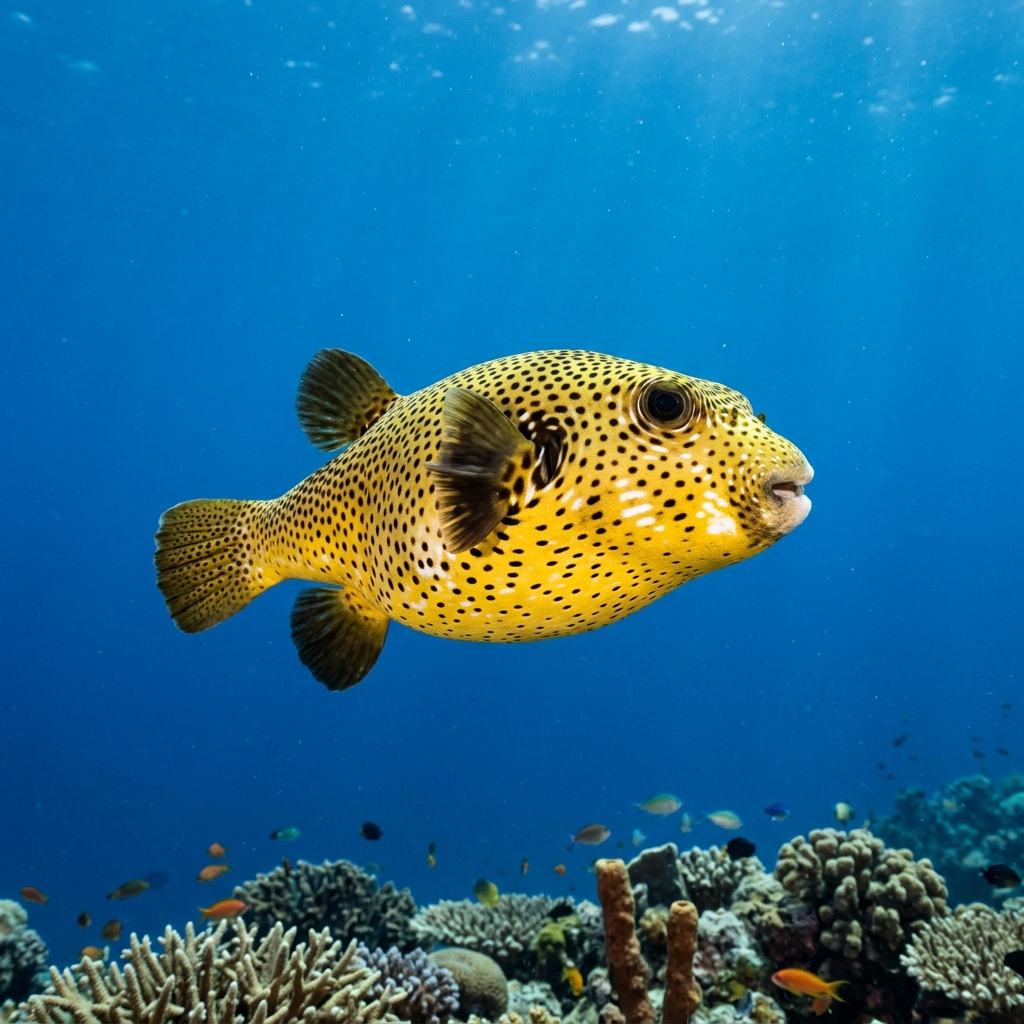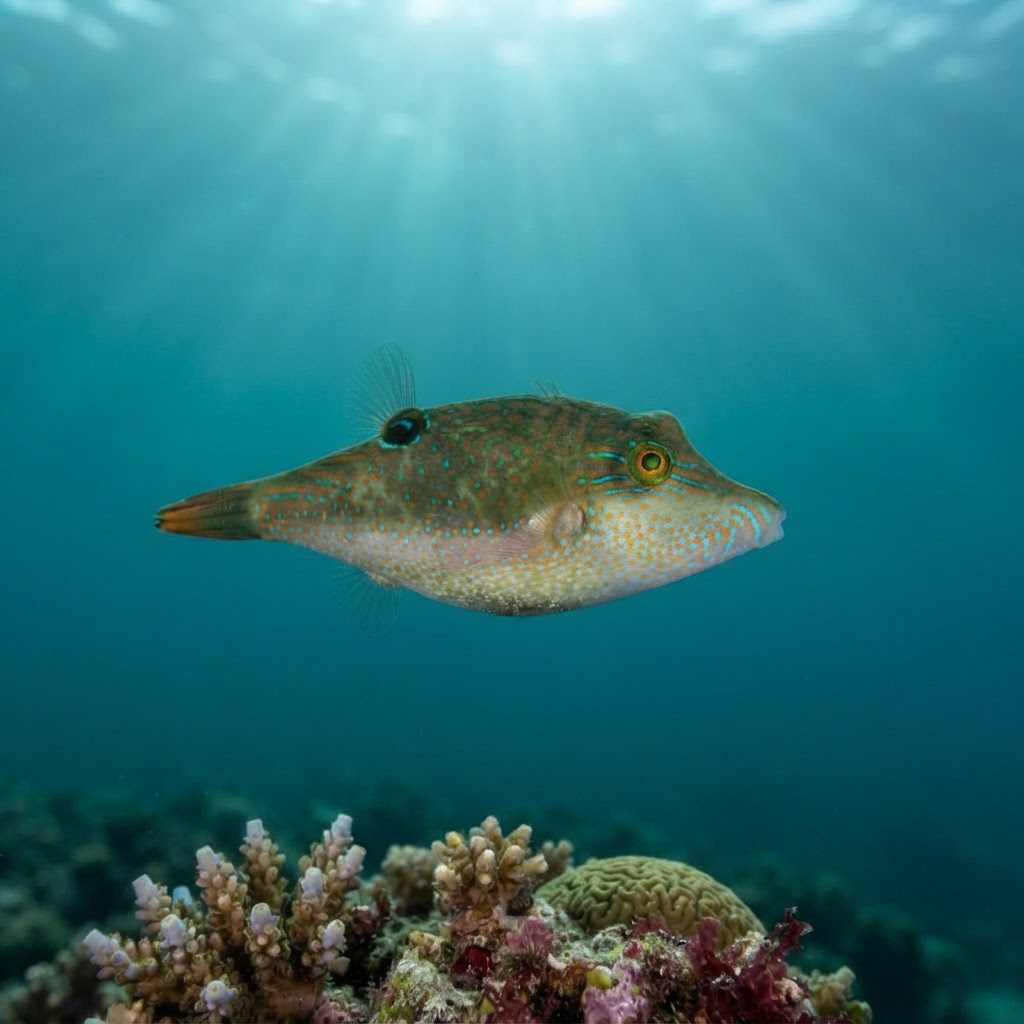
Canthigaster bennetti
A small reef puffer logged across the Maldives, Bali, and French Polynesia year-round in warm 25-29C water. Here's how to spot one.
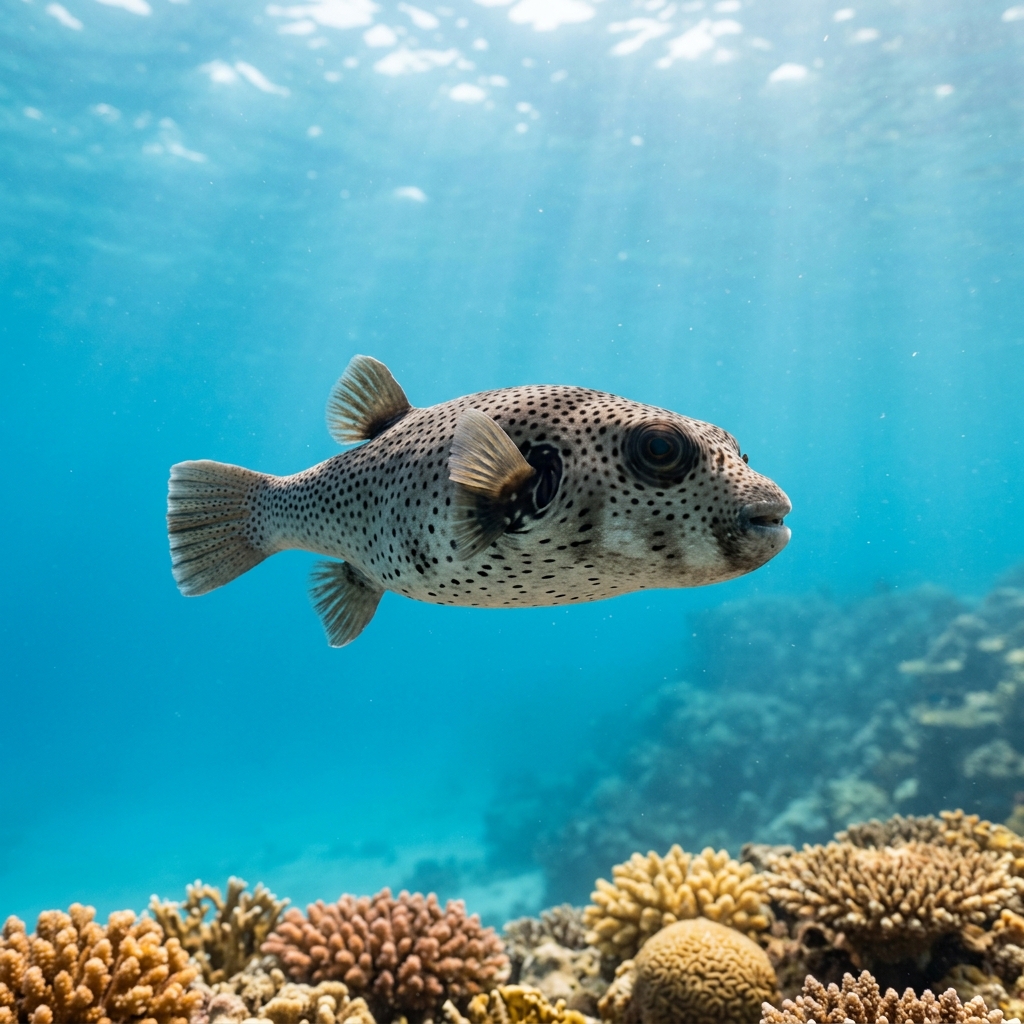
Tiny even by puffer standards at around 7 cm, with a brownish body covered in fine dark speckling that fades toward a paler belly. Look for a scatter of short blue lines and dashes near the tail and just behind the eye, and a small pointed snout typical of sharpnose puffers. It swims with the slow, hovering, almost hesitant motion common to the group rather than darting like a wrasse.
Usually spotted hovering alone just above coral or rubble, picking at algae and small invertebrates rather than following any obvious patrol route. It tends to hold its ground rather than bolt when a diver approaches, though it will duck into a crevice if pressed. Most logs describe it as an uncommon but steady find on a reef scan rather than something divers actively hunt for.
Like other pufferfish, it can inflate by gulping water if seriously threatened, but at 7 cm it relies far more on simply tucking into reef crevices to avoid trouble.
No clear seasonal pattern shows up in the sightings, and with a comfortable range of about 25 to 29C it's present on these reefs all year round. Plan around good general reef conditions in each region rather than a puffer-specific season.
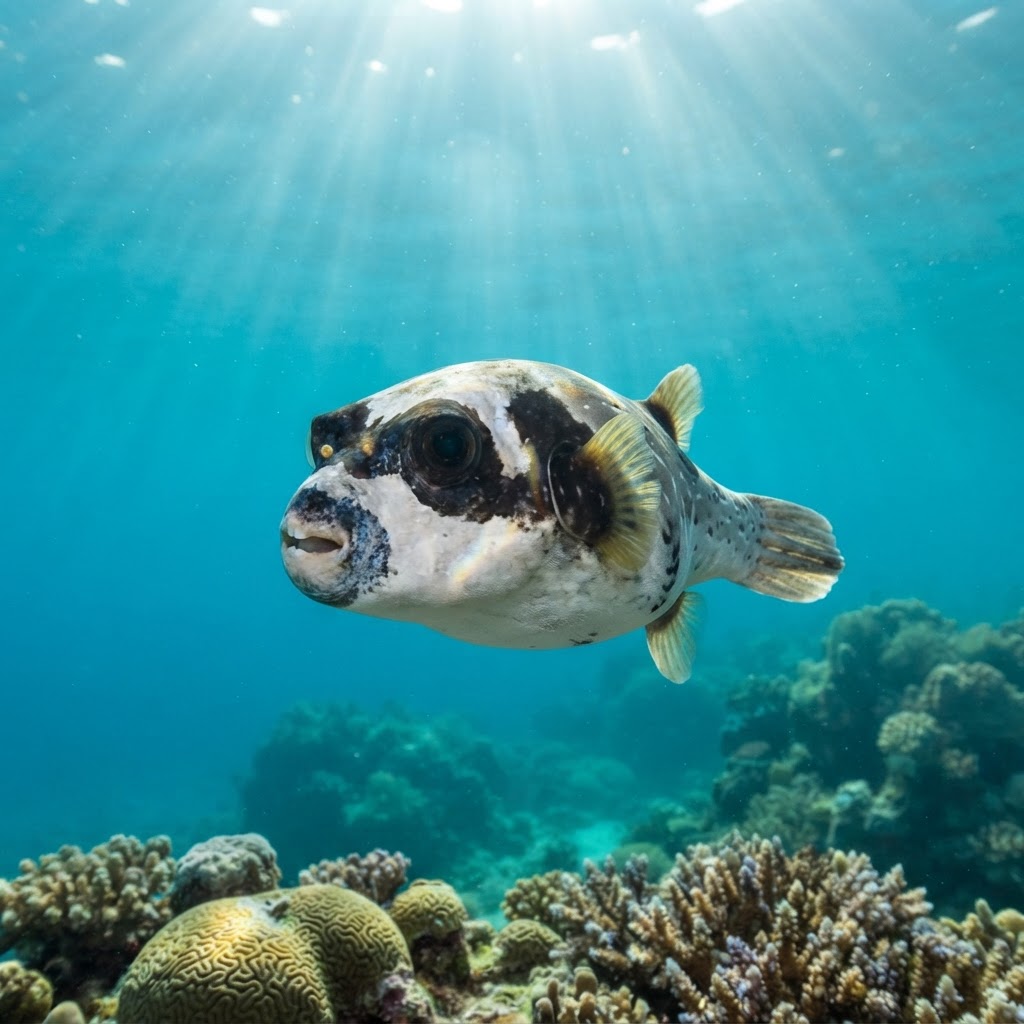
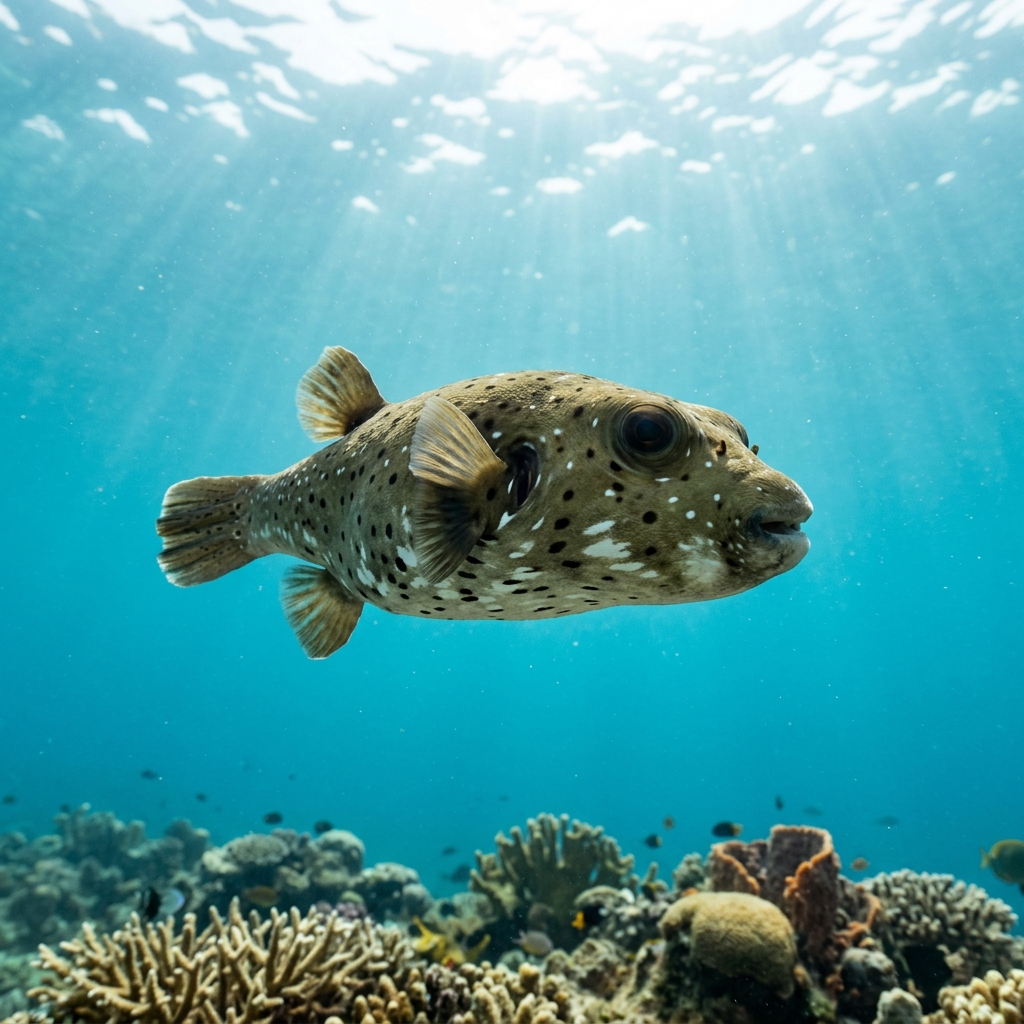
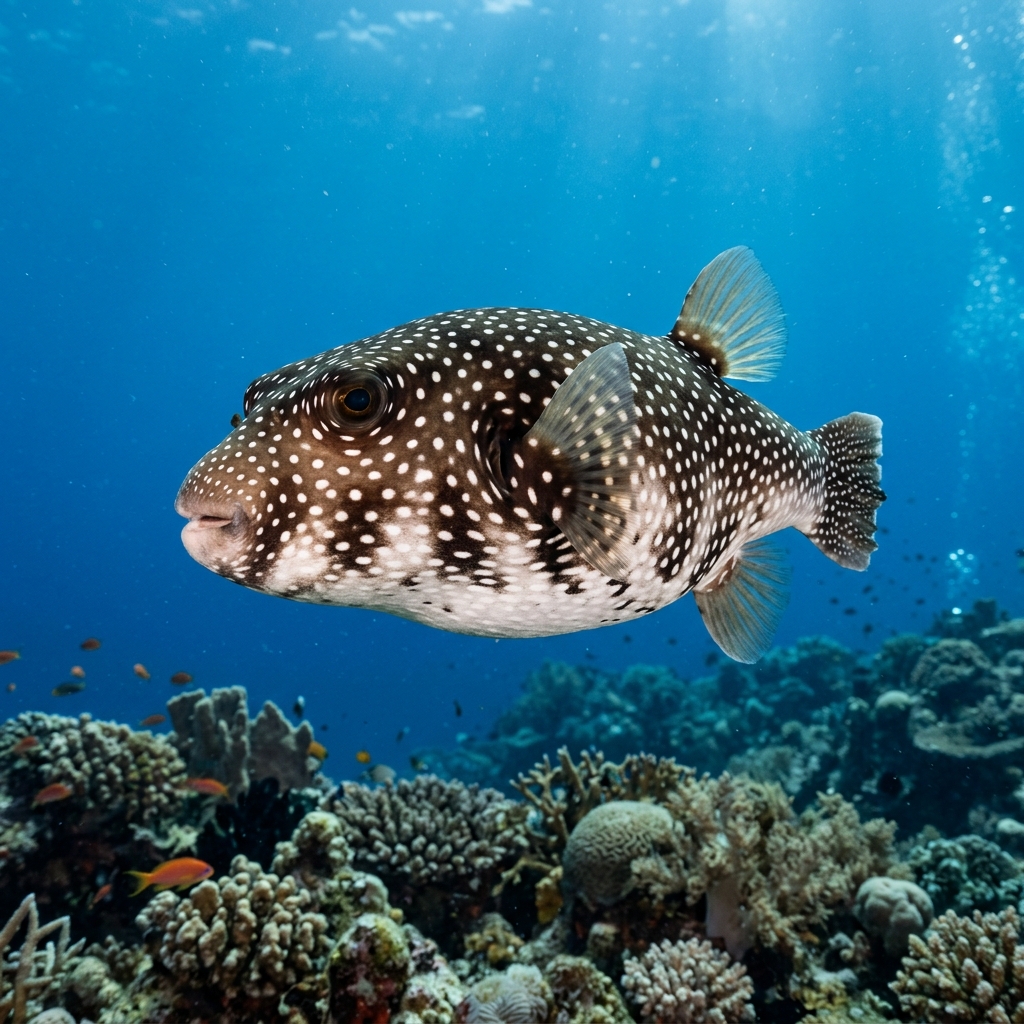
Reef neighbours a diver could mistake it for. Use the identification notes above to tell them apart.
Most reliably logged in the Maldives, particularly the Central Atolls, with strong numbers also coming out of Indonesia (Bali and Sulawesi) and French Polynesia's Society Islands. Smaller but consistent sightings turn up in Queensland, Australia, and along the Kenyan and South African coasts around Diani and KwaZulu-Natal.
Mapping where Bennett's Sharpnose Puffer is logged…
It shows up most often in the Maldives' Central Atolls, plus Bali and Sulawesi in Indonesia and the Society Islands of French Polynesia. Smaller numbers are logged in Queensland, Australia, and along the Kenyan and South African coasts.
There's no detected season, it's found year-round on tropical reefs within its 25 to 29C comfort range. Any time you're diving those regions is a fair shot at seeing one.
Look for a very small, speckled brown puffer around 7 cm long with fine blue lines near the tail and behind the eye. It moves slowly and hovers close to the reef rather than swimming in open water.
They stay small, typically around 7 cm, making them one of the more easily overlooked pufferfish on a reef.
No, they're not considered a danger to divers and pose no threat when approached calmly and left undisturbed.
Site and sighting data is aggregated from diver logs, iNaturalist and GBIF. For taxonomy and conservation status:
Valentini Pufferfish
2,830 sites