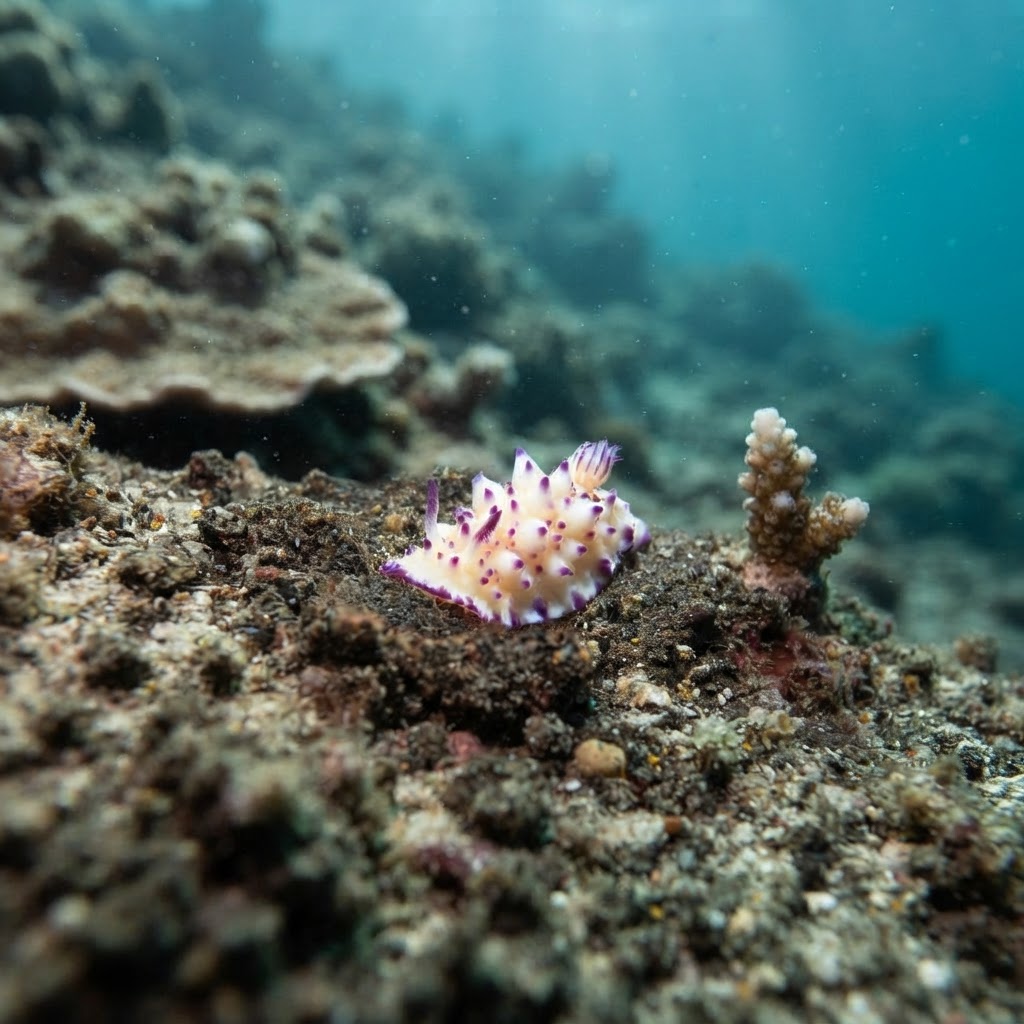
Mexichromis multituberculata
A 2cm violet nudibranch turning up on reefs in Bali and Sulawesi year-round in 25.6-31.6C water. Here's how to spot one.
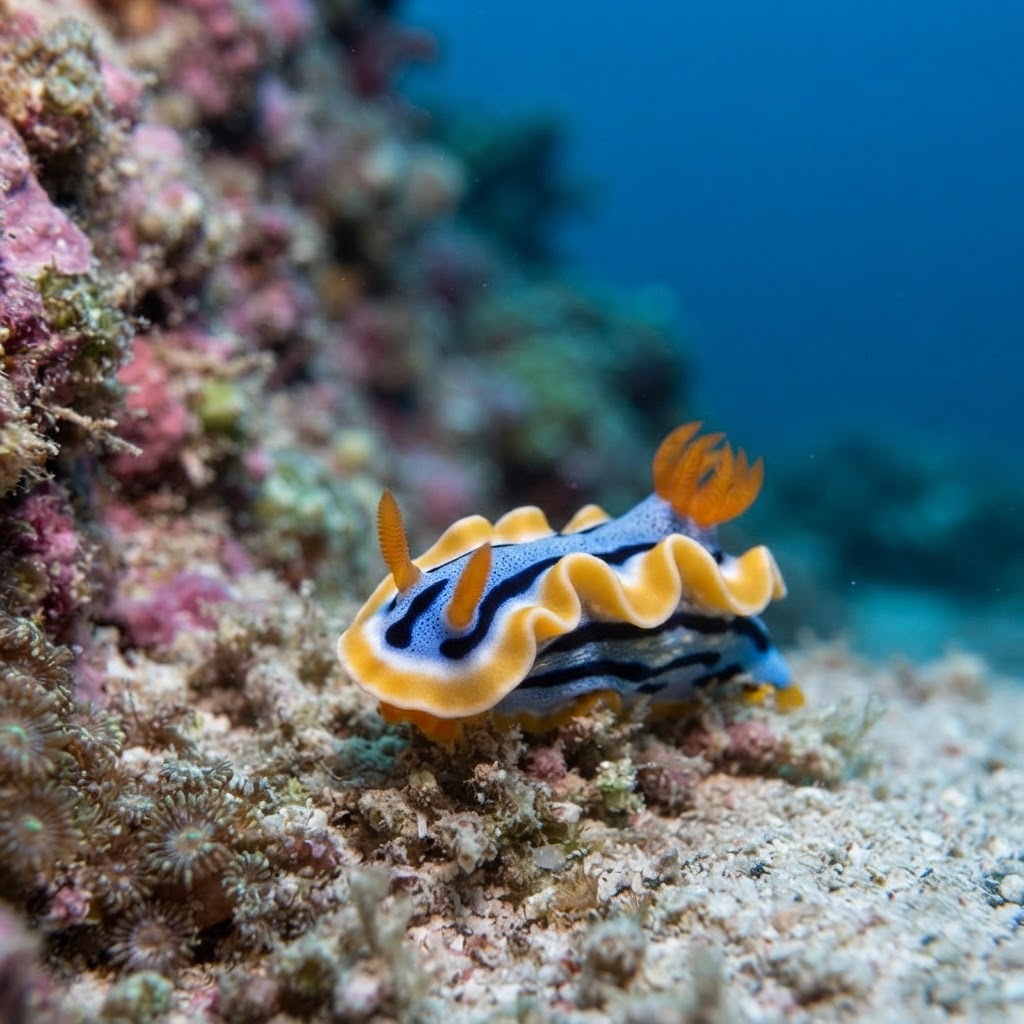
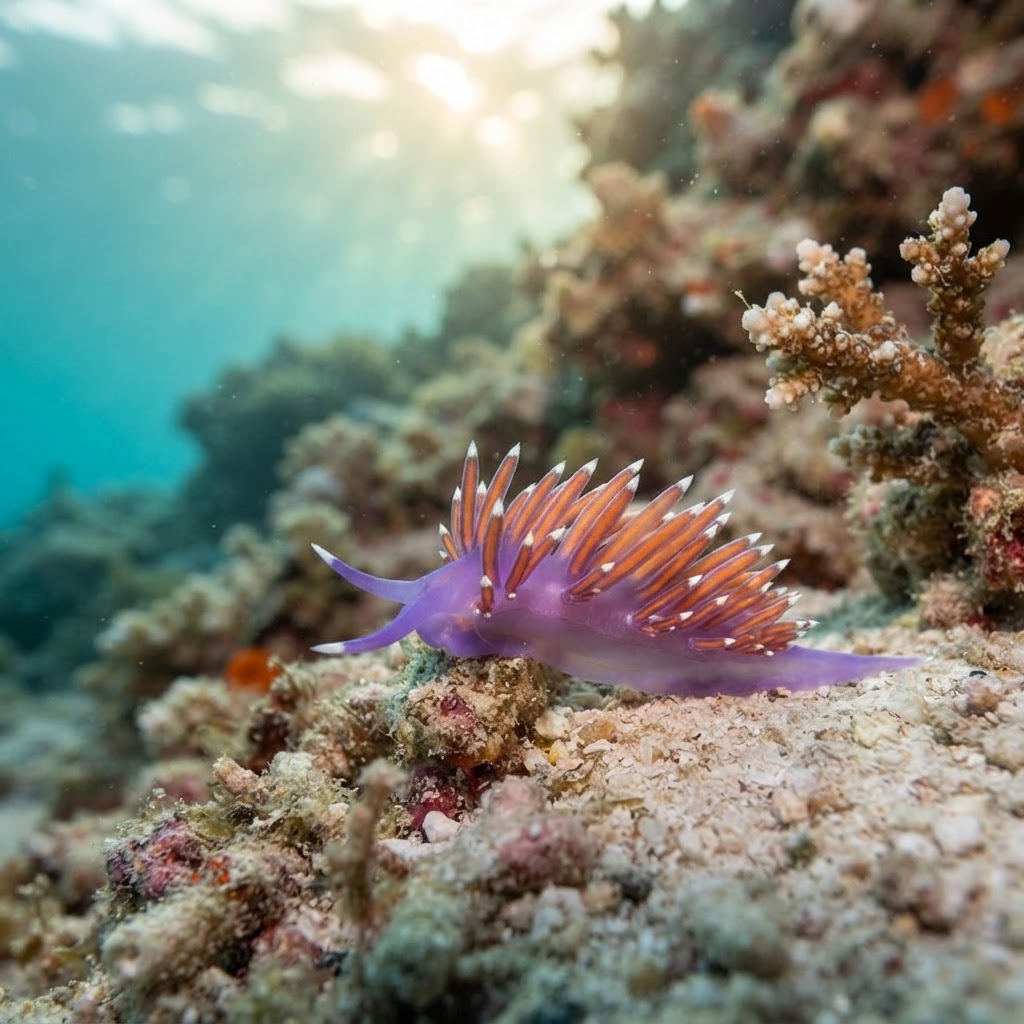
A small nudibranch, around 2 cm long, with a smooth violet-to-purple body edged in a paler margin. The gill cluster and rhinophores (the paired sensory tentacles on its head) usually show contrasting orange or yellow tips, which is the detail most divers key on against the mantle colour. Body shape is a simple elongated oval with no obvious frills, so it reads as sleek rather than ruffled compared with other chromodorids on the same patch of reef.
Found grazing slowly over encrusted rock, rubble and reef slopes, usually spotted by divers running a slow macro-focused eye across the substrate rather than swimming past. It shows no reaction to divers beyond continuing its unhurried crawl, and sightings come from both day and night dives. Like most chromodorids it stays put on its feeding patch rather than roaming widely, so a single find is often worth a second look nearby.
Nudibranchs in this family feed on sponges and can sequester the sponge's chemical defences into their own tissue, which is likely why bright, contrasting colours like this one's violet body and orange gill tips exist despite having no shell to hide in.
No clear seasonal pattern shows up in the sighting data, and its temperature niche of 25.6 to 31.6C covers typical tropical reef conditions all year, so treat this as a year-round find rather than a seasonal one.
Reef neighbours a diver could mistake it for. Use the identification notes above to tell them apart.
Most reliably logged in Indonesia, especially Bali and Sulawesi, which together account for the bulk of recorded sightings. It also turns up with fair regularity in the Philippines, particularly Mindanao and Luzon, and has been recorded on a couple of sites in Sabah, Malaysia.
Mapping where Beau Vallon Magnificent Slug is logged…
Best odds are in Indonesia, particularly Bali and Sulawesi, where it's logged most often. It's also a reasonably regular find in the Philippines, especially Mindanao and Luzon, and has turned up in Sabah, Malaysia.
There's no detected season in the sighting data, and its comfort range of 25.6 to 31.6C matches tropical reefs year-round, so any time of year is fair game.
Look for a small, roughly 2 cm violet-bodied nudibranch with a smooth, unfrilled oval shape and orange or yellow tips on its gills and rhinophores. The colour contrast at the tail end is the quickest tell against similar purple slugs on the same reef.
Around 2 cm long, putting it firmly in macro-life territory. You'll want a sharp eye or a guide pointing it out rather than expecting it to catch your attention from a distance.
No. It has no means of harming divers and simply crawls slowly over the reef surface, easy to photograph without any risk.
Its bright colouring likely comes from chemicals it absorbs from the sponges it eats, borrowing the sponge's own defences to make itself less appetising to predators.
Site and sighting data is aggregated from diver logs, iNaturalist and GBIF. For taxonomy and conservation status:
Light-spotted Aegires
3,168 sites