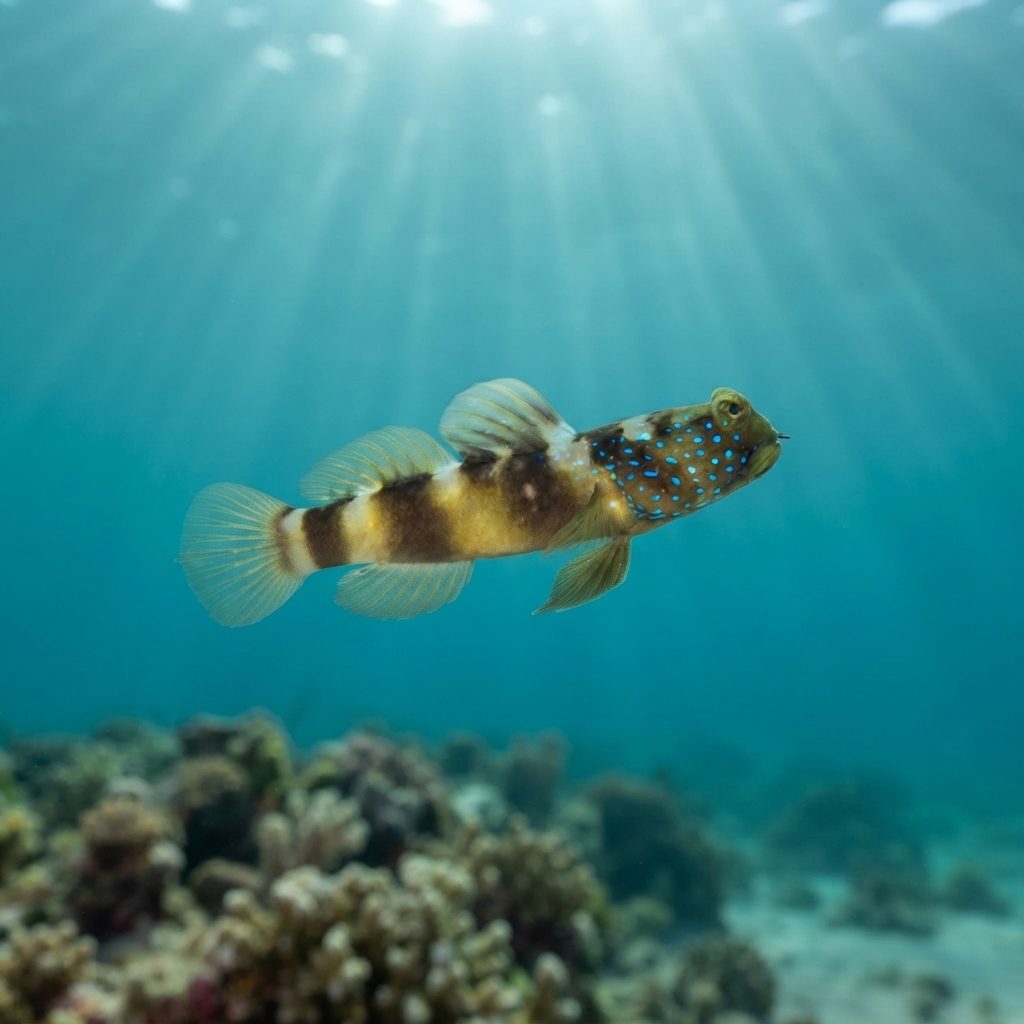
Cryptocentrus fasciatus
Orange-barred goby that shares a burrow with a shrimp. Most reliably found on sandy reef flats across Sulawesi and Mafia Island year-round.
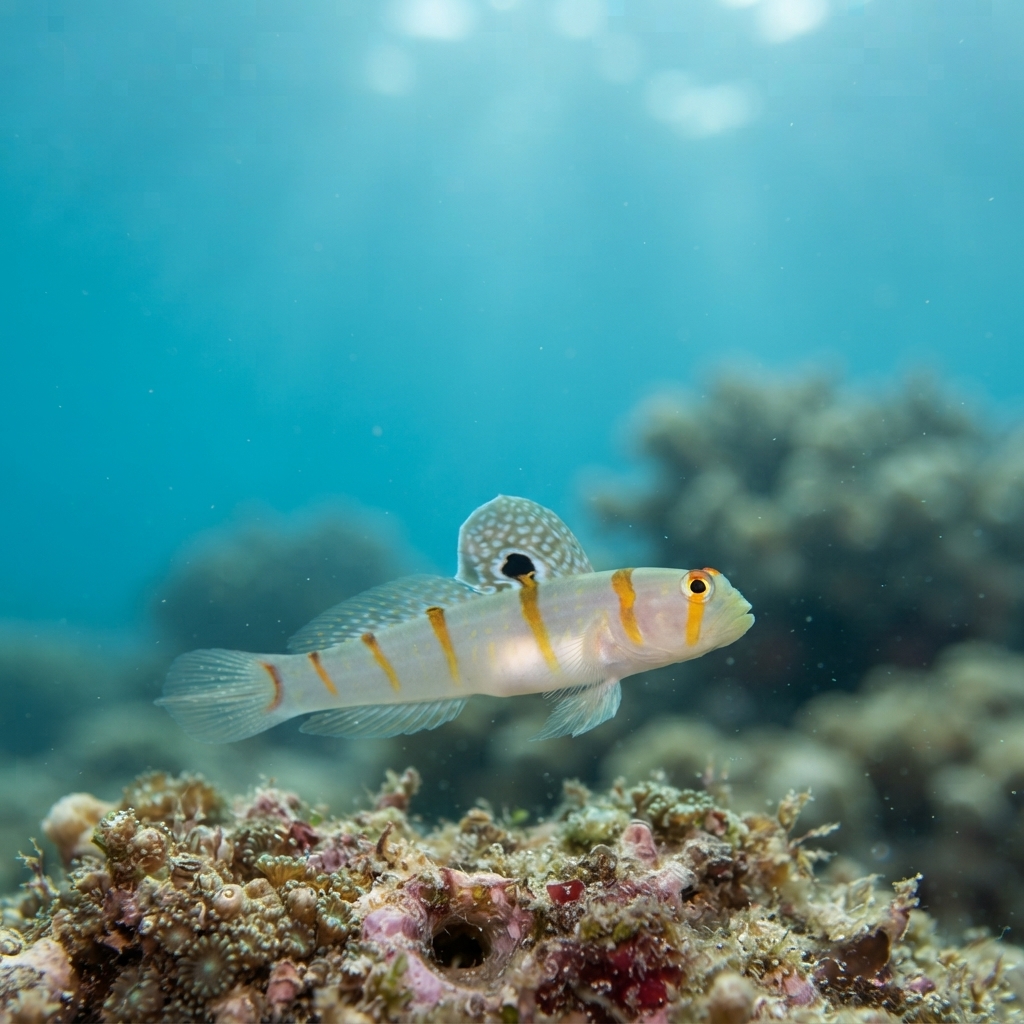
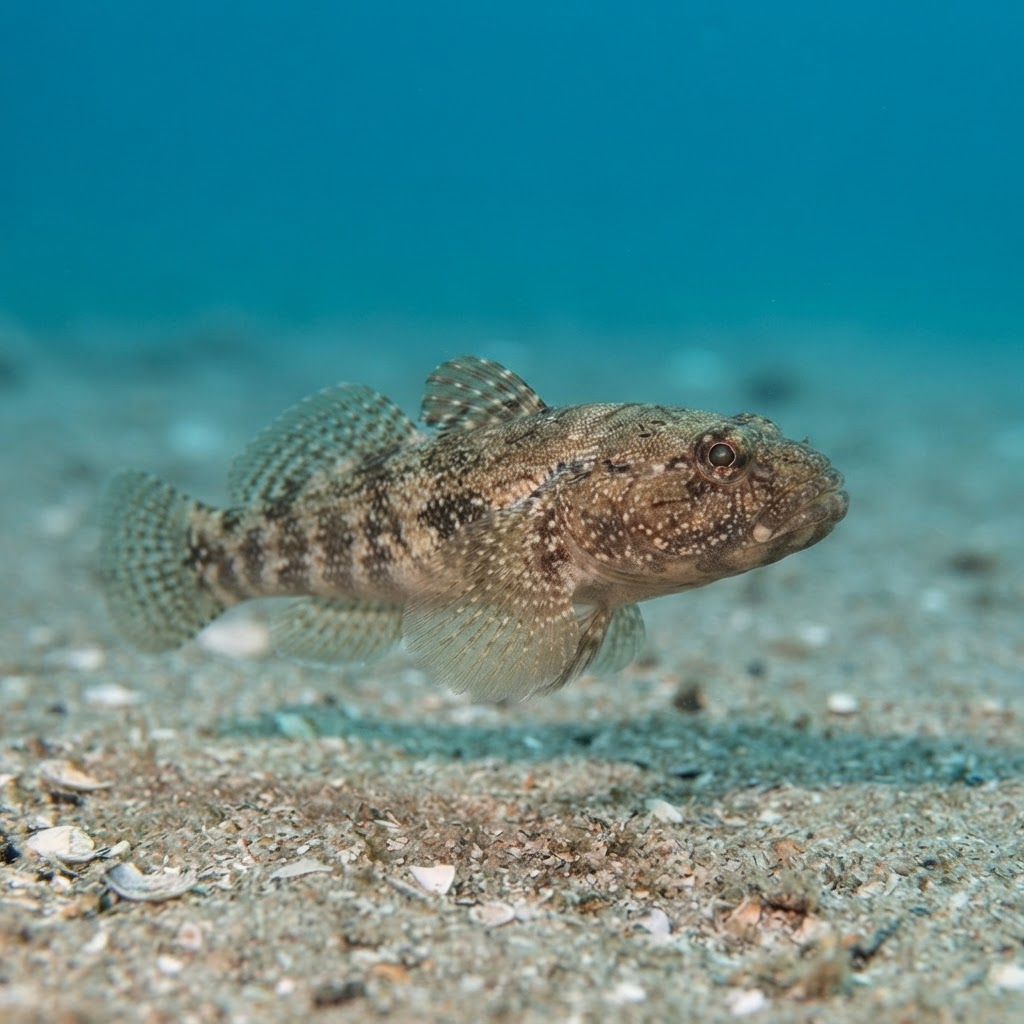
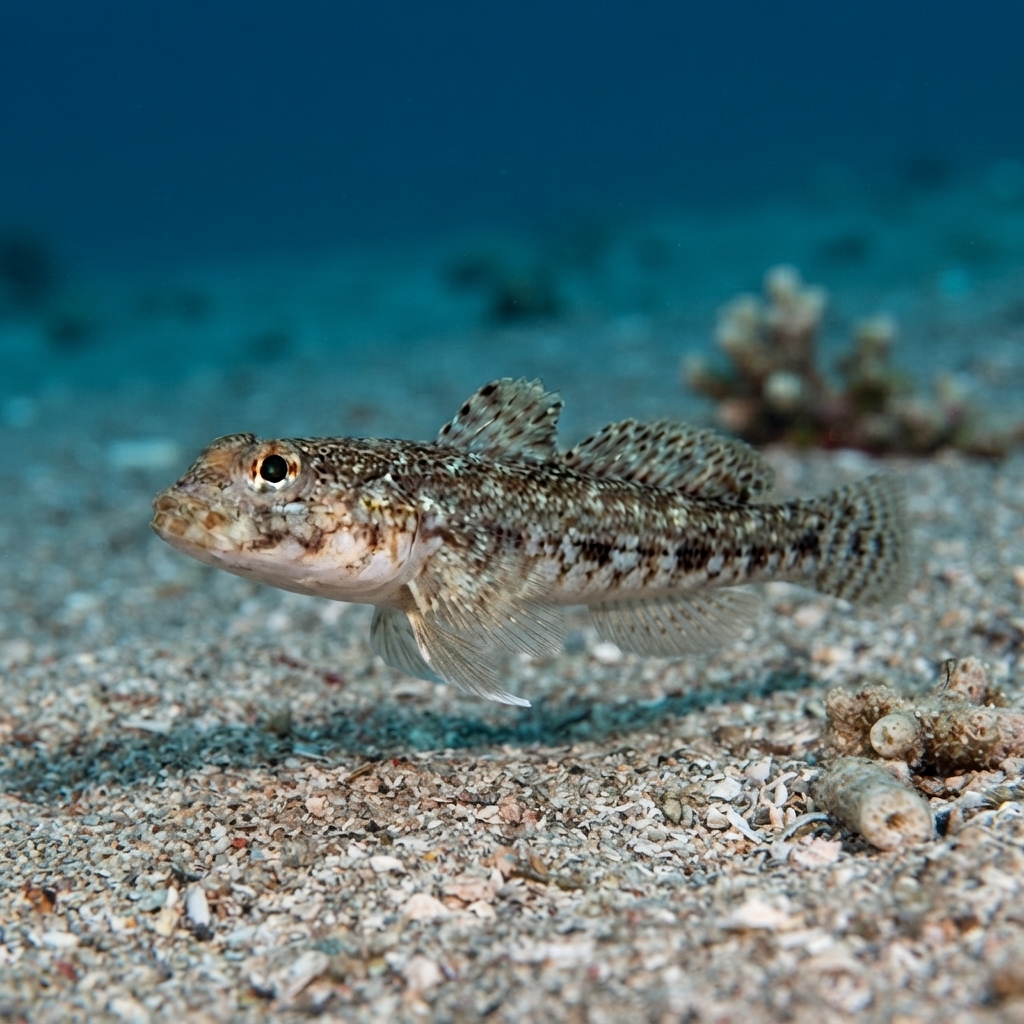
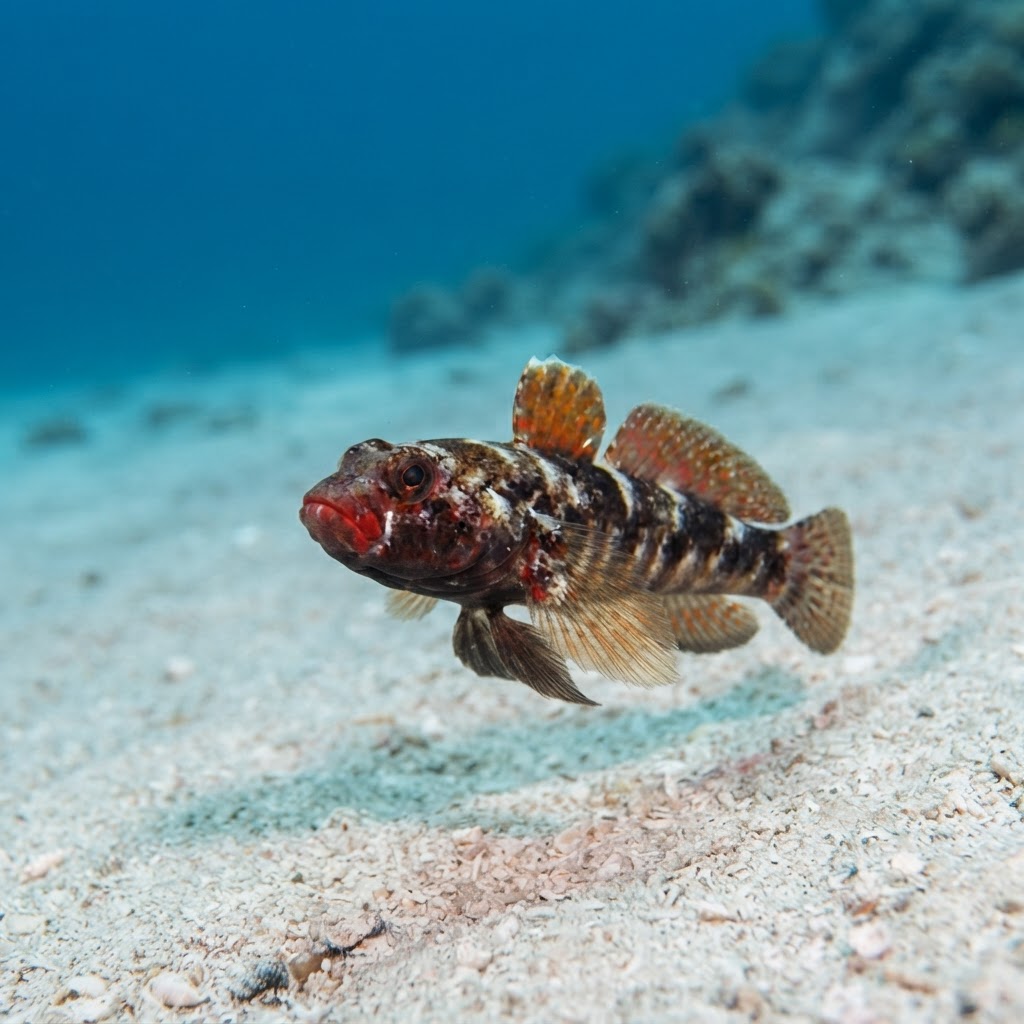
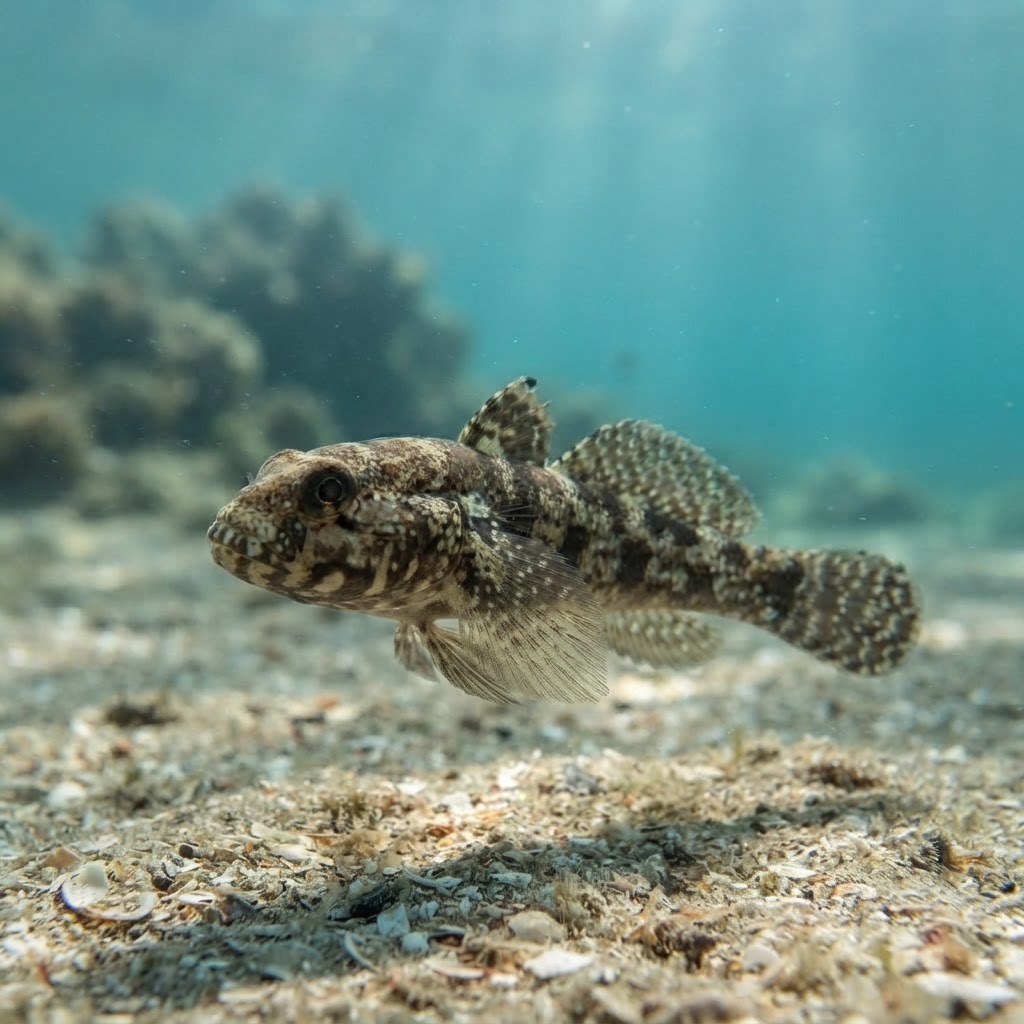
Slender goby around 9 cm with bold orange (or reddish-brown) bars alternating with pale white bands running down a pale body. Look for tall, rounded first dorsal fin often held erect, and a habit of hovering just above a burrow entrance rather than perching flat on the substrate. Head and snout are elongated compared to most reef gobies, giving it a slightly pointed profile.
Spend most of a dive sighting hovering at the mouth of a burrow dug into sand or rubble patches, ready to dart backward in if a diver gets too close. It shares that burrow with a partner shrimp that keeps the tunnel clear, a classic goby-shrimp arrangement, and the pair stay in near-constant antennal contact at the entrance. Approach low and slow on a sandy reef flat and it will often tolerate a close look before retreating.
Lives in an obligate partnership with a burrowing shrimp: the shrimp digs and maintains the shared tunnel while the goby, which has far better eyesight, stands guard and flicks its tail to warn of danger.
No clear seasonal pattern shows up in the sightings, and with a comfortable range of 25.4 to 29.3C it's present on these reefs all year, so any month works for a dive plan built around it.
Reef neighbours a diver could mistake it for. Use the identification notes above to tell them apart.
Most commonly logged across Sulawesi in Indonesia, which accounts for the bulk of sightings, with a further reliable presence in Luzon in the Philippines. Smaller but consistent populations turn up on Mafia Island in Tanzania and around Dili in Timor-Leste, with occasional records from Queensland in Australia, Koh Lanta in Thailand and Nouméa in New Caledonia.
Mapping where Barred Prawn-goby is logged…
Sulawesi in Indonesia has the strongest numbers of sightings by far, with Luzon in the Philippines, Mafia Island in Tanzania and Dili in Timor-Leste also producing regular sightings.
There is no strong seasonal signal in the sightings, and the species sits comfortably in 25.4 to 29.3C water, so it can be found year-round on the reefs where it occurs.
Look for a slim goby about 9 cm long with alternating orange and white bars along the body, an erect first dorsal fin, and a habit of hovering above a sandy burrow entrance rather than sitting on open rubble.
They reach roughly 9 cm in length, a typical size for reef-associated gobies, so they are easy to overlook unless you are specifically scanning sandy patches near burrows.
It lives in a tight partnership with a burrowing shrimp, sharing a single tunnel where the shrimp digs and the goby, with sharper eyesight, watches for predators and signals danger with tail flicks.
Site and sighting data is aggregated from diver logs, iNaturalist and GBIF. For taxonomy and conservation status:
Slender Goby
806 sites