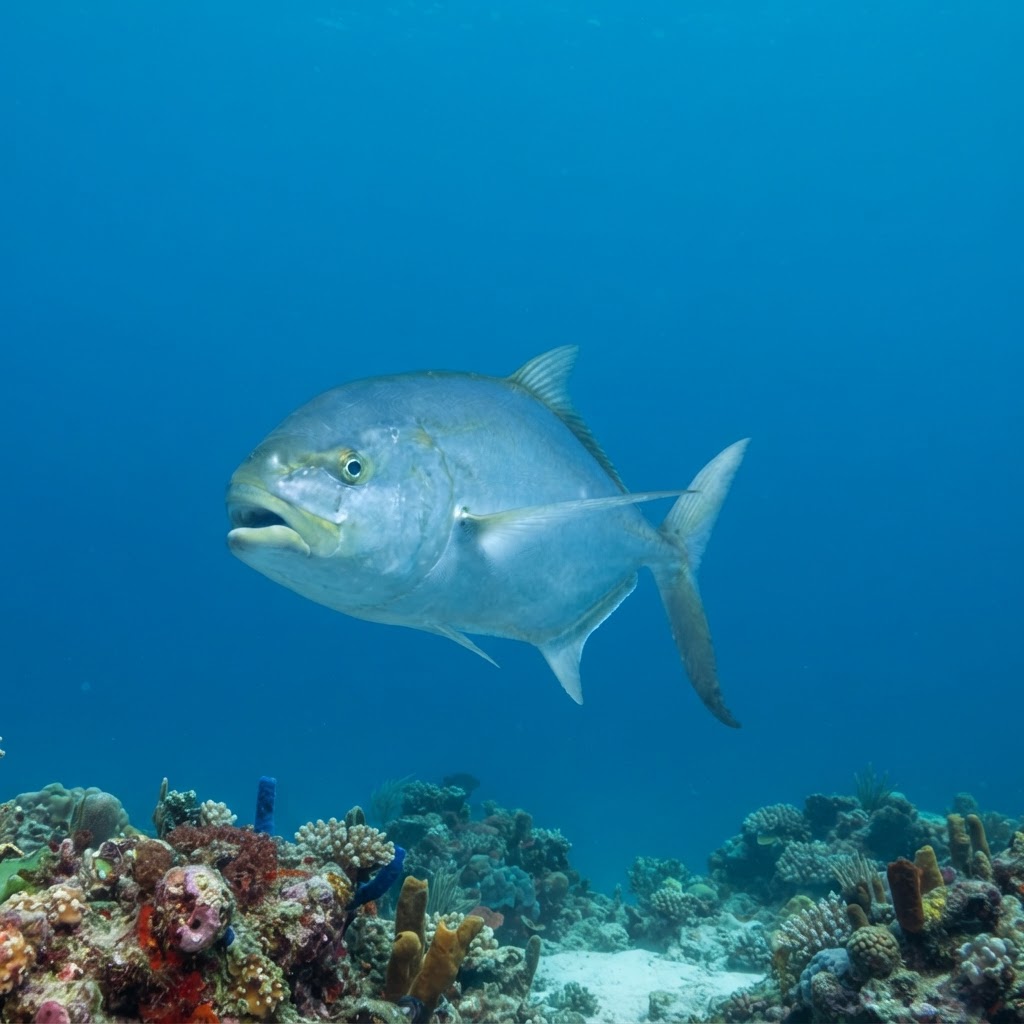
Caranx bartholomaei
A fast-moving flash of silver and gold over Caribbean reefs, from Florida to the Grenadines, water a steady 23-28C year-round.
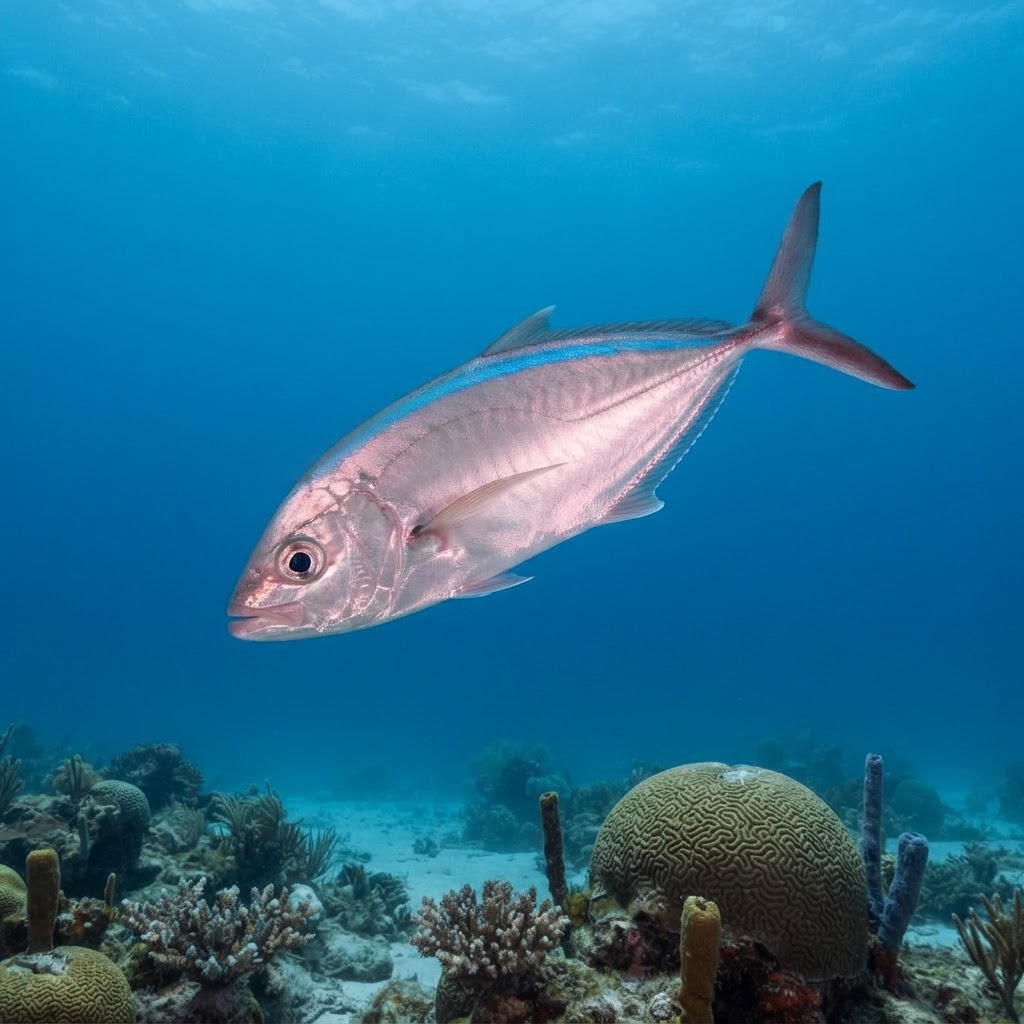
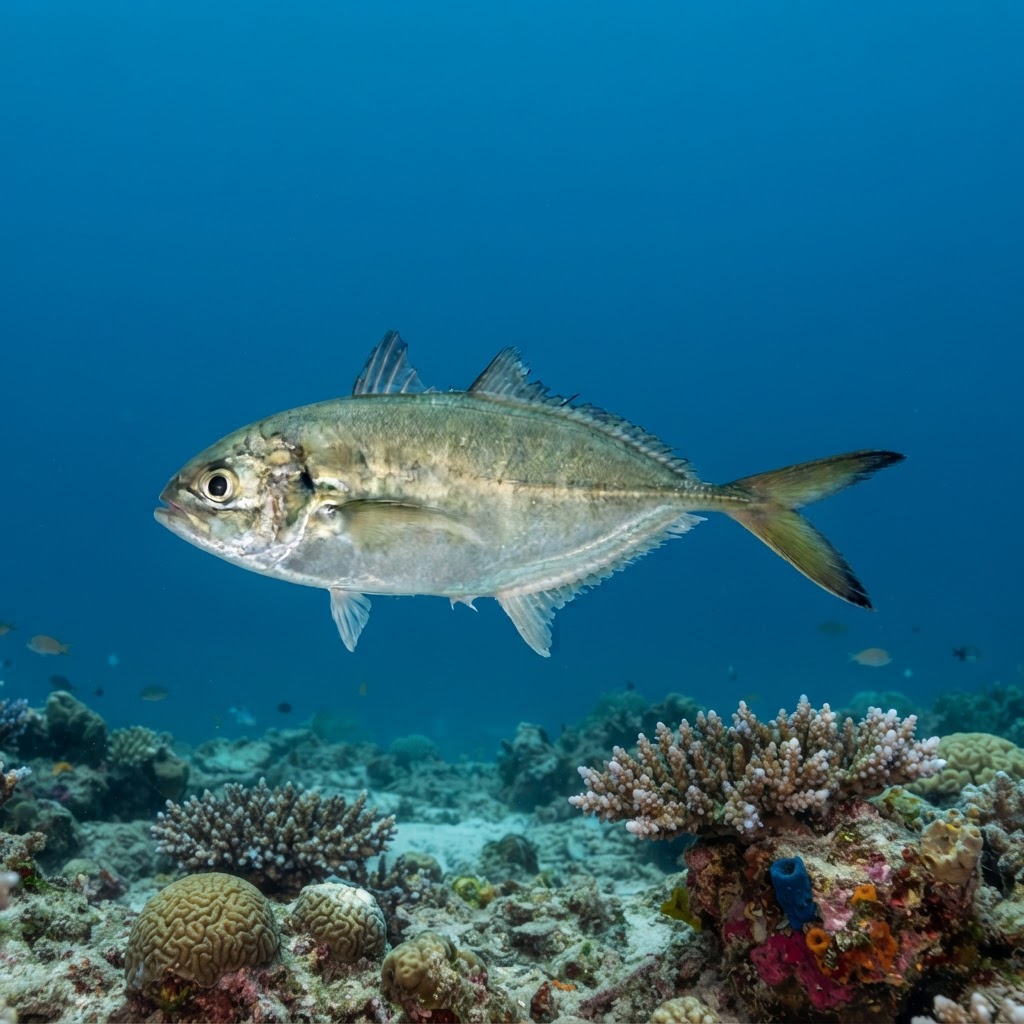
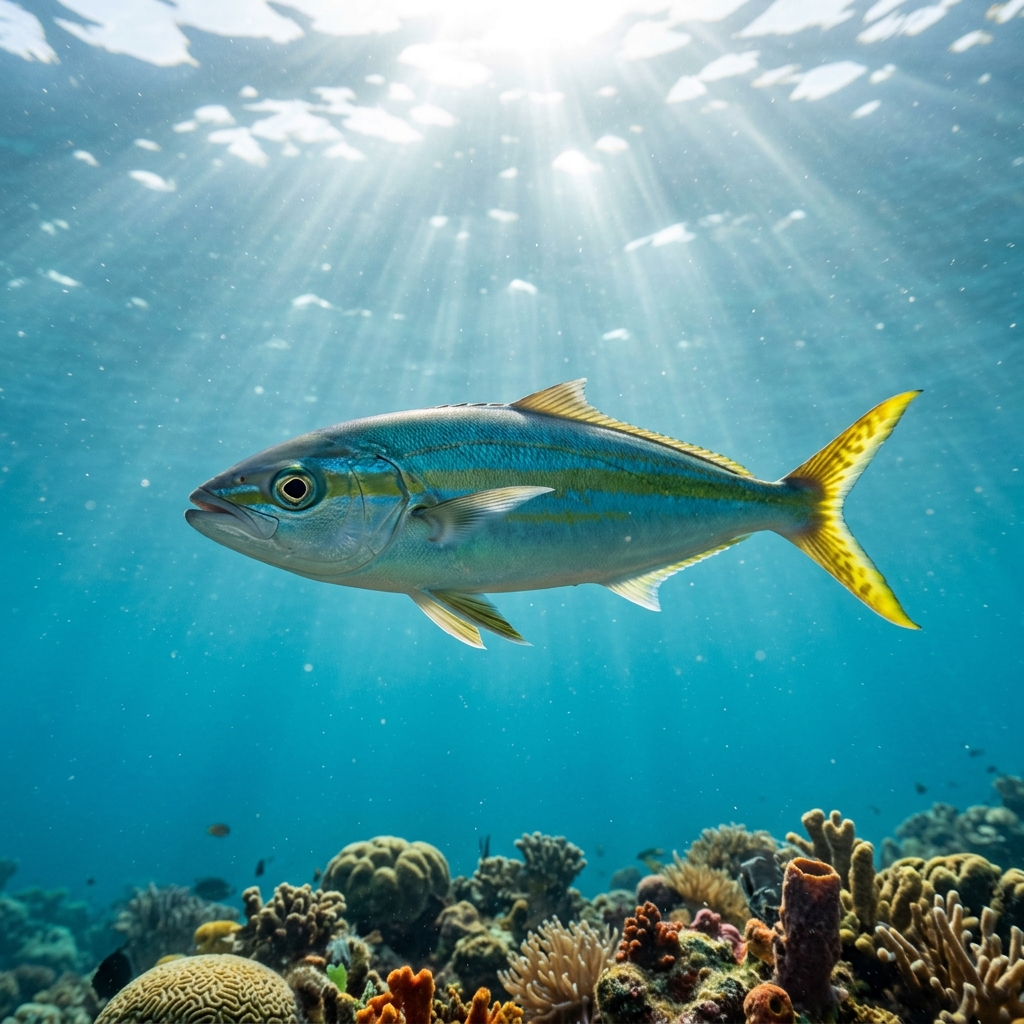
Look for a slim, torpedo-shaped jack with a silvery-blue body that fades into strong yellow on the tail, fins and lower flanks. The forked tail and pointed snout give it a streamlined look built for speed, and it often shows a faint dusky spot near the gill cover. Compared to other jacks it reads noticeably more yellow along the belly and fins, which is the fastest field mark from a distance.
Usually spotted cruising alone or in small loose groups over reef edges and open water nearby, moving with the quick, purposeful pace typical of jacks hunting small fish. Divers rate it uncommon rather than a guaranteed sighting, so it tends to appear as a fast pass-by rather than something that lingers for a photo. It shows little interest in divers and rarely sticks around once noticed.
Yellow jacks are opportunistic hunters that will shadow other predators, including larger jacks and even reef sharks, to snap up scraps or fish scattered by the bigger animal's hunting rush.
No strong seasonal pattern shows up in sighting data, and with a comfortable range of 22.8 to 28C it's present on tropical and subtropical reefs throughout the year. Plan around good visibility and reef conditions rather than a particular month.
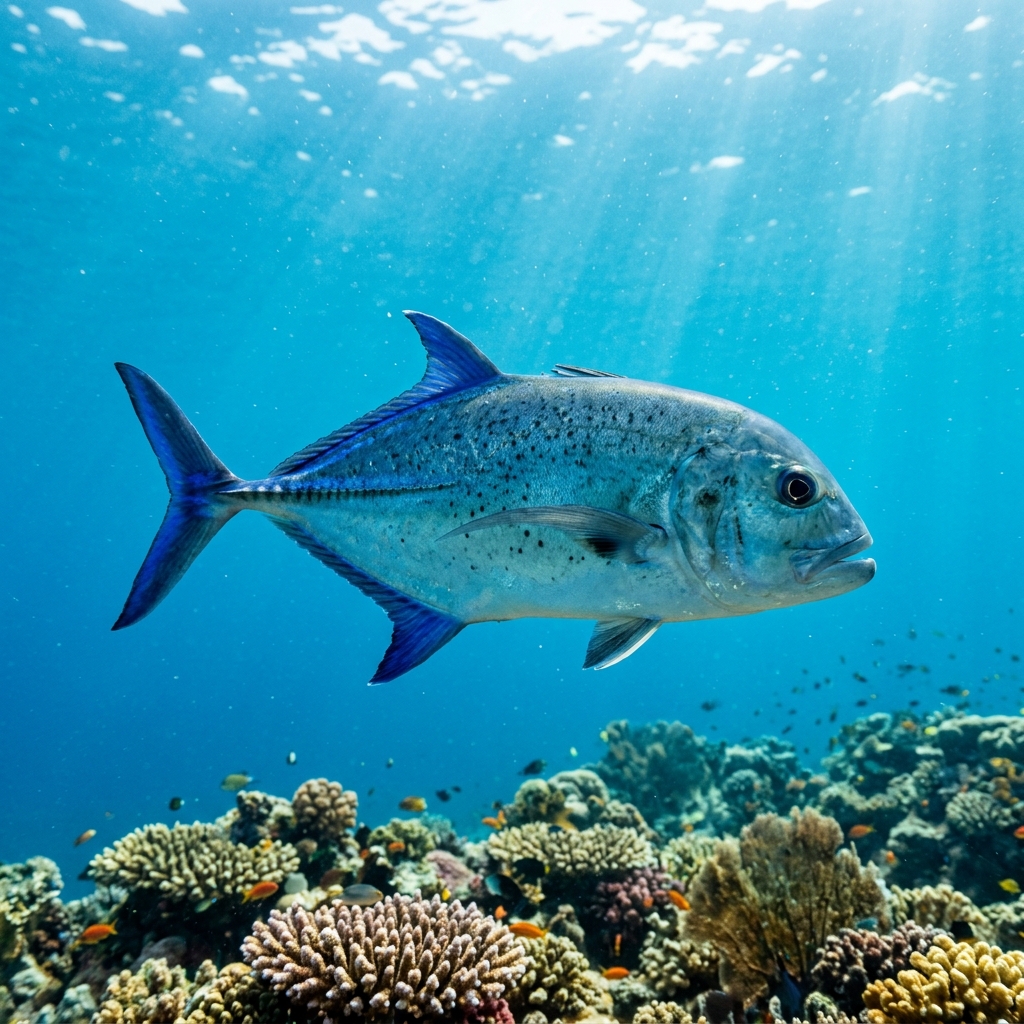
Reef neighbours a diver could mistake it for. Use the identification notes above to tell them apart.
Most reliably logged on reefs in Florida and Mexico's Yucatán Peninsula, with strong showings across the Eastern Caribbean in the Grenadines, the Dominican Republic and the Bay Islands of Honduras. Carriacou in Grenada and Tobago also turn up regularly in dive logs, making this a species you'll cross paths with on almost any warm-water Caribbean or Gulf reef trip.
Mapping where Yellow Jack is logged…
Florida and Mexico's Yucatán Peninsula produce the most sightings, with the Grenadines, Dominican Republic, Bay Islands of Honduras, Carriacou in Grenada and Tobago all reliable spots too. It's a widespread Caribbean and Gulf species rather than one tied to a single hotspot.
There's no clear seasonal pattern in the data, and it tolerates a wide temperature range of roughly 23 to 28C, so it's seen on reefs year-round. Any time you're diving warm Caribbean or Gulf waters gives you a shot at one.
Check for a silvery-blue, torpedo-shaped body with a strong wash of yellow across the tail and lower fins. The forked tail and steady, fast swimming style are good secondary cues if the colour is hard to judge in low light.
They typically reach around 70cm in length, making them a mid-sized jack, noticeably smaller than giant trevally but similar in scale to a bar jack or blue runner.
No, they're not considered dangerous to divers. They keep their distance and are focused on hunting small fish rather than interacting with people.
Site and sighting data is aggregated from diver logs, iNaturalist and GBIF. For taxonomy and conservation status:
Bigeye Trevally
2,591 sites