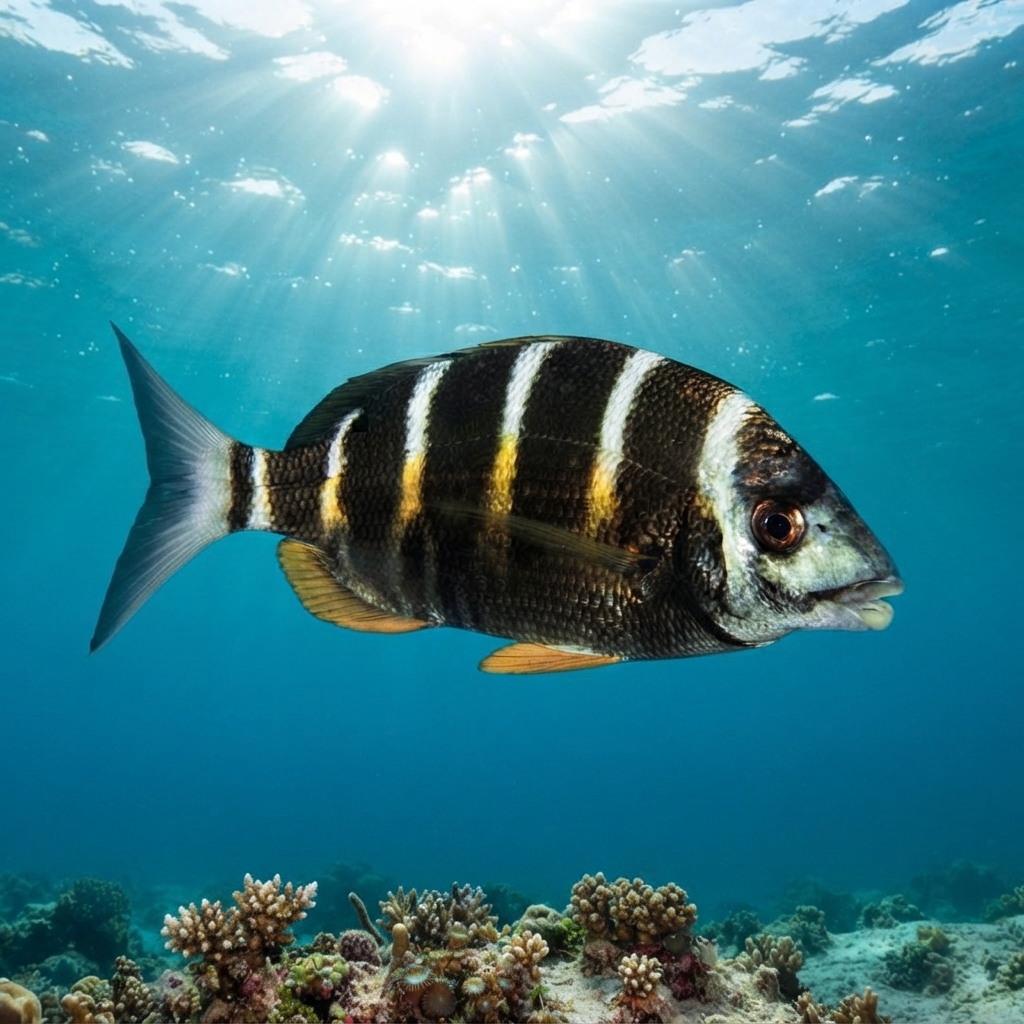
Diplodus fasciatus
Uncommon but findable off Sal and São Vicente, Cape Verde, this striped seabream turns up year-round in 21 to 27C water.
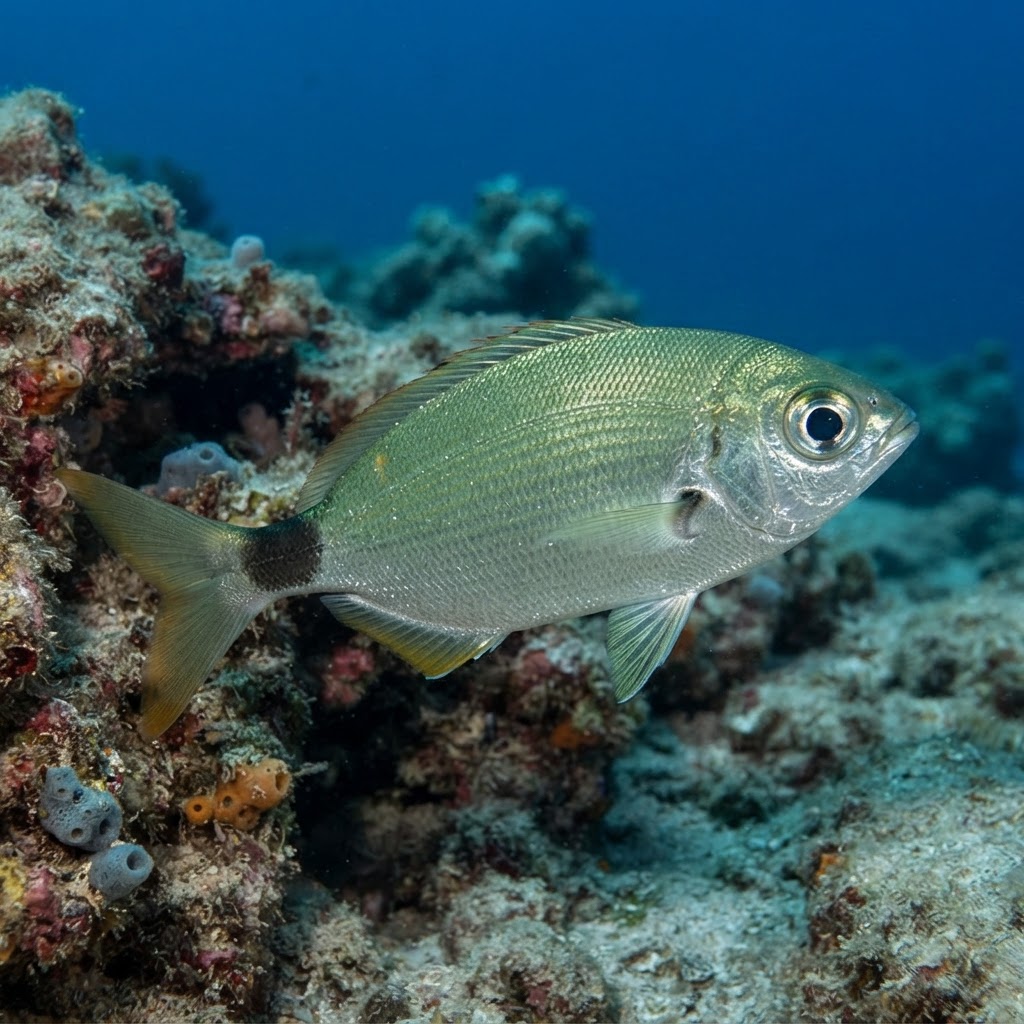
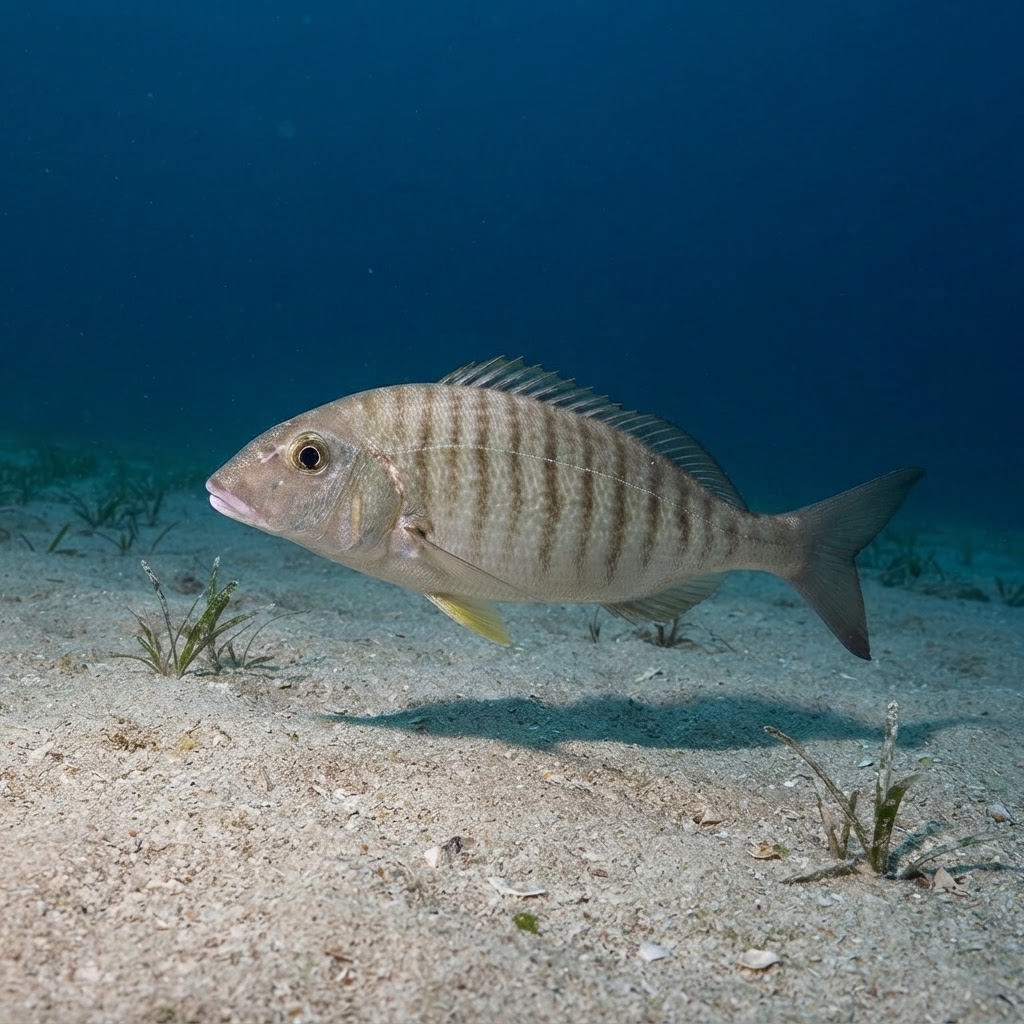
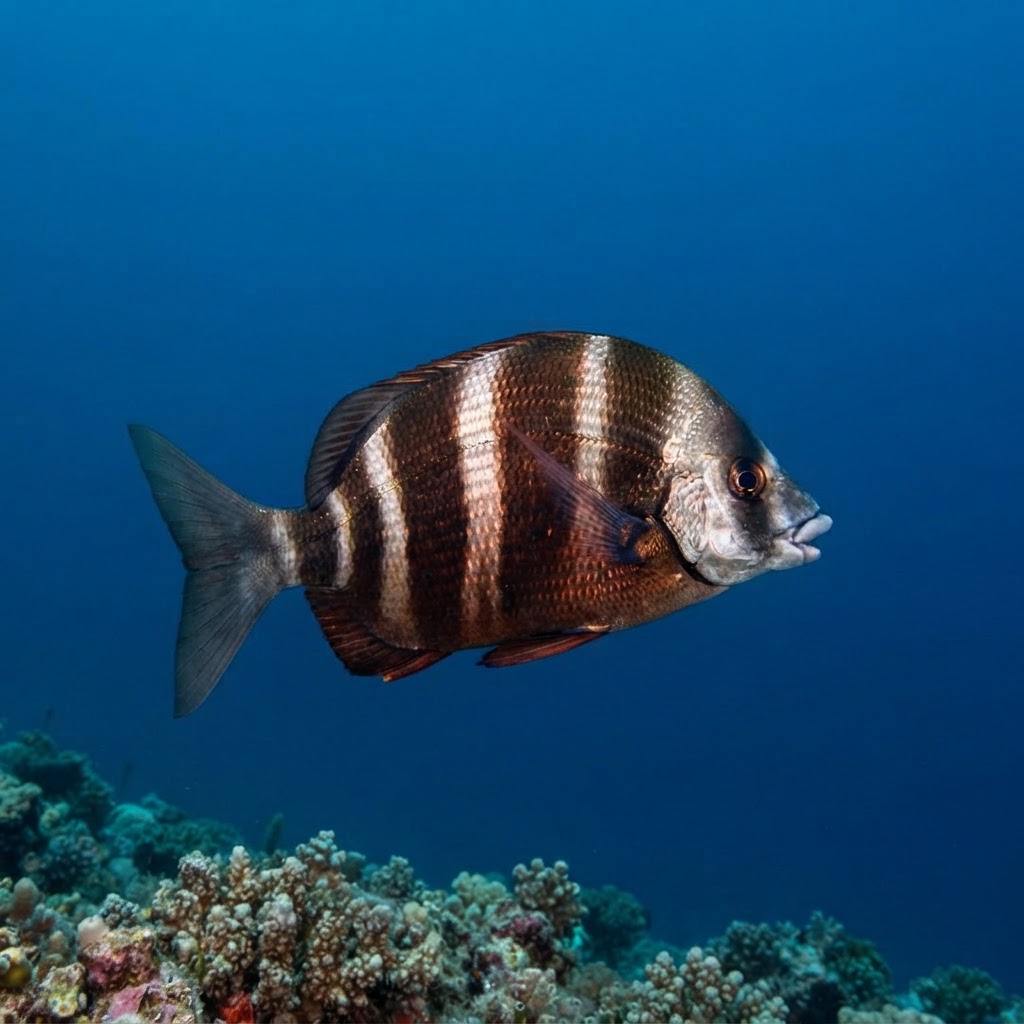
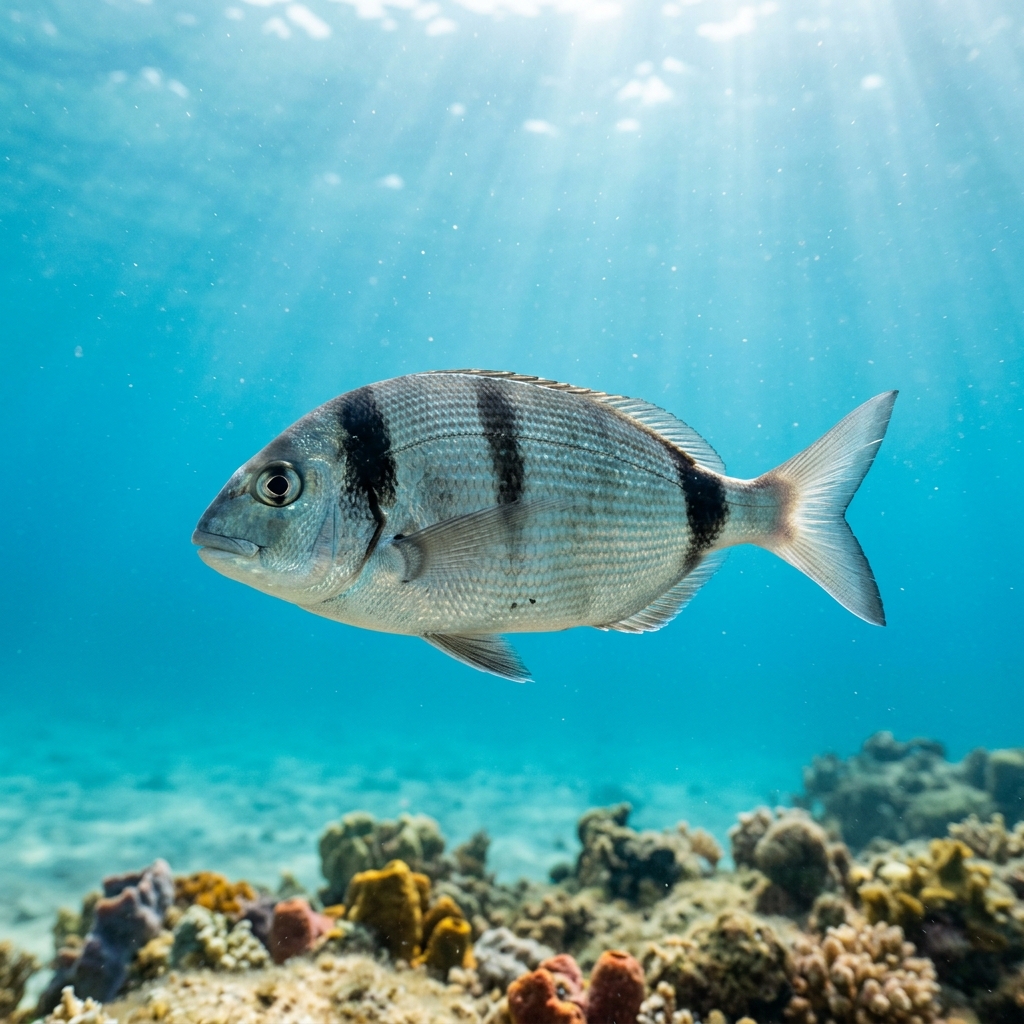
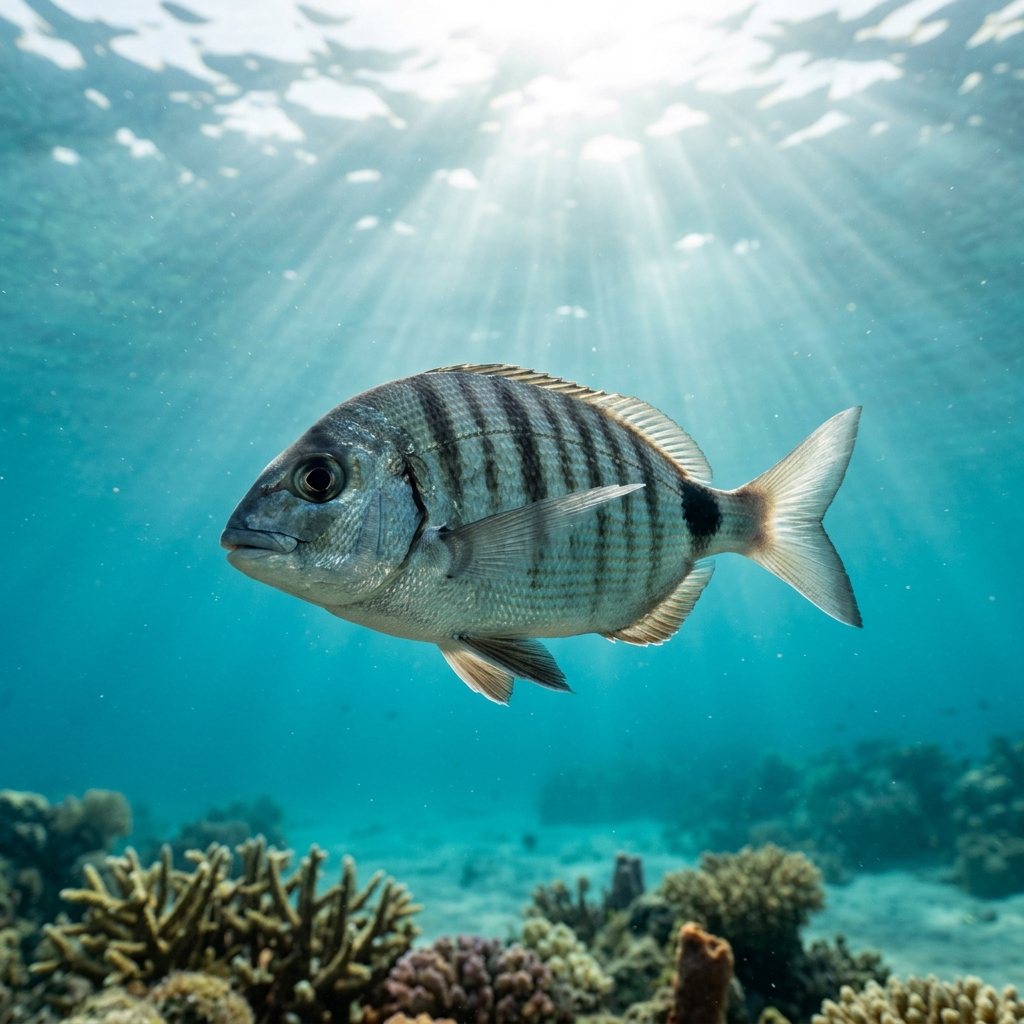
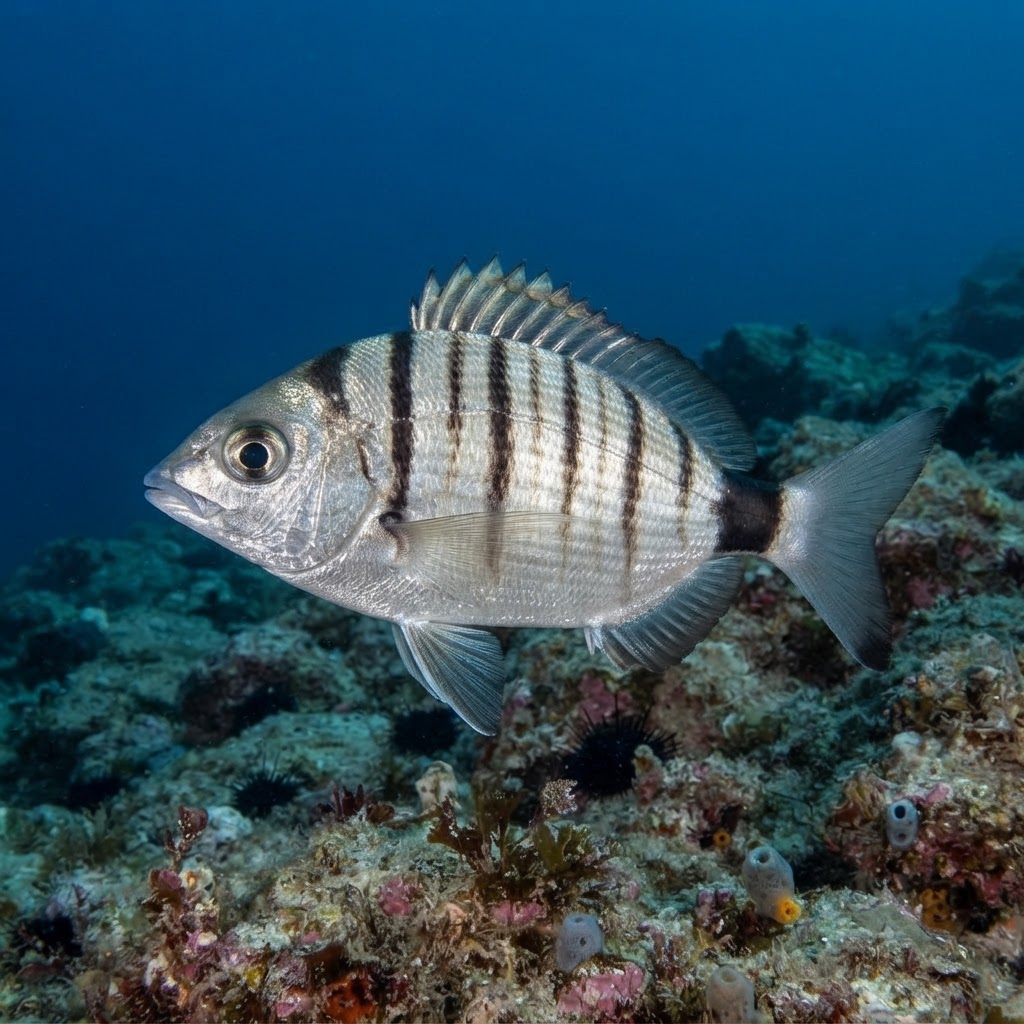
Silvery to grey body carrying a series of dark vertical bars down the flanks, with a more pronounced black band across the tail base. Grows to around 31 cm, deep-bodied and oval in profile like other seabream, with a blunt snout. The tail-base bar and the repeated body bars together are the quickest way to separate it from plainer sparids on the same reef.
Divers typically find it cruising alone or in small loose groups over rocky and mixed reef ground, moving at an unhurried pace rather than darting for cover. It tends to keep a bit of distance from divers but doesn't bolt outright, making it a patient-approach subject rather than a photo-friendly poser. Most logs describe single fish worked into the background of a reef scene rather than a dedicated sighting.
Like other Diplodus seabream, it feeds by picking invertebrates and small prey off rock and reef surfaces, so it's often seen nose-down working a ledge rather than swimming in open water.
No clear seasonal pattern shows up in the sighting data, and the 21 to 27C temperature range it's logged in matches Cape Verde's water year-round, so any month is worth a look.
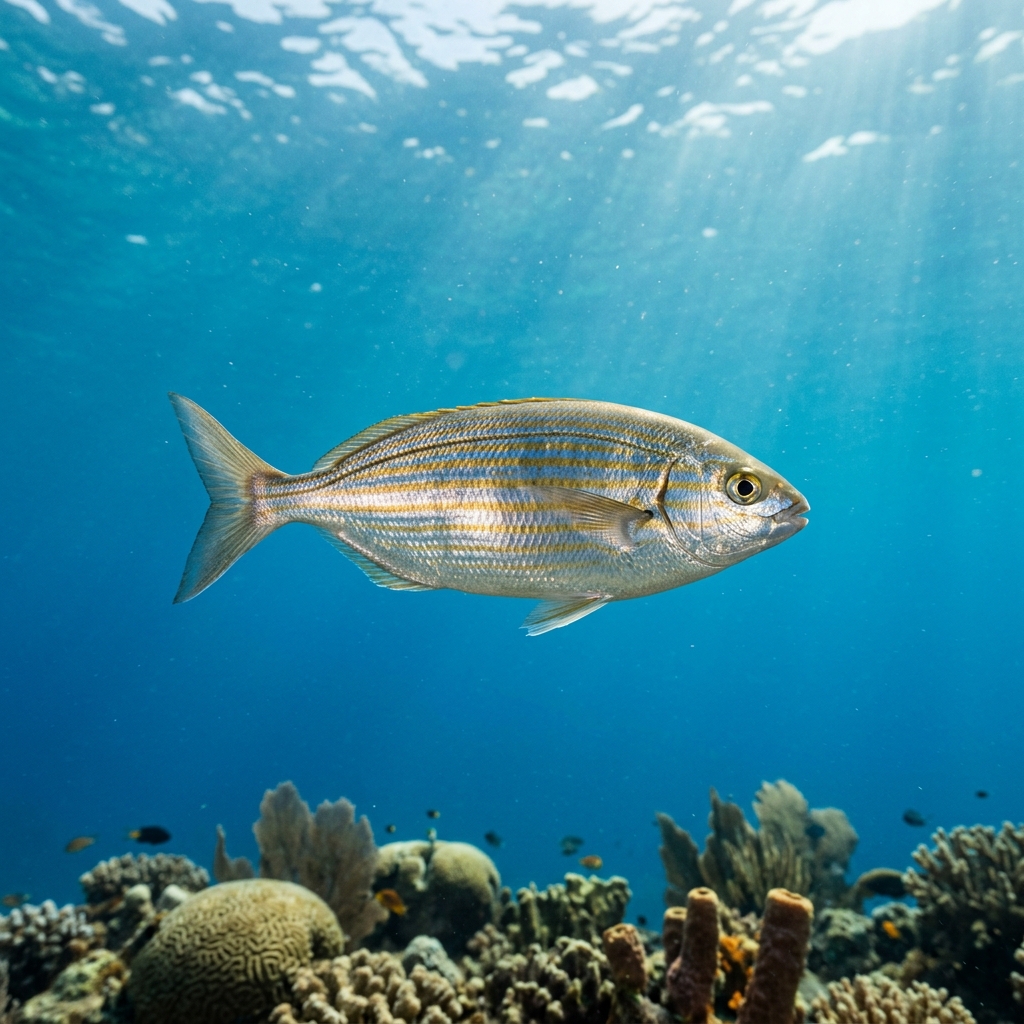
Reef neighbours a diver could mistake it for. Use the identification notes above to tell them apart.
Cape Verde is the place for this one, with sightings concentrated around Sal, São Vicente and Santo Antão. It shows up as an uncommon to occasional find at reef and rocky sites across these islands rather than a guaranteed encounter.
Mapping where Banded Seabream is logged…
Cape Verde is the reliable spot, particularly around Sal, São Vicente and Santo Antão, where it turns up as an uncommon to occasional sighting on rocky and reef terrain.
There's no strong season in the sighting data. It's recorded in water from about 21 to 27C, which covers Cape Verde's conditions most of the year, so it's a reasonable year-round target.
Look for a silvery, deep-bodied fish around 31 cm with dark vertical bars along its sides and a bolder dark band at the base of the tail. The tail-base bar is the quickest tell against similar-looking sparids.
They reach around 31 cm, a typical mid-size sparid build, deep-bodied rather than long and slender.
No. They're not considered dangerous to divers and simply go about their business over rock and reef ground, keeping a modest distance if approached.
Site and sighting data is aggregated from diver logs, iNaturalist and GBIF. For taxonomy and conservation status:
Saddled Bream
3,846 sites