Chloroscombrus chrysurus
A silvery, deep-bodied jack with a dark tail spot, most often logged uncommon around Florida in water between 23 and 28C, year-round.
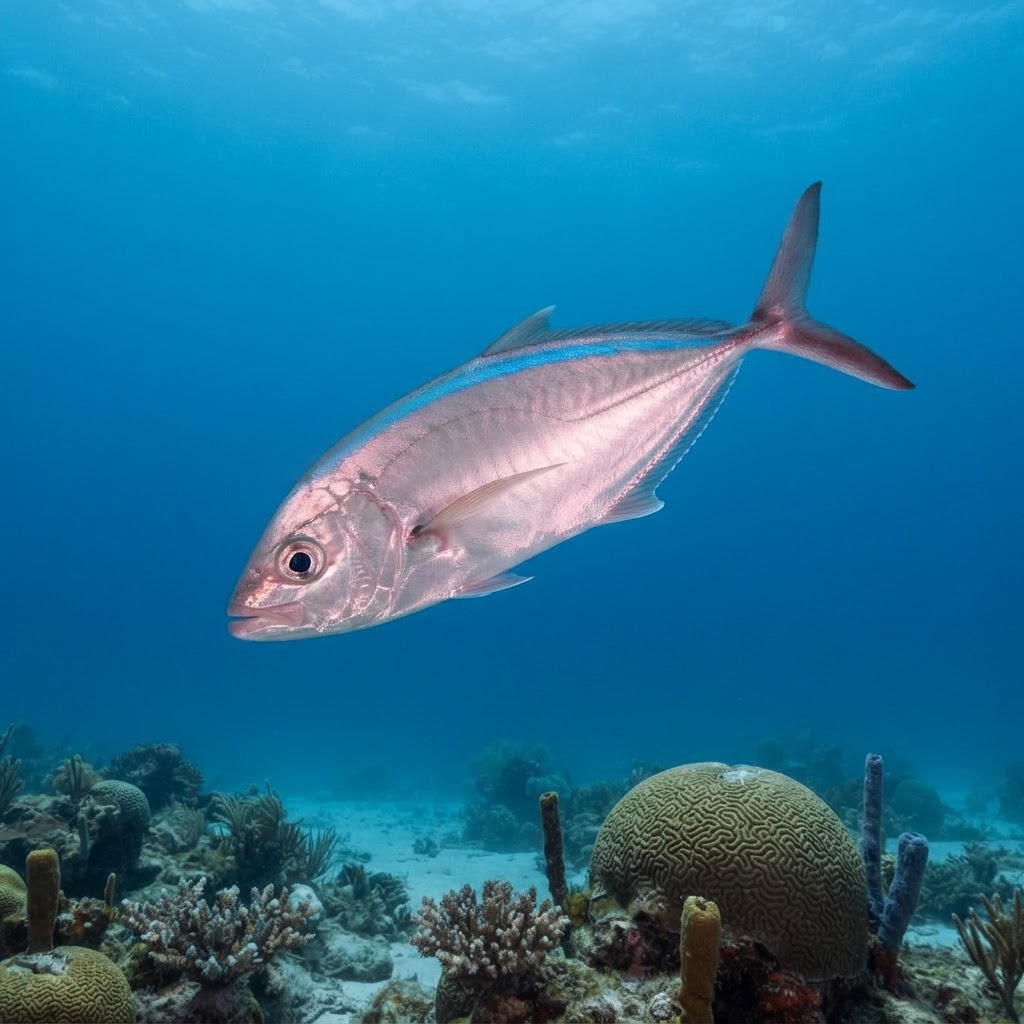
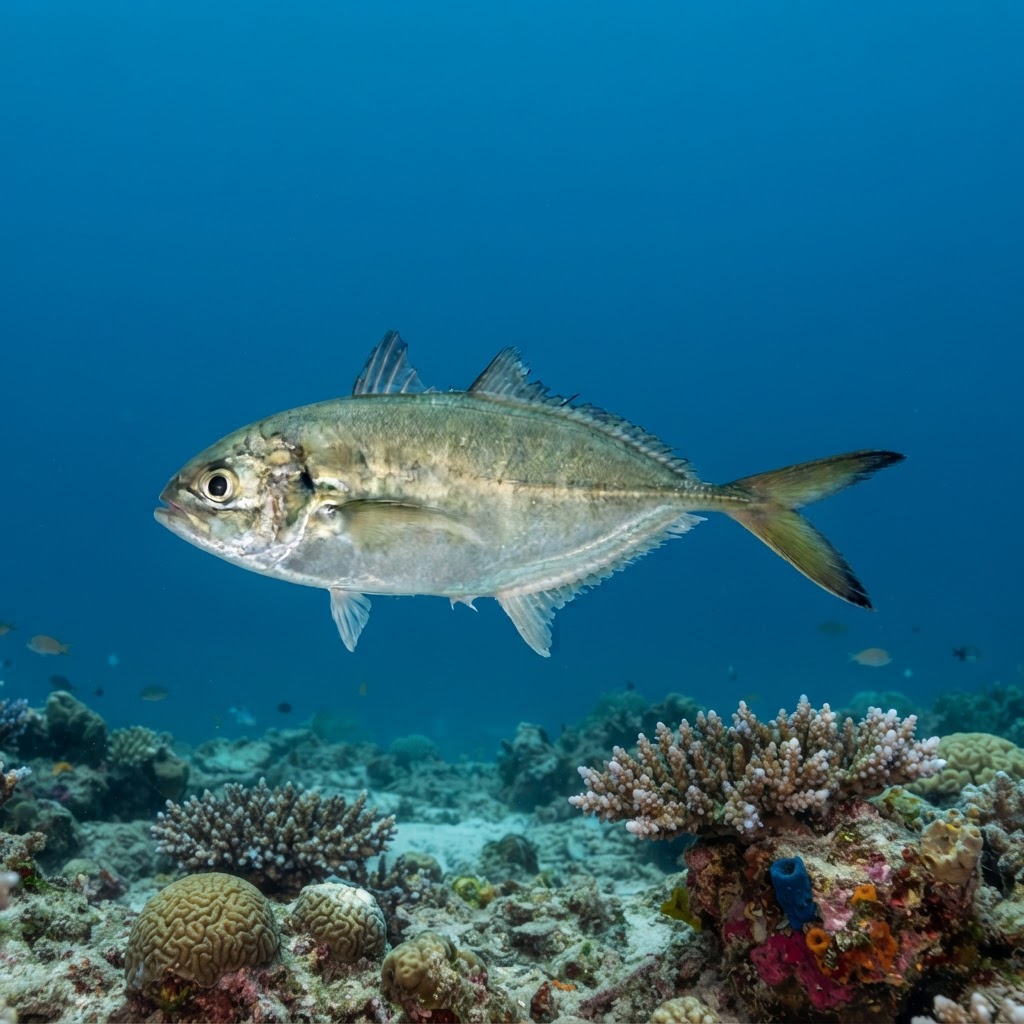
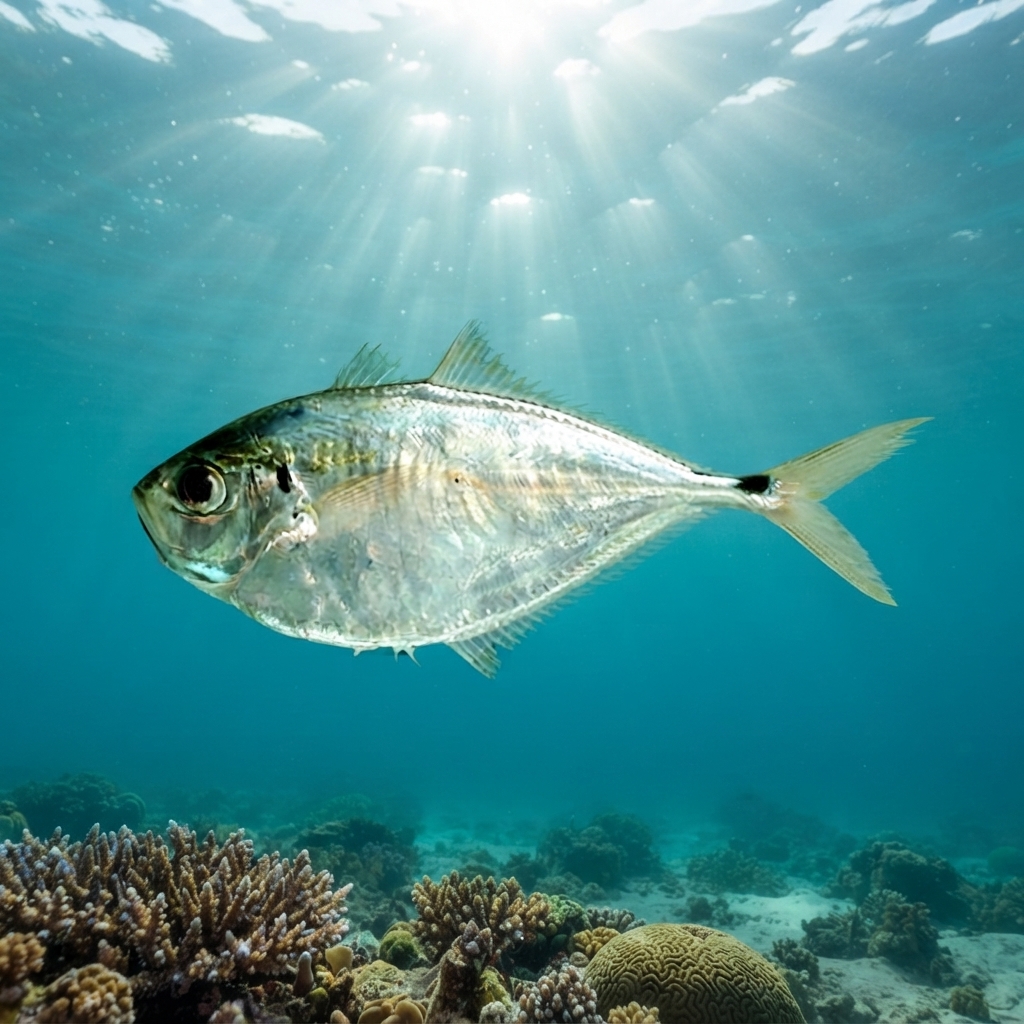
Look for a deep, flattened, coin-shaped body that flashes silver-gold as it turns, with a strongly curved back profile and a sharply forked tail. The giveaway mark is a small dark spot at the base of the tail, often paired with a dark blotch near the gill cover. It sits smaller than most jacks you will see on the same reef, topping out around 46 cm, and tends to show up as loose, moving groups rather than lone fish.
Divers usually find it hovering in loose, mixed groups over sand flats or open water near reef structure rather than tight against the bottom. It stays fairly relaxed around divers, drifting and circling rather than bolting, and its flattened body flashes bright silver as it turns side-on to the light. It is logged as uncommon at most sites, so a sighting is a nice surprise rather than a given, and worth scanning for in mid-water rather than on the reef itself.
That dark spot near the tail is a classic juvenile-mimicry trick in this family: young jacks with an eyespot near the tail confuse predators about which end is the head, buying a split second to escape.
Sightings do not show a clear seasonal pattern, and the observed temperature range of 23.2 to 28.0C covers Florida's water conditions for most of the year, so this is best treated as a year-round possibility rather than a seasonal target.
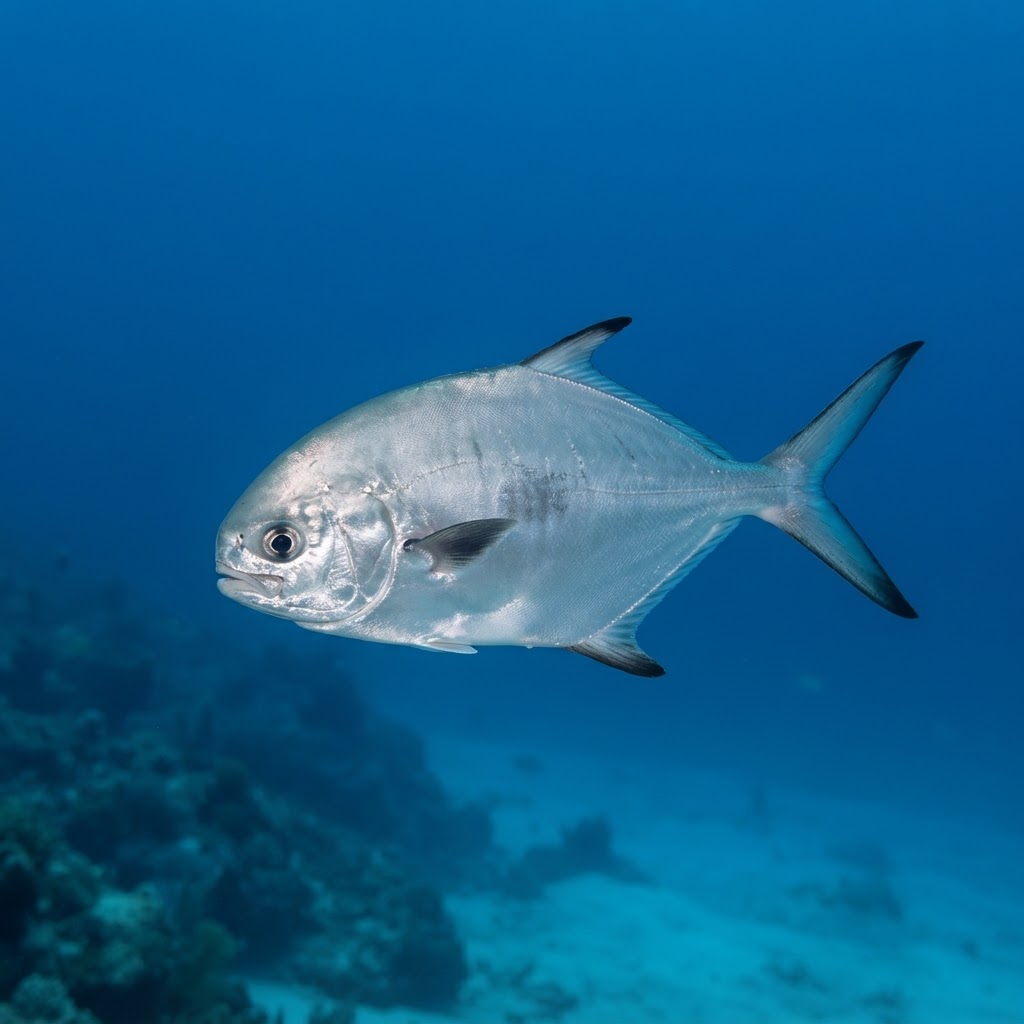
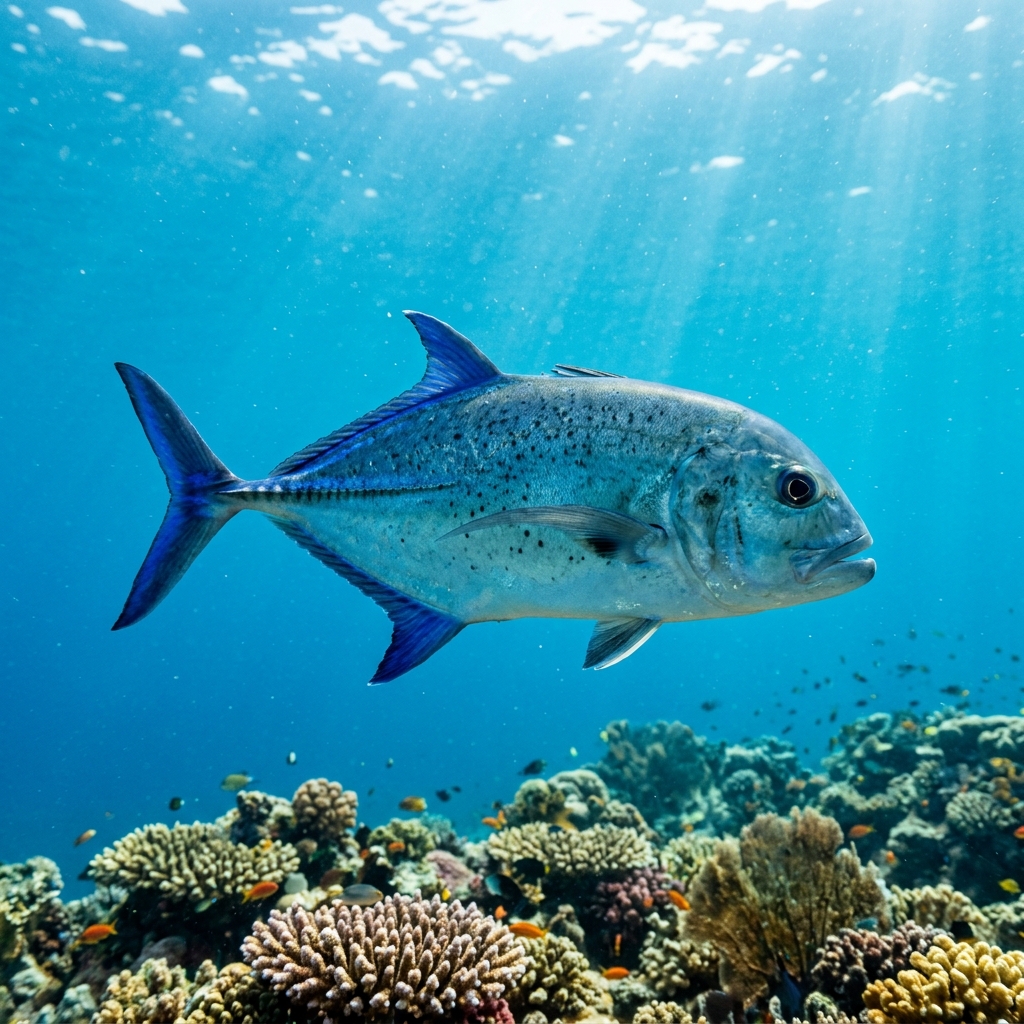
Reef neighbours a diver could mistake it for. Use the identification notes above to tell them apart.
Almost all logged sightings come from the United States, with Florida by far the strongest area and a smaller scatter of records from Texas. Within Florida it turns up across a wide range of sites rather than clustering in one hotspot, so it is more a case of keeping an eye on open water and sandy patches near reef edges than seeking out a single dive site.
Mapping where Atlantic Bumper is logged…
Florida is by far the strongest area for sightings, with a smaller number of records from Texas. It shows up at a wide spread of sites rather than being tied to one famous location.
There is no clear season in the data, so treat it as a year-round possibility. It has been observed in water from 23.2 to 28.0C, a range Florida holds for most of the year.
Check for a deep, flattened, silvery body with a strongly arched back and a forked tail, plus a small dark spot at the base of the tail. It runs smaller than many similar jacks, usually under 46 cm, and travels in loose groups.
They typically reach around 46 cm, making them smaller and more compact than many of the jacks and trevallies they get mistaken for underwater.
No, they pose no danger to divers and are not known for any aggressive or defensive behaviour toward people in the water.
Site and sighting data is aggregated from diver logs, iNaturalist and GBIF. For taxonomy and conservation status:
Bigeye Trevally
2,591 sites