Sepiola atlantica
A thumbnail-sized cuttlefish relative found on night dives in Zeeland and England, in 9 to 15C water, year-round.
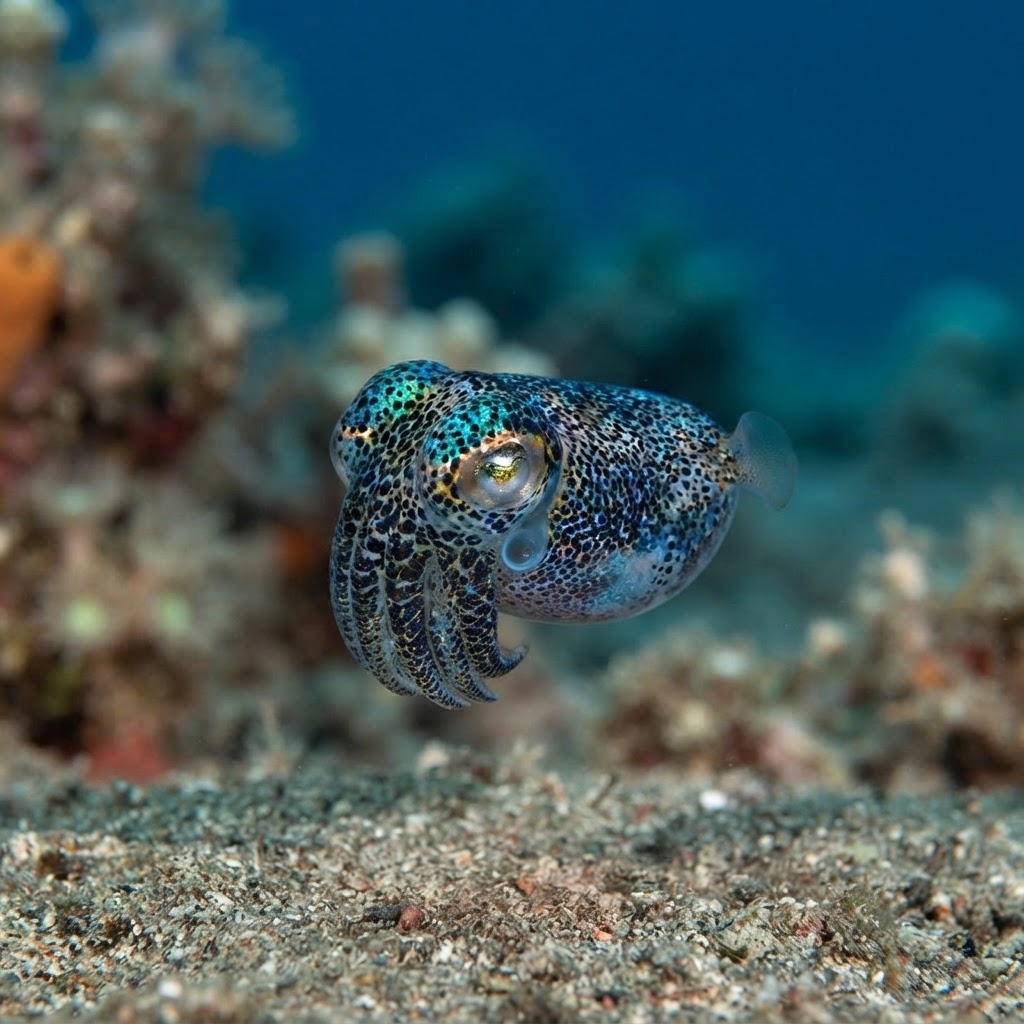
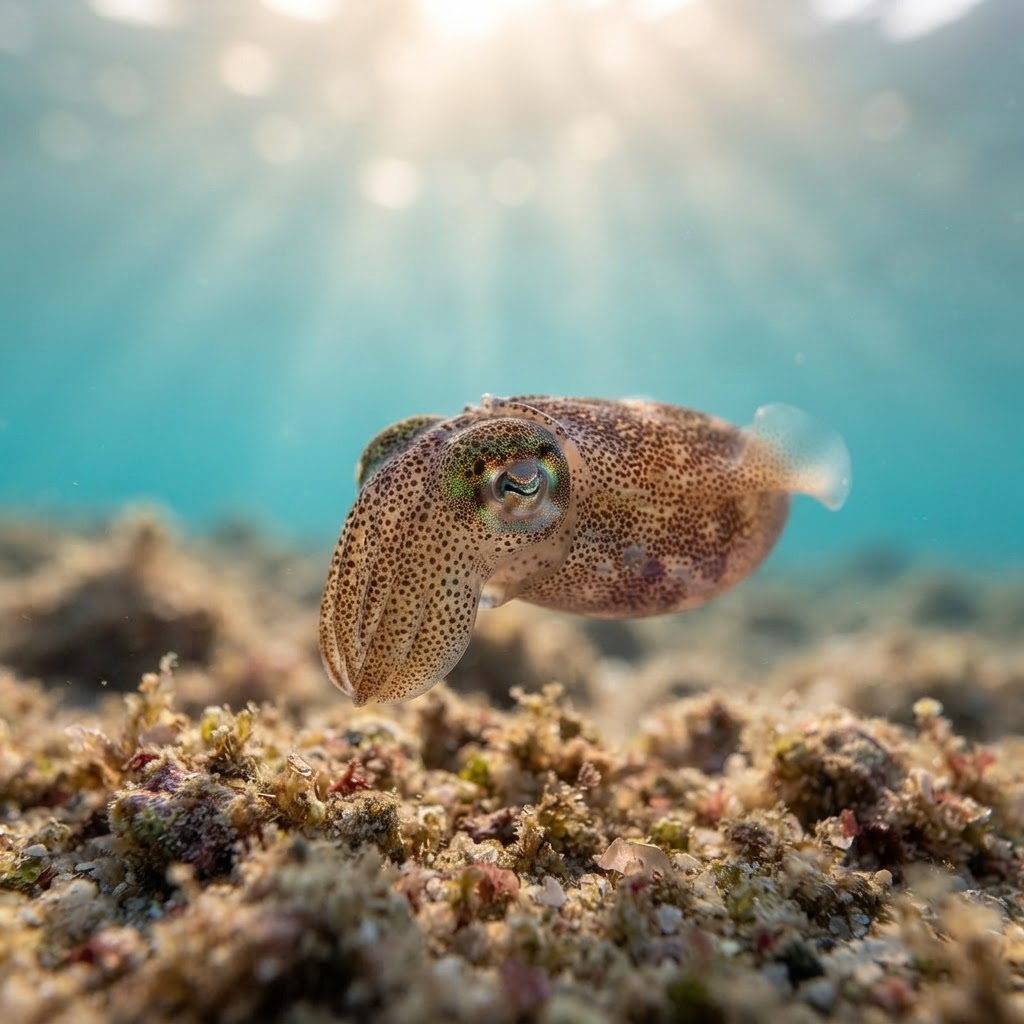
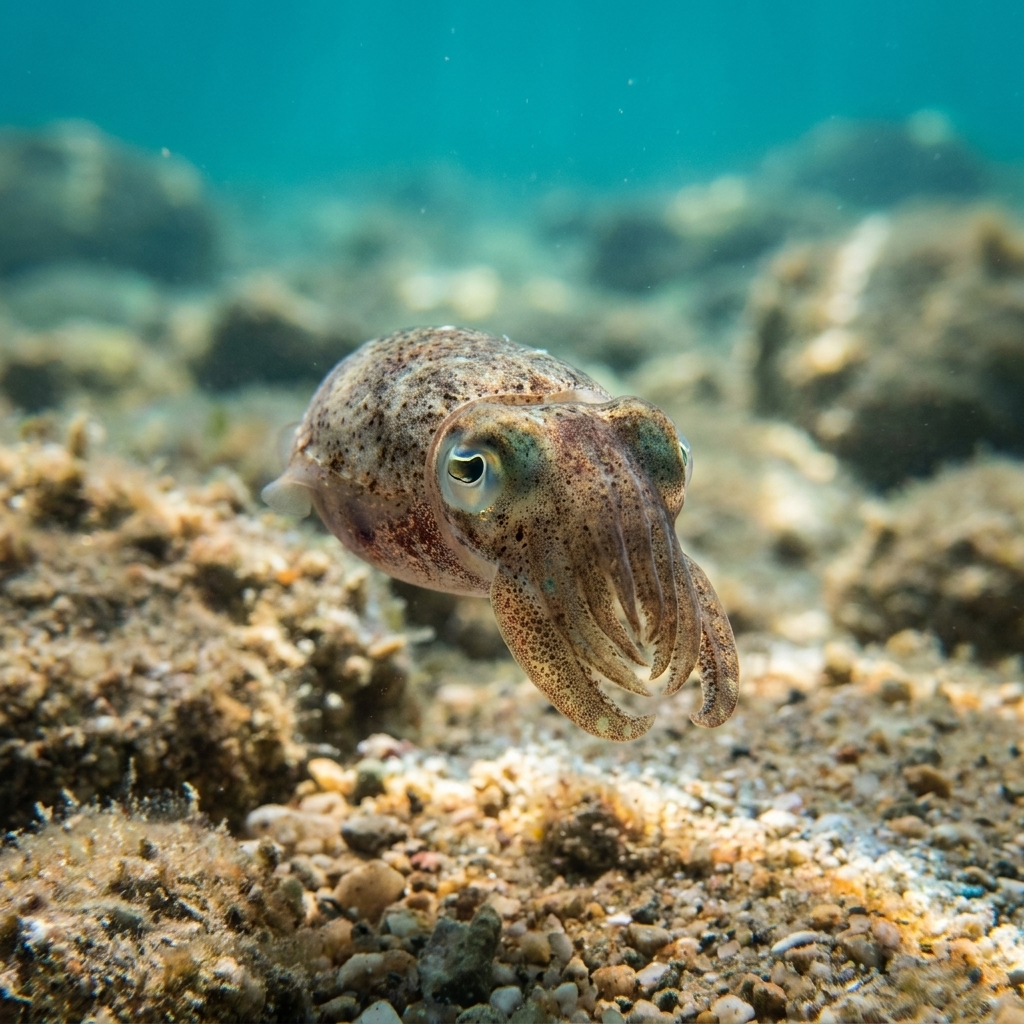
At around 1cm, this is one of the smallest cephalopods you will ever put a torch on, with a rounded, almost stubby body instead of the elongated shape you'd expect from a cuttlefish or squid. Colouring is mottled brown and cream, giving it excellent camouflage against sand and fine gravel, and it has small fins running along the sides of its stumpy mantle rather than the finned tail of a true squid. Look for it half-buried or sitting still on the bottom, often only given away by its two dark eyes catching the light.
Divers mostly find this one sitting motionless on sand or fine sediment, relying on camouflage rather than fleeing when a torch beam passes over it. It is most often picked up on slower, close-focus dives where divers are scanning the substrate rather than the water column, and night dives improve your odds since it is more active after dark. Approach slowly and it will usually stay put rather than jet away.
Despite the name, it is not a true bobtail squid but a small cuttlefish relative in the family Sepiolidae, and like other sepiolids it can bury itself in sediment with only its eyes exposed.
Sightings are logged year-round with no clear seasonal peak, which fits its cool-water niche of roughly 9 to 15C, conditions that hold for much of the year in Zeeland and English coastal waters.
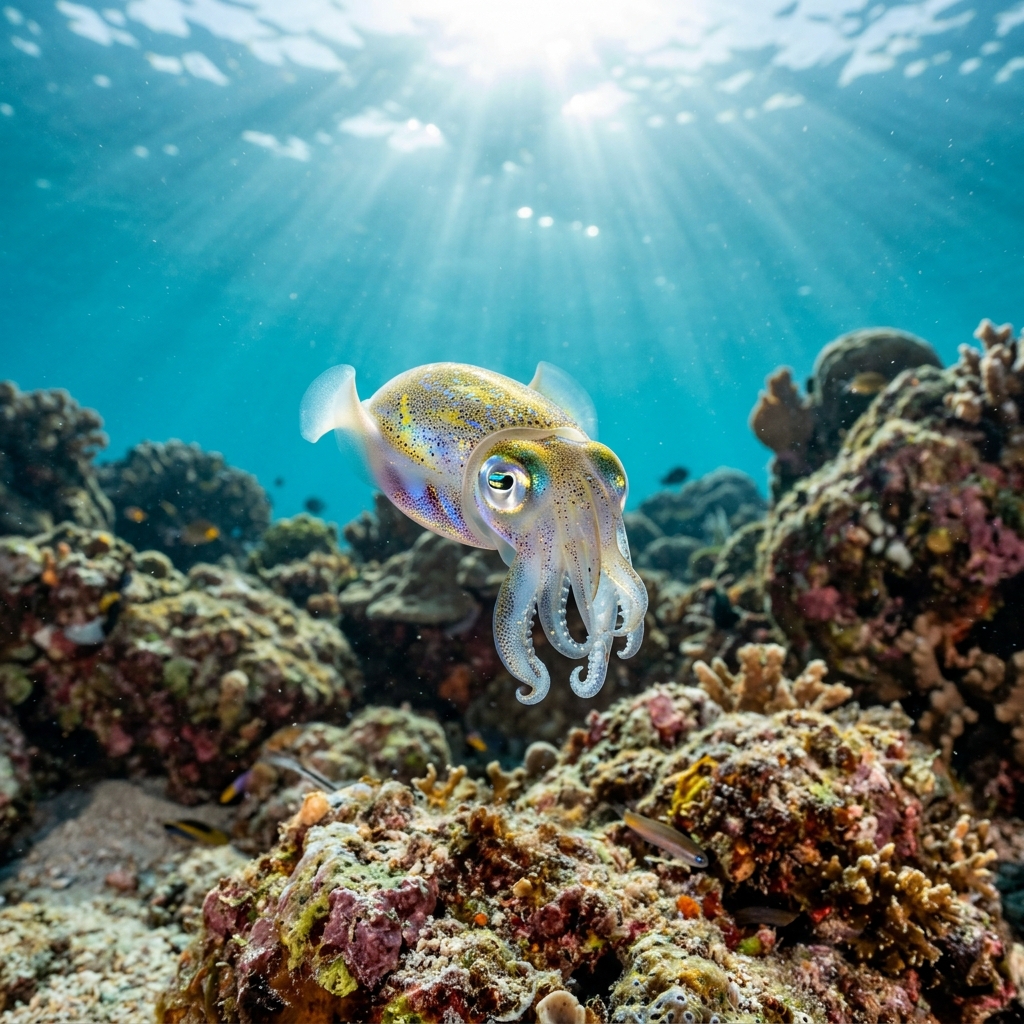
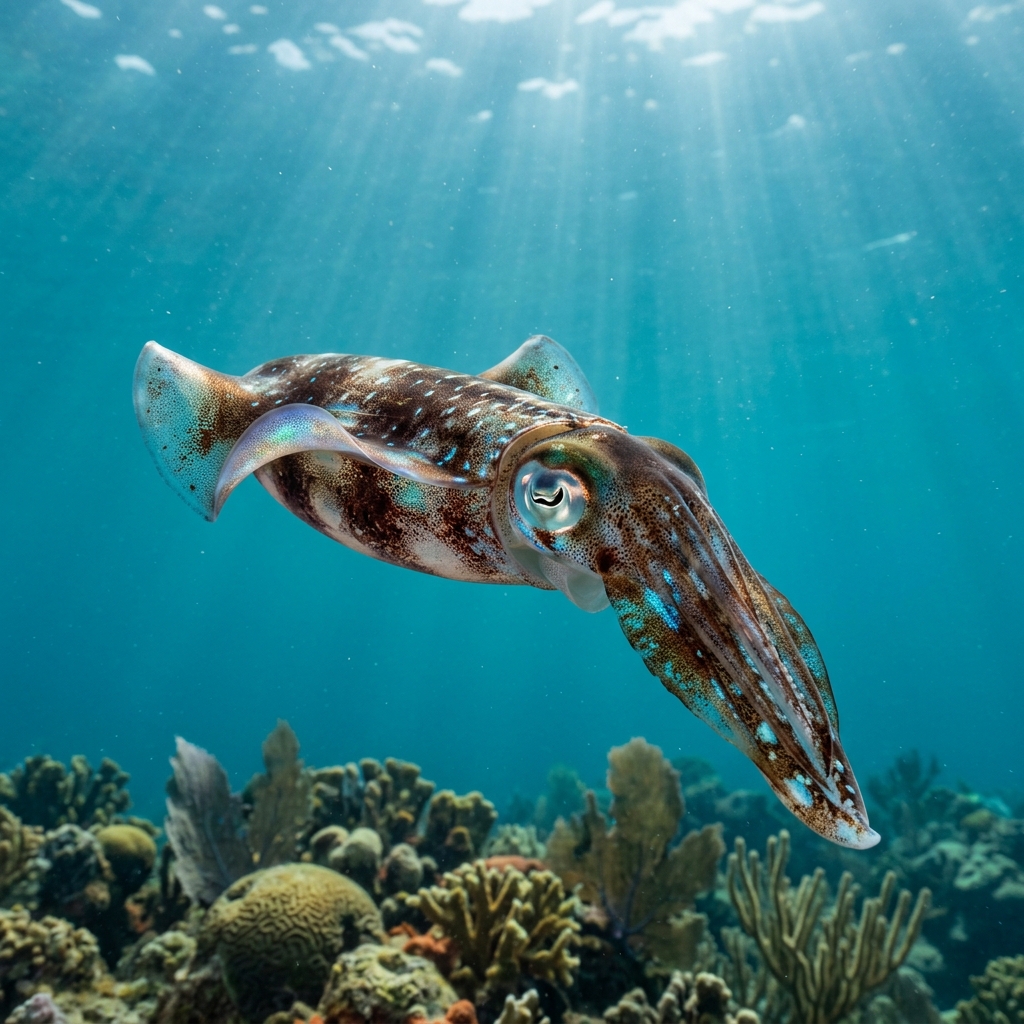
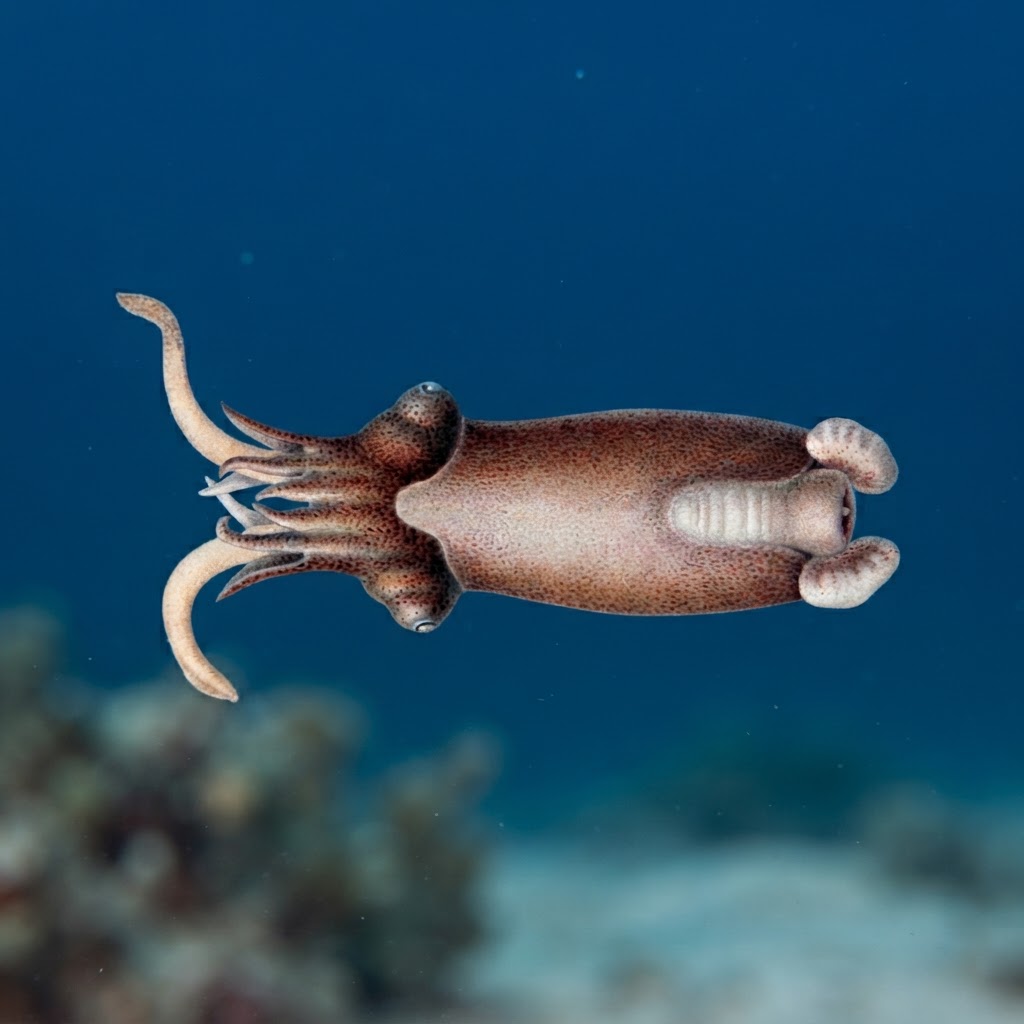
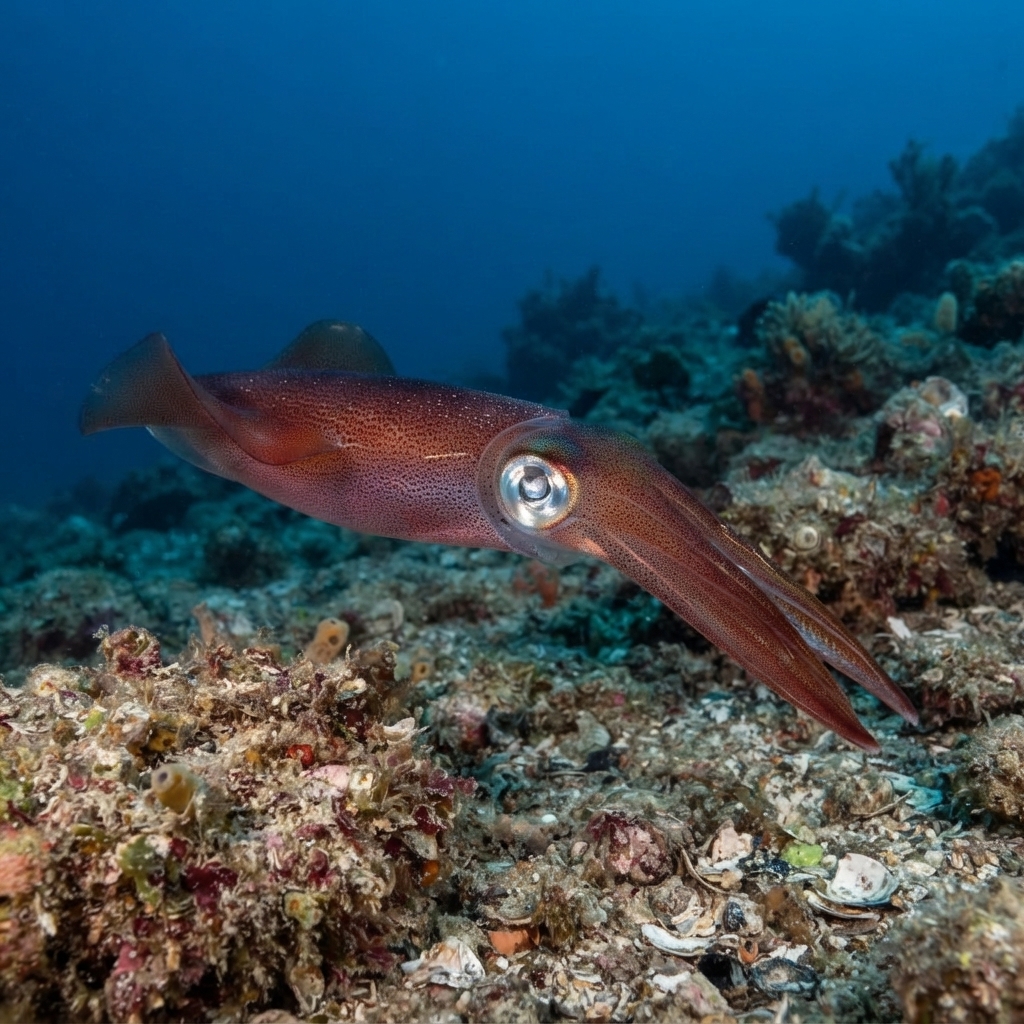
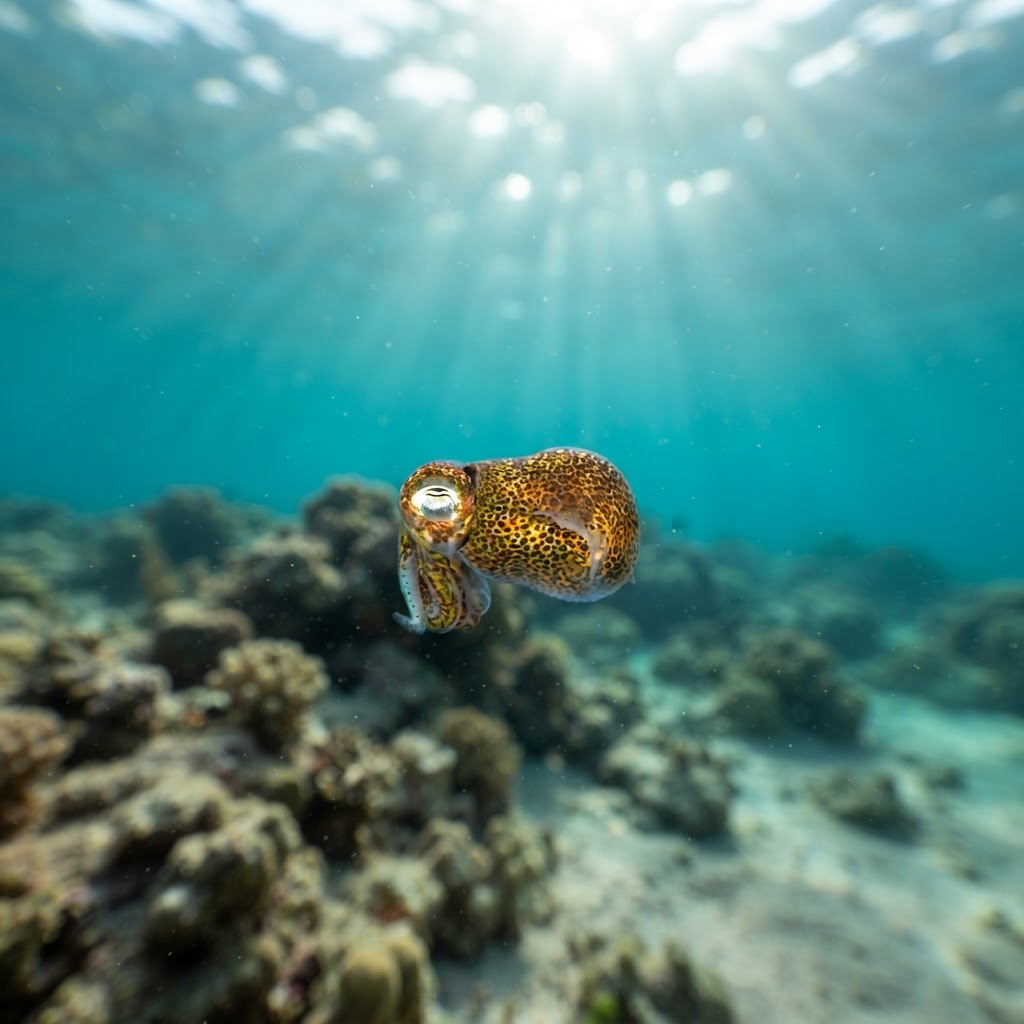
Reef neighbours a diver could mistake it for. Use the identification notes above to tell them apart.
Most reliably found in the Netherlands, especially around Zeeland, which accounts for the bulk of logged sightings. In the UK it turns up across England and, less often, Wales, usually as an uncommon or rare find on muddy or sandy sites rather than reef.
Mapping where Atlantic Bobtail is logged…
Zeeland in the Netherlands is the most consistent spot, with further sightings across England and Wales in the UK. It favours sandy or muddy seabeds rather than rocky reef.
There's no strong season in the data, so it's logged year-round in waters between about 9 and 15C. Night dives generally improve your chances of spotting one active on the seabed.
Look for a stubby, rounded body only about 1cm long, mottled brown and cream for camouflage, with small side fins rather than an elongated squid shape. It usually sits still on sand rather than swimming in open water.
Fully grown, this species reaches only around 1cm, making it one of the smallest cephalopods divers can encounter on a UK or Dutch dive.
It's not a true squid despite the common name, but a tiny relative of the cuttlefish that can bury itself in sediment, leaving only its eyes visible to watch for danger.
Site and sighting data is aggregated from diver logs, iNaturalist and GBIF. For taxonomy and conservation status:
Inshore Squid
390 sites