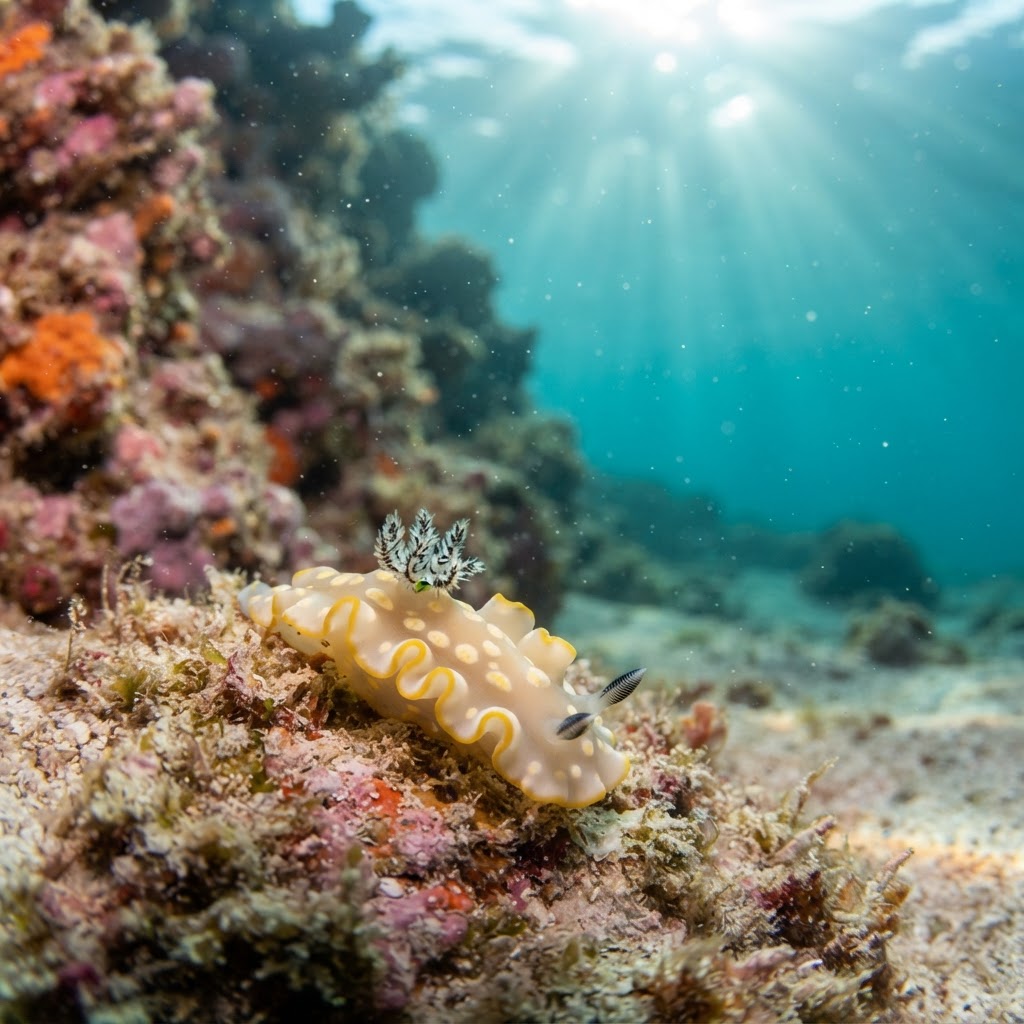
Ardeadoris tomsmithi
White-and-orange nudibranch found on Hawaii's reefs in 22.4-28.4C water, year-round and mostly uncommon to common at each site.
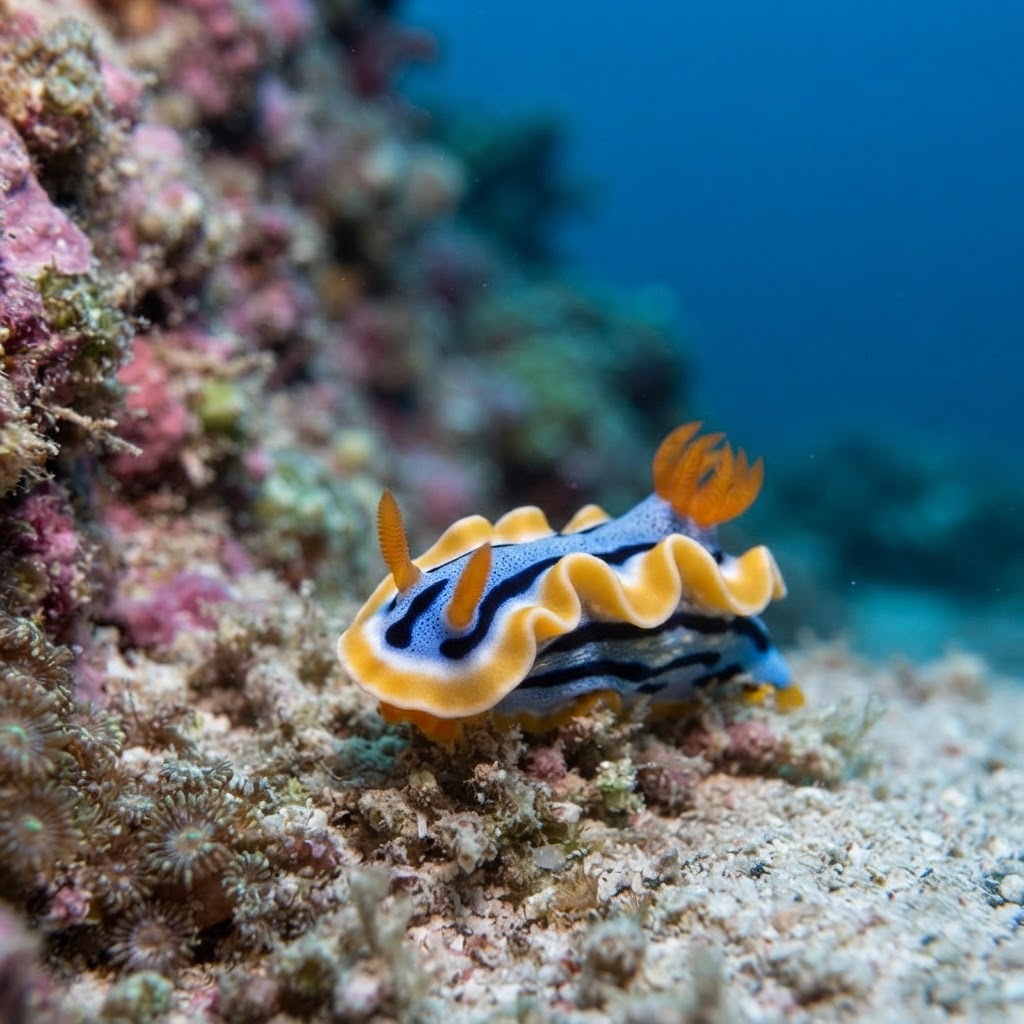
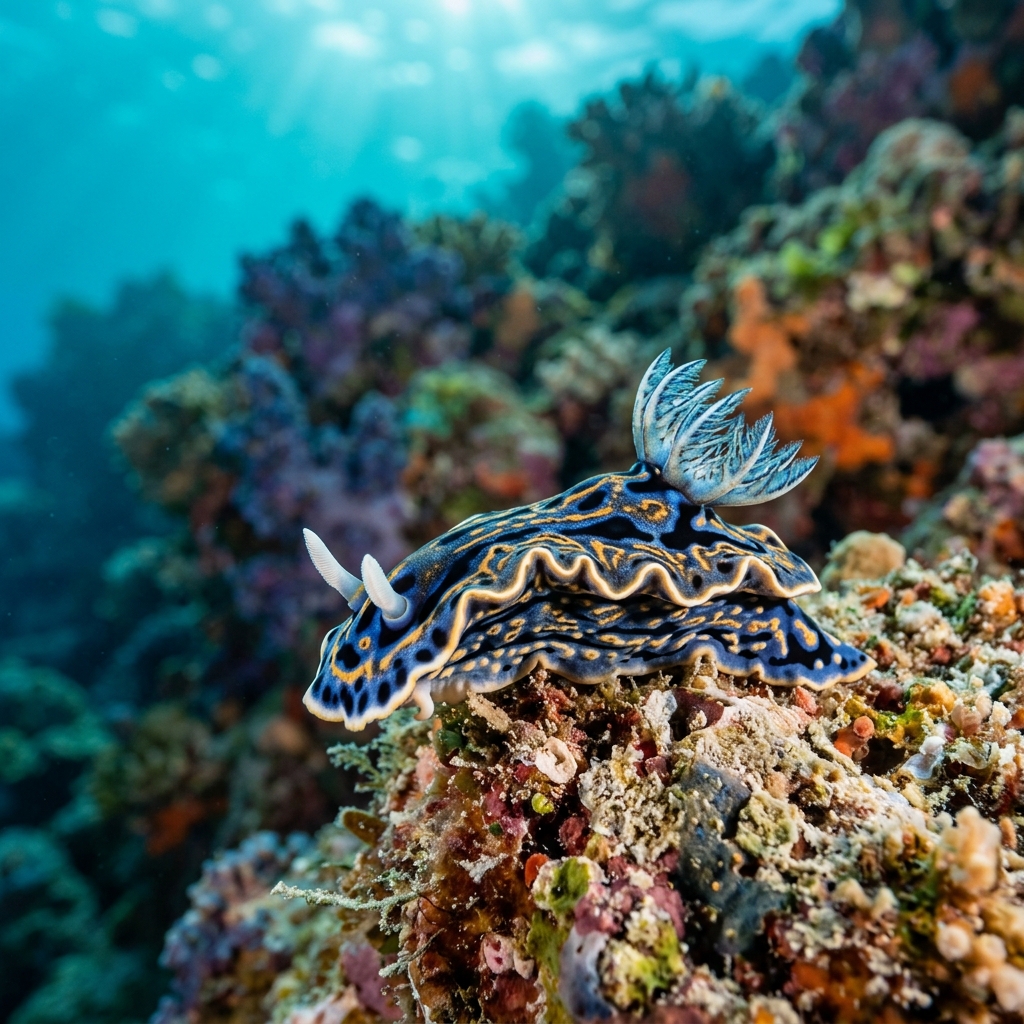
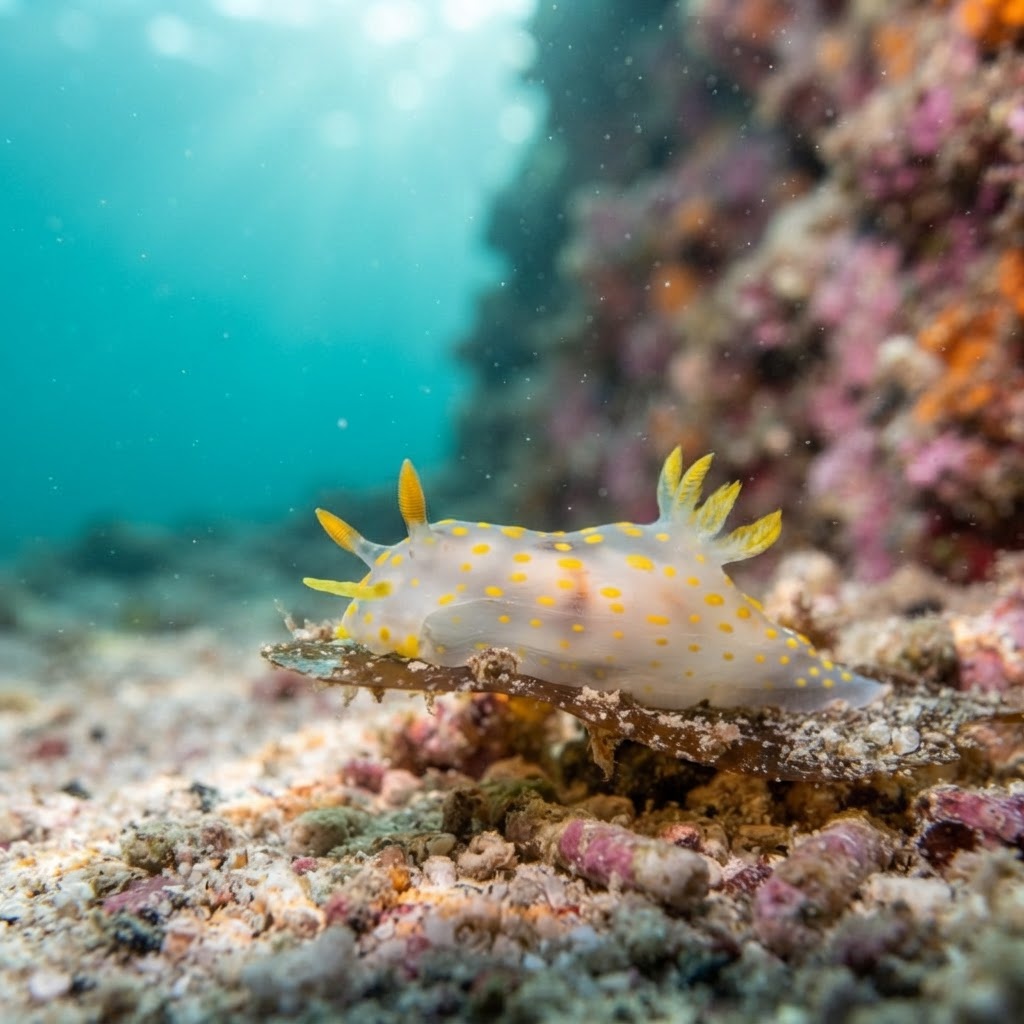
A small, soft-bodied sea slug (nudibranch) with a white to cream mantle rimmed in a band of orange or yellow along the edge. The surface carries scattered low tubercles (bumps) rather than a smooth gloss, and a pair of rhinophores (the small sensory horns on the head) usually shows the same orange tipping as the mantle margin. It moves slowly across hard bottom and rubble, so once you spot the colour contrast it is easy to hold in frame.
Divers typically find it parked on rock, rubble or reef structure rather than out in the open water, moving at the unhurried pace typical of nudibranchs as it grazes. It shows no reaction to divers beyond the odd retraction of its rhinophores if bumped, so it tolerates a close, slow approach for photos.
Like other chromodorid nudibranchs, it almost certainly feeds on sponges and stores or repurposes their chemical defences in its own tissue, which is part of why these slugs can afford to sit exposed on the reef in daylight without much cover.
Water temperatures at recorded sightings range from 22.4 to 28.4C, comfortably within Hawaii's year-round reef range, and there is no detectable seasonal pattern in the logs. Plan on it being a possibility on any Hawaii dive rather than a seasonal target.
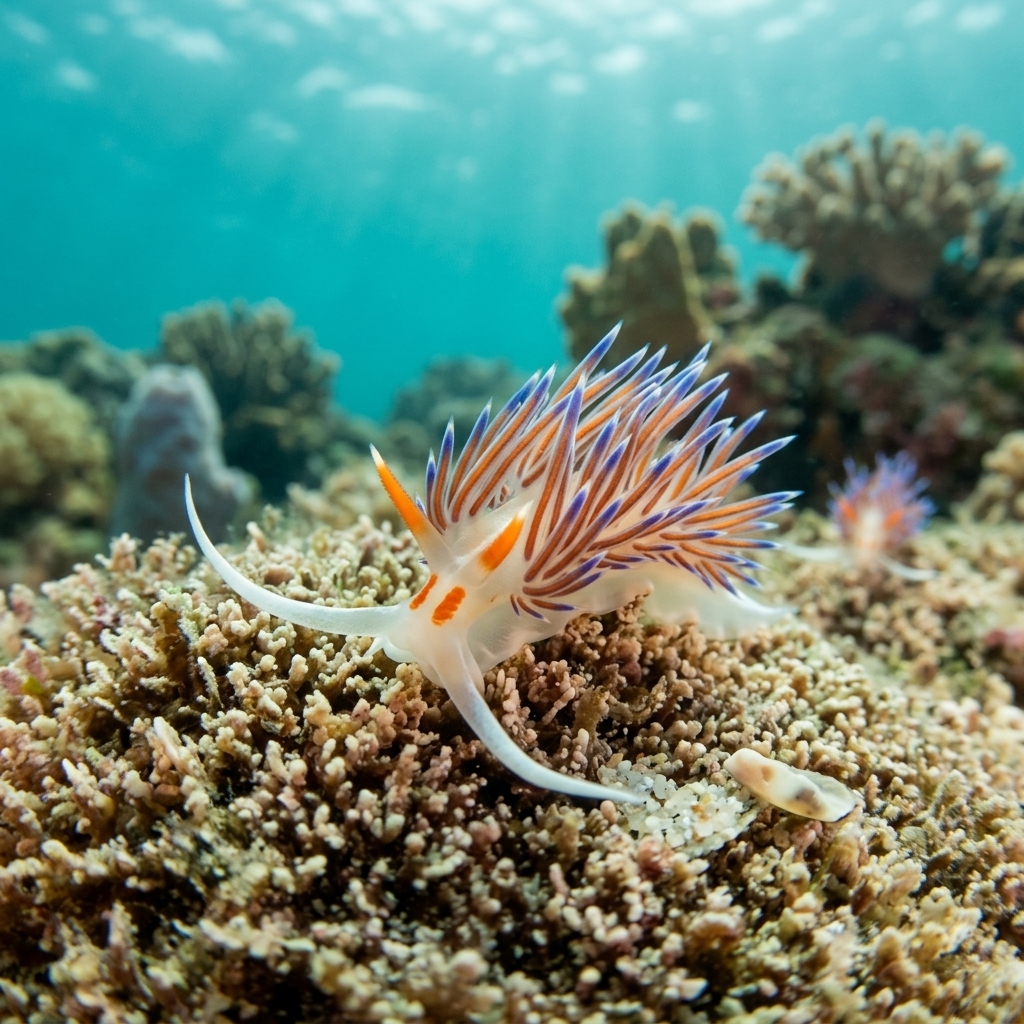
Reef neighbours a diver could mistake it for. Use the identification notes above to tell them apart.
Every logged sighting of this species so far comes from Hawaii, making it essentially a Hawaii speciality among divers documenting nudibranchs. Within the islands it turns up across a wide spread of sites, most often logged as uncommon with a smaller number of sites reporting it as a common find.
Mapping where Ardeadoris tomsmithi is logged…
All confirmed sightings are from Hawaii, spread across a wide range of dive sites there. It has not been documented elsewhere, so Hawaii is currently the place to look for it.
There is no clear seasonal pattern in the sightings, and it has been logged in water from 22.4 to 28.4C, which covers Hawaii's typical range year-round. Any time of year on a Hawaii dive trip is a reasonable shot.
Look for a white to cream body edged with an orange or yellow band around the mantle margin, with matching orange-tipped rhinophores on the head. The body surface has scattered low bumps rather than being smooth, and it moves slowly over rock or rubble.
Exact size data is not established for this species, but like most Chromodorididae nudibranchs it stays small, typically in the centimetre-to-a-few-centimetres range seen in the family.
No, it poses no danger to divers. It is a slow-moving, benthic (bottom-dwelling) sea slug that can be approached and photographed safely at close range.
As with related chromodorids, it almost certainly grazes on sponges, absorbing chemical compounds from its prey that may help defend it against predators. This diet-based chemical defence is common across the Chromodorididae family.
Site and sighting data is aggregated from diver logs, iNaturalist and GBIF. For taxonomy and conservation status:
Nudibranch
3,168 sites