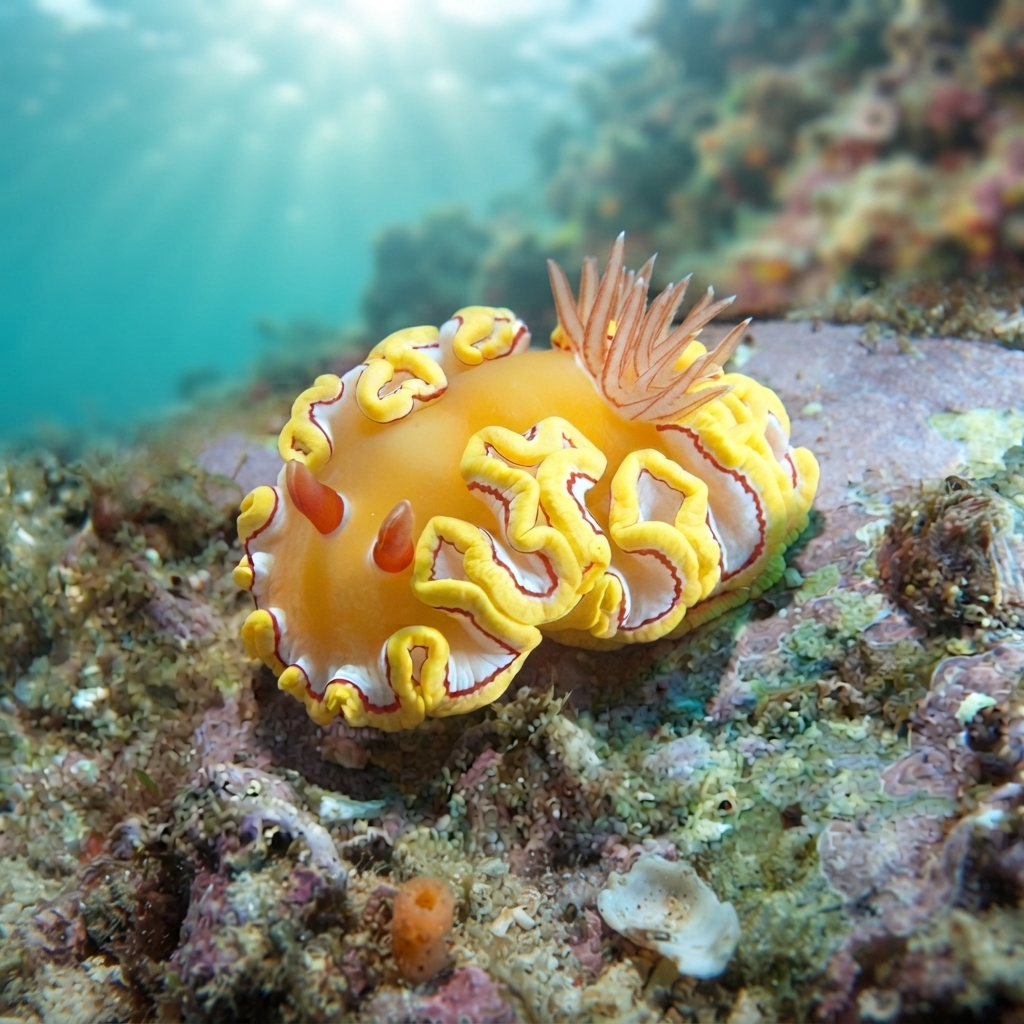
Ardeadoris rubroannulata
A rare find on Queensland and New South Wales reefs, this red-ringed nudibranch turns up year-round in 20-26C water.
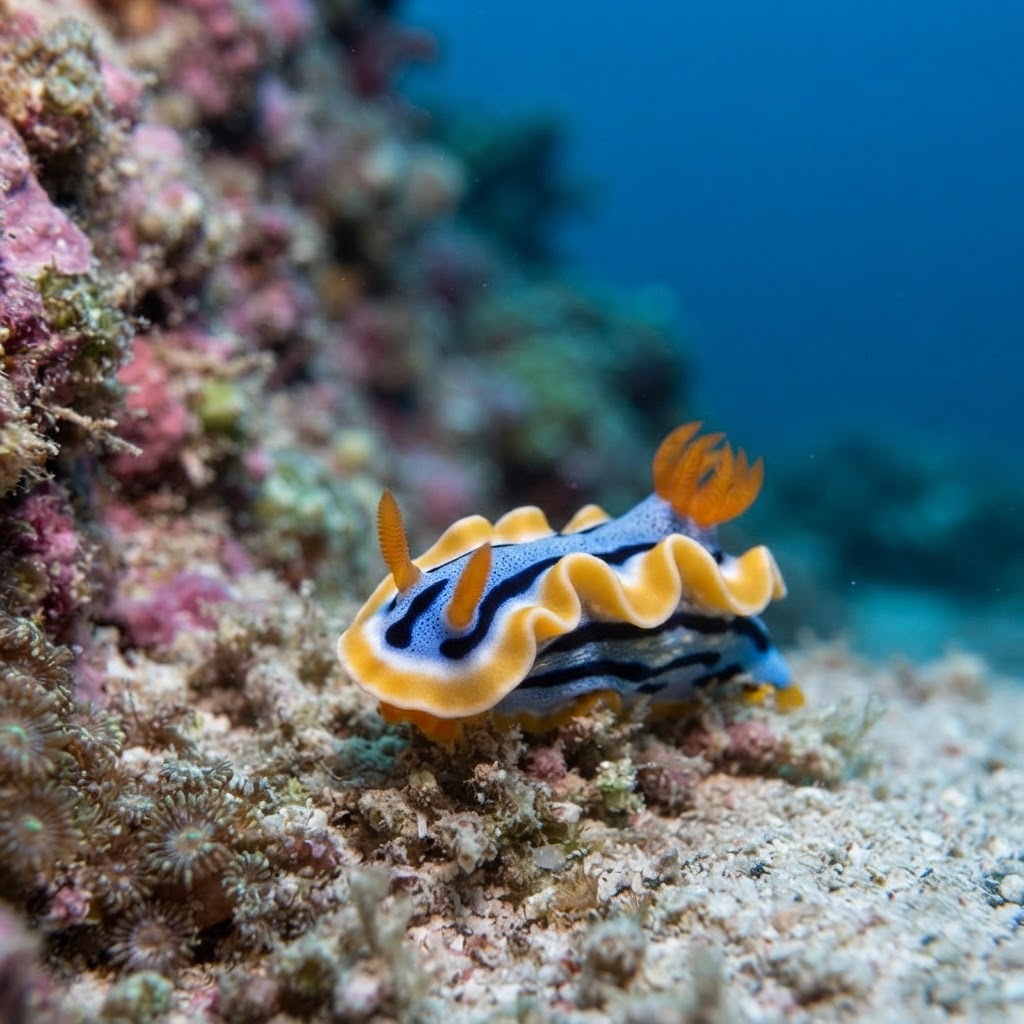
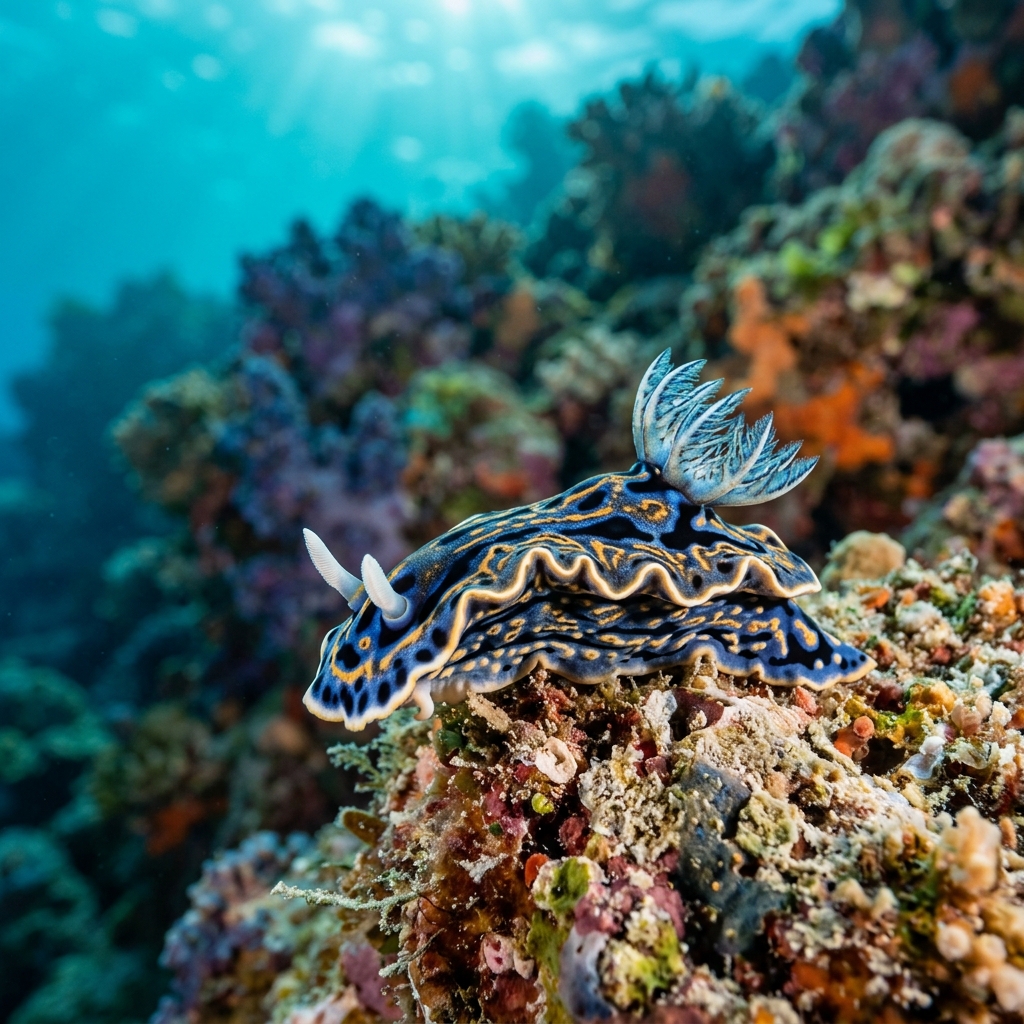
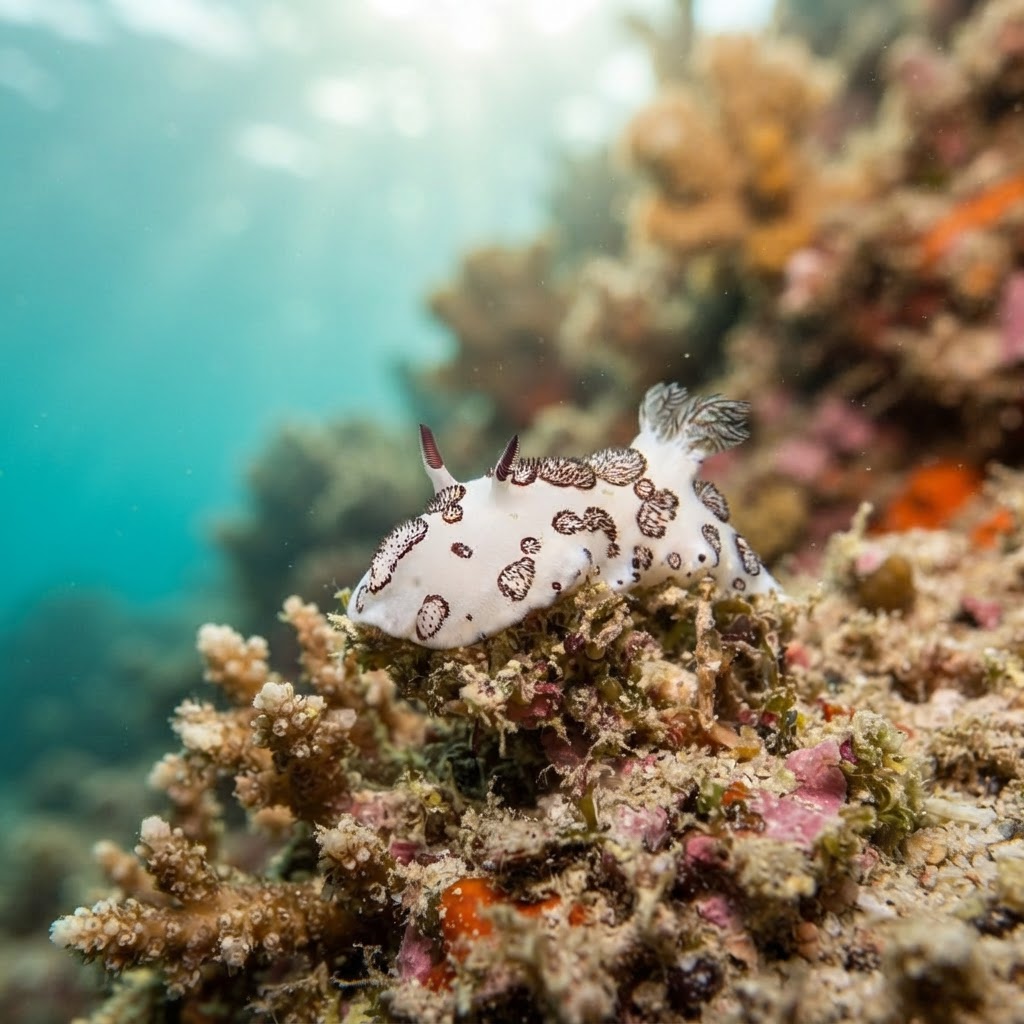
Look for a white to cream body marked with distinct red or orange ringed spots scattered across the mantle, giving this nudibranch its name. The body is soft and elongated, typically only a few centimetres long, with the frilly gills (a feathery breathing structure) and rhinophores (the paired sensory tentacles on the head) visible at either end. There is no strong colour difference reported between individuals, so the ringed pattern is the main thing to scan for against sponge-covered rubble or rock.
Like most chromodorid nudibranchs, it moves slowly across rock and rubble grazing on sponges, paying little attention to divers hovering nearby. Sightings tend to come from divers doing slow macro-focused passes over reef structure rather than mid-water swims, since this species stays put on the substrate rather than swimming. It is not schooling or social, so expect single individuals rather than groups.
Like other dorid nudibranchs, it likely feeds on specific sponges and can incorporate their chemical defences into its own tissue, which is part of why many chromodorids display bold warning colouration rather than trying to hide.
Sightings show no clear seasonal pattern, so it is best treated as a year-round find within its observed temperature range of roughly 20 to 26C. Plan around water temperature rather than a calendar season when targeting this species in Queensland or New South Wales.
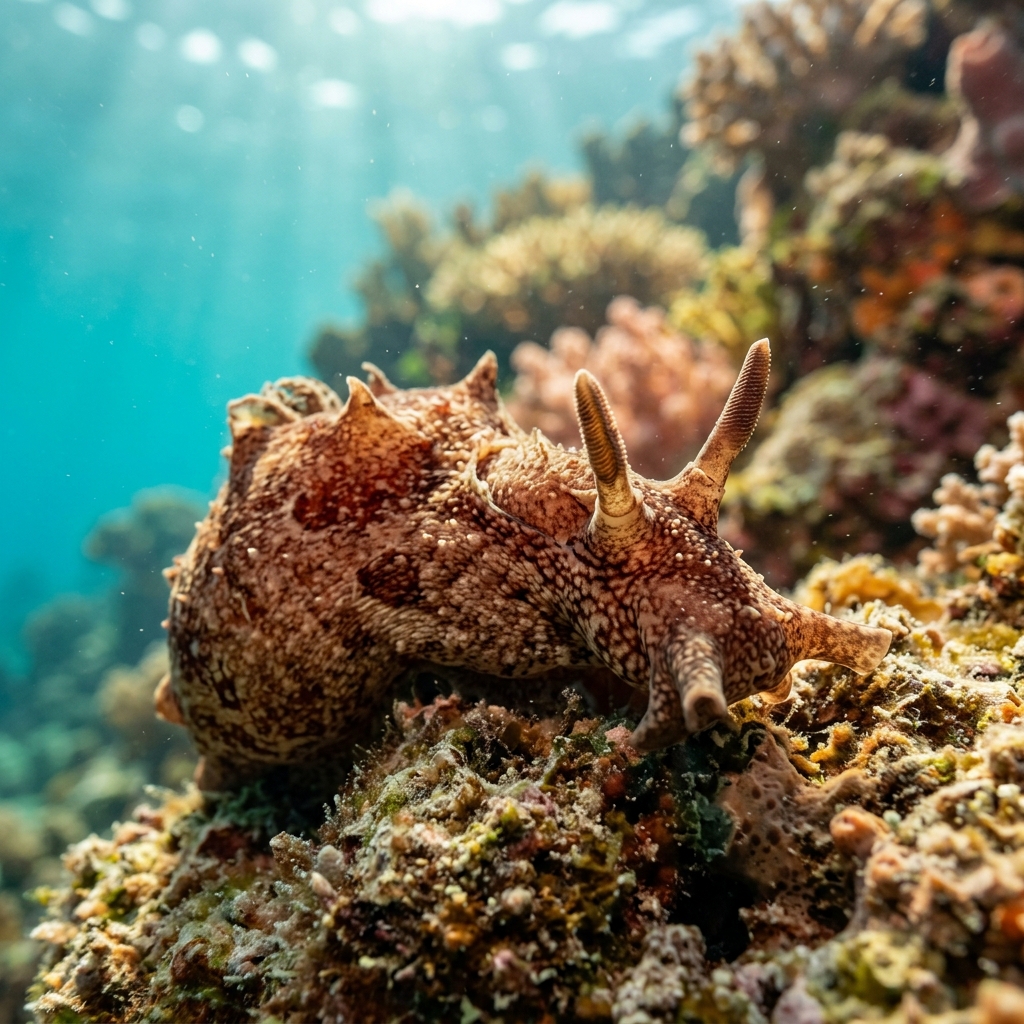
Reef neighbours a diver could mistake it for. Use the identification notes above to tell them apart.
This one is logged almost exclusively in Australia, with Queensland the strongest area and New South Wales a reliable secondary spot. Divers searching reef rubble and sponge patches in these two regions have the best odds of a sighting, though it stays uncommon to rare even there.
Mapping where Red-ringed Ardeadoris is logged…
It is most reliably logged in Australia, with Queensland producing the strongest numbers of sightings and New South Wales a solid secondary region for divers scanning rubble and sponge patches.
There is no detected seasonal pattern, so it can turn up any time of year within its observed temperature range of about 20 to 26C. Treat it as a year-round possibility rather than a seasonal target.
Check for a pale white to cream body scattered with red or orange ringed spots, a soft elongated shape, and visible gills and rhinophores at each end. The ringed spotting pattern is the clearest feature to key on underwater.
Exact size data is not confirmed for this species, but like most Ardeadoris nudibranchs it is a small macro subject, typically only a few centimetres long when found on reef rubble.
No, this nudibranch poses no danger to divers. It has no means of harming humans and simply grazes slowly on sponges across the reef substrate.
Like related dorid nudibranchs, it probably absorbs chemical compounds from the sponges it eats and uses them for its own defence, which explains the bold warning-style colouration seen in this group.
Site and sighting data is aggregated from diver logs, iNaturalist and GBIF. For taxonomy and conservation status:
Light-spotted Aegires
3,168 sites