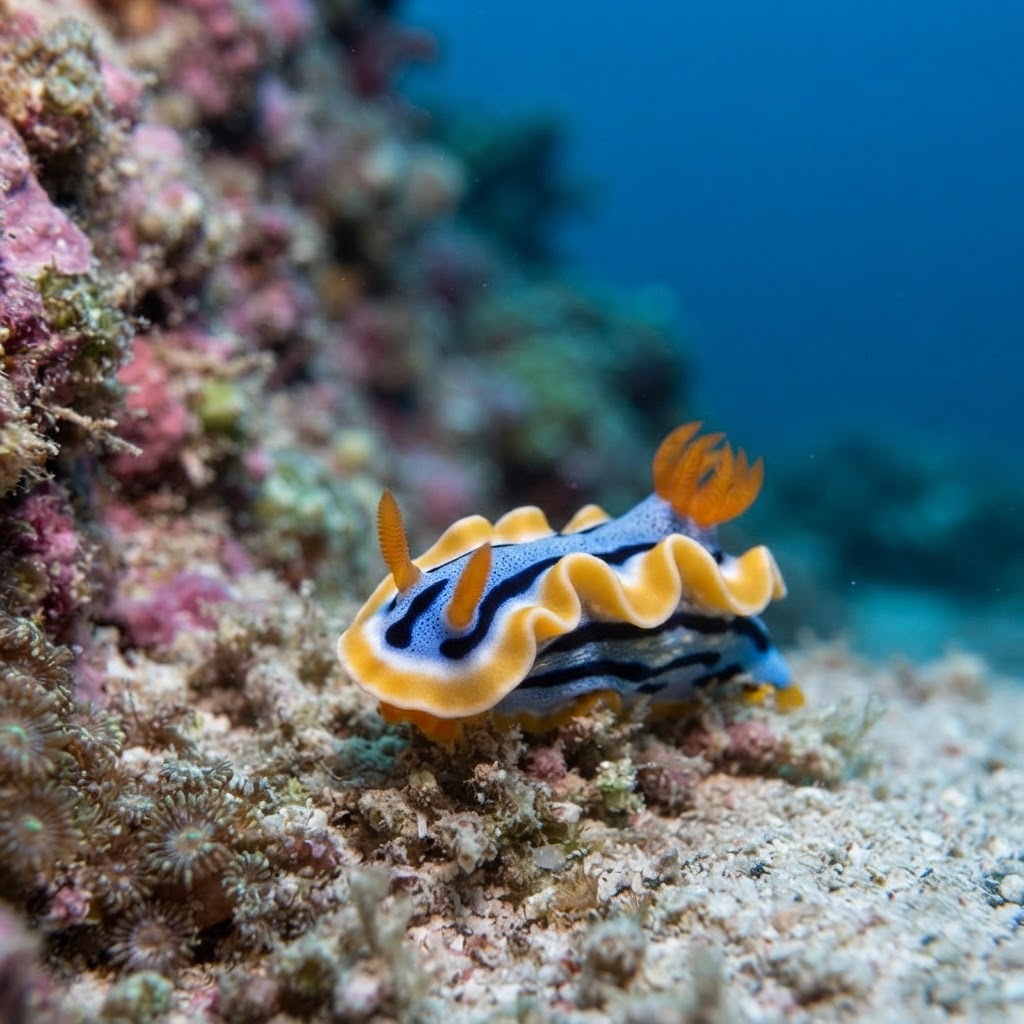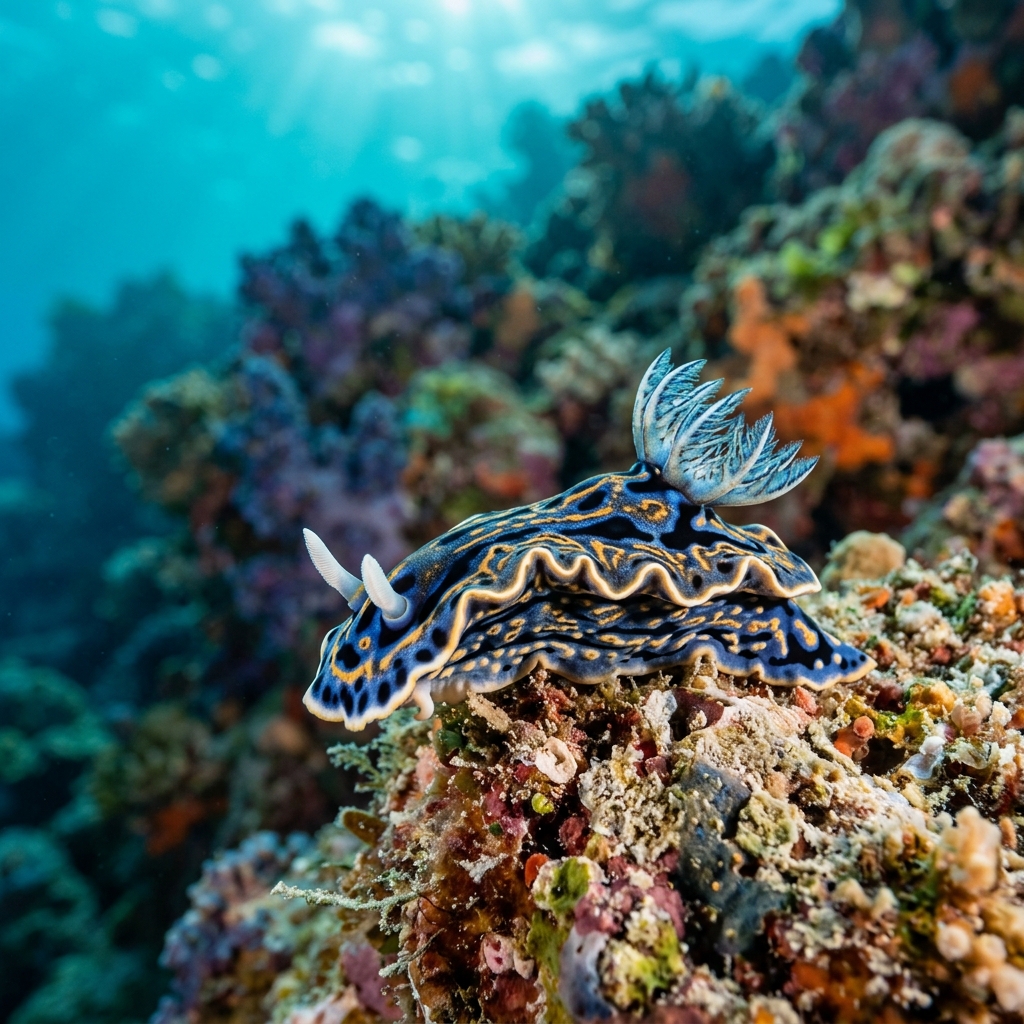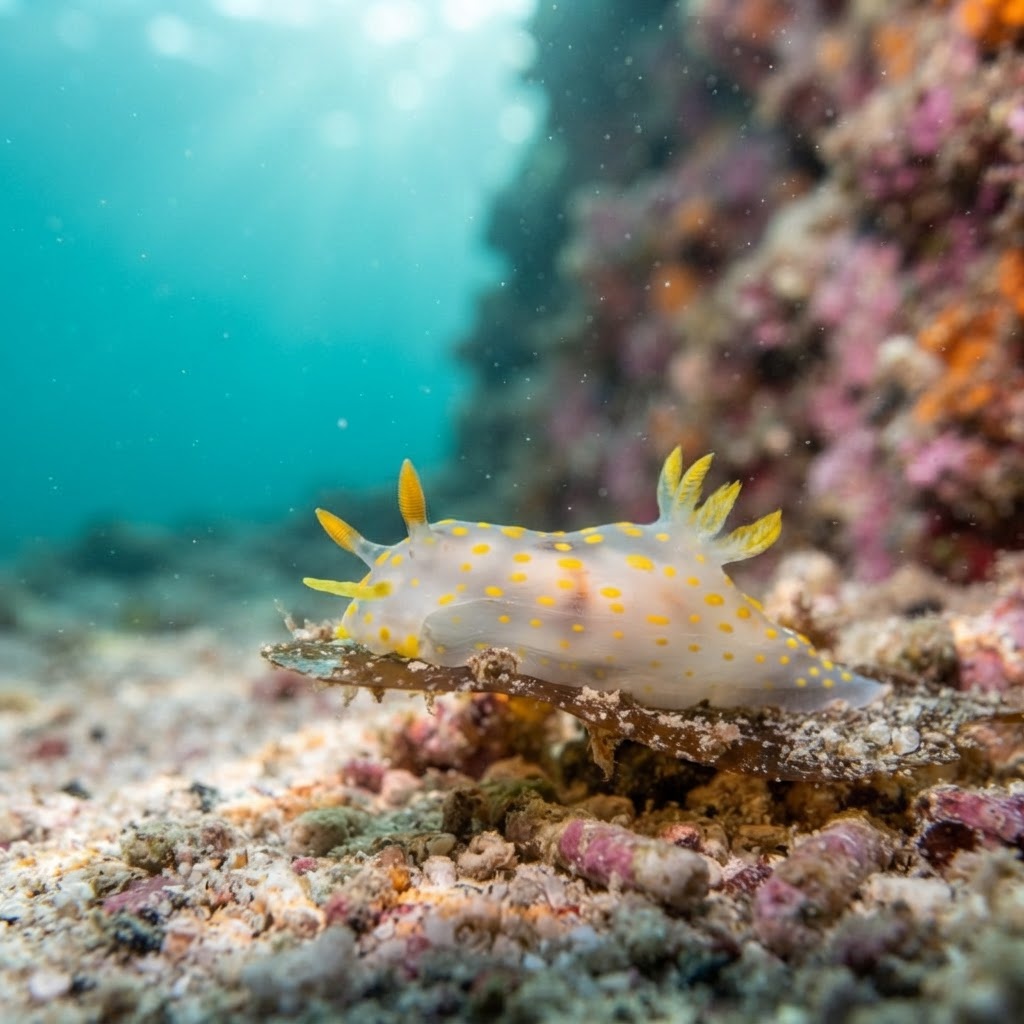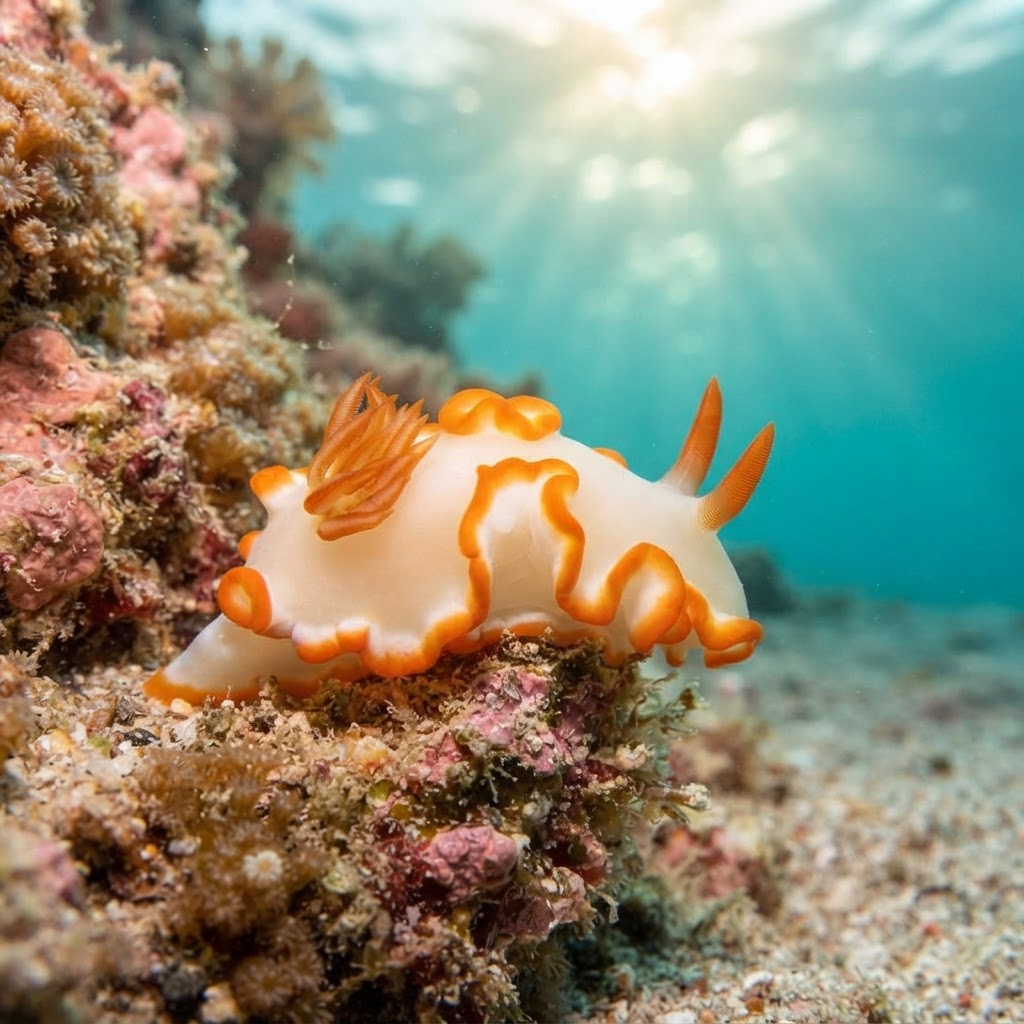
Ardeadoris averni
Uncommon nudibranch find logged on reefs in Queensland and Luzon, in water from 19.6 to 29.6 C, year-round if you look closely.
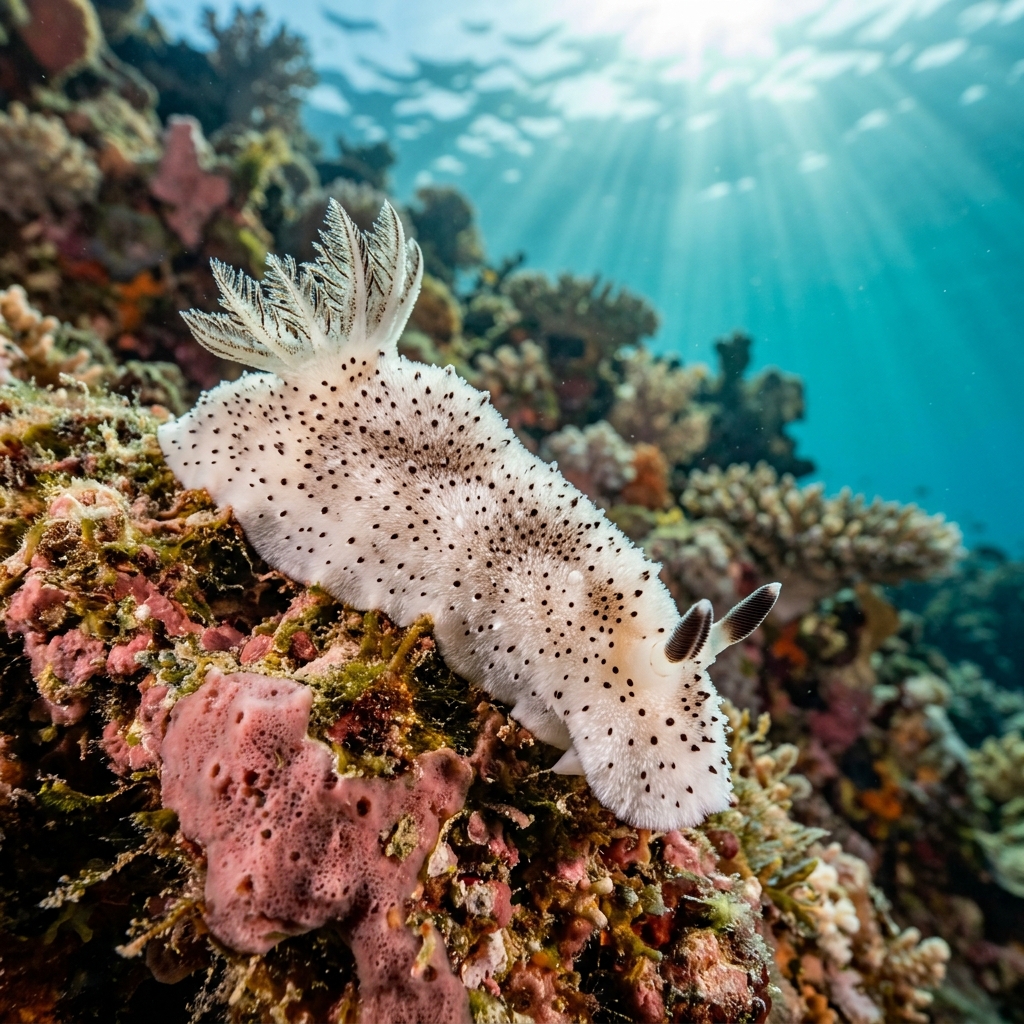
A small sea slug (nudibranch) identified mainly by its patterned mantle and the pair of feathery gills toward the rear of its body. Look closely along the reef bottom, on sponges or rubble, rather than out in open water, since it moves slowly and stays low. No dramatic size is on record, so expect a typical small chromodorid, a few centimetres at most.
Divers typically find it parked on the reef floor or grazing slowly across sponges and rubble, doing what most chromodorid nudibranchs do: nothing fast. It shows no reaction to divers beyond continuing its crawl, so a steady hand and a macro lens are all you need. Most logs come from daytime dives rather than night dives, though its small size means it is easy to miss either way.
Like other chromodorid nudibranchs, it almost certainly feeds on sponges and stores or repurposes chemical compounds from that diet as a defence against predators, which is part of why these slugs can afford to be so slow and conspicuous.
No clear season shows up in the sightings so far, and the wide observed temperature range, 19.6 to 29.6 C, suggests it tolerates both cooler temperate water and warmer tropical reefs. Treat it as a year-round find and just budget time for a slow, careful search of the substrate.
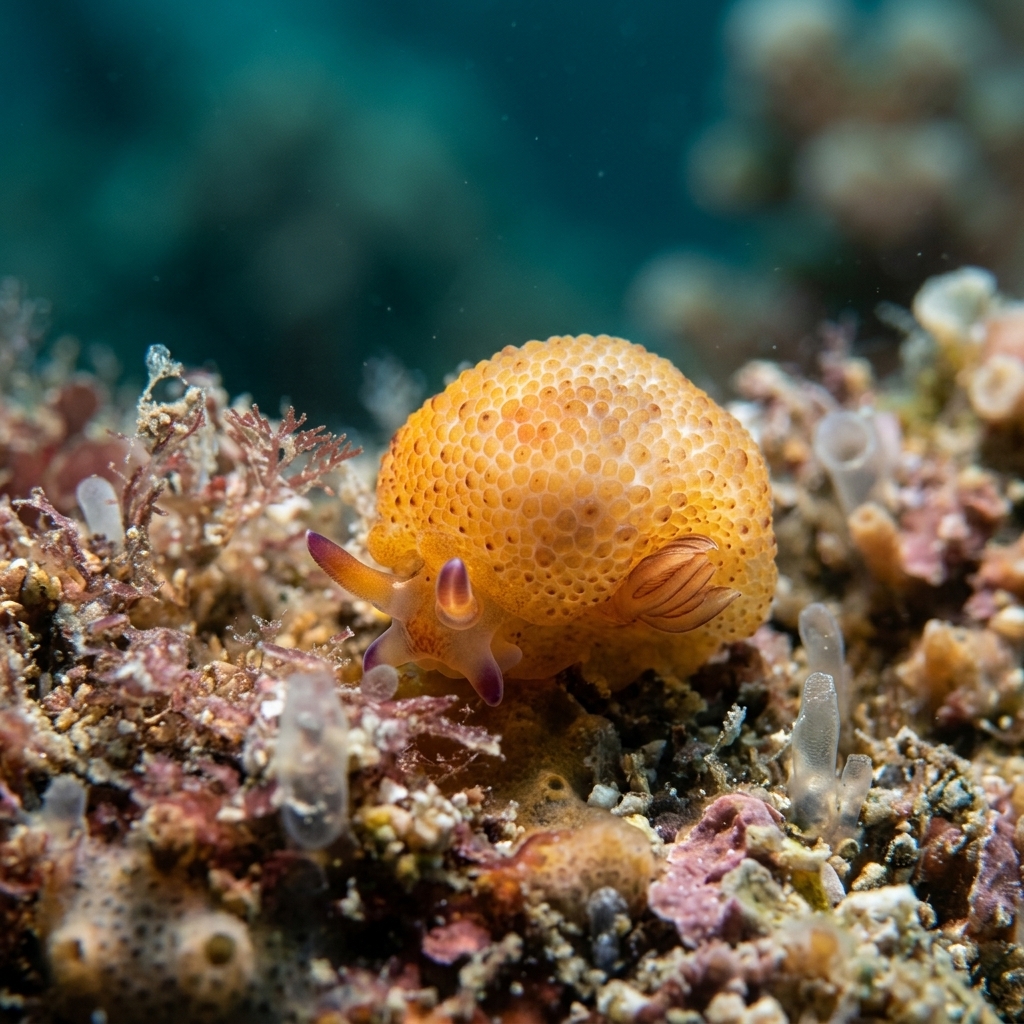
Reef neighbours a diver could mistake it for. Use the identification notes above to tell them apart.
Most reliably logged on reefs in Queensland and New South Wales, Australia, with additional sightings from Luzon in the Philippines. Australia currently accounts for the bulk of recorded sightings, making the east coast your best bet for a search.
Mapping where Ardeadoris averni is logged…
It has been logged most often on reefs in Queensland and New South Wales, Australia, with additional sightings in Luzon, Philippines. Australia's east coast currently offers the strongest chance of a find.
There is no detected season in the sightings logged so far, and it has been recorded across a wide temperature range from 19.6 to 29.6 C. That points to a year-round presence rather than a narrow window.
Look for a small patterned nudibranch moving slowly across sponge or rubble on the reef floor, identified by its mantle markings and rear gill tuft. It is easily confused with other chromodorid nudibranchs, so a close macro look at the pattern helps confirm it.
Exact size data is not established for this species, but as a member of the chromodorid nudibranch group it is likely a small animal, typically a few centimetres in length when fully grown.
No, it poses no danger to divers. It is a small, slow-moving sea slug that will simply continue grazing if you approach carefully for a photo.
Like related chromodorid nudibranchs, it likely feeds on sponges and may use compounds from that diet for chemical defence, which explains why such a slow, exposed animal survives in the open on the reef.
Site and sighting data is aggregated from diver logs, iNaturalist and GBIF. For taxonomy and conservation status:
Blue Dragon
3,163 sites