Chromodoris hamiltoni
A KwaZulu-Natal reef regular: this rainbow-hued nudibranch turns up year-round on South Africa's warm reefs at 21-27C.
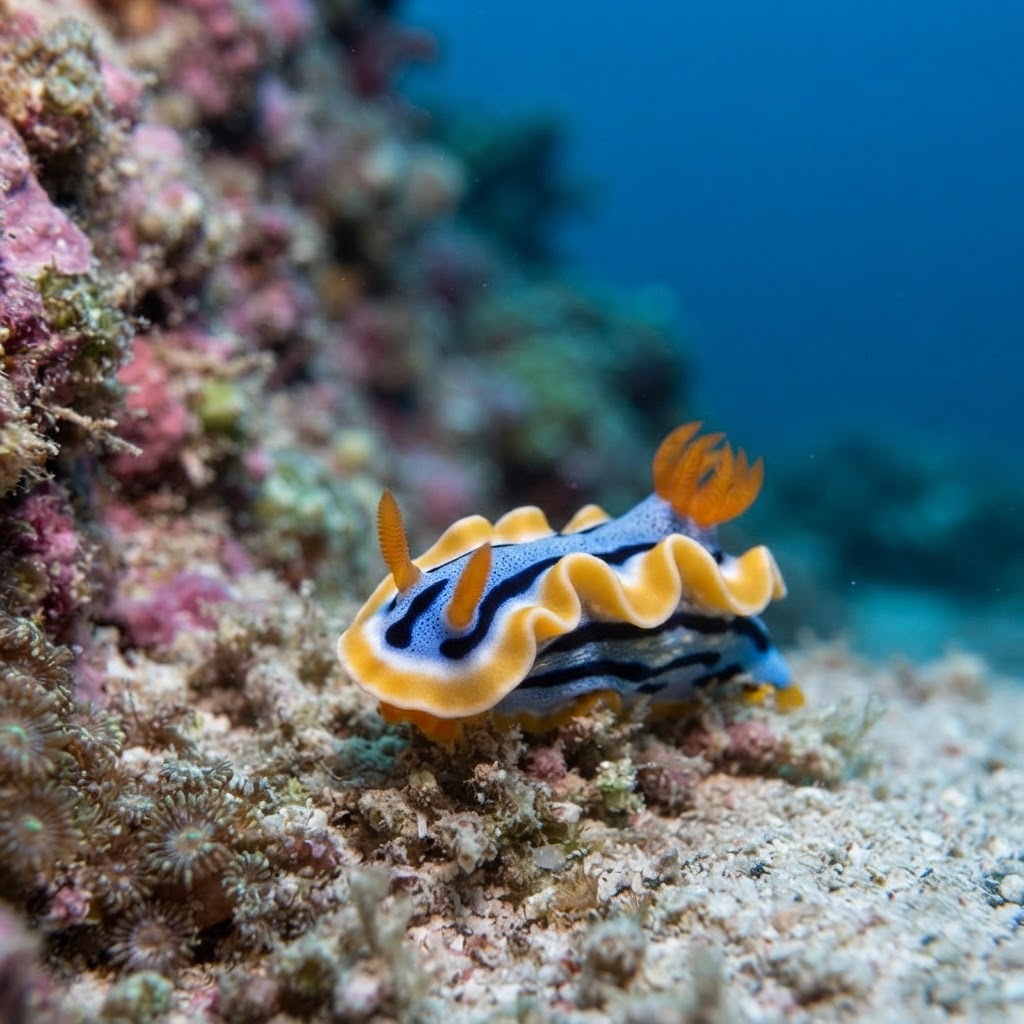
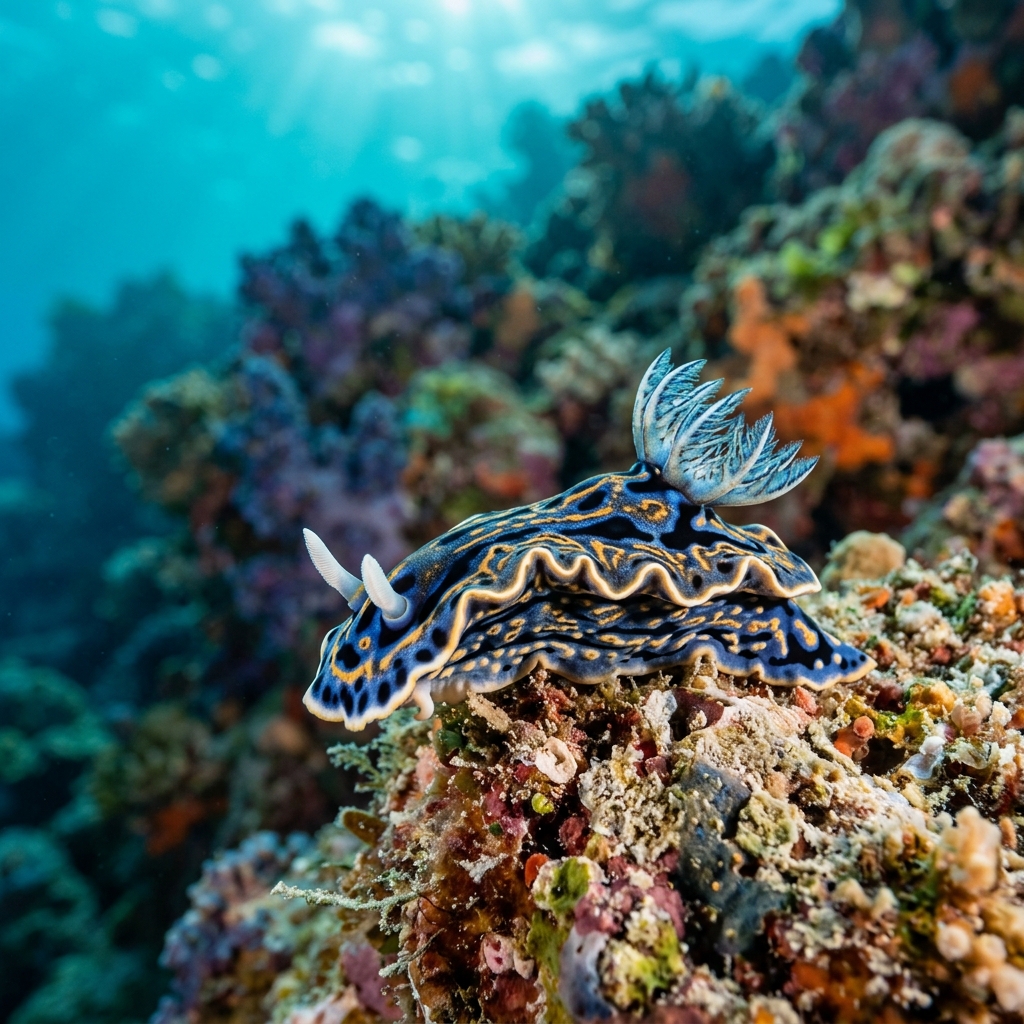
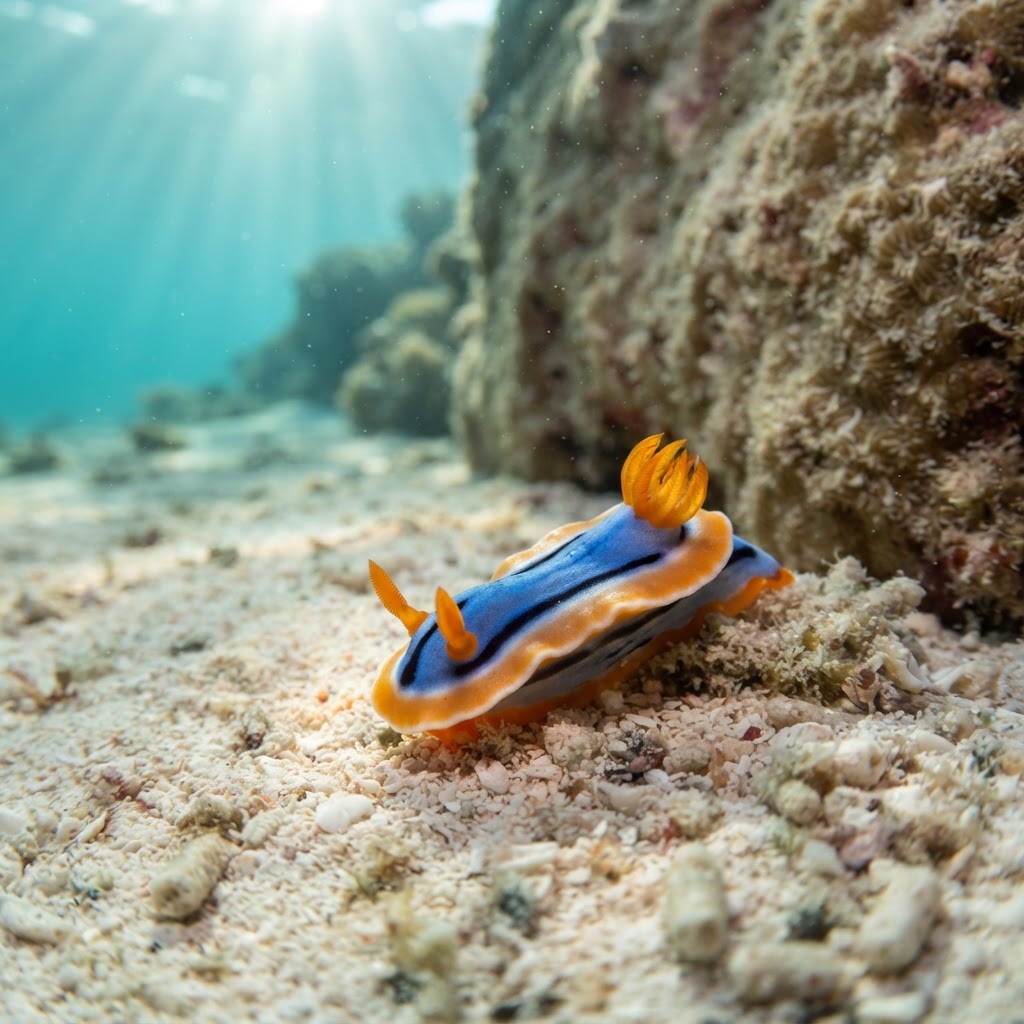
A small, elongated sea slug (nudibranch) with a pale, translucent-white to cream mantle edged in a band of orange, pink and purple, giving it the rainbow look its name suggests. The mantle margin is often gently ruffled, and a cluster of feathery gills sits toward the rear of the back, contrasting against the lighter body. Look for it moving slowly across sponge-covered rock or rubble rather than open sand.
Divers typically find it grazing slowly across sponge and algae-covered reef, moving at the unhurried pace typical of dorid nudibranchs while it feeds. It shows no reaction to divers beyond continuing its crawl, making it an easy subject for a macro shot if you spot it against a contrasting background. Most sightings come from close reef inspection rather than open water, so it rewards divers who slow down and scan ledges and rubble patches.
Like other chromodorid nudibranchs, its bright colouring likely signals to predators that it has taken up distasteful or toxic chemicals from the sponges it feeds on, making the pattern a warning rather than decoration.
Sightings show no clear seasonal pattern, so it is logged across the year on KwaZulu-Natal's warm reefs, consistent with the 21.1 to 27.1C range divers find it in. Plan around good reef conditions generally rather than a specific month.
Reef neighbours a diver could mistake it for. Use the identification notes above to tell them apart.
This one is very much a South African speciality, most reliably logged on reefs through KwaZulu-Natal, with occasional sightings extending north into Inhambane, Mozambique. If you are diving the Aliwal Shoal, Sodwana Bay or nearby KZN reef systems, keep an eye on sponge-encrusted rock and ledges.
Mapping where Aquafresh Rainbow Dorid is logged…
It is most reliably found on reefs through KwaZulu-Natal, South Africa, with a scattering of sightings reaching into Inhambane, Mozambique. It tends to be an uncommon find at most sites, though a handful of KZN reefs report it more consistently.
There is no strong seasonal pattern in sightings, so it can turn up any time of year on KwaZulu-Natal reefs where water sits between roughly 21 and 27C.
Look for a small, slow-moving nudibranch with a pale cream to white mantle bordered by a band of orange, pink and purple, with a tuft of gills near the rear. It is usually seen crawling across sponge-covered rock rather than swimming.
Exact size data is not well documented for this species, but like most chromodorid nudibranchs it is a small reef animal typically measured in centimetres rather than being a large, easily spotted creature from a distance.
No, it poses no danger to divers. It is a small, slow-moving sea slug that can be observed safely up close without any risk.
Site and sighting data is aggregated from diver logs, iNaturalist and GBIF. For taxonomy and conservation status:
Light-spotted Aegires
3,168 sites