Apolemichthys xanthurus
Spot Yellowtail Angelfish in Sri Lanka, Oman or the Red Sea. Best sightings Nov, Feb in warm 22-29 °C waters. ID tips and top dive sites inside.
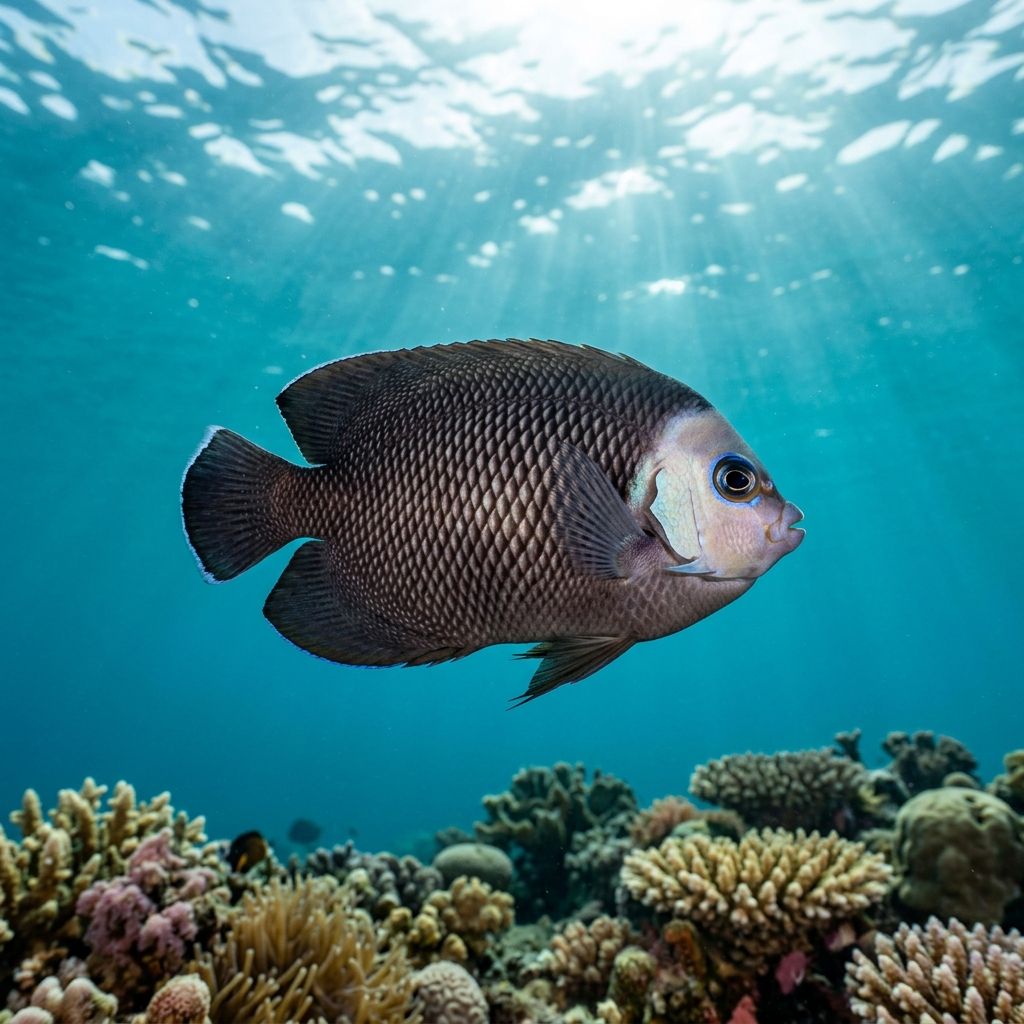
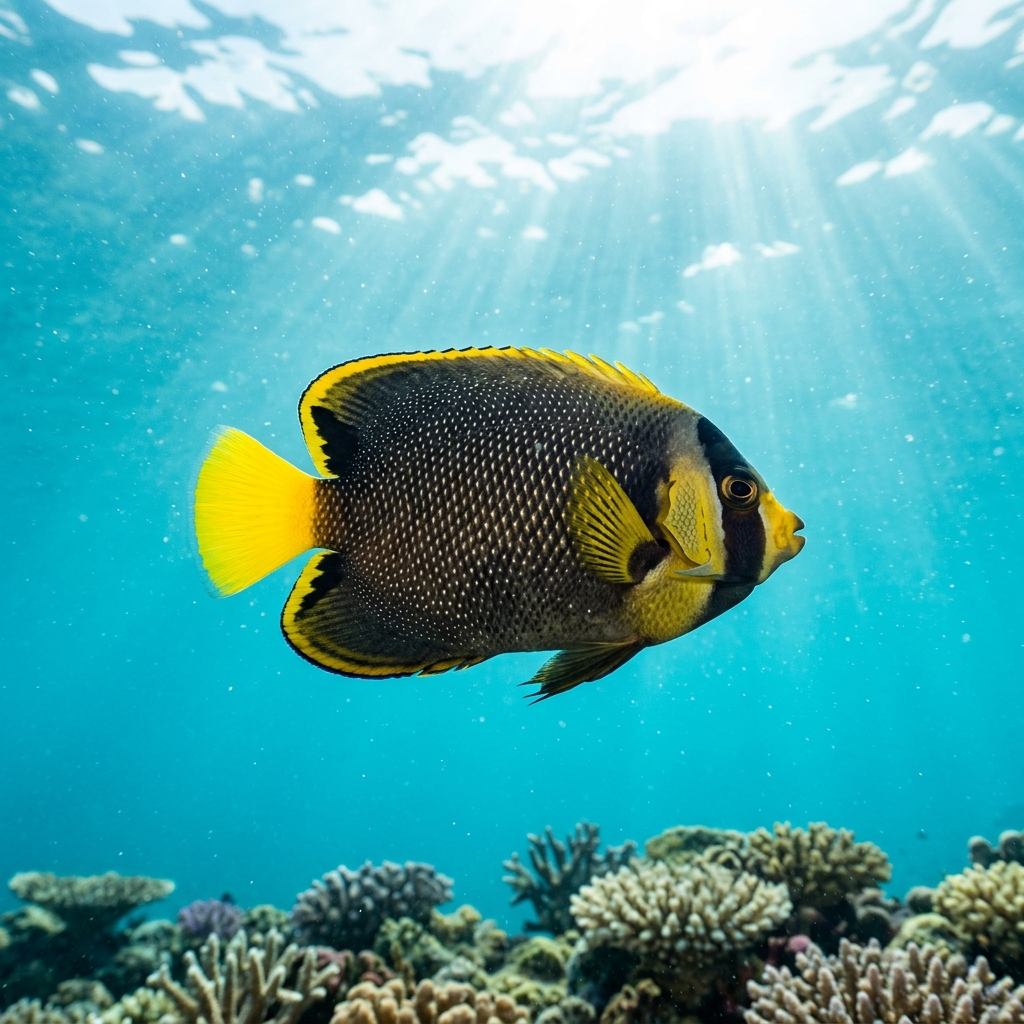
A dark, almost charcoal-brown body covered in white-edged scales gives this angelfish a fine scalloped pattern that catches the light on the reef. The giveaway is the vivid yellow tail fin, which stands out sharply against the dark body, look for that splash of colour and identification is straightforward. The face is pale to whitish, and there is a yellow wash on the dorsal and anal fins. Body shape is the classic laterally compressed angelfish disc, mid-sized and unhurried in the water.
Yellowtail angelfish are typically seen moving steadily along coral-rich reef walls and rocky slopes, grazing on sponges and encrusting organisms. They tend to be solitary and moderately wary, they will usually maintain a comfortable distance from divers but rarely bolt unless approached quickly. Most sightings are in the mid-water column close to the reef structure, and the species does not appear to be strongly tied to any particular time of day.
Like many angelfishes, yellowtail angelfish are protogynous hermaphrodites, meaning dominant females can transition into males, so a large individual you encounter may well have started life as a female.
Northern Hemisphere sightings concentrate between November and February, so the cooler months of the northeast monsoon season are your best window across the Indian Ocean and Red Sea regions where this species is most reliably logged.
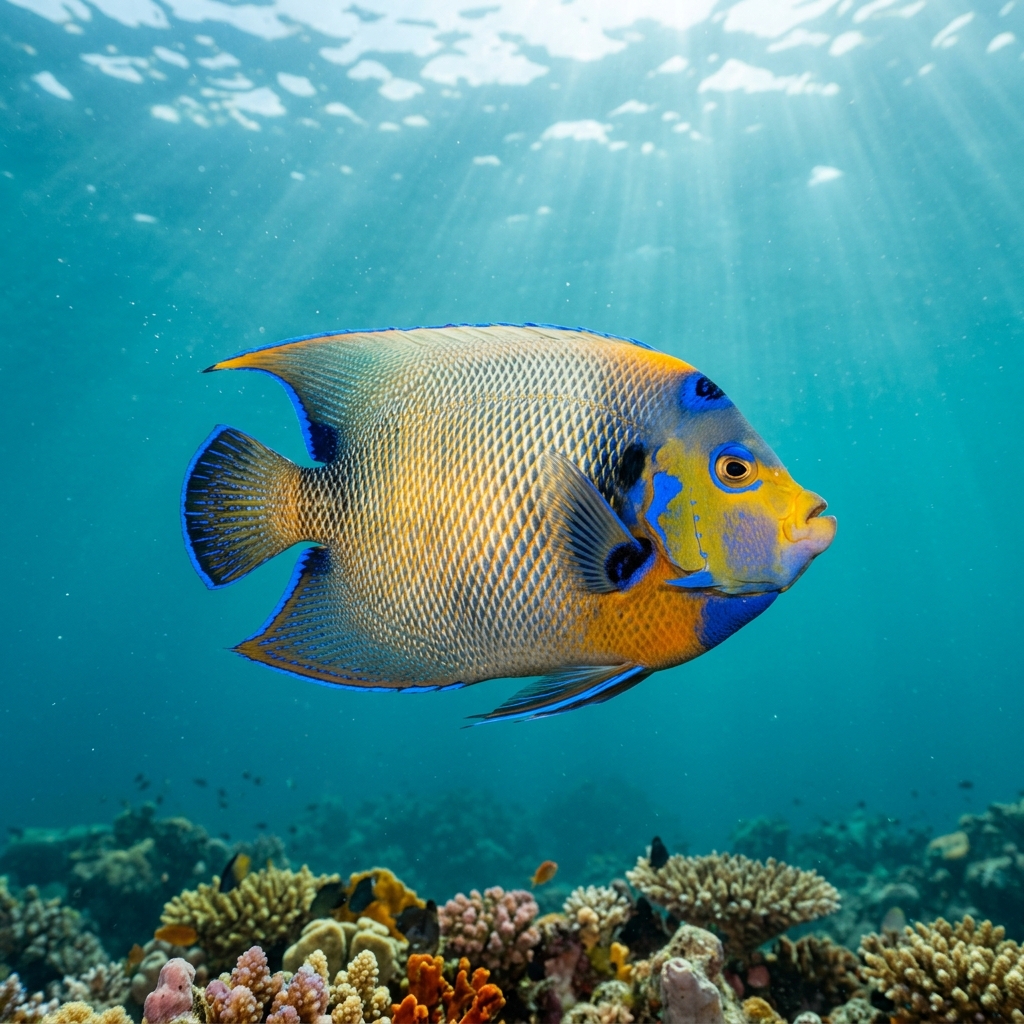
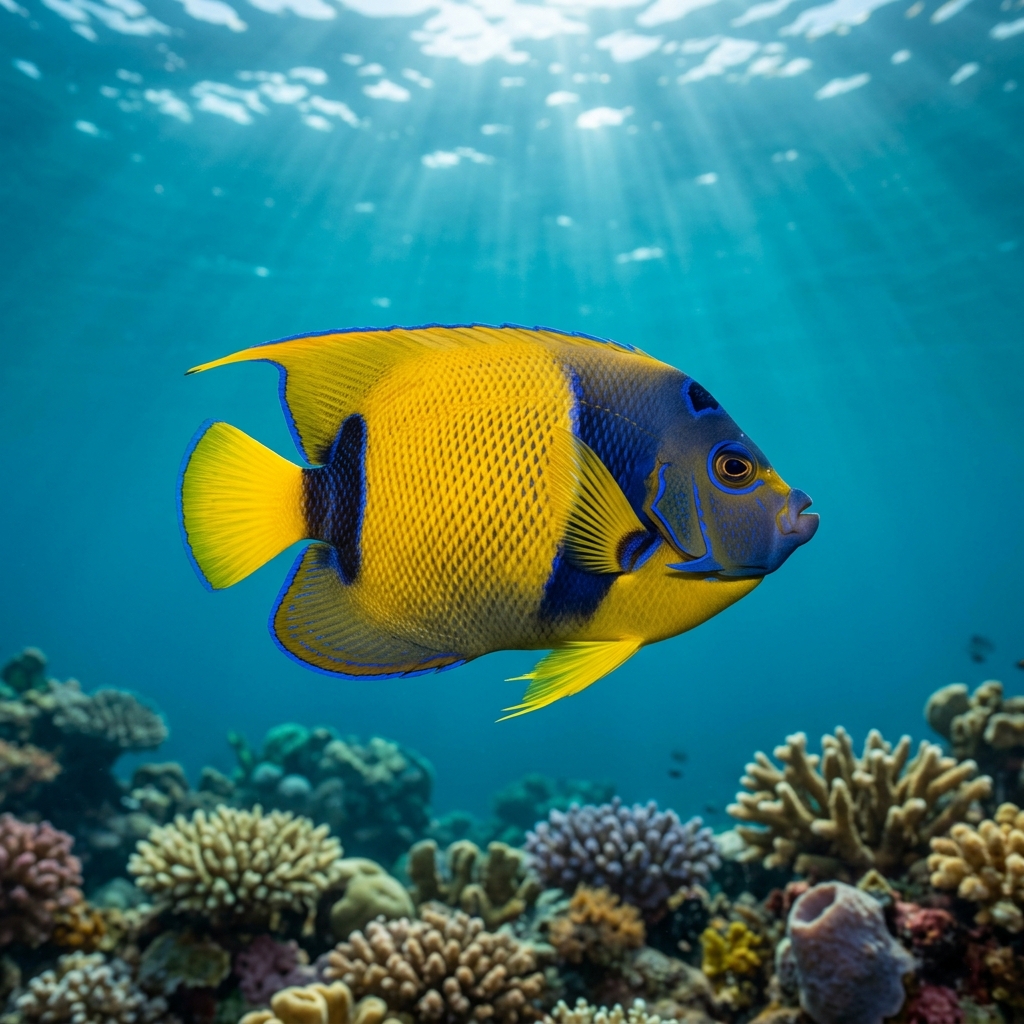
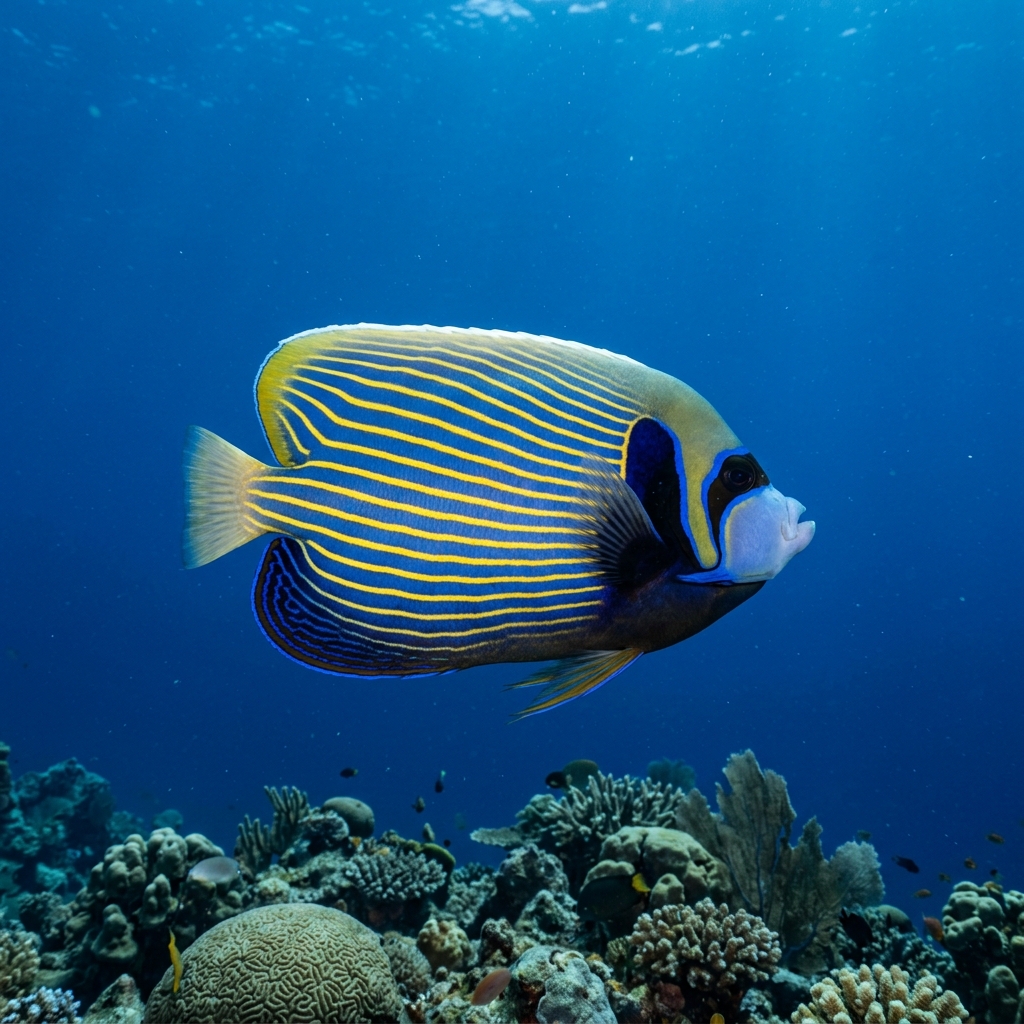
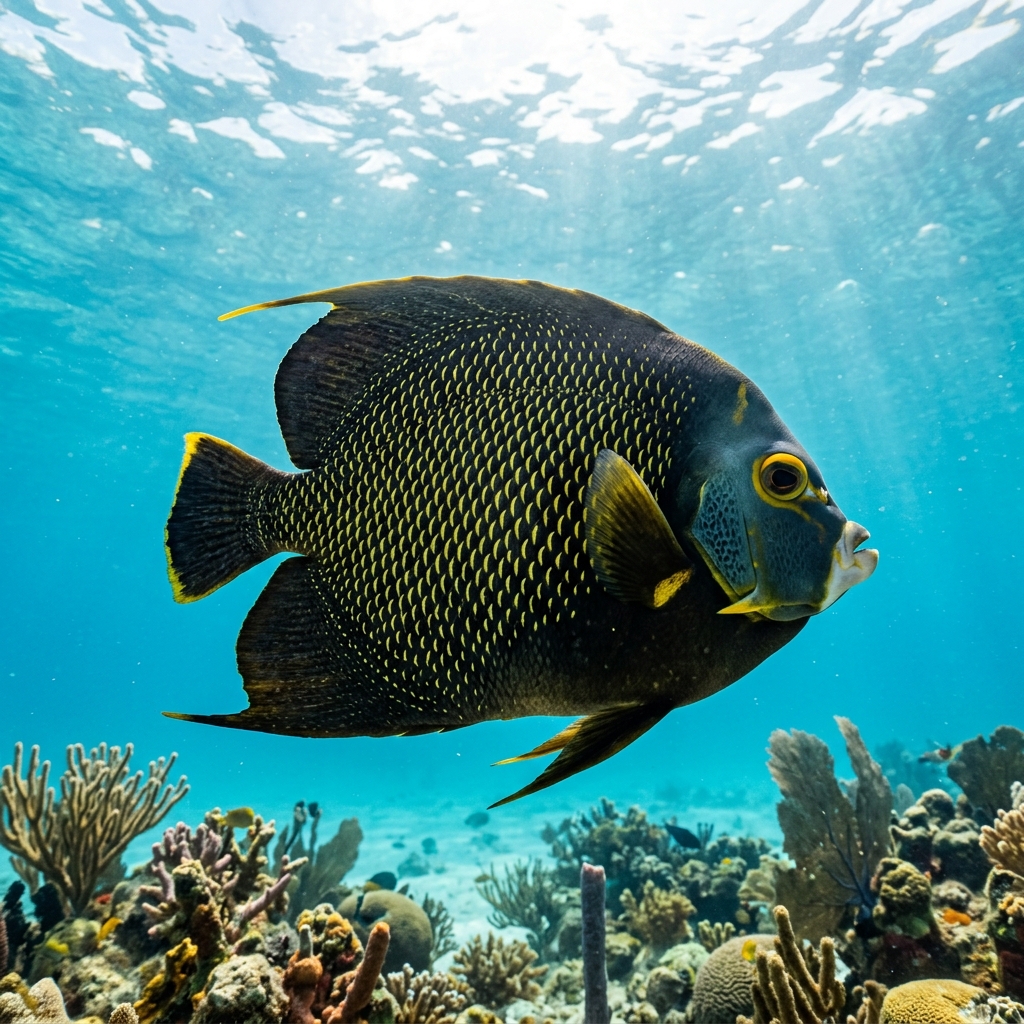
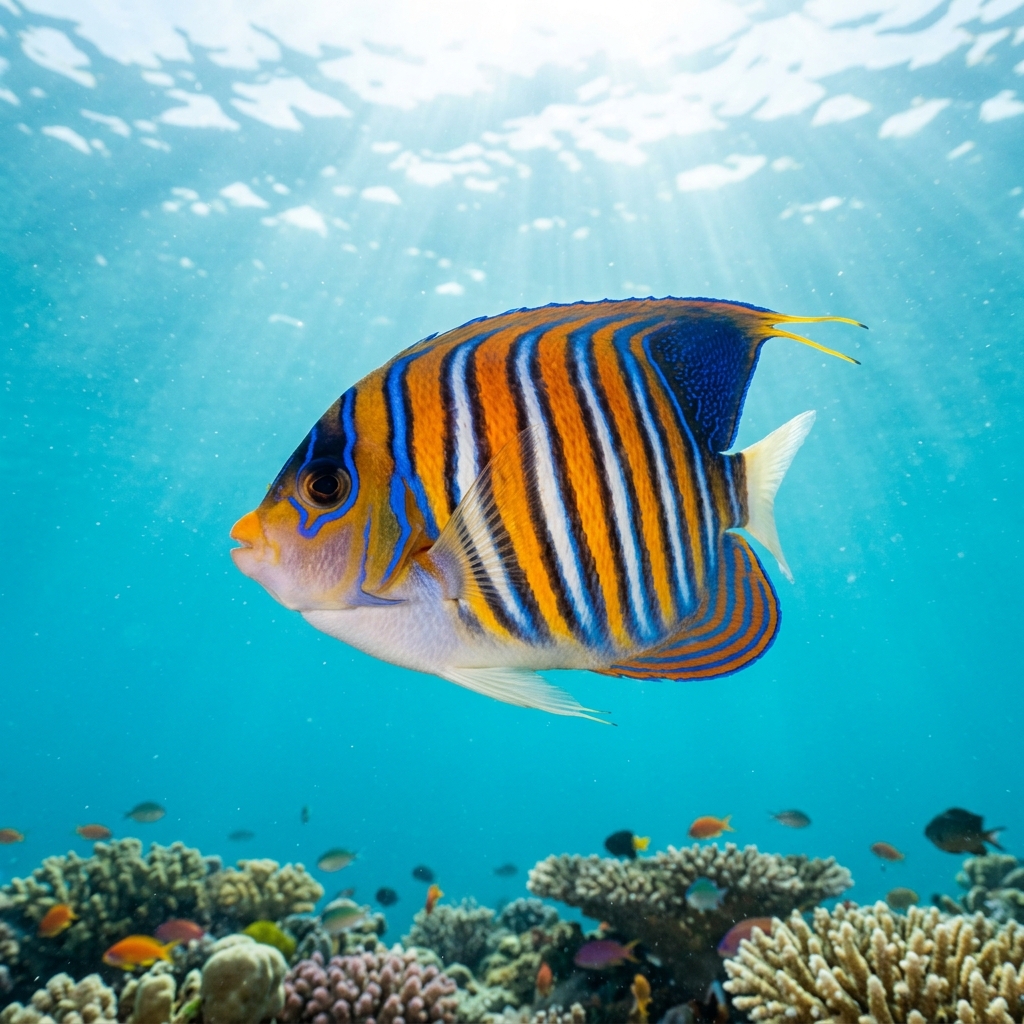
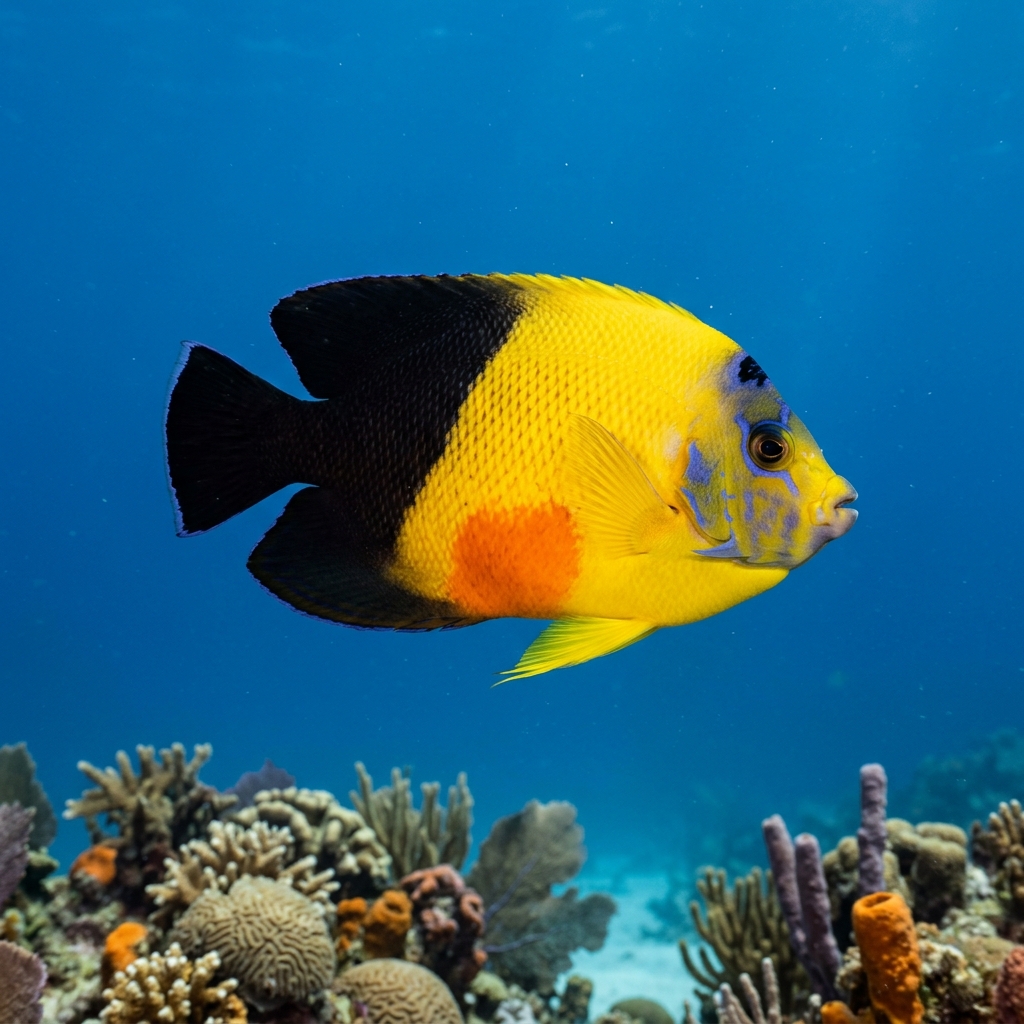
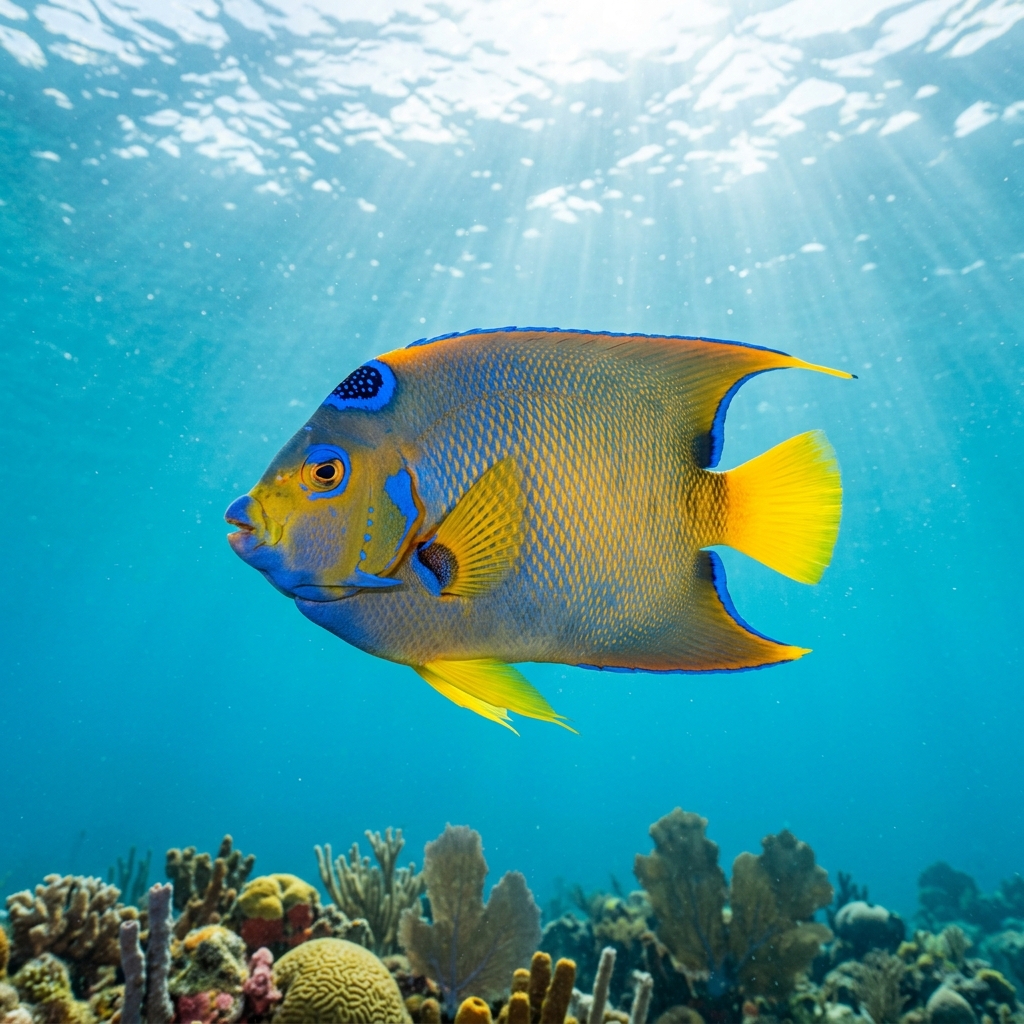
Reef neighbours a diver could mistake it for. Use the identification notes above to tell them apart.
Most sightings come from Sri Lanka, Oman and India, with the Muscat area of Oman and Netrani Island off the Karnataka coast of India standing out as particularly well-logged sites. Sri Lanka's east coast and south coast both contribute strong records, and the species also turns up regularly around the Andaman Islands, in the Red Sea at Sharm el Sheikh, and in Eilat in the northern Red Sea. Across all these locations it is considered uncommon rather than abundant, so treat any encounter as a worthwhile find.
Mapping where Yellowtail Angelfish is logged…
The species is most reliably logged in Sri Lanka, Oman and India. Stand-out locations include Muscat in Oman, Netrani Island in India, and Sri Lanka's east and south coasts. It also appears in Thailand's Andaman region, the Red Sea around Sharm el Sheikh, and in Eilat, Israel.
Across the Indian Ocean and Red Sea regions where this species is most often logged, sightings concentrate from November through February. This aligns with the northeast monsoon season when many of these sites offer their calmest diving conditions.
Look for a dark charcoal-brown disc-shaped body with a fine white-edged scale pattern and a distinctly yellow tail fin. The pale face and yellow tinge on the dorsal and anal fins help confirm the ID. No other angelfish in its range combines that dark scalloped body with such a clean yellow tail.
Sighting data from across its range rates the species as uncommon at the vast majority of sites where it has been recorded, and rare at others. Encounters do happen regularly in the right locations, but this is not a fish you can expect to find on every dive, a sighting is worth noting in your log.
No. Yellowtail angelfish pose no threat to divers. They are reef grazers and will typically keep their distance or move away slowly if approached. Standard reef etiquette, calm movements, no chasing, is all that is needed.
Site and sighting data is aggregated from diver logs, iNaturalist and GBIF. For taxonomy and conservation status:
Rock Beauty
1,573 sites