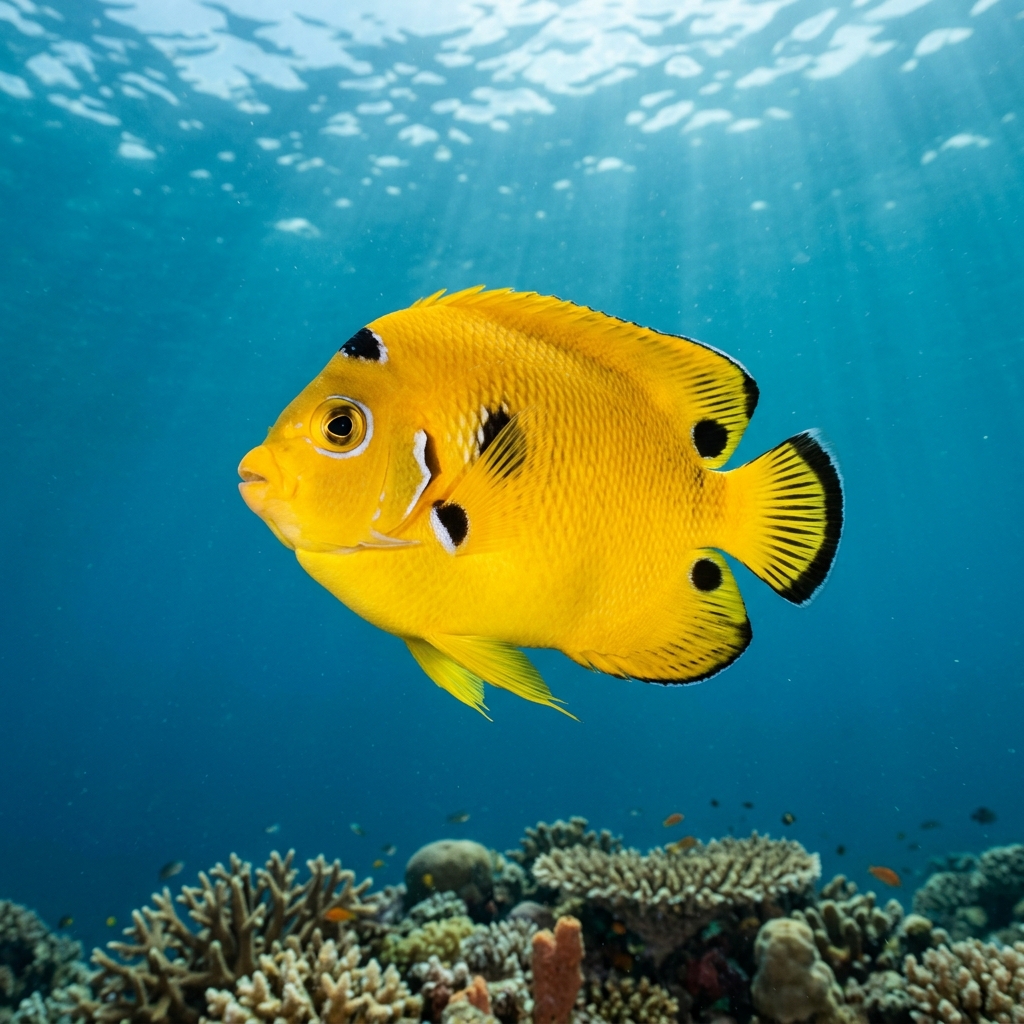
Apolemichthys trimaculatus
Spot the Threespot Angelfish across the Maldives, Philippines and Seychelles. Warm-water reefs at 26-29 °C are your best bet. Here's how to find and ID one.
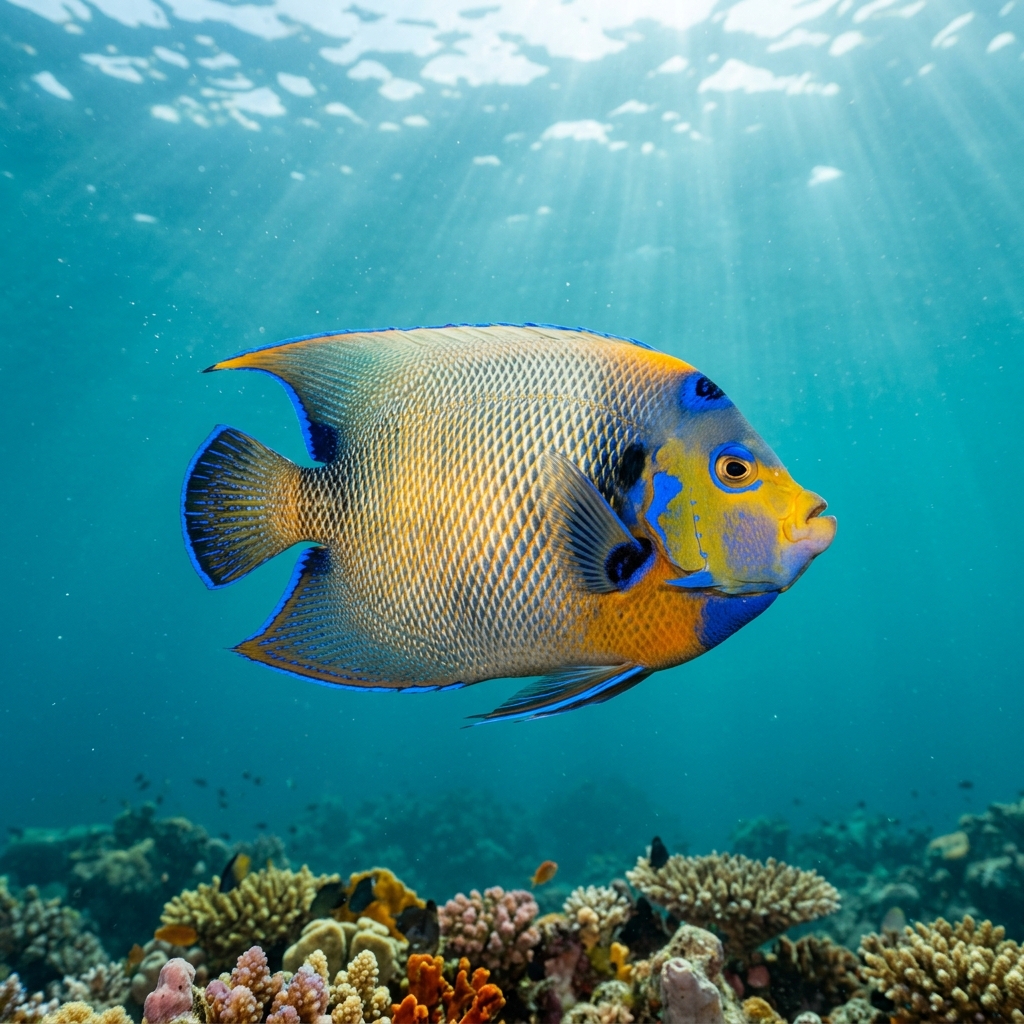
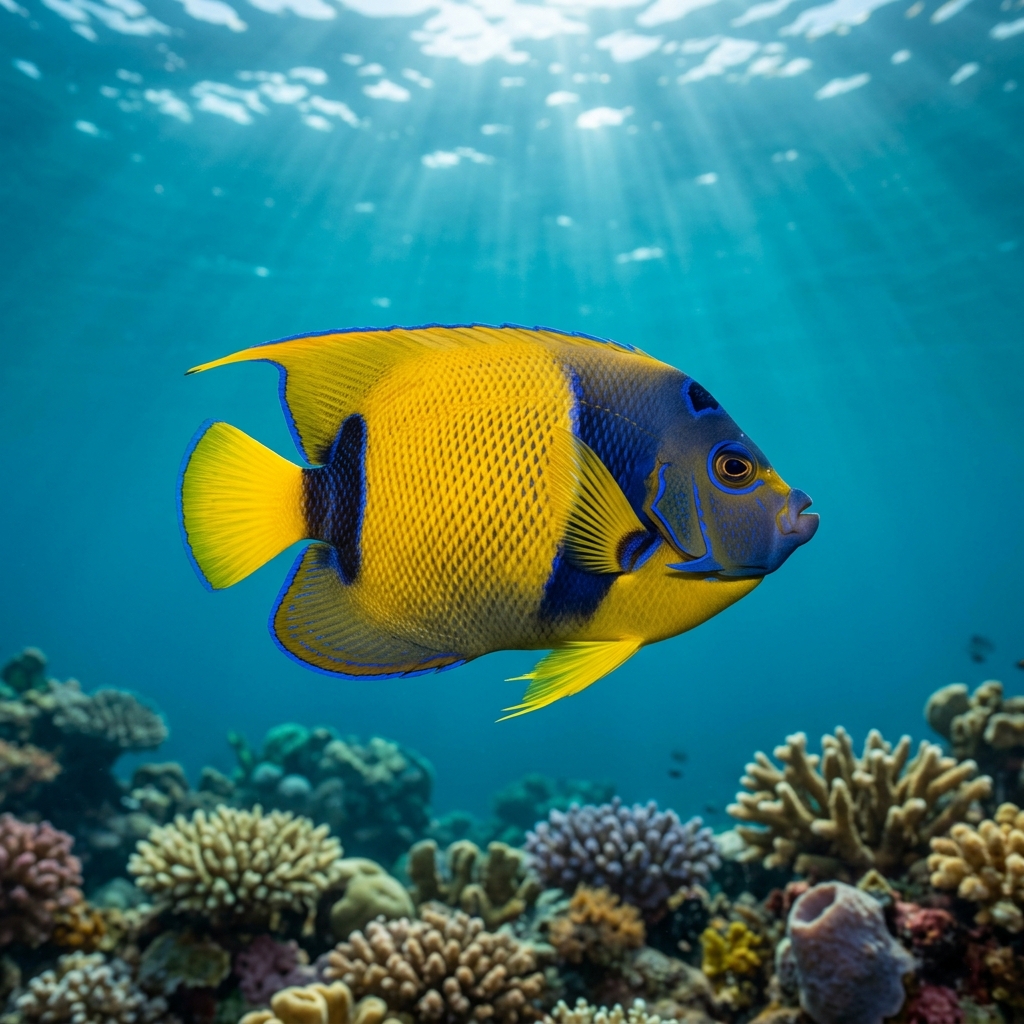
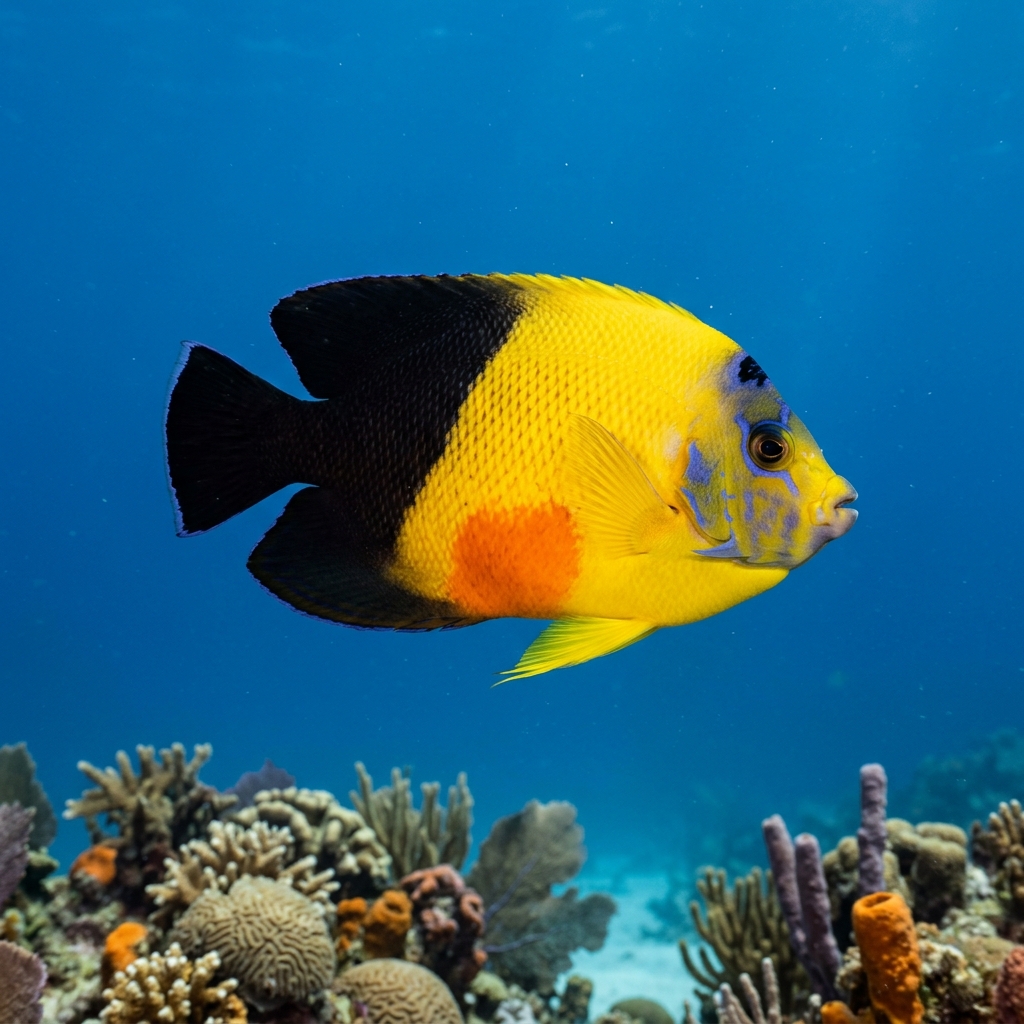
A vivid lemon-yellow body sets this angelfish apart from most reef neighbours at a glance. Look for the three dark spots that give it its name: one on the forehead, one at the base of the dorsal fin, and one at the top of the tail. The lips are a striking electric blue, contrasting sharply with the yellow face. Juveniles carry the same yellow base colour but show additional white and dark banding on the rear body, which fades as they mature.
Typically encountered alone or in loose pairs moving slowly across coral-rich slopes and walls, foraging on sponges and tunicates. It tends to keep a cautious distance from divers, often retreating into coral structure when approached too quickly. Slow, non-threatening movement and patience at depth give the best chance of a close view before it drifts away.
The blue lips are not just a striking visual feature; they are thought to help signal species identity to conspecifics on busy Indo-Pacific reefs where several similarly sized angelfish share the same territory.
Sighting data from the northern hemisphere concentrates in December, while southern hemisphere records peak around October. The species favours warm water consistently around 27-29 °C, so tropical reef sites within that temperature band offer the most reliable encounters regardless of season.
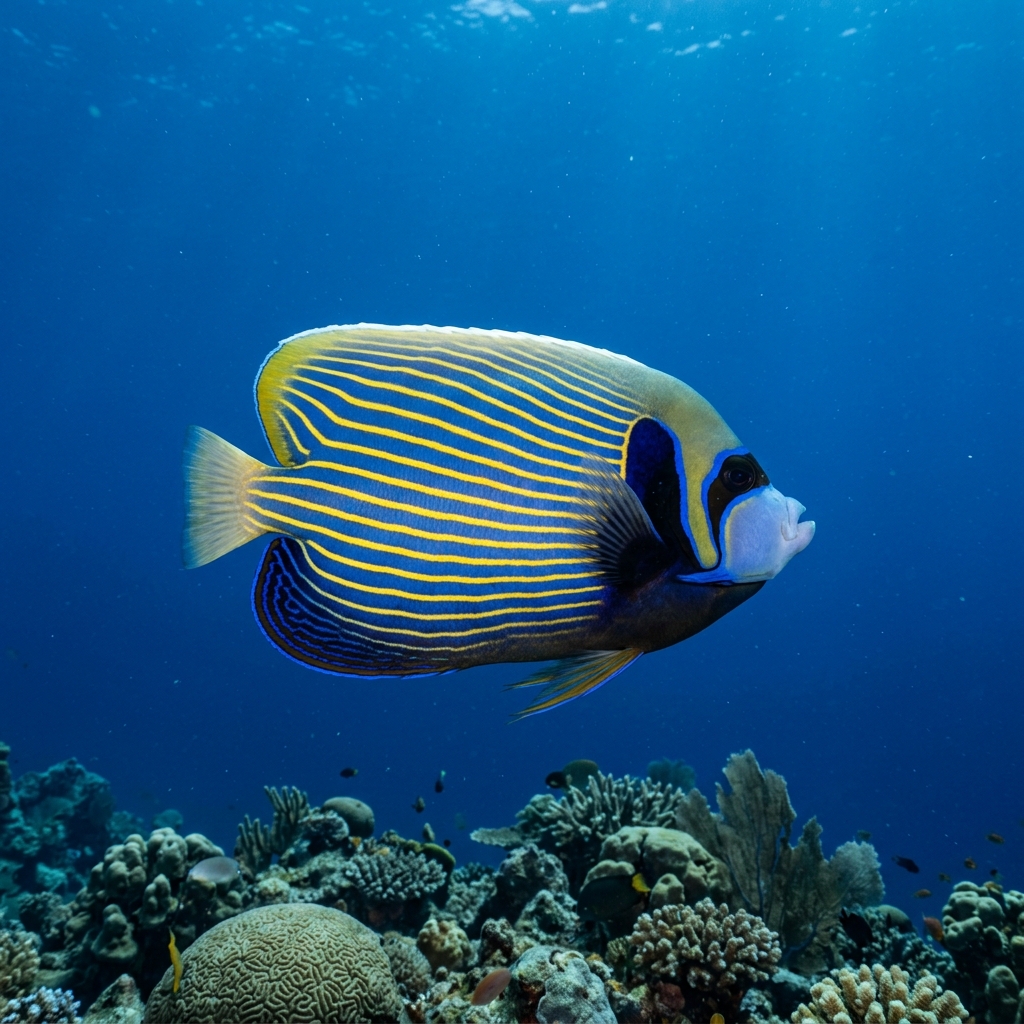
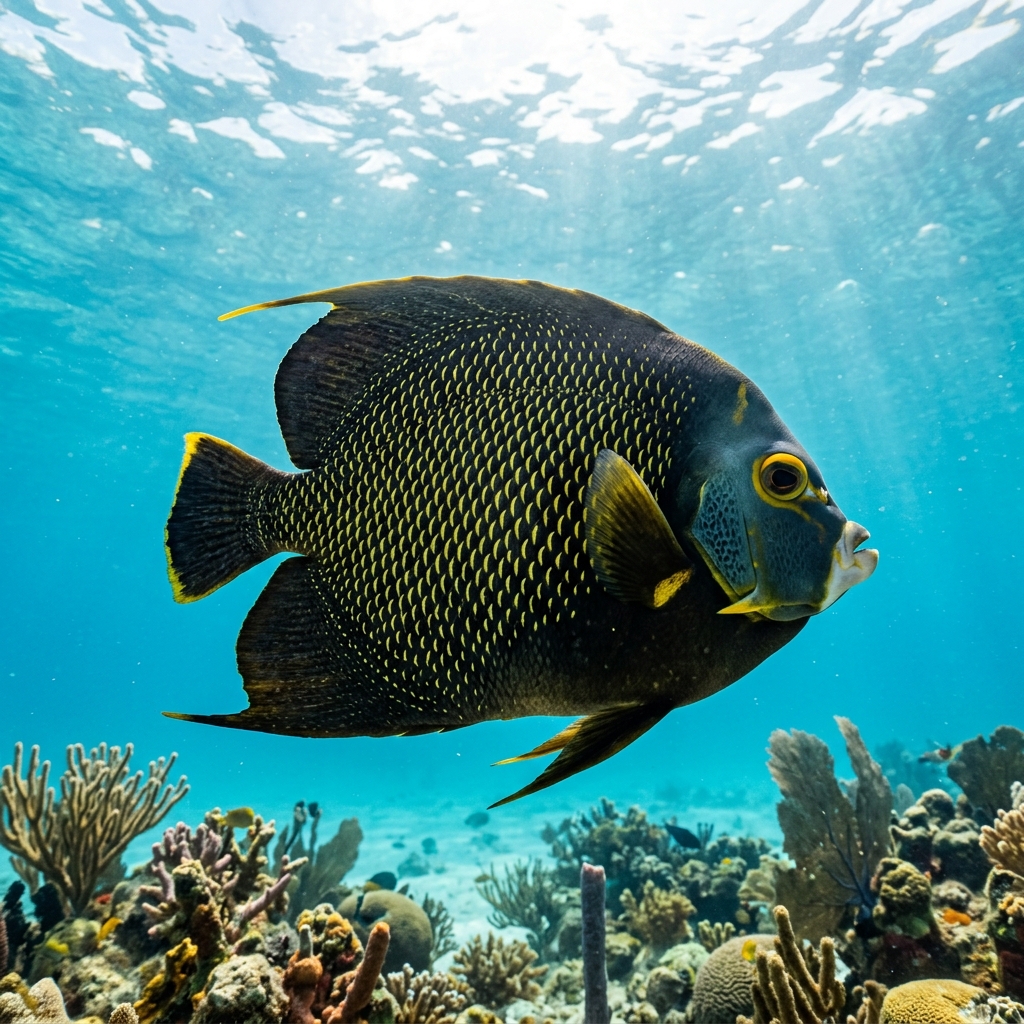
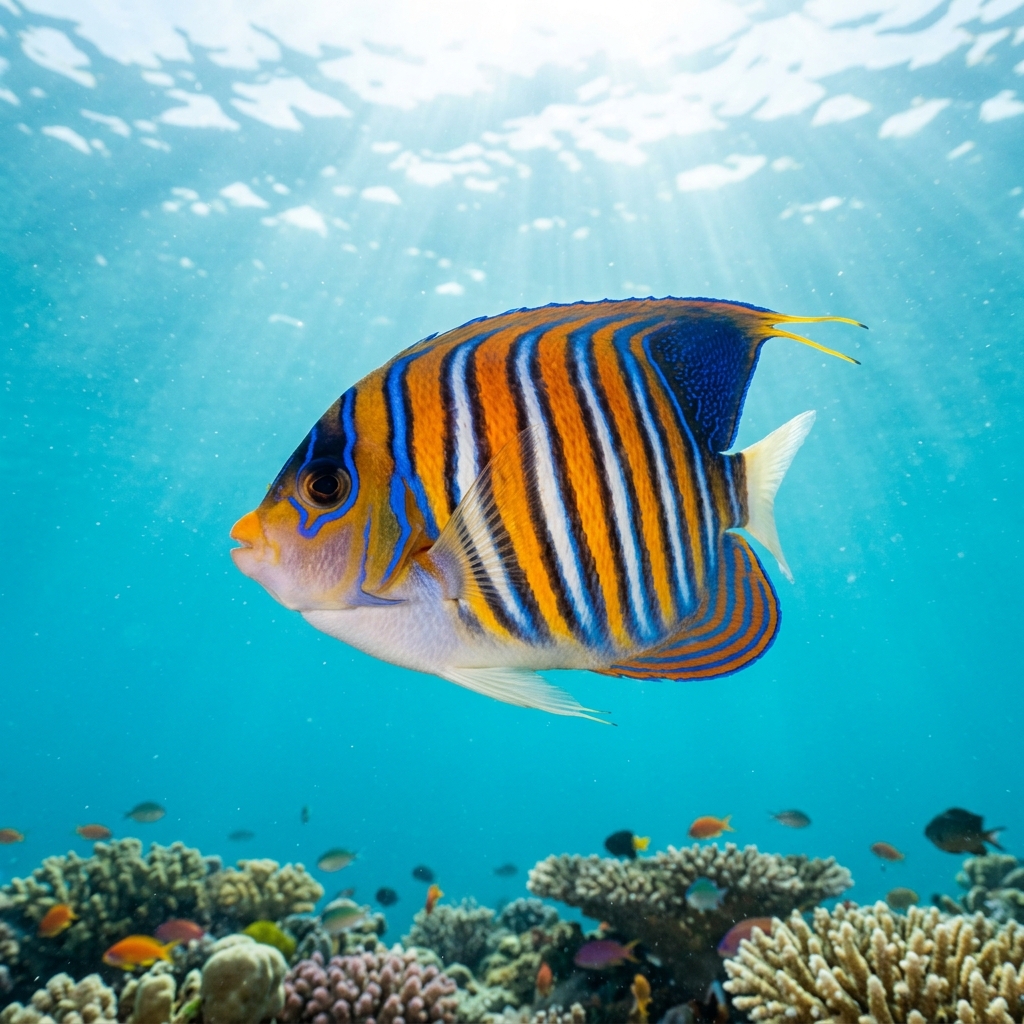
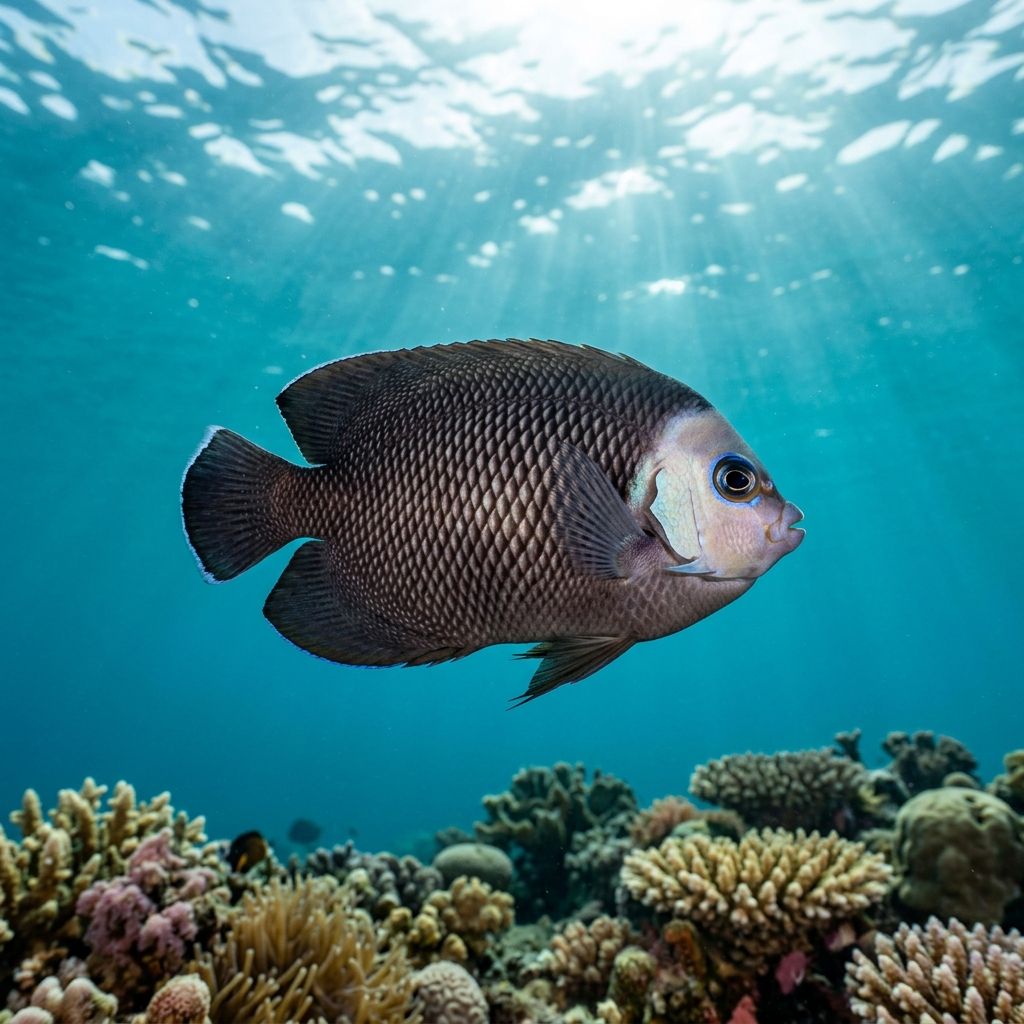
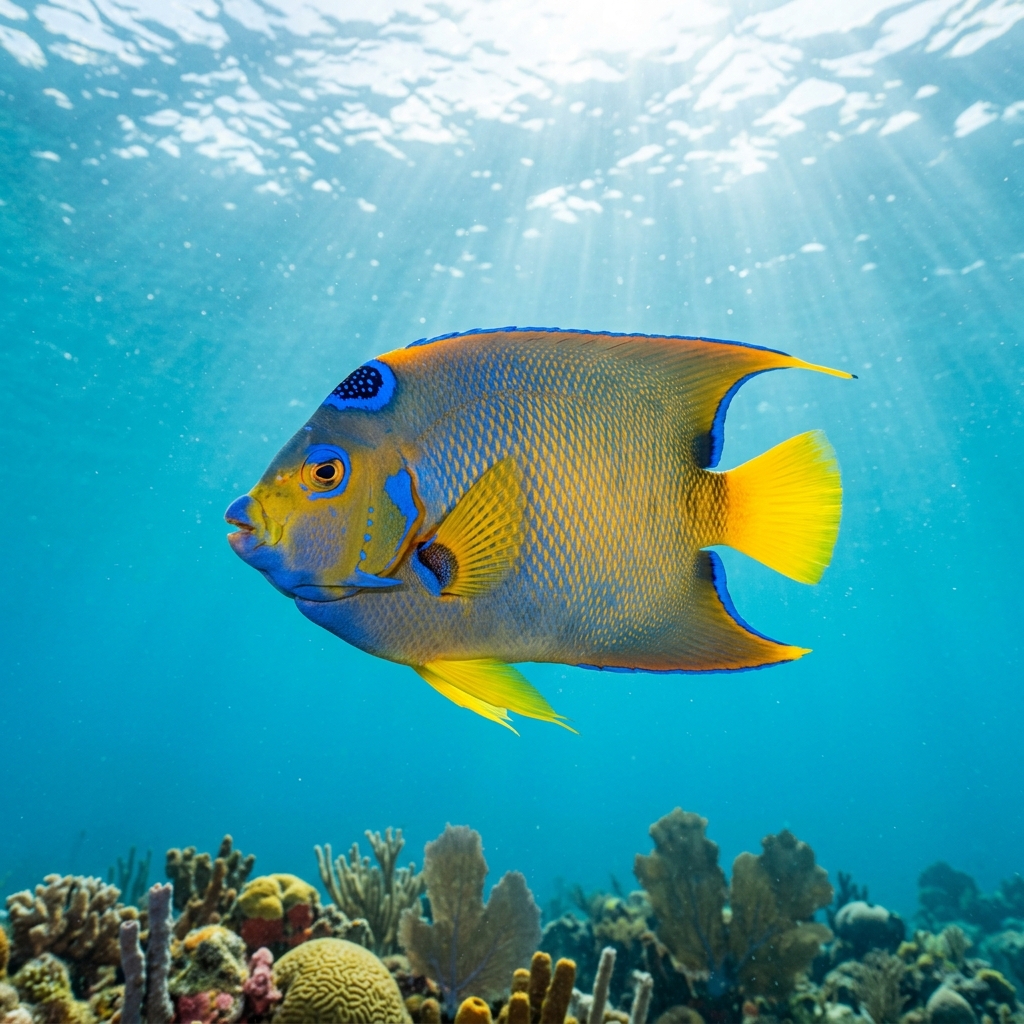
Reef neighbours a diver could mistake it for. Use the identification notes above to tell them apart.
Most commonly logged in the Maldives and the Philippines, with strong populations also recorded across the Seychelles and Indonesia. Zanzibar and the Durban coast of South Africa round out the Indo-Pacific spread, while Taiwan and Thailand offer additional sites in the northern part of the range.
Mapping where Threespot Angelfish is logged…
The species is most reliably logged in the Maldives and the Philippines, particularly in Western Visayas and around the Visayas island groups. The Seychelles, Bali, and Zanzibar are also solid options. South Africa's Durban north coast produces sightings too, making it one of the more southerly reliable locations.
Northern hemisphere dive destinations see the most sightings concentrated in December. In the southern hemisphere, October is the peak month. The fish is tied to warm water around 27-29 °C, so any visit to a tropical reef within that temperature range offers a reasonable chance year-round.
Focus on three things: the overall lemon-yellow body, the vivid blue lips, and the three dark spots on the forehead, dorsal fin base, and tail top. No other common Indo-Pacific angelfish combines that yellow colouration with blue lips and those three distinct spots.
Threespot Angelfish typically reach around 25-26 cm as adults, putting them in the mid-size range for Indo-Pacific angelfishes. Underwater they appear roughly palm-sized with a deep, disc-shaped body typical of the pomacanthid family.
Not especially. Across the many sites where divers have logged them, most sightings are classed as uncommon, and a significant number as rare. Only a handful of sites report them as common. Patience and slow reef exploration give you the best odds of an encounter.
Site and sighting data is aggregated from diver logs, iNaturalist and GBIF. For taxonomy and conservation status:
Rock Beauty
1,573 sites