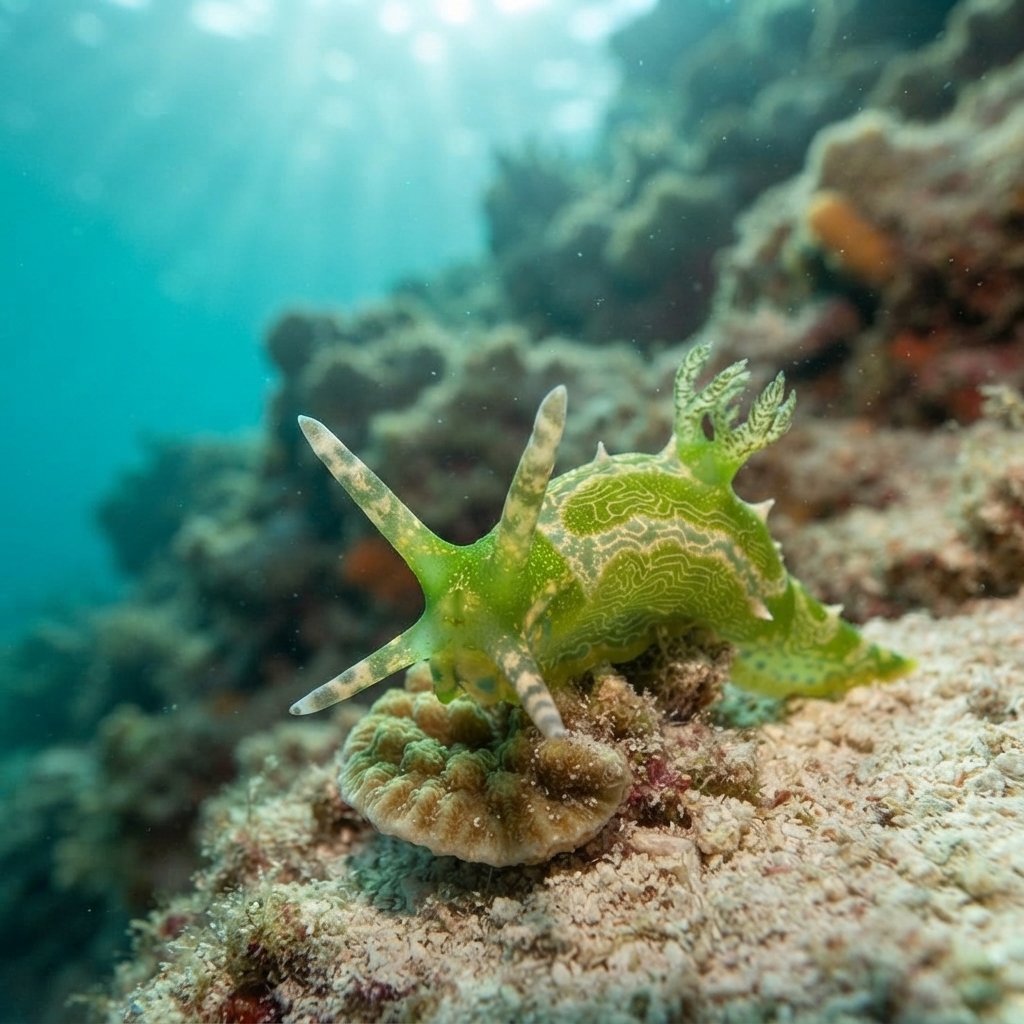
Oxynoe antillarum
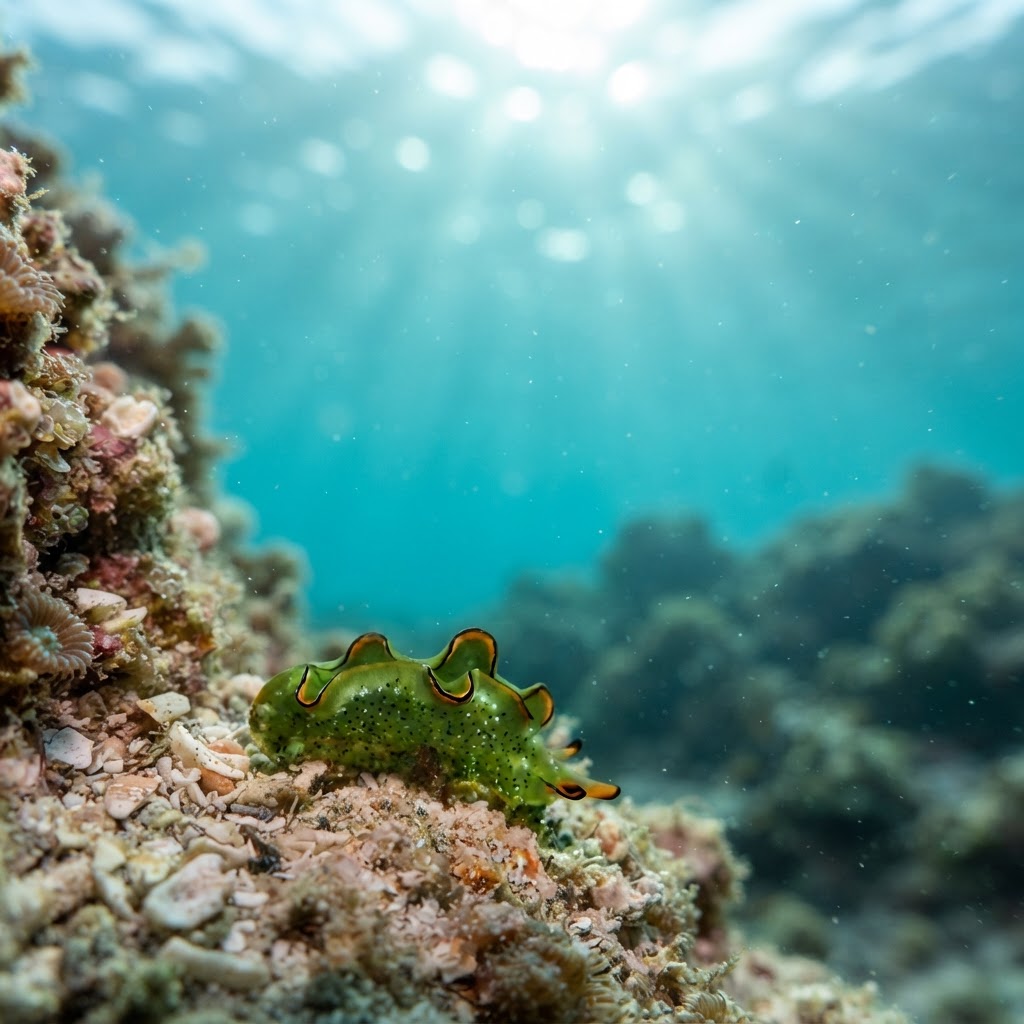
A bright green sap-sucking slug logged across Grande-Terre, Guadeloupe, in warm 25-31C water, year-round on shallow seagrass.
A small, slender sea slug with a bright green to yellow-green body that often shows faint iridescent blue flecks along its sides, helping it blend into the algae it feeds on. Its foot curls up along the edges into a loose tube shape rather than lying flat like many other slugs, and it lacks obvious external gills or showy cerata (the finger-like projections seen on some related slugs). Most divers spot it as a small patch of moving colour on a blade of algae rather than as a distinct animal at first glance.
Divers usually find it clinging to or slowly grazing over the green algae it depends on, moving at a snail's pace across a single blade or clump rather than roaming the reef. It shows little to no reaction to divers and is easy to hover over for a close look or macro photo without disturbing it, most often spotted during the day on shallow, sunlit patches of algae.
It feeds by piercing individual algal cells and drawing out the contents, and in some related sap-sucking slugs this diet lets the animal retain functioning chloroplasts from the algae in its own tissue, giving it a green colour that doubles as camouflage.
No clear seasonal pattern shows up in the sightings, and with water sitting between roughly 25 and 31 C year-round in Guadeloupe, conditions stay suitable for it in every month. Treat it as a year-round find rather than something tied to a particular season.
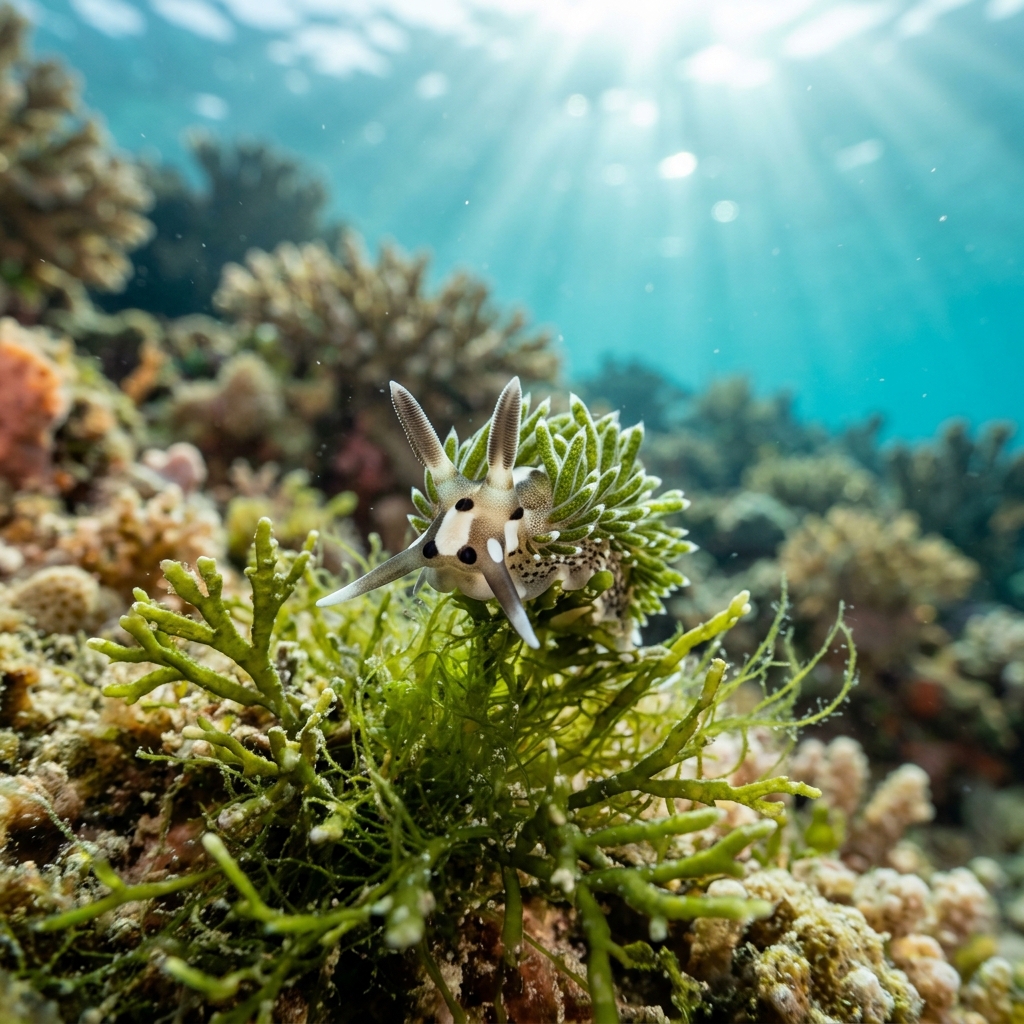
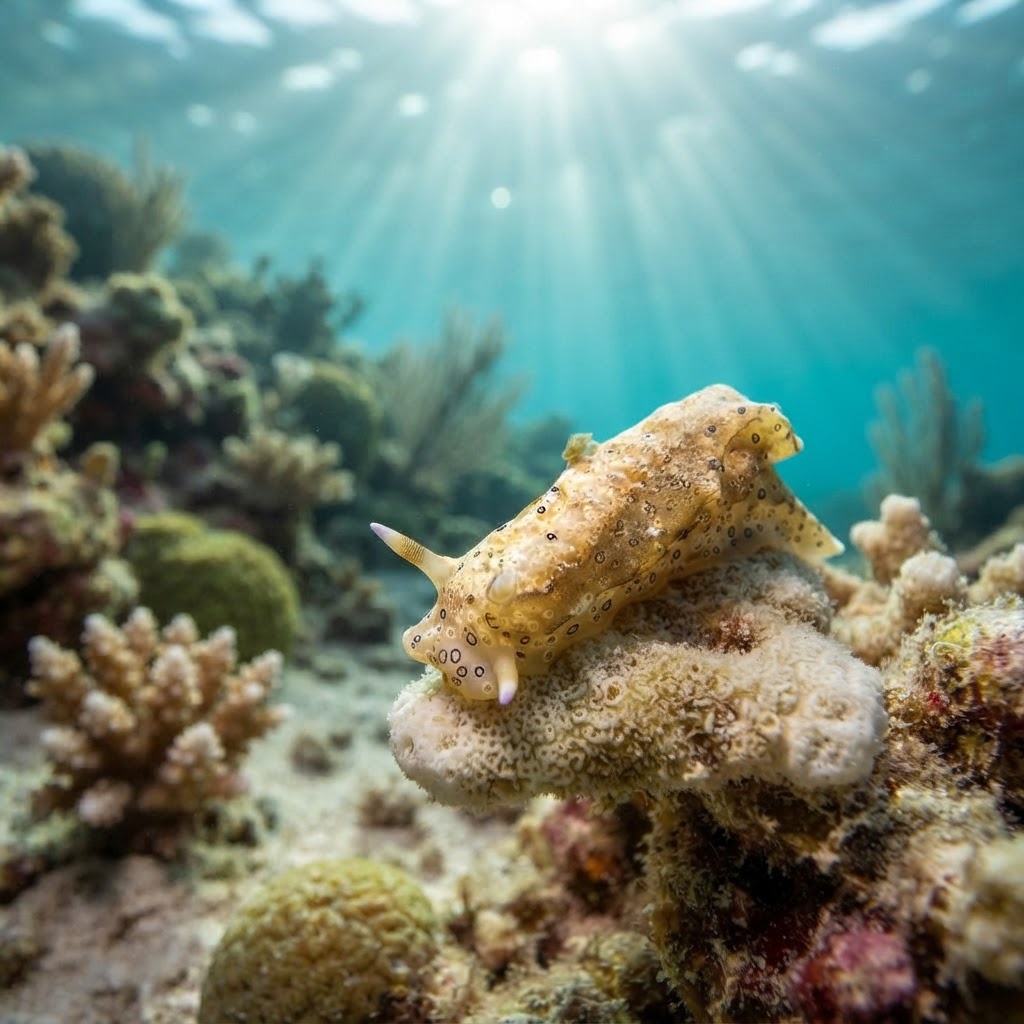
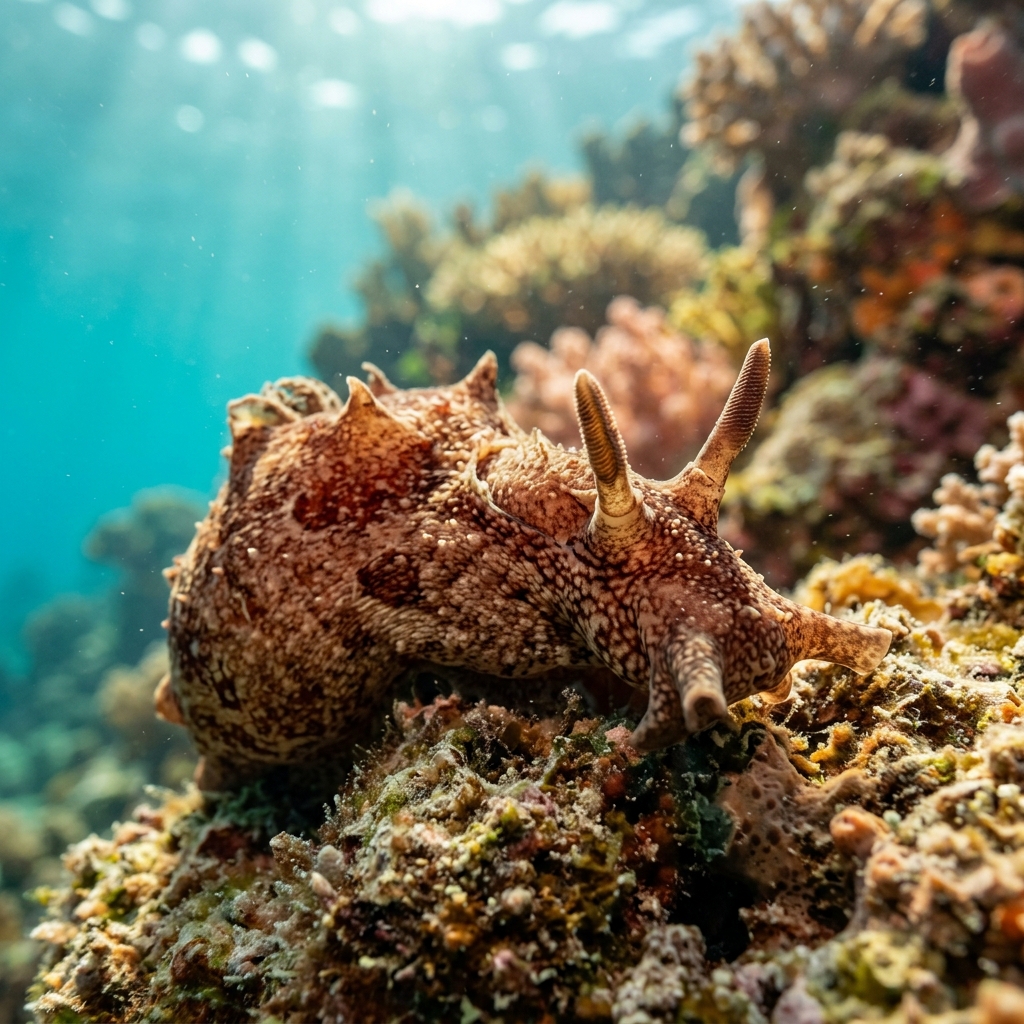
Reef neighbours a diver could mistake it for. Use the identification notes above to tell them apart.
Logged almost exclusively in Guadeloupe, with Grande-Terre standing out as the strongest area for sightings, followed by Îles des Saintes and Basse-Terre. Within these regions it turns up on shallow reef and seagrass patches rather than being spread evenly across every site, so it pays to check dive shops for spots known for macro life and algae beds.
Mapping where Antilles Oxynoe is logged…
Guadeloupe is the standout location, with Grande-Terre logging the most sightings, followed by Îles des Saintes and Basse-Terre. Look for dive and snorkel sites with shallow algae or seagrass patches rather than deep reef walls.
There is no strong seasonal pattern in the sightings, and water temperatures in Guadeloupe stay warm enough (around 25 to 31 C) year-round for it to be present in any month.
Look for a small, slender green to yellow-green slug with a rolled, tube-like foot resting on blades of green algae. It lacks showy projections or bright contrasting patterns, so its main giveaway is its close association with the algae it feeds on.
Exact size data isn't confirmed for this species, but like most Oxynoe slugs it stays small, typically only a few centimetres long, so divers need to look closely at algae patches to spot one.
No, it poses no danger to divers. It has no sting or bite of concern and simply grazes on algae, easy to observe up close without any risk.
Site and sighting data is aggregated from diver logs, iNaturalist and GBIF. For taxonomy and conservation status:
Light-spotted Aegires
3,168 sites