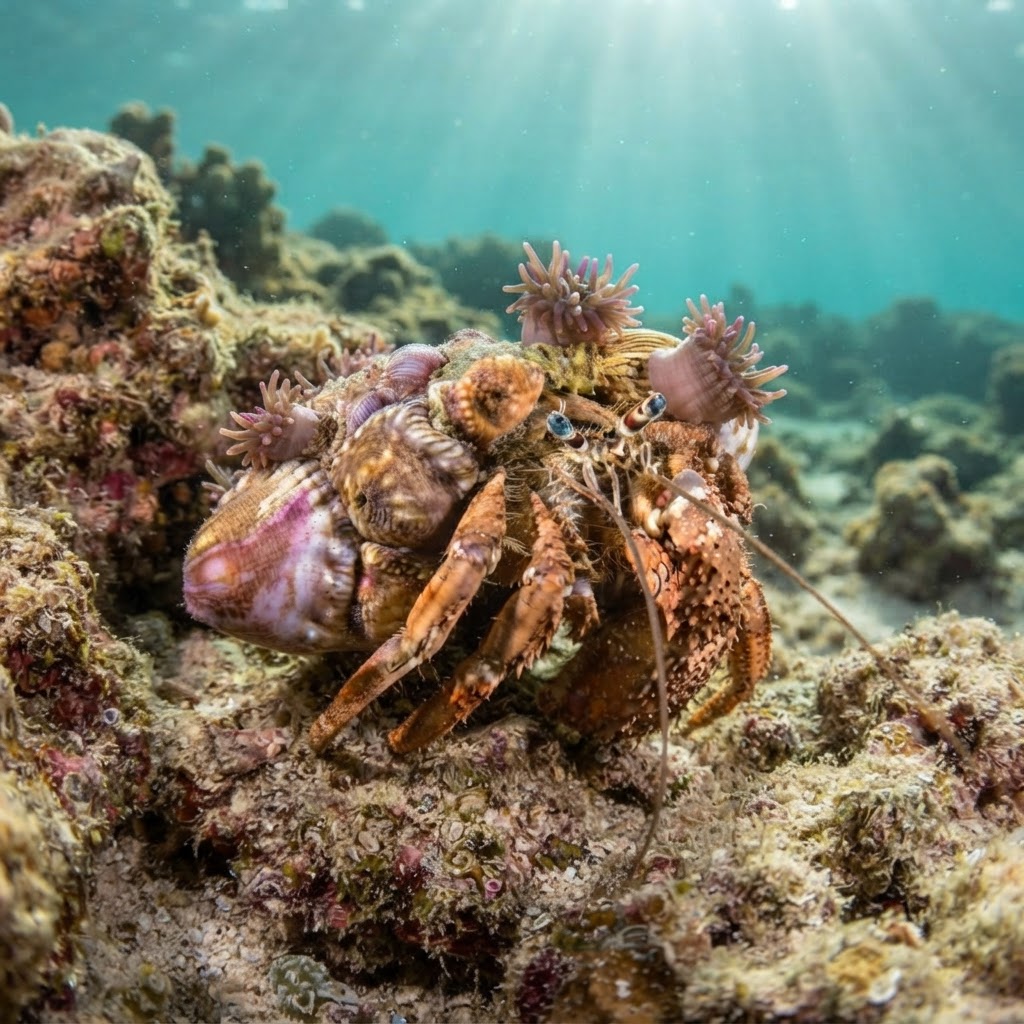
Dardanus tinctor
Look for a hermit crab hauling live anemones on its shell across South Sinai and Aqaba reefs, in water around 22-28C, year-round.
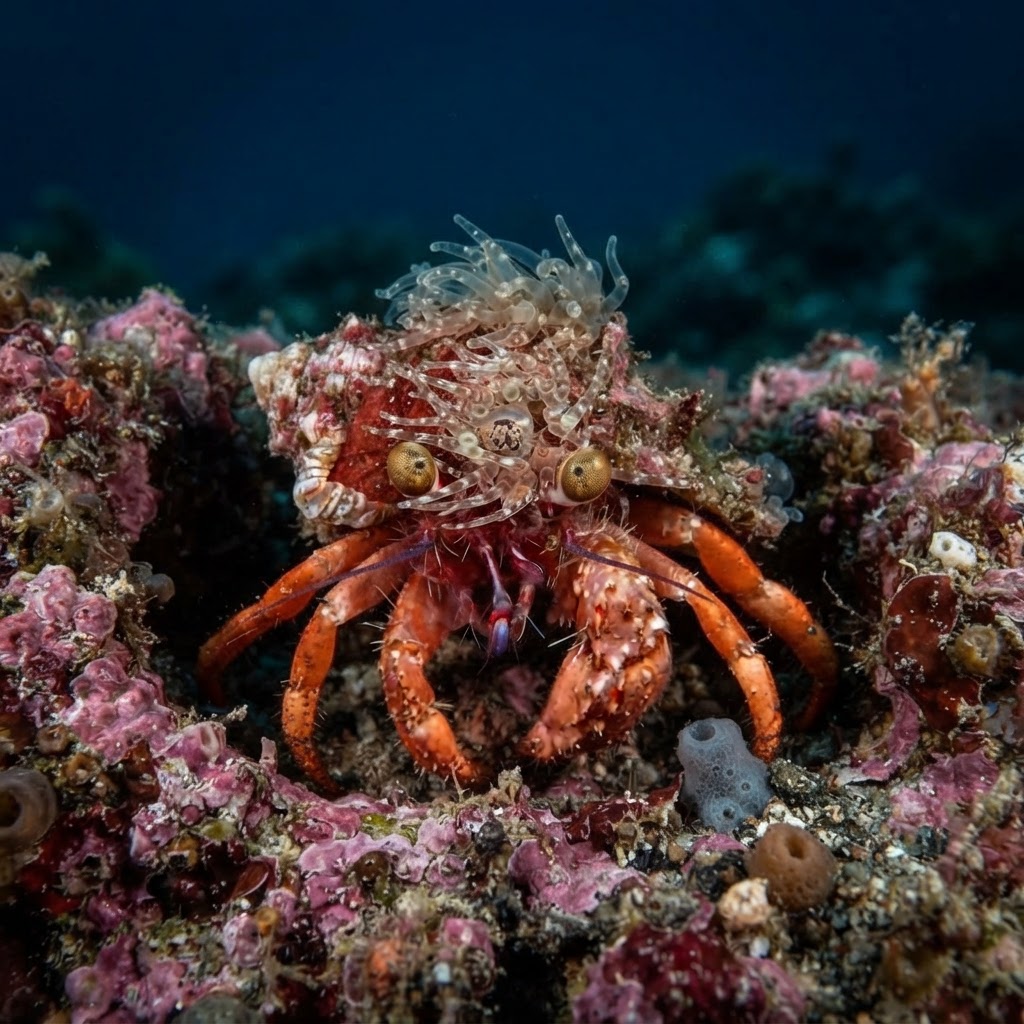
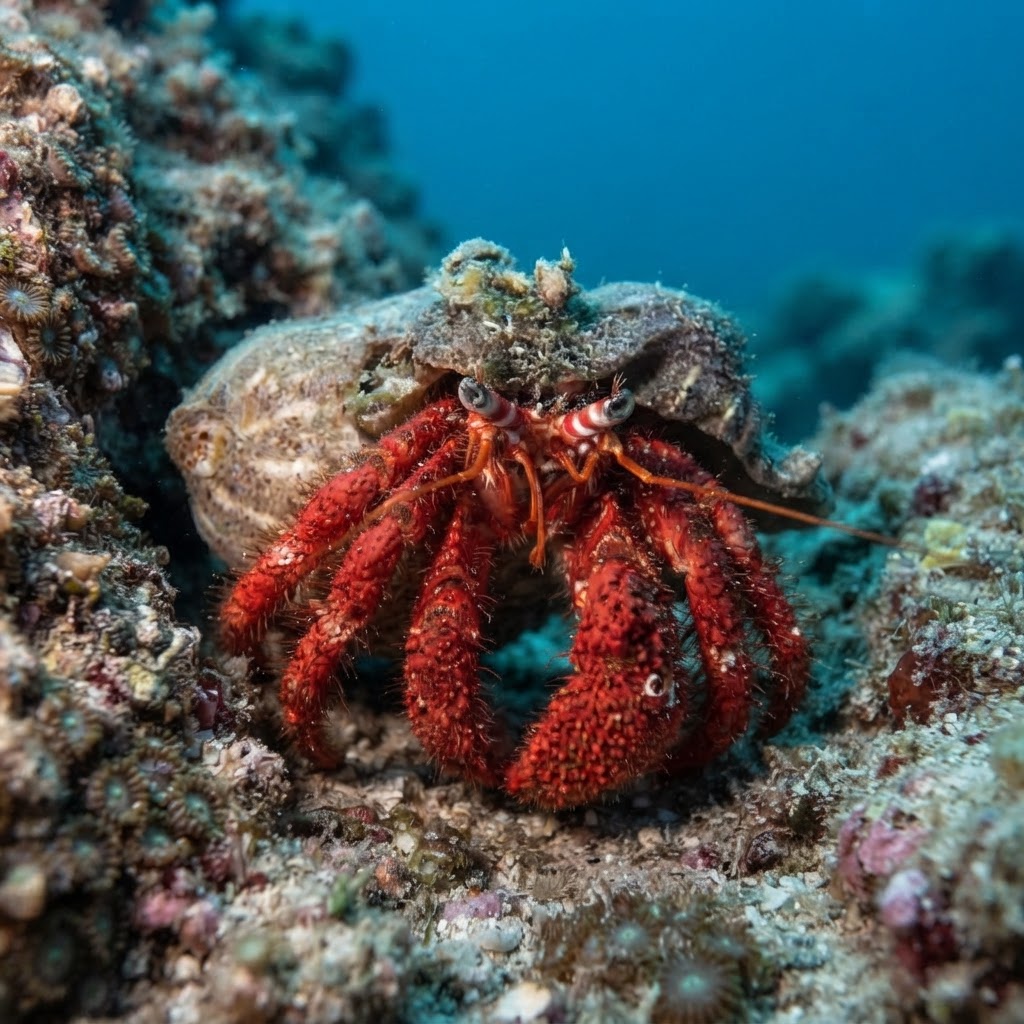
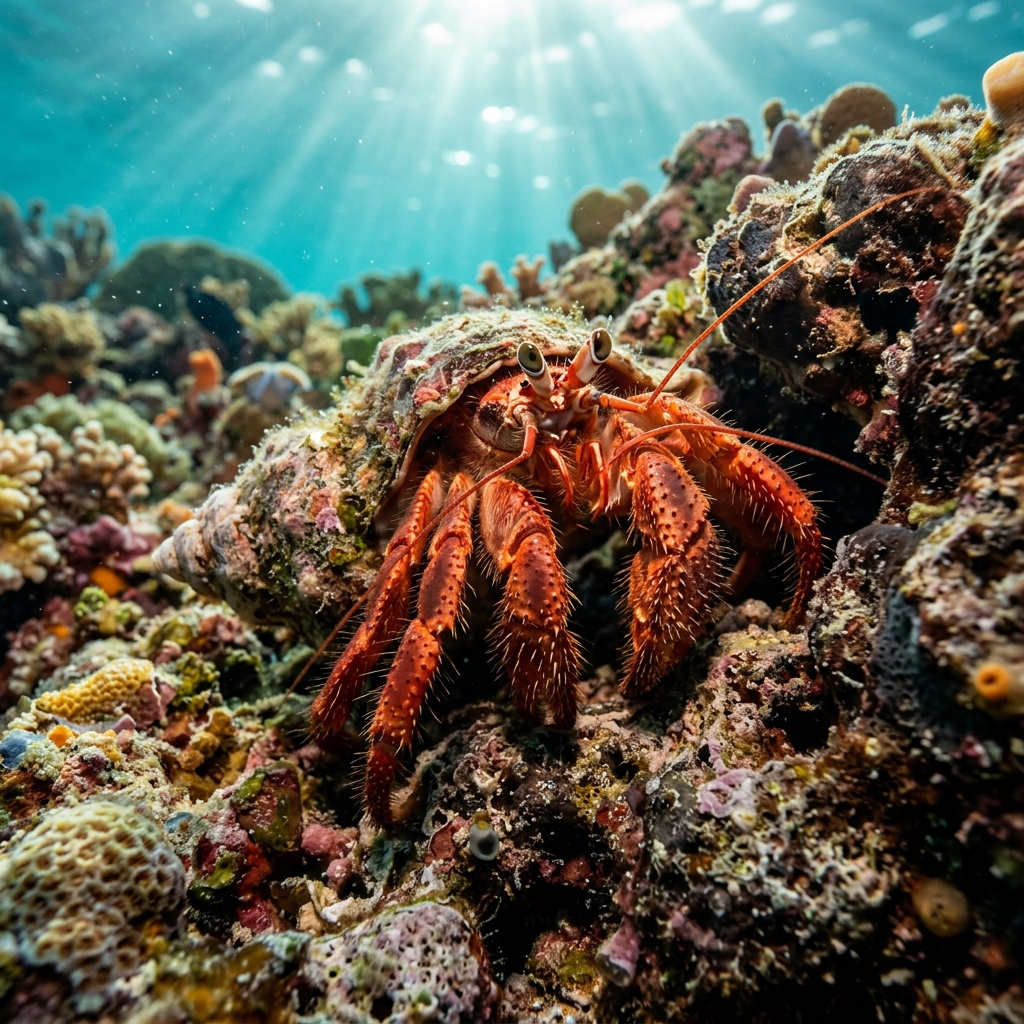
Spot the shell first: this hermit crab drags around a mobile home studded with small anemones stuck to the outside, which is the single giveaway feature underwater. The crab itself has hairy, reddish-brown legs and claws that poke out from beneath the anemone-covered shell, and it moves in slow, deliberate steps across sand and rubble. Size varies with the borrowed shell it is occupying, so look at the leg and claw pattern rather than overall bulk to confirm the ID.
Divers usually find it ambling slowly over sand, rubble or reef base at a steady, unhurried pace, often at night or during low-light dives when hermit crabs are most active. It tends to ignore divers unless directly disturbed, relying on its anemone-covered shell for cover rather than fleeing. Logged sightings mark it as uncommon at almost every site, so a slow scan of open sand near reef edges is the best way to pick one out.
The anemones riding on its shell are not just decoration: they sting anything that gets too close, giving this hermit crab a portable defence system that most predators avoid, while the anemones get a free ride to fresh feeding spots.
No clear seasonal pattern shows up in the sightings, and with water in its comfort range of roughly 22 to 28C year-round across the Red Sea, it is a fair bet on any dive regardless of month.
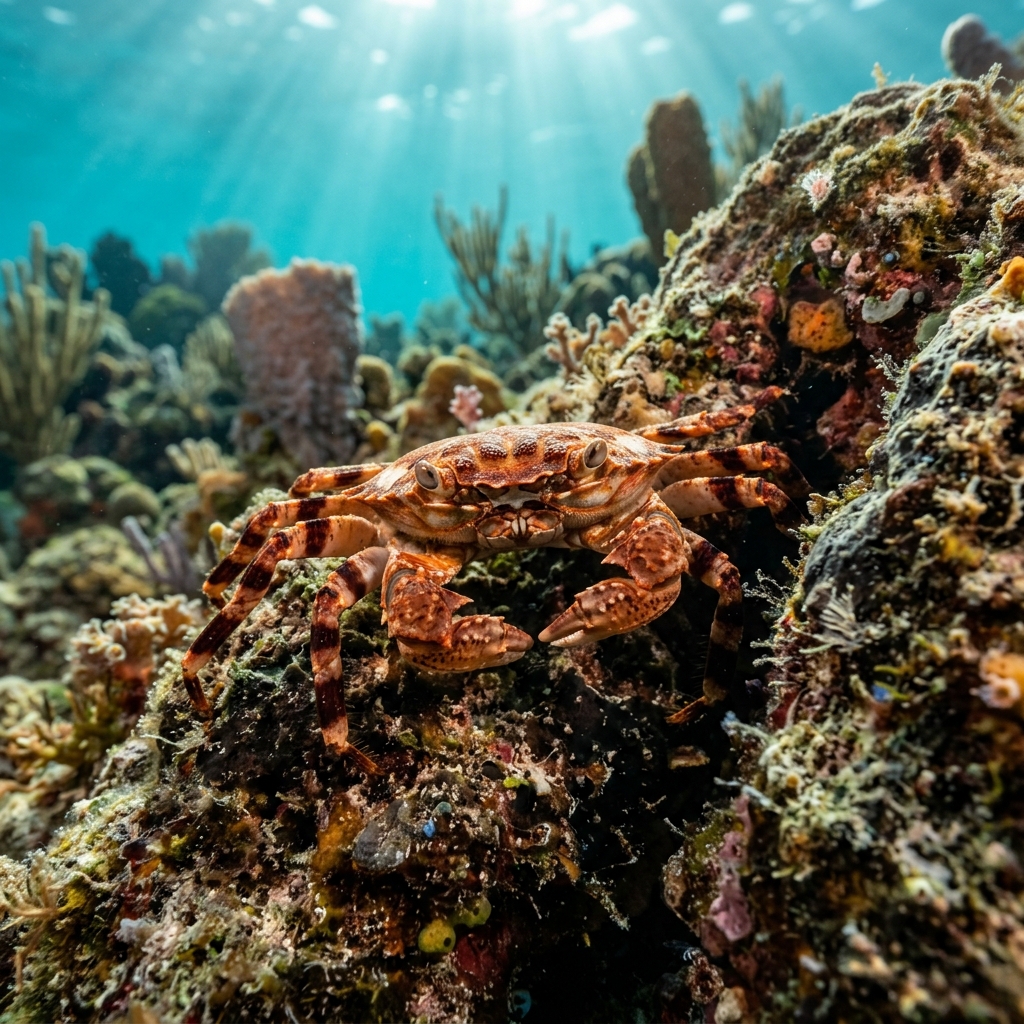
Reef neighbours a diver could mistake it for. Use the identification notes above to tell them apart.
Most consistently logged across Egypt, especially South Sinai and the Red Sea Riviera, with a further reliable presence in Marsa Alam and the Deep South. Outside Egypt it turns up at sites in Aqaba, Jordan, along Saudi Arabia's Red Sea coast, and in Eilat, Israel.
Mapping where Anemone Carrier is logged…
South Sinai and the Red Sea Riviera in Egypt are the strongest areas, with further sightings in Marsa Alam, Aqaba in Jordan, Saudi Arabia's Red Sea coast, and Eilat in Israel.
There is no strong seasonal pattern in the sightings, and it tolerates a wide temperature range of roughly 22 to 28C, so it is seen year-round on Red Sea reefs.
Look for a hermit crab shell covered in small live anemones, with reddish, hairy legs and claws poking out below. The anemone-studded shell is the clearest way to tell it apart from a plain hermit crab.
It deliberately attaches live anemones to its shell for defence, since the anemones' stinging cells deter predators. In return the anemones get carried to new feeding grounds they could never reach on their own.
Site and sighting data is aggregated from diver logs, iNaturalist and GBIF. For taxonomy and conservation status:
European Green Crab
2,469 sites