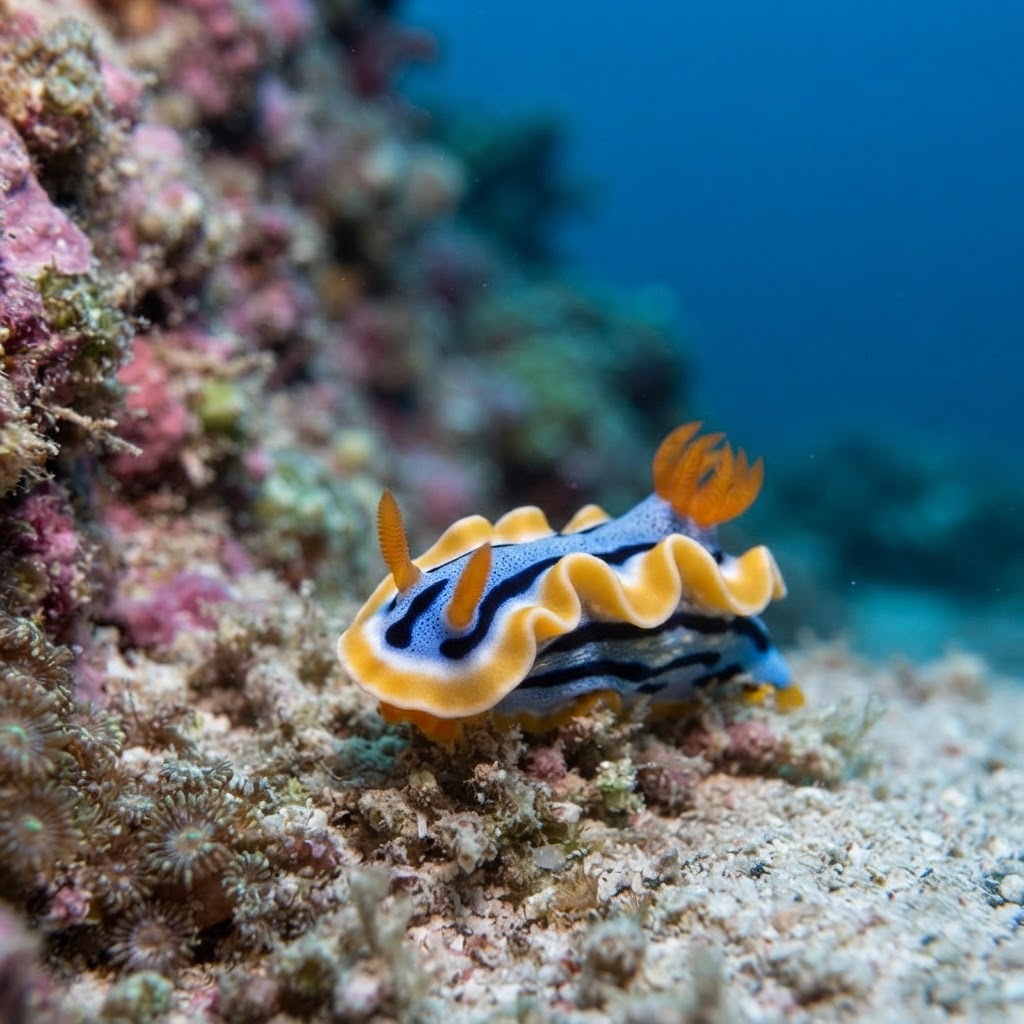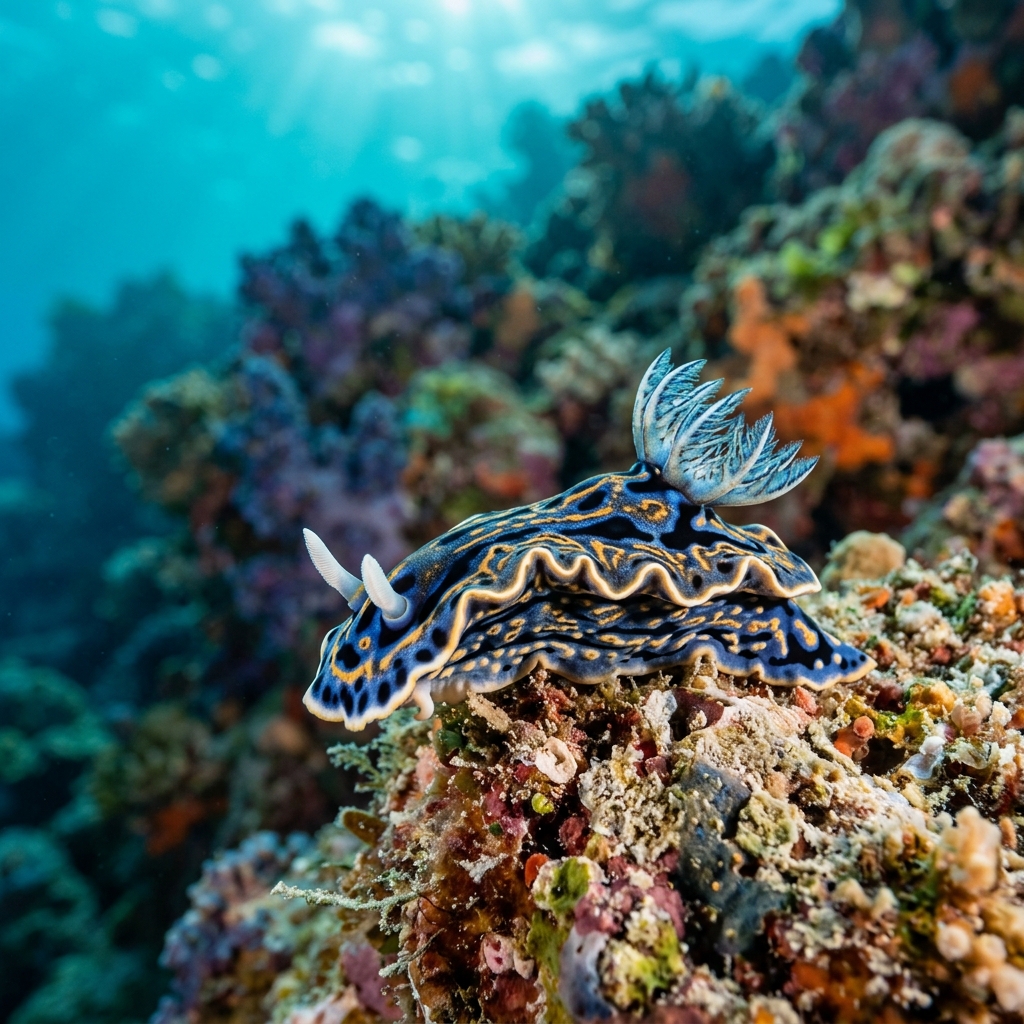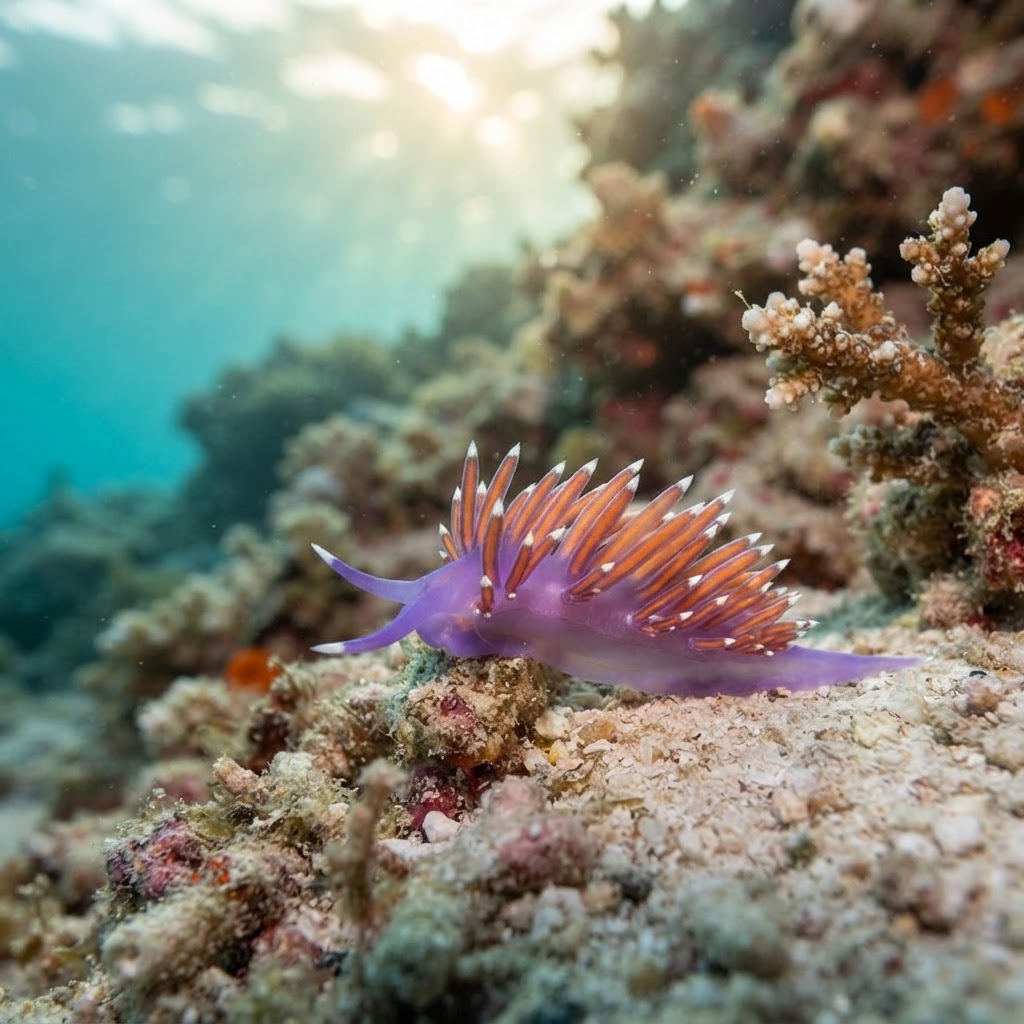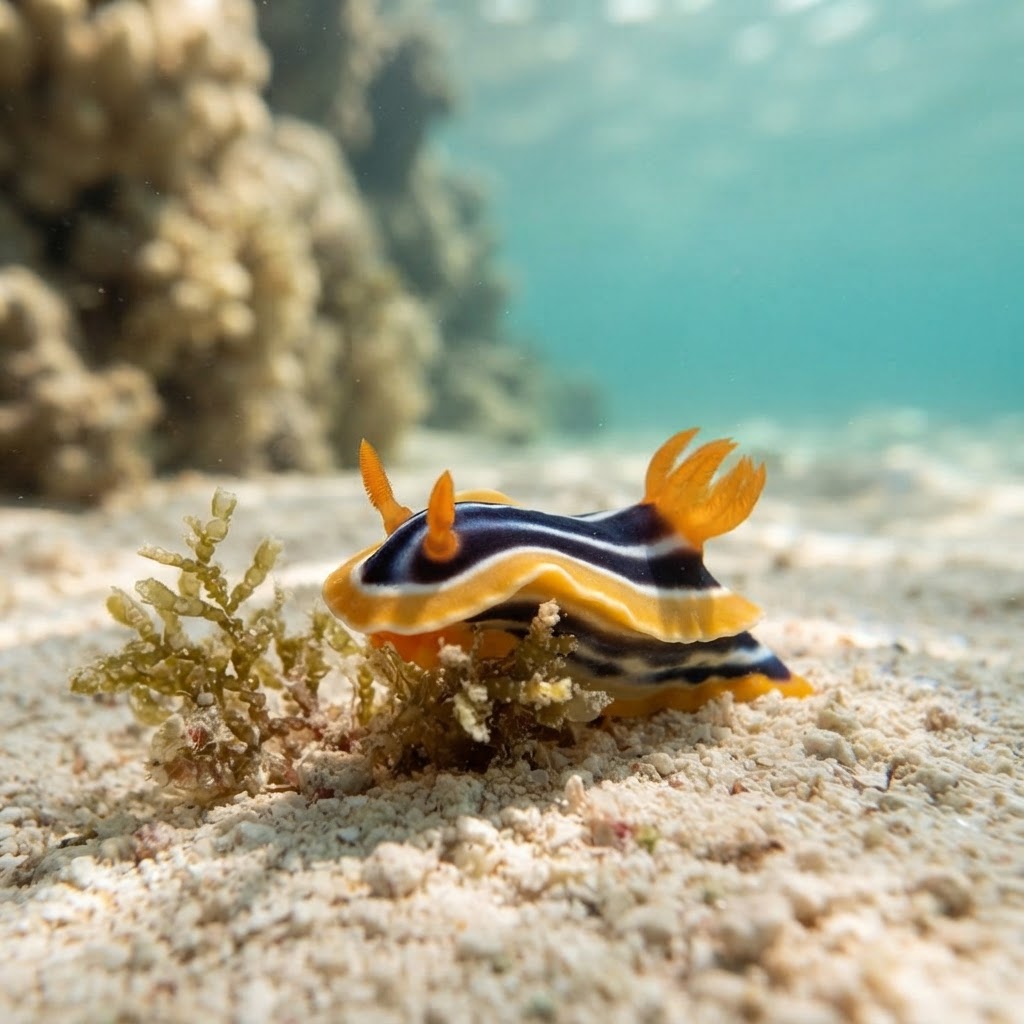
Chromodoris africana
A tiny purple-and-orange nudibranch turning up on reefs from KwaZulu-Natal to Zanzibar, in water 22-28C, year-round.
A small, slug-shaped nudibranch topping out around 4 cm, with a smooth purple to violet mantle edged in fine white or yellow lines. Look for the contrasting orange-tipped gills (feathery tuft) clustered at the rear and a pair of short rhinophores (sensory horns) up front. It moves slowly across encrusting sponge and algae, so once you spot the colour contrast it is easy to hold in view.
Divers find it parked on sponge-covered rock and rubble patches, grazing slowly and paying little attention to torches or close approach. It is not a swimmer, so once located it tends to stay put long enough for a proper look and photo. Most logs come from daytime reef dives rather than night dives, though nudibranchs like this are active around the clock.
Like other Chromodoris species, its bright colouring is a warning rather than decoration, the mantle carries chemical compounds absorbed from the sponges it feeds on, making it distasteful to would-be predators.
No clear seasonal pattern shows up in the sighting data, and its comfort range of 22.4 to 28.4C spans most of the year on these reefs, so it is worth watching for on any dive in the region rather than timing a trip around it.
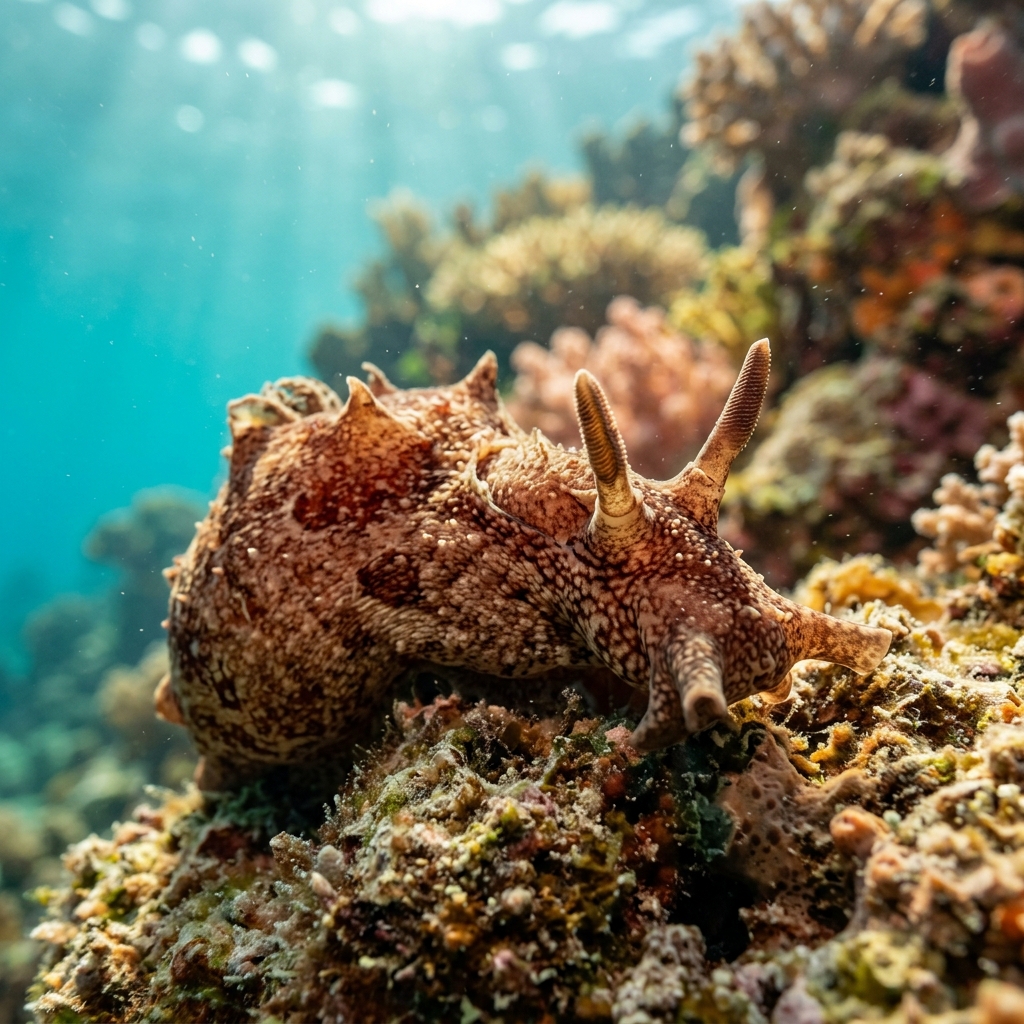
Reef neighbours a diver could mistake it for. Use the identification notes above to tell them apart.
Most reliably logged along South Africa's KwaZulu-Natal coast, which accounts for the bulk of recorded sightings, with additional records from Zanzibar in Tanzania and Nosy Be in Madagascar. Smaller numbers turn up at N'Gouja in Mayotte and Inhambane in Mozambique, making this largely a southwest Indian Ocean species for divers.
Mapping where African Rainbow Dorid is logged…
KwaZulu-Natal in South Africa has the most records, with further sightings in Zanzibar (Tanzania), Nosy Be (Madagascar), Mayotte and Mozambique. It is a southwest Indian Ocean species best searched for on reef and rubble patches in these regions.
There is no strong season in the sighting data, and it is found in water from 22.4 to 28.4C, so it can be spotted year-round on the reefs where it occurs rather than during a specific month.
Check for a small purple to violet mantle with fine pale edging and an orange-tipped gill tuft at the rear. It sits still on sponge-covered substrate at around 4 cm long, making the colour contrast the key giveaway.
It stays small, typically reaching about 4 cm in length, so divers usually need to get close to the reef surface to notice it.
No, it poses no danger to divers. It has no sting or bite of concern and simply relies on chemical defences absorbed from its sponge diet to deter predators.
Its bright colours advertise toxins taken from the sponges it grazes on, a defence strategy shared across the Chromodoris family rather than a unique trait, but effective at keeping predators away.
Site and sighting data is aggregated from diver logs, iNaturalist and GBIF. For taxonomy and conservation status:
Light-spotted Aegires
3,168 sites