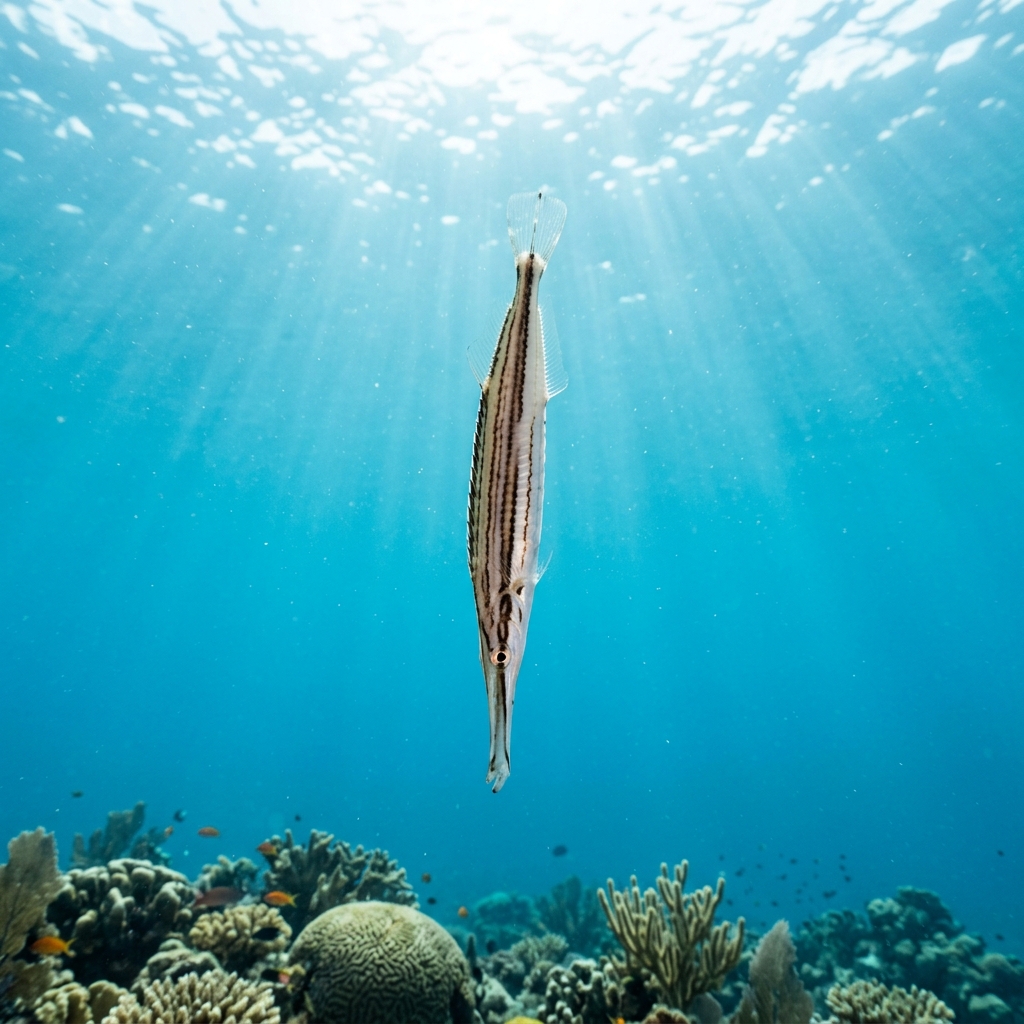
Aeoliscus spp.
Look for razorfish hovering vertically over urchin spines in Sulawesi, the Philippines and Sabah, year-round in warm Indo-Pacific water.
Thin, blade-flat bodies held vertically in the water with the head pointed down, giving the whole school a hanging-needle look. Colour runs from translucent silver to brown or striped depending on the individual, and the body is edged with a sharp keel along the belly. They're usually spotted in tight little groups rather than alone, all tilted at the same odd downward angle, drifting just above the reef.
Look for them hovering motionlessly in small schools just above long-spined sea urchins or branching coral, every individual pointed nose-down toward the reef. Rather than bolting when you approach, the whole group tends to shift together, keeping the urchin's spines between themselves and you, and will duck between the spines if pressed. They're picking tiny crustaceans out of the water column, so they're often thickest wherever a bit of gentle current brings plankton past.
Hovering in formation over an urchin isn't just camouflage, it's a shared shelter strategy: the whole school uses the same spines as a communal bolt-hole, ducking between them in unison rather than each fish finding its own hiding spot.
No clear seasonal pattern in the data, and with a comfort range of roughly 24 to 30C they're a year-round find on tropical Indo-Pacific reefs.
Reef neighbours a diver could mistake it for. Use the identification notes above to tell them apart.
Most reliably found across Indonesia and the Philippines, with strong numbers logged in Sulawesi, Luzon, Palawan, Visayas and Mindanao. Malaysia's Sabah region, Thailand and Queensland in Australia also turn up sightings regularly, and further afield they show up along Egypt's and Saudi Arabia's Red Sea coasts.
Mapping where Razorfish is logged…
They're most commonly logged across Indonesia and the Philippines, particularly Sulawesi, Luzon, Palawan and the Visayas, with good numbers also in Sabah (Malaysia), Thailand, Queensland and the Red Sea coasts of Egypt and Saudi Arabia.
There's no strong seasonal signal in sightings, and they sit comfortably in water from about 24 to 30C, so they're a fair bet on tropical reefs any month of the year.
Look for a small school of flat, blade-thin fish hovering vertically with their heads pointed straight down at the reef, usually parked just above an urchin or coral bed. The whole group tilts and shifts together rather than scattering when you get close.
No. They have no venom or aggressive behaviour toward divers and simply drift away or duck into urchin spines if approached too fast.
It's a defence strategy: schools line up nose-down and use the urchin's long spines as a shield, darting in between them for cover if a predator or diver gets too close.
Exact size data isn't confirmed for this genus, but divers typically encounter them as small, slender fish only a few centimetres long, easy to miss until you notice the school hovering as one unit.
Site and sighting data is aggregated from diver logs, iNaturalist and GBIF. For taxonomy and conservation status:
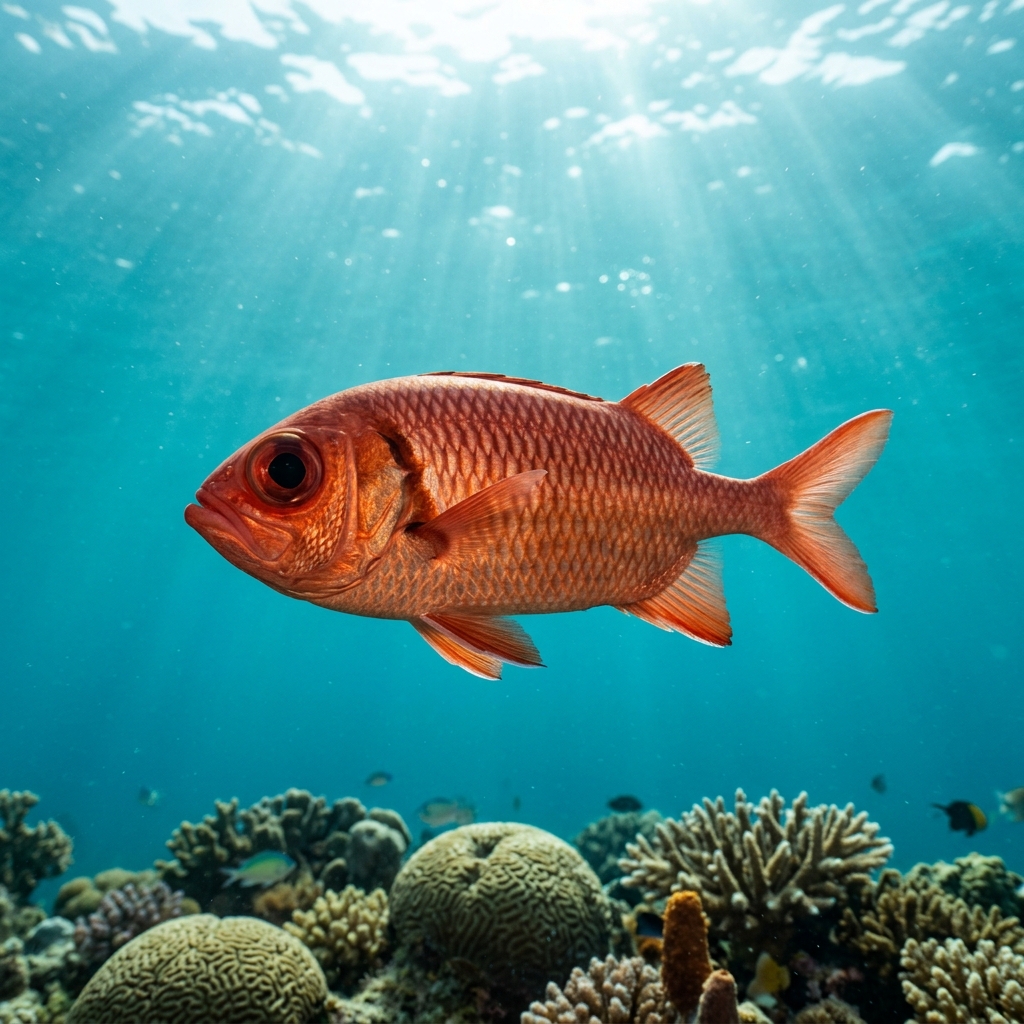
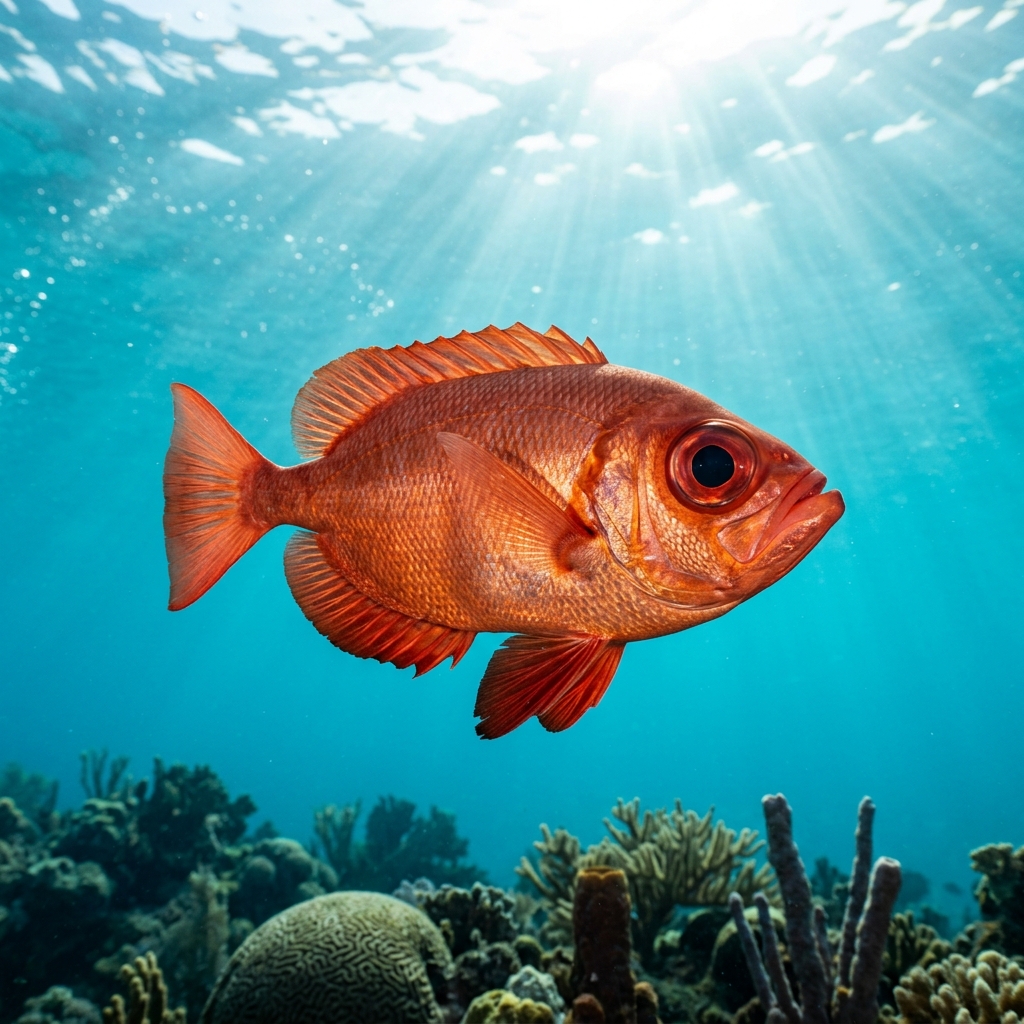
Soldierfish
3,612 sites