Pegasidae spp.
Seamoth are rare but unforgettable finds across Queensland, Bali and the Philippines. Here's where divers log them and how to spot one on the sand.
Seamoths are small, heavily armoured fish with a rigid, box-like body encased in fused bony plates and enormous, wing-like pectoral (side) fins that splay flat like a miniature manta ray. Their flattened snout extends forward into a pointed rostrum, giving the head an almost insect-like look that you won't confuse with anything else once you've seen it. Most species are earthy brown, tan, or mottled with subtle patterning that blends well against sandy or rubble seafloors. Adults typically crawl rather than swim, using small pelvic fins to walk across the bottom.
When divers encounter seamoths they are usually resting or slowly walking across open sandy or silty seafloor and shallow rubble, using their pelvic fins like little legs. They tend to sit tight rather than flee, which makes extended observation possible if you approach slowly and stay low. Because they rely on camouflage and armour rather than speed, a patient diver can often watch one for several minutes without it moving more than a few centimetres.
Seamoths shed their entire outer skin periodically, slipping out of the bony-plate covering in one piece, which is an unusual strategy among fish and may help remove parasites.
There is not enough monthly sighting data to point to a peak season, so treat seamoths as a year-round possibility wherever conditions are right. Their recorded temperature range of roughly 17 to 29 °C spans both tropical and warm-temperate reefs, meaning winter dives in temperate Australia or Japan are still within range.
Seamoths appear across the Indo-Pacific, and sightings are most commonly logged in Australia, the Philippines, Indonesia, and Japan. Within those countries the strongest concentrations of dive sites fall in Queensland and Western Australia, the Visayas and Palawan in the Philippines, Bali and Sulawesi in Indonesia, and the Izu Peninsula area of Japan. Thailand, Malaysia, Vietnam, and Fiji also fall within the recorded range.
Mapping where Seamoth is logged…
Seamoths are logged across the Indo-Pacific, with the most dive sites recorded in Australia (especially Queensland and Western Australia), the Philippines (Visayas and Palawan), Indonesia (Bali, Sulawesi, and Maluku), and Japan (Izu Peninsula). Thailand, Malaysia, Vietnam, and Fiji also fall within the known range.
There is no confirmed peak season in the sighting data, so seamoths are best treated as a year-round target. Their observed temperature range of about 17 to 29 °C means both tropical and warm-temperate dive destinations can produce encounters throughout the year.
Look for a very small, flattened fish with a rigid armoured body and enormous wing-like pectoral fins held flat to the sides. The elongated, pointed snout and the way it walks on the seafloor rather than swimming are both instant giveaways. Colouration is usually muted brown or tan to match sandy and rubble substrates.
Seamoths are small fish. Most species in the Pegasidae family reach somewhere between 5 and 18 cm in total length depending on species, so they are easy to overlook against a sandy or rubble background.
Unlike most bony fish, seamoths periodically shed their outer skin in a single intact piece, armour and all. This moult-like behaviour is rare among fish and is thought to help rid the animal of parasites attached to its surface plates.
Site and sighting data is aggregated from diver logs, iNaturalist and GBIF. For taxonomy and conservation status:
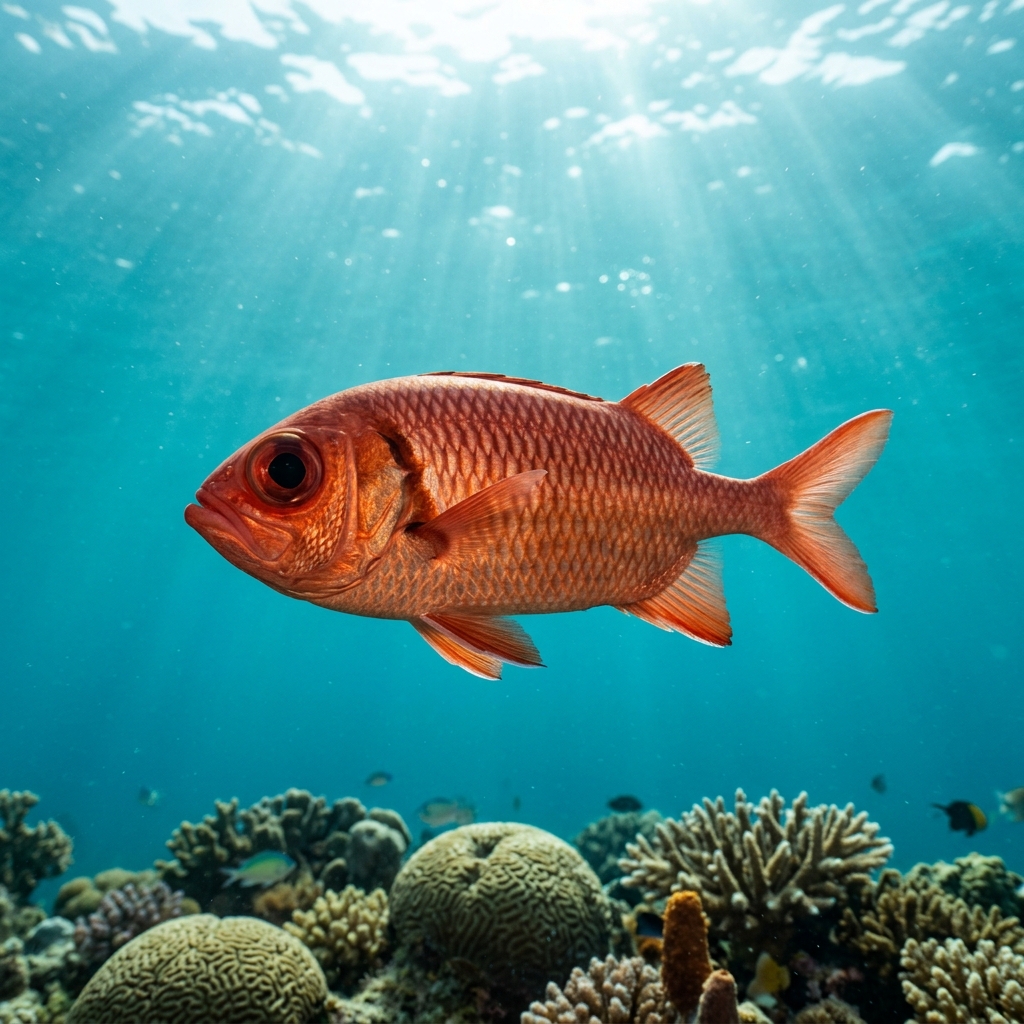
Soldierfish
3,612 sites