Ogcocephalus nasutus
Spot the Shortnose Batfish in Florida, the US Virgin Islands, and Brazil. A bizarre bottom-dweller found in warm tropical waters year-round.
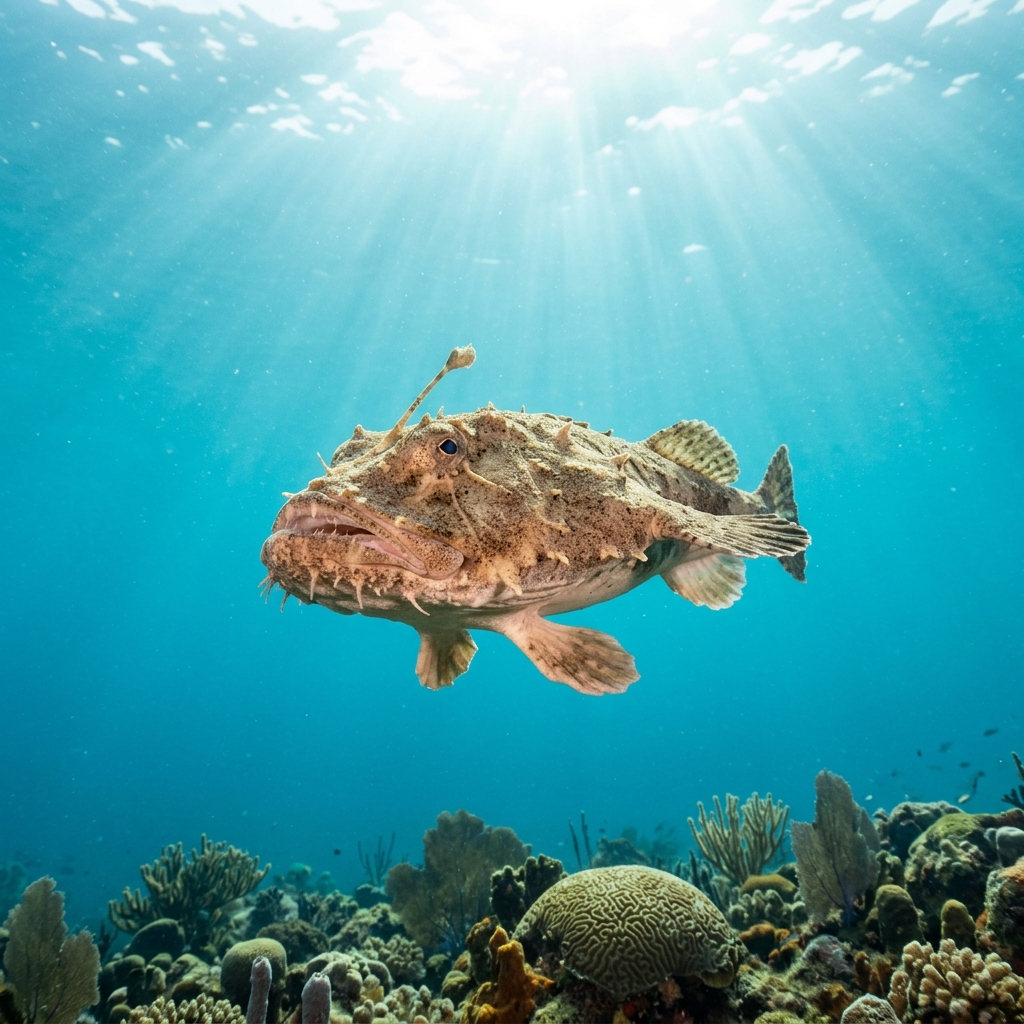
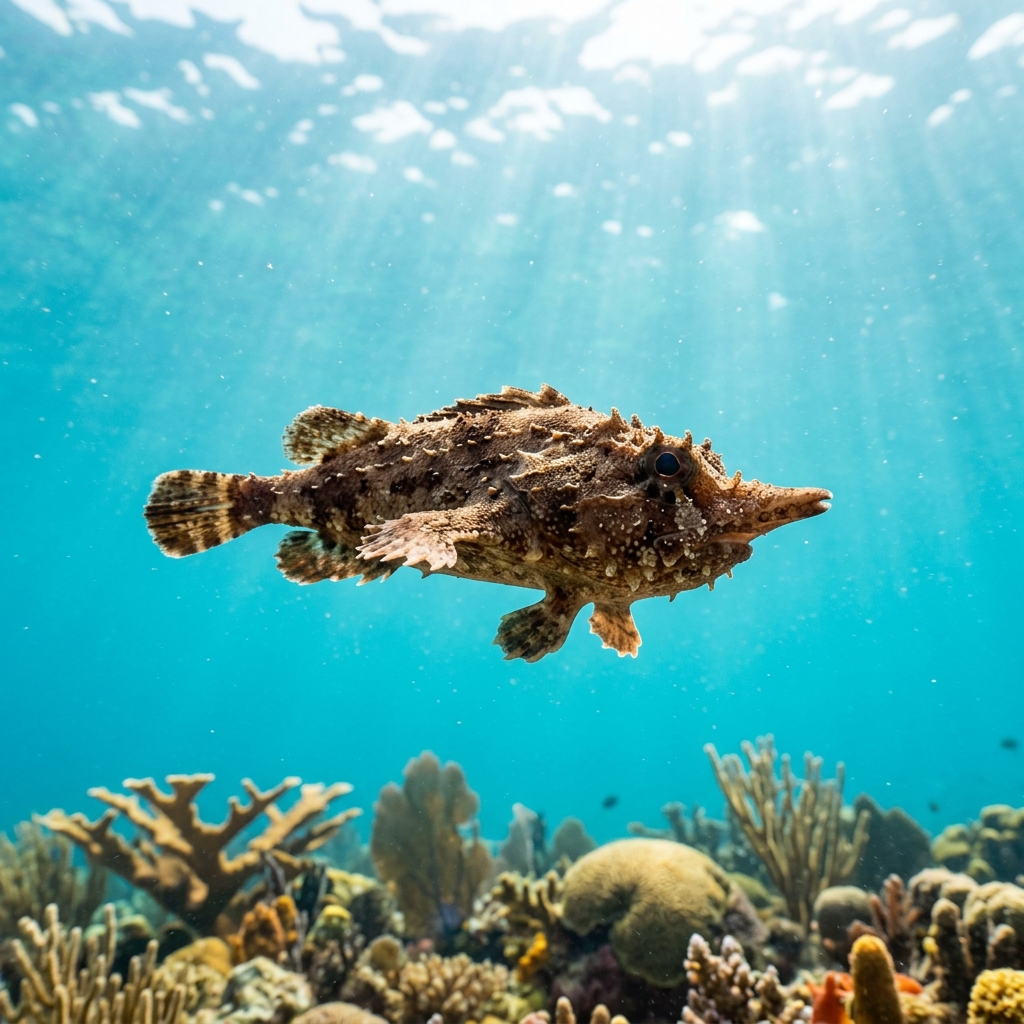
Flat as a pancake and roughly triangular in outline, this is one of the more alien-looking fish on a tropical reef. The body is mottled brown or tan on top, helping it blend into sand and rubble, with a notably upturned, fleshy snout that gives the species its name. What really catches a diver's eye is the way it props itself on stiff, arm-like pectoral and pelvic fins rather than swimming, often holding perfectly still on the bottom. A short, retractable lure (called an illicium) sits just above the mouth and is used to attract prey.
When you find one, it is almost certainly sitting motionless on a sandy or rubble bottom, relying on camouflage rather than flight. Rather than swimming away, it tends to shuffle a short distance on its fin-legs if approached too closely, then settle again. Look low and slow along the seabed; their stillness and cryptic colouring make them easy to miss even when they are right in front of you.
Batfish are poor swimmers and essentially walk along the bottom using modified fins that function like stubby limbs. The retractable lure above the snout releases a chemical attractant to draw in small invertebrates within striking range.
No clear seasonal peak has emerged from the data, so this species is best treated as a year-round resident. Observed water temperatures run from around 24 to 29 °C, consistent with the warm tropical and subtropical waters it inhabits across all seasons.
Shortnose Batfish are most consistently logged across Florida and the US Southeast, making the region the standout destination for a sighting. Saint Croix in the US Virgin Islands is the next most reliable location, with strong records spread across its sites. Brazil's Northeast Coast and the Rio de Janeiro and São Paulo coastline round out the range, offering further opportunities in the South Atlantic.
Mapping where Shortnose Batfish is logged…
The best-documented locations are Florida and the broader US Southeast, followed by Saint Croix in the US Virgin Islands and the coastlines of Brazil, particularly the Northeast Coast and the Rio de Janeiro and São Paulo region. All sightings come from warm, shallow tropical and subtropical waters within those areas.
Available data does not point to a specific season, so diving for this species is a year-round proposition across its range. The water temperatures where it is observed run between roughly 24 and 29 °C, meaning warm-water conditions that persist throughout the year in Florida, the US Virgin Islands, and Brazil.
Look for a very flat, triangular fish sitting motionless on sand or rubble, mottled brown on top with a distinctly upturned snout. The giveaway is the way it props itself on stiff, limb-like fins rather than hovering or swimming. No other common reef fish in its range shares that combination of shape, posture, and the fleshy, upturned nose.
Typical individuals reach around 15 to 20 cm in length. Their flattened shape can make them look smaller than they are when viewed from above, especially against a sandy background.
Not in the usual sense. Batfish are famously poor swimmers and instead use their modified pectoral and pelvic fins as limbs to prop themselves up and shuffle across the seafloor. They also carry a small retractable lure above the mouth to attract prey, a trait shared with their deep-sea anglerfish relatives.
No. Shortnose Batfish pose no threat to divers. They are slow-moving, cryptic animals that rely on camouflage and stillness for defence. The main risk is accidentally disturbing one you did not notice on the sand, so keep an eye on where you place your hands and knees.
Site and sighting data is aggregated from diver logs, iNaturalist and GBIF. For taxonomy and conservation status:
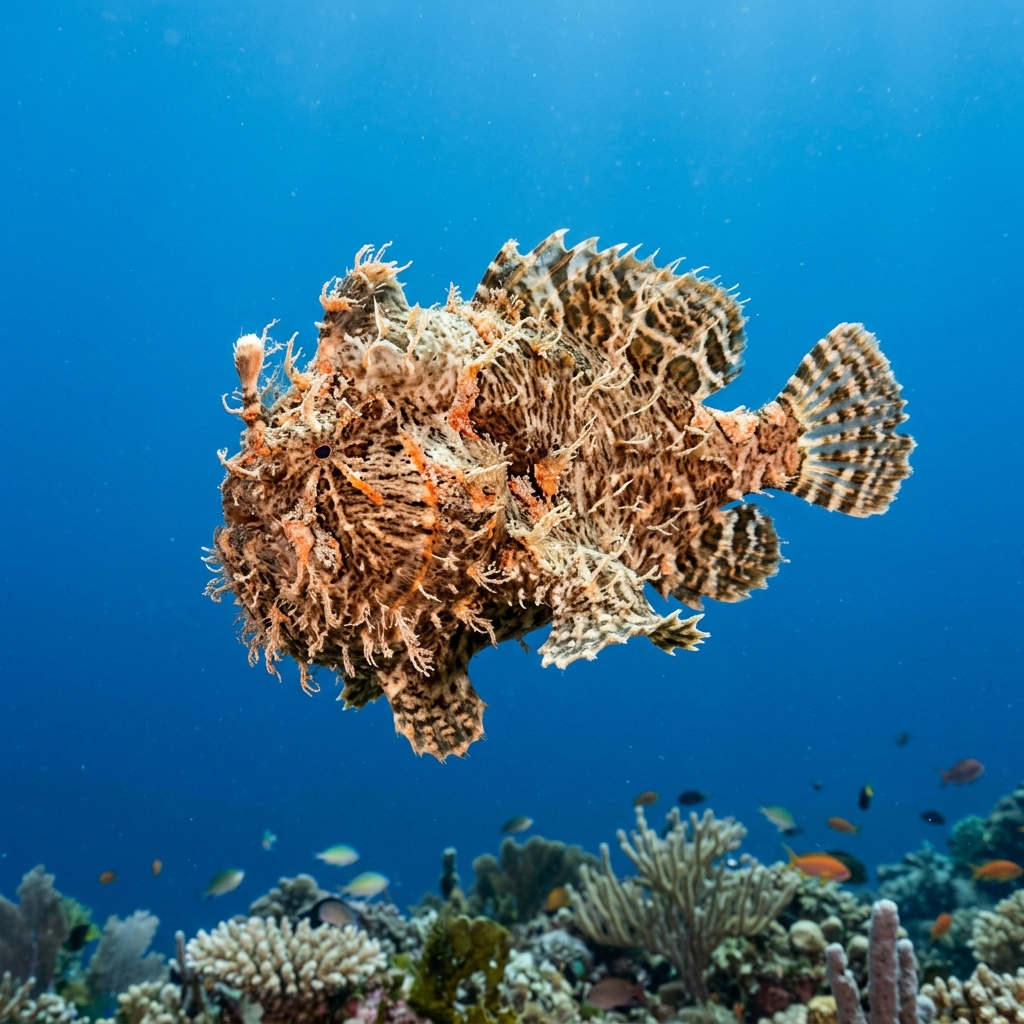
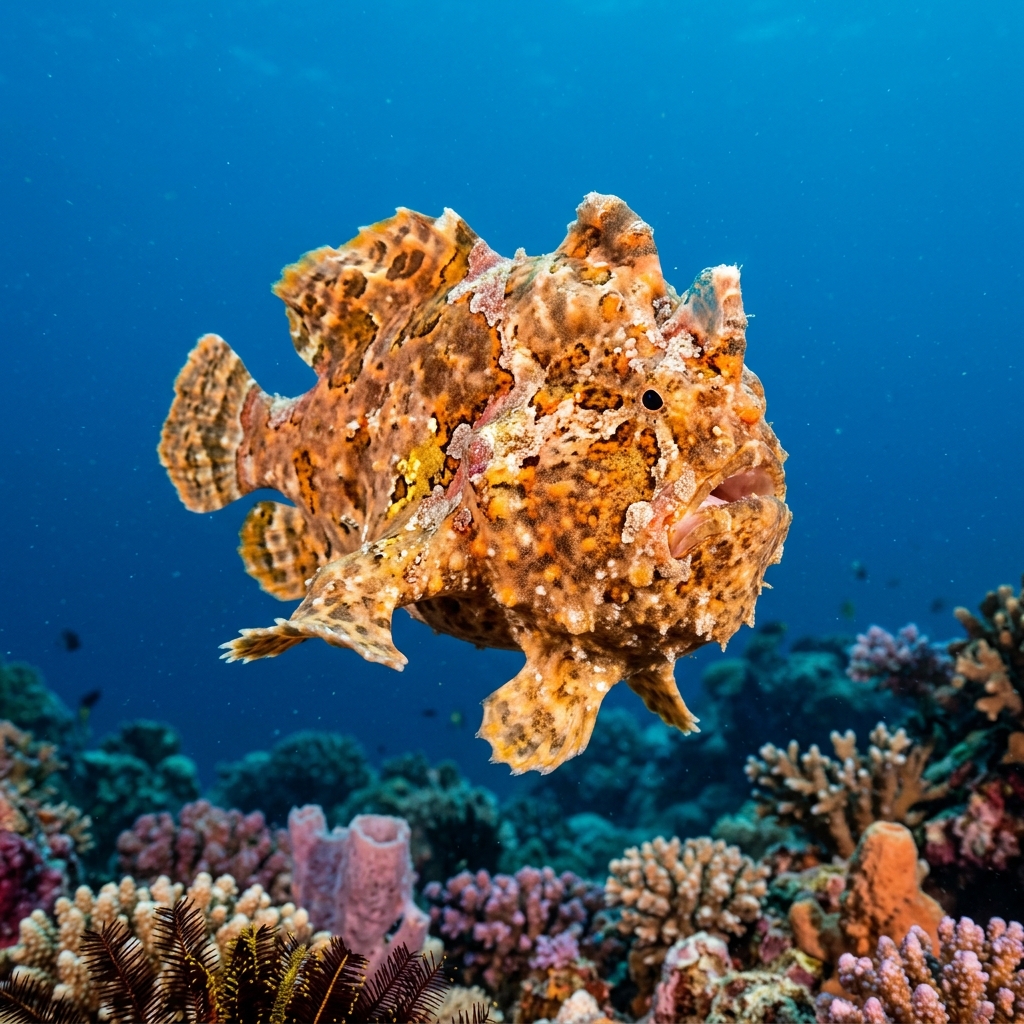
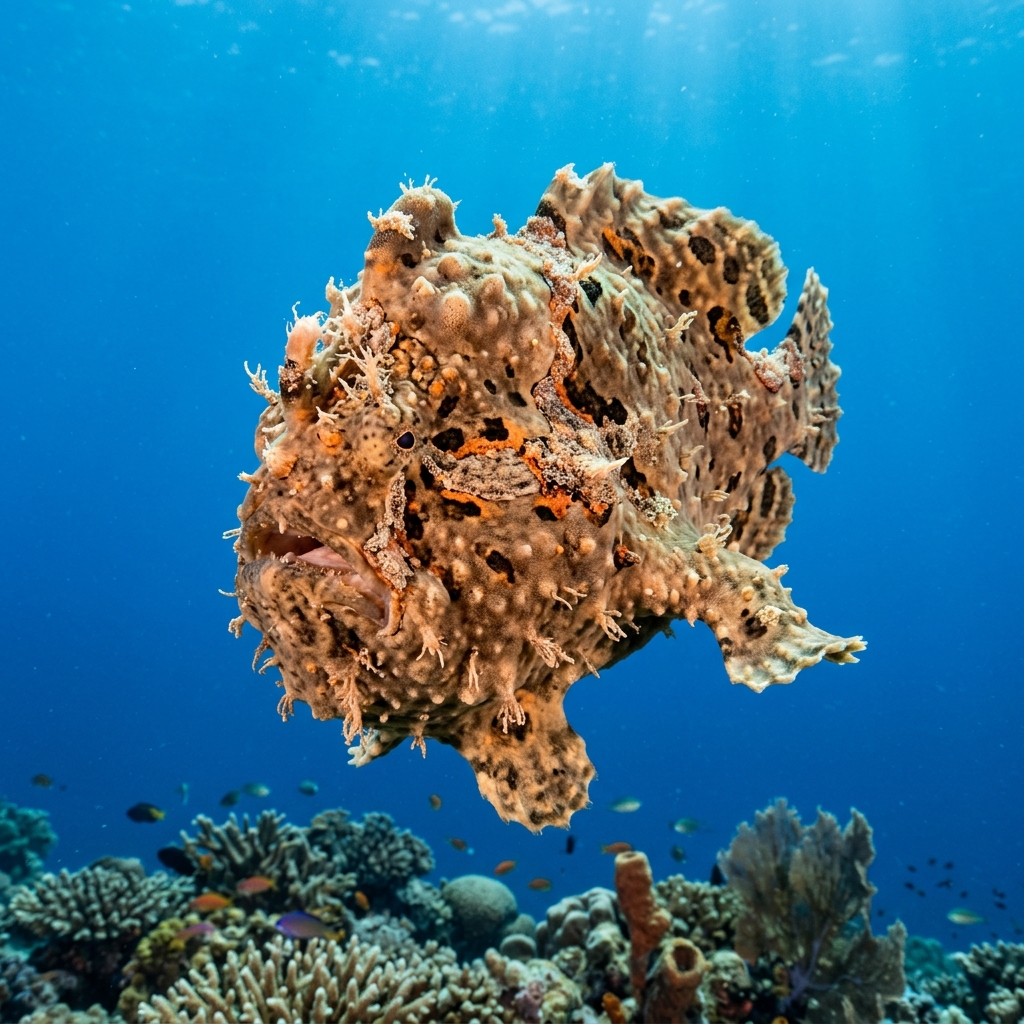
Giant Frogfish
1,292 sites