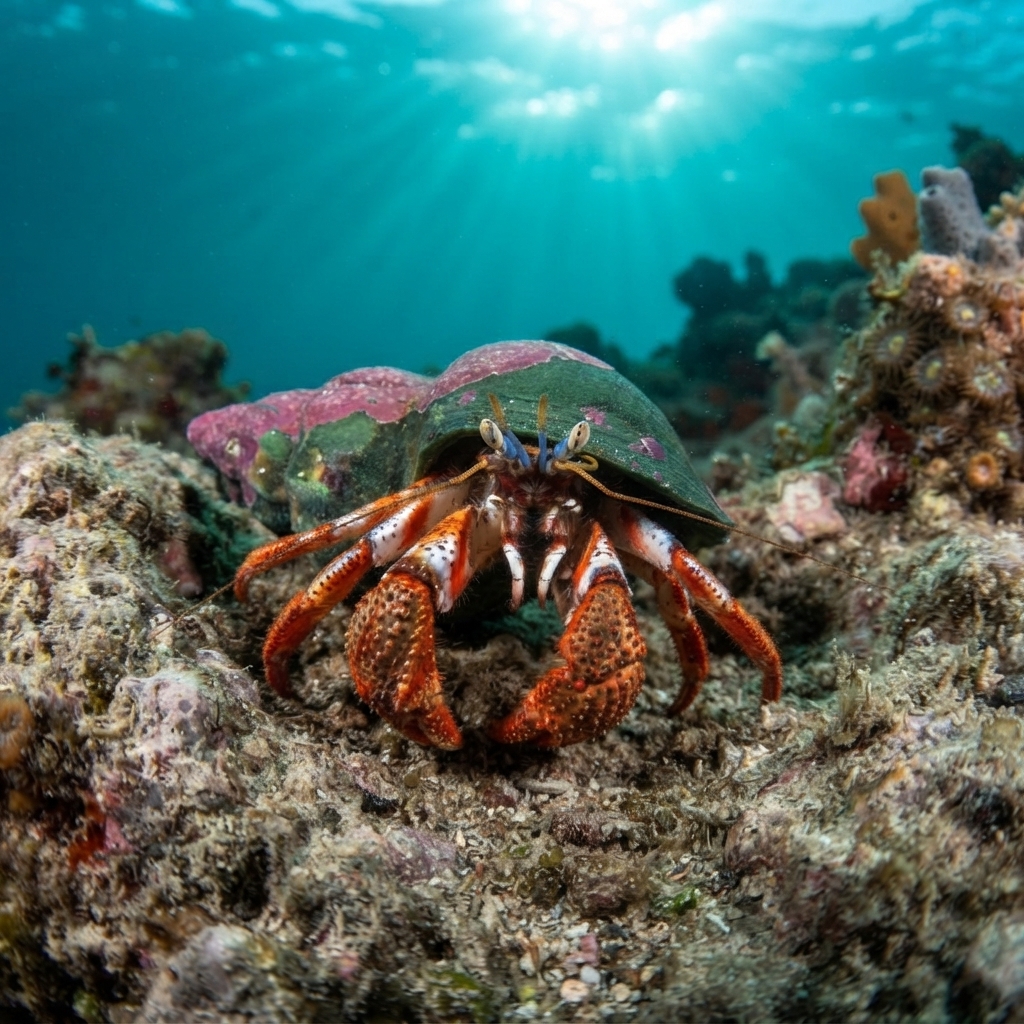
Pagurus acadianus
Cold-water hermit crab found across Nova Scotia and the Northeast US, usually spotted uncommonly on rocky bottoms from 5 to 12C.
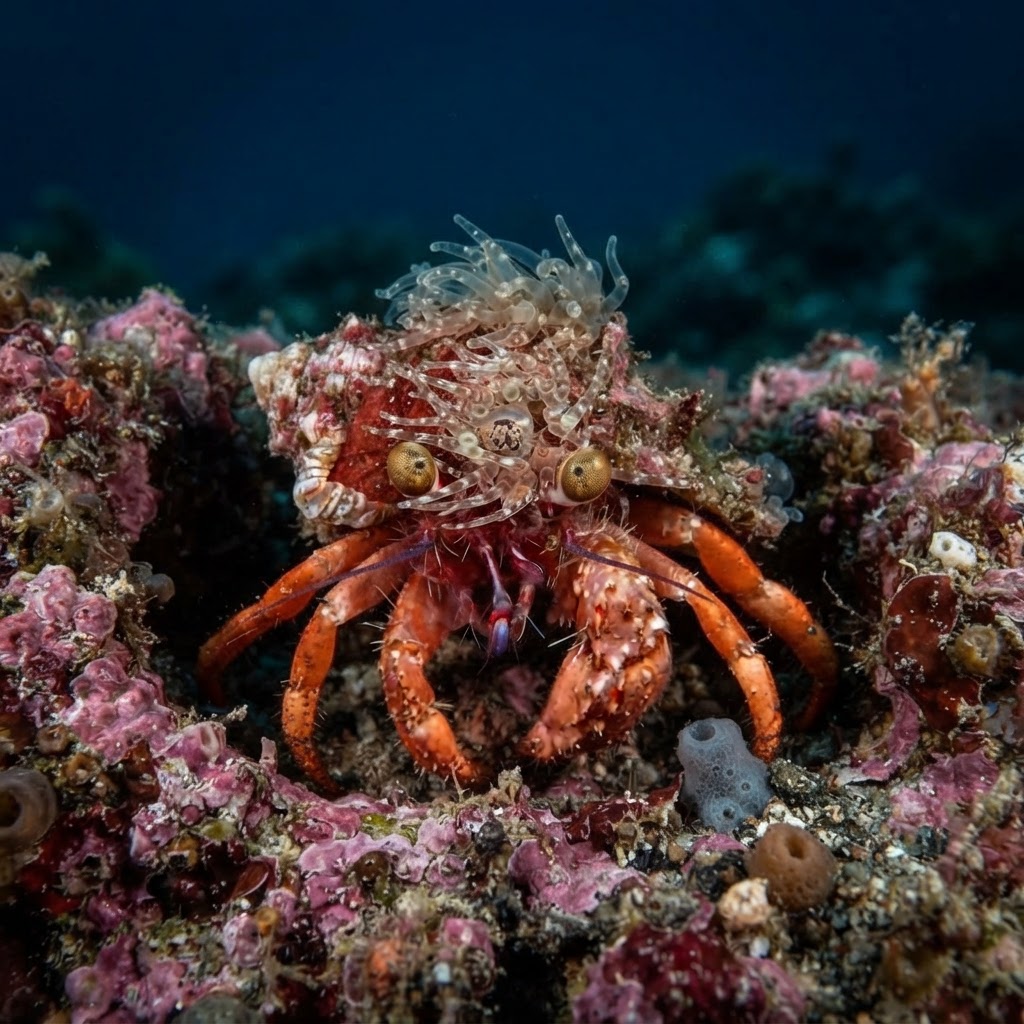
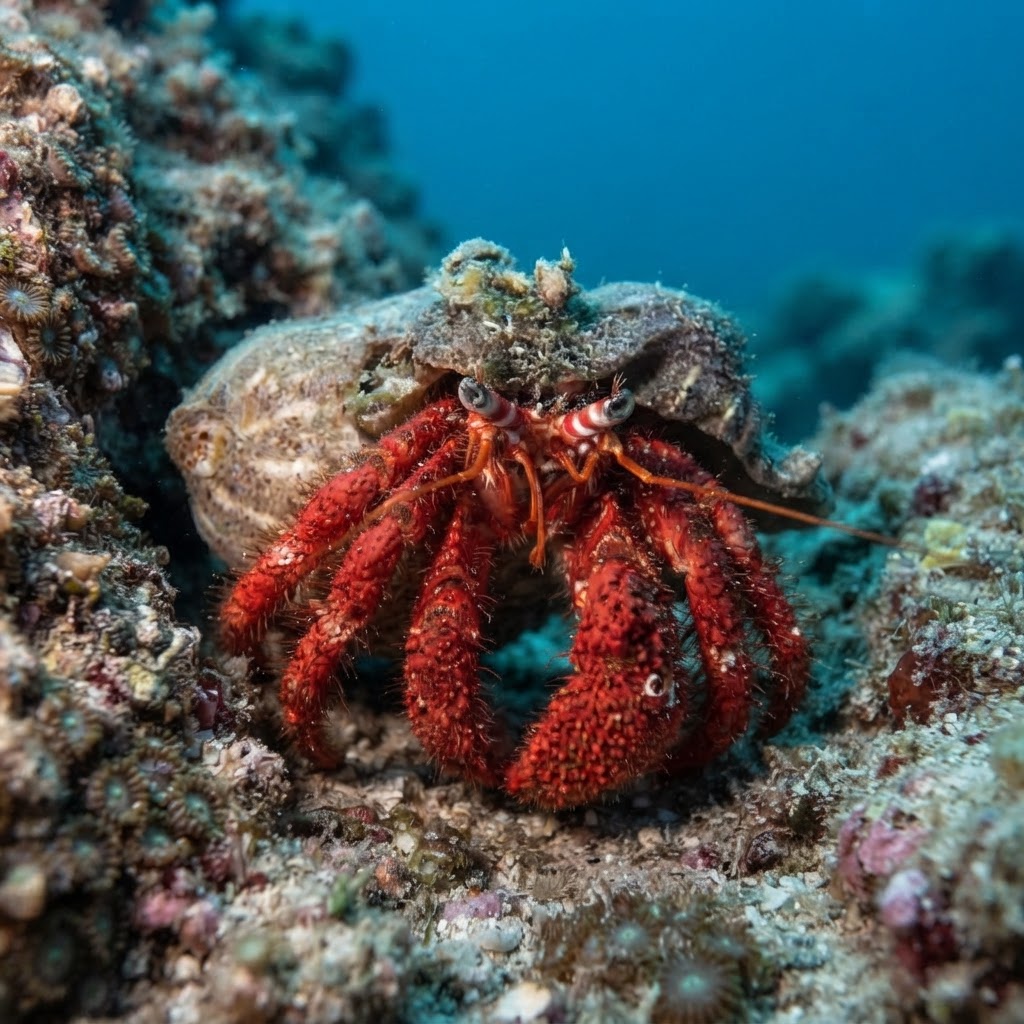
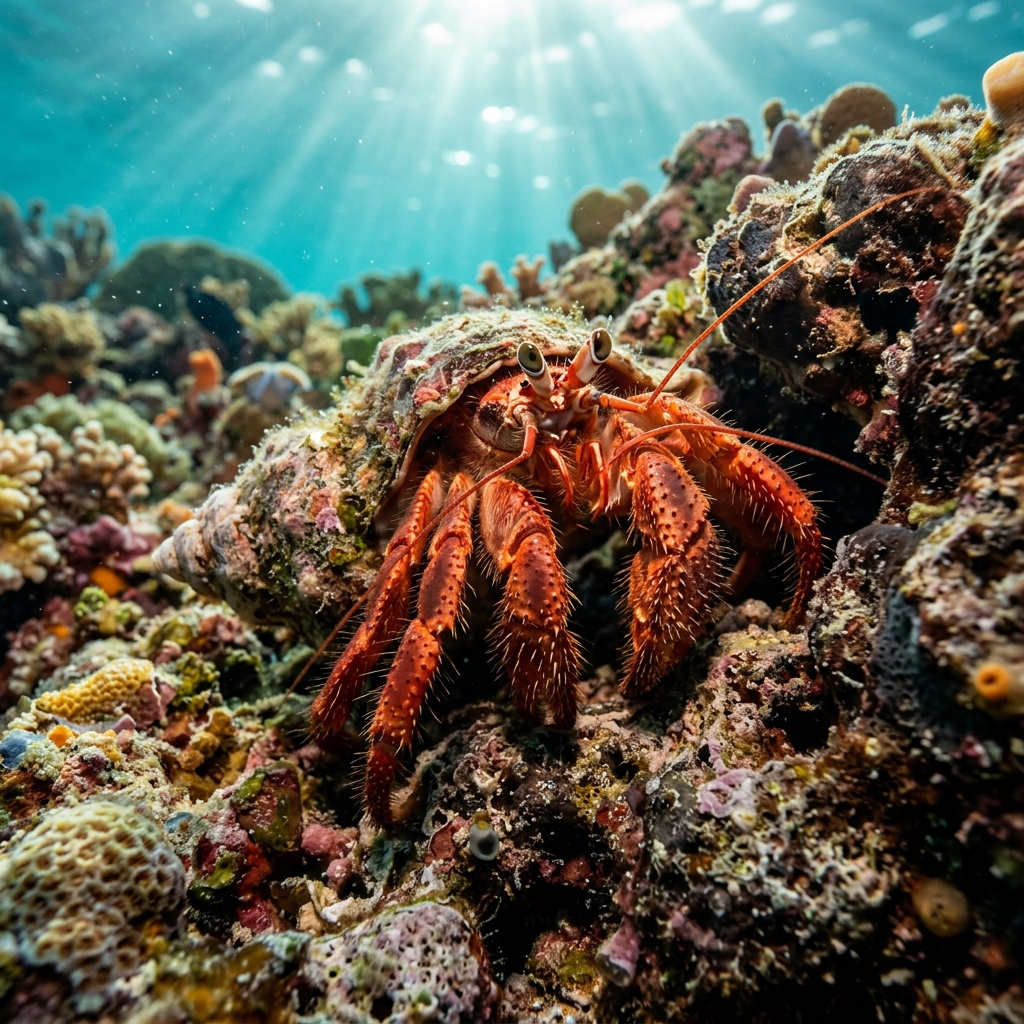
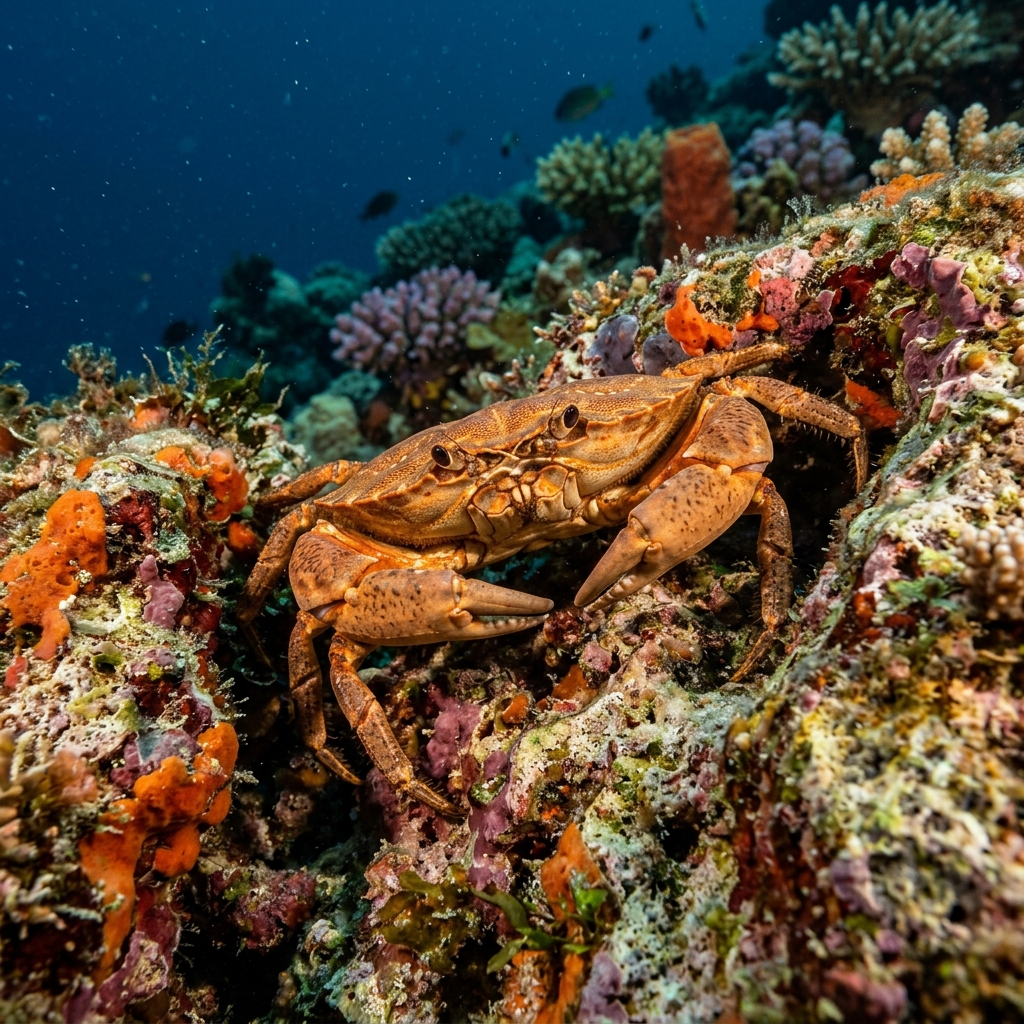
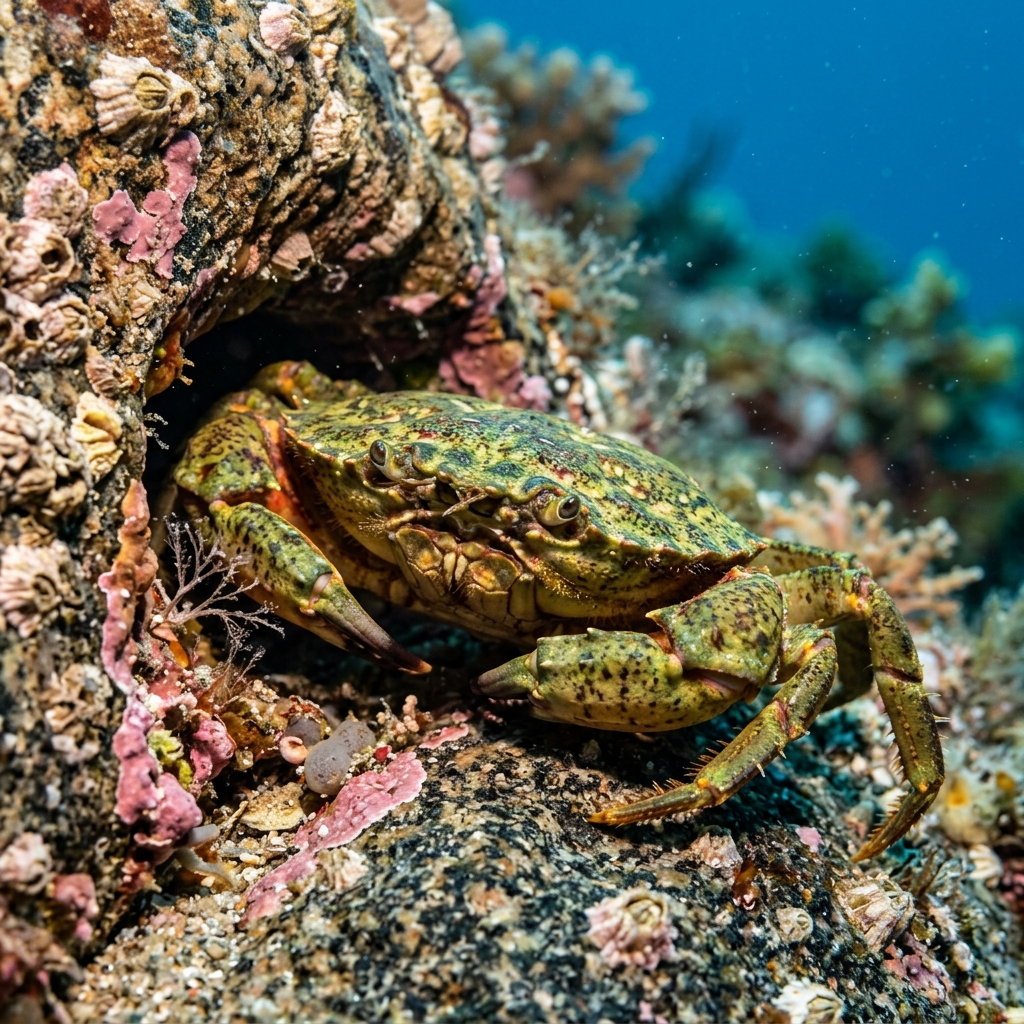
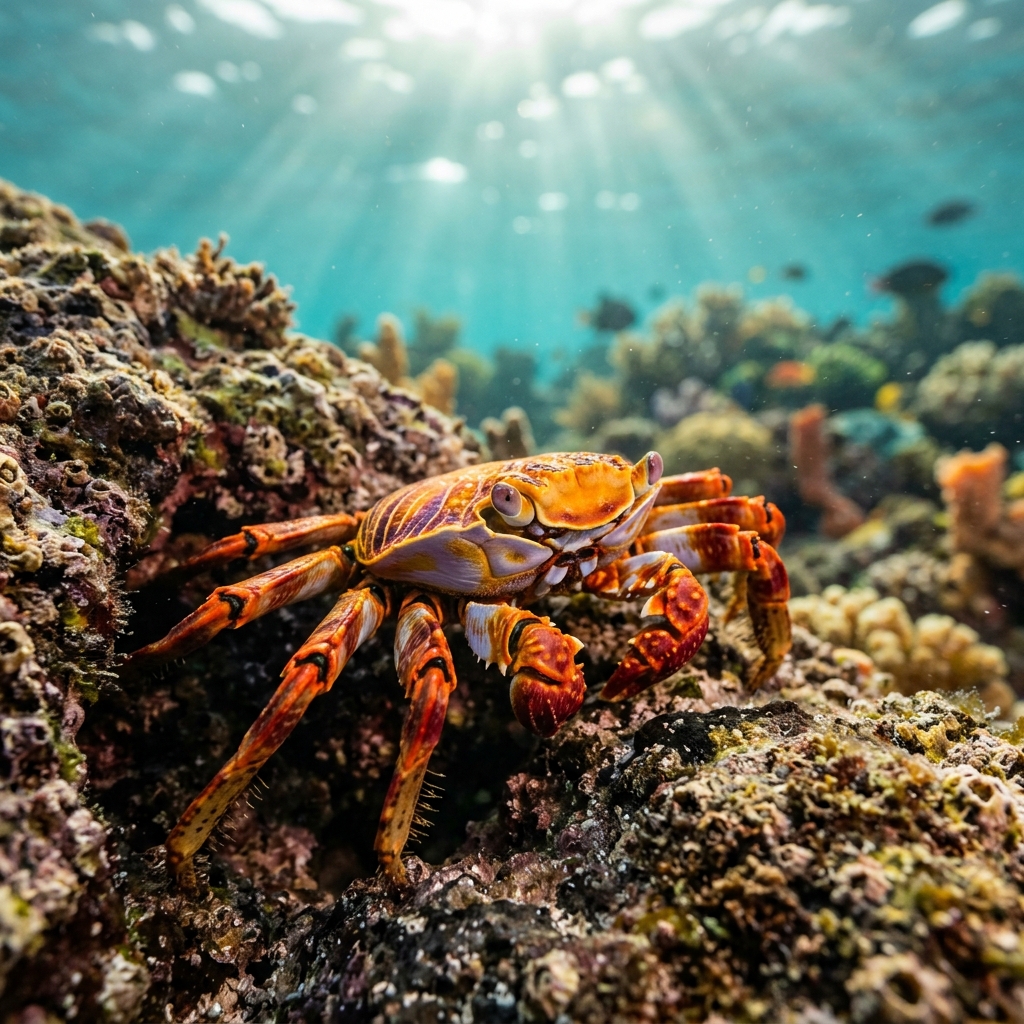
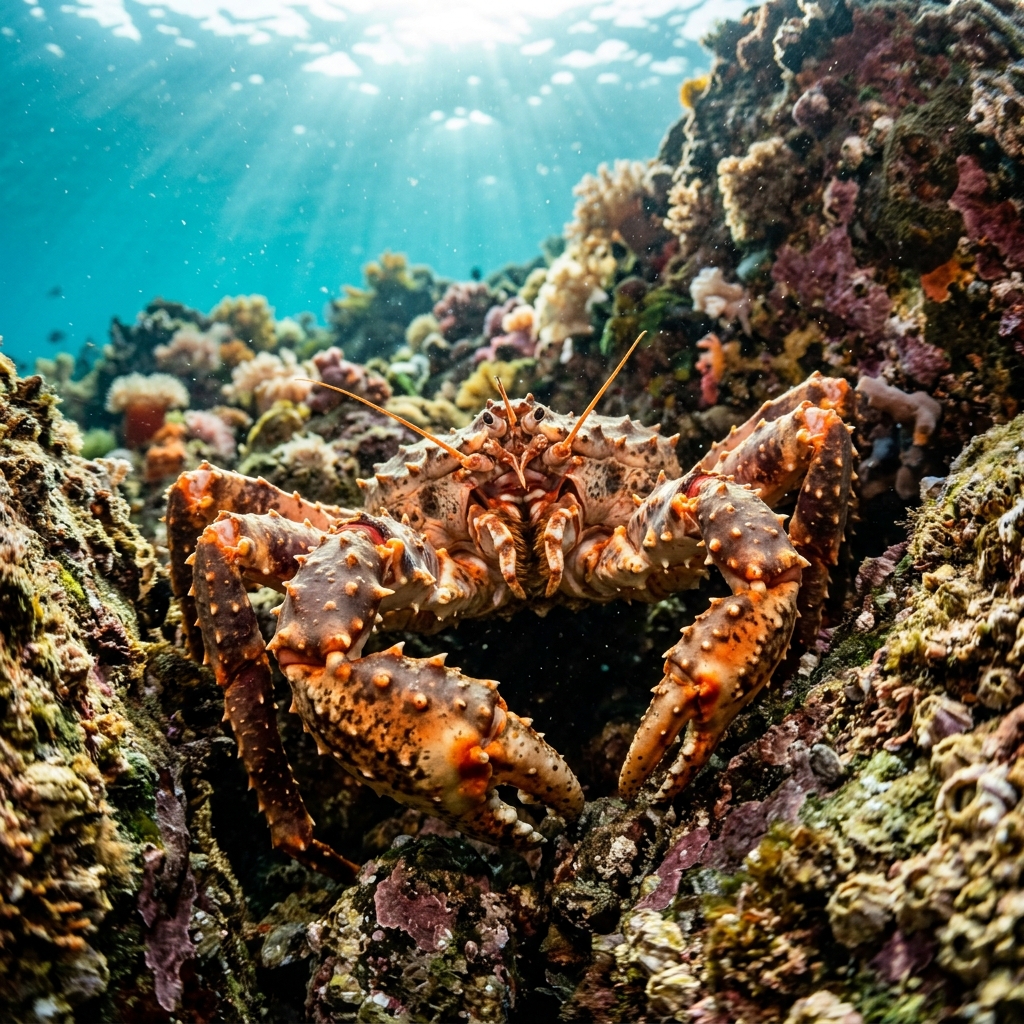
Look for a stocky reddish-brown to tan crab dragging a spiral snail shell across the bottom, with banded or speckled walking legs and one noticeably larger claw held up front. The eyestalks are pale and the antennae are often ringed. Size varies with the shell it has scavenged, so the shell itself is a poor clue, focus on the leg pattern and claw shape instead.
Divers usually find it walking slowly across rock, cobble, or mixed sediment bottoms, probing crevices and old shells with its claws as it searches for scraps. It tends to withdraw into its borrowed shell if a torch or hand gets too close, then re-emerges once the disturbance passes. Most sightings are single individuals rather than groups, spotted at a fairly leisurely pace rather than fleeing.
Like other hermit crabs, it has to trade up to a bigger salvaged shell as it grows, and a shell shortage on a given patch of seabed can leave it exposed and vulnerable until it finds a replacement.
No clear seasonal pattern shows up in the sightings, and it sits comfortably in 4.8 to 11.6C water, so divers log it across the diving season rather than in one particular month.
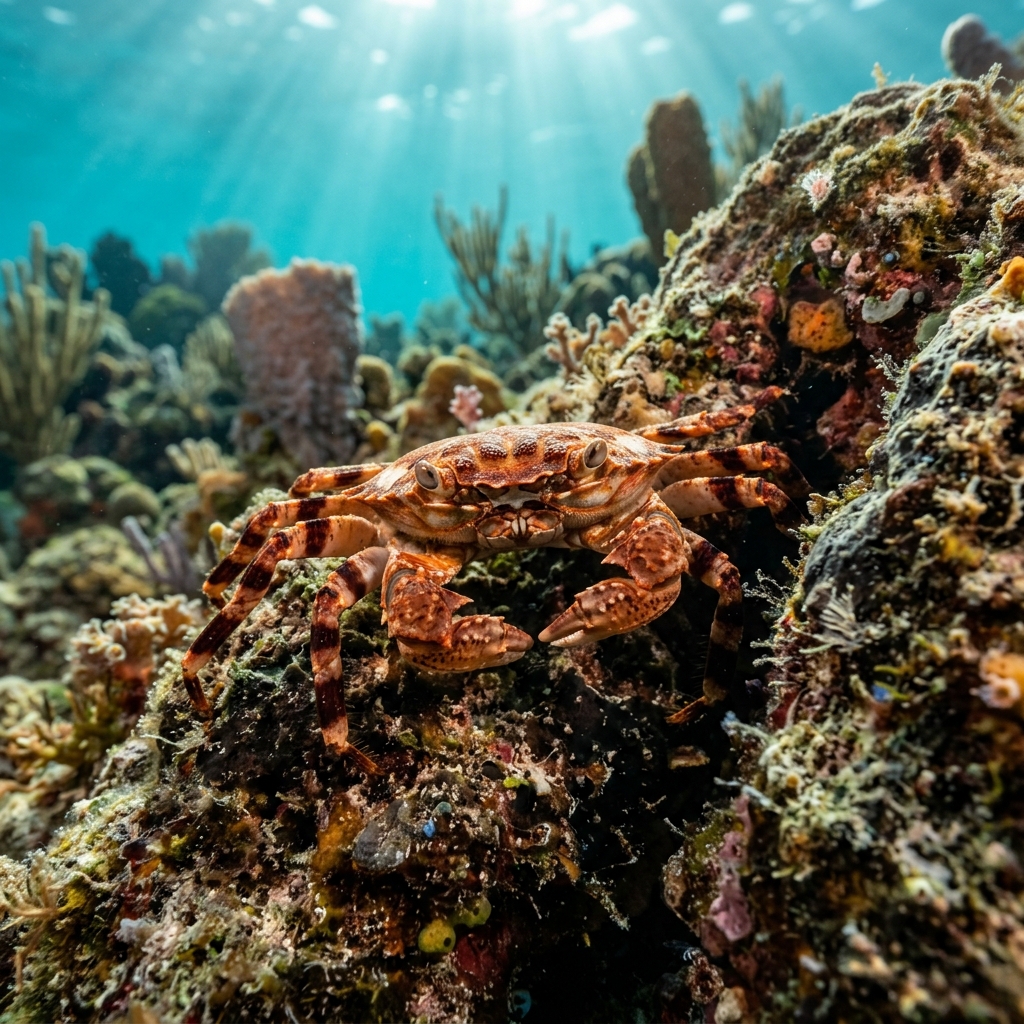
Reef neighbours a diver could mistake it for. Use the identification notes above to tell them apart.
Most reliably logged in Nova Scotia, Canada, and across the Northeast United States, with a smaller but steady presence in Quebec. These cold, rocky Atlantic coastlines are where this species turns up most consistently on dives.
Mapping where Acadian Hermit Crab is logged…
It is most consistently logged in Nova Scotia, Canada, and the Northeast United States, with additional sightings in Quebec. These cold Atlantic coastal sites are its main strongholds.
Sightings do not show a strong season, and it tolerates water from about 4.8 to 11.6C, so it is seen across the dive season in the Northeast US and Atlantic Canada rather than at one specific time of year.
Watch for a reddish-brown crab with banded legs dragging a spiral shell over rock or cobble, using one enlarged claw to probe crevices. It moves slowly and withdraws into its shell if approached closely.
No, it poses no danger to divers. It is a small, shell-dwelling scavenger that retreats rather than confronts.
It has a soft, unprotected abdomen and relies on a scavenged snail shell for cover, upgrading to a larger shell as it grows. A lack of suitable empty shells nearby can leave it exposed.
Site and sighting data is aggregated from diver logs, iNaturalist and GBIF. For taxonomy and conservation status:
European Green Crab
2,469 sites