Sabella spallanzanii
Spot spirograph worms across the French Riviera, Costa Brava and Croatia in waters from 14-20 °C. Learn to identify those vivid, fan-like crowns.
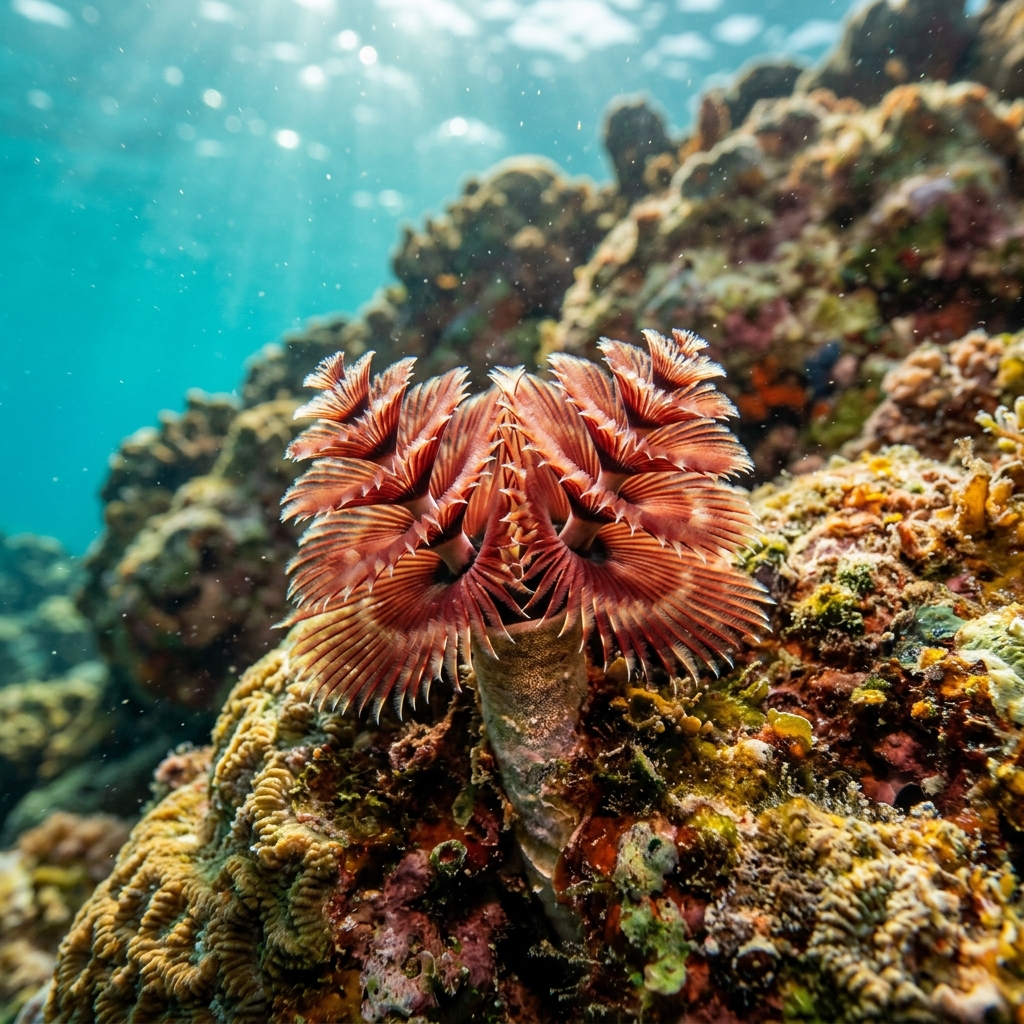
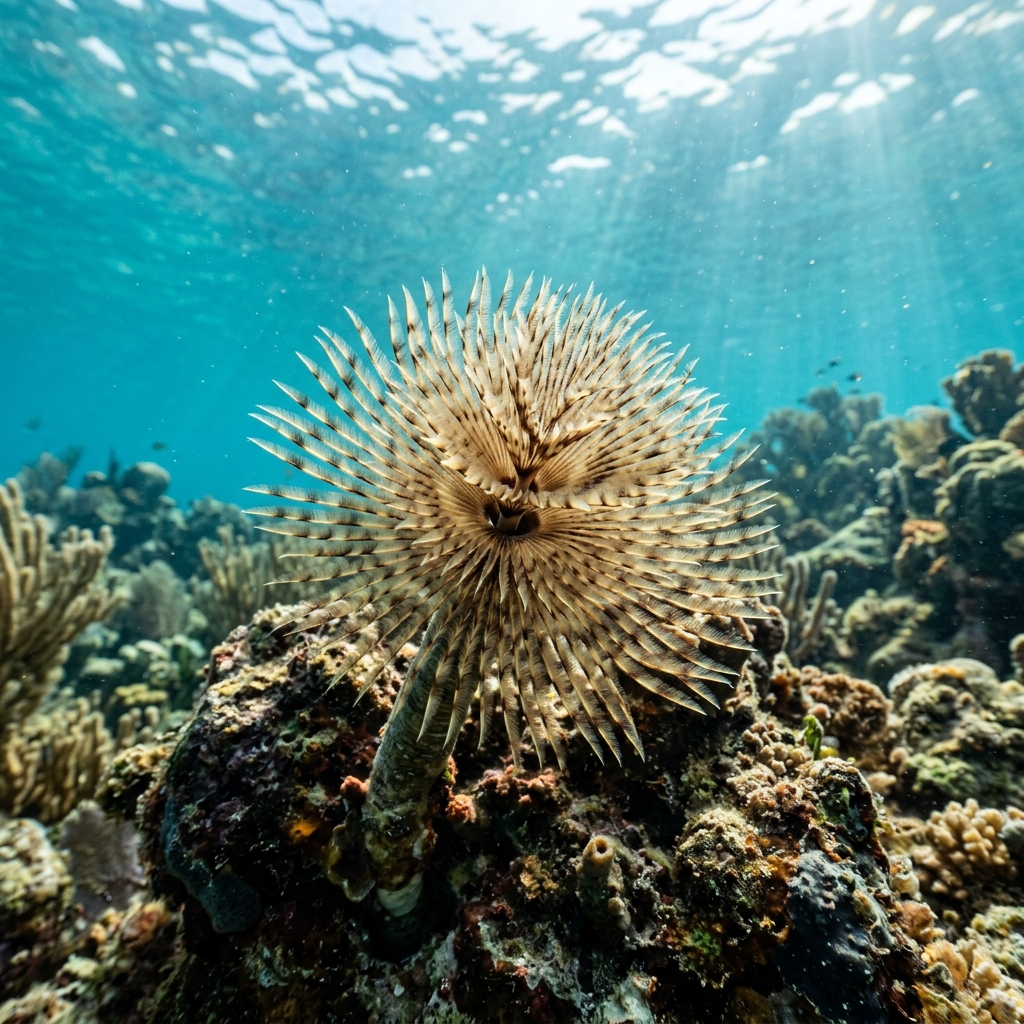
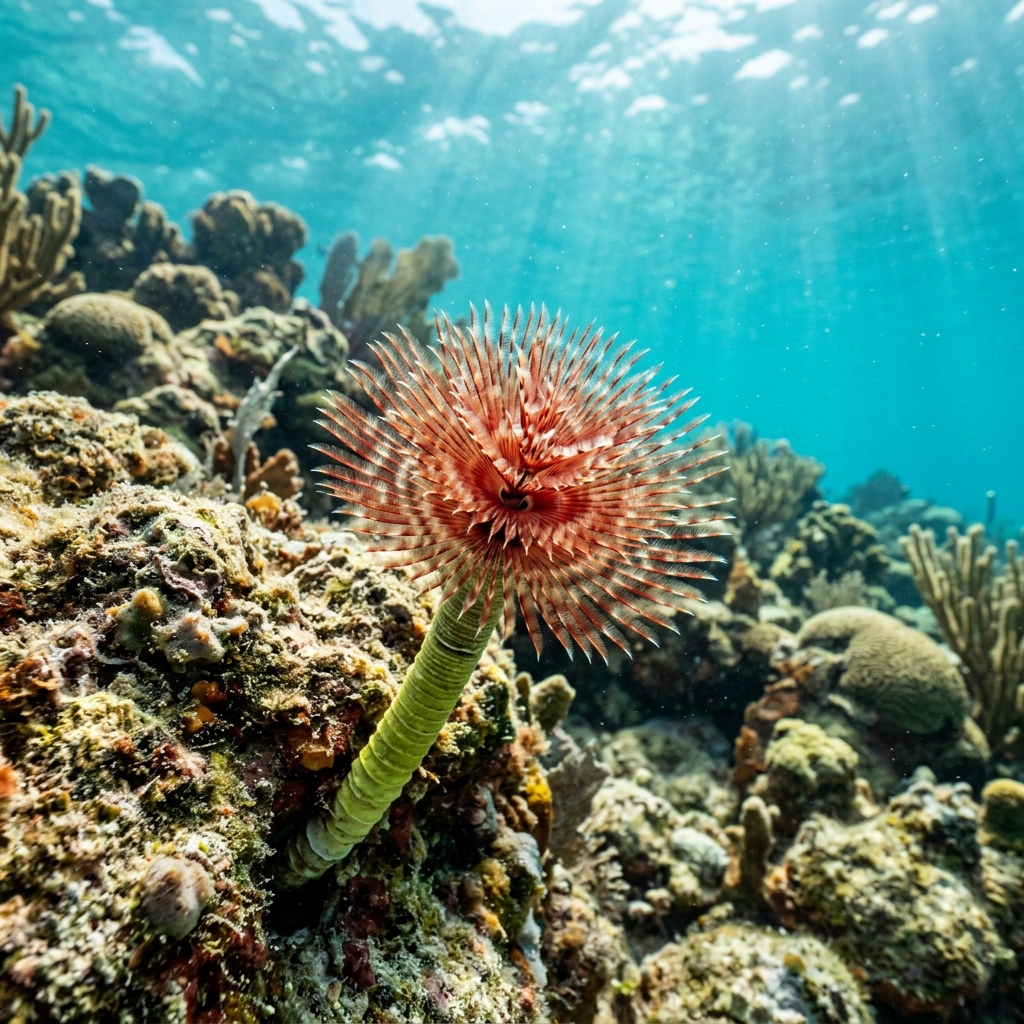
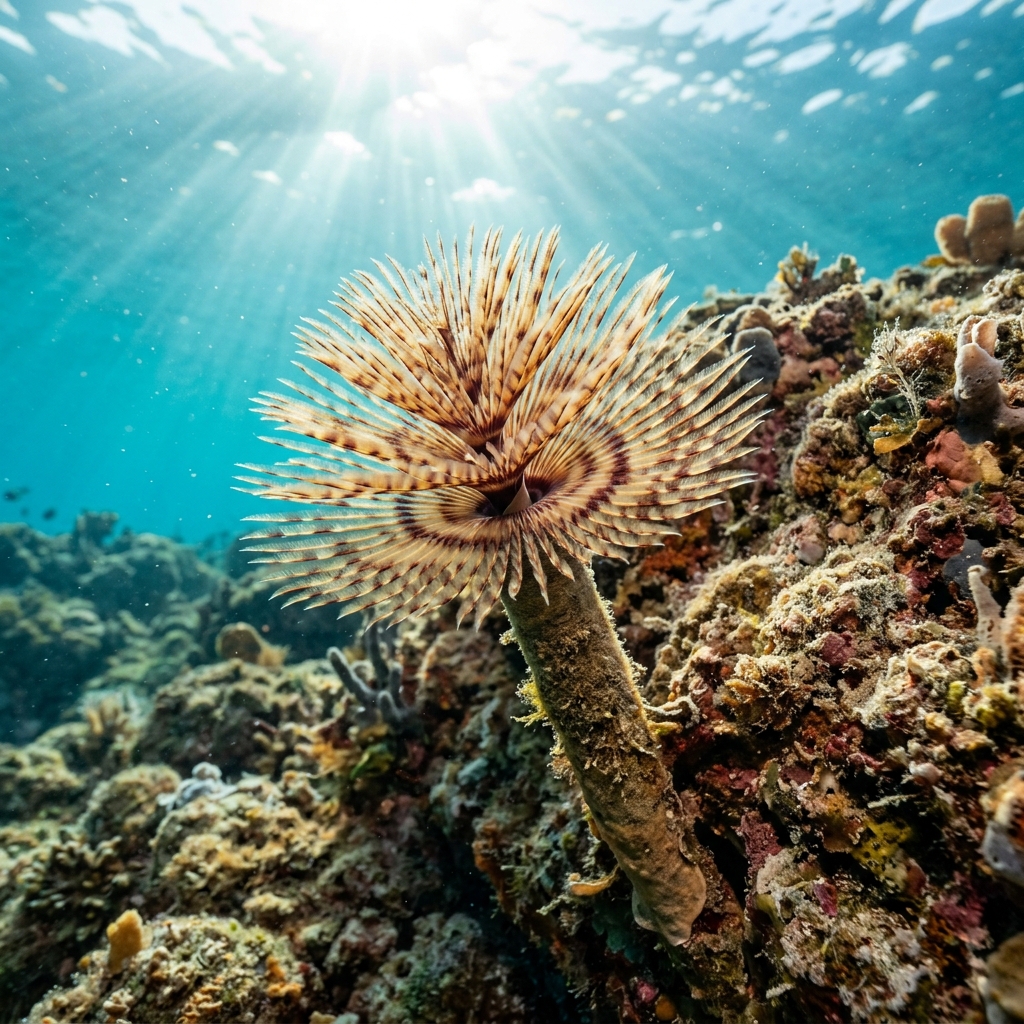
A fan of delicate, feathery radioles (the feeding tentacles that form the crown) is the giveaway, up to 49 cm tall, these crowns are arranged in a near-perfect spiral and are typically banded in alternating colours: cream, purple, brown or orange. The worm itself lives inside a flexible, parchment-like tube anchored to rock, rubble or soft sediment. At rest the crown is fully open; any water disturbance causes it to retract instantly into the tube. The tube is often partially buried, so you may only see the exposed crown hovering above the substrate.
Sessile (fixed in one place), it spends its life anchored to the substrate with its crown extended into the water column to filter-feed on tiny particles. Approach slowly, the slightest shadow or pressure wave causes the crown to snap shut and disappear into the tube in a fraction of a second, leaving nothing to photograph. Giving it a minute to re-emerge after a disturbance usually rewards patience.
The crown is not just for feeding, it also functions as a gill, exchanging oxygen and carbon dioxide while the worm draws in food. Each radiole is lined with tiny hair-like cilia that beat rhythmically to move particles towards the mouth at the crown's centre.
In the Northern Hemisphere, sightings concentrate from January through October, suggesting it is present and visible for most of the year in its Mediterranean and Atlantic strongholds. It favours cooler temperate waters, roughly 14 to 20 °C, so it is less tied to a narrow warm-water window than many tropical invertebrates.
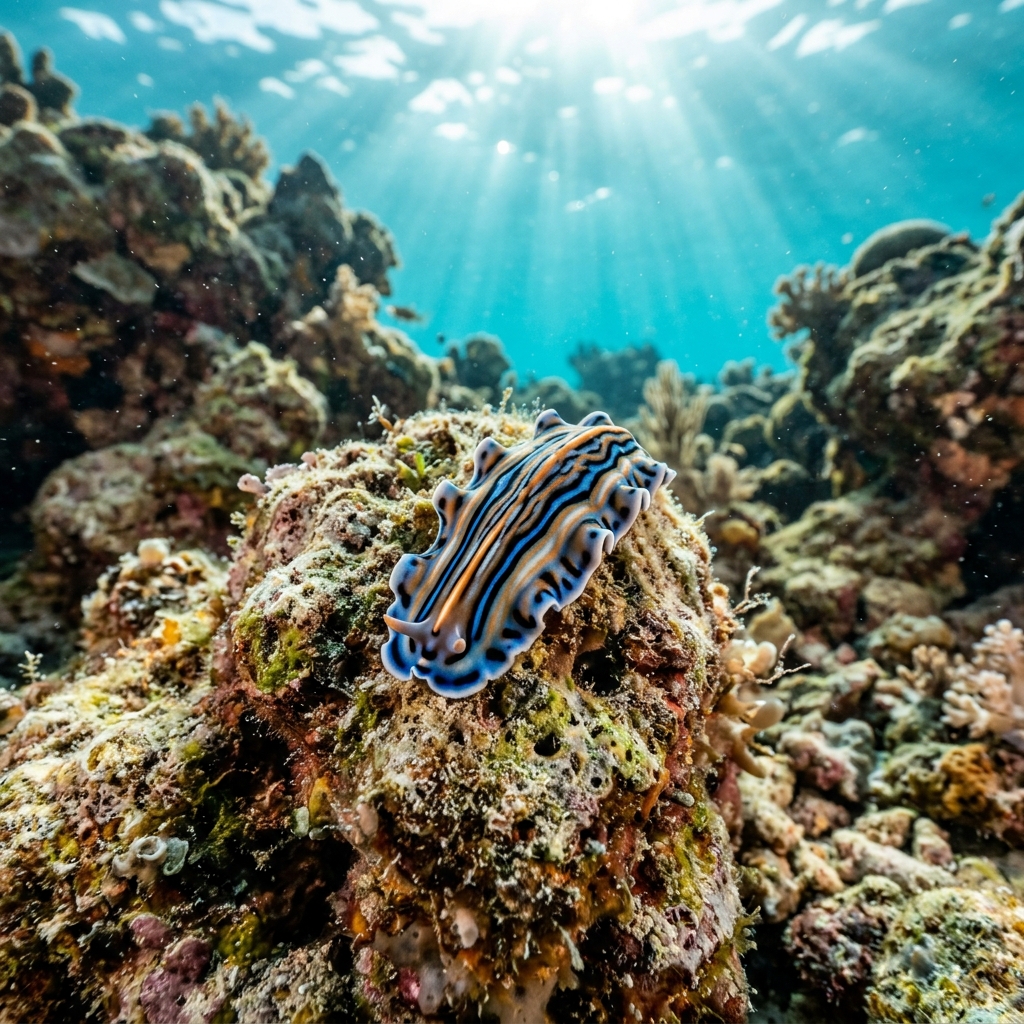
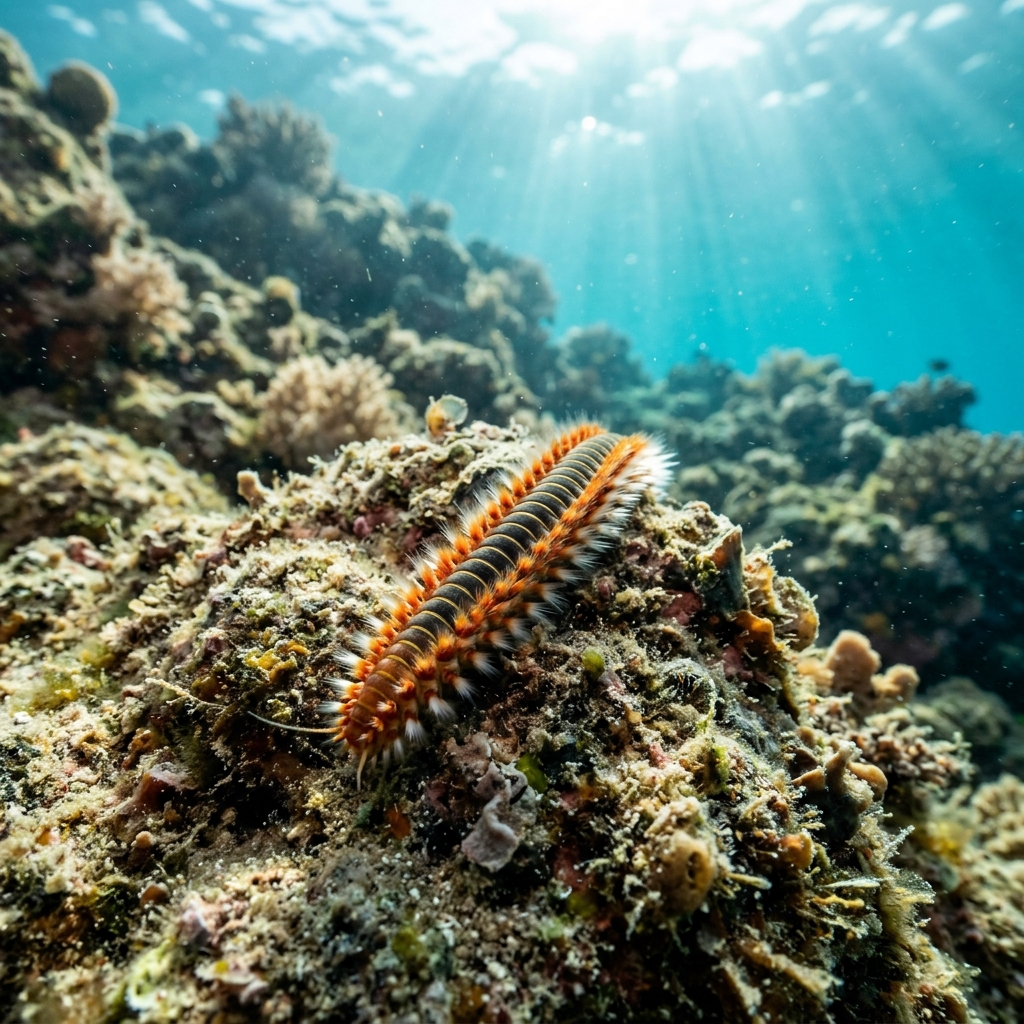
Reef neighbours a diver could mistake it for. Use the identification notes above to tell them apart.
Most commonly logged in France, Spain, Italy and Greece, with the French Riviera and Provence standing out as the single richest region in the data, followed by Spain's Costa Blanca and Costa Brava. Croatia's Kvarner Gulf and Greece's Cyclades are also strong bets, and there are reliable populations in Australia and Portugal as well.
Mapping where Spirograph is logged…
The French Riviera and Provence is the most reliably logged region, but the Costa Brava, Costa Blanca, Croatia's Kvarner Gulf and the Greek Cyclades all offer strong sighting records. Outside the Mediterranean, Australia and Portugal also have confirmed populations.
In the Northern Hemisphere, divers log them from January through October, making them a near-year-round target in Mediterranean destinations. They thrive in cooler temperate water around 14-20 °C, so you are not chasing a short seasonal window.
Look for a large, open spiral crown of banded feathery tentacles rising from a flexible tube on the seabed. The banding, cream, purple, orange or brown in alternating rings, is distinctive. It will snap shut the moment it senses movement, which is itself a useful ID clue; few other tube worms retract that rapidly.
They can reach up to 49 cm in total length, making them one of the larger tube worms a diver is likely to encounter in European waters. In practice, what you see is just the crown above the sediment; the worm and its tube extend further below.
It is a filter-feeder, using its radiole crown like a net to capture microscopic plankton and organic particles suspended in the water column. Tiny cilia lining each radiole beat continuously to move captured material towards the worm's mouth at the crown's centre.
Site and sighting data is aggregated from diver logs, iNaturalist and GBIF. For taxonomy and conservation status:
Christmas Tree Worm
2,154 sites