Neopomacentrus azysron
Small blue-and-yellow damselfish common in Khao Lak, Thailand and Queensland, thriving in warm 27-29 C reef water year-round.
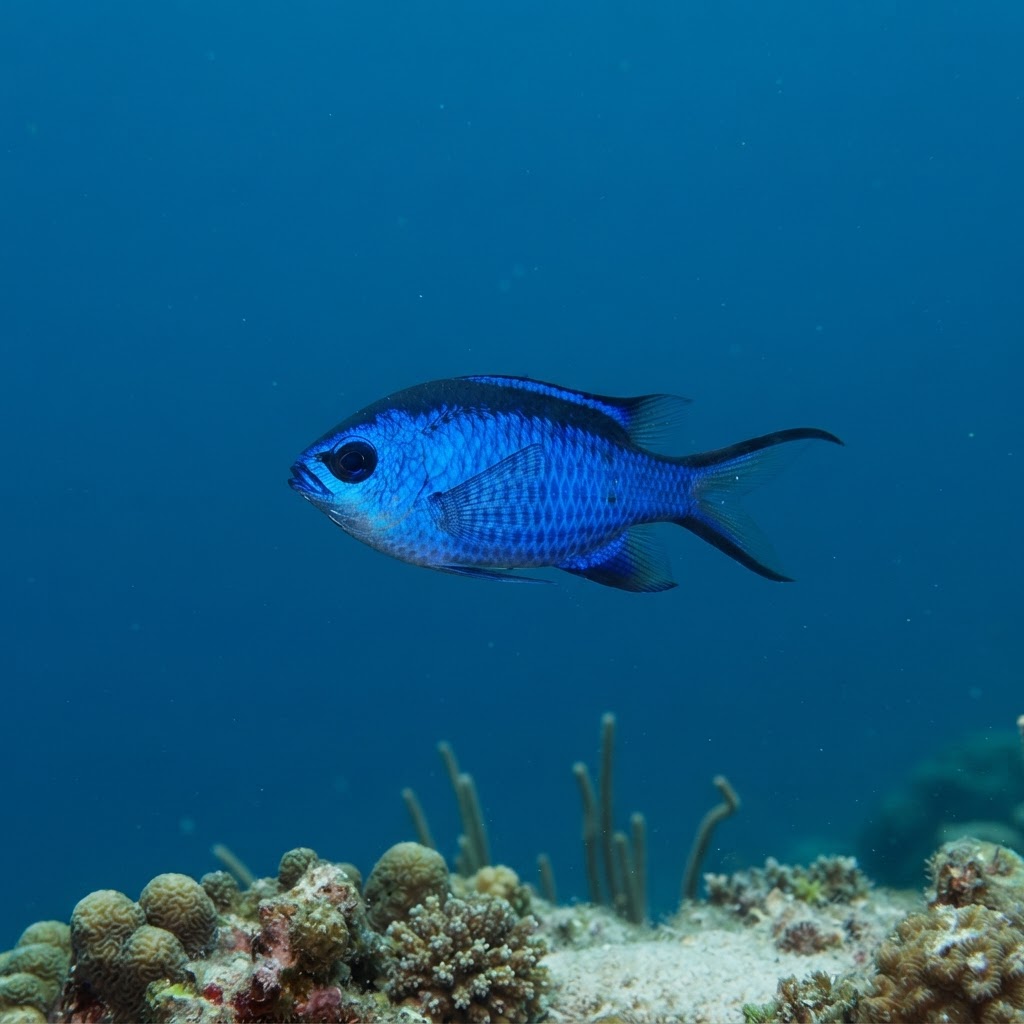
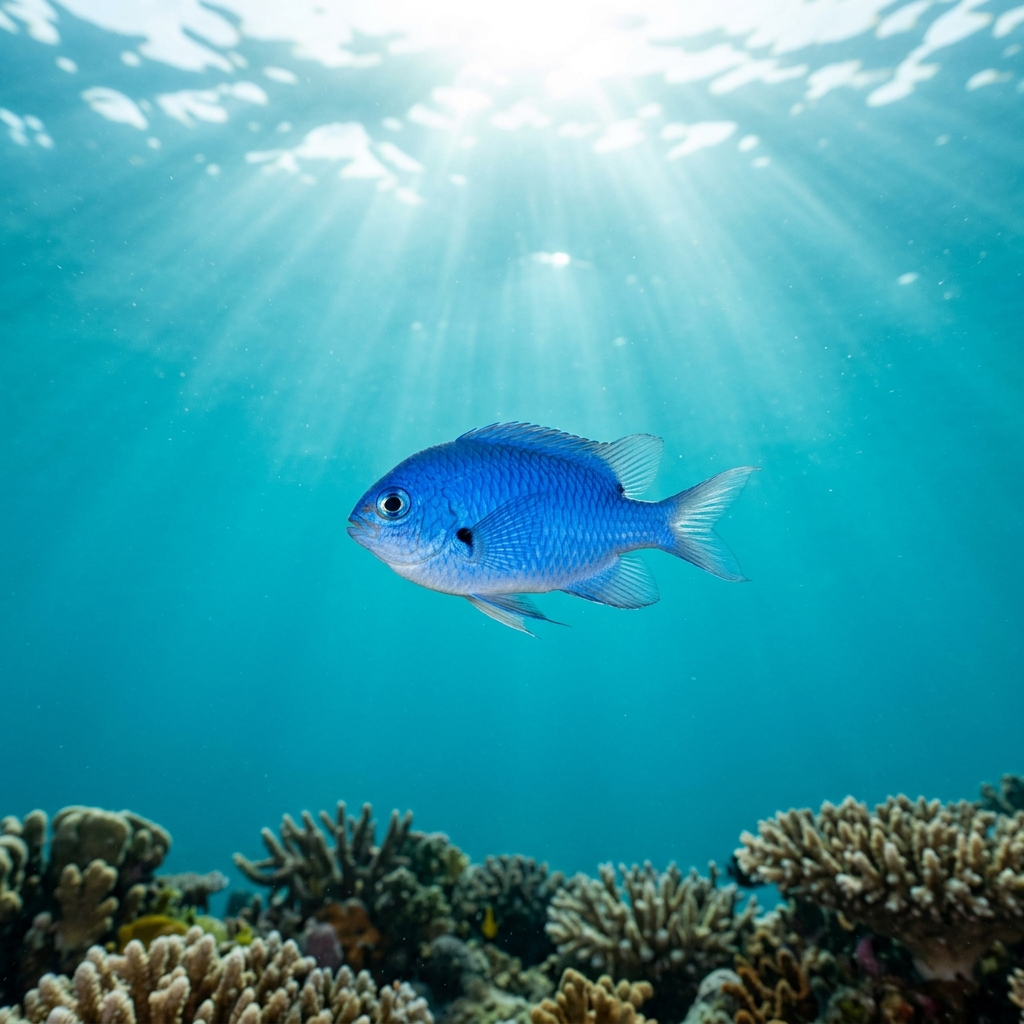
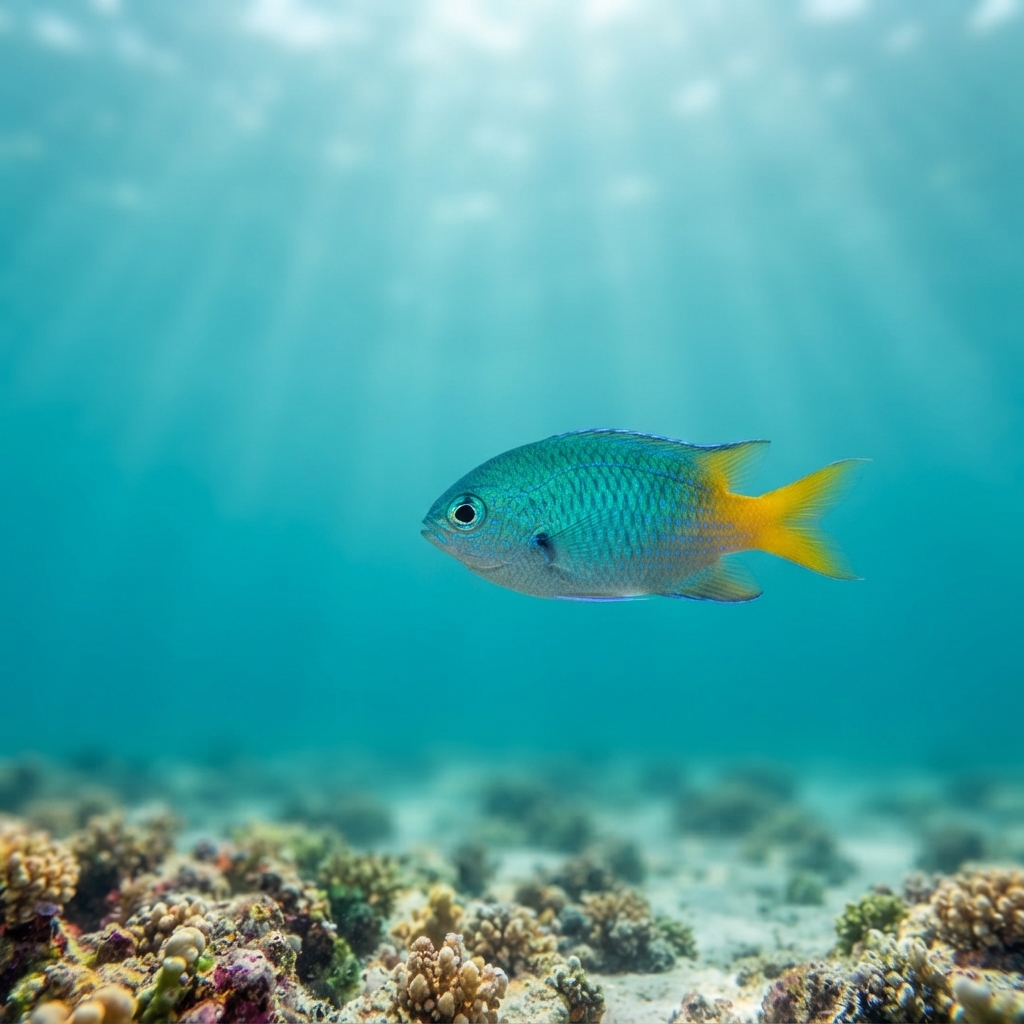
A slim, deep-blue damselfish barely bigger than a thumb, with a sharp line where the blue body gives way to a translucent yellow tail. There is often a fine dark spot at the base of the tail fin, useful for confirming ID against similar small blue damselfish. It swims in loose, hovering groups rather than sitting still on the reef, which is itself a helpful cue.
Watch for small, loose aggregations hovering just above coral heads or rubble patches, picking plankton out of the water column rather than feeding on the reef itself. They keep a light distance from divers, drifting back toward shelter if approached too fast but not diving for cover the way more territorial damselfish do. Most sightings come from open reef flats and slopes rather than deep or enclosed structure.
Like most pomacentrids it feeds mainly on drifting plankton in the water column, which is why you tend to see it hanging in a loose cloud above the reef rather than grazing on algae like many of its relatives.
There is no clear seasonal pattern in the sightings, and the water temperature range it is found in (27 to 29.3 C) is stable warm-reef conditions year-round, so divers can expect to find it on any visit to its known sites.
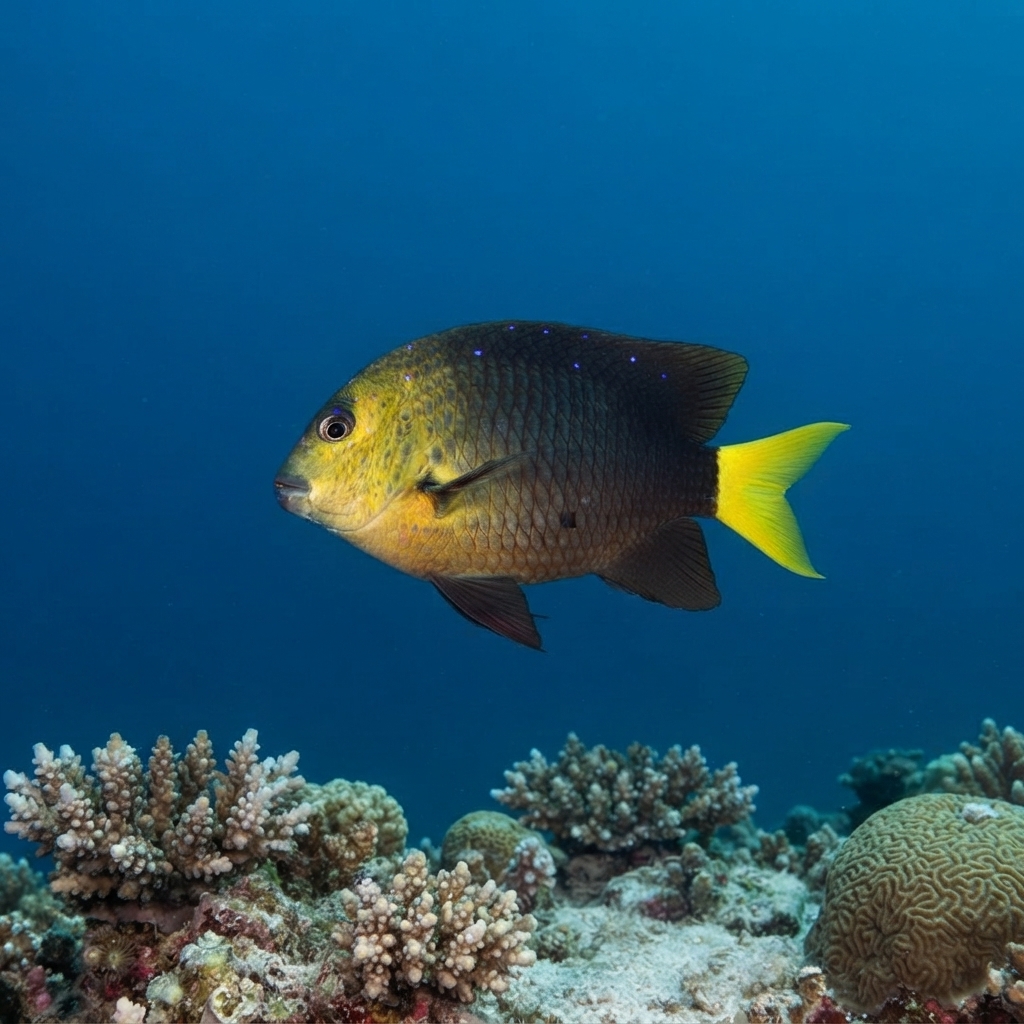
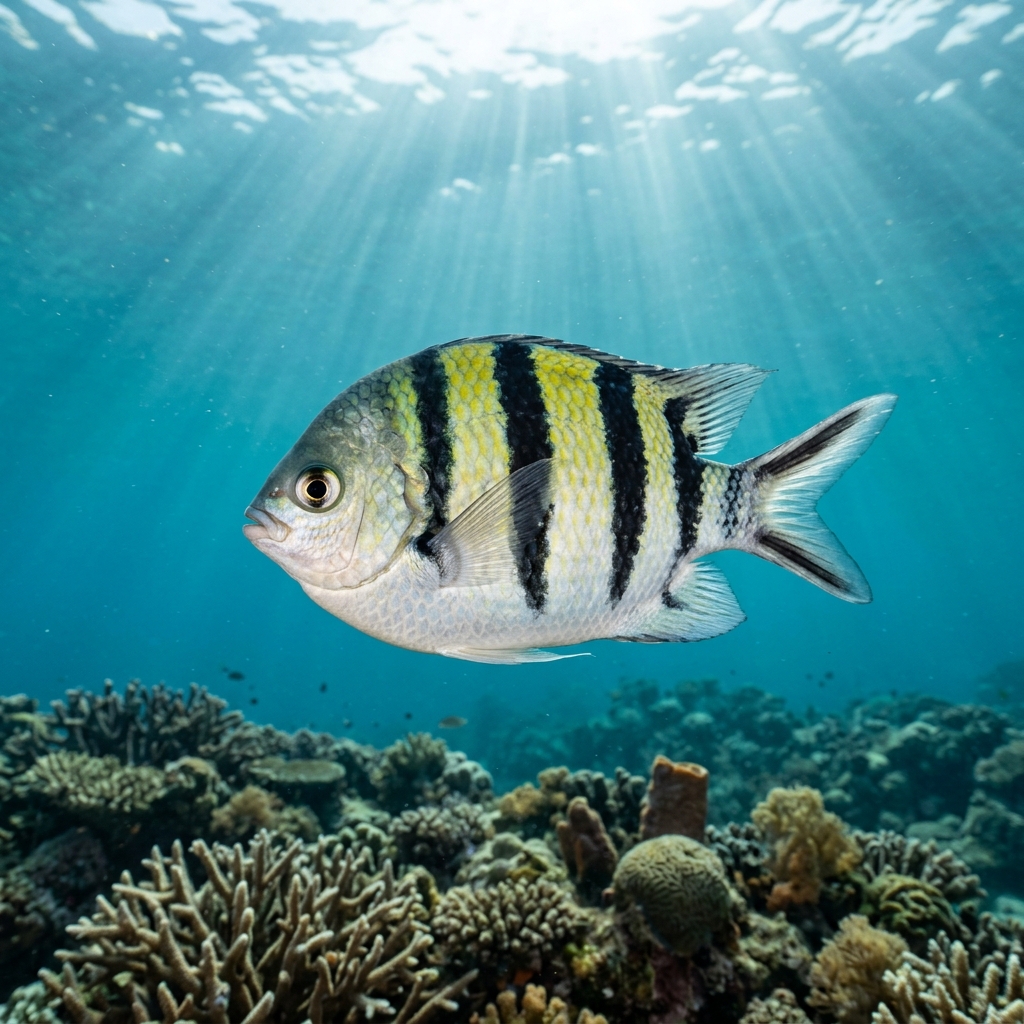
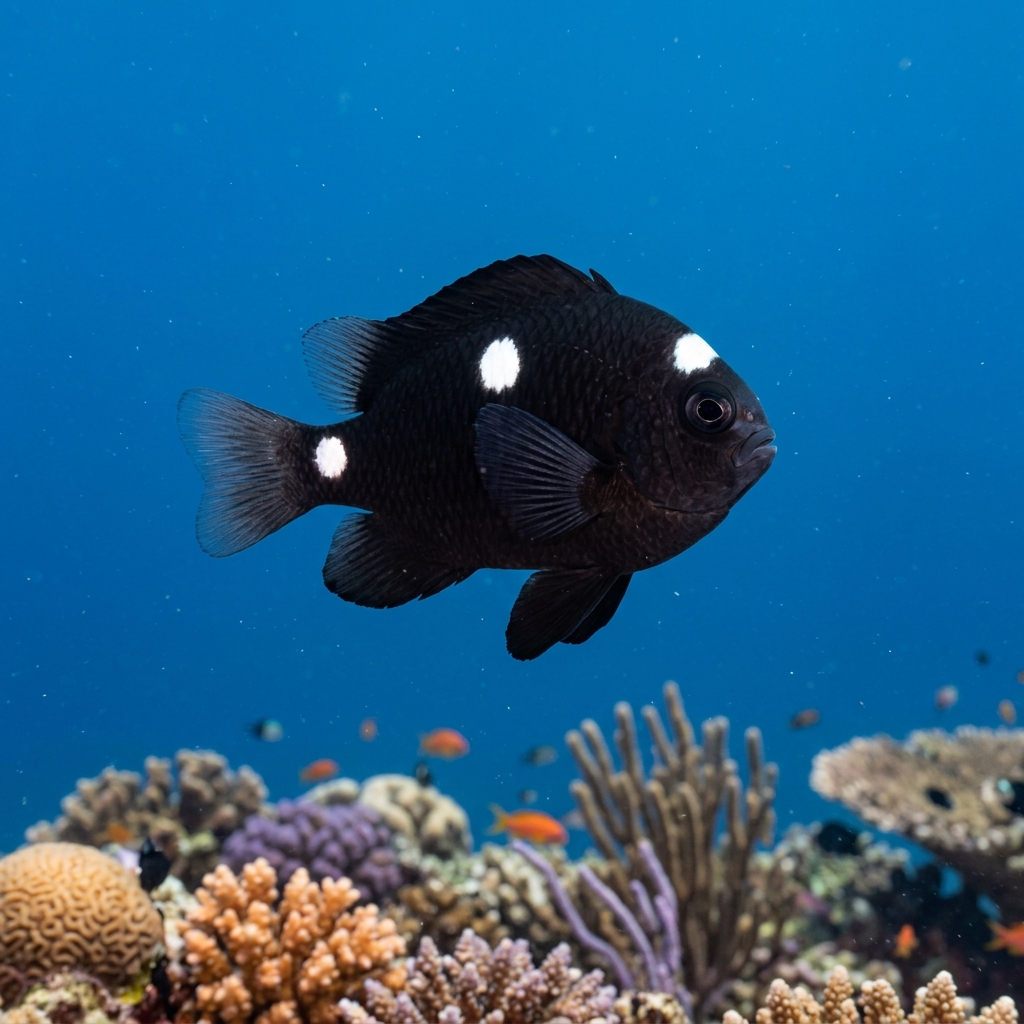
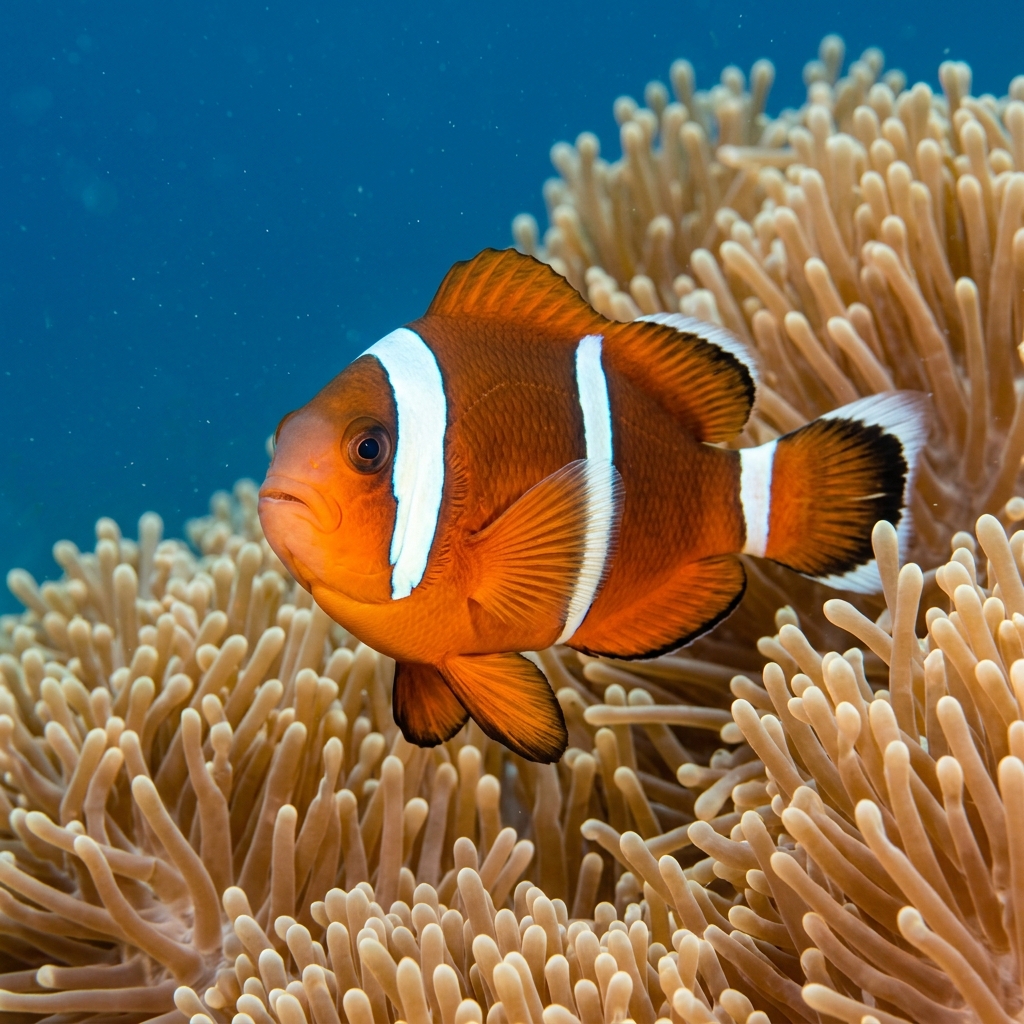
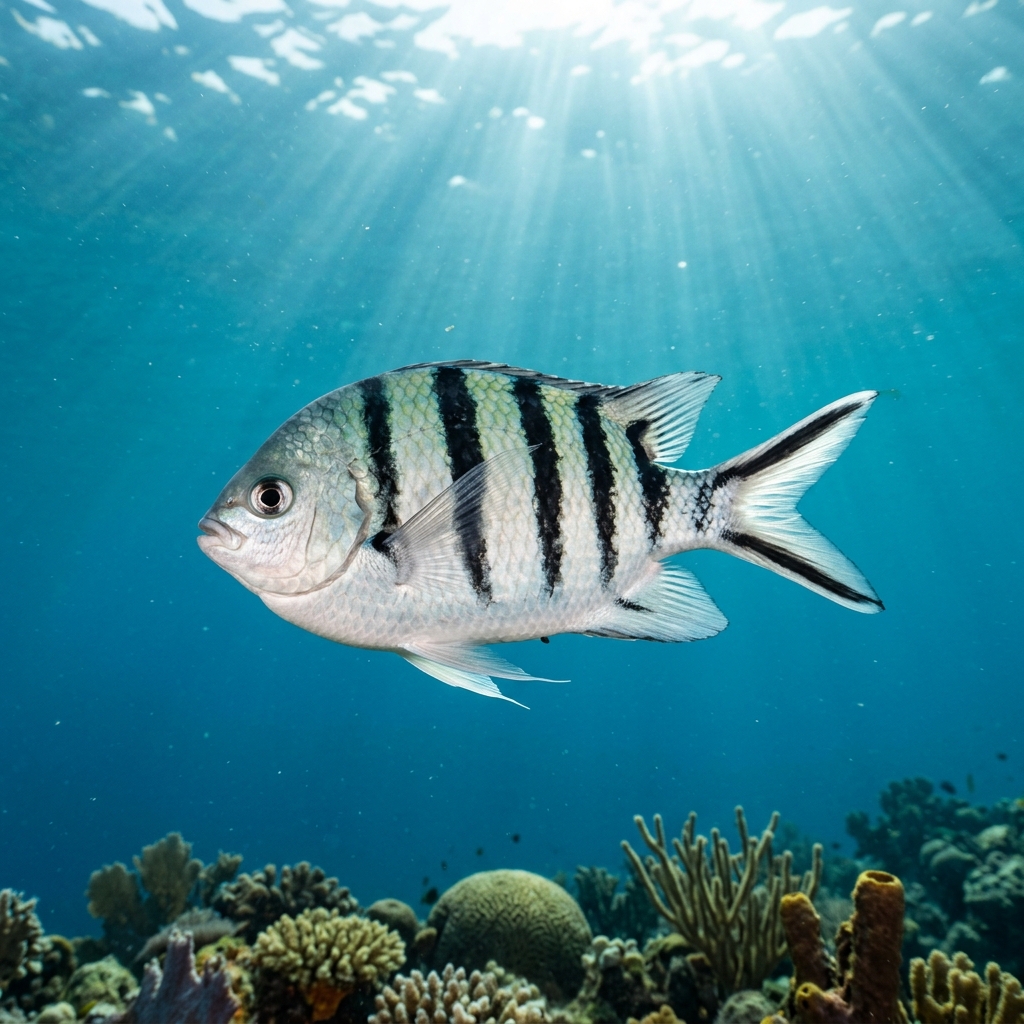
Reef neighbours a diver could mistake it for. Use the identification notes above to tell them apart.
Most reliably logged around Khao Lak in Thailand, where it turns up at a wide spread of sites, and in Queensland, Australia, on reef systems along the coast. Outside these two regions it has not been logged in the data, so Thailand and Australia are currently the safest bets for a planned sighting.
Mapping where Yellowtail Demoiselle is logged…
They are most consistently logged around Khao Lak in Thailand and on reefs in Queensland, Australia. These two regions currently account for essentially all recorded sightings.
There is no strong season in the data, and the species sits comfortably in warm 27 to 29 C reef water, so it is a year-round sighting at its known sites rather than a seasonal one.
Look for a small blue body around 6 cm long with a sharply defined yellow tail and often a small dark mark at the tail base. It typically hovers in loose groups over the reef rather than perching on a single coral head.
They stay small, reaching around 6 cm as adults, making them one of the more modest-sized damselfish divers will spot on a reef.
No, they pose no threat to divers. They are small plankton feeders that keep their distance and have no reason to interact aggressively with people on the reef.
Site and sighting data is aggregated from diver logs, iNaturalist and GBIF. For taxonomy and conservation status:
Dascyllus
3,697 sites