Umbrina roncador
Spot yellowfin croaker along California's sandy surf zones, an uncommon but year-round find in waters between 19.5 and 26 C.
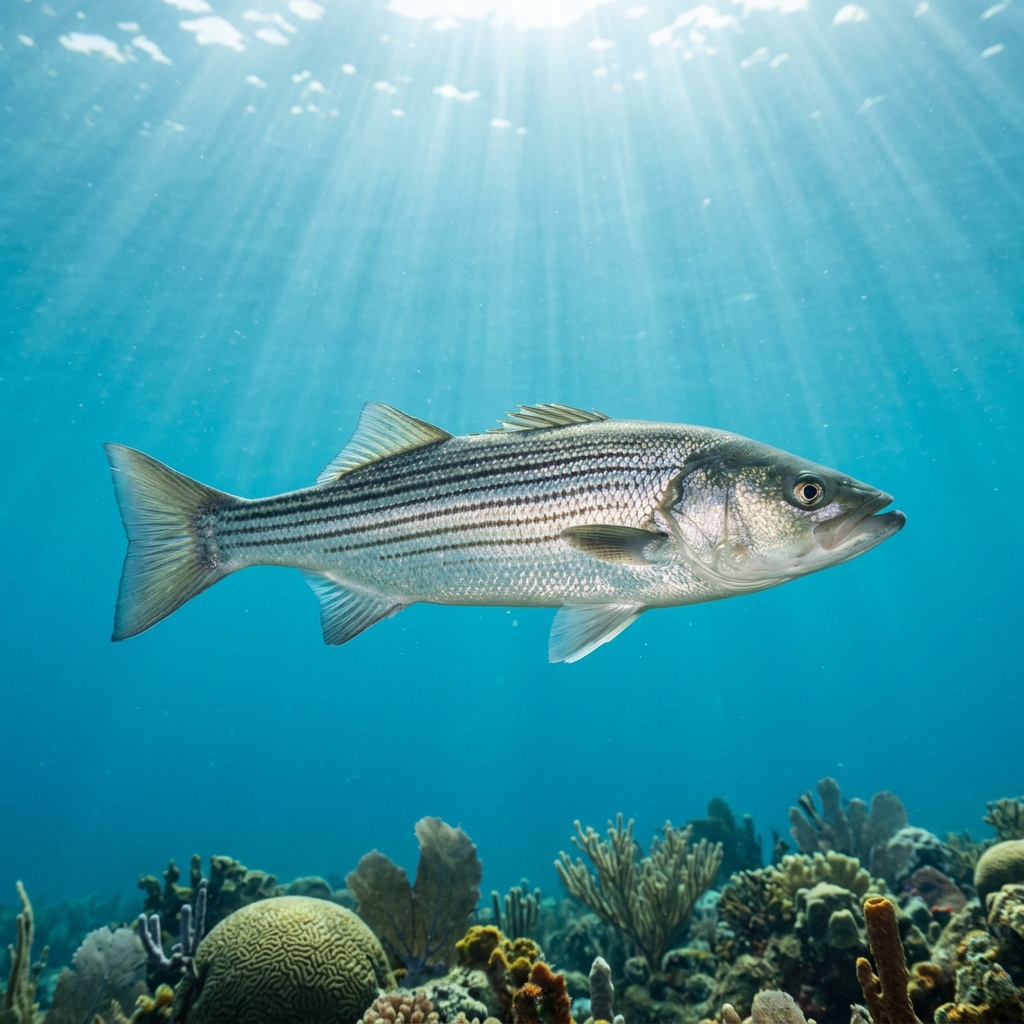
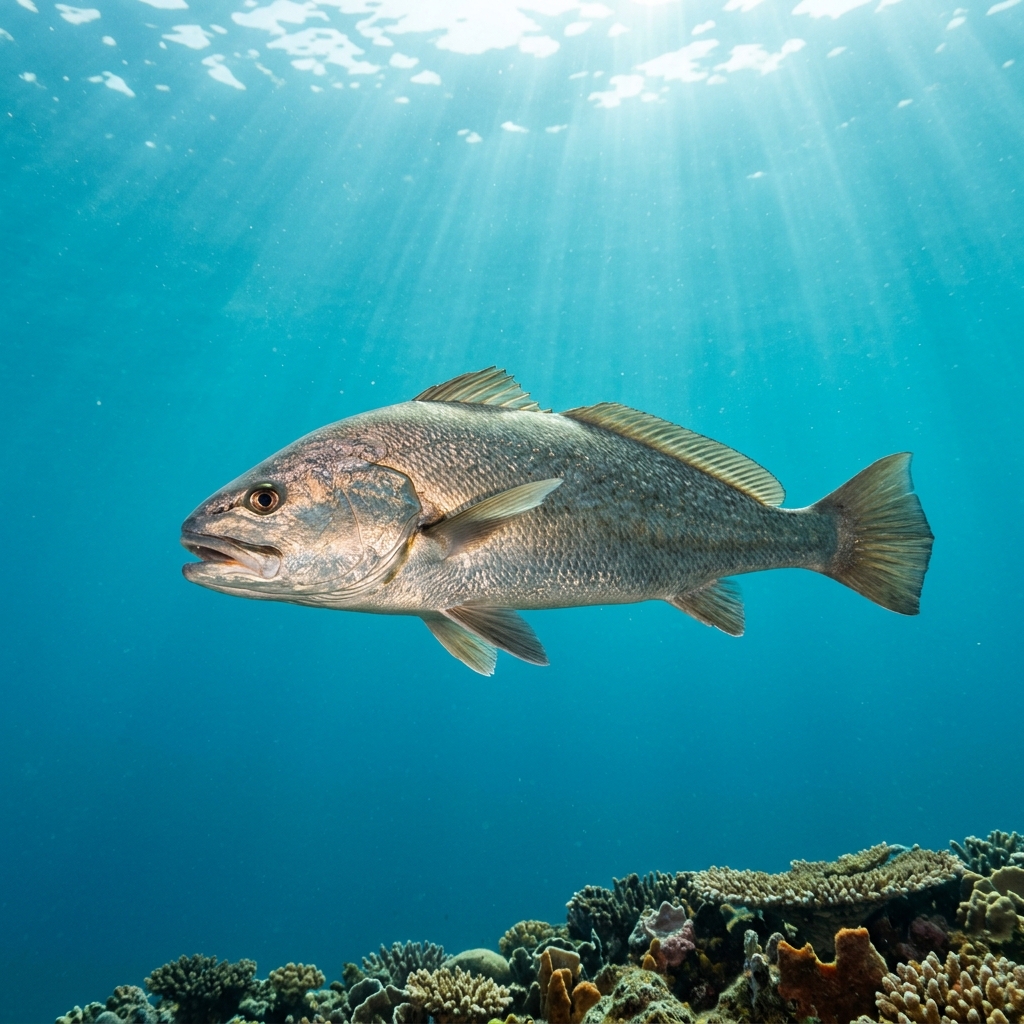
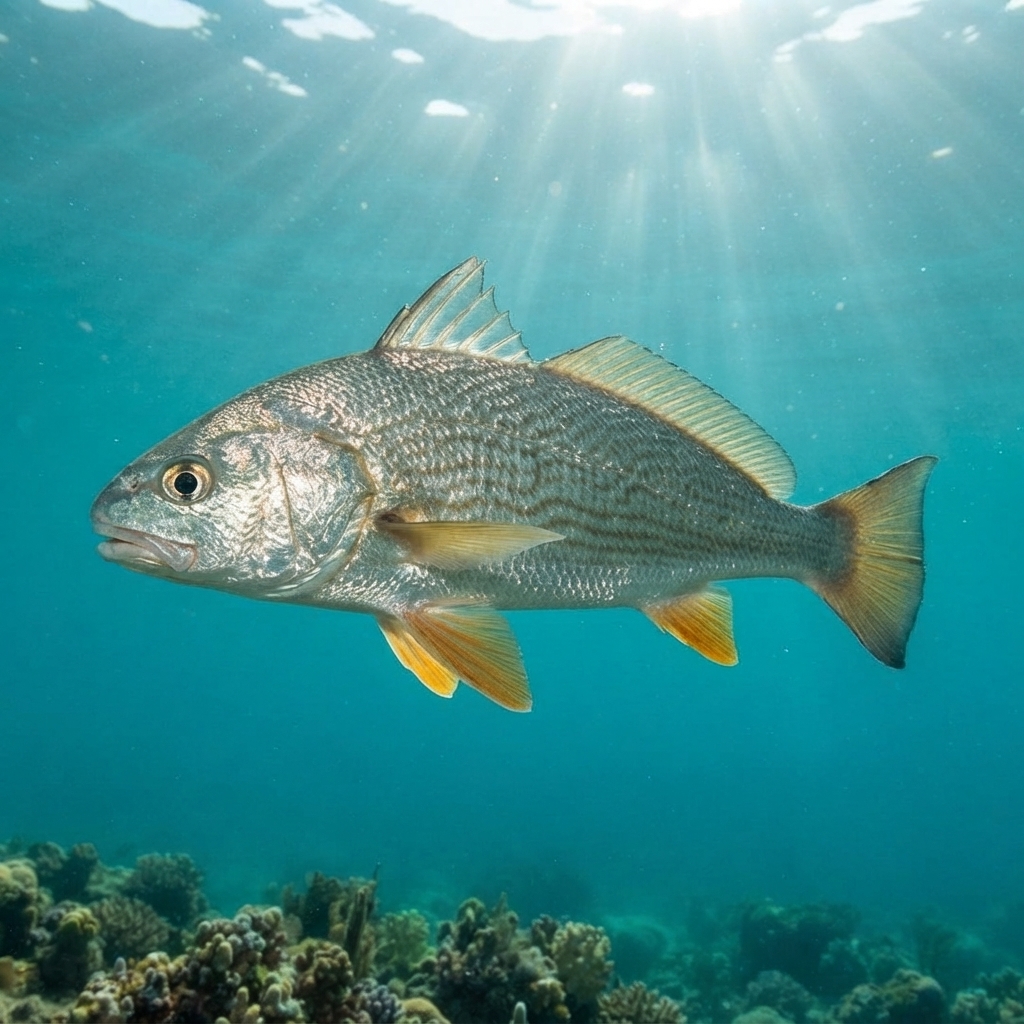
A silvery, bronze-toned body around 39 cm long with a series of faint diagonal dark streaks running across the flanks toward the tail. The fins carry a distinct yellow wash, most noticeable on the pectoral and tail fins, which is where the common name comes from. Look for a blunt head with a small chin barbel-like fold and a slightly humped back profile typical of croakers working close to the sand.
Typically seen cruising low over sand or mixed sand-and-rock bottoms, often alone or in small loose groups rather than tight schools. It tends to keep some distance from divers and will move off into open water or bury itself in sediment rather than approach, so patient, slow observation gives the best look.
Croakers in this family produce audible drumming or croaking sounds using muscles vibrated against the swim bladder, a trait tied to communication and possibly spawning behaviour rather than anything a diver will hear underwater.
Observed across a water temperature range of 19.5 to 25.9 C with no detected seasonal pattern, so treat it as a year-round possibility on California dives rather than a species tied to a particular month.
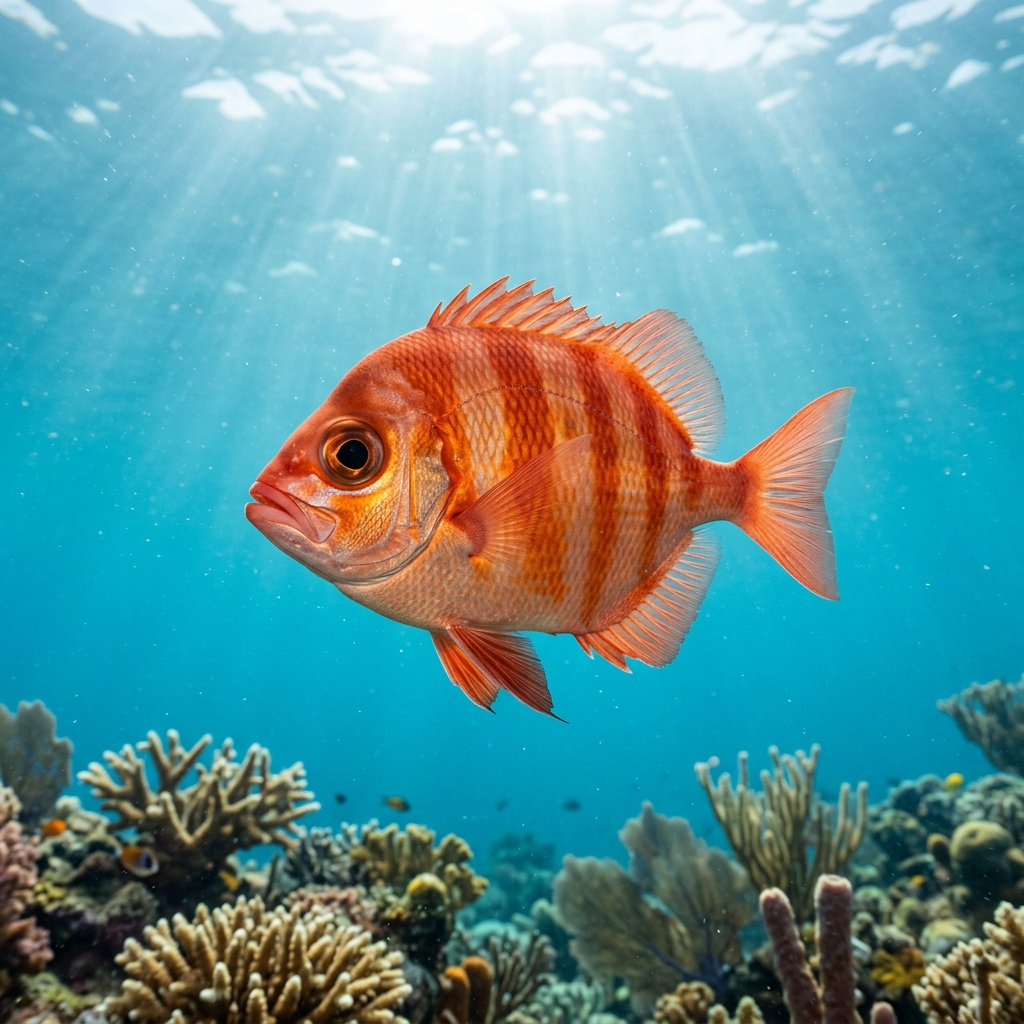
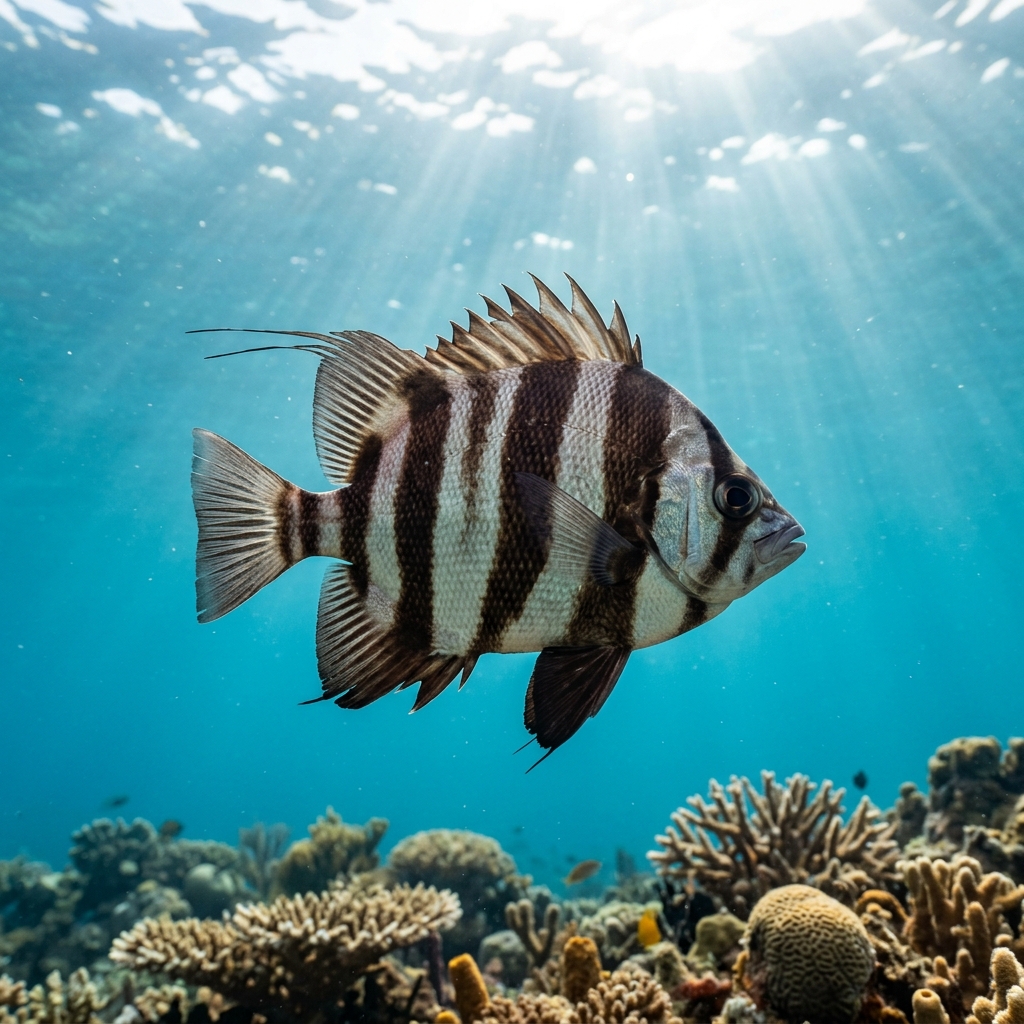
Reef neighbours a diver could mistake it for. Use the identification notes above to tell them apart.
Logged exclusively at sites in California, United States, where it turns up as an uncommon sighting rather than a guaranteed one. If you are diving sandy stretches or surf-zone reefs along the Southern California coast, this is the region to keep an eye on the bottom.
Mapping where Yellowfin Croaker is logged…
It is recorded almost exclusively along the California coast in the United States, particularly around sandy or mixed-bottom sites in Southern California, where divers log it as an uncommon sighting.
There is no strong seasonal pattern in the data, so sightings occur year-round within its observed temperature range of 19.5 to 25.9 C, making any season a reasonable time to look.
Look for a silvery-bronze body about 39 cm long with faint diagonal streaks along the sides and a yellow tint to the fins, especially the tail. It usually hovers close to sandy bottoms rather than mid-water.
They typically reach around 39 cm in length, a modest size that keeps them easy to overlook against a sandy seafloor.
Like other members of the drum and croaker family, it can produce drumming sounds by vibrating muscles against its swim bladder, a behaviour linked to communication among the group.
No, they pose no danger to divers and are a calm, harmless species to observe from a respectful distance.
Site and sighting data is aggregated from diver logs, iNaturalist and GBIF. For taxonomy and conservation status:
Meagre
1,159 sites