Sciaenidae spp.
Spot drums and croakers year-round across Florida, the Yucatán and Roatán. Learn what to look for and where sightings are most reliable.
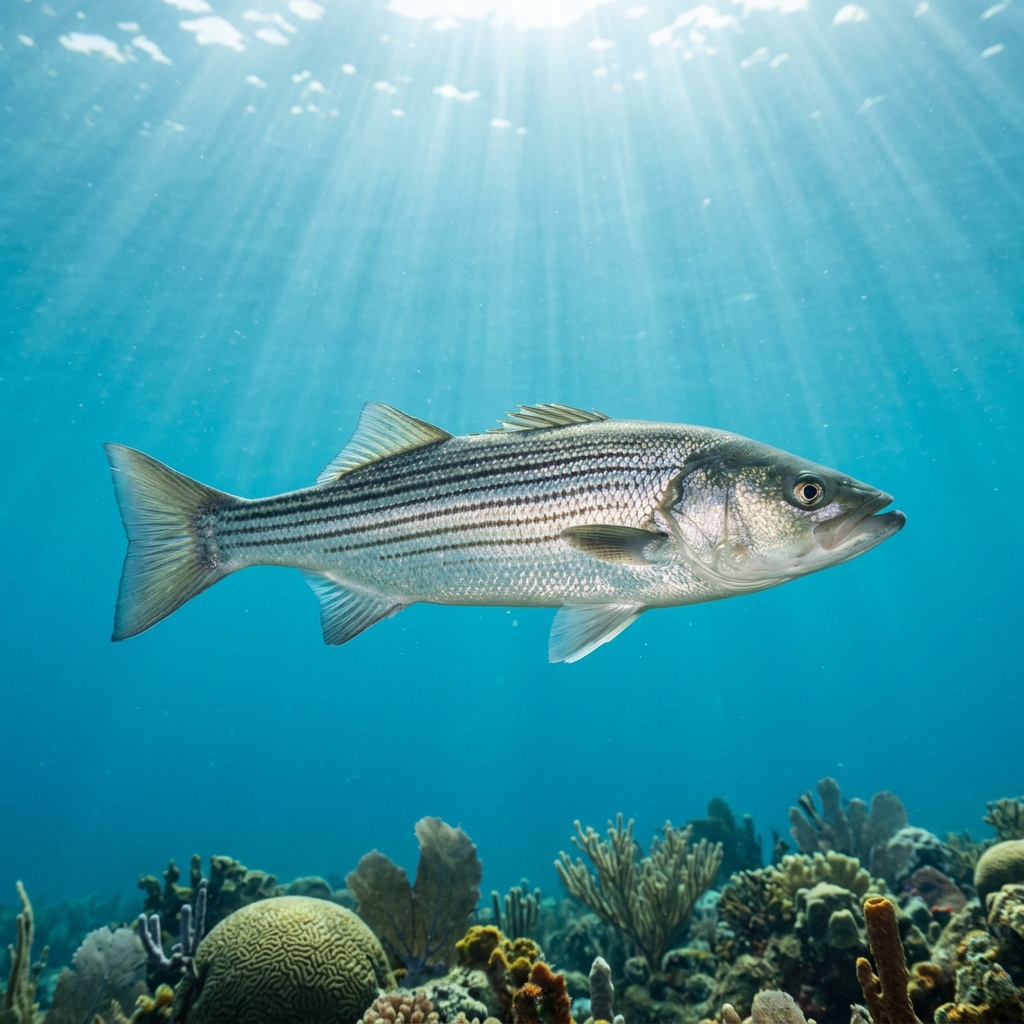
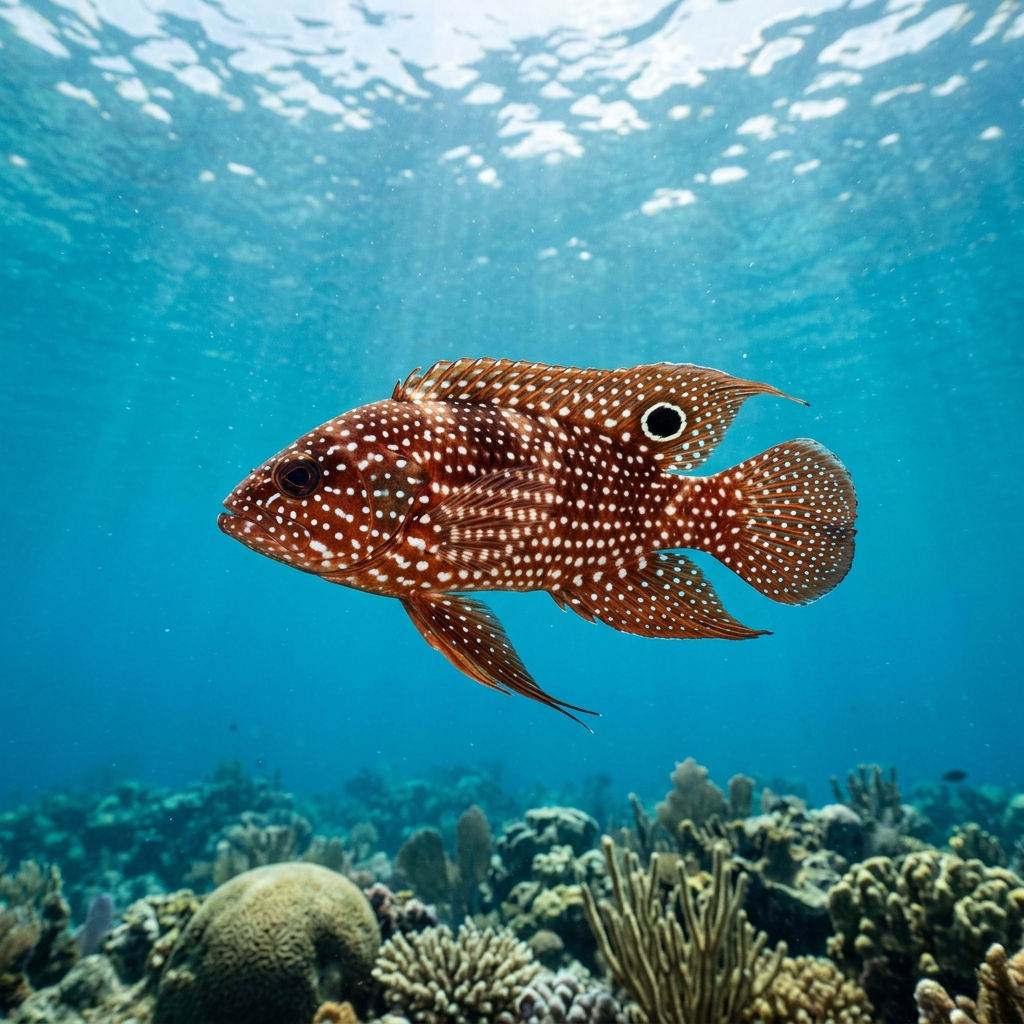
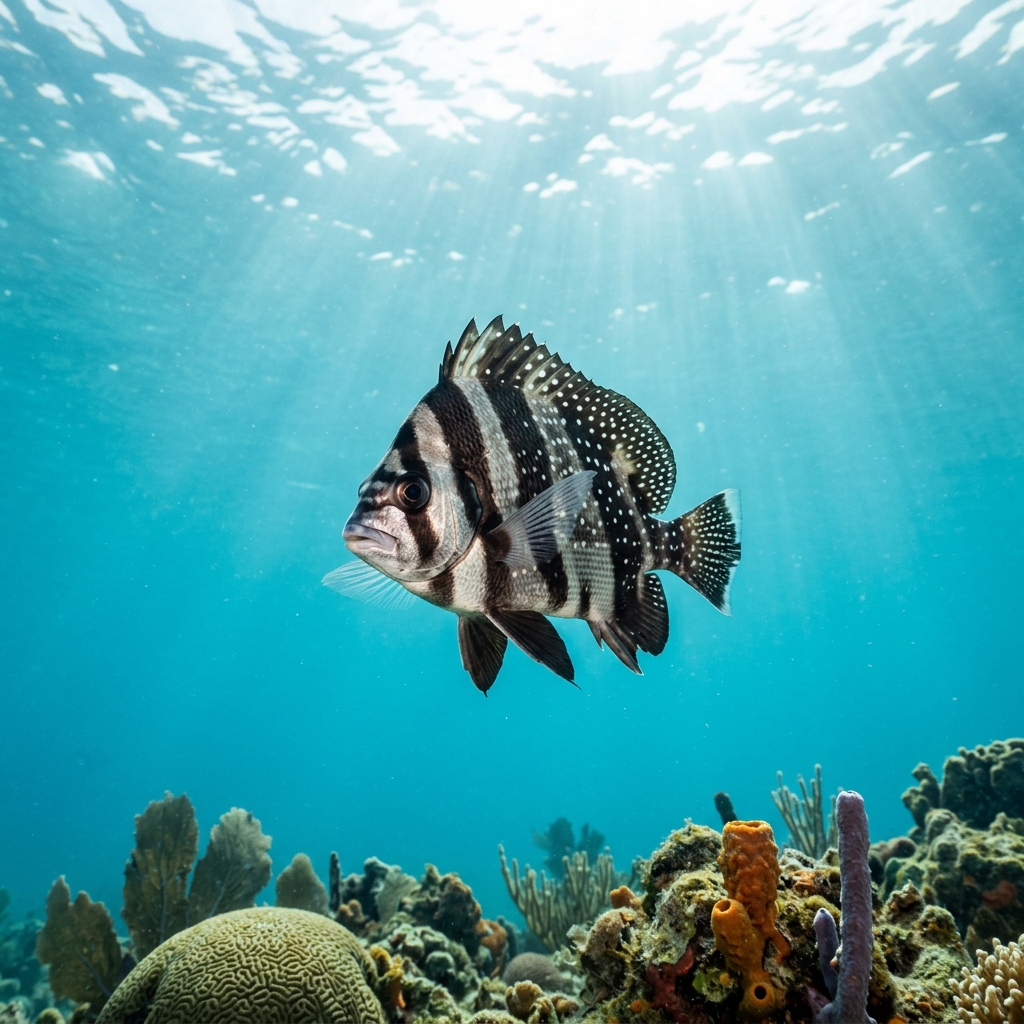
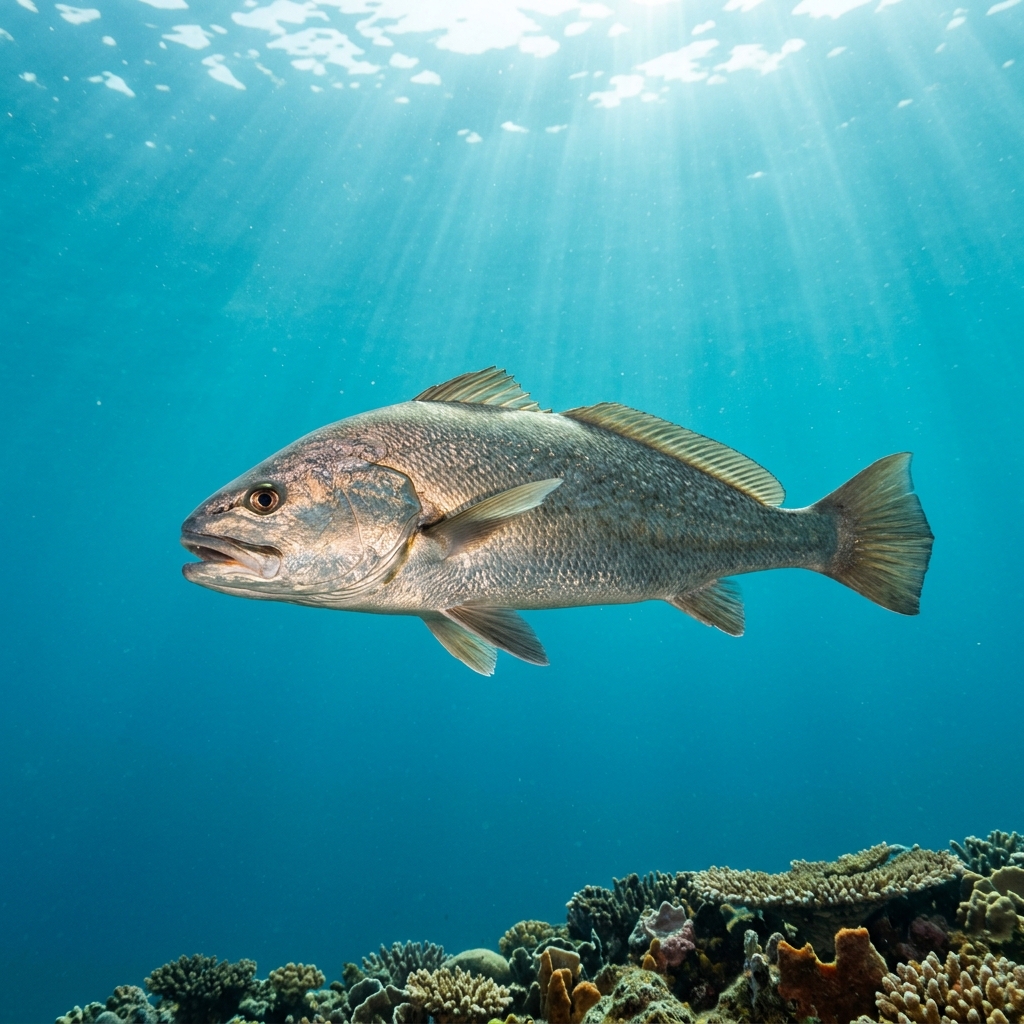
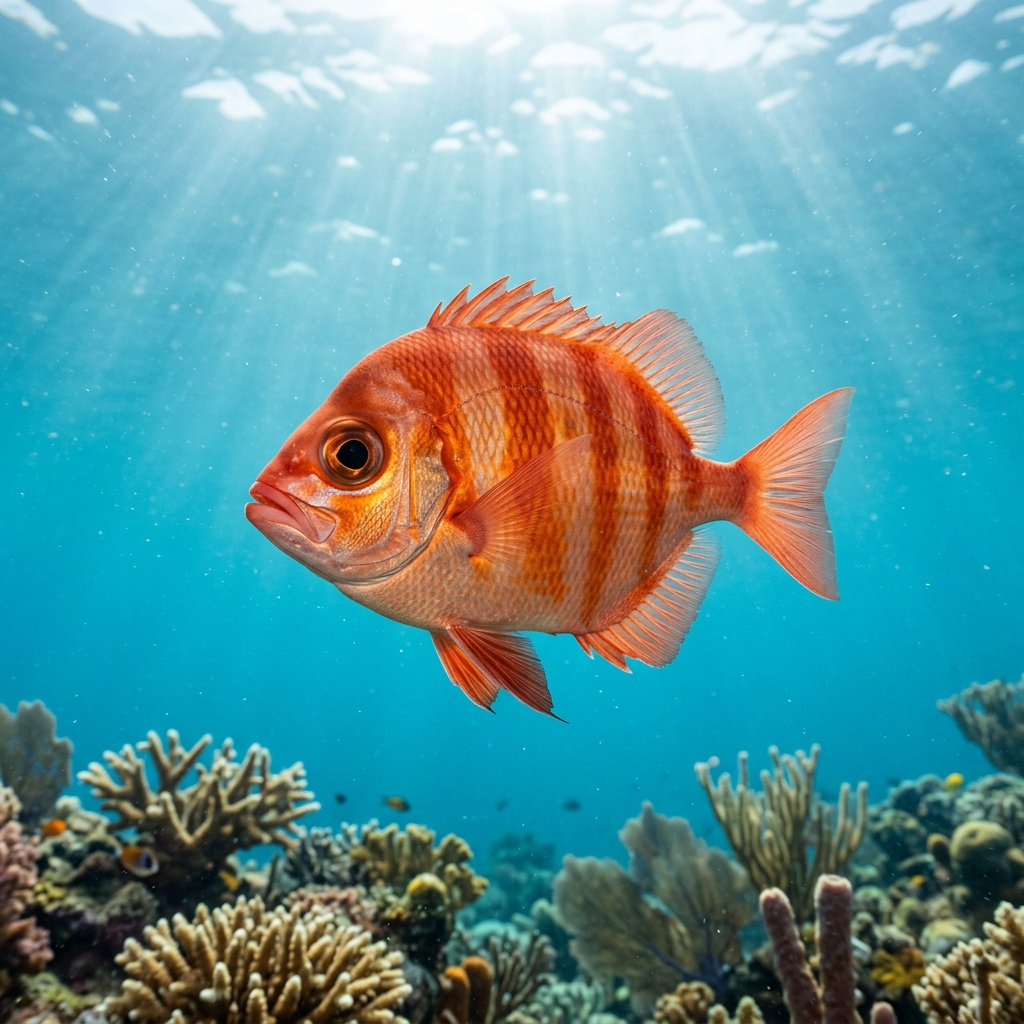
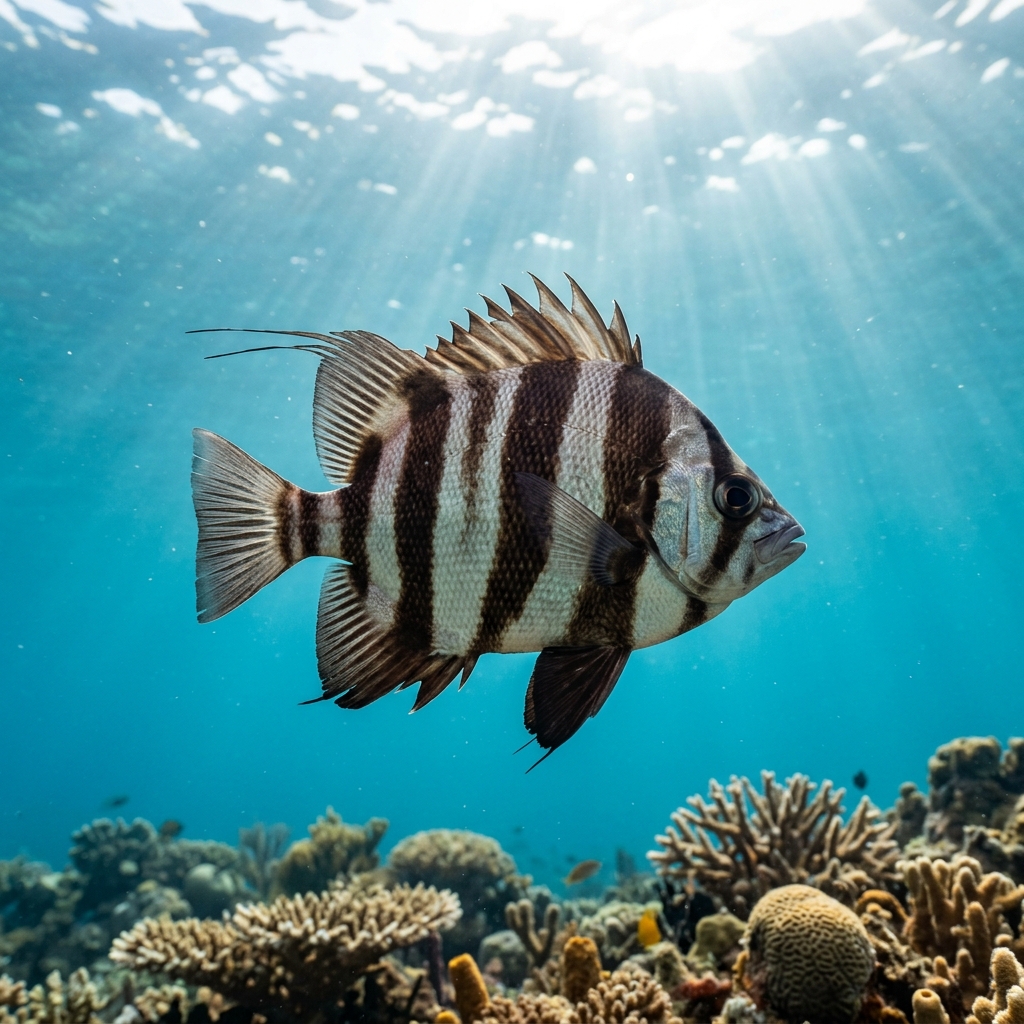
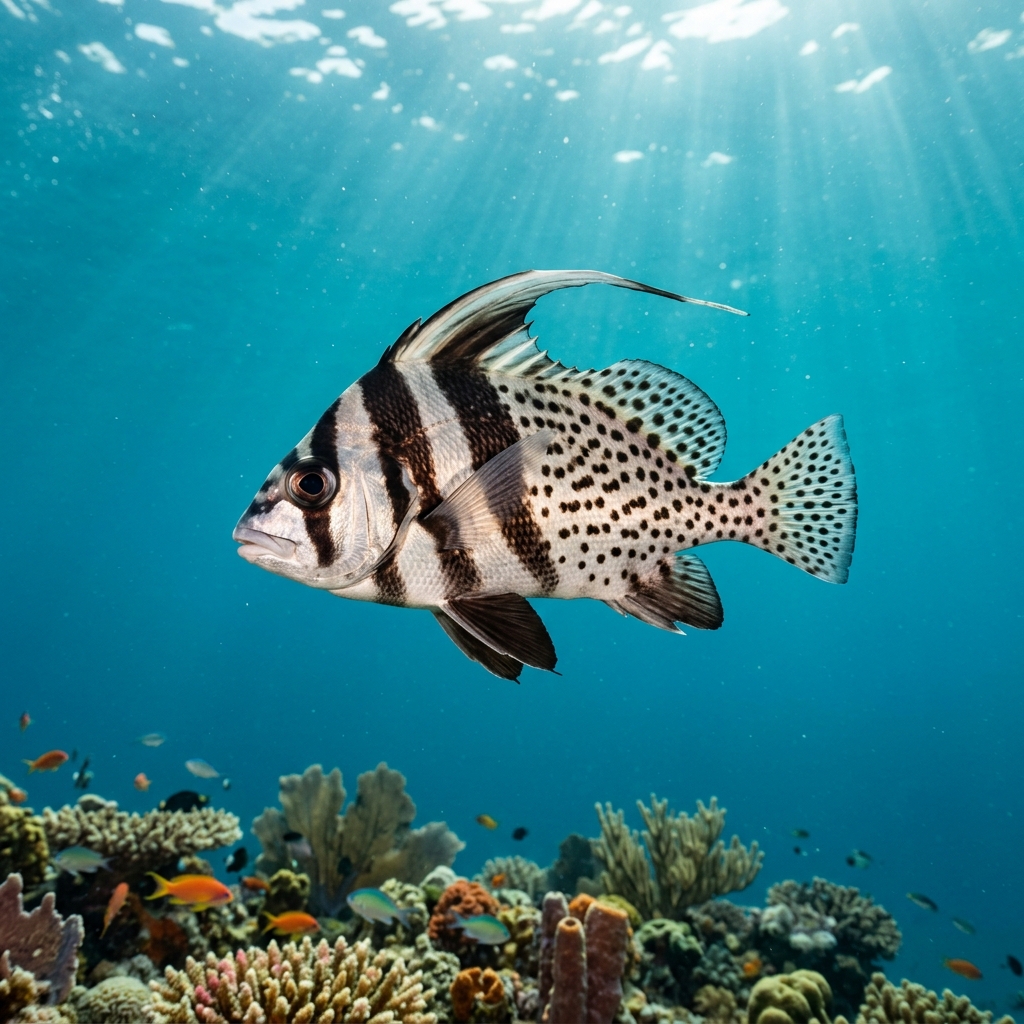
Most members of this family share a deep, laterally compressed body with a high arched back, a subterminal mouth (pointing slightly downward), and silvery or bronze flanking that can show dark bars, spots, or a single prominent lateral stripe depending on species. In the water they typically look stocky and deliberate, moving slowly near the bottom or mid-water. Juveniles stand out sharply with a white body, two bold black stripes, and a dramatically elongated ribbon-like dorsal fin that trails well beyond the body.
Drums and croakers are typically seen moving slowly along sandy bottoms, rubble patches, or near reef structure, often probing the substrate with their chin barbels (the small whisker-like sensory organs beneath the lower jaw) in search of invertebrates. They tend to be unhurried around divers and will often hold position long enough for a good look. Some species are more nocturnal, making night dives a productive time to encounter them actively feeding.
The family gets both its common names from sound: specialised muscles vibrate against the swim bladder to produce audible drumming or croaking calls used during spawning aggregations, making these among the few reef fish a diver can sometimes hear before seeing.
Observations show a year-round presence with no concentrated season, which makes sense given the family's broad temperature comfort, recorded across water temperatures from around 16 °C to 28.5 °C, meaning they're present on both warm tropical reefs and cooler subtropical sites throughout the calendar.
This family is most consistently logged across the Caribbean and the Gulf of Mexico, with the United States (particularly Florida and the Southeast) and Mexico's Yucatán Peninsula recording the widest spread of sighting sites. Strong populations are also reported across the Bay Islands of Honduras, the dive sites of Grenada, and throughout the Dutch Caribbean islands of Bonaire, Curaçao, and the Cayman Islands.
Mapping where Drum & Croaker is logged…
They are most reliably encountered across the Caribbean and Gulf of Mexico. Florida and the Southeast United States, Mexico's Yucatán Peninsula, Roatán in Honduras, and the Dutch Caribbean islands of Bonaire and Curaçao are among the top regions for sightings. The family is also well represented across Grenada and the Cayman Islands.
They are present year-round at sites across their range, with no distinct peak season recorded. Their tolerance for water temperatures from around 16 °C to 28.5 °C means you can encounter them on warm tropical reefs in midsummer or on cooler subtropical sites in winter.
Look for a stocky, deep-bodied fish with a high-arched back, a downward-angled mouth, and silvery or bronze sides that may show dark bars or a bold lateral stripe. They move deliberately near the bottom and often root through sand or rubble. Juveniles are unmistakable, white with two black stripes and a long trailing black dorsal fin.
Specialised muscles contract rapidly against the swim bladder to produce drumming or croaking sounds, most often during spawning. These are among the few reef fish families where the sound is loud enough for a nearby diver to hear underwater without any equipment.
Site and sighting data is aggregated from diver logs, iNaturalist and GBIF. For taxonomy and conservation status:
Meagre
1,159 sites