Stenopus scutellatus
Spot this banded reef shrimp tucked in crevices across Florida and Sint Eustatius, in warm 25-31C water year-round.
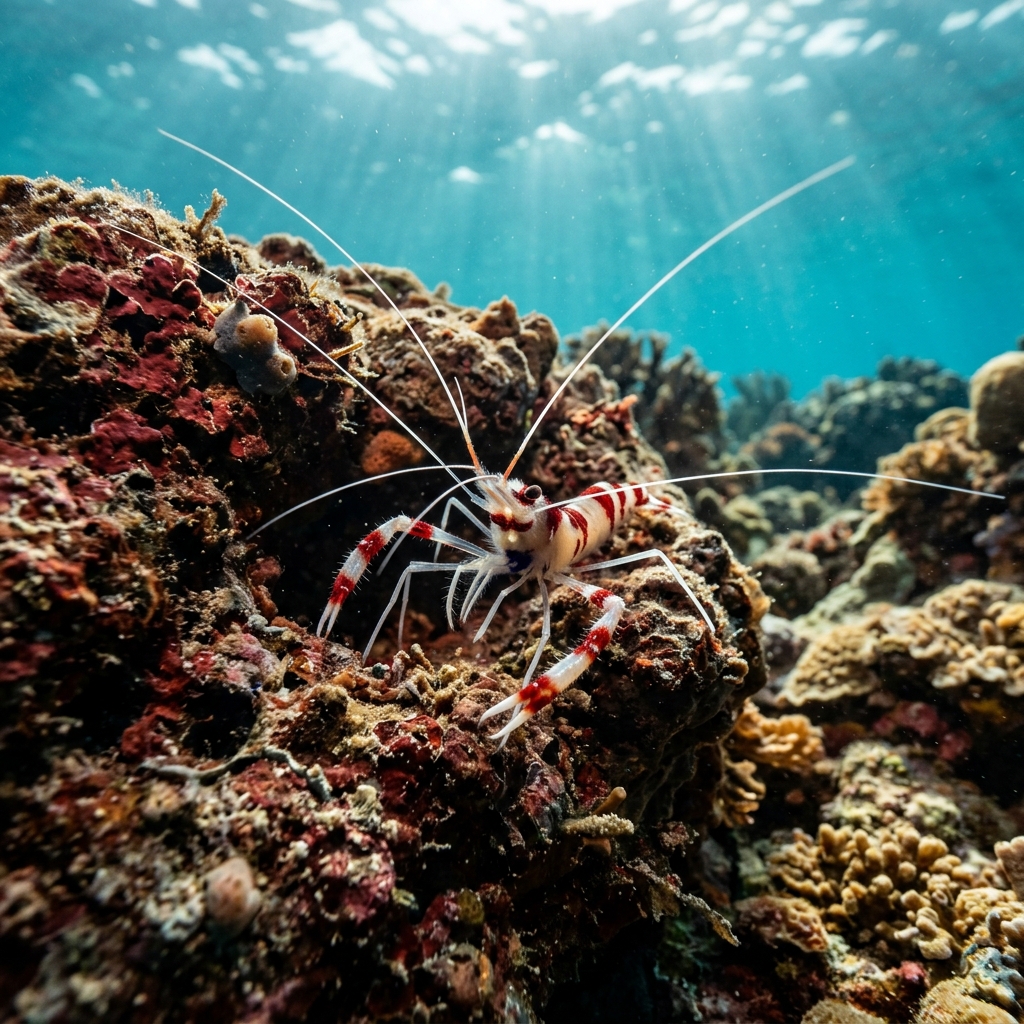
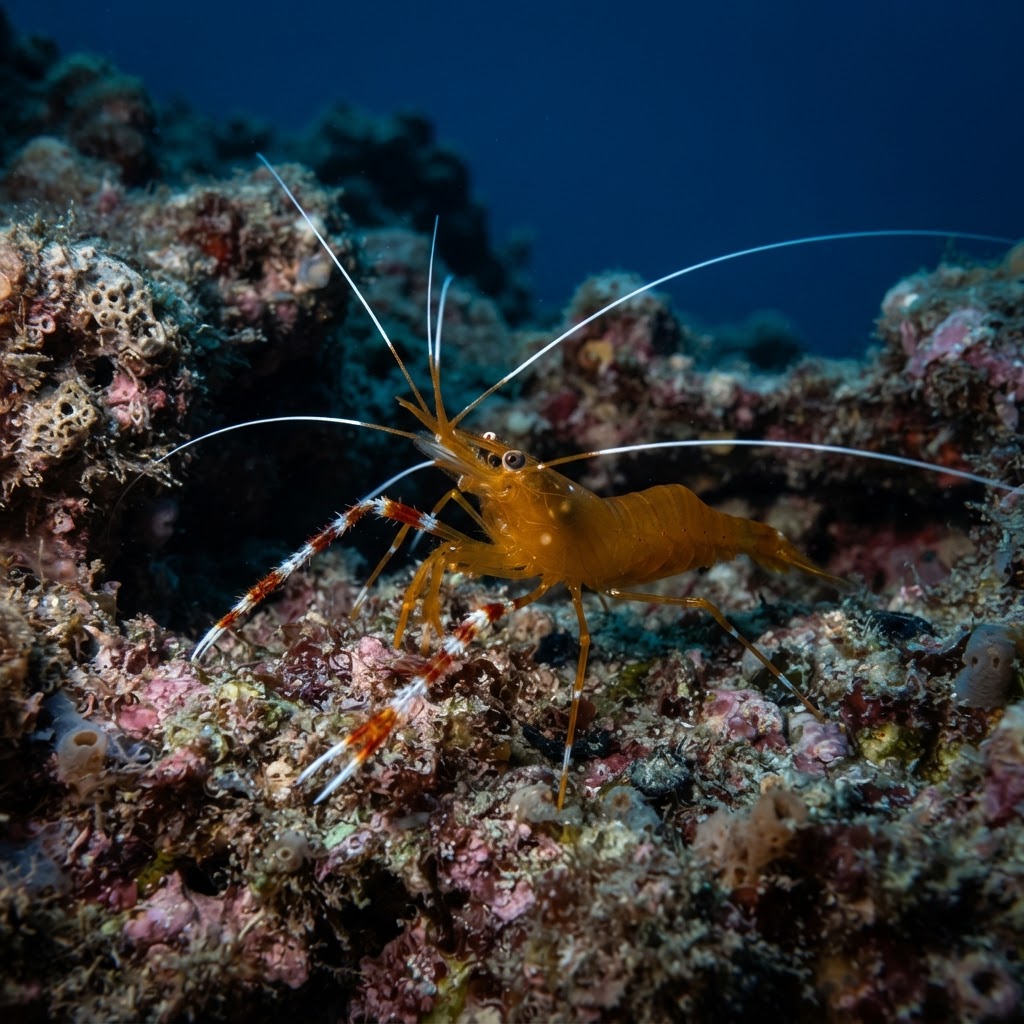
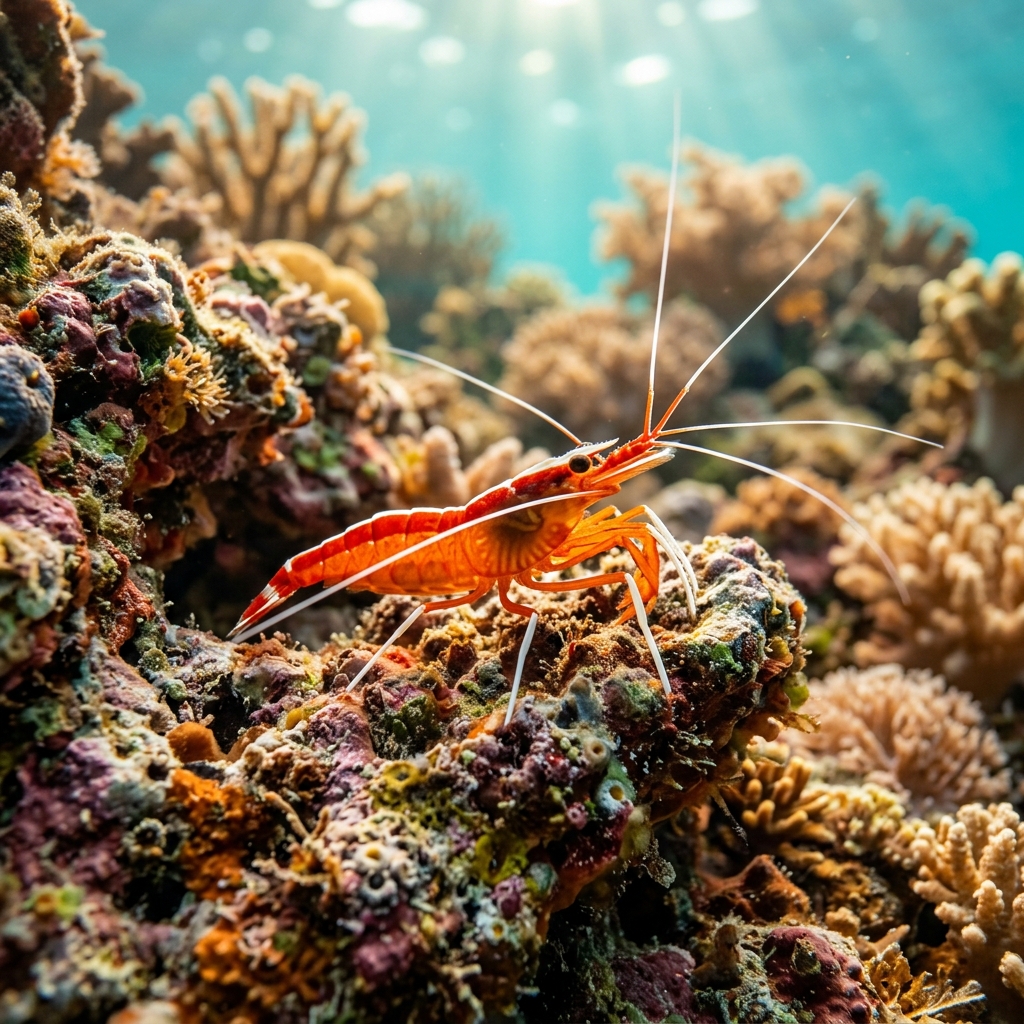
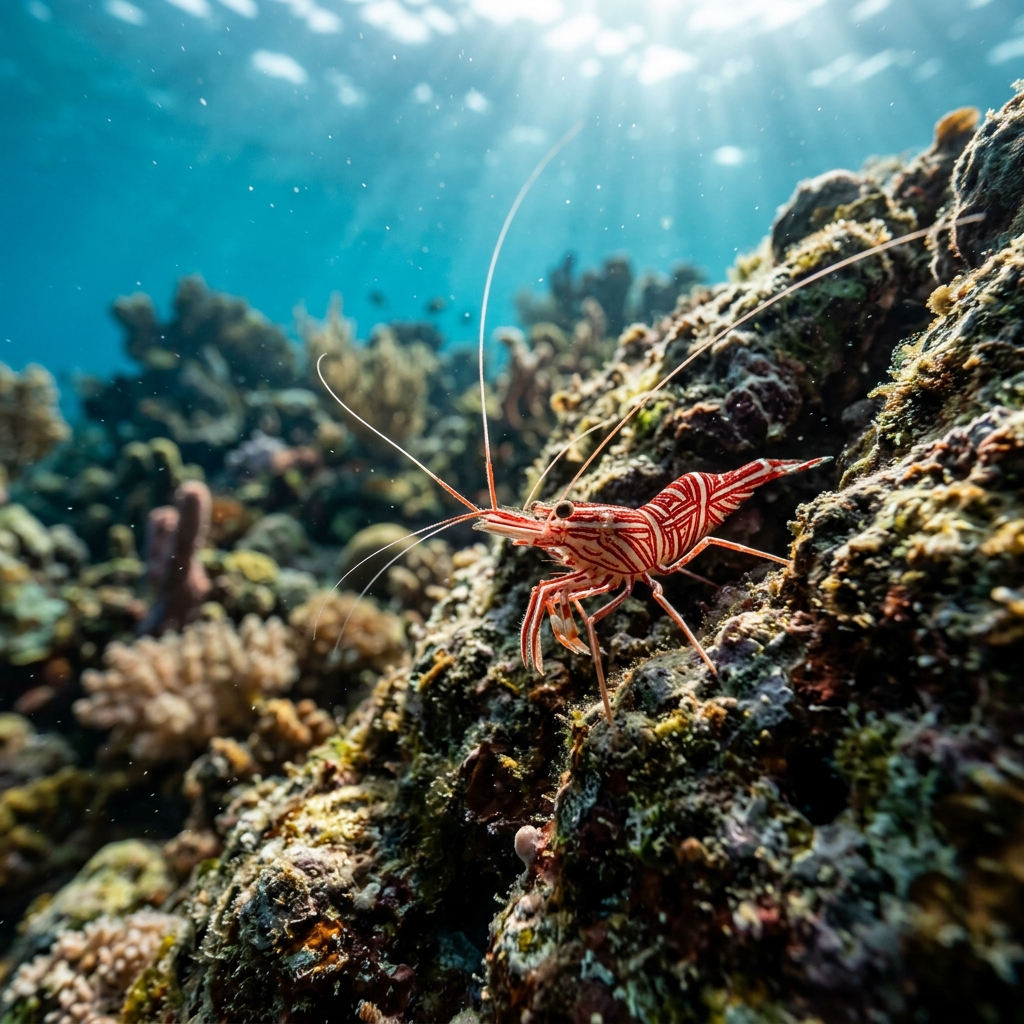
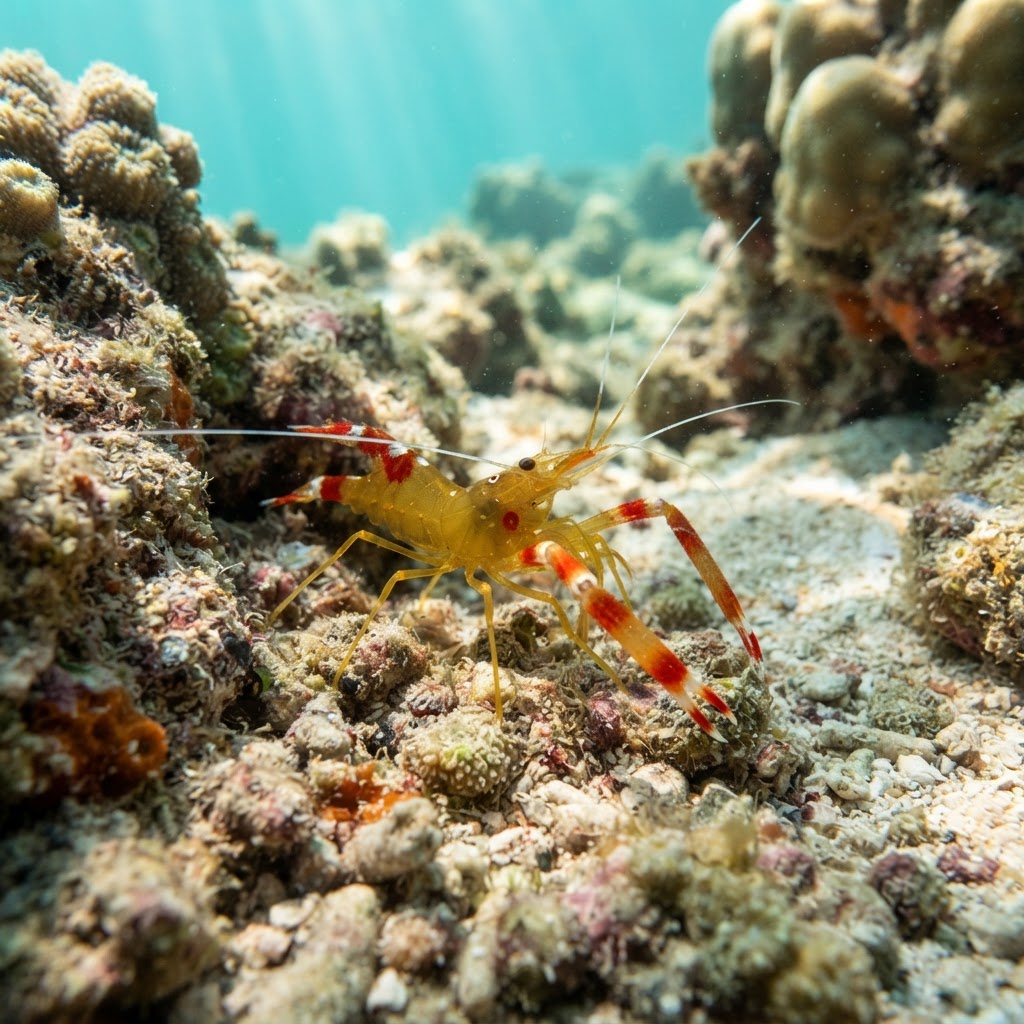
Slender, long-legged shrimp with alternating red-and-white bands running down its body and tail, plus a pair of extremely long, thin white antennae that often give it away before the body does. It sits low in crevices or under ledges rather than out on open coral, usually solitary or in a mated pair facing the same direction. Size in the water is small, a few centimetres of body length, easy to miss unless you scan holes with a torch.
Divers usually find it wedged into a crevice or under a coral ledge, antennae waving out into the current while the rest of the body stays hidden. It tends to hold its ground rather than bolt when a light passes over it, which makes it a good subject once you have located one, though it rarely comes out into the open. Most sightings are on daytime dives, tucked into the same kind of holes favoured by other stenopodid shrimp.
Like other banded coral shrimp, it is thought to pair up and hold a fixed crevice as a territory, with both members of the pair often visible together if you find the hole.
No clear seasonal pattern shows up in sightings, and its comfortable temperature range of roughly 25 to 31C spans Caribbean and Florida reef conditions all year, so it is a year-round find rather than a seasonal target.
Reef neighbours a diver could mistake it for. Use the identification notes above to tell them apart.
Most reliably logged on reefs in Florida, United States, with a strong secondary population around Sint Eustatius in the Dutch Caribbean and a smaller but consistent presence off Tobago, Trinidad and Tobago. Look under ledges and in reef crevices on hard-bottom and patch reefs at these sites rather than open sand.
Mapping where Yellowbanded Coral Shrimp is logged…
Florida reefs turn up the most sightings, with a solid population also logged around Sint Eustatius and a smaller number of records from Tobago. Check crevices and ledges on hard-bottom reef rather than open sand or grass.
There is no strong seasonal pattern in sightings, and its warm-water niche of roughly 25 to 31C holds year-round on the reefs where it is found, so any month is a reasonable bet.
Look for red-and-white banding down a slender body and very long, thin white antennae poking out of a crevice or ledge. It usually stays tucked into a hole rather than sitting exposed on coral.
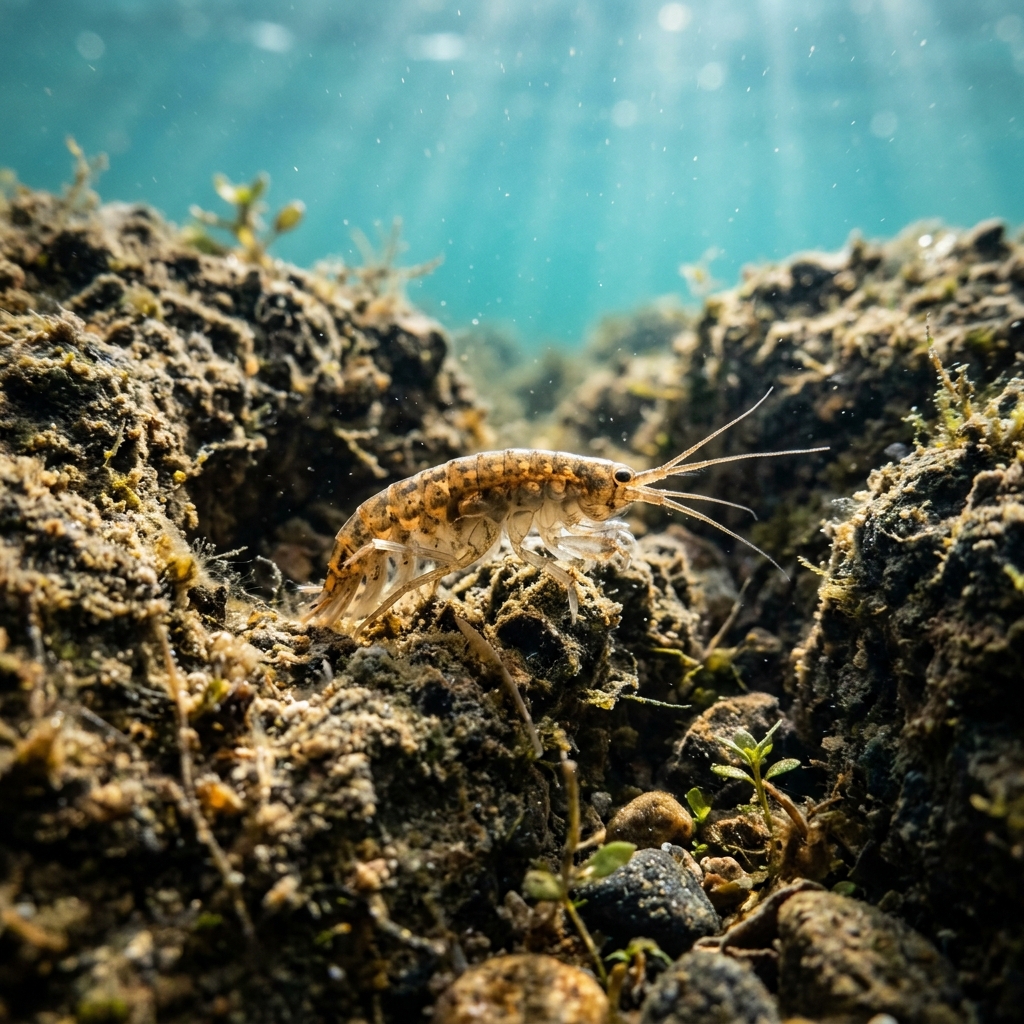
They are small, only a few centimetres of body length, with the long antennae often extending further than the body itself. Exact maximum size is not well documented for this species.
No, they pose no danger to divers. They stay tucked in crevices and have no reason to interact with a passing diver beyond a curious antenna wave.
Site and sighting data is aggregated from diver logs, iNaturalist and GBIF. For taxonomy and conservation status:
Rockpool Prawn
2,179 sites