Stenopus spinosus
Red-and-white banded shrimp tucked in crevices across Liguria, Valencia and Sardinia, 15-21C water, no real season to plan around.
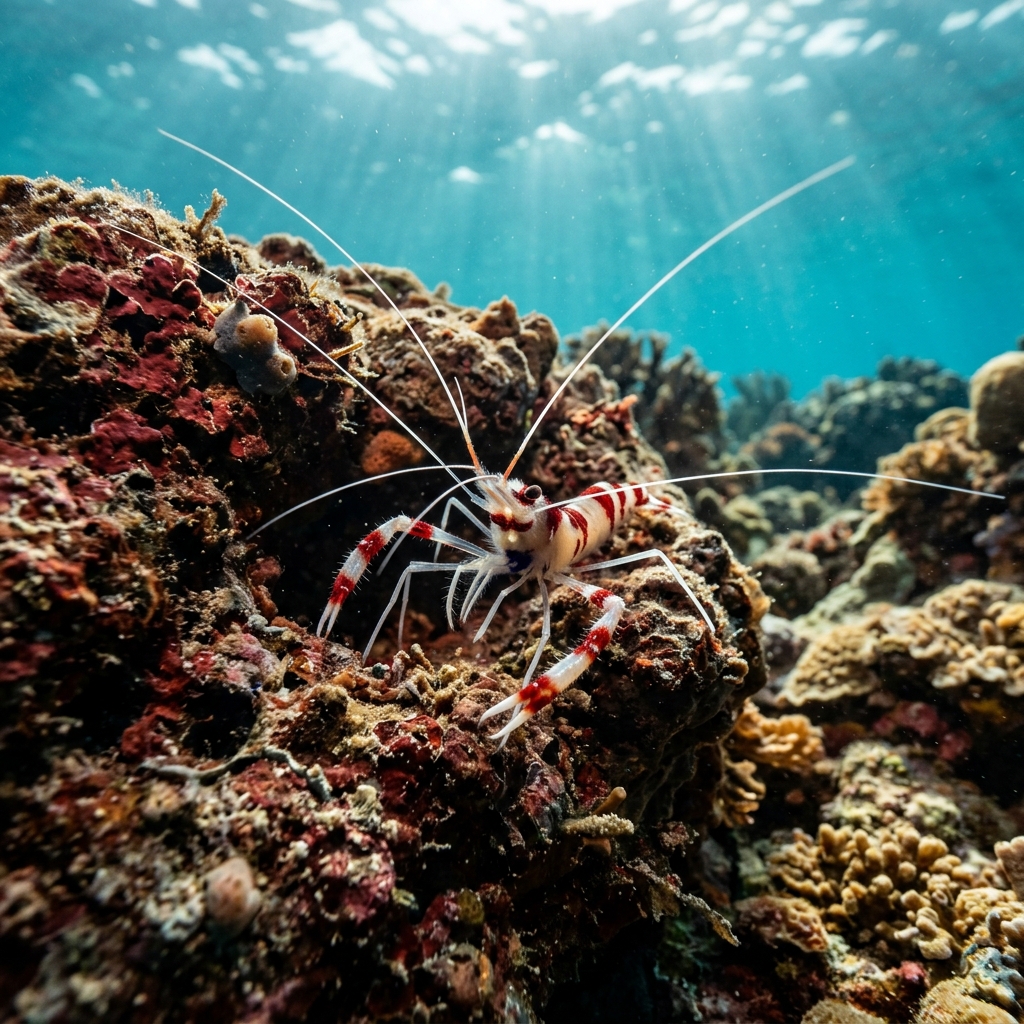
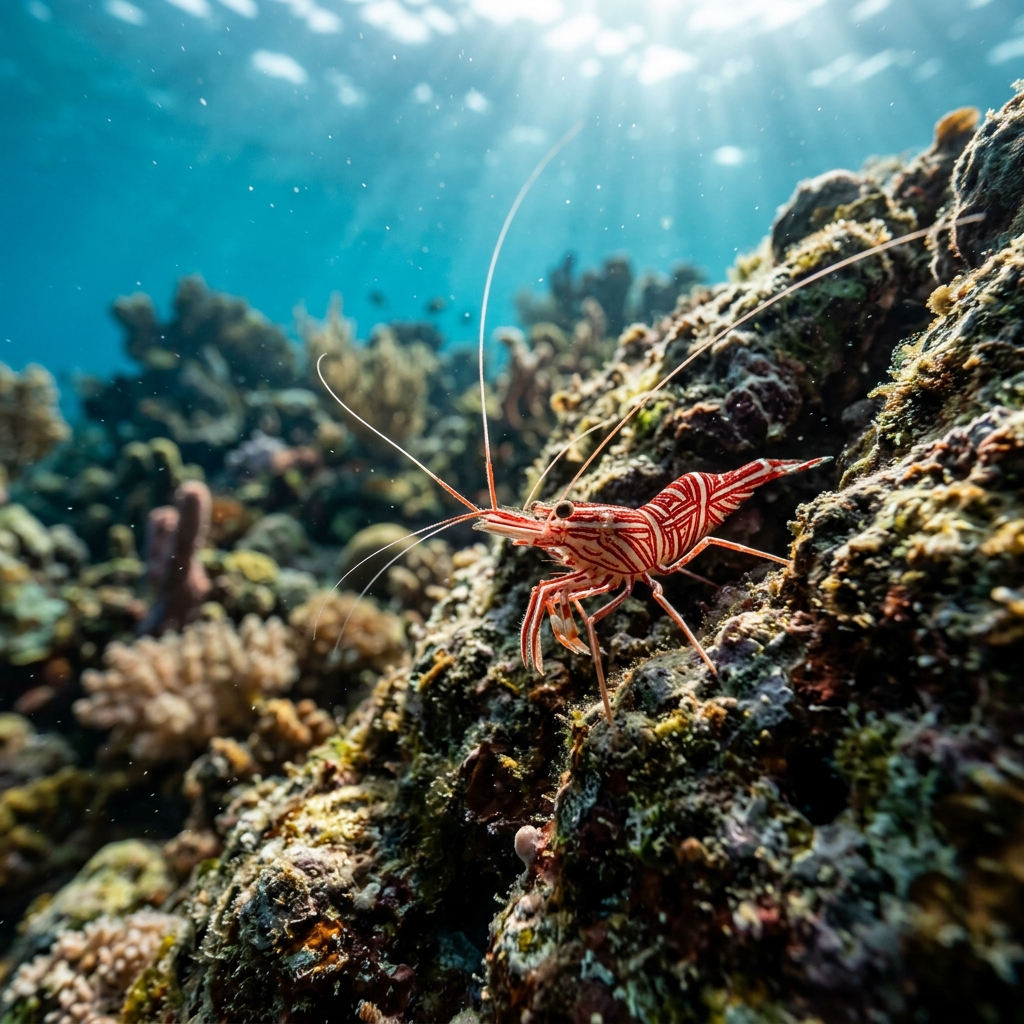
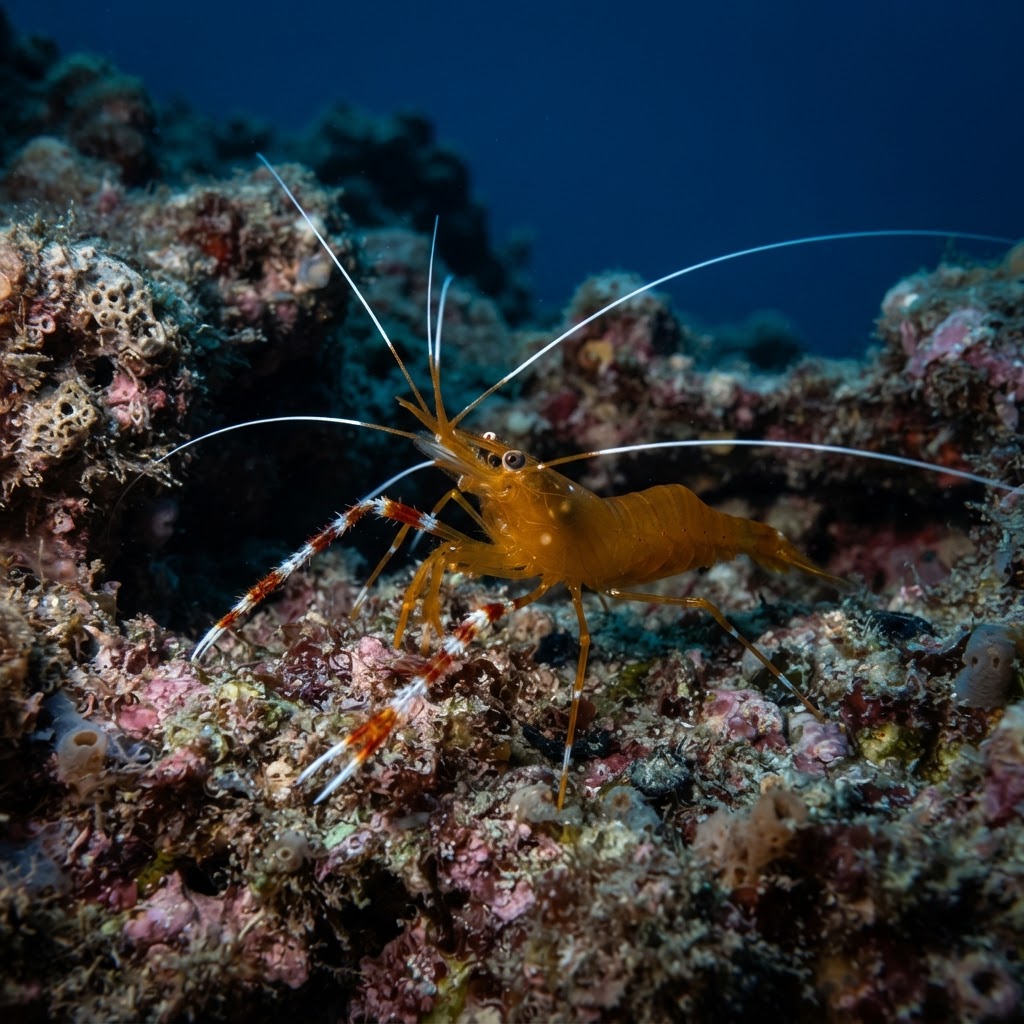
A slender crevice-dweller a few centimetres long, marked with alternating deep red and white bands running down its body and long, whip-like white antennae that often give it away before the body does. It usually sits with its front claws raised, tucked back into a crack or under a ledge rather than out in the open. The banding is bolder and more saturated than on the Mediterranean's other cleaner-type shrimps, which helps with a quick ID once you're used to it.
Look for it wedged into a dark crack, overhang or small cave mouth, usually solitary or in a pair, with its long antennae waving out into open water while the body stays hidden. It doesn't bolt when a torch beam hits it, but it will retreat deeper into its crevice if you crowd the entrance, so a slow approach and a bit of patience gets the best look. Most sightings are on rocky reef and wall habitat rather than sand or seagrass.
Like other Stenopus shrimps it's thought to pair up and hold a crevice territory, and it can shed a claw to escape a predator and simply regrow it over successive moults.
No clear seasonal pattern shows up in the sightings, and it holds a fairly wide temperature range of 15 to 21C, so it's a fair bet on any dive in its range through the year rather than a species tied to one season.
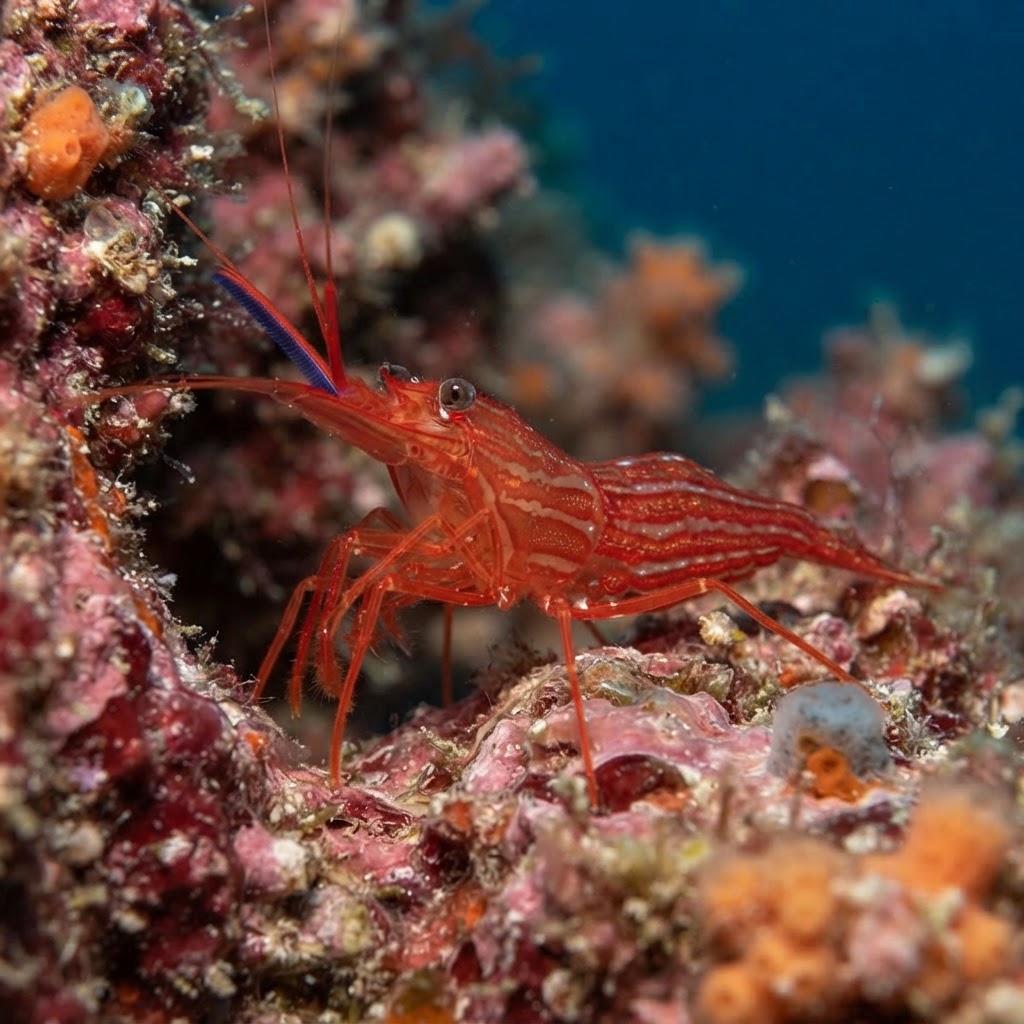
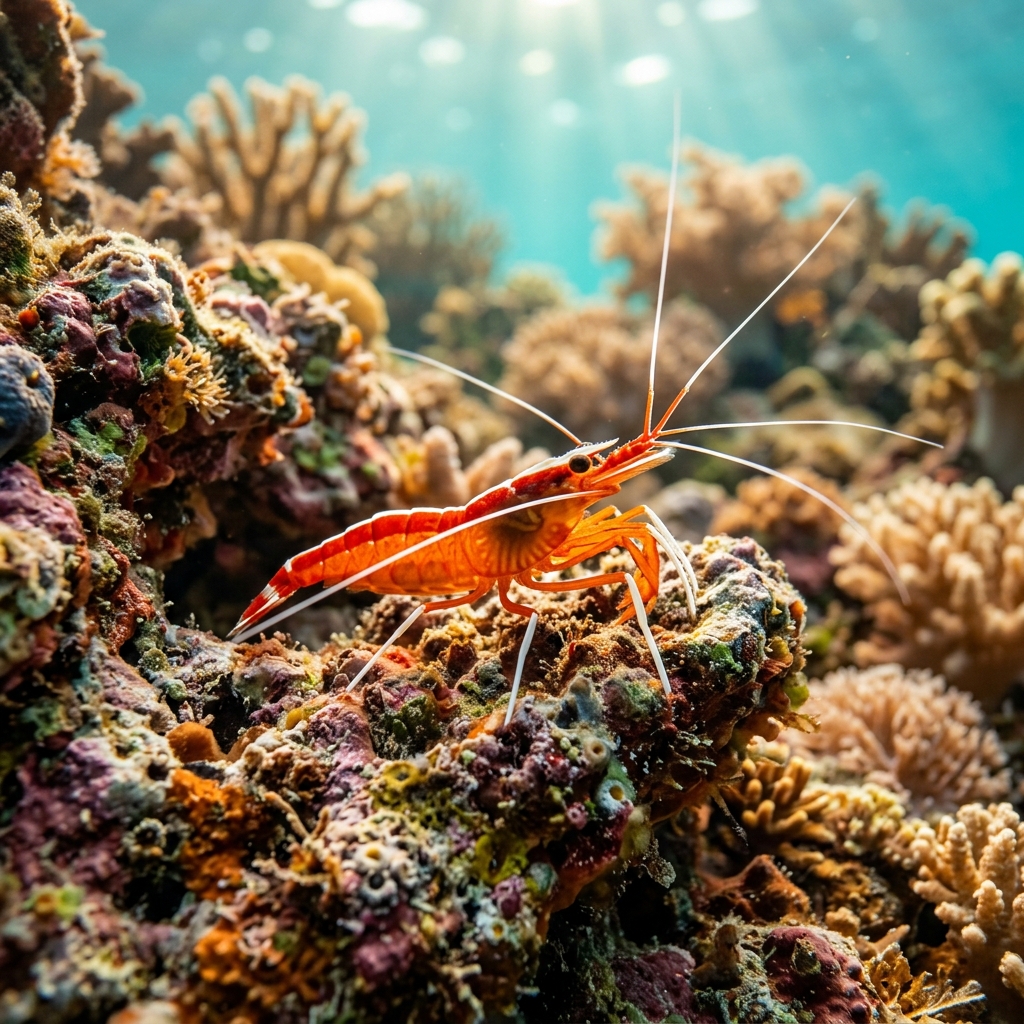
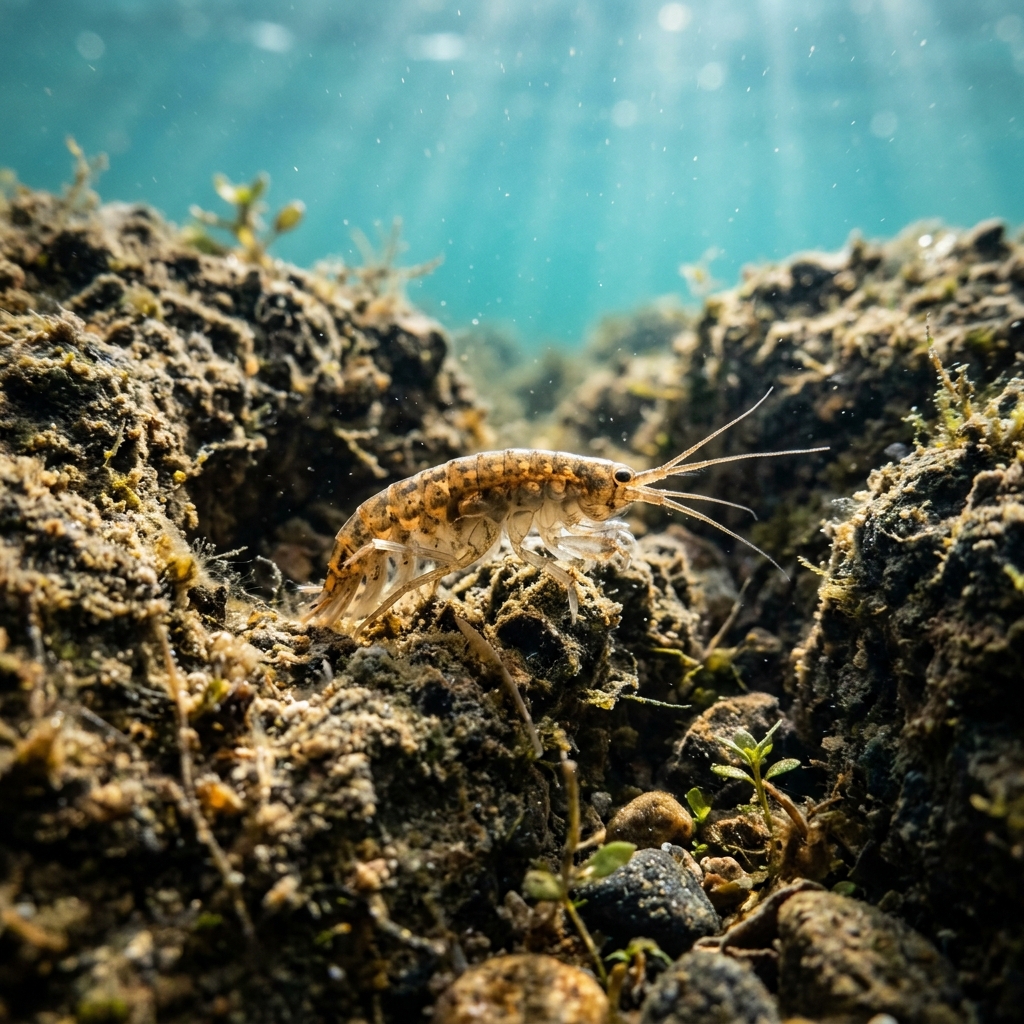
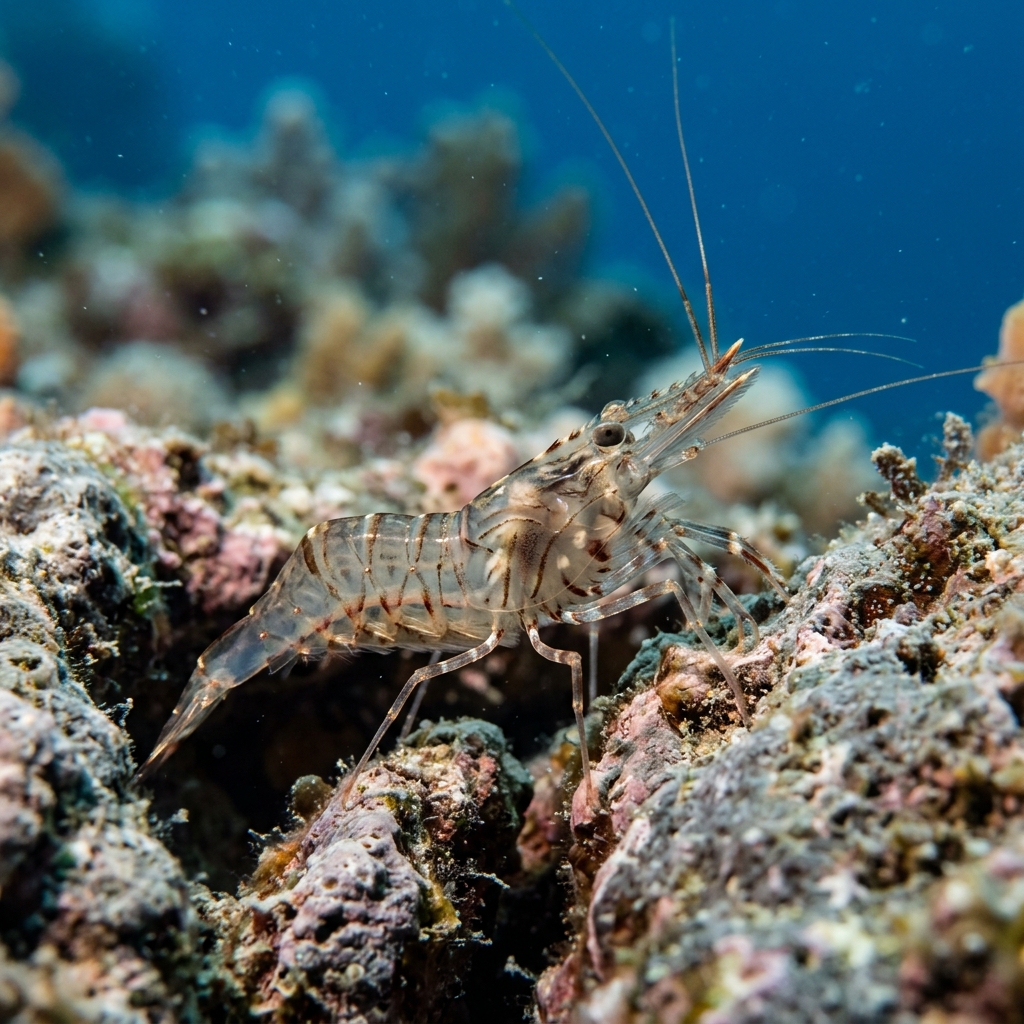
Reef neighbours a diver could mistake it for. Use the identification notes above to tell them apart.
This is a Mediterranean regular, most reliably logged in Italy and Spain, with strong numbers also out of France, Croatia and Madeira. Within those countries it turns up most often around Liguria, the French Riviera and Provence, Valencia, Catalonia, Sardinia and Istria, usually tucked into rocky crevices rather than open sand or reef flats.
Mapping where Golden Coral Shrimp is logged…
It's most commonly logged in Italy and Spain, particularly Liguria, the French Riviera and Provence, Valencia, Catalonia and Sardinia, with further sightings in Croatia's Istria region and around Madeira.
There's no strong season in the sighting data, so it's seen year-round within its 15 to 21C comfort range rather than at a particular time of year.
Look for bold red and white banding along the body and long white antennae trailing out of a rocky crevice. It usually stays tucked back with claws raised rather than sitting in the open.
No. They have no venom or sting of concern to divers and simply retreat into their crevice if disturbed.
Like related Stenopus species, it can drop a claw to escape a threat and regrow it over later moults, a handy trick for a shrimp with few other defences.
Site and sighting data is aggregated from diver logs, iNaturalist and GBIF. For taxonomy and conservation status:
Rockpool Prawn
2,179 sites