Paracaesio xanthurus
Blue-and-yellow schooling fish logged off New South Wales in water from 20 to 28 C, year-round, mostly in small uncommon groups.
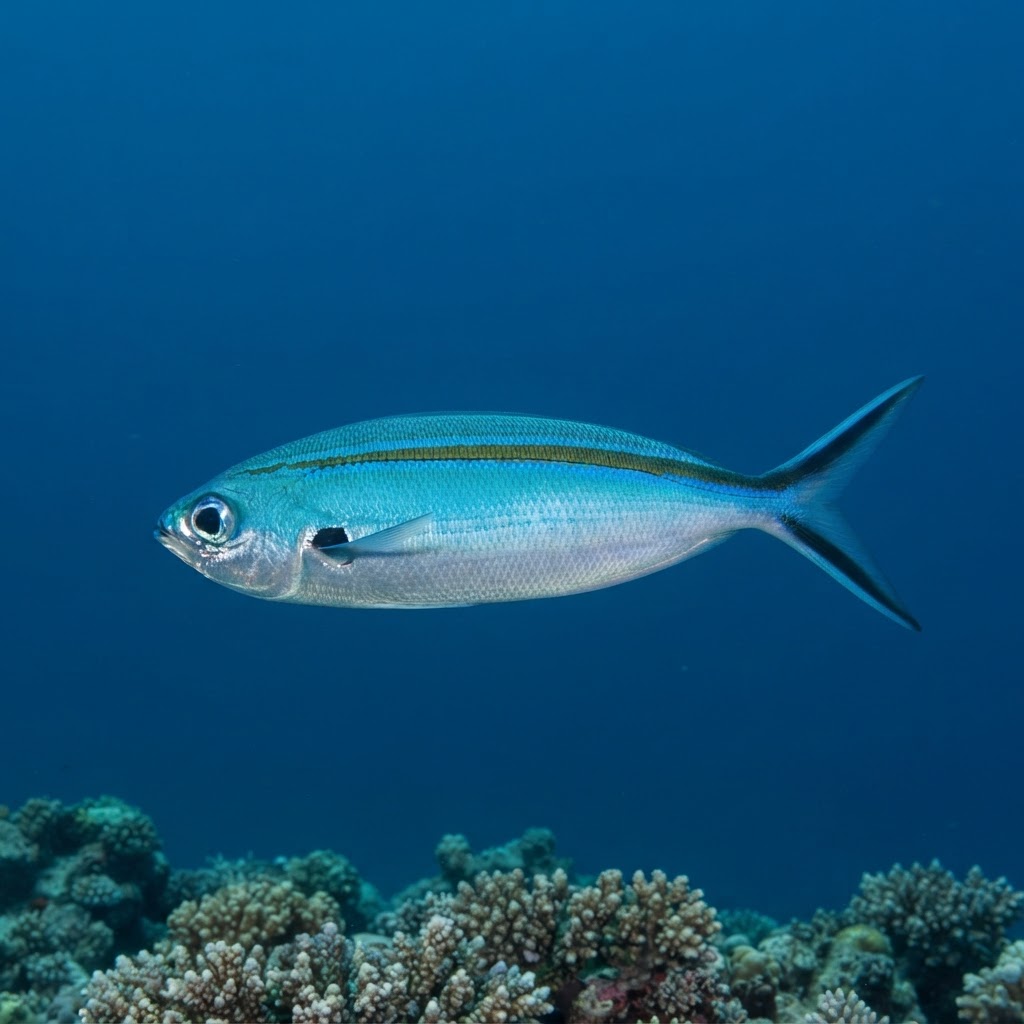
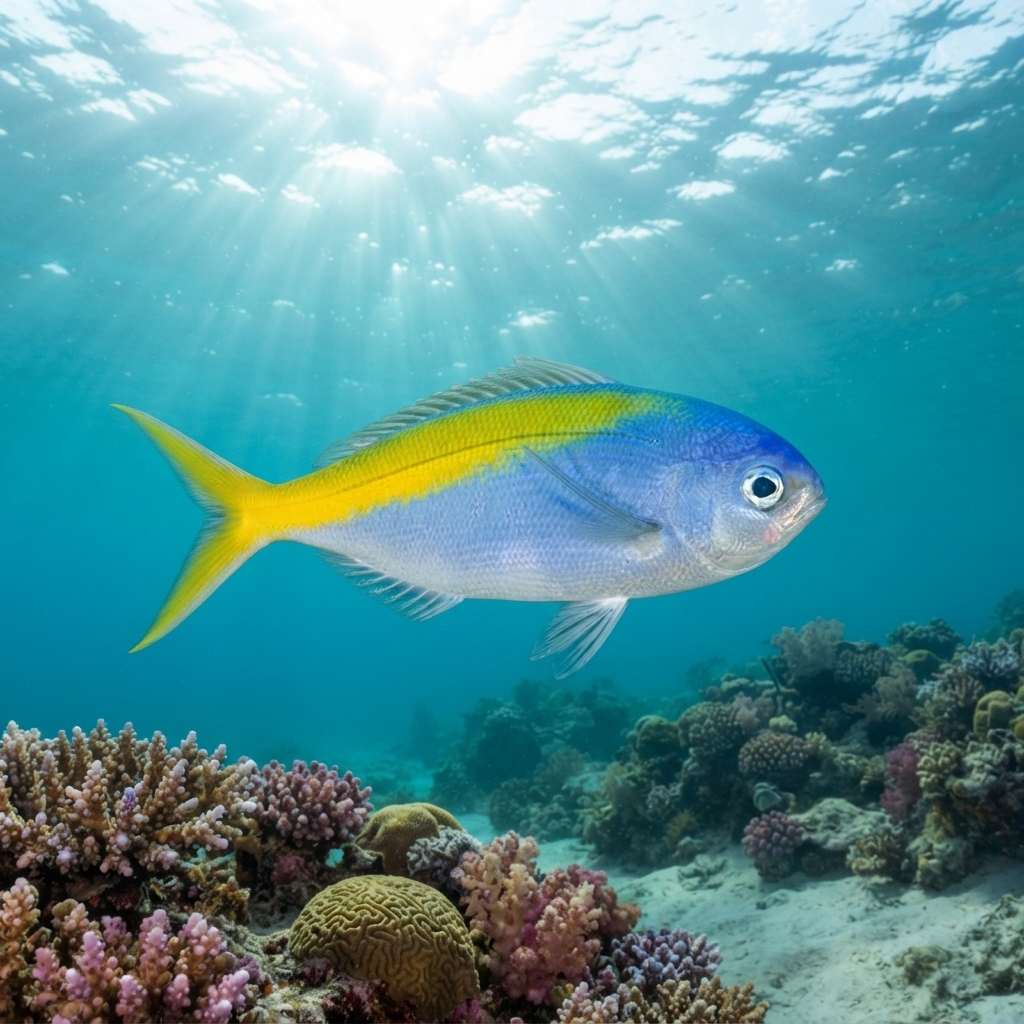
Slim, torpedo-shaped body around 35 cm long, with a deep blue to grey-blue back that fades to silvery-white below. The tail and rear third of the body are washed bright yellow, giving the species its name and the easiest field mark from below or behind. It swims in loose midwater groups rather than hugging the reef, with a forked tail and streamlined shape built for open water.
Typically seen hovering or cruising in loose midwater groups above reef structure rather than sheltering in crevices, feeding on drifting plankton as it goes. It tends to keep some distance from divers, drifting off rather than fleeing outright, so a slow approach and a bit of patience in open water above the reef is the best way to get a proper look.
As a fusilier it feeds mainly on plankton picked from the water column, which is why you'll find it hanging in open water over the reef rather than picking at the substrate like many of its snapper relatives.
Sighting data shows no clear seasonal pattern, and its comfort range of roughly 20 to 28 C spans both cooler temperate and warm tropical conditions, so it's worth looking for year-round.
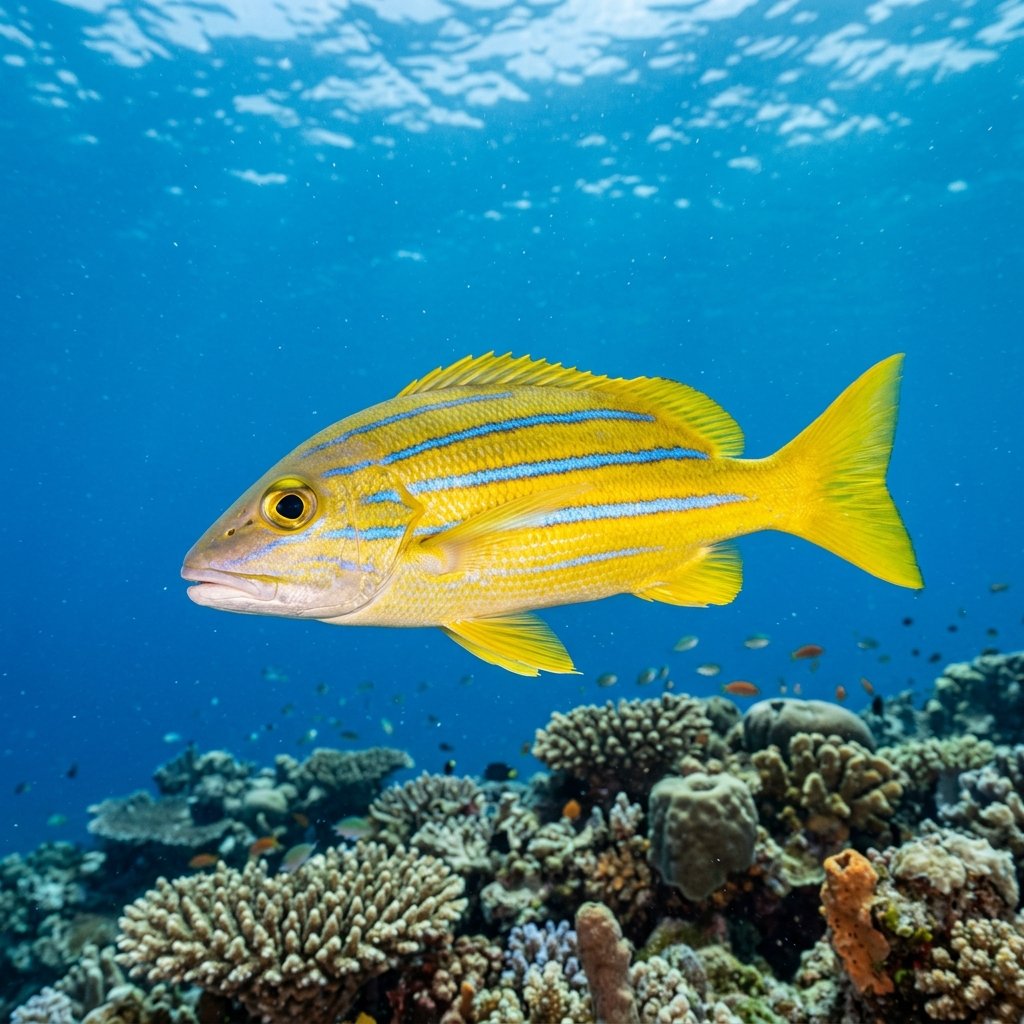
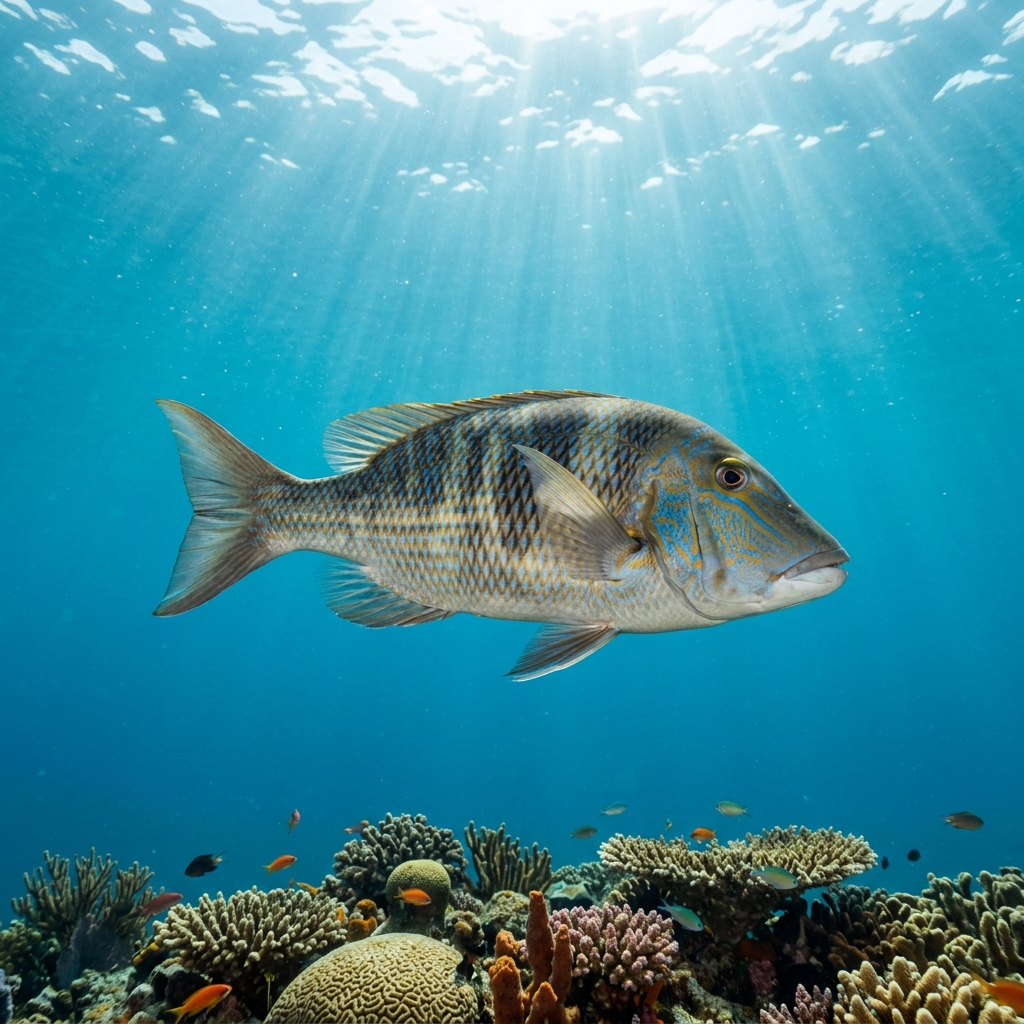
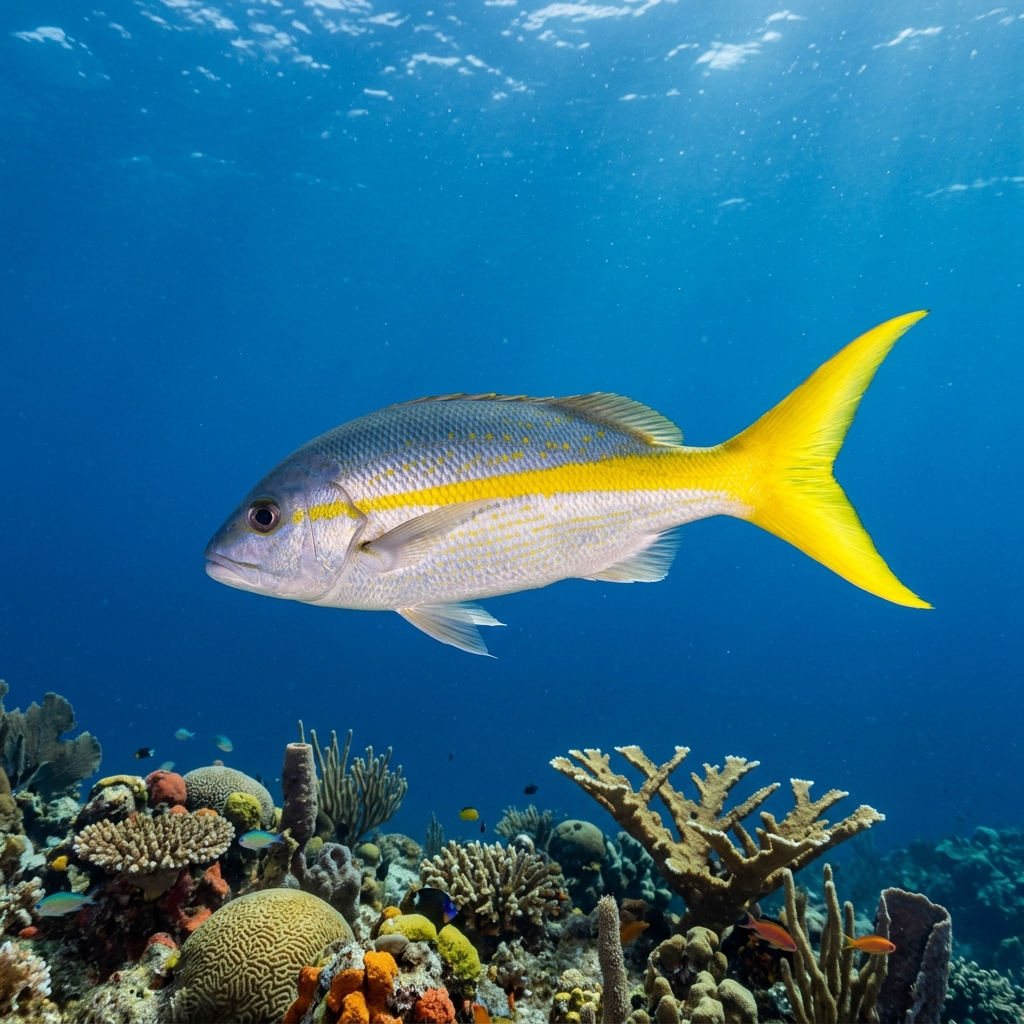
Reef neighbours a diver could mistake it for. Use the identification notes above to tell them apart.
Most reliably logged around New South Wales, Australia, where it turns up at a broad spread of temperate reef sites, with additional sightings off Bali, Indonesia. Divers in NSW have the strongest odds of a sighting, though it's still logged as uncommon at most of those sites rather than a guaranteed encounter.
Mapping where Yellowtail False Fusilier is logged…
New South Wales, Australia is the strongest region for this species, with sightings across a wide range of sites there. It has also been logged off Bali, Indonesia, though less frequently.
There's no detected seasonal pattern in sightings, so it's considered a year-round species. Its recorded temperature range of about 20 to 28 C covers both temperate and tropical conditions across the year.
Look for a slim, torpedo-shaped fish around 35 cm with a blue-grey back and a bright yellow tail and rear body. It's usually seen schooling loosely in midwater above the reef rather than resting on the bottom.
They typically reach around 35 cm in length, a mid-sized fusilier that's easy to spot in open water thanks to its streamlined shape and colour contrast.
No, they pose no threat to divers. They're plankton feeders that keep to open water and tend to move off rather than approach.
Site and sighting data is aggregated from diver logs, iNaturalist and GBIF. For taxonomy and conservation status:
Bluestriped Snapper
2,054 sites