Petroscirtes fallax
A small yellow blenny best found tucked into reef rubble around Queensland, in water from 22.6 to 29.3C, year-round.
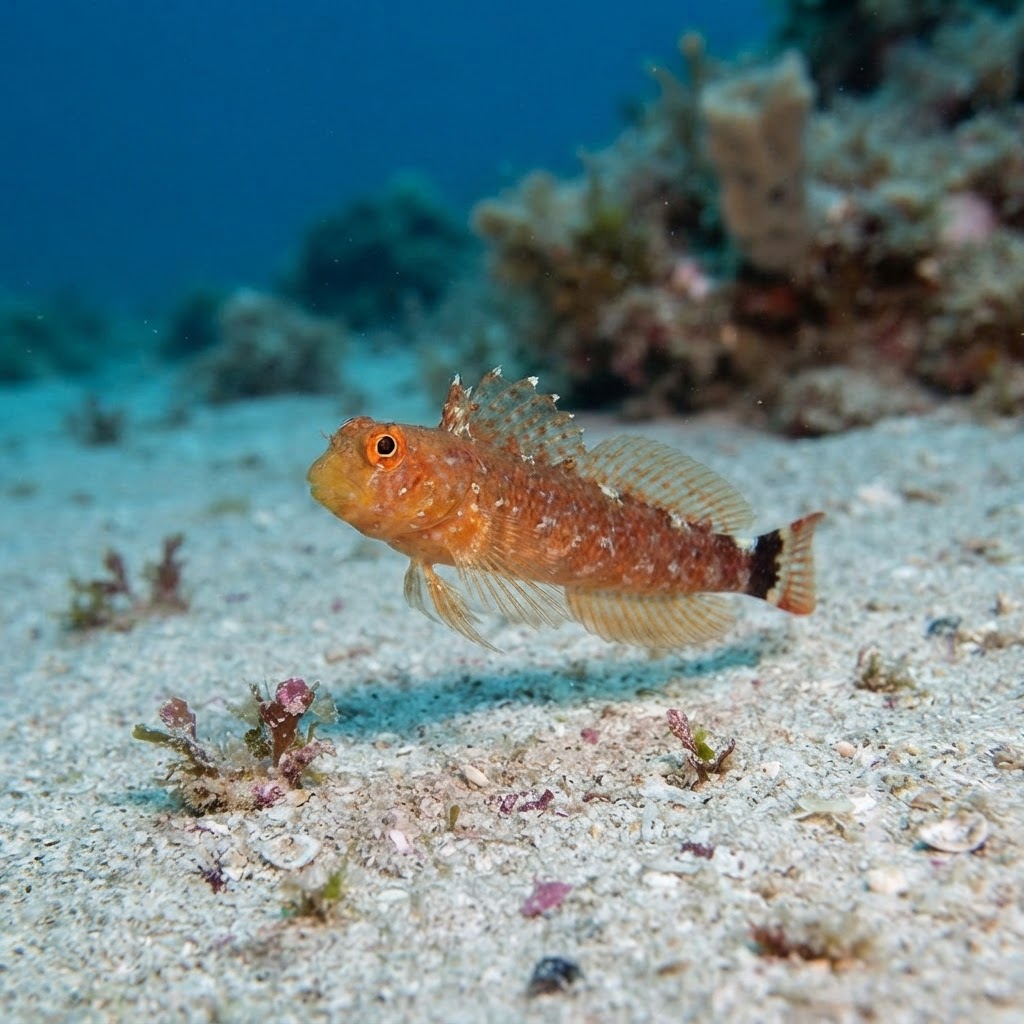
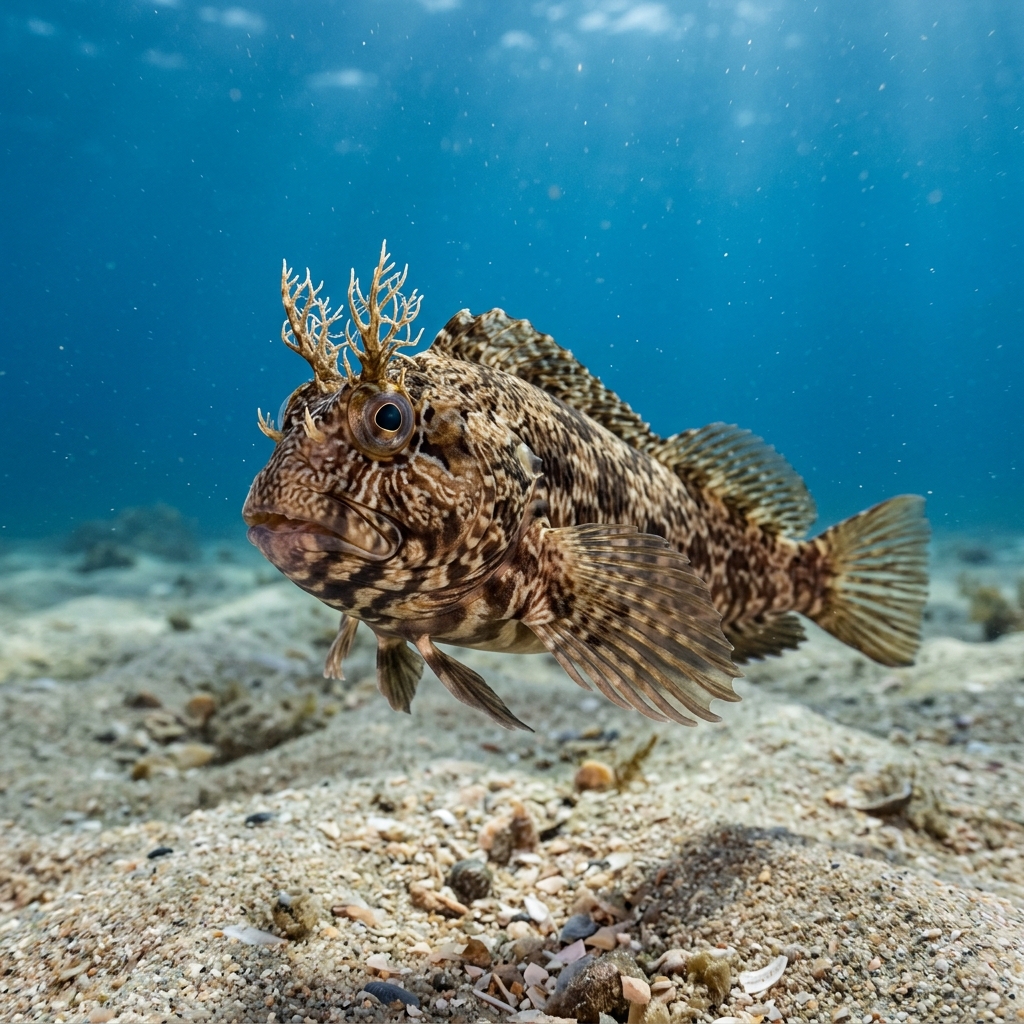
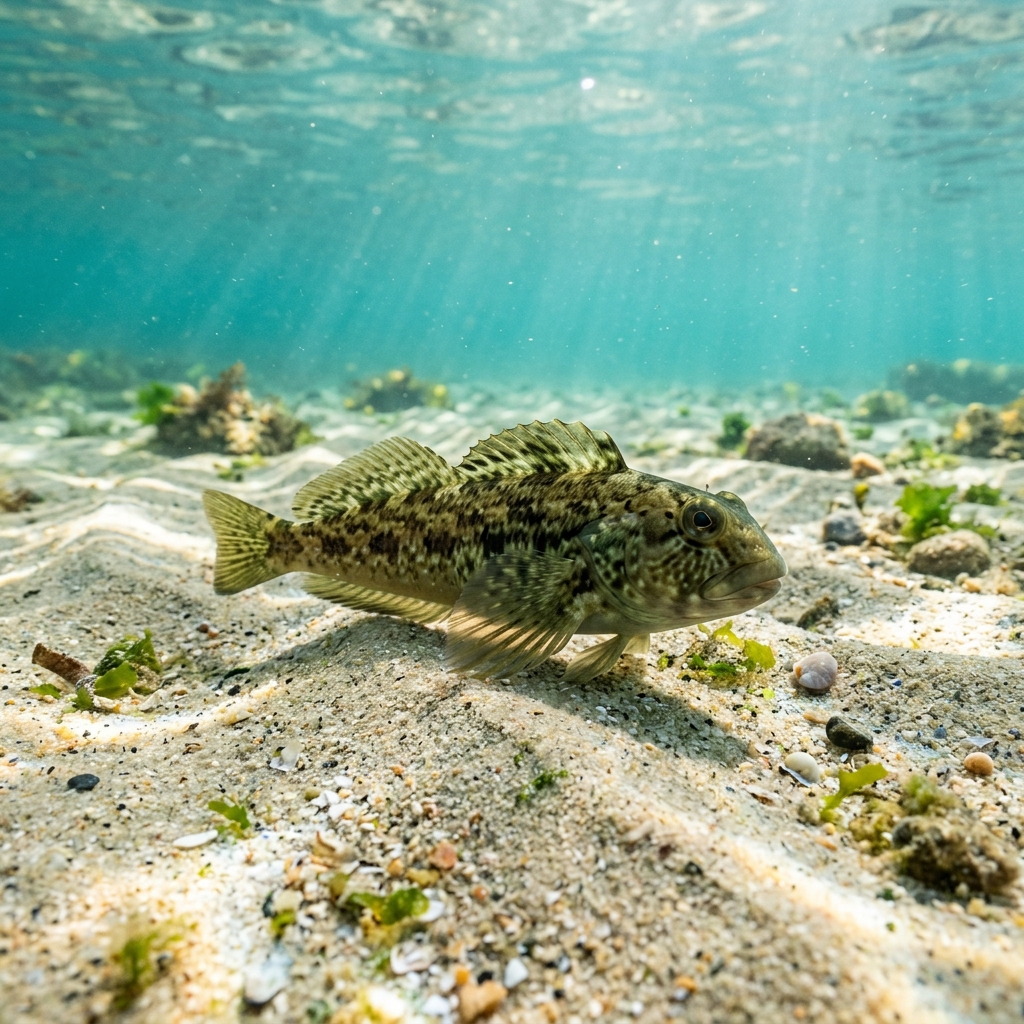
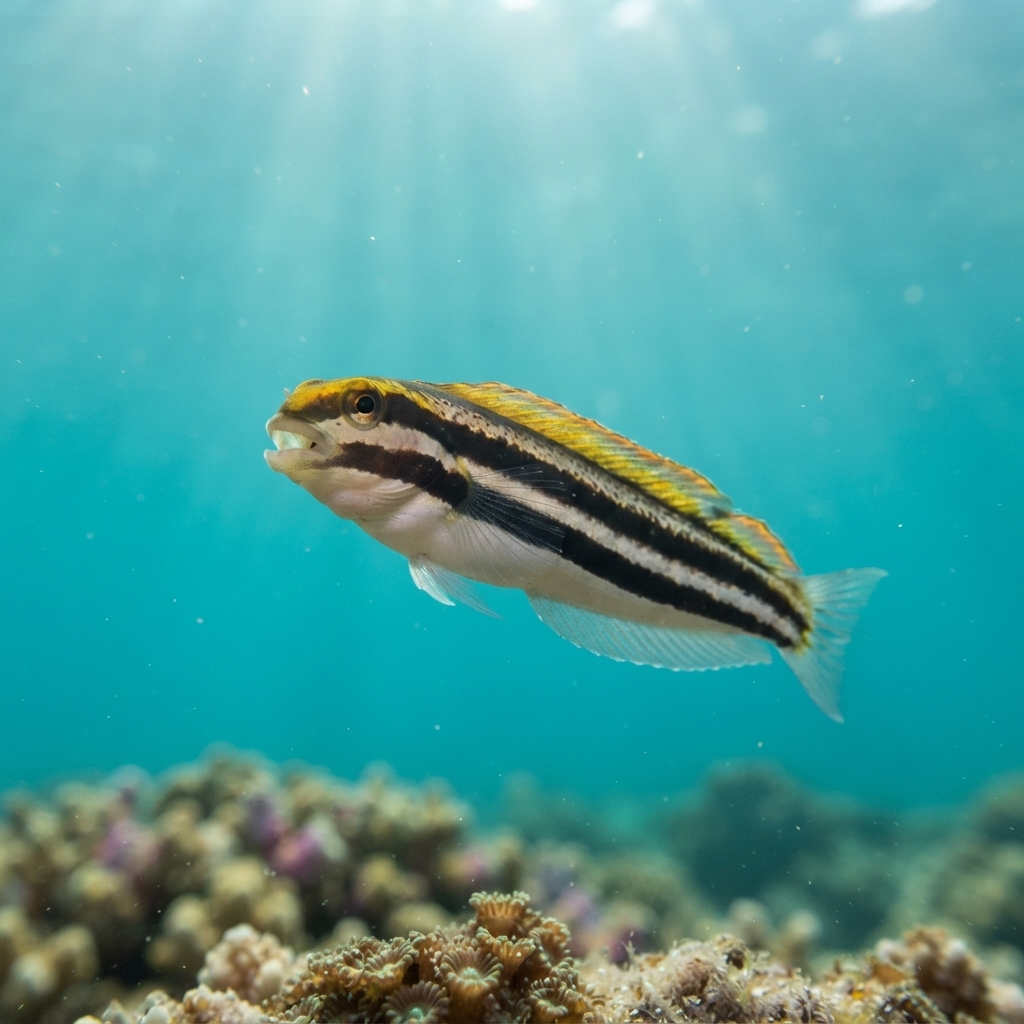
A tiny, elongated fish, around 7cm, with a soft yellow body that can shift toward olive or pale depending on the light and background. Look for the blunt head with large eyes set high, and the way it perches motionless on rubble or in small holes rather than swimming in open water. The face has a slightly puffed, blunt-nosed look typical of blennies, without obvious cirri (fleshy head tufts) or bright facial markings.
Spends most of its time sitting still on rubble, dead coral, or in small crevices, darting for cover rather than swimming off when a diver approaches. It is easy to miss unless you slow down and scan low sections of reef, since it relies on staying put and blending in rather than fleeing into open water. Most sightings come from divers working reef rubble patches close to the bottom rather than mid-water or wall dives.
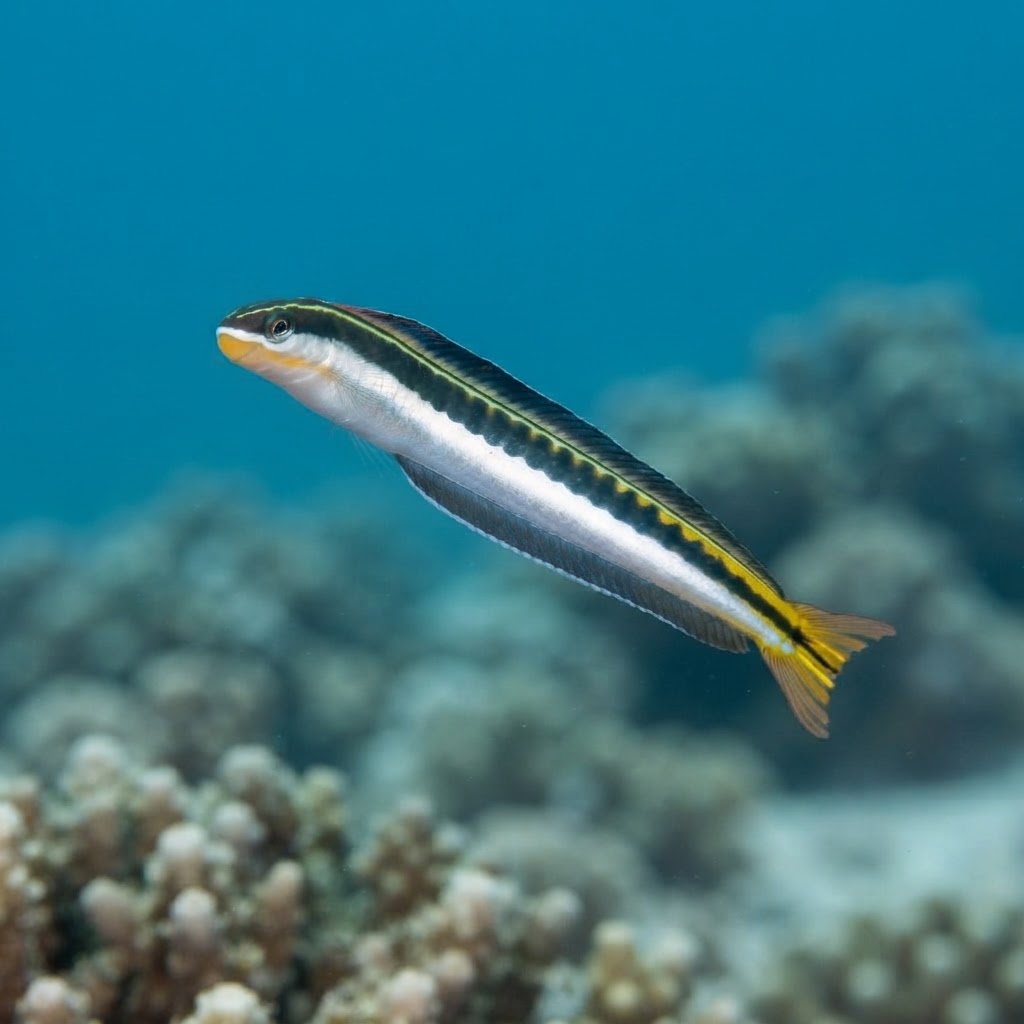
Blennies in this genus carry venom-loaded fangs in the lower jaw, a feature shared with mimic species that copy cleaner wrasse to get close to other fish, though this particular species is not a known mimic.
Recorded across a broad temperature range of 22.6 to 29.3C, with no clear seasonal pattern in the data, so treat it as a year-round sighting on Queensland and New South Wales reefs.
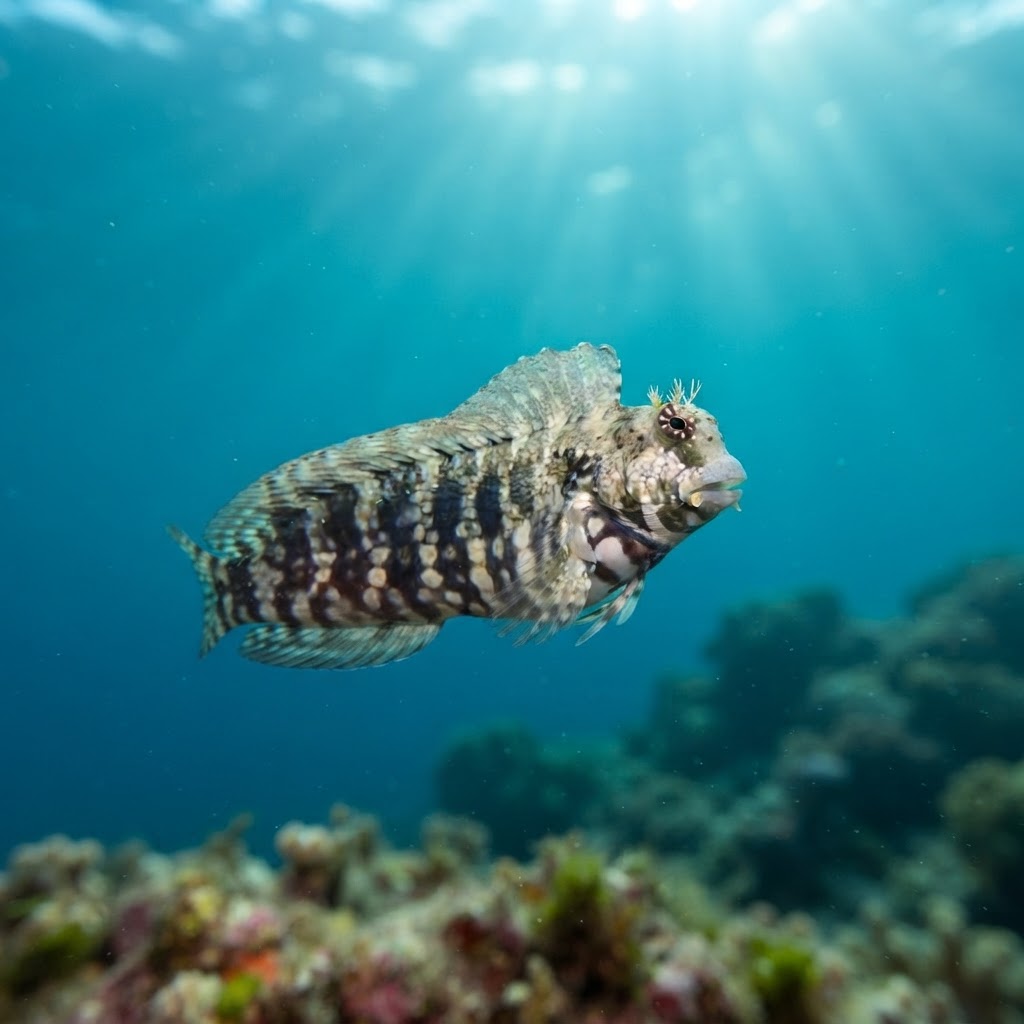
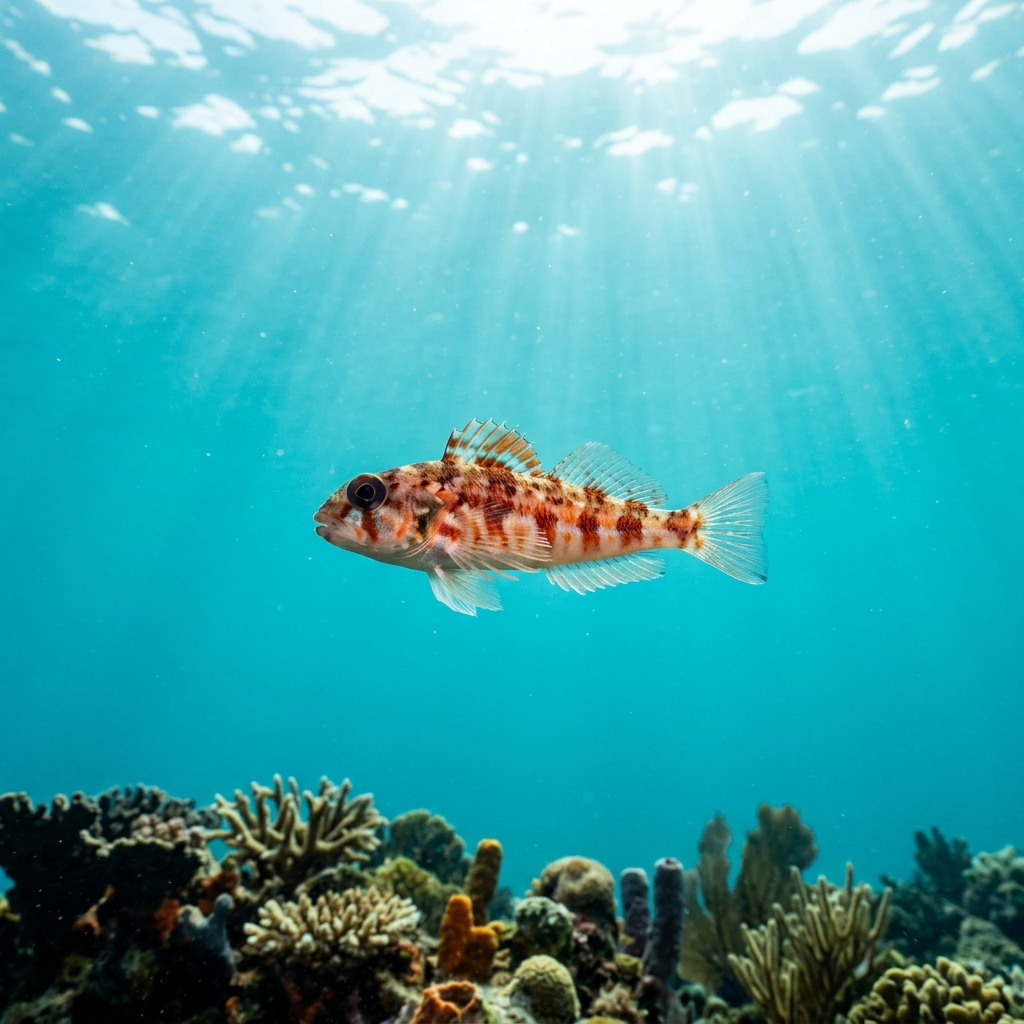
Reef neighbours a diver could mistake it for. Use the identification notes above to tell them apart.
Logged almost exclusively in Australia, with Queensland the strongest area for sightings and a smaller but reliable spread of records in New South Wales. Most reports come from reef and rubble sites rather than open water, so it is one to look for on a slower, close-focus dive rather than a big-animal drift.
Mapping where Yellow Sabretooth Blenny is logged…
Sightings are concentrated in Australia, most often in Queensland, with a smaller number of records from New South Wales. It tends to turn up on rubble patches and low reef structure rather than open sand or walls.
There is no strong seasonal pattern in the sighting data, and it has been recorded in water from 22.6 to 29.3C, so it is realistic to look for year-round on Queensland and New South Wales reefs.
Look for a small, soft-bodied yellow fish around 7cm long, perched still on rubble or tucked into a crevice rather than swimming freely. It has a blunt head, large high-set eyes, and lacks the bright facial patterns or long head tufts some other blennies show.
They stay small, typically around 7cm long, which is one reason they are easy to overlook on a reef unless you are looking closely at rubble and crevices.
No, they pose no danger to divers. They are small, non-aggressive fish that retreat into cover rather than approach.
Site and sighting data is aggregated from diver logs, iNaturalist and GBIF. For taxonomy and conservation status:
Rusty Blenny
2,605 sites