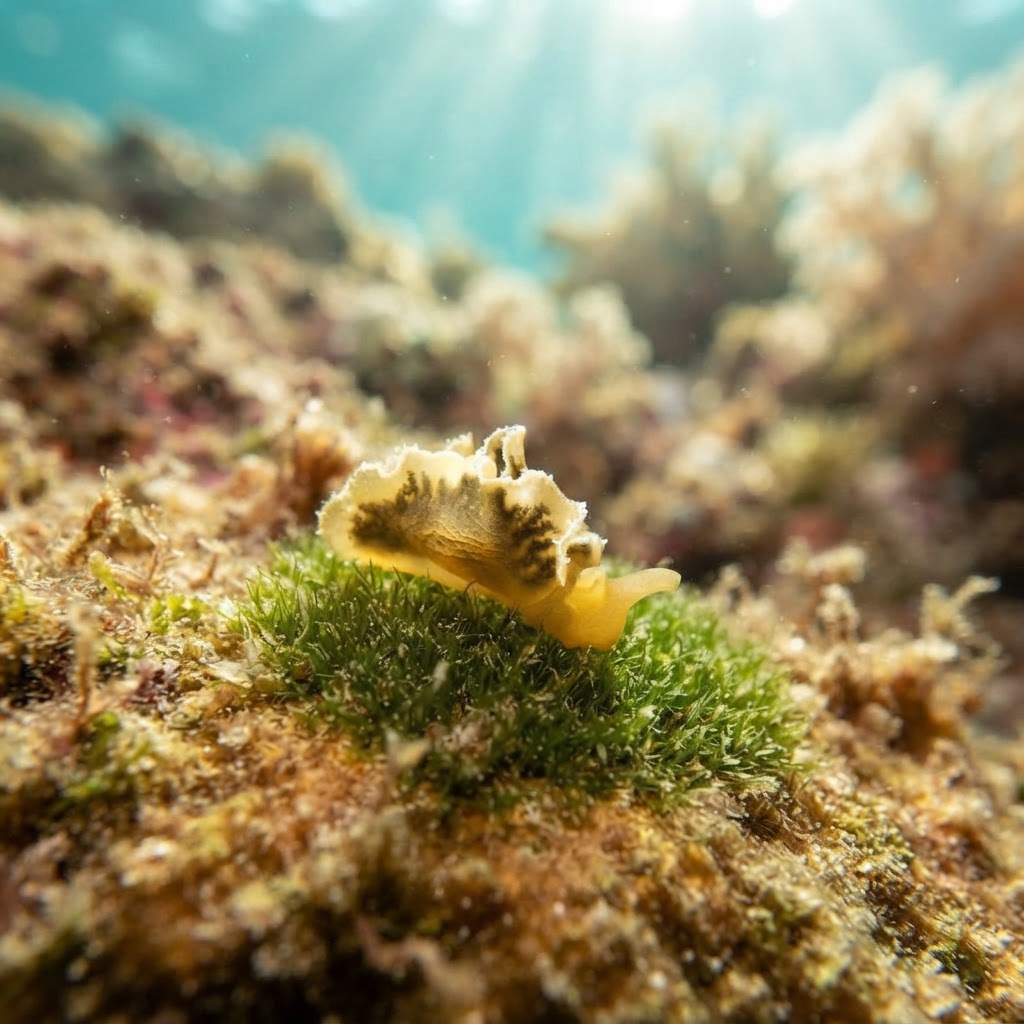
Elysia flava
A 1cm yellow sea slug most reliably found along Colombia's Caribbean Coast, in water around 25-31C, spotted year-round.
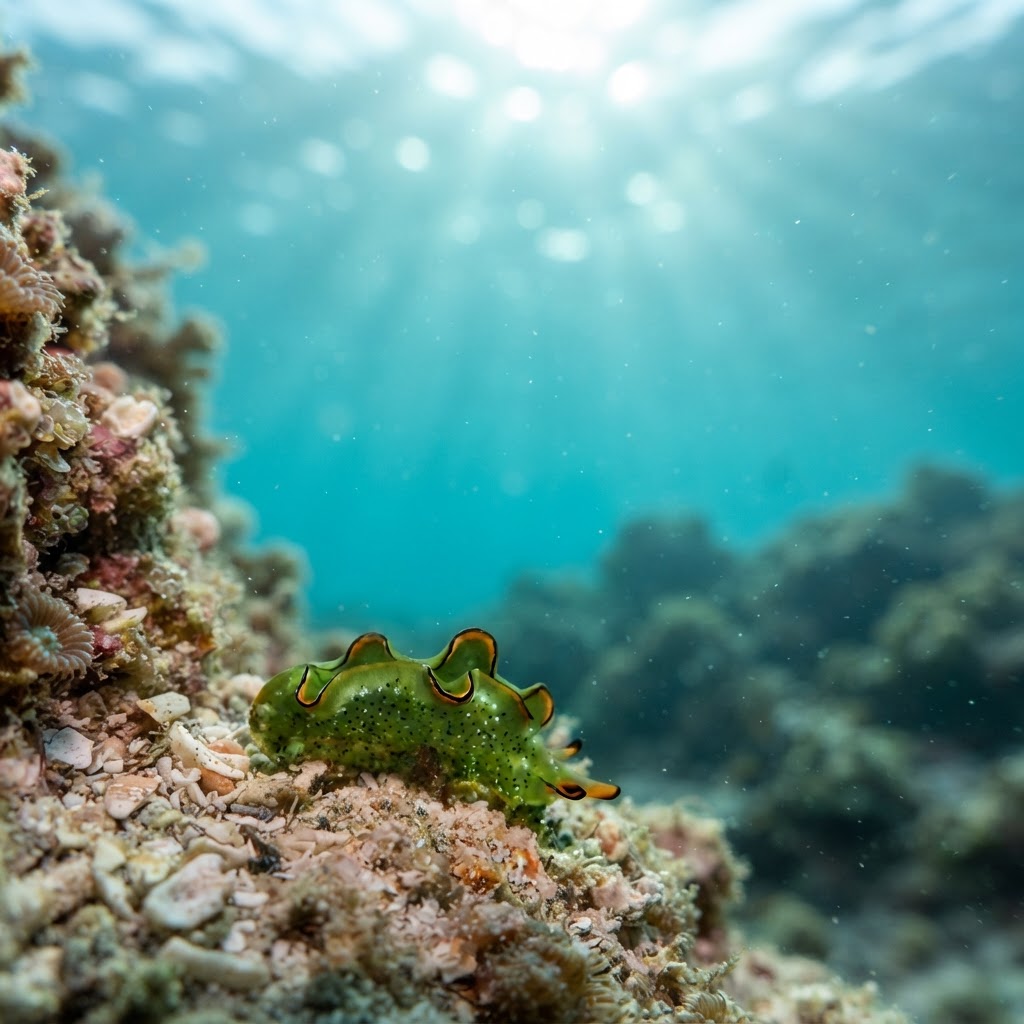
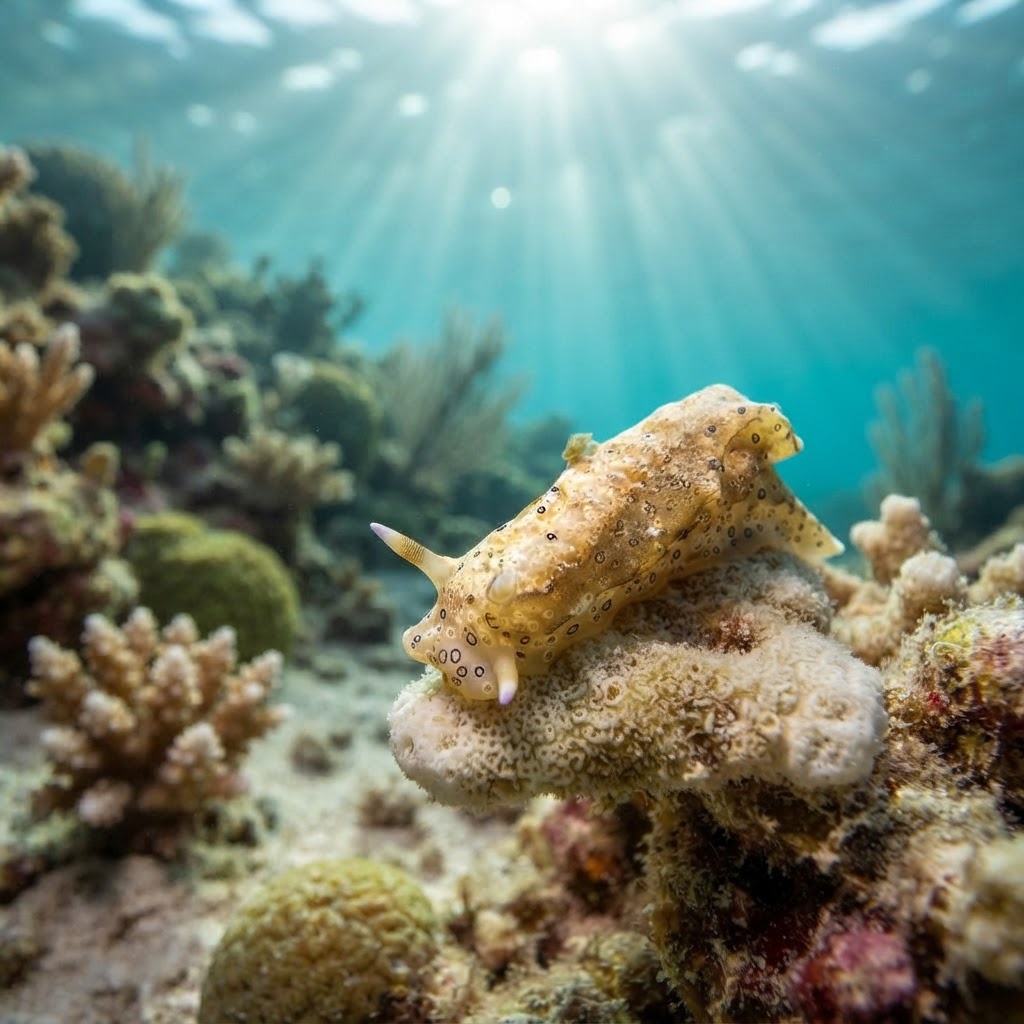
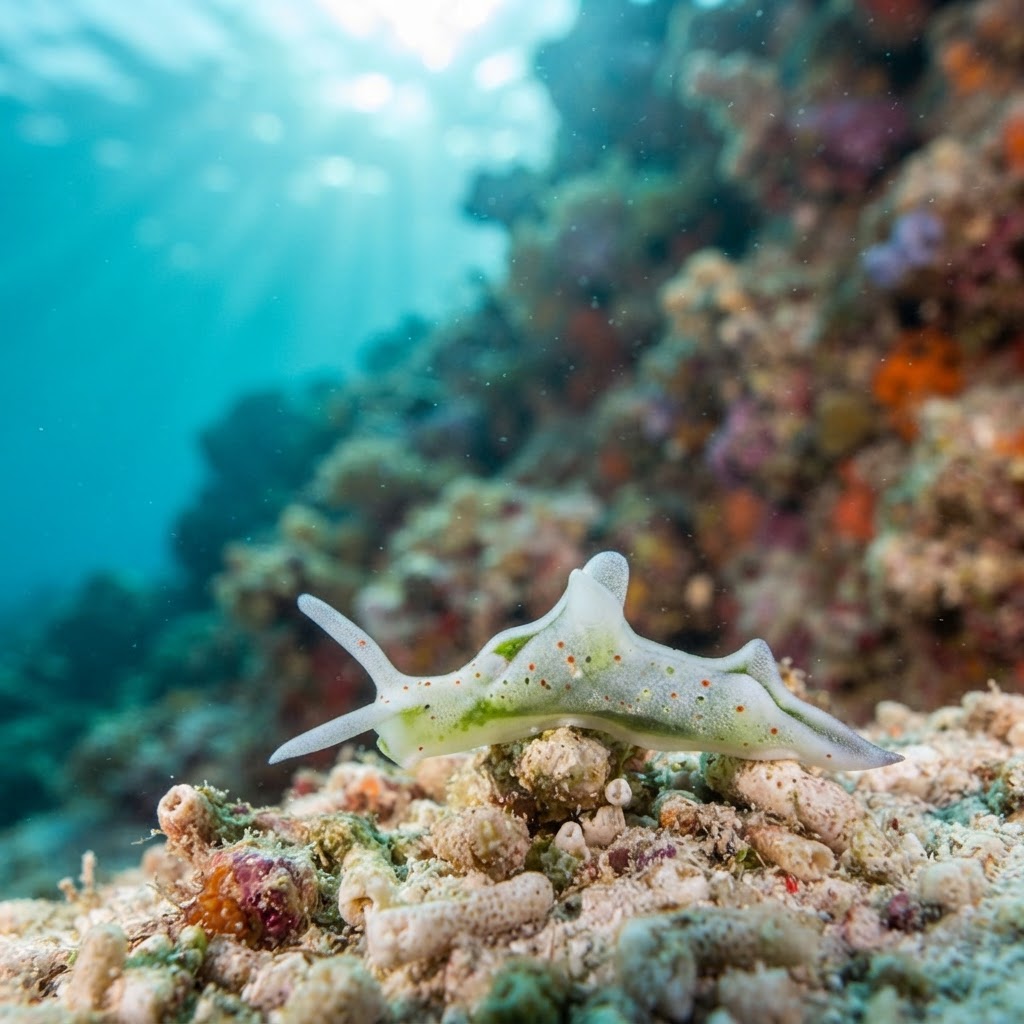
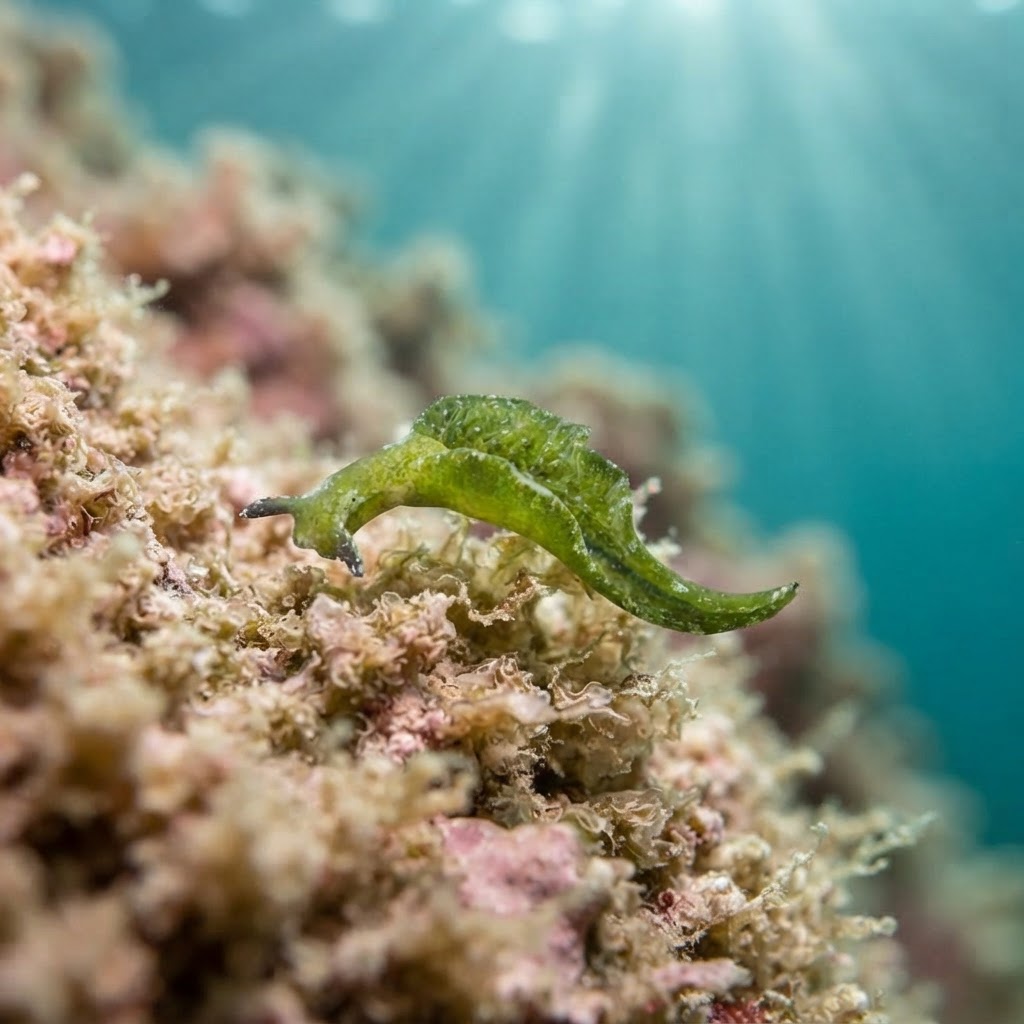
Look for a slug barely a centimetre long, coloured solid bright yellow with no strong contrasting bands or spots. Its body is flattened and leaf-like, with two rolled wing-like flaps (parapodia) running along its back that it can hold open or clamped shut over itself. There is no obvious shell; the whole animal reads as a small yellow smear against algae until you get your eyes close and steady.
Divers find it parked on algae mats or turf, moving slowly and rarely bothering to react to a torch or a close look. It's a grazer, so expect it stationary or inching along a single patch rather than covering open reef. Most sightings happen on slow, careful macro-focused dives where someone is already scanning algae for small stuff.
Like other members of its family, it likely practises kleptoplasty, storing living chloroplasts from the algae it eats in its own tissue and using them to photosynthesise for a while, effectively running on borrowed solar power between meals.
No clear seasonal pattern shows up in the data, so treat this as a year-round find. It's been logged in water from about 25 to 31C, comfortably warm Caribbean conditions that hold steady across the calendar.
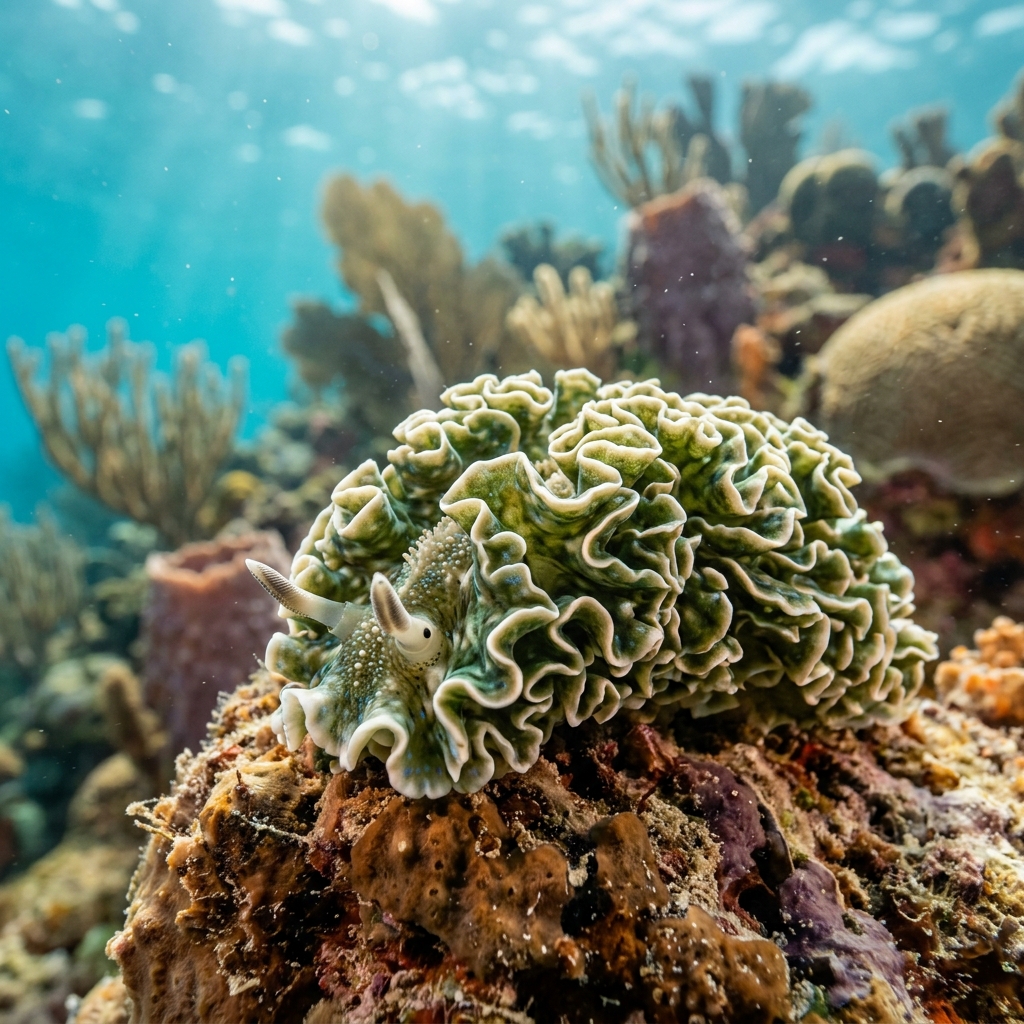
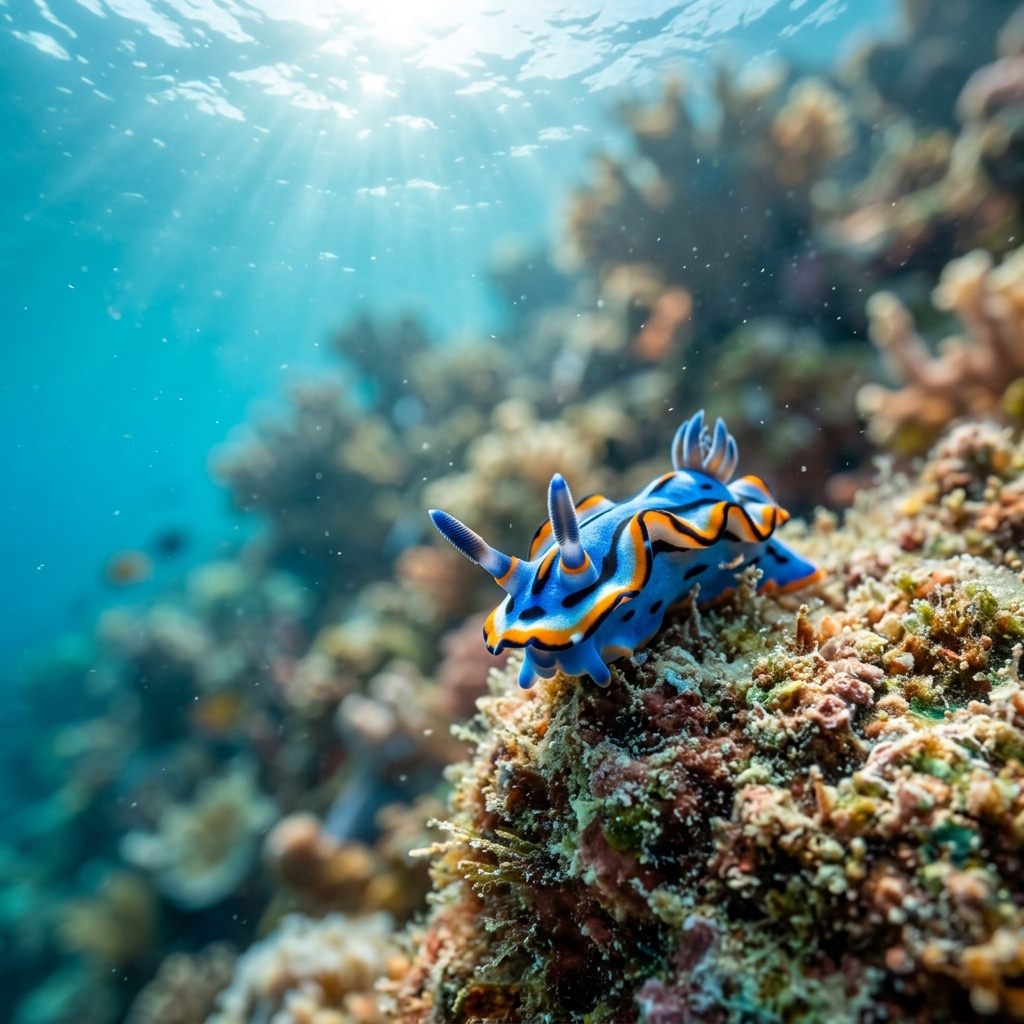
Reef neighbours a diver could mistake it for. Use the identification notes above to tell them apart.
This one is most reliably logged along Colombia's Caribbean Coast, where the vast majority of sightings come from, making it the strongest bet for a dedicated search. Guadeloupe is the other confirmed spot, with sightings spread across Basse-Terre, Iles des Saintes, and Grande-Terre.
Mapping where Yellow Elysia is logged…
Colombia's Caribbean Coast is by far the strongest area for sightings, with Guadeloupe's Basse-Terre and Iles des Saintes also producing repeat records.
There's no detected season in the sighting data, so it's considered a year-round find on warm Caribbean reefs between roughly 25 and 31C.
Around 1cm long, so it's a real macro find. Bring a torch and expect to search algae patches closely rather than spot it from a distance.
Solid bright yellow body under 1cm, flattened and leaf-shaped, with rolled parapodia along the back and no visible shell. It sits still on algae, which helps confirm the sighting.
Like related sap-sucking slugs, it likely holds onto living chloroplasts from the algae it feeds on and uses them to photosynthesise, essentially topping up energy from sunlight between meals.
Site and sighting data is aggregated from diver logs, iNaturalist and GBIF. For taxonomy and conservation status:
Elysia Timida
573 sites