Pomacentrus chrysurus
Small dark damselfish with a pale tail, common on shallow reefs in Koh Tao and the Maldives at 25.5 to 29.3 C year-round.
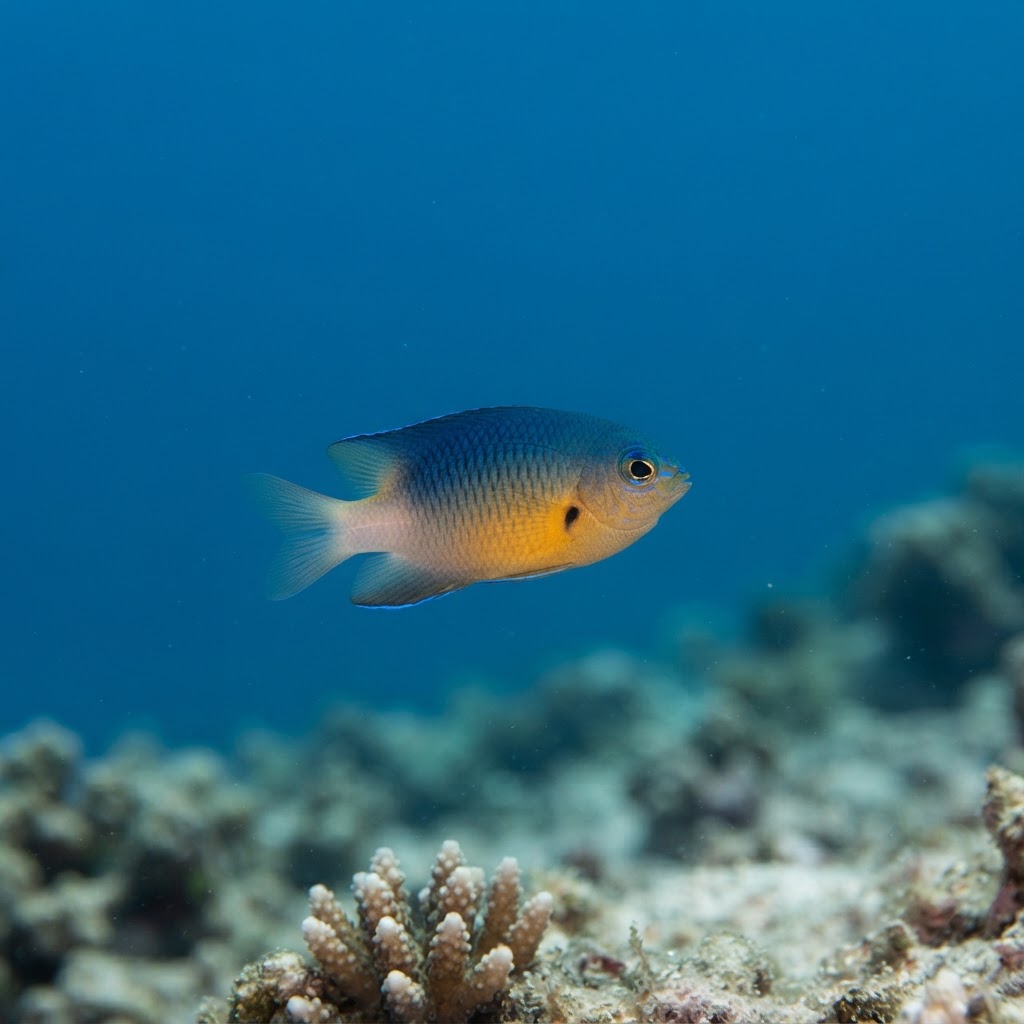
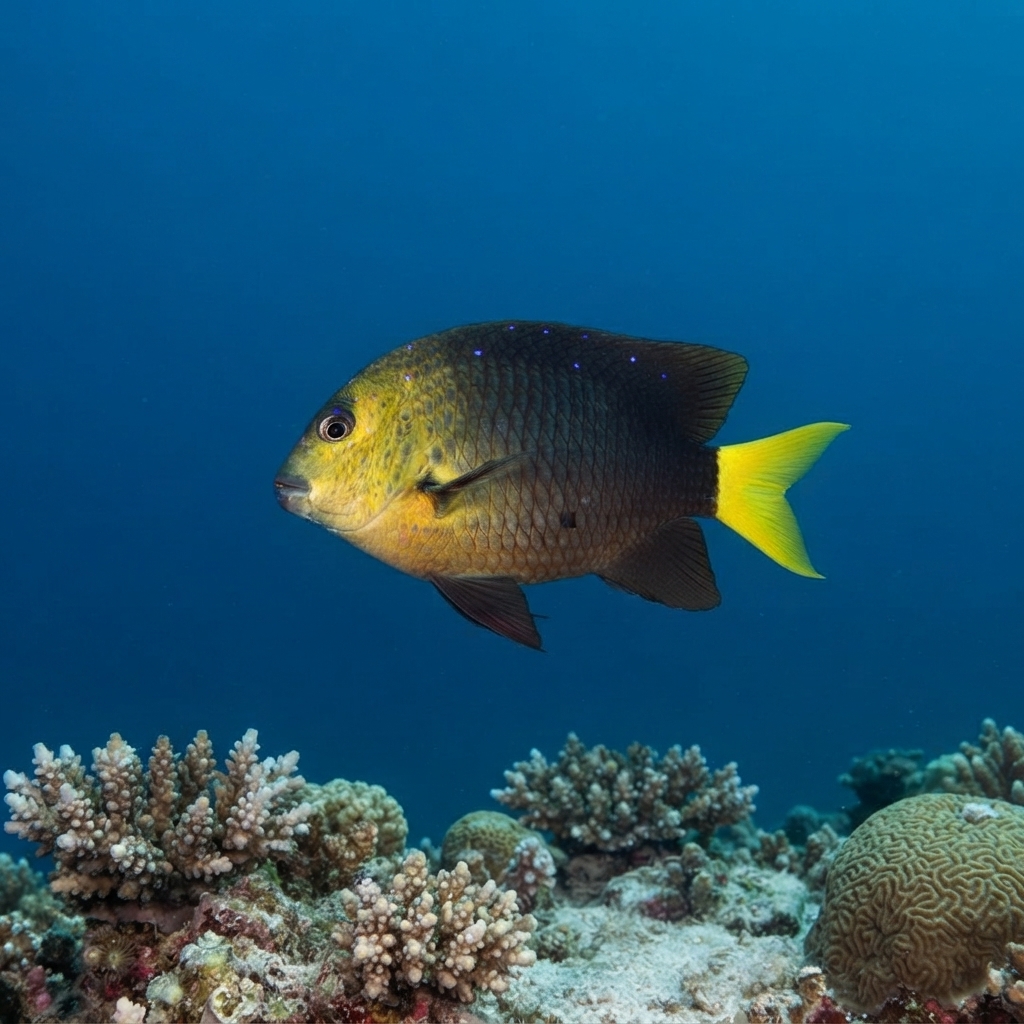
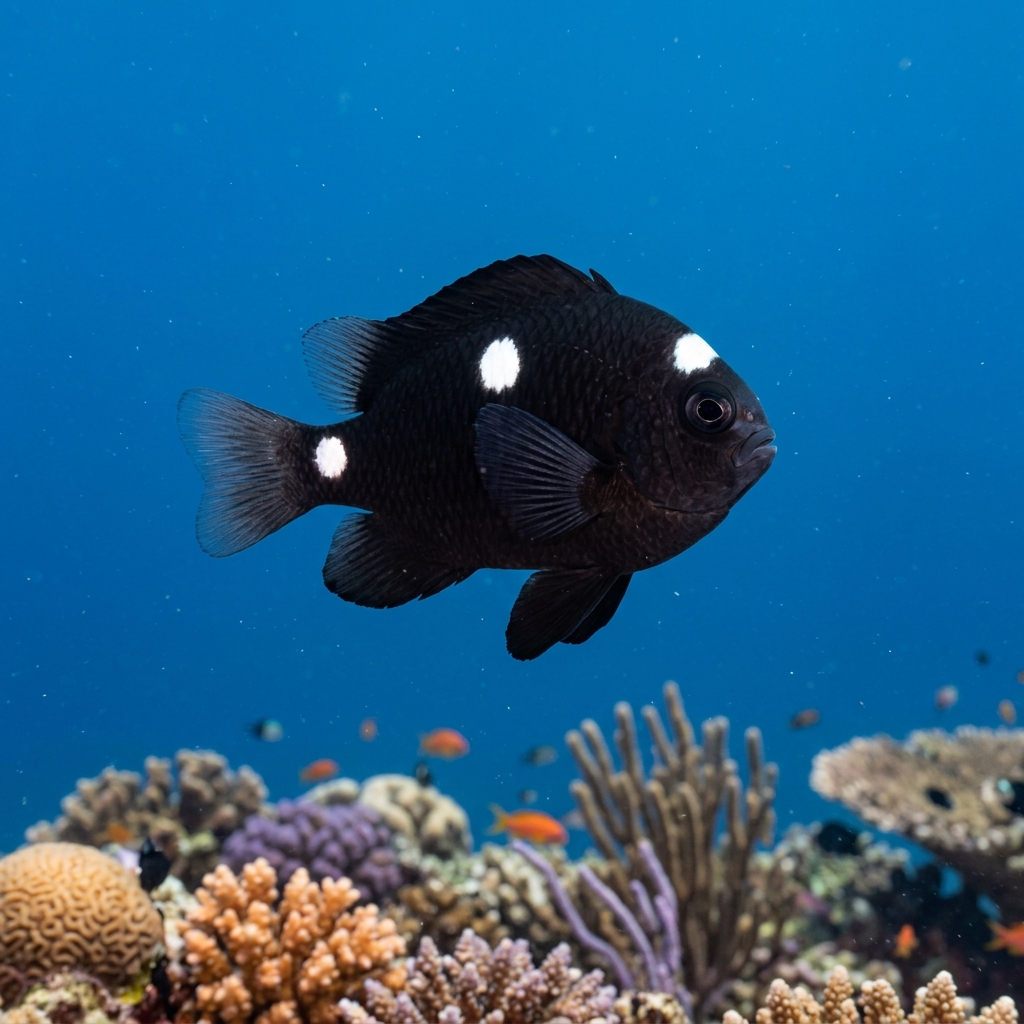
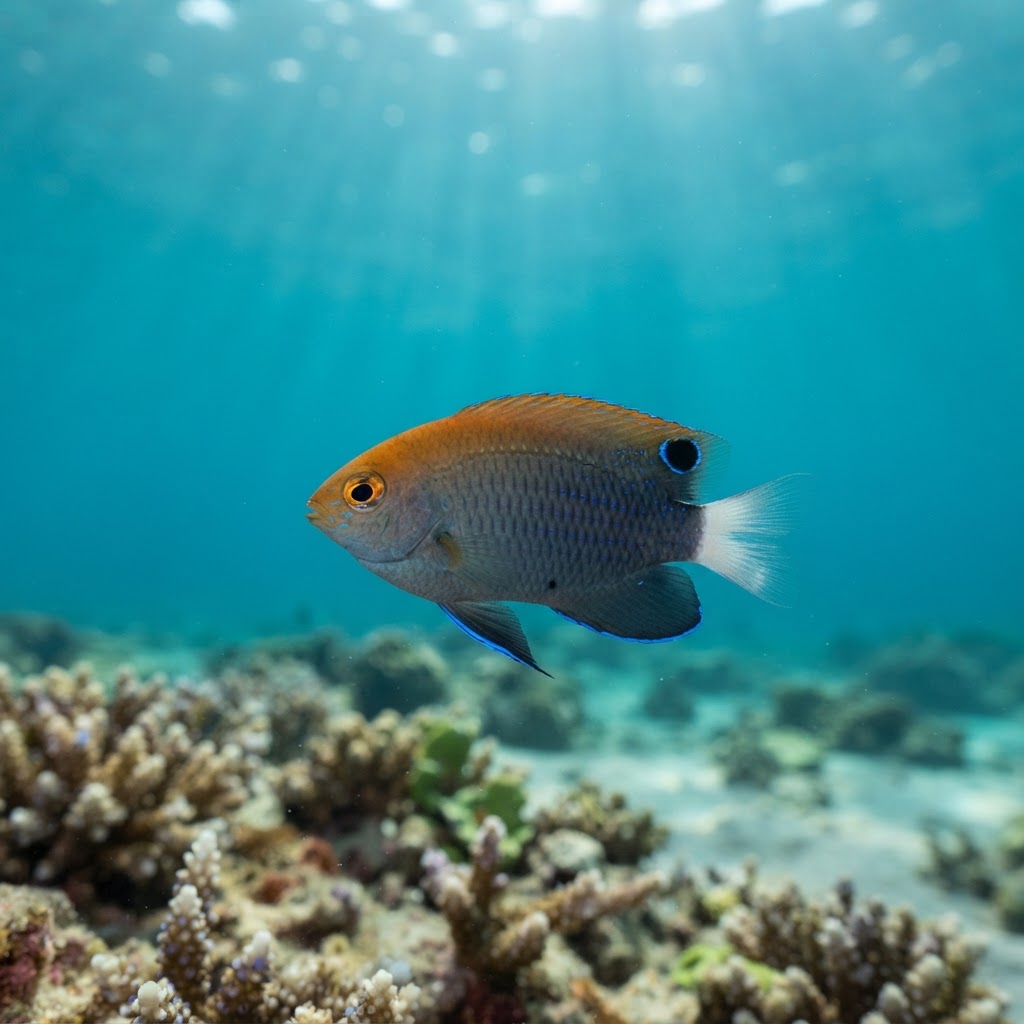
A small, deep-bodied damselfish around 6 cm, dark bluish-grey to blackish over most of the body with a clean pale to white tail that gives it its name. Look for the contrast right at the tail base, that's the single mark to key on against the many similar dark damsels on the same reef. It sits low over rubble and coral heads in shallow water, holding a fairly compact, alert posture rather than schooling in open water.
Usually seen hovering close to the reef in the first few metres of water, picking at algae and small invertebrates rather than chasing anything down. It holds its ground fairly well when divers approach, more likely to dart into a coral head than flee across open water. Most sightings are on shallow reef flats and slopes, the kind of terrain you drift over early in a dive before heading deeper.
Like most damselfish, it feeds by both grazing algae off the reef and picking zooplankton from the water column, making it one of the small omnivores that helps keep algal growth in check on shallow reef flats.
No clear seasonal pattern shows up in the sightings, and with a comfortable range of 25.5 to 29.3 C it's a fair bet on shallow tropical reefs any month you dive.
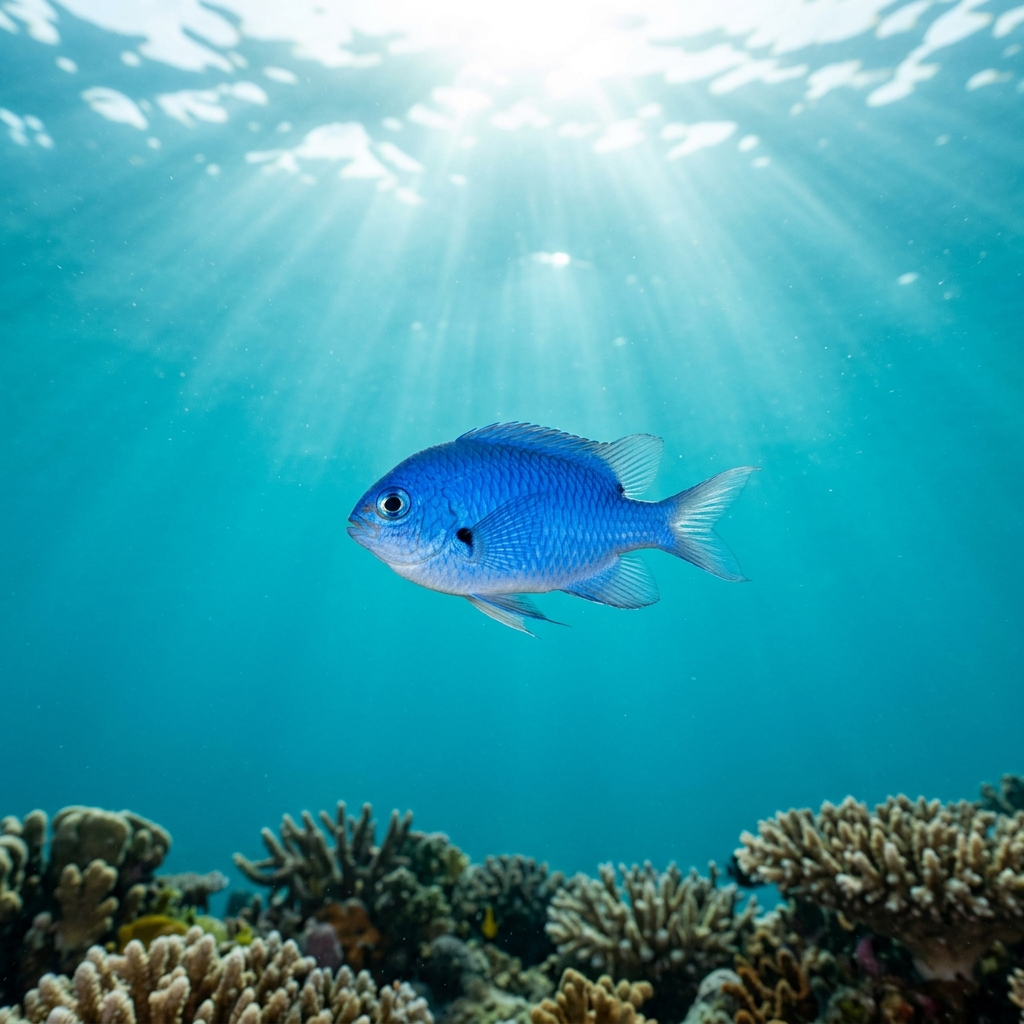
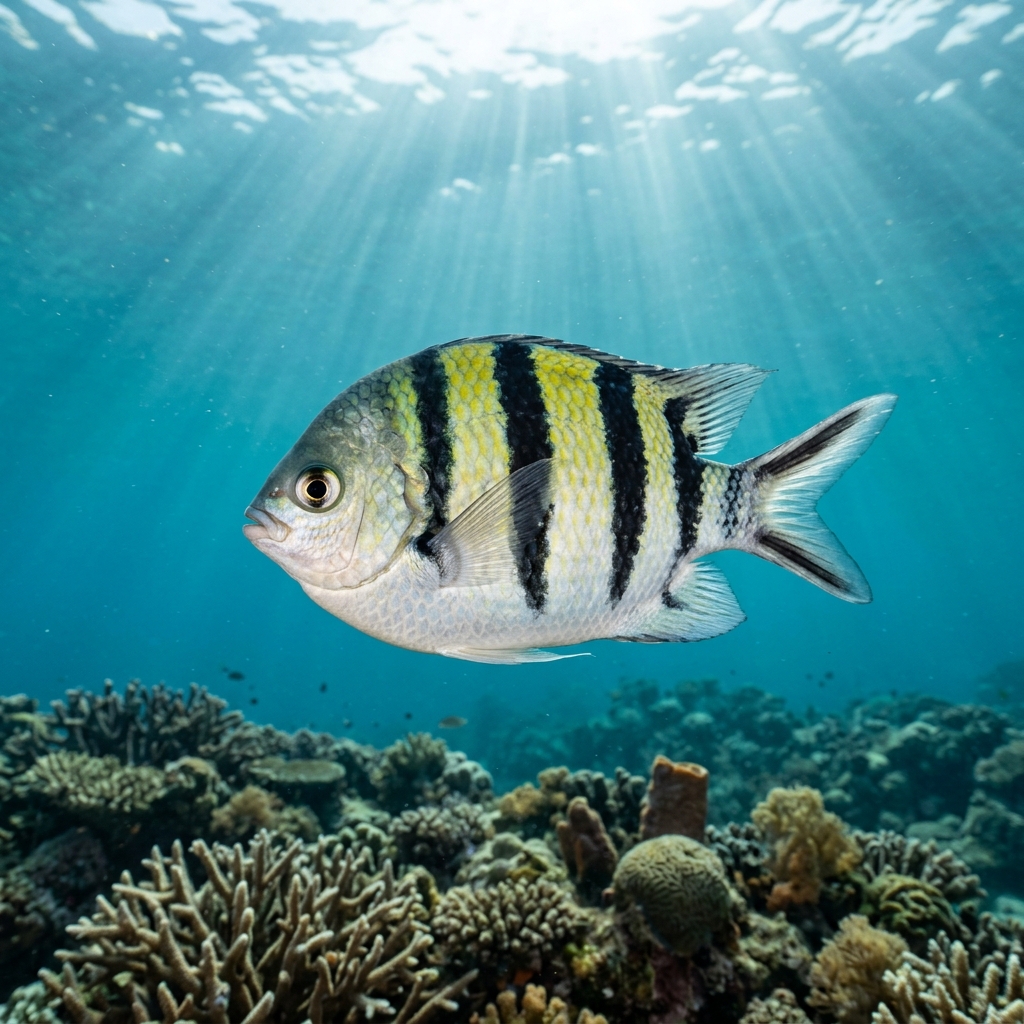
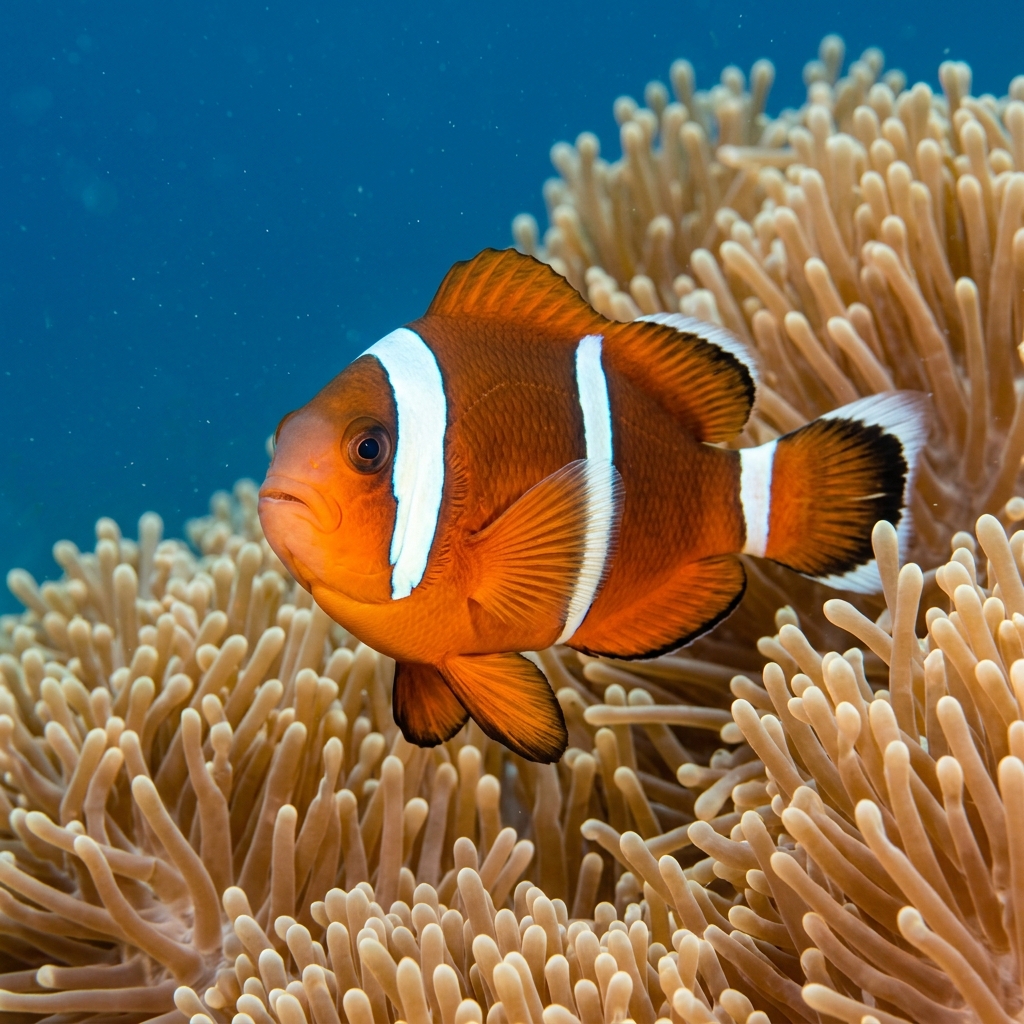
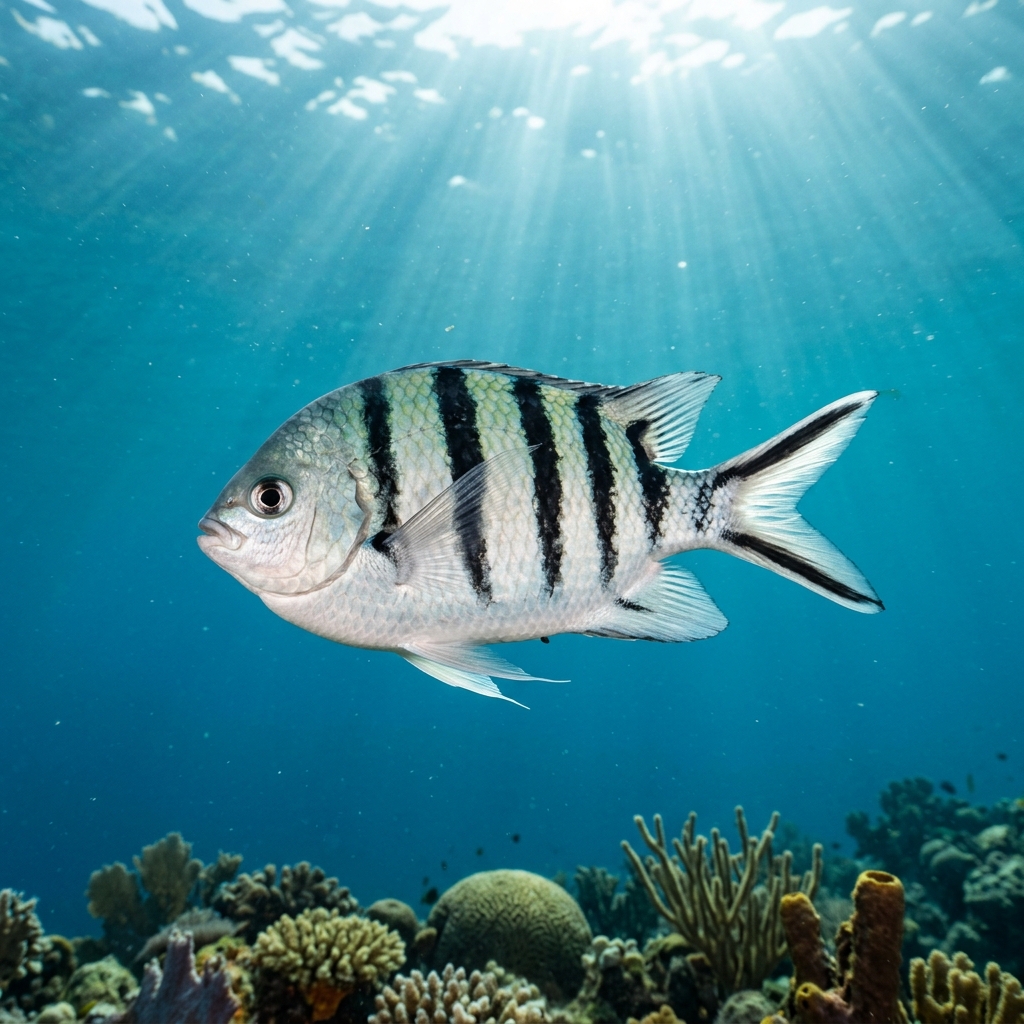
Reef neighbours a diver could mistake it for. Use the identification notes above to tell them apart.
Most reliably logged around Koh Tao and Koh Pha Ngan in Thailand, with strong numbers through the Central Atolls of the Maldives and the Andaman Islands in India. Smaller but real populations turn up around Nouméa in New Caledonia and Sai Kung in Hong Kong, with occasional sightings in Queensland, the Philippine Visayas, and Indonesia.
Mapping where Whitetail Damselfish is logged…
They're most commonly logged around Koh Tao and Koh Pha Ngan in Thailand, and in the Central Atolls of the Maldives. The Andaman Islands in India also produce regular sightings, with smaller numbers in New Caledonia and Hong Kong.
There's no strong seasonal pattern in the sightings, and they sit comfortably in water from 25.5 to 29.3 C, so they're a year-round fixture on the shallow reefs where they're found.
Look for a small, dark bluish-grey damselfish around 6 cm with a distinctly pale to white tail. It hovers low over shallow reef and rubble rather than schooling in open water.
They stay small, typically around 6 cm, which is standard for reef damselfish. You won't see one much bigger than that even on a healthy reef.
No, they pose no danger to divers. They're small, reef-associated fish that may hold their ground or dart into coral when approached, but there's nothing to worry about.
Site and sighting data is aggregated from diver logs, iNaturalist and GBIF. For taxonomy and conservation status:
Dascyllus
3,697 sites