Apogon lachneri
Small reef fish spotted around Sint Eustatius, Belize's Lighthouse Reef and Martinique's Saint-Pierre, comfortable in 24.5 to 27.8 C year-round.
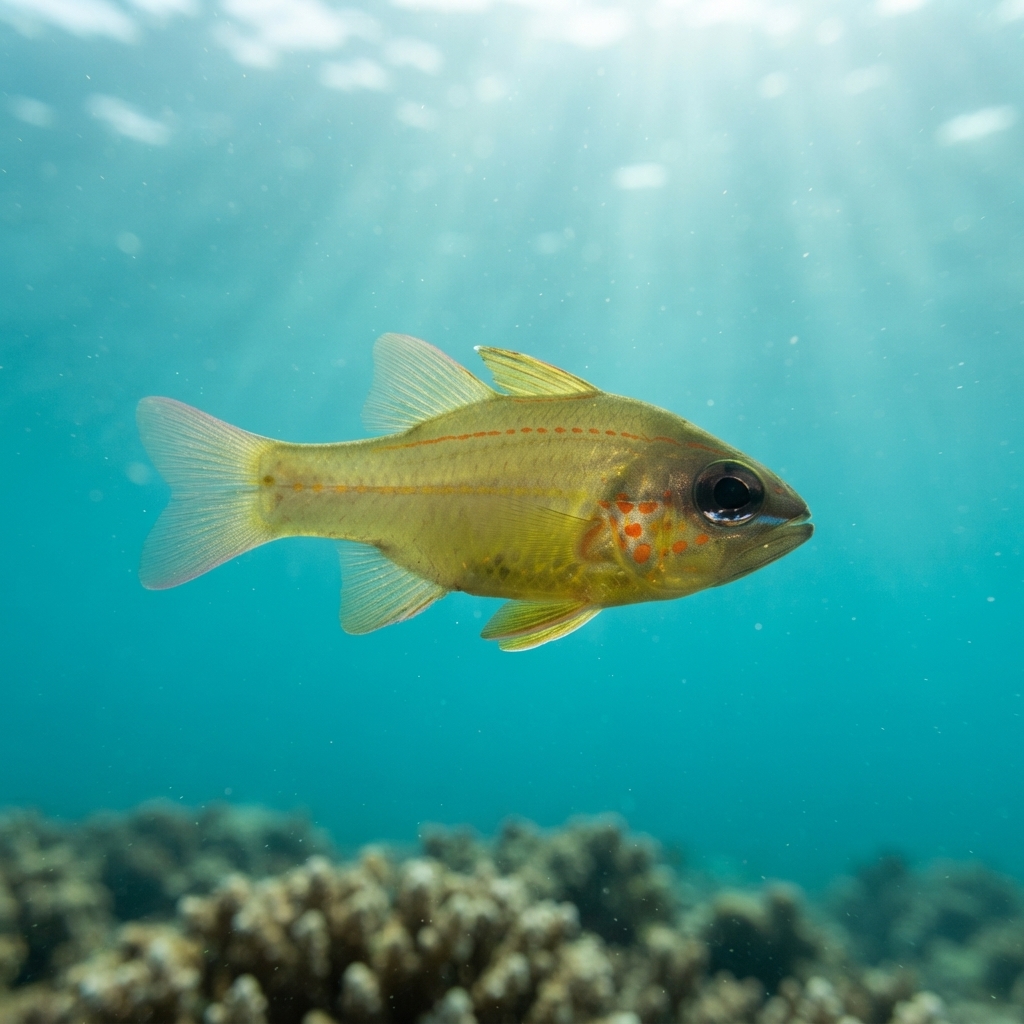
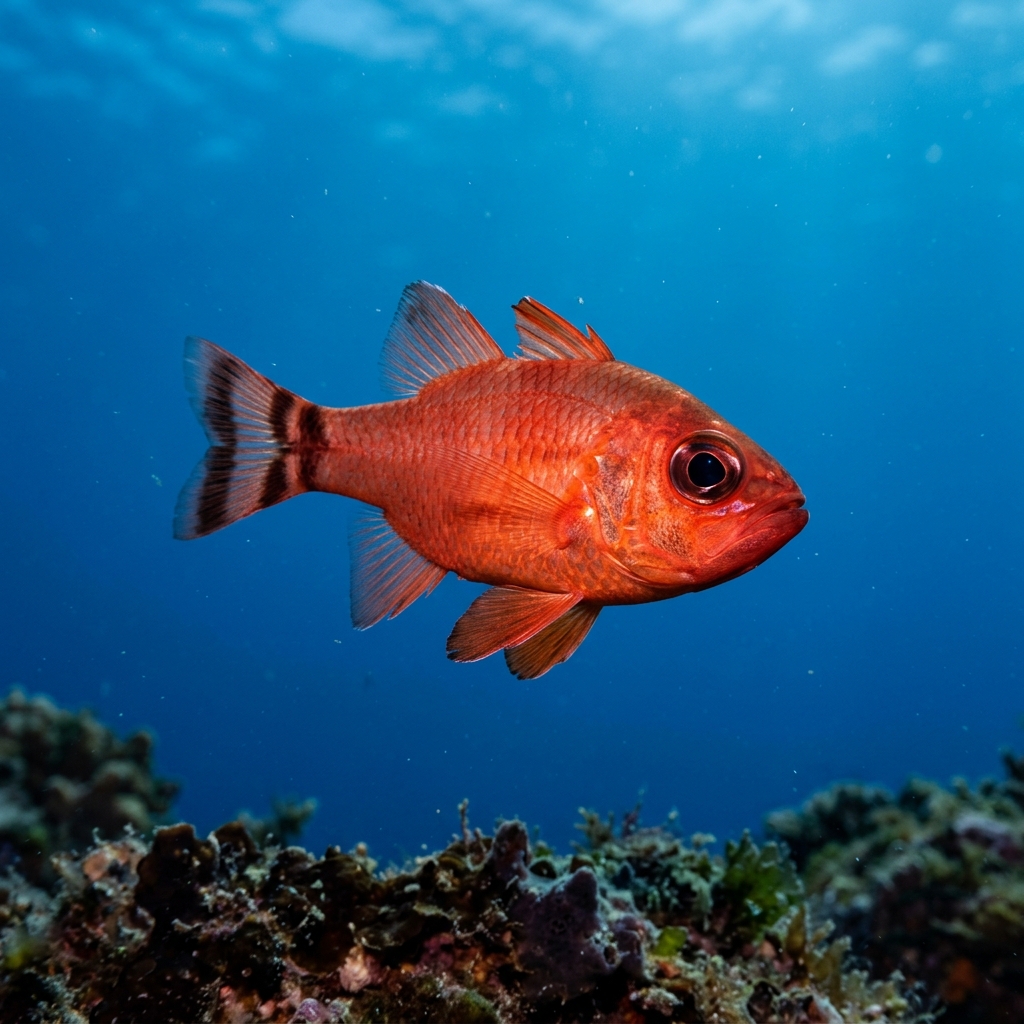
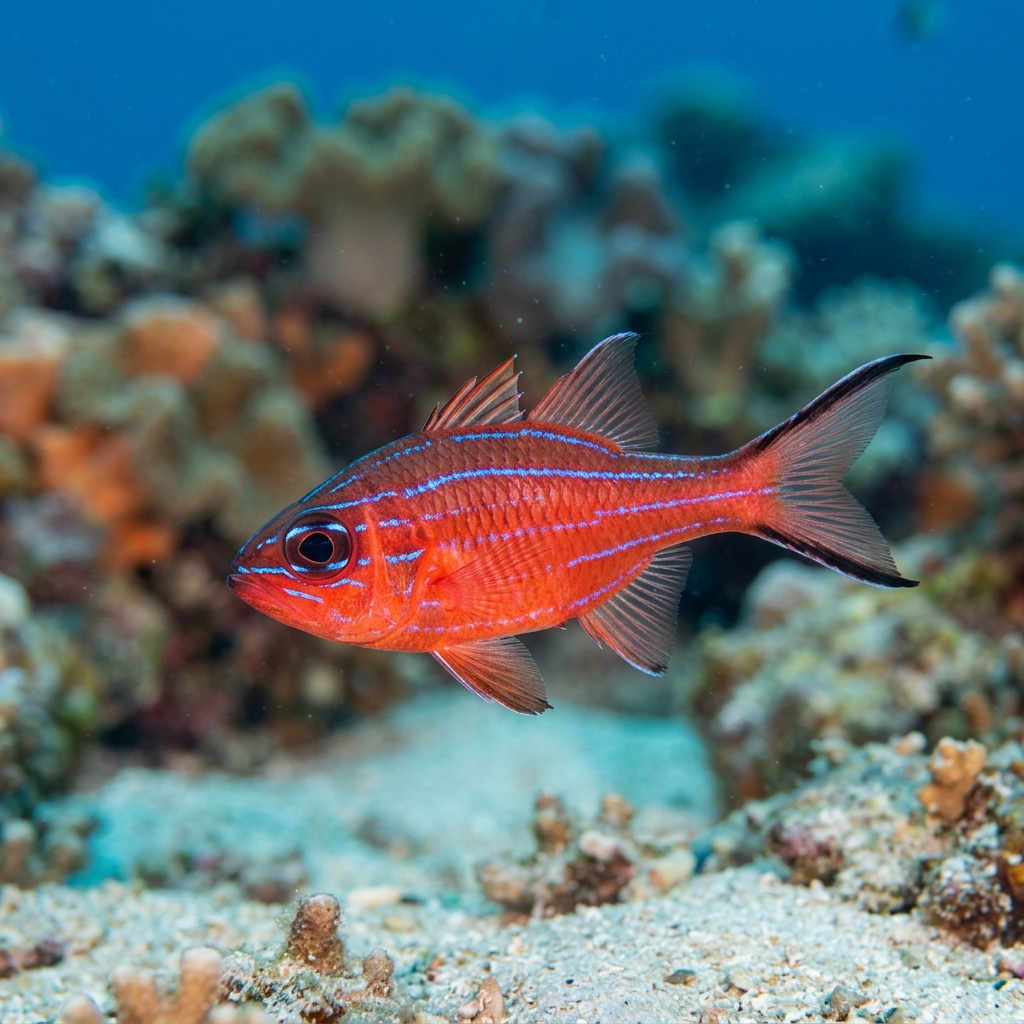
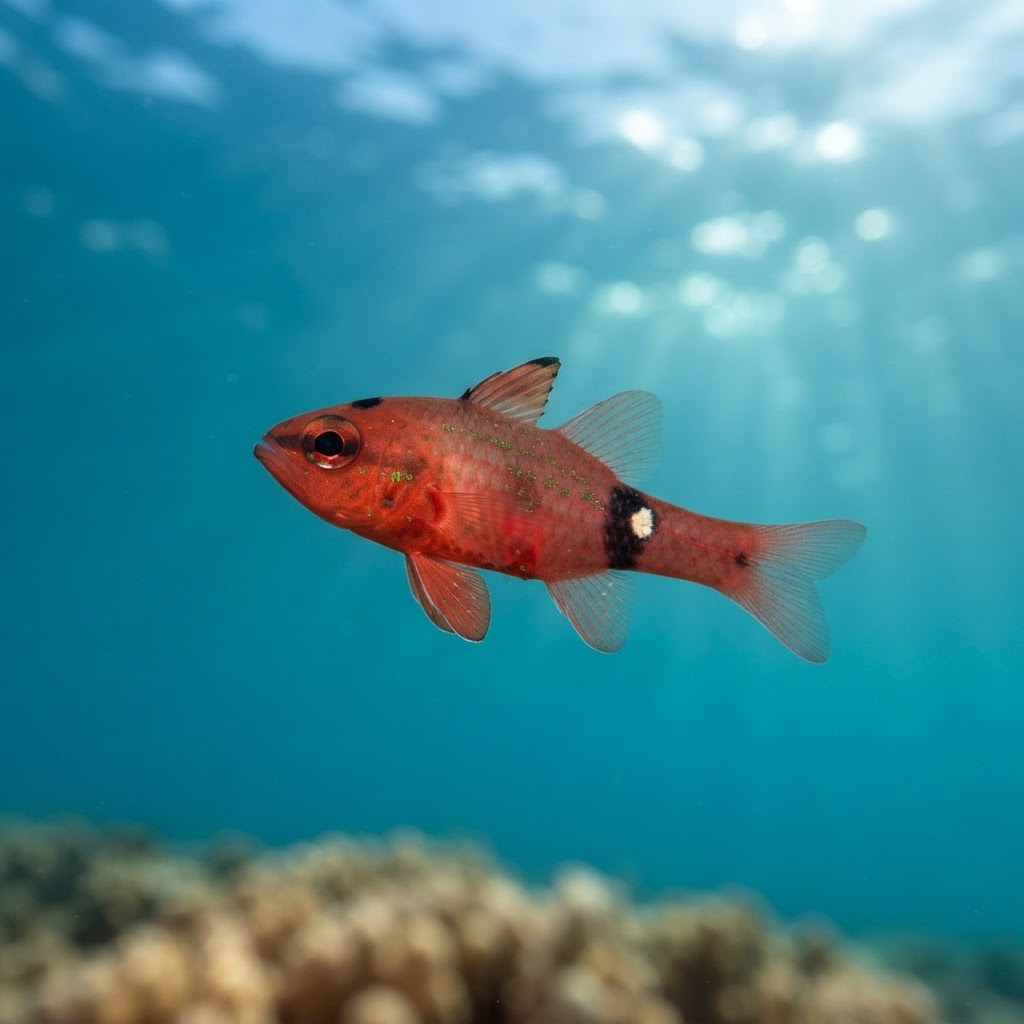
A small, deep-bodied cardinalfish, around 4 cm, with a reddish-brown to coppery body and the oversized eyes typical of the family. Look for a pale, star-like spot near the base of the tail, the mark that gives it its name, along with faint dark lines through the eye. It holds a stiff, hovering posture close to cover rather than swimming out in the open.
Divers mostly find it tucked under ledges, in crevices, or hovering just above sponges and coral rubble rather than out over open sand. It tends to hold still or drift gently in place when a torch or diver passes close, relying on its small size and shaded hiding spots rather than fleeing far. Look for it in small loose groups rather than alone, often sharing a crevice with other small reef fish.
Like other cardinalfish, this species is a mouth-brooder, meaning one parent carries the fertilised eggs in its mouth until they hatch, a trait that keeps the eggs hidden from predators on the reef.
No clear seasonal pattern shows up in the sightings, and with a comfortable range of 24.5 to 27.8 C, reefs across its range stay within that window most of the year, so it's a fair year-round target.
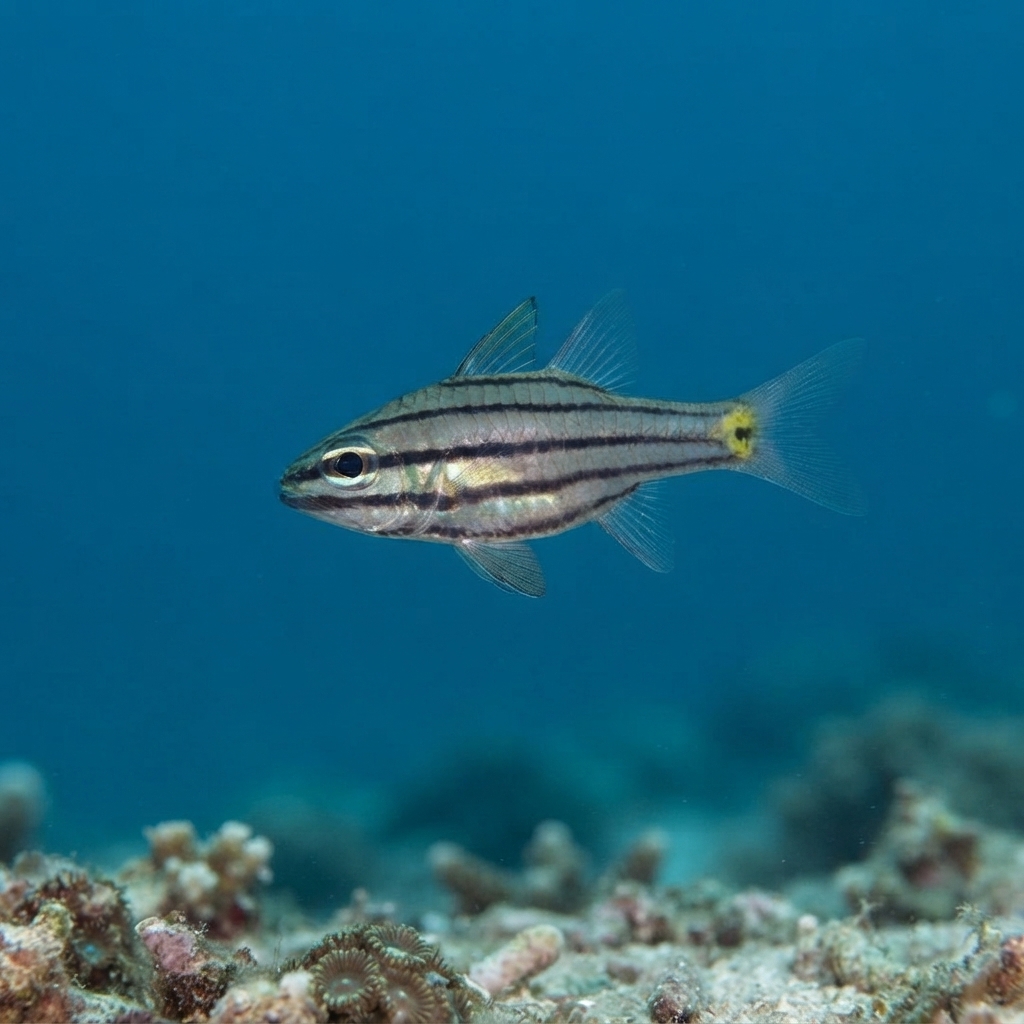
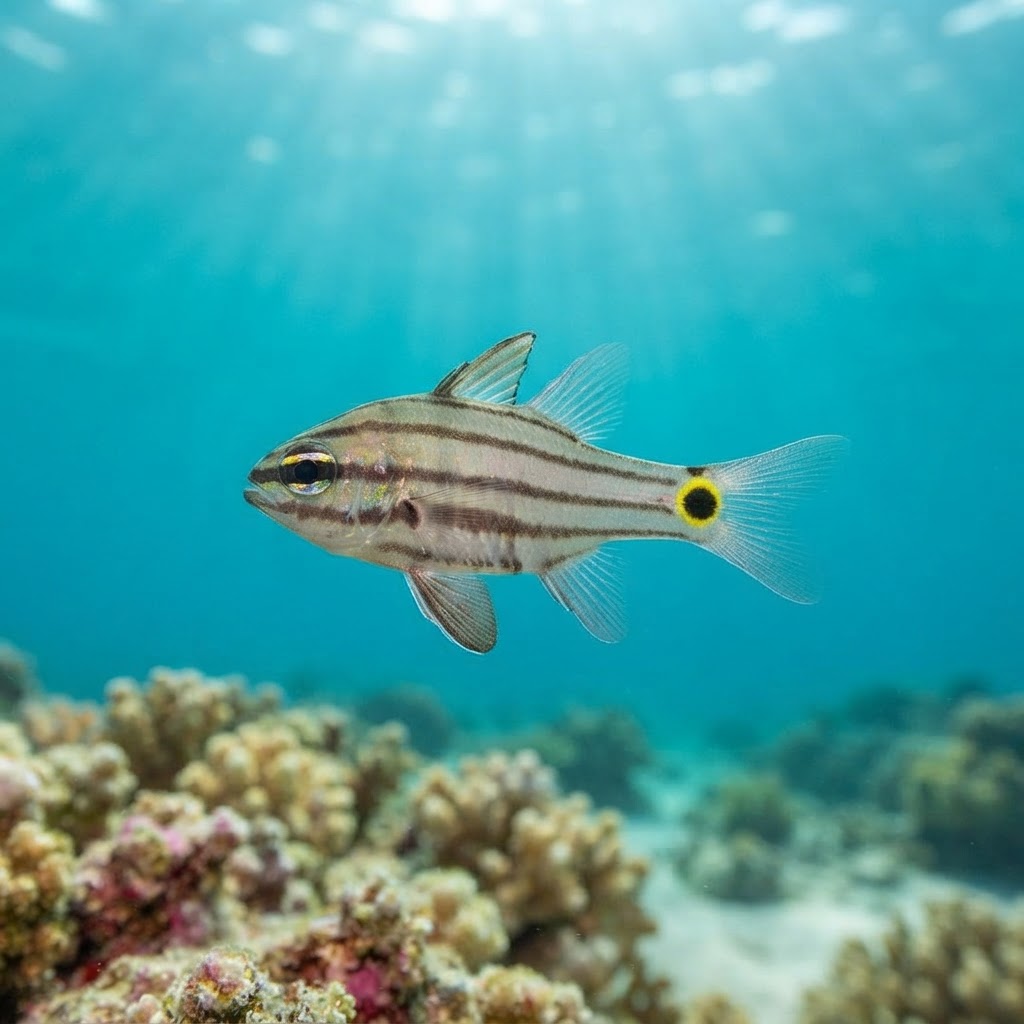
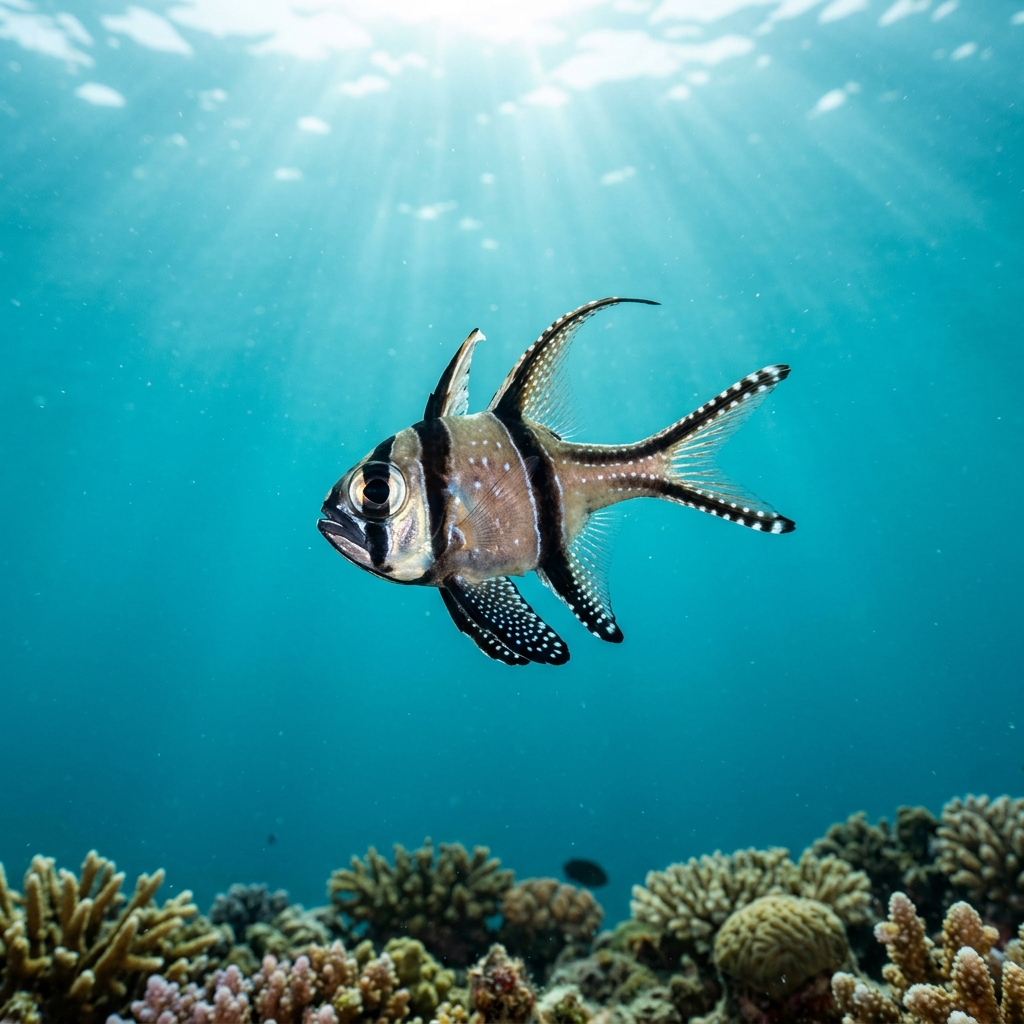
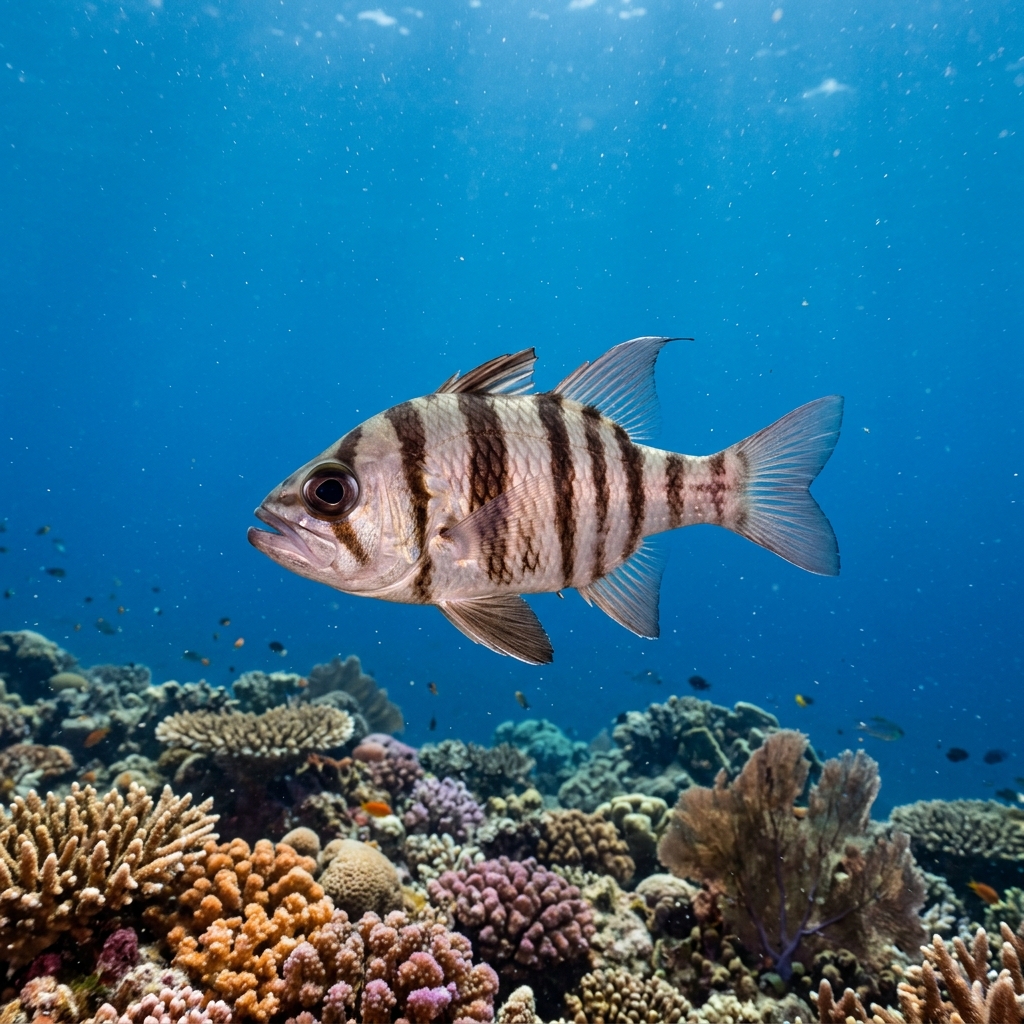
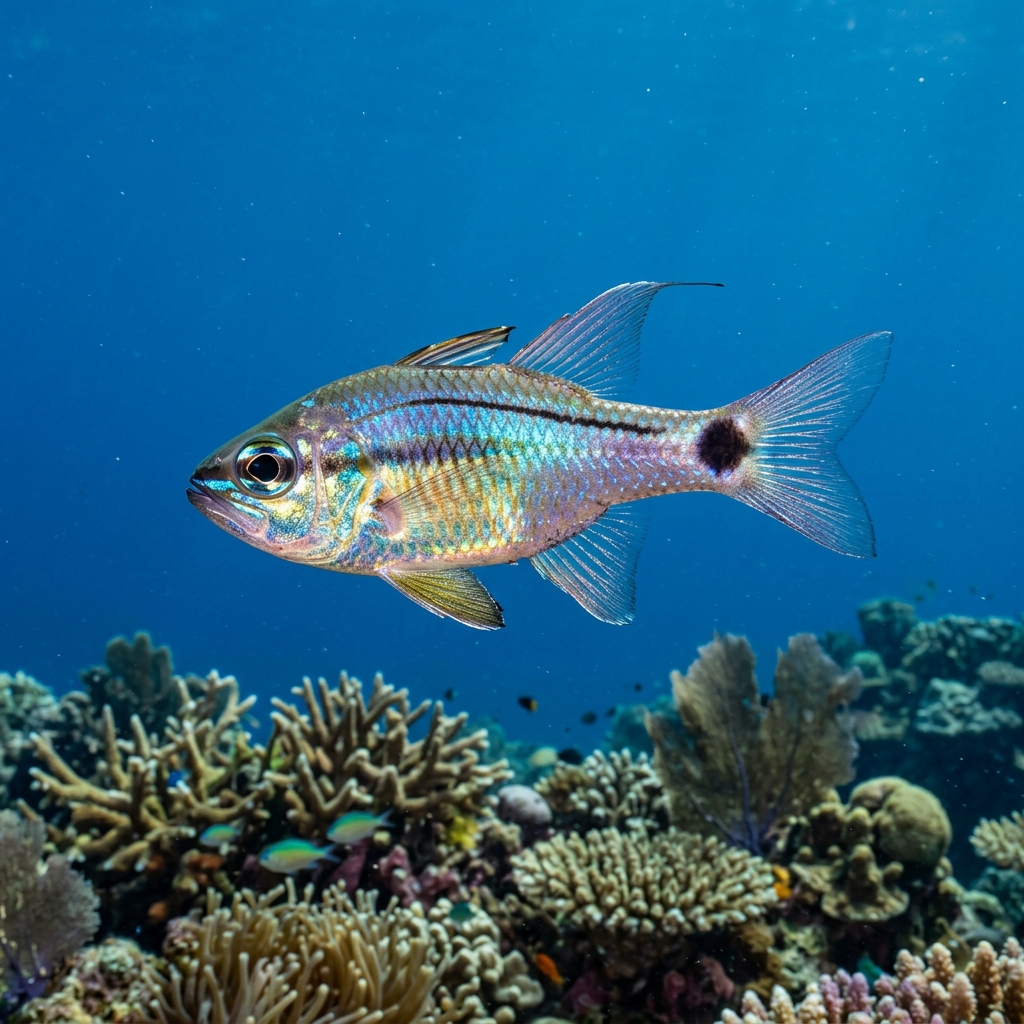
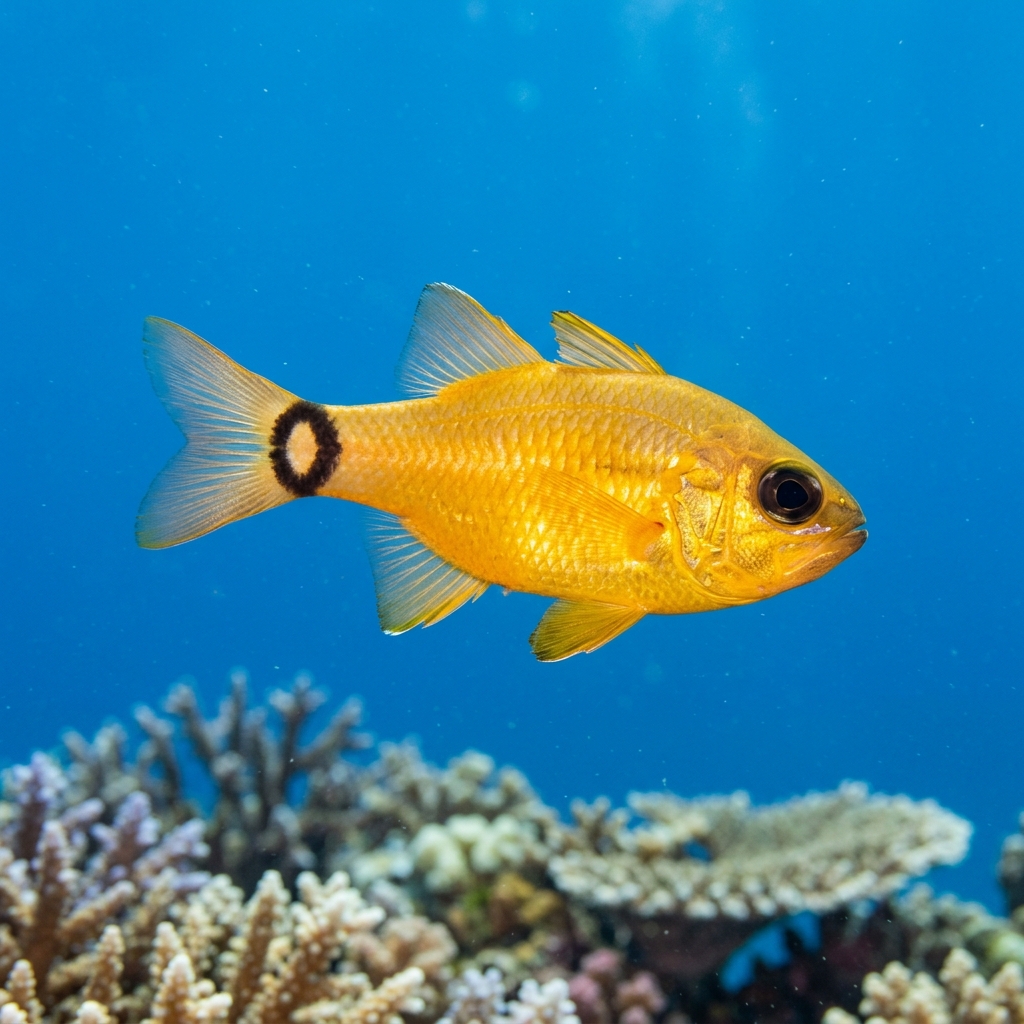
Reef neighbours a diver could mistake it for. Use the identification notes above to tell them apart.
Most reliably logged in Sint Eustatius, where it turns up across more sites than anywhere else in the data, and a strong second population sits around Lighthouse Reef in Belize. It also shows up regularly at Saint-Pierre in Martinique and in smaller numbers around Long Island in the Bahamas, so it's a Caribbean-wide find rather than a one-spot specialty.
Mapping where Whitestar Cardinalfish is logged…
Sint Eustatius has the most sightings, with Belize's Lighthouse Reef and Martinique's Saint-Pierre also strong spots. Smaller numbers turn up around Long Island in the Bahamas.
There's no strong season in the sighting data, and its preferred water temperature of 24.5 to 27.8 C holds across most of the year on these reefs, so any month works.
Check for a small, big-eyed, coppery-brown fish around 4 cm long with a pale star-shaped mark near the tail base. It usually hovers close to a crevice or ledge rather than out in open water.
They stay small, reaching only around 4 cm as adults, so they're easy to overlook against the reef unless you're looking closely into shaded crevices.
No. They pose no threat to divers and simply hold still or ease back into cover when approached.
They're mouth-brooders, carrying fertilised eggs in the mouth until the young hatch, a strategy shared across the cardinalfish family to protect eggs from predators.
Site and sighting data is aggregated from diver logs, iNaturalist and GBIF. For taxonomy and conservation status:
Iridescent Cardinalfish
1,781 sites