Ostorhinchus limenus
Spot Sydney Cardinalfish in New South Wales and Queensland reefs. Small, reddish, and shelf-shy, they're most active at night. Here's where and how to find them.
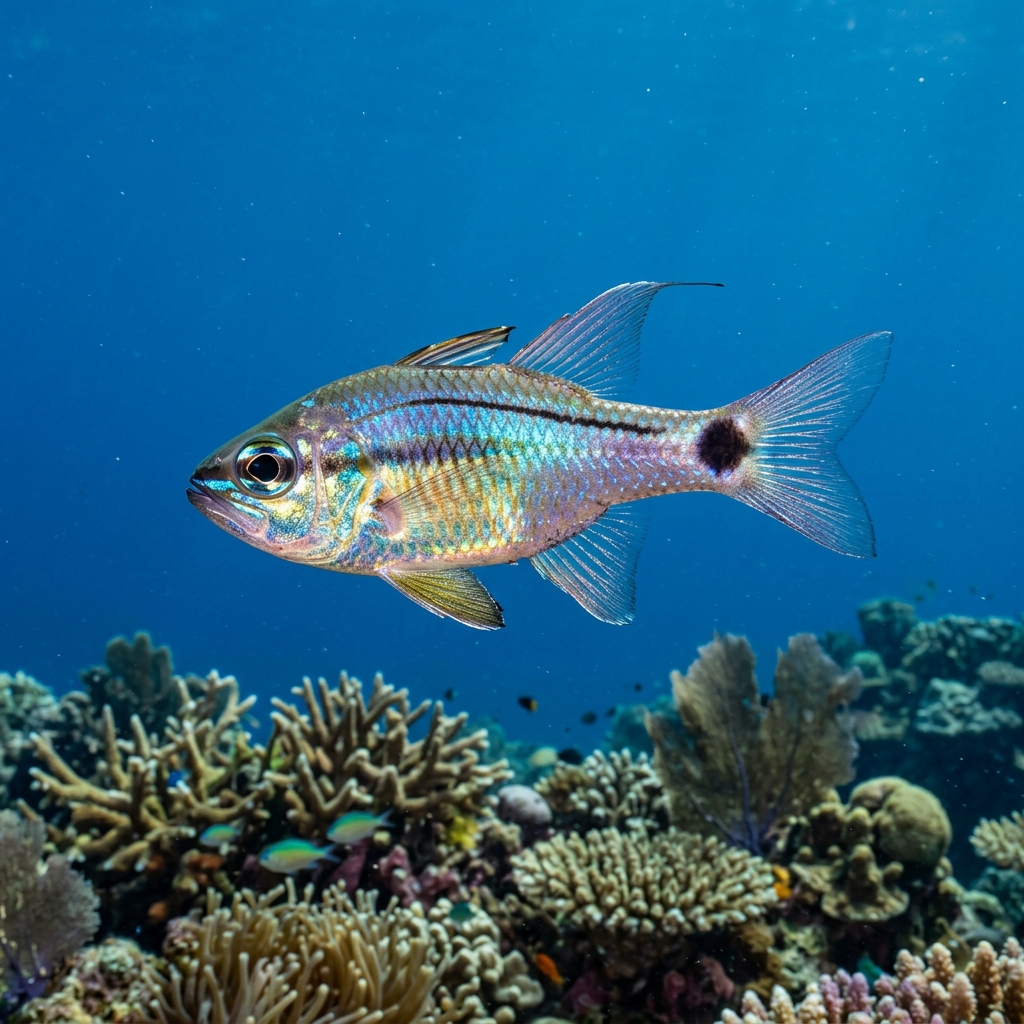
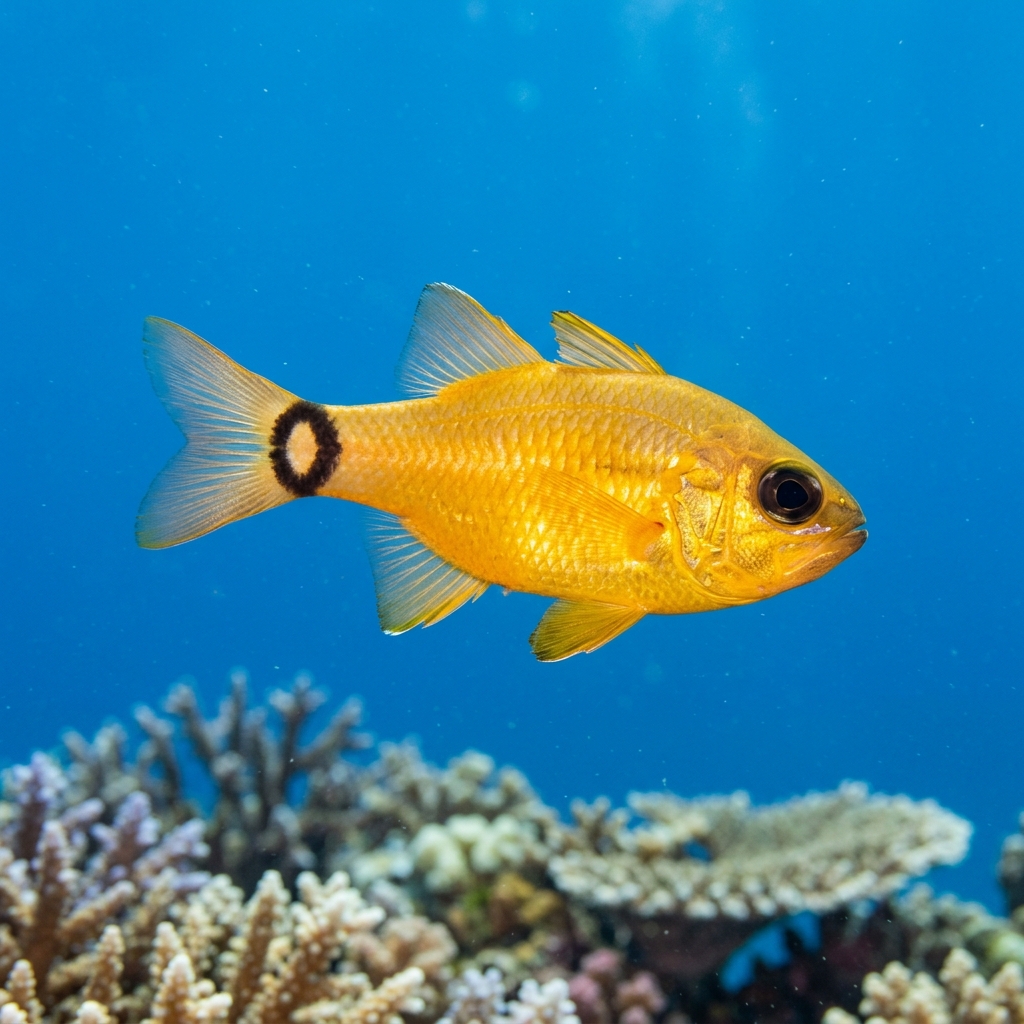
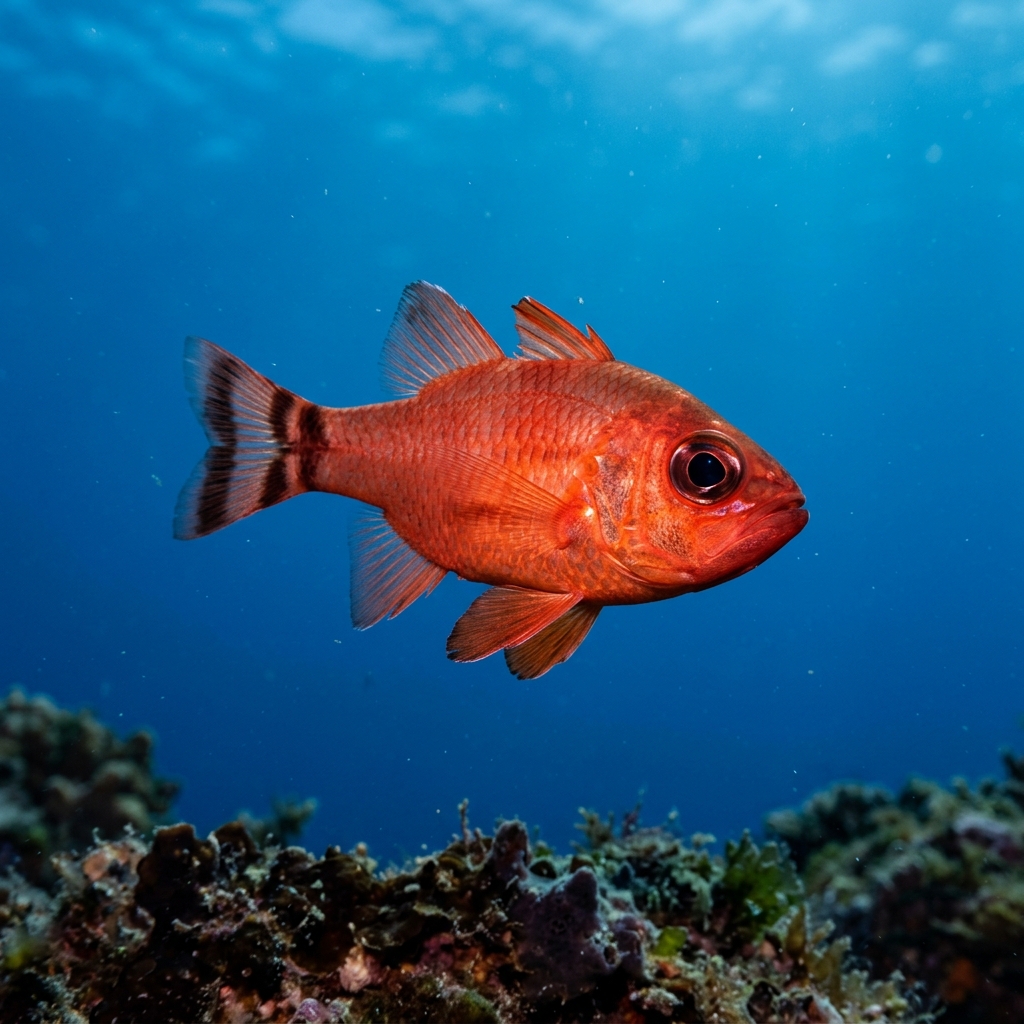
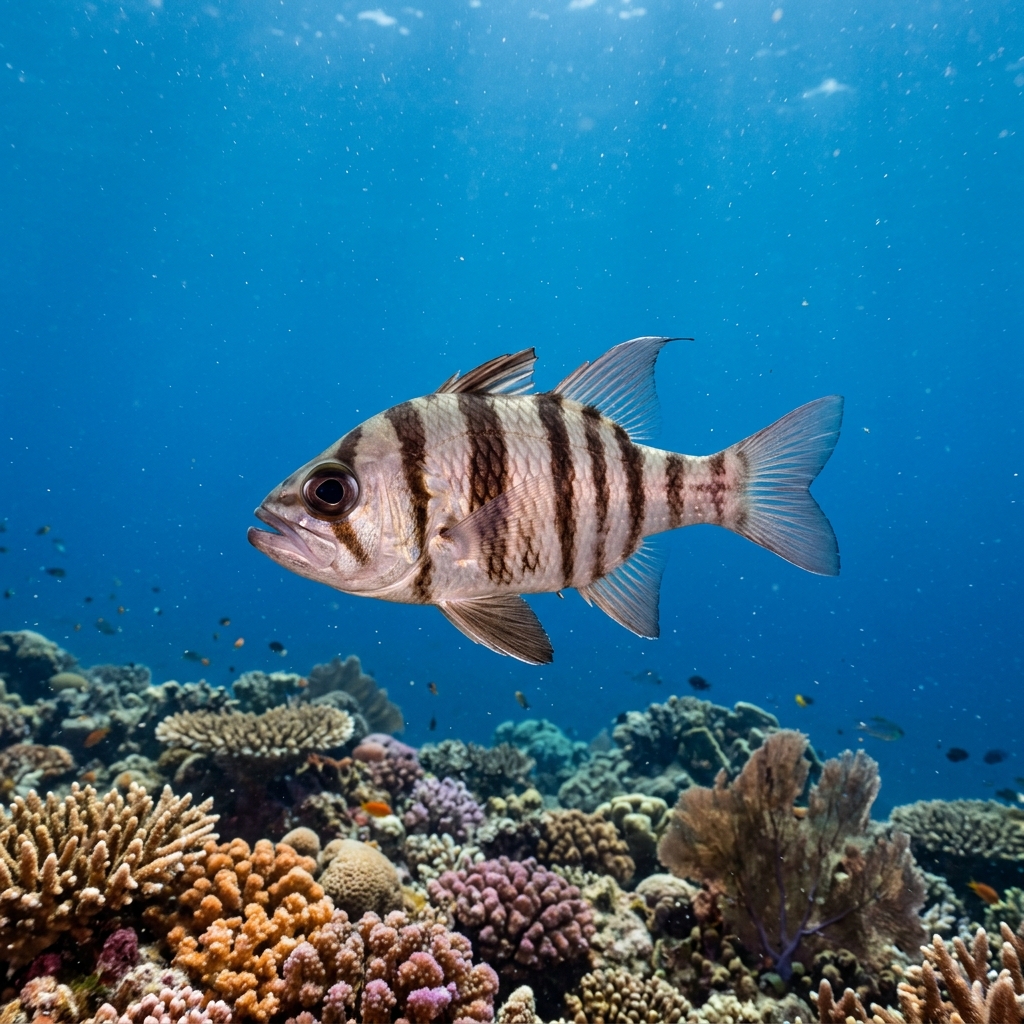
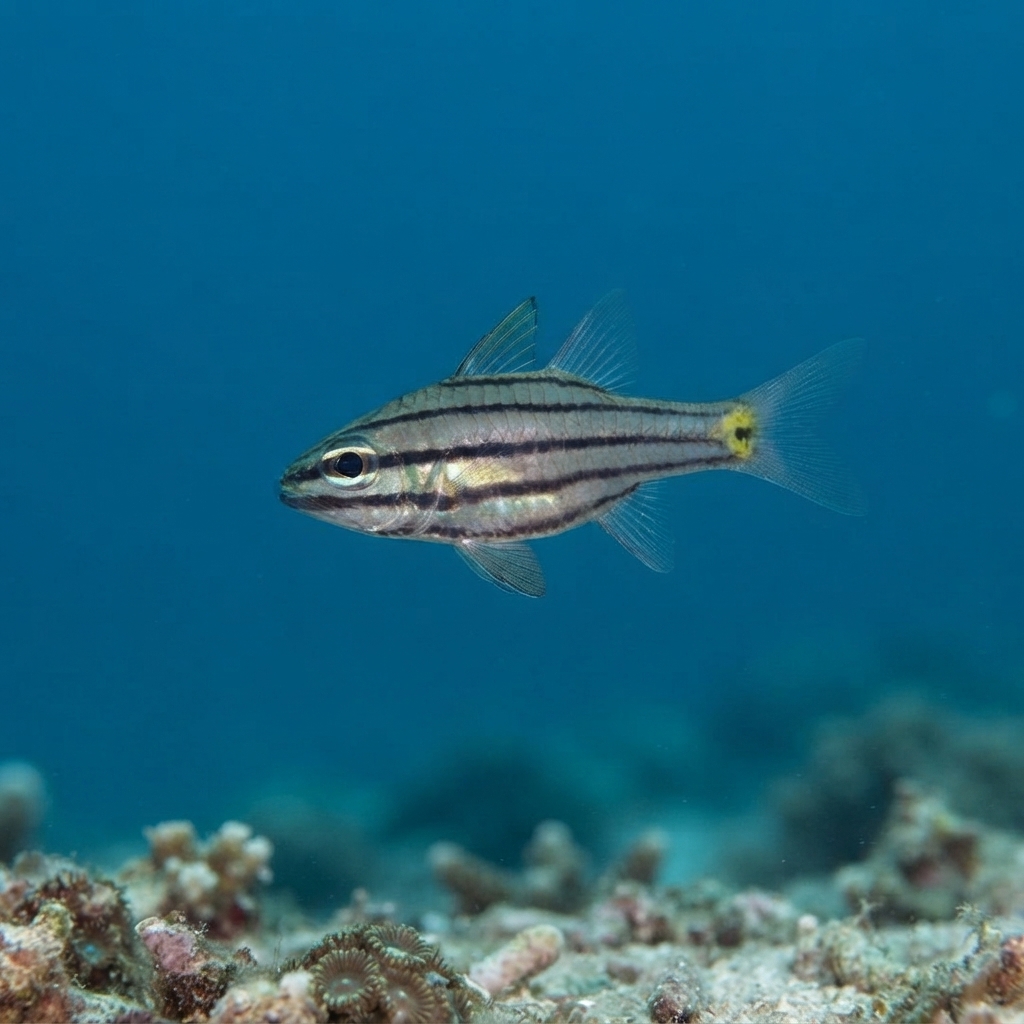
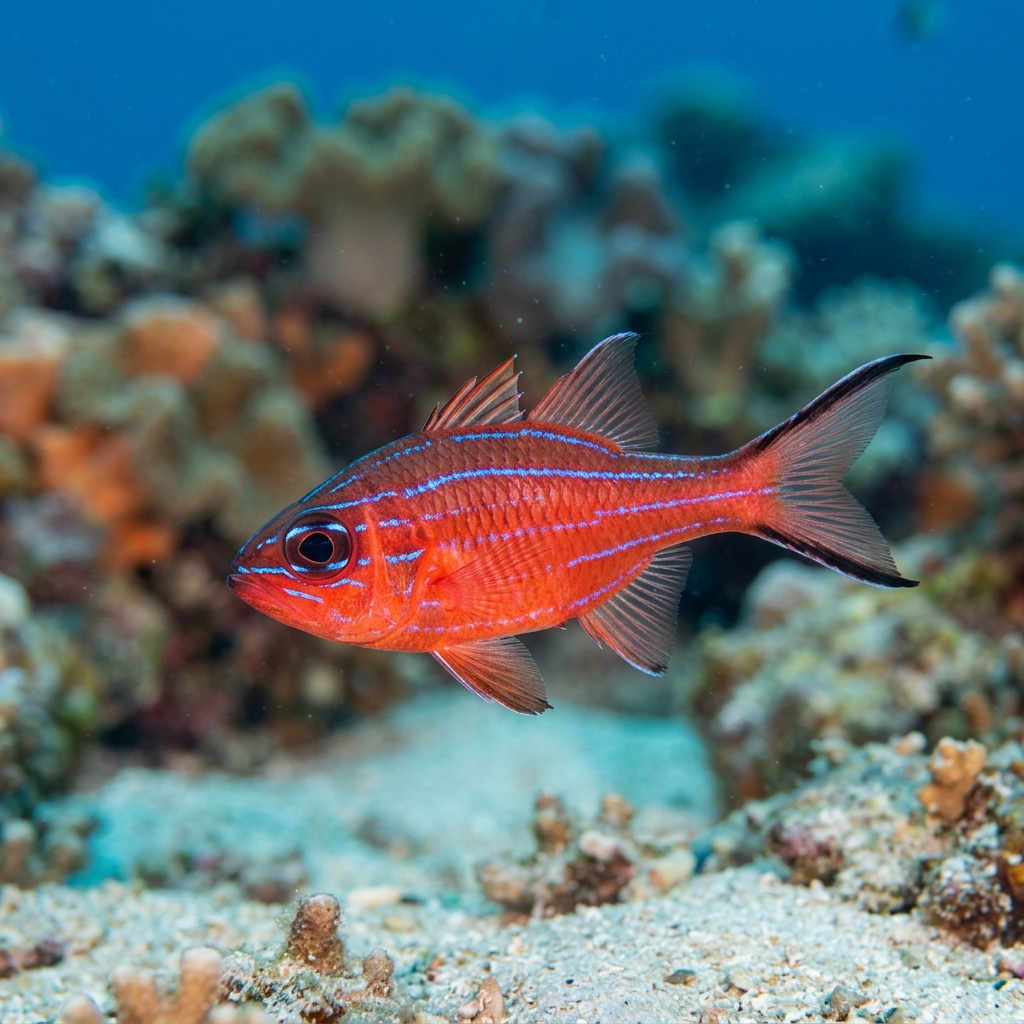
At around 9 cm, this is a small, deep-bodied cardinalfish with warm reddish to pinkish-orange colouring and large, prominent eyes that betray its nocturnal habits. Look for a pale or translucent belly and a relatively blunt snout compared to slimmer cardinalfish species. During the day it tends to hover near ledge edges or crevice openings, usually in small loose groups, which makes that reef-hugging posture a reliable field cue.
During daylight hours, small groups gather under ledges or inside crevices, hovering quietly and keeping a cautious eye on approaching divers, get too close and they ease further back into cover. They feed at night, so a torch-lit twilight or night dive gives you the best chance of watching them out in the open and actively moving around the reef. During the day, patience and a slow approach are rewarded with decent views before they retreat.
Like most cardinalfish, males are mouthbrooders, incubating the egg mass inside their mouths until the eggs hatch, a behaviour sometimes observed on night dives when a male is visibly carrying a clutch.
There is not enough monthly data to pin down a peak season, so treat sightings as possible year-round. The observed temperature range of roughly 22 to 27 °C aligns well with temperate to subtropical conditions on the New South Wales and Queensland coasts across all seasons.
Reef neighbours a diver could mistake it for. Use the identification notes above to tell them apart.
Sightings are concentrated almost entirely in Australia, with the strongest records coming from New South Wales, including the Sydney region itself, and Queensland. A handful of range-model sites extend the picture northward into areas near the Society Islands, but confirmed diver observations are overwhelmingly from the Australian east coast.
Mapping where Sydney Cardinalfish is logged…
The vast majority of confirmed sightings come from Australia's east coast, particularly New South Wales and Queensland. New South Wales, including the waters around Sydney Harbour and nearby coastal dive sites, holds the strongest concentration of logged observations. Queensland also shows reliable sightings across a broad stretch of coast.
Sightings are recorded year-round with no strongly defined peak season from the available data. The species suits the temperate to subtropical water temperatures found along the Australian east coast, so there is no single 'best' month. Night dives or twilight dives will generally give you the most active, visible encounters regardless of the time of year.
Look for a small, roughly 9 cm fish with a rounded, deep body, reddish to pinkish-orange colouring, and noticeably large eyes relative to its head size. It typically hovers close to shelter, ledges, crevices, or overhangs, often in small groups. The large eyes and reef-hugging behaviour are the two most reliable in-water cues.
They reach around 9 cm in length, making them a small, palm-sized fish. Their relatively deep, rounded body shape can make them look slightly chunkier than that length suggests, but they remain easy to overlook among reef rubble and ledge shadows.
Yes, like most cardinalfish, males are mouthbrooders. After spawning, the male holds the fertilised egg mass in his mouth until the eggs hatch. On a night dive you may spot a male with a visibly distended jaw and a more limited movement pattern, a sign he is incubating a clutch. He does not feed during this period.
Site and sighting data is aggregated from diver logs, iNaturalist and GBIF. For taxonomy and conservation status:
Iridescent Cardinalfish
1,781 sites