Cheilodipterus novemstriatus
Small striped cardinalfish tucked into crevices along Turkey's Turquoise Coast and Greece's Dodecanese, in 25-29C water year-round.
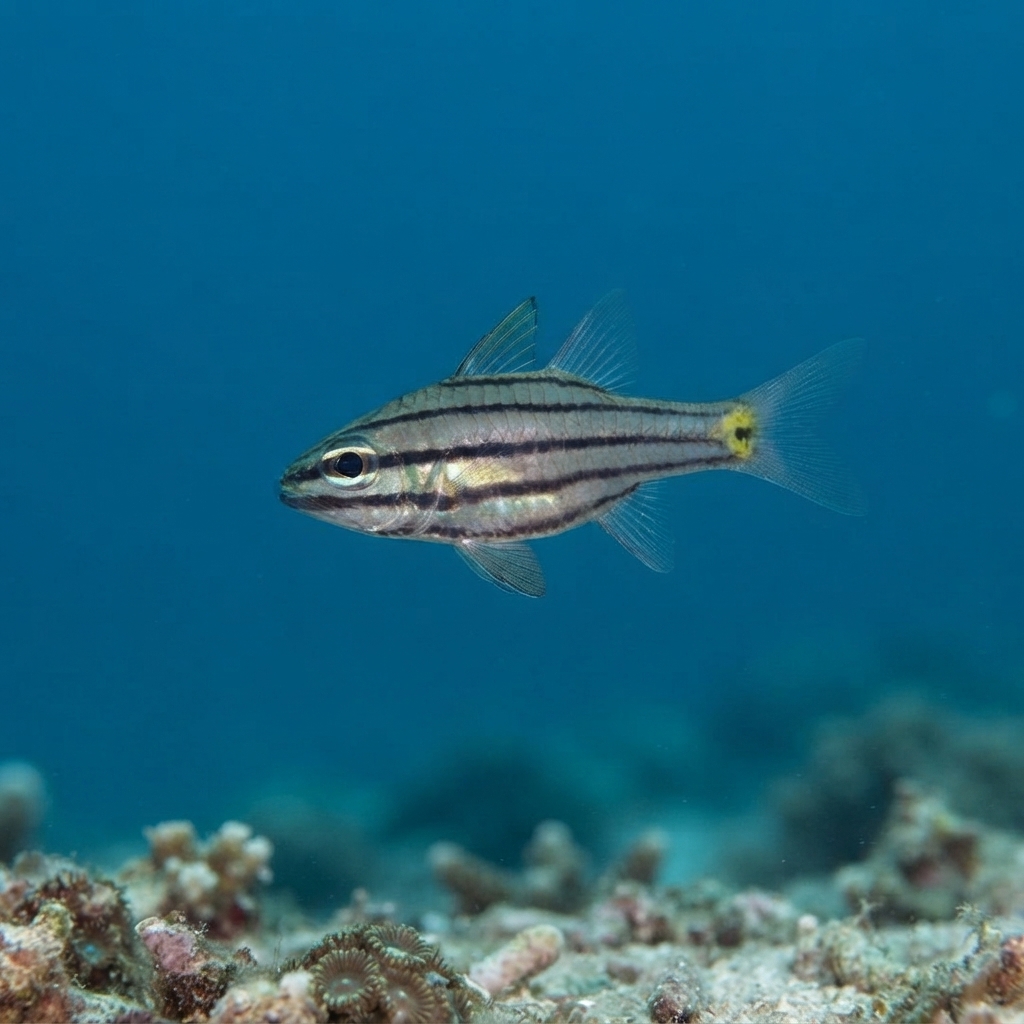
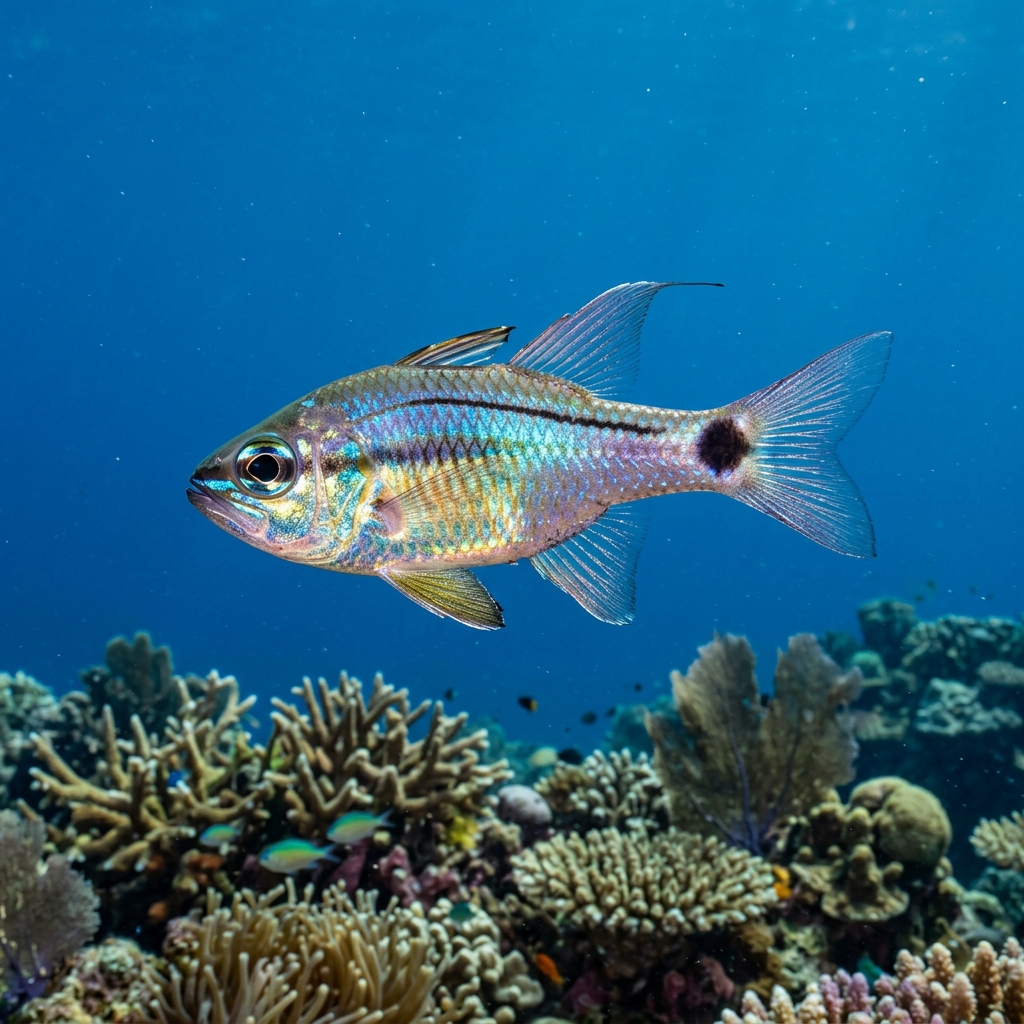
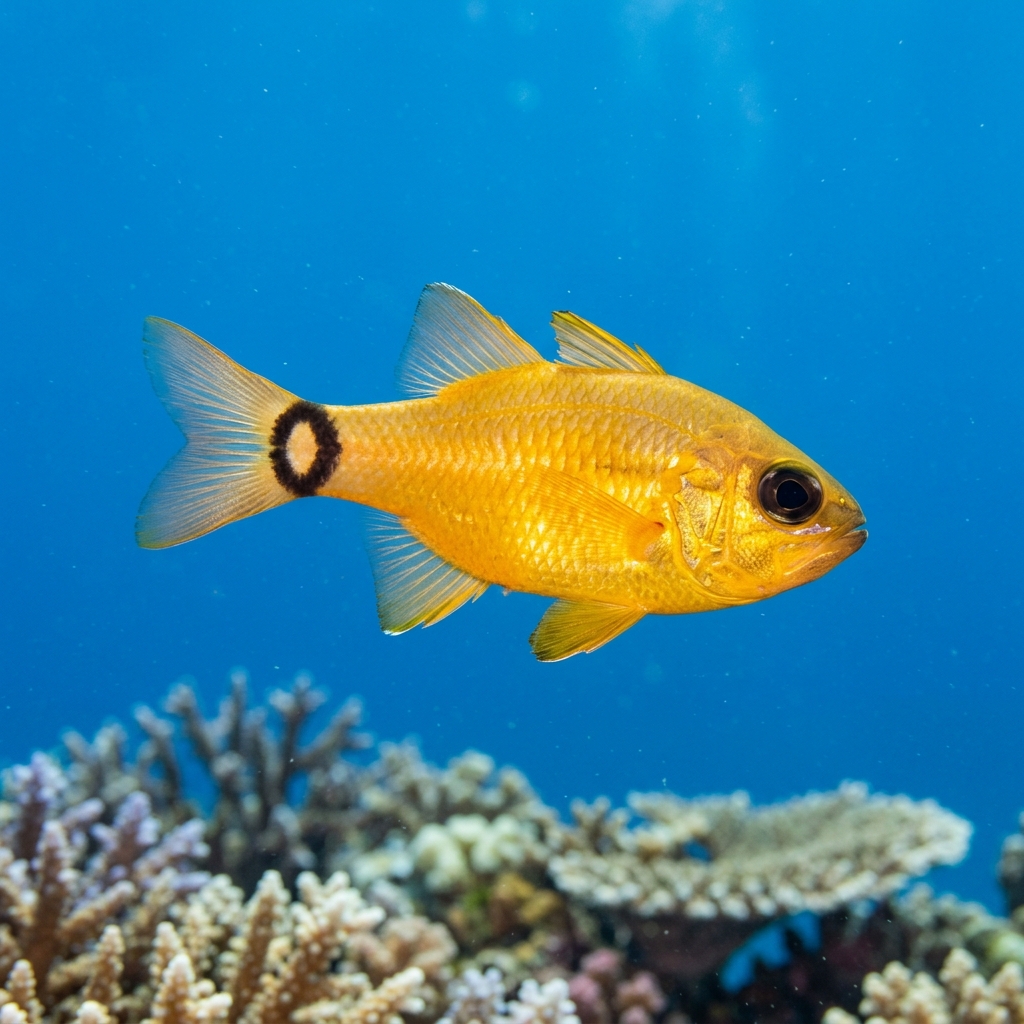
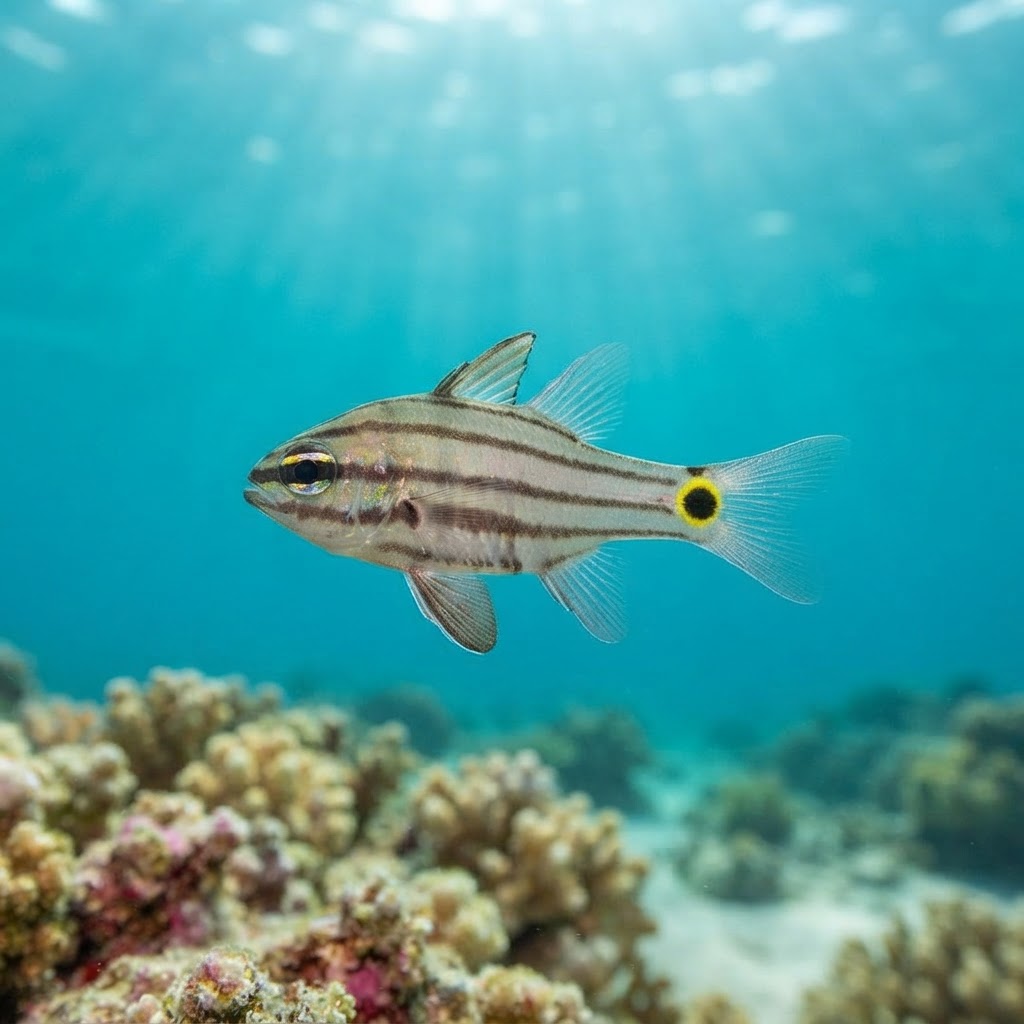
A slim, big-eyed fish barely 6 cm long, marked with several thin dark stripes running the length of a pale body. The name comes from a pair of dark spots near the tail base, a useful check when the stripe pattern alone is hard to pin down in low light. It hovers head-first into crevices and overhangs rather than swimming openly over the reef.
Look for it hanging motionless in small groups just inside cracks, under ledges, and around rocky overhangs rather than out on open reef. It tends to hold position with minimal fuss when divers pass, only retreating deeper into cover if approached directly. Most sightings are during daylight dives, tucked into the same kind of shaded structure a diver would check for shrimp or small groupers.
Like other Cheilodipterus cardinalfish, this species is a mouthbrooder: one parent carries the fertilised eggs in its mouth until they hatch, which is part of why you'll often see them holding still in sheltered spots rather than roaming.
No clear seasonal pattern shows up in the data, so treat it as a year-round sighting. Water in its recorded range sits between 25.1 and 29.2C, which covers the local diving season comfortably.
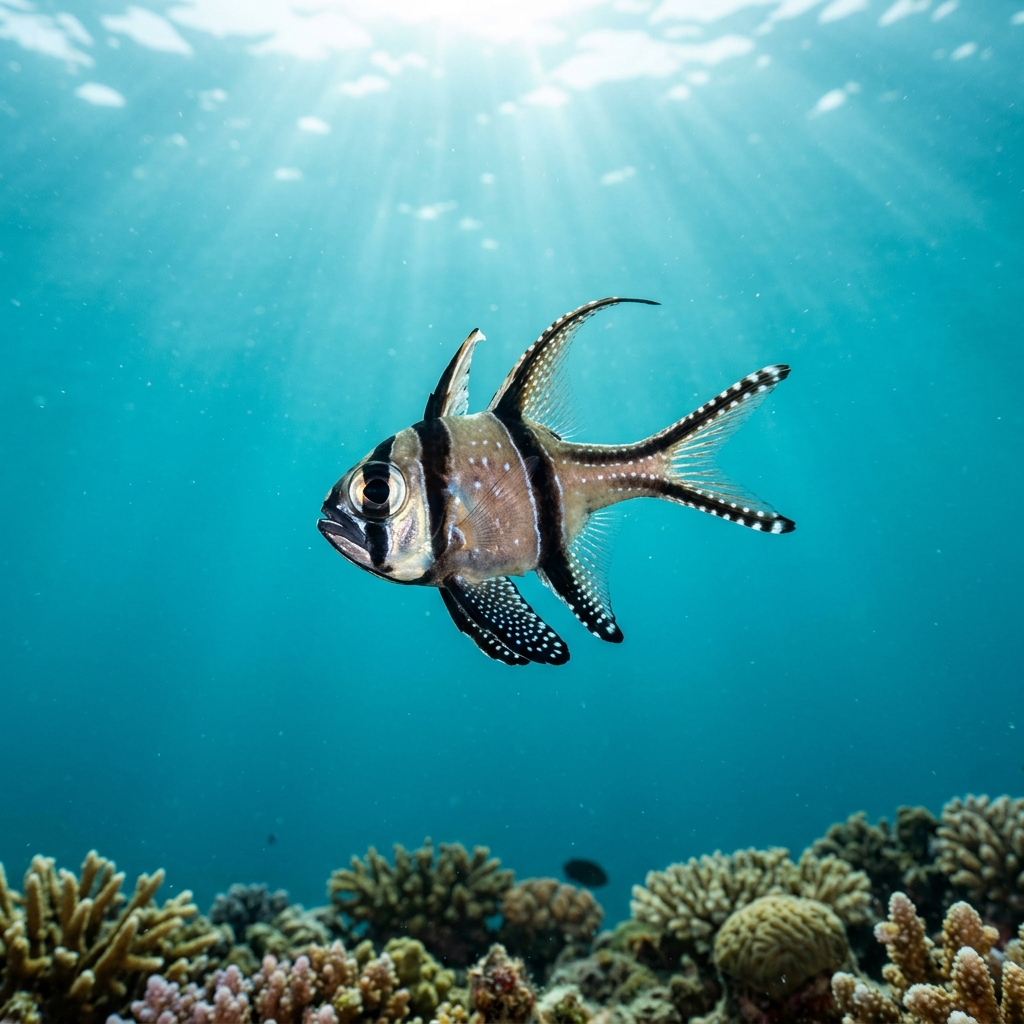
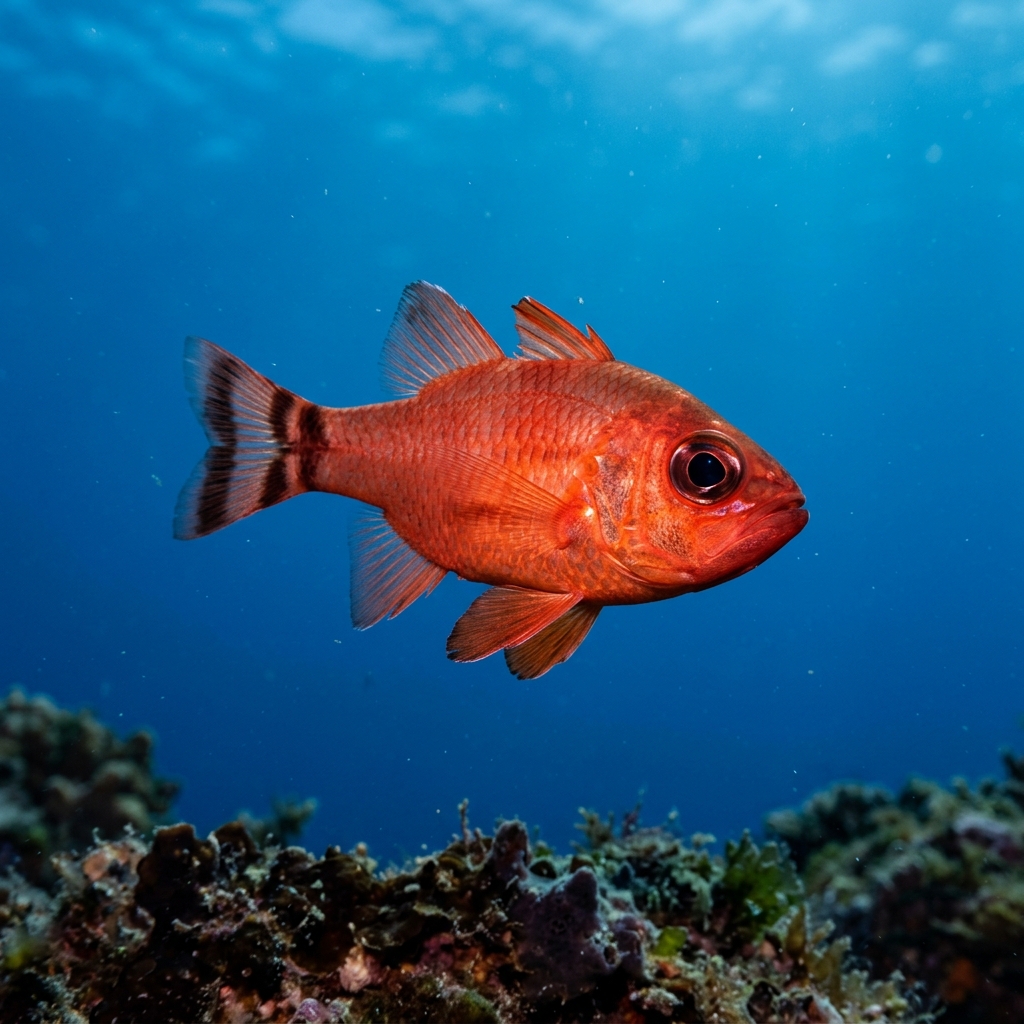
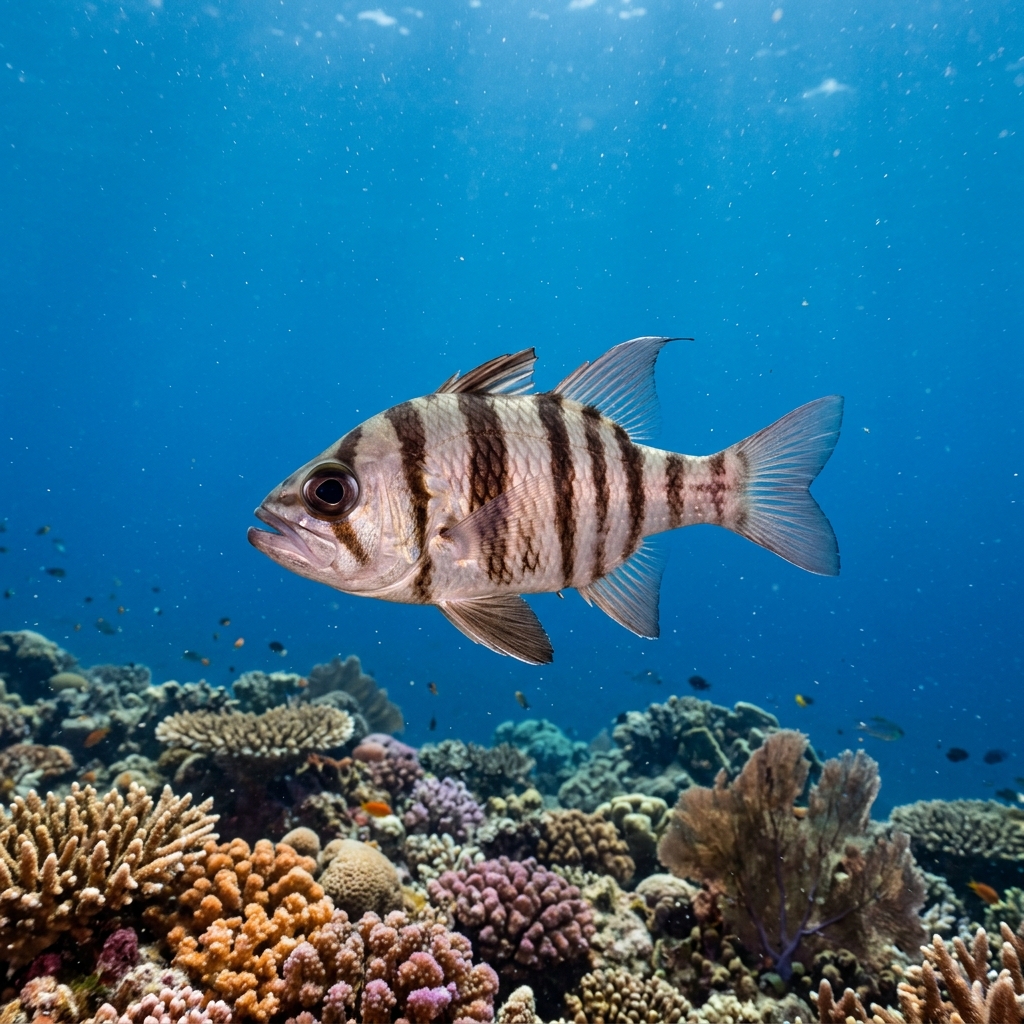
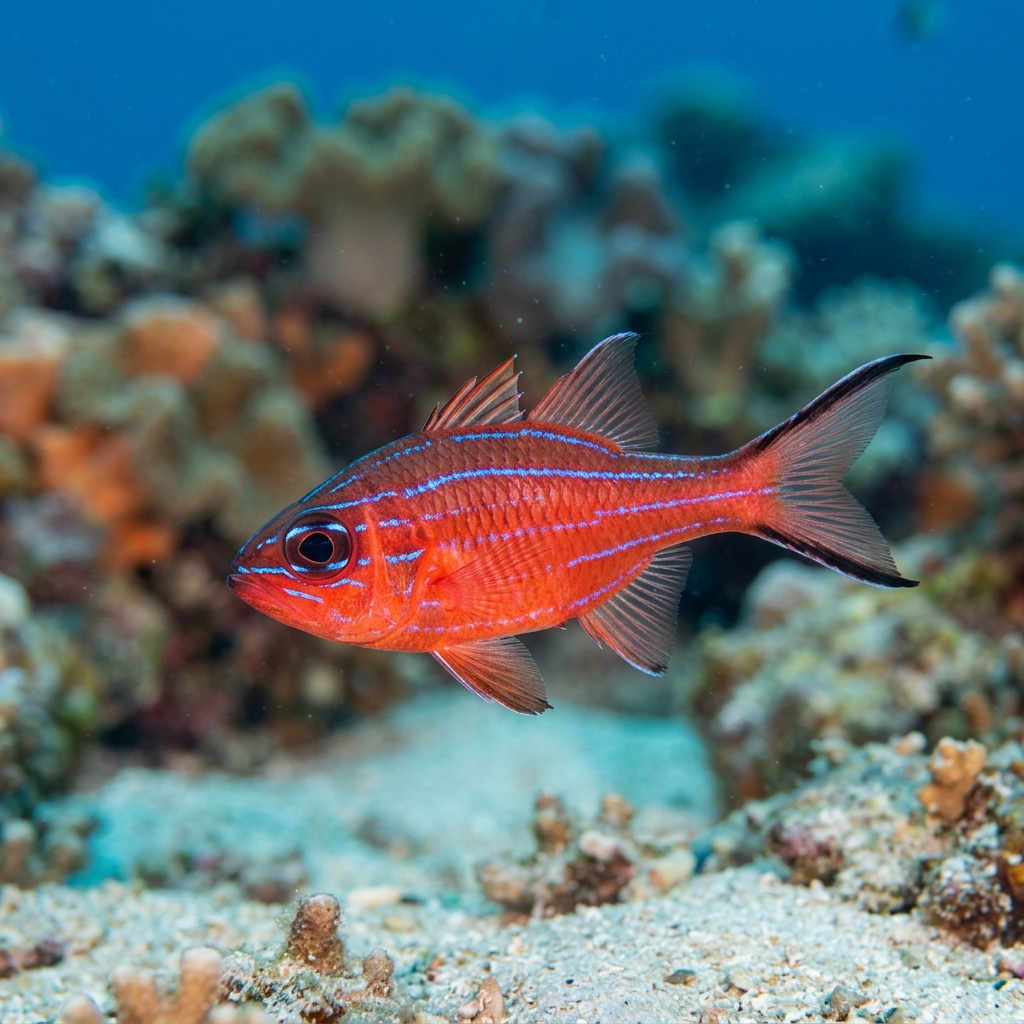
Reef neighbours a diver could mistake it for. Use the identification notes above to tell them apart.
This one is most reliably logged in Turkey, especially the Turquoise Coast and Antalya regions, with a further strong presence across Greece's Dodecanese islands. Most sightings are along the eastern Mediterranean rather than further west, so it's a species to look for specifically on Turkish and Greek reef and rock dives.
Mapping where Twospot Cardinalfish is logged…
Turkey is the strongest area for this species, particularly the Turquoise Coast and Antalya region, with further sightings across the Dodecanese islands of Greece.
There's no strong season in the sighting data, so it's considered a year-round find on Turkish and Greek reefs, in water typically between 25 and 29C.
Look for a small, slender fish around 6 cm with fine dark stripes along the body and a pair of dark spots near the base of the tail, usually seen hovering near crevices rather than out in open water.
They stay small, reaching about 6 cm in length, which keeps them tucked close to reef structure rather than out on open sand.
No. They're a harmless small reef fish that simply retreats into cover if a diver gets too close.
Like related cardinalfish, one parent mouthbroods the eggs, holding the developing clutch inside its mouth until the young hatch, which is why adults are often seen holding still near shelter.
Site and sighting data is aggregated from diver logs, iNaturalist and GBIF. For taxonomy and conservation status:
Iridescent Cardinalfish
1,781 sites