Ostorhinchus chrysopomus
Small reef cardinalfish logged across Visayas and Nusa Tenggara, hovering near coral heads in 26 to 29 C water year-round.
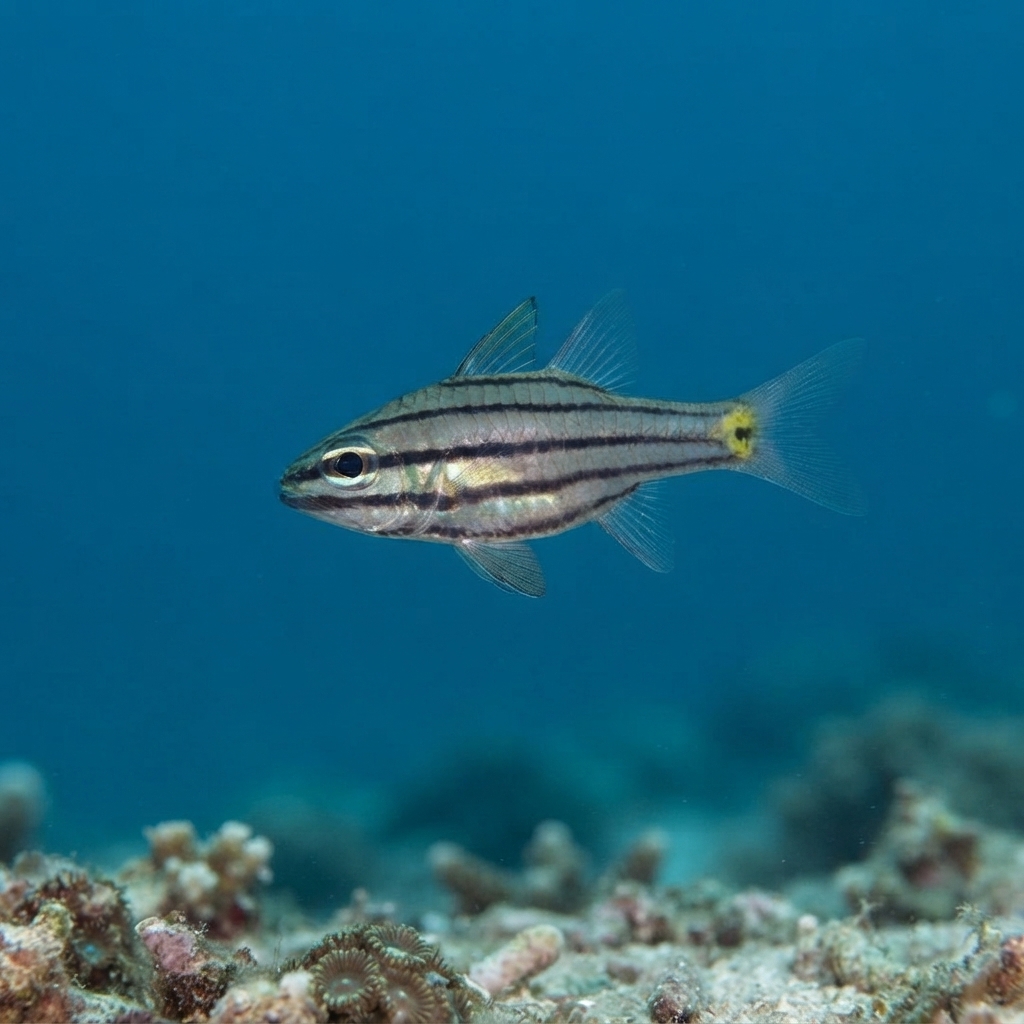
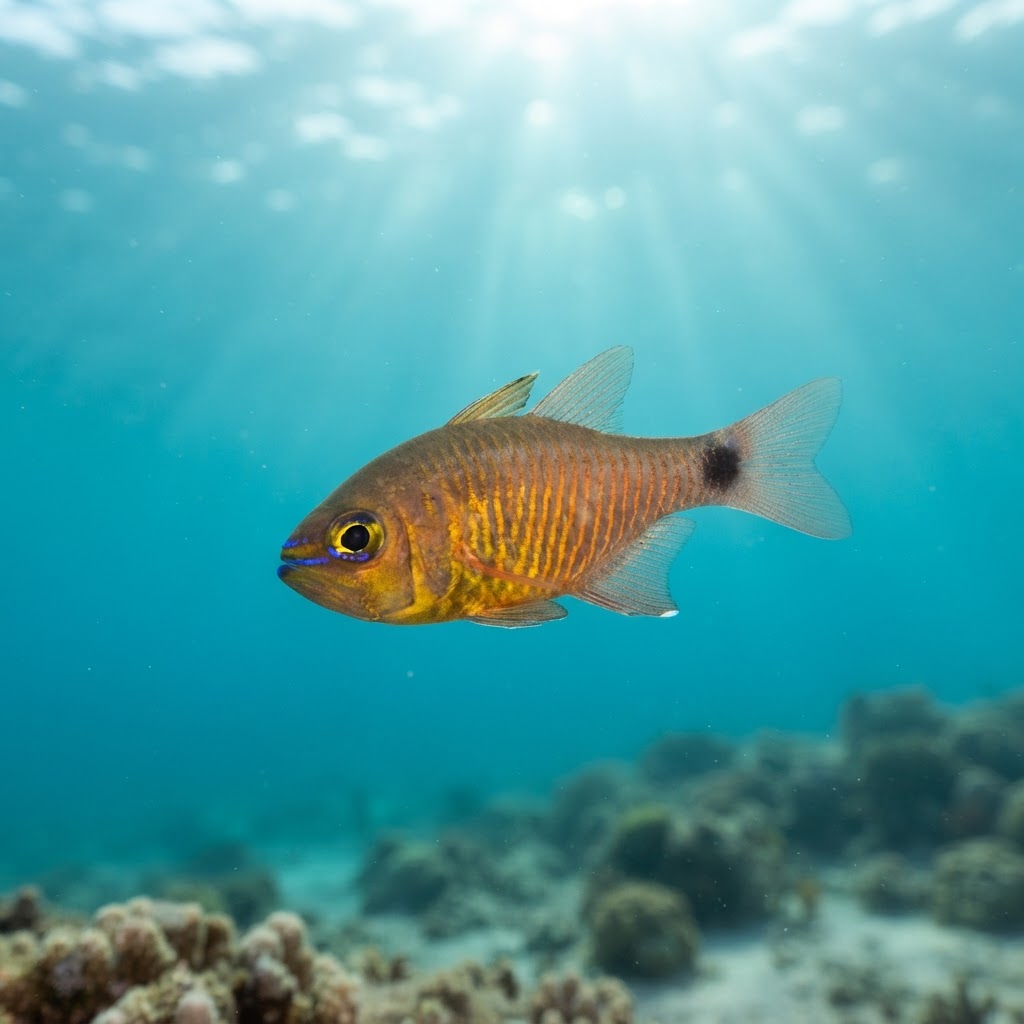
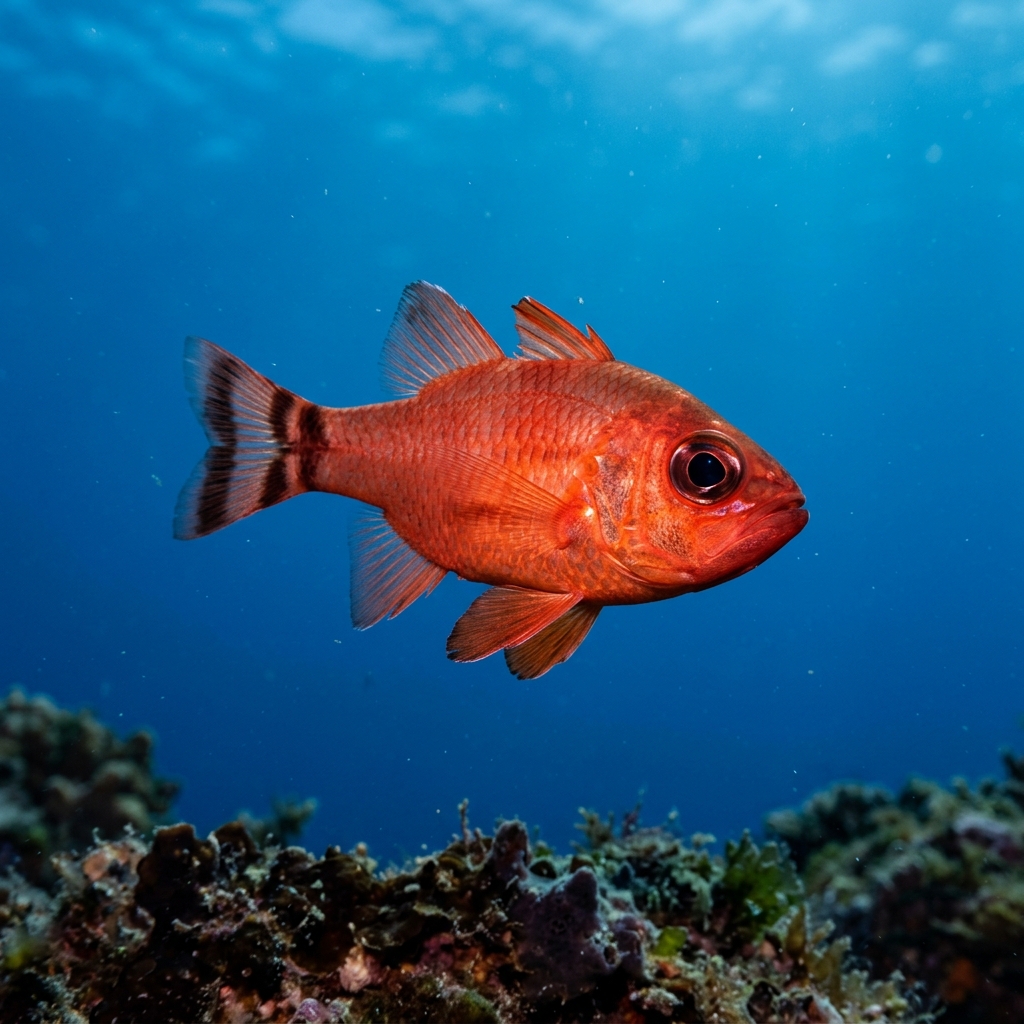
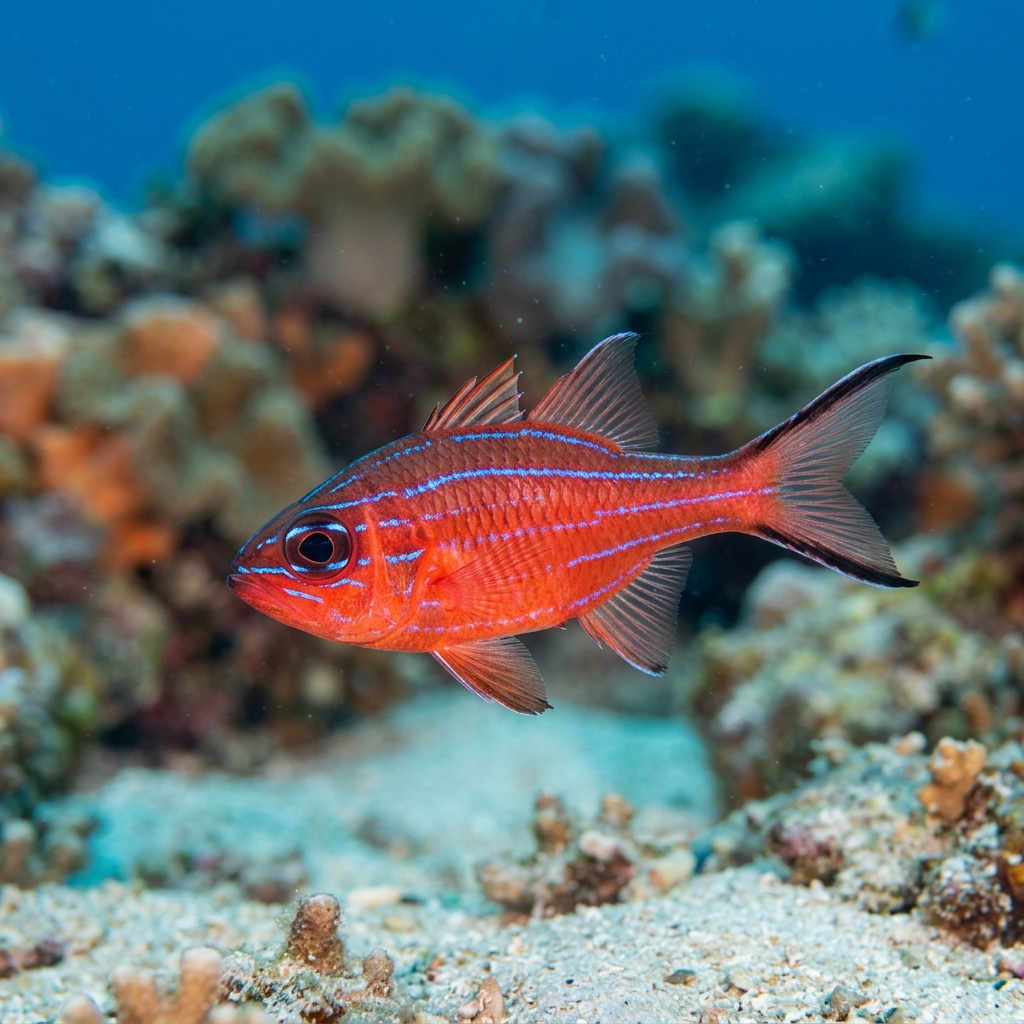
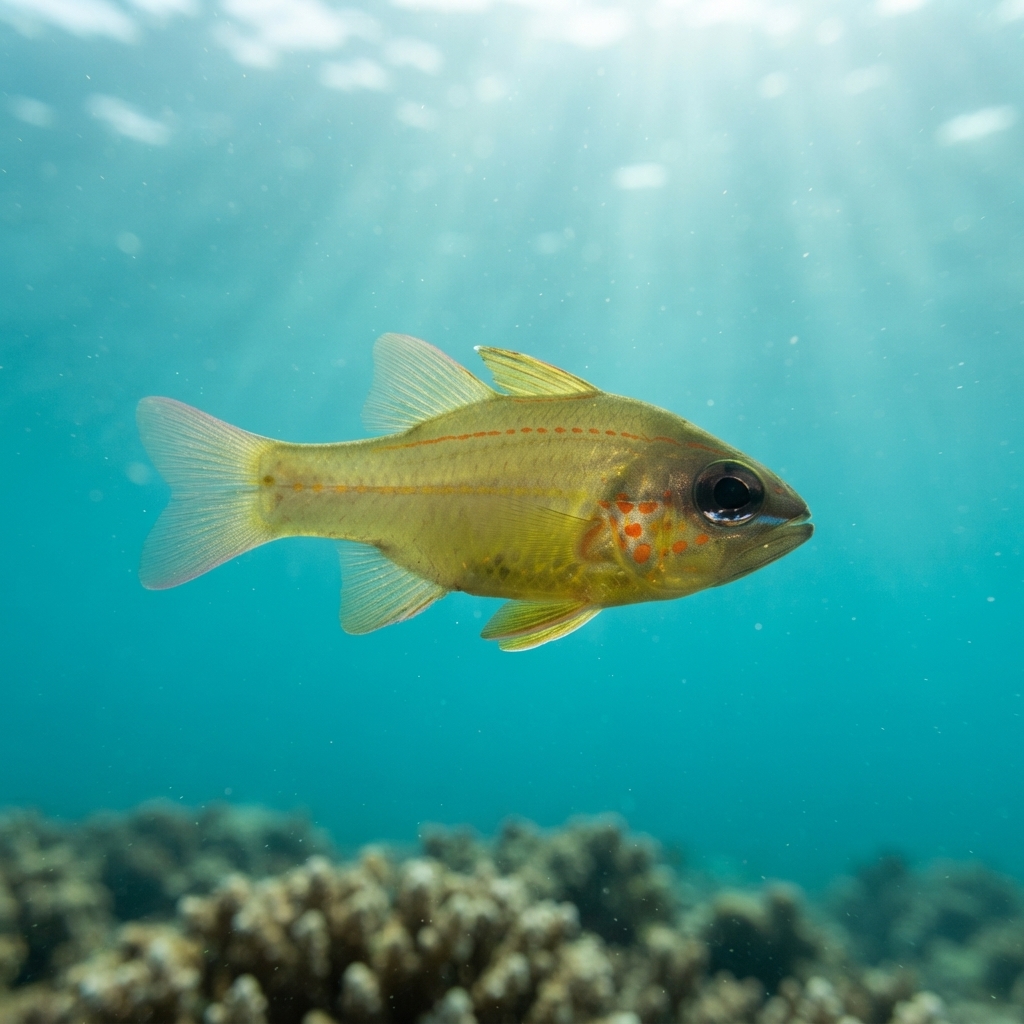
A small, deep-bodied cardinalfish reaching about 7 cm, with a large eye and the dark cheek spot behind the eye that gives it its name. Body colour runs pale tan to reddish-brown, often with a faint dark blotch near the tail base. It hangs motionless or hovers in short vertical bursts close to coral heads rather than swimming out over open reef, which along with the cheek marking is the quickest way to pick it out from other small apogonids sharing the same crevice.
Look for it tucked close to coral heads, ledges or sponge cover during the day, often hovering nearly still in small loose groups rather than schooling tightly. It is not shy exactly, but it tends to hold its position and let divers pass rather than bolting for cover, becoming more active around dusk as many cardinalfish shift toward feeding on plankton after dark.
Like other cardinalfish, this species is a mouthbrooder, with the male carrying the fertilised eggs in his mouth until they hatch, a trait that makes close-up photos of a male with a visibly swollen jaw worth watching for on a dive.
There is no clear seasonal pattern in the sightings, and with a water-temperature niche of roughly 26 to 29 C it sits comfortably on tropical reefs all year, so any month at these sites should work.
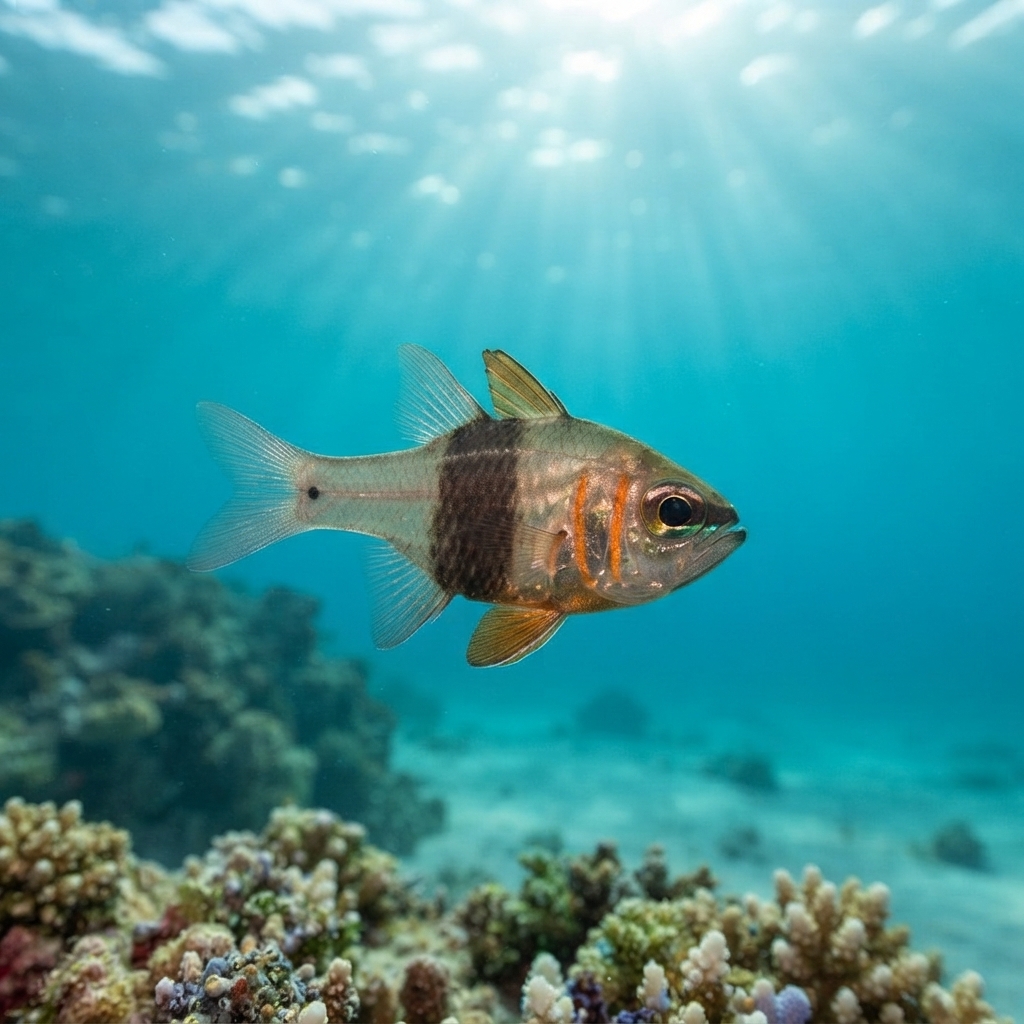
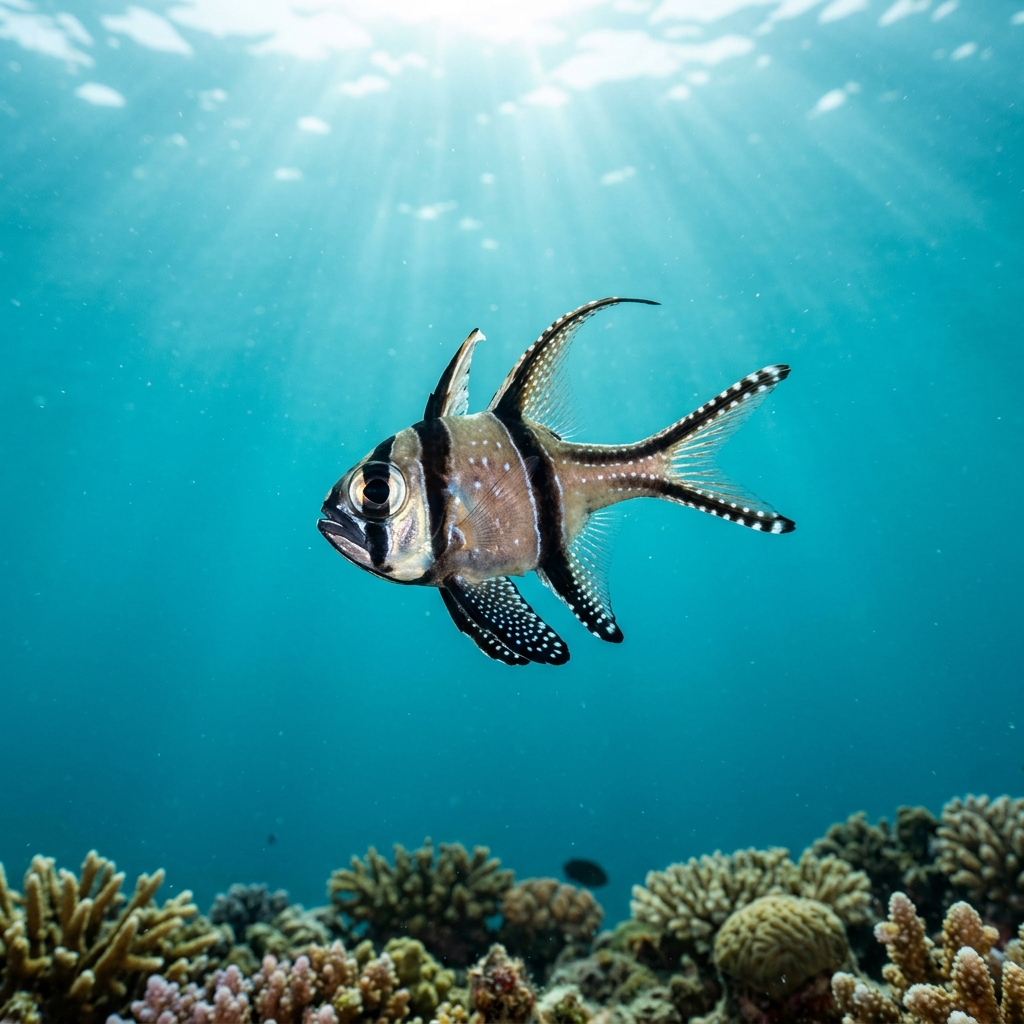
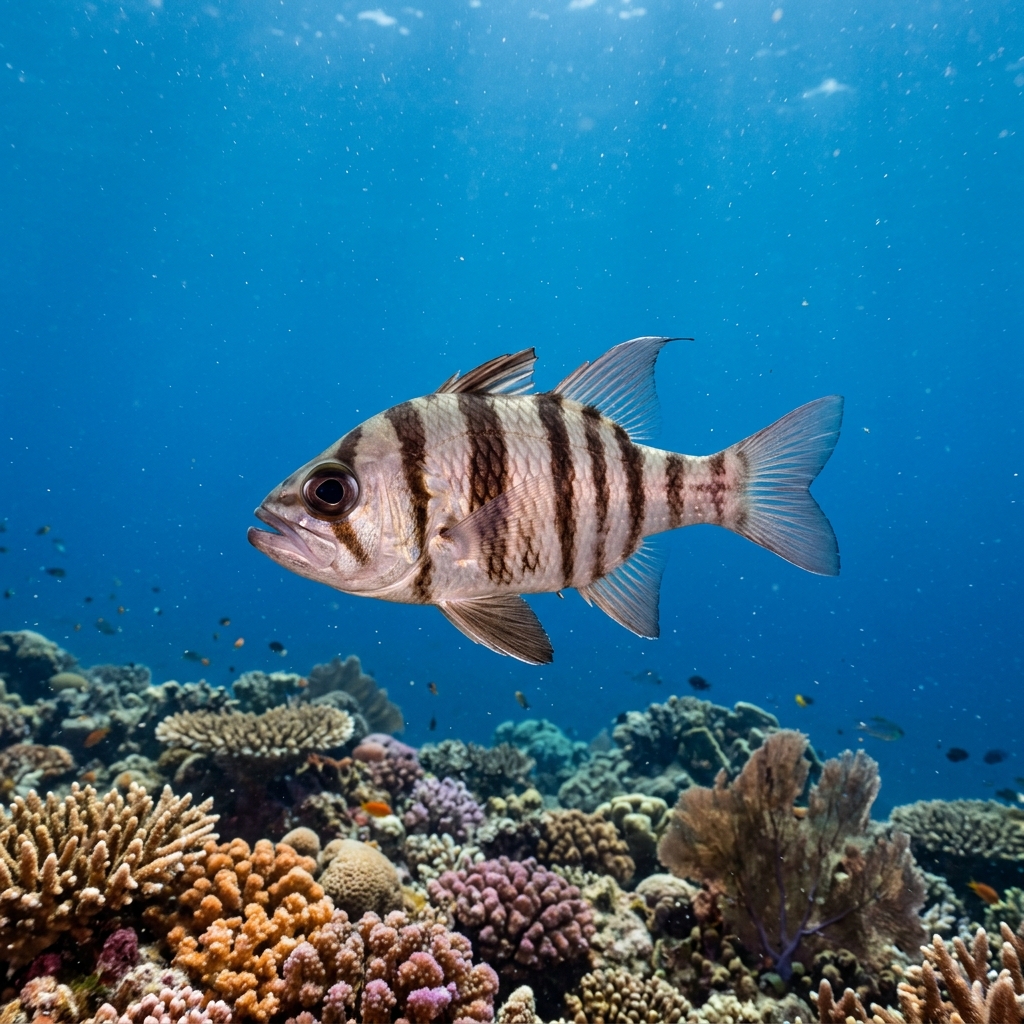
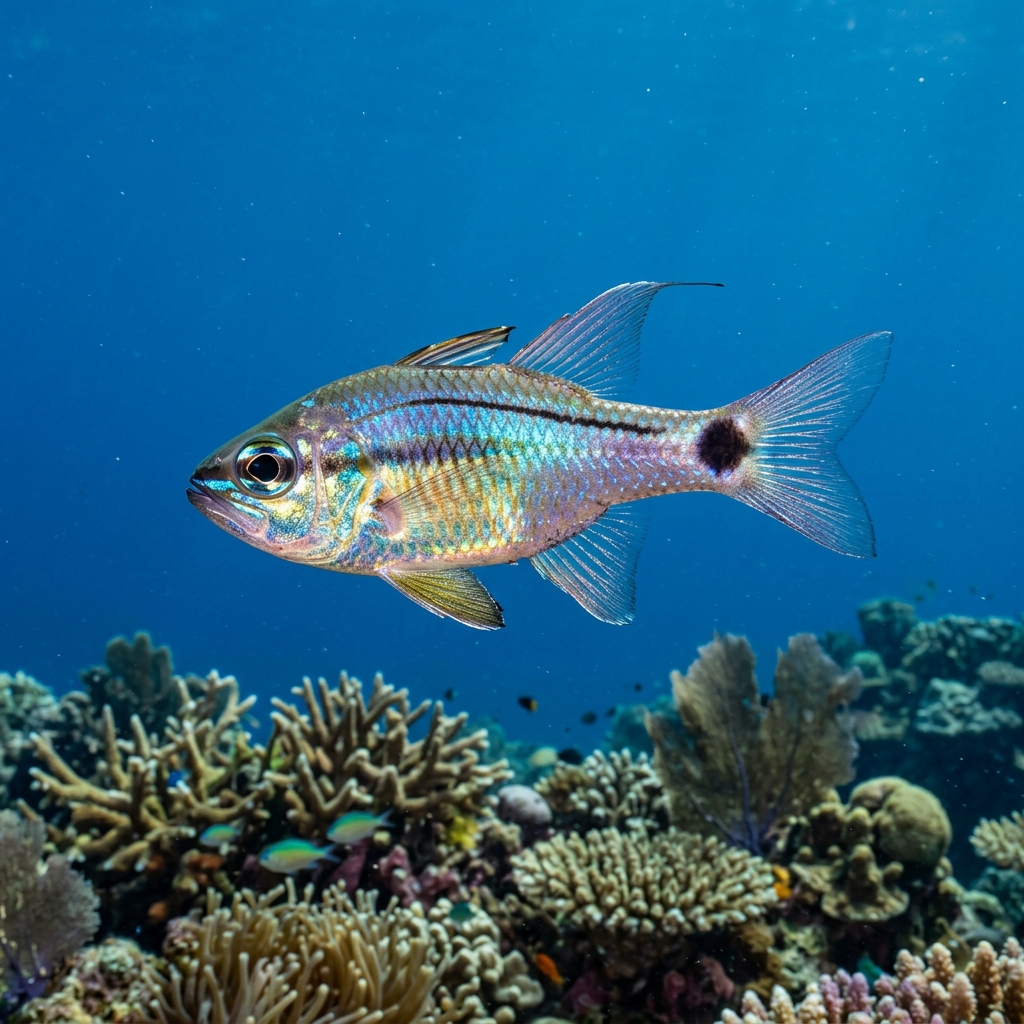
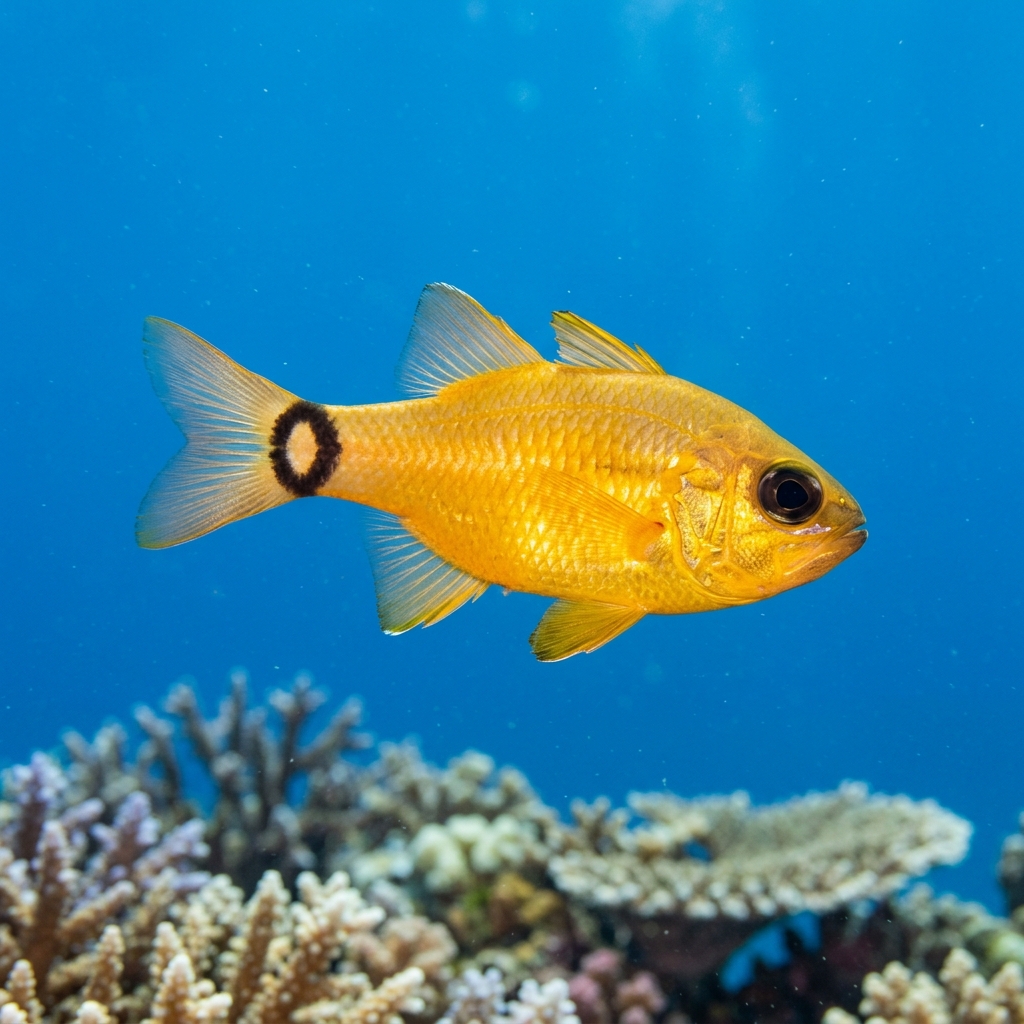
Reef neighbours a diver could mistake it for. Use the identification notes above to tell them apart.
Most reliably logged on reefs in the Visayas region of the Philippines, with strong numbers also coming out of Nusa Tenggara in Indonesia. Sabah in Malaysia turns up a steady scatter of sightings too, and it has been recorded as far east as Guadalcanal in the Solomon Islands, though less often there.
Mapping where Cheek-spot Cardinalfish is logged…
It is most commonly logged on reef dives in the Visayas region of the Philippines and Nusa Tenggara in Indonesia, with additional sightings around Sabah in Malaysia and occasionally Guadalcanal in the Solomon Islands.
Sightings show no strong seasonal pattern, and its comfort range of about 26 to 29 C water means it is present on these reefs throughout the year, so timing your trip around it is not necessary.
Check for a small, tan to reddish-brown body around 7 cm long with a distinct dark spot on the cheek behind the eye. It typically hovers close to coral heads rather than swimming freely over open reef.
They reach roughly 7 cm in length, making them one of the smaller reef fish divers will encounter, best spotted by looking closely at coral heads and ledges rather than scanning open water.
Males of this species are mouthbrooders, holding the fertilised eggs in their mouth until they hatch, a behaviour shared across most cardinalfish and sometimes visible as a swollen jaw on close inspection.
Site and sighting data is aggregated from diver logs, iNaturalist and GBIF. For taxonomy and conservation status:
Iridescent Cardinalfish
1,781 sites