Cheilodipterus macrodon
Spot Tiger Cardinalfish on reefs from the Maldives to the Philippine Visayas. Best seen at night in 24-29 °C tropical waters. Here's what to look for.
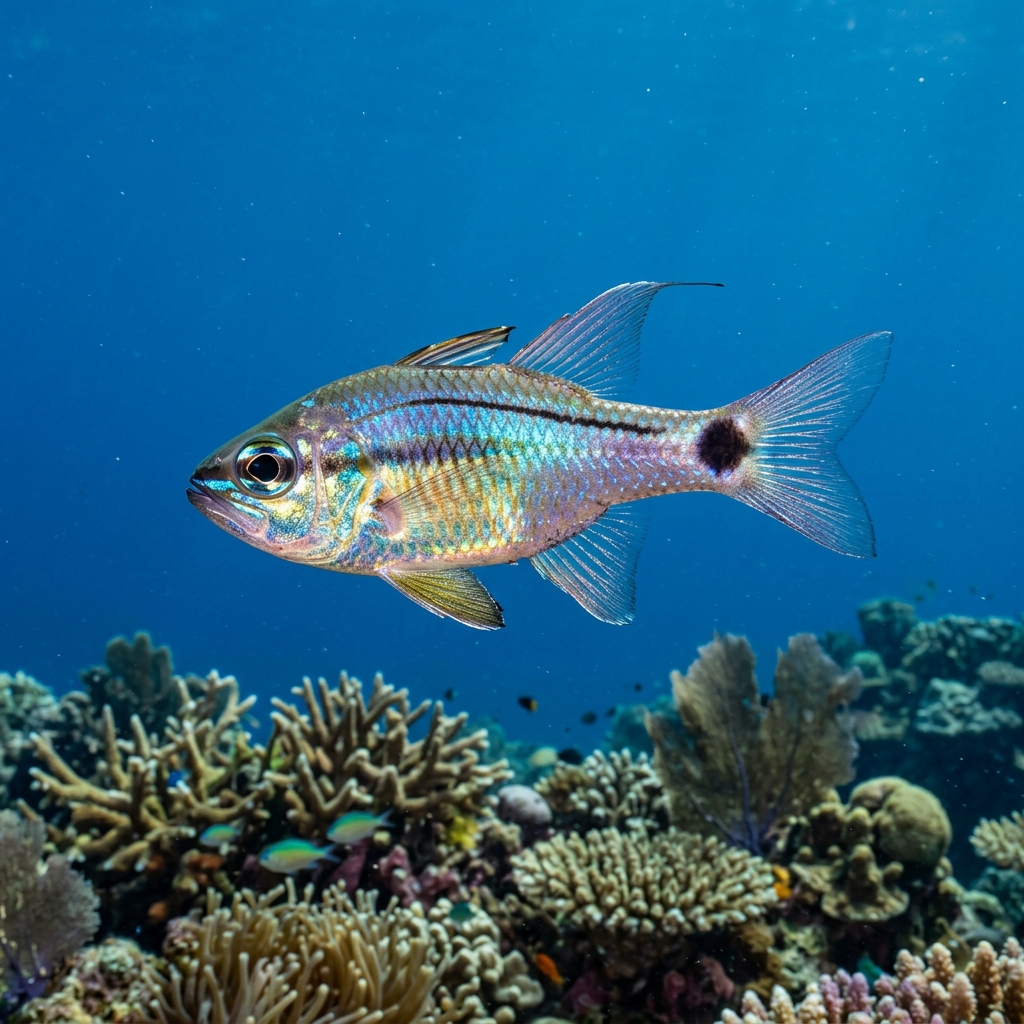
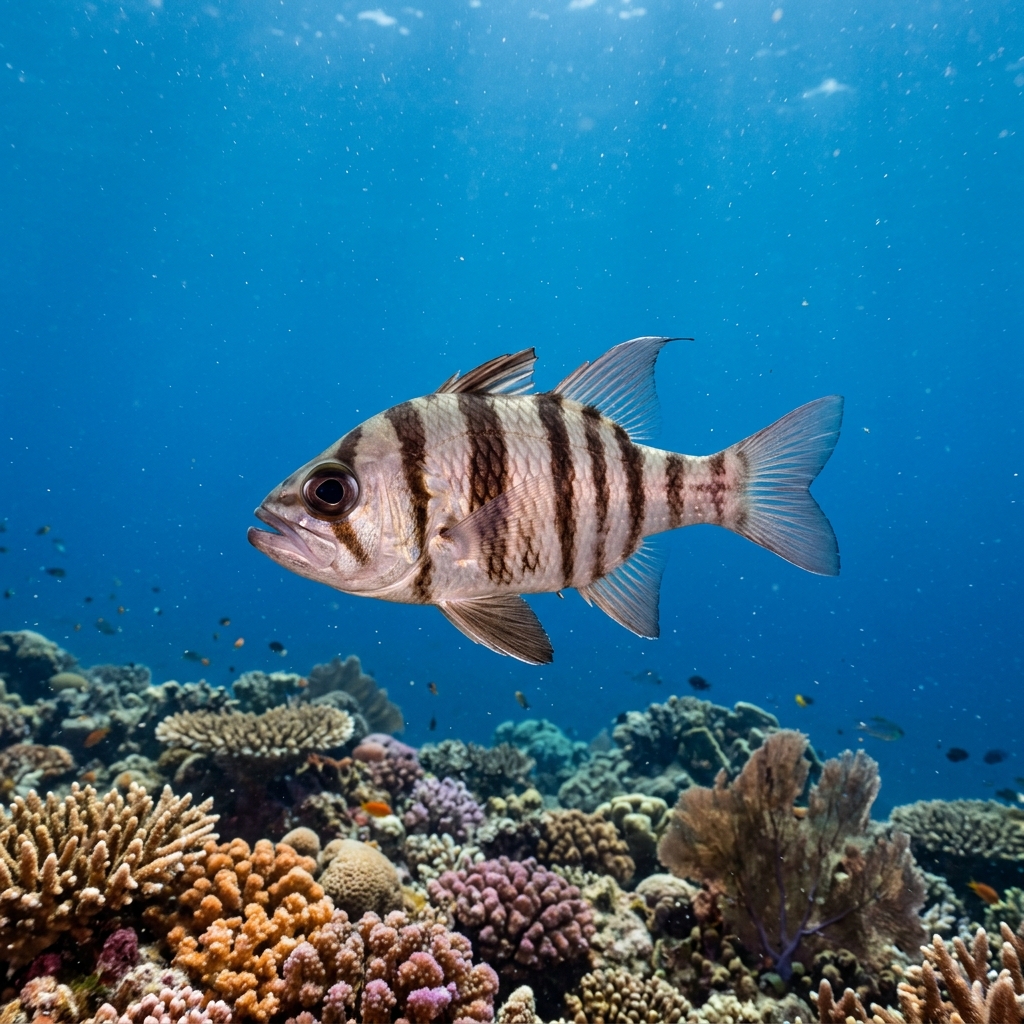
Bold, dark longitudinal stripes running along a pale silvery-white body give this species its name and make it one of the more distinctive cardinalfish underwater. At around 17 cm it sits at the larger end of the family, noticeably chunkier than most small reef cardinalfish you will encounter. Look for a large mouth, relatively big eyes, and two clearly separated dorsal fins. The striped pattern is consistent across individuals, which helps separate it from plainer species in the same habitat.
During the day, tiger cardinalfish tend to hang in sheltered pockets of the reef, often in loose aggregations near overhangs, under table corals, or inside coral heads. They are cautious around divers and will ease deeper into the structure if you push too close, so slow approaches pay off. They are nocturnal hunters, so a night dive gives you the best chance of watching them actively working the water column for small prey.
Like other apogonids (members of the cardinalfish family), tiger cardinalfish are mouthbrooders. The male carries the fertilised egg mass inside his mouth until the eggs hatch, forgoing feeding for the entire incubation period.
Sightings in the Northern Hemisphere concentrate from April through January, making that the most productive window across the Maldives, Red Sea, and Philippines. The species is comfortable in water temperatures of 24 to 29 °C, so it is present on tropical reefs throughout much of the year wherever those temperatures hold.
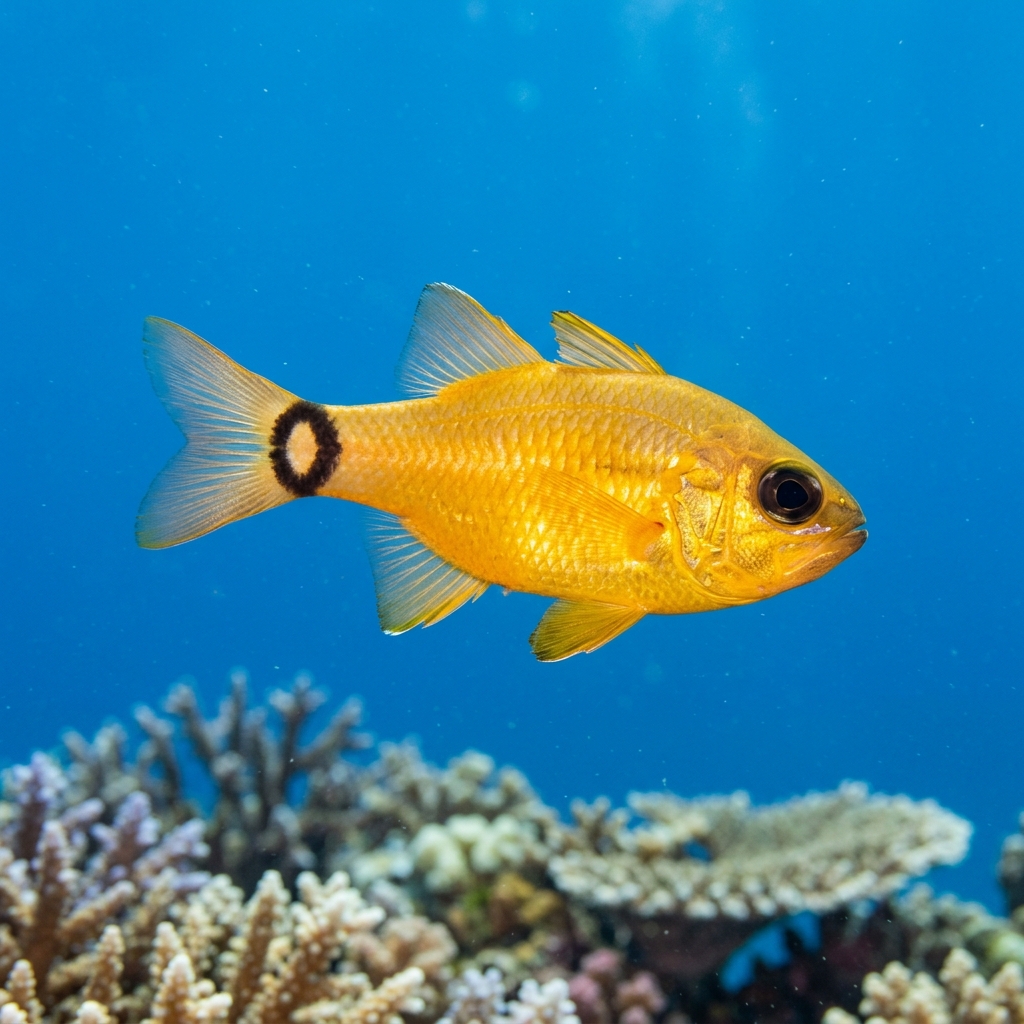
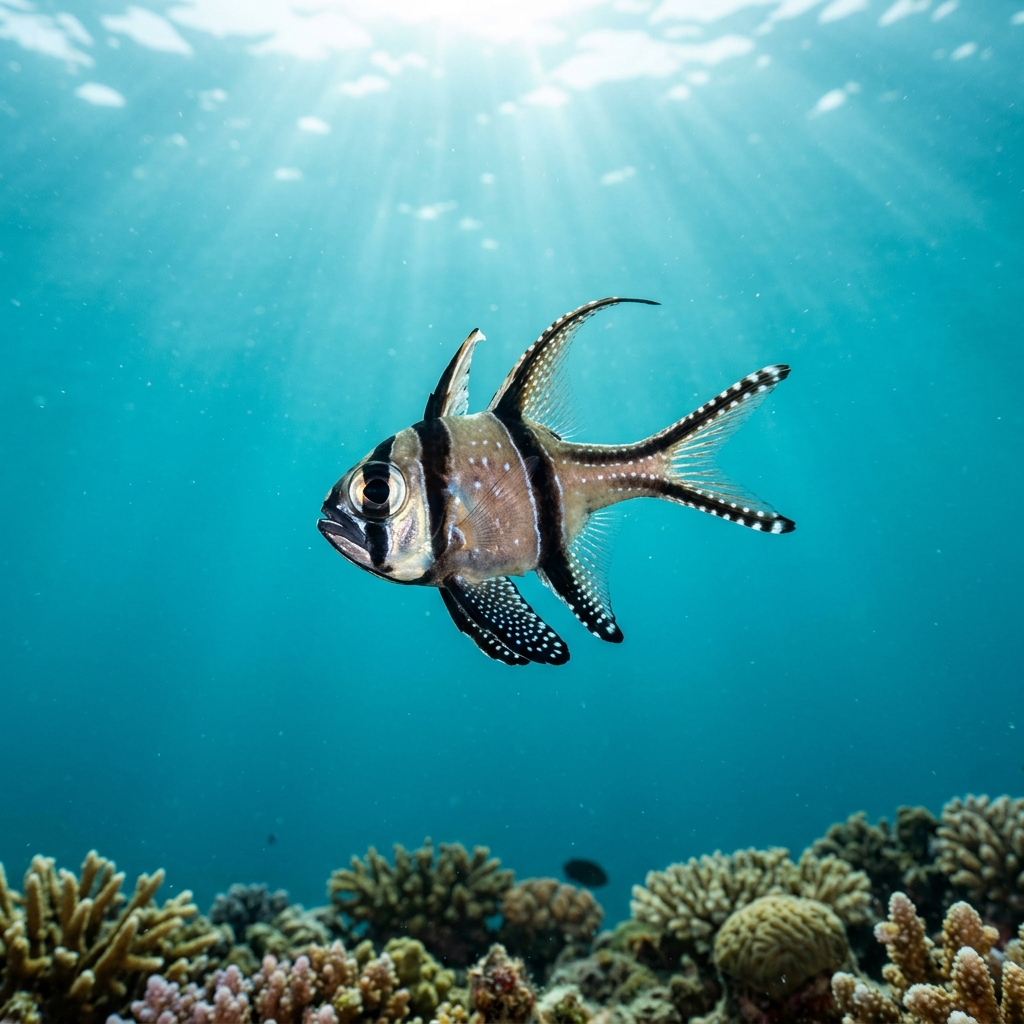
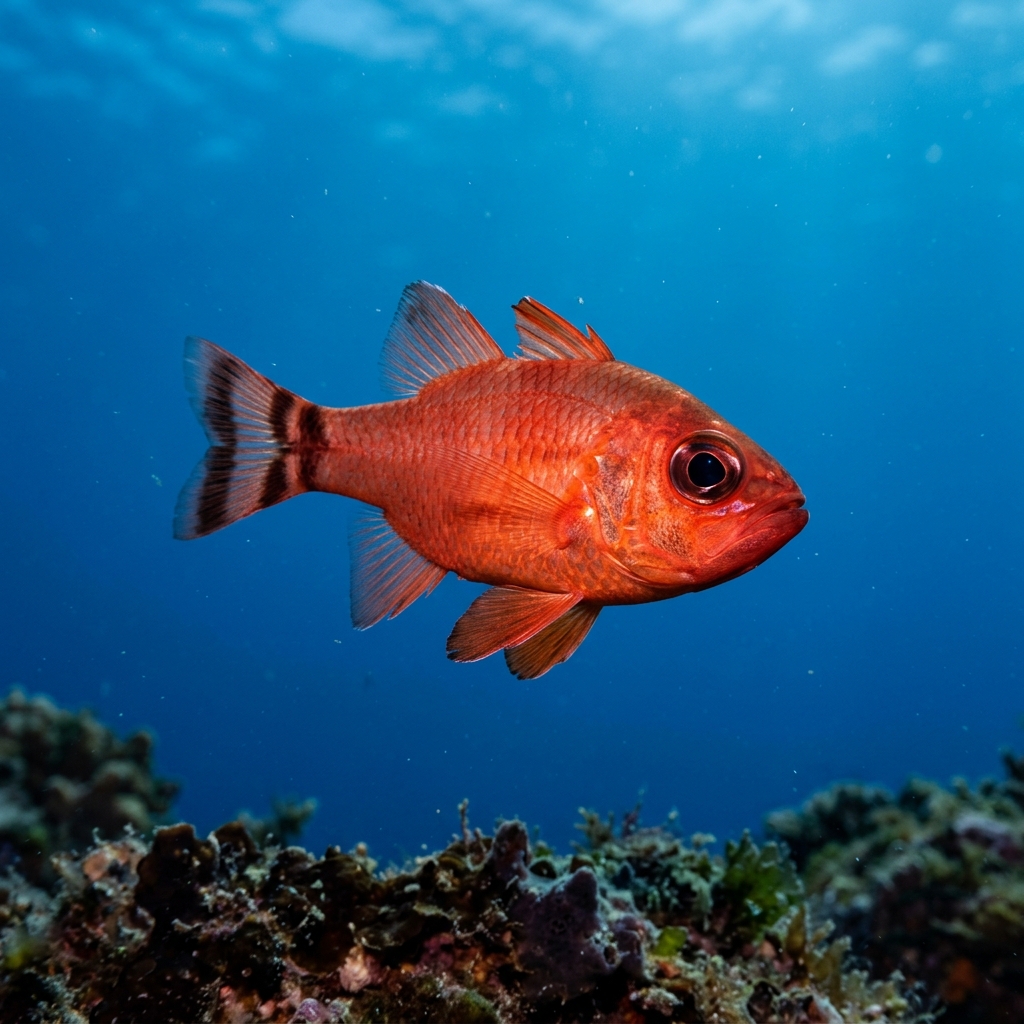
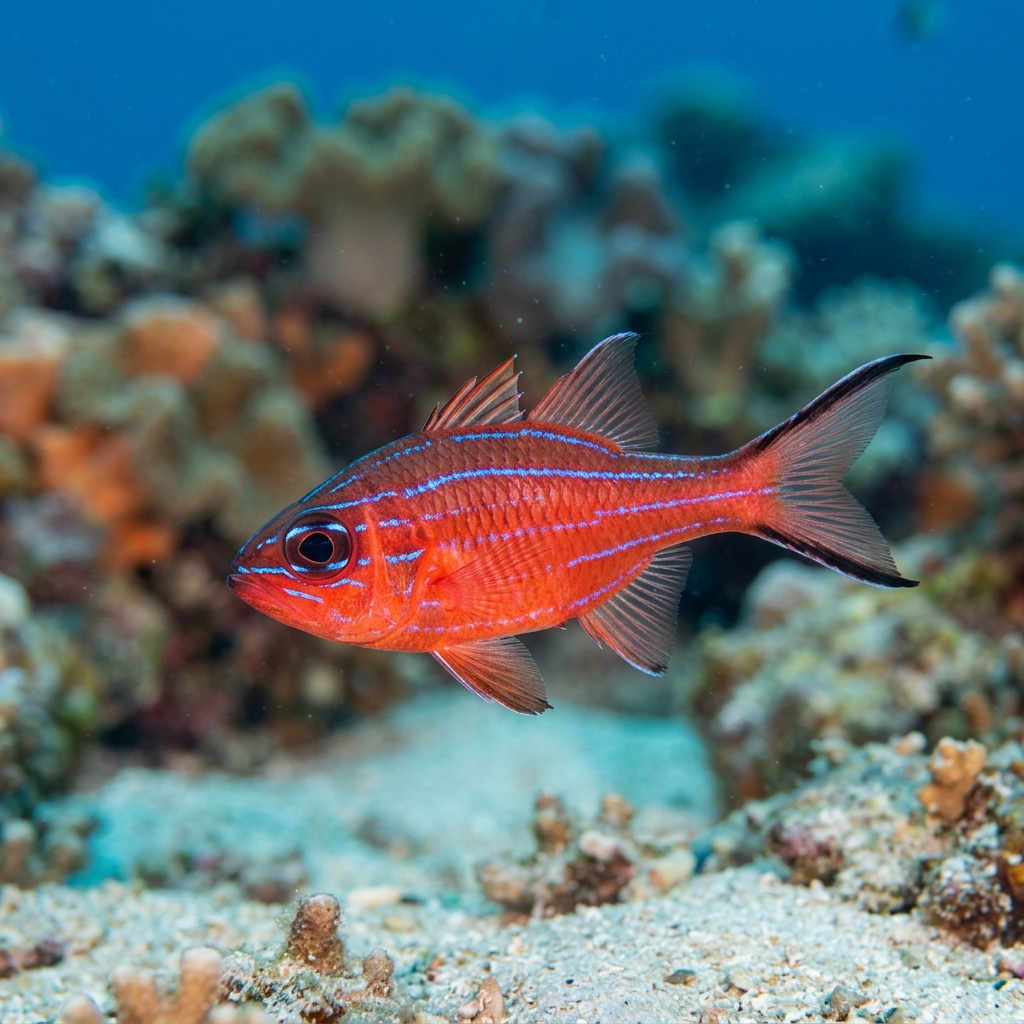
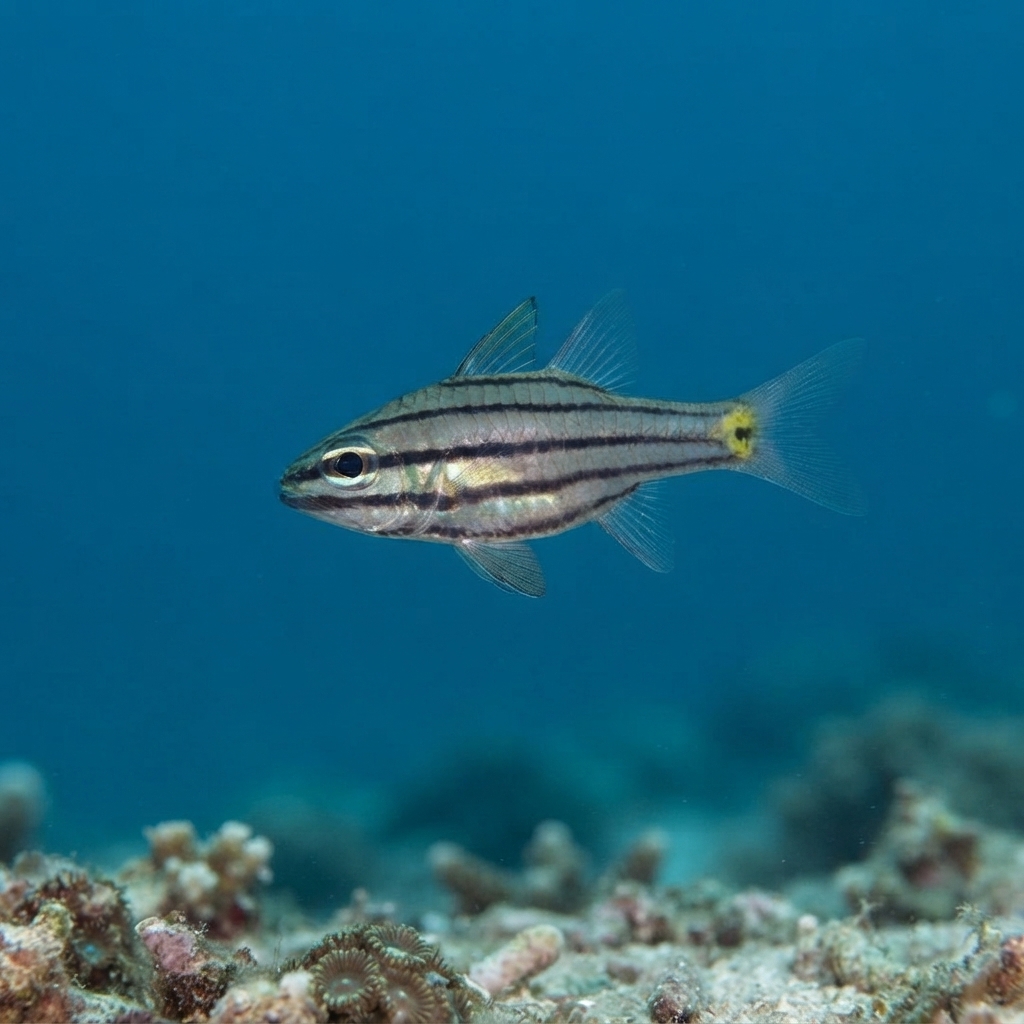
Reef neighbours a diver could mistake it for. Use the identification notes above to tell them apart.
Most commonly logged in the Philippines, Maldives, Indonesia, and the Egyptian Red Sea, with strong representation across the Visayas, the North and Central Atolls of the Maldives, and the reefs around Sharm el Sheikh. Queensland, Australia and Thailand also feature regularly in diver records. Within Southeast Asia, Bali, Palawan, and the Maluku and Papua regions of Indonesia are worth targeting.
Mapping where Tiger Cardinalfish is logged…
They are most reliably logged in the Philippines, Maldives, Indonesia, and Egypt. Key regions include the North and Central Atolls of the Maldives, Sharm el Sheikh in the Egyptian Red Sea, the Visayas in the Philippines, and Bali in Indonesia. Australia and Thailand also feature regularly in diver records.
In Northern Hemisphere destinations such as the Maldives, Red Sea, and Philippines, sightings concentrate from April through January. The species favours water temperatures of 24 to 29 °C and is present on suitable tropical reefs across most of the year wherever those conditions persist.
Look for bold dark horizontal stripes on a pale body, a large mouth, oversized eyes, and two clearly separated dorsal fins. At around 17 cm it is larger than many reef cardinalfish. The Ringtail Cardinalfish is similar but typically shows a distinctive dark caudal-peduncle band rather than full-length body stripes.
They reach around 17 cm, making them one of the larger members of the cardinalfish family. That extra size, combined with the striped pattern, is one of the easiest ways to pick them out from the many smaller, plainer cardinalfish sharing the same reef.
No. They pose no threat to divers. They are shy and will retreat from approaching divers rather than stand their ground. Slow, calm movements are all that is needed to observe them comfortably.
Yes. Like other cardinalfish, they are mouthbrooders. The male incubates the fertilised egg mass inside his mouth until the eggs hatch, and does not feed during this period. If you spot a cardinalfish with noticeably puffed-out cheeks, there is a good chance it is brooding.
Site and sighting data is aggregated from diver logs, iNaturalist and GBIF. For taxonomy and conservation status:
Ringtail Cardinalfish
1,384 sites