Apogon imberbis
Spot Mediterranean Cardinalfish in the French Riviera, Costa Brava, and Sardinia. Cave-dwellers active at night, in water from 13 to 21 °C.
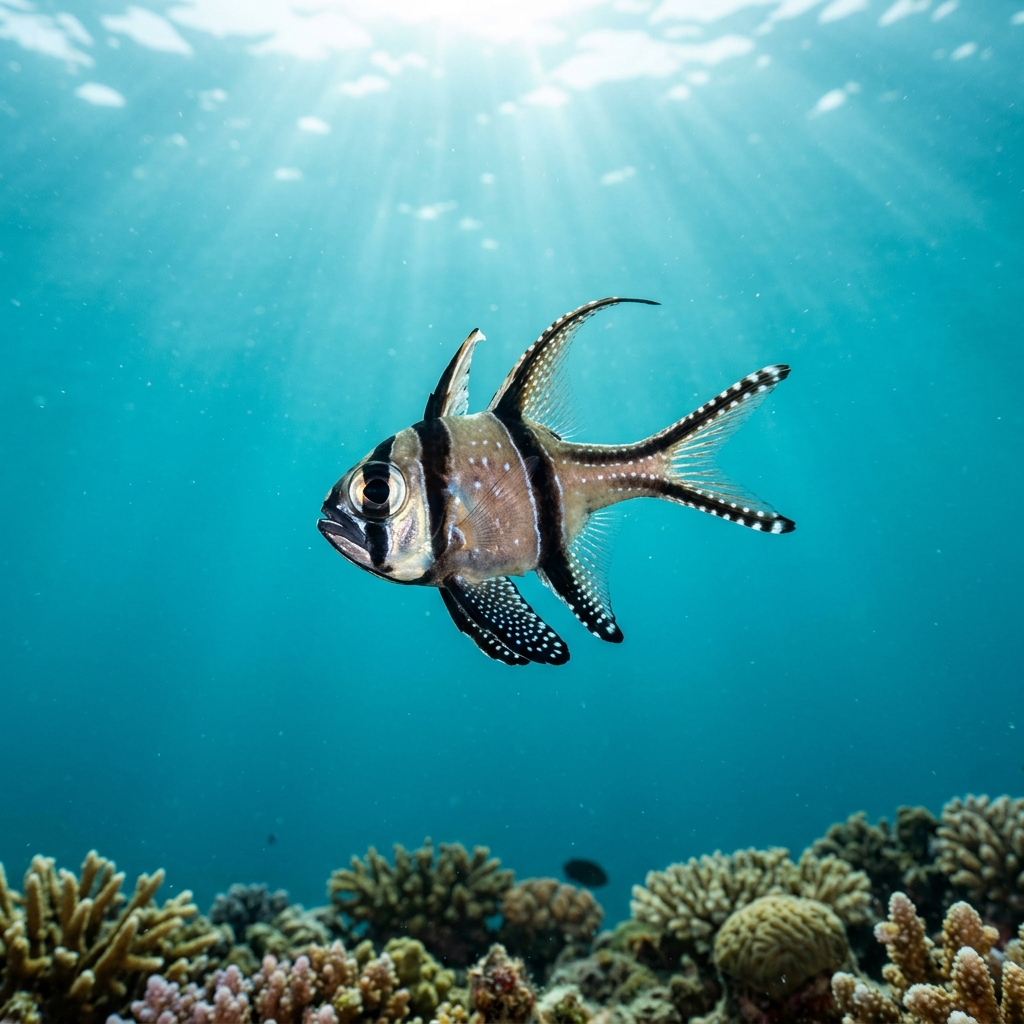
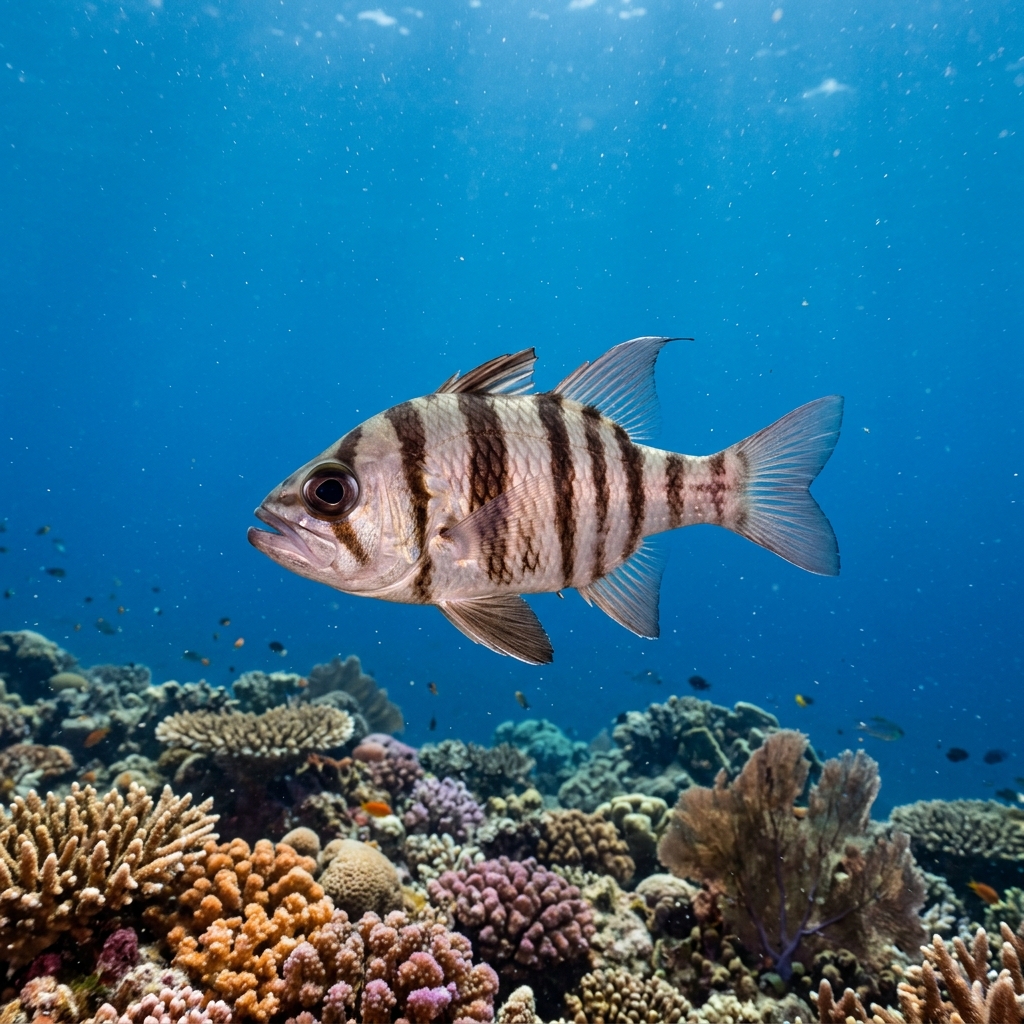
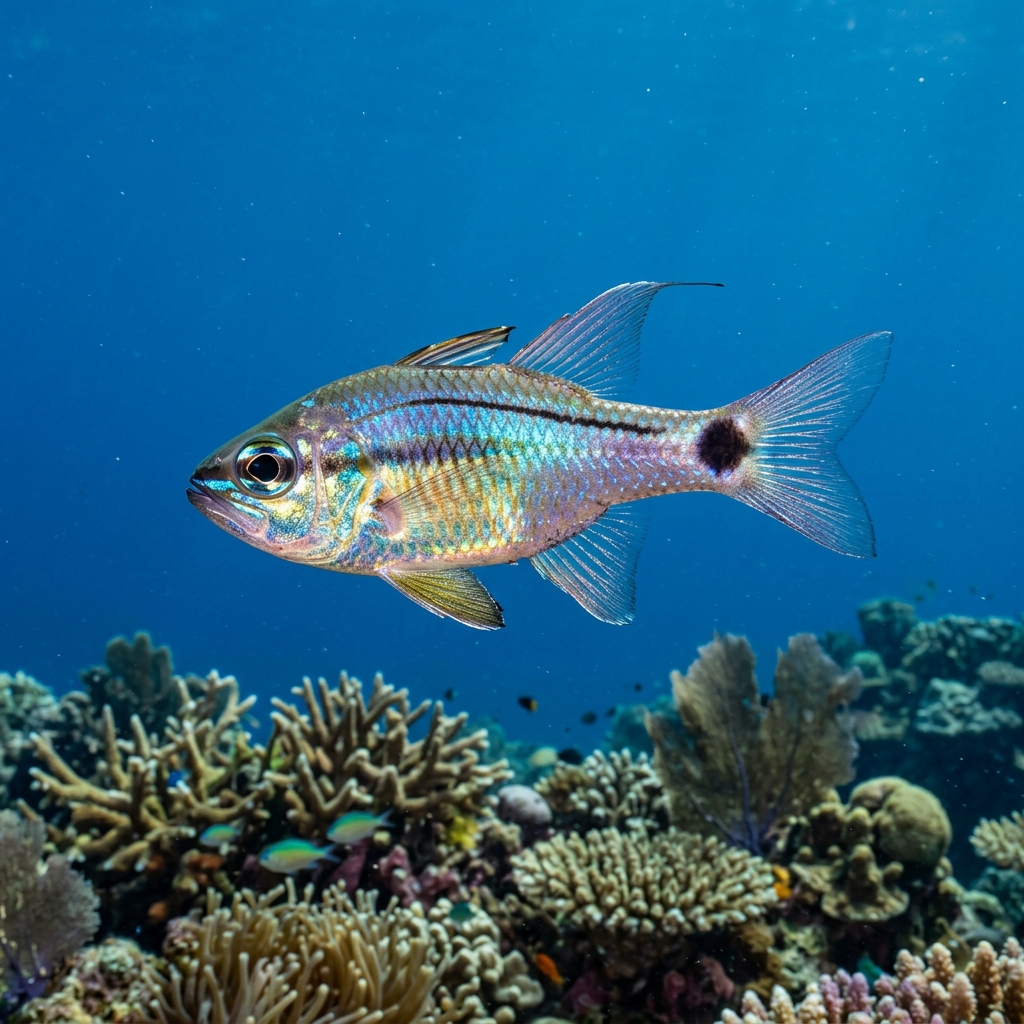
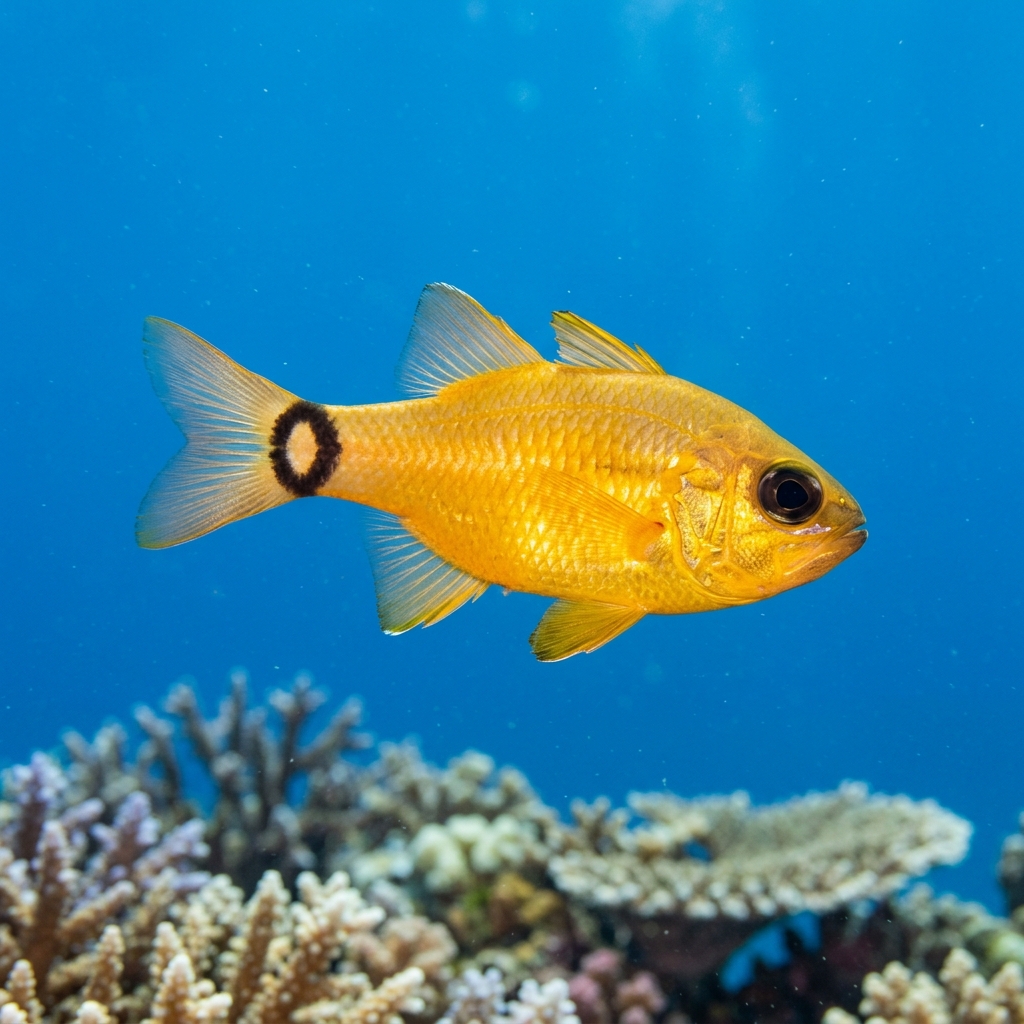
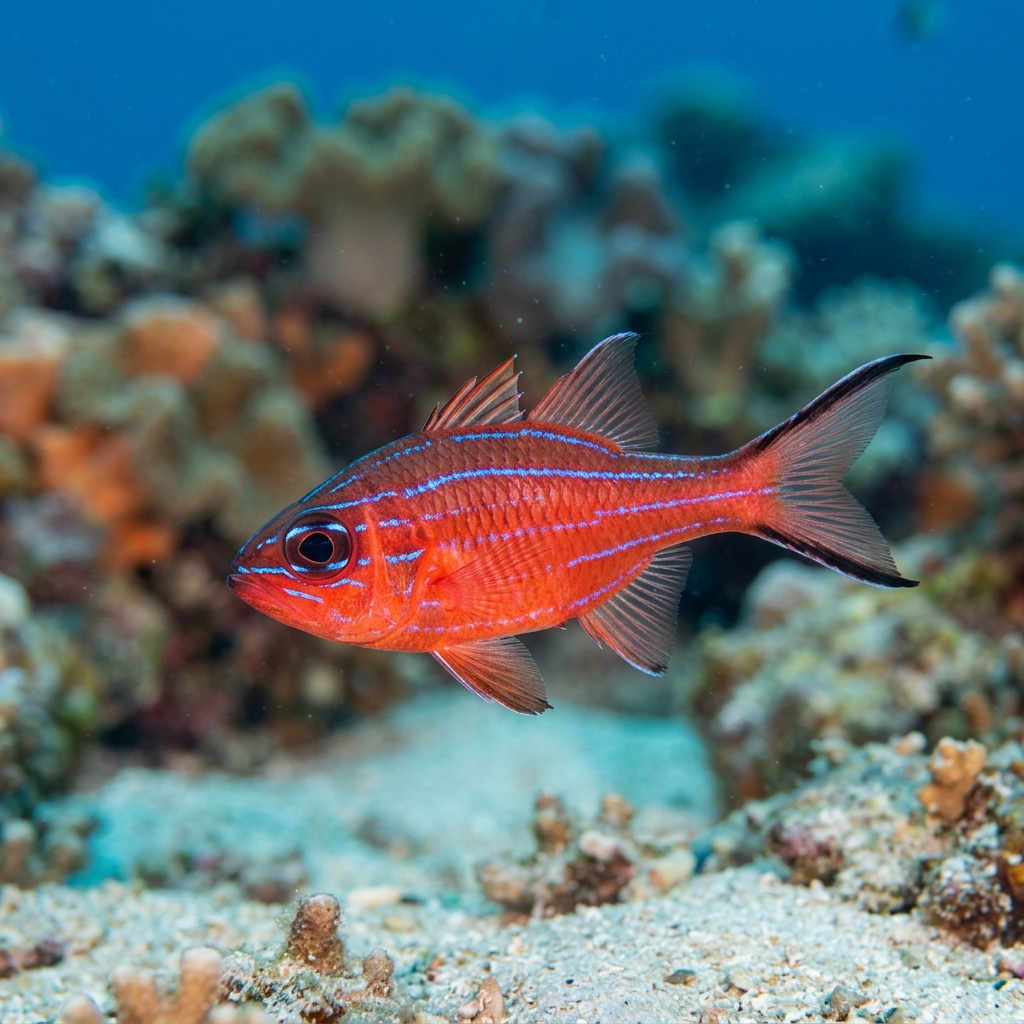
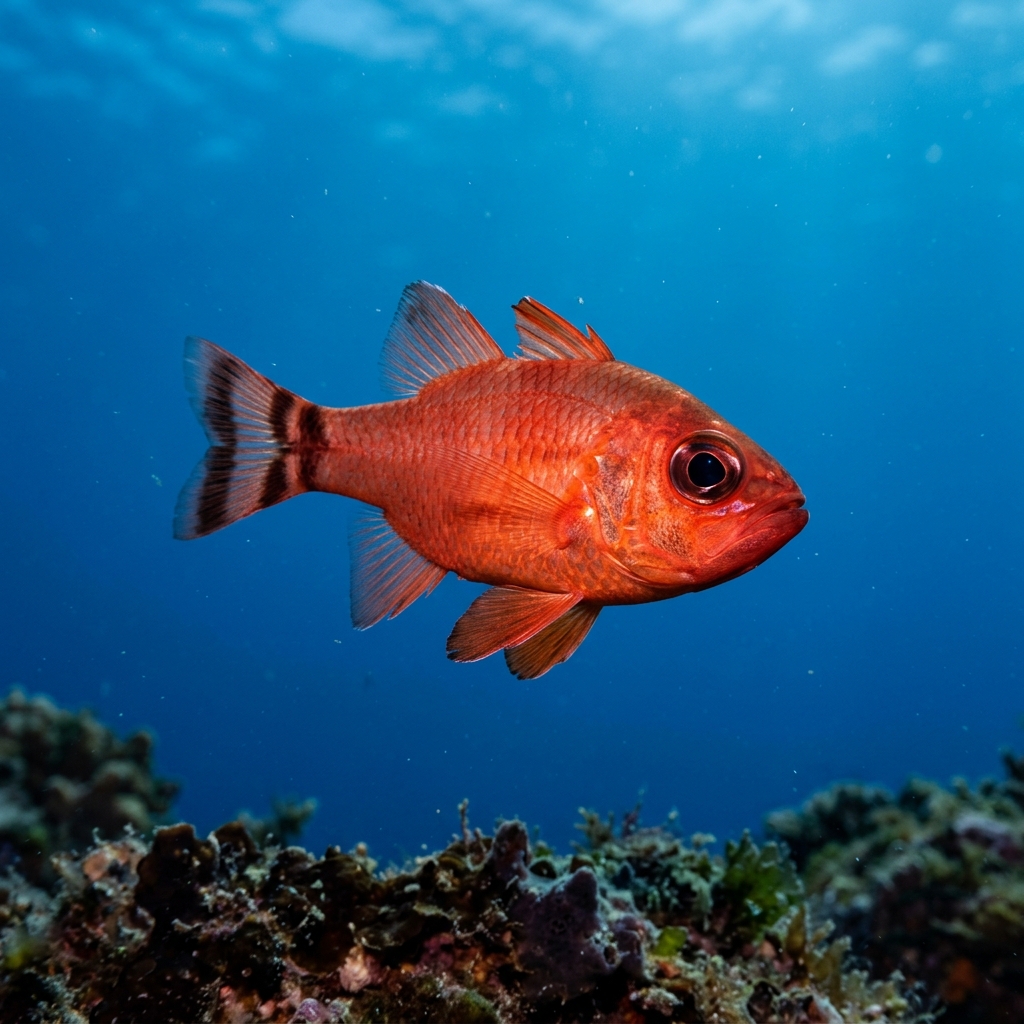
A small, compact fish, roughly 10 cm, with a vivid red to orange-red body and disproportionately large, dark eyes that betray its nocturnal lifestyle. The body is laterally flattened with two distinct dorsal fins, and the overall colouring is fairly uniform without bold stripes or spots, which sets it apart from most other small reef fish sharing its habitat. Underwater, the large eyes and warm reddish hue are the two details to key on, especially when torchlight catches a cluster of them in a cave or crevice.
During the day, cardinalfish huddle in groups inside caves, under ledges, and within deep crevices, approach slowly with a torch and you will often find a loose cluster hovering almost motionless in the shadows. At night they disperse to actively hunt small invertebrates, and this is when behaviour becomes far more interesting to watch. They are not especially wary; a calm, deliberate approach rarely sends them fleeing, and they will often simply shift a little deeper into the cave rather than bolt.
Like many cardinalfish, the Mediterranean cardinalfish is a paternal mouthbrooder, the male incubates the fertilised egg mass inside his mouth until the larvae hatch, during which time he does not eat.
Sightings concentrate from April through January, suggesting a broad season with a likely dip in the coldest winter months. The species tolerates cool water down to around 13 °C, so a spring start and a long autumn run are realistic across the northern Mediterranean.
Most commonly logged across Spain, Italy, and France, with the French Riviera and Provence, Costa Brava, Costa Blanca, and the waters around Sardinia and Tuscany standing out as particularly strong regions. Greece and Croatia also show solid records, and the Canary Islands extend its range into the eastern Atlantic. Malta, the Balearic Islands, and Sicily round out the reliable spots around the central Mediterranean basin.
Mapping where Mediterranean Cardinalfish is logged…
The strongest sightings come from the French Riviera and Provence, Costa Brava, Costa Blanca, and the waters around Sardinia and Tuscany. Spain, Italy, and France collectively account for the vast majority of logged records, with Greece, Croatia, Malta, and the Canary Islands also well represented.
Sightings are most consistent from April through January across the northern Mediterranean. The coldest winter months see a natural dip, but the species tolerates cool water well, so the season is long compared with many reef fish. Night dives during this period give the best chance of seeing them actively feeding.
Look for a small, roughly 10 cm fish with a uniform red to orange-red body and notably large, dark eyes. Two separate dorsal fins and a compact, laterally flattened shape help narrow it down. You will usually find them grouped inside caves or under overhangs rather than out in open water.
Adults typically reach around 10 cm in length. In the water they look quite small and delicate, which is part of why the large eyes are such a reliable ID feature, they seem almost oversized for the body.
Yes. The male broods the fertilised egg mass inside his mouth until the larvae are ready to hatch. During this period he cannot feed at all. It is a relatively rare reproductive strategy among Mediterranean reef fish and a good reason to look closely at any individual you find hovering alone near a cave.
Not at all. They pose no threat to divers and will typically retreat slowly into a crevice if approached too quickly rather than showing any defensive behaviour. A slow, calm approach with a torch is all you need.
Site and sighting data is aggregated from diver logs, iNaturalist and GBIF. For taxonomy and conservation status:
Ringtail Cardinalfish
1,384 sites