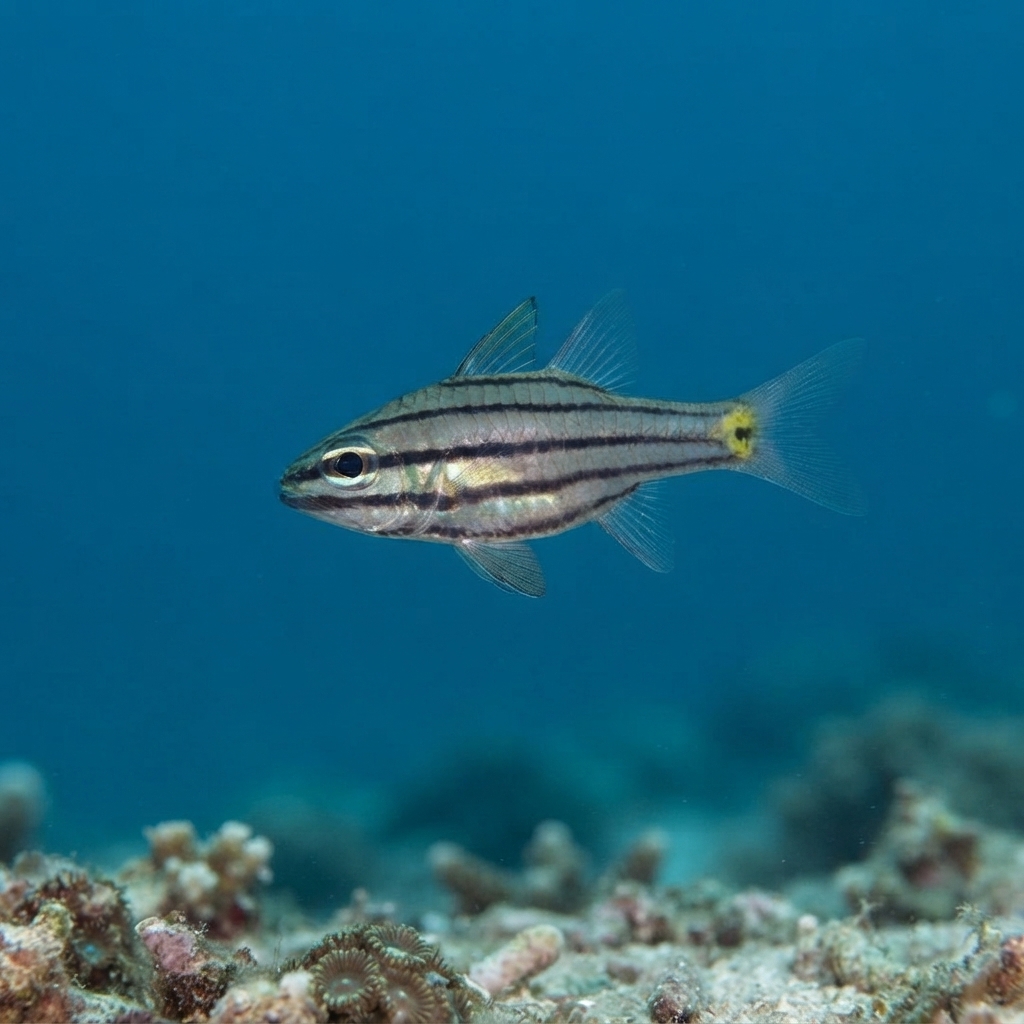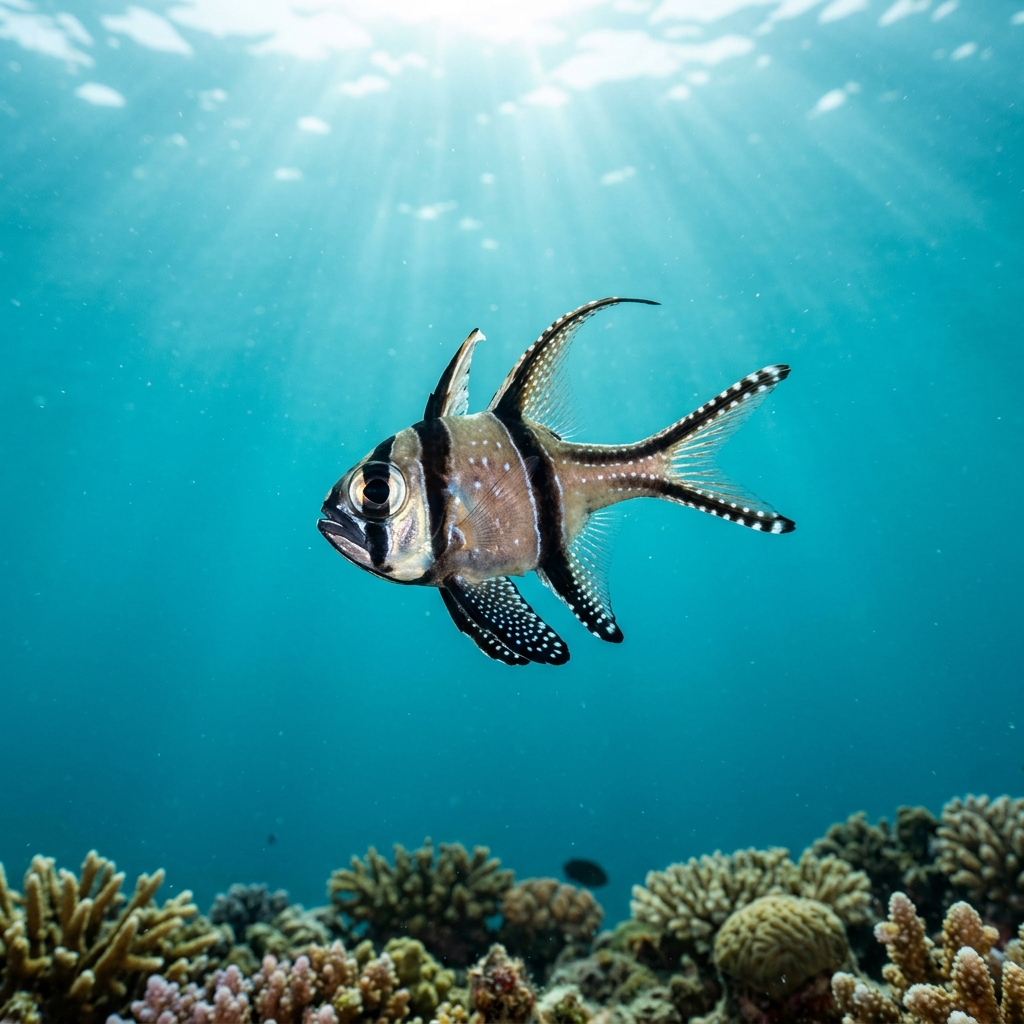
Apogonidae spp.
Spot cardinalfish on reefs from the Philippines to the Red Sea. Year-round sightings in warm tropical waters, here's where divers see them most.
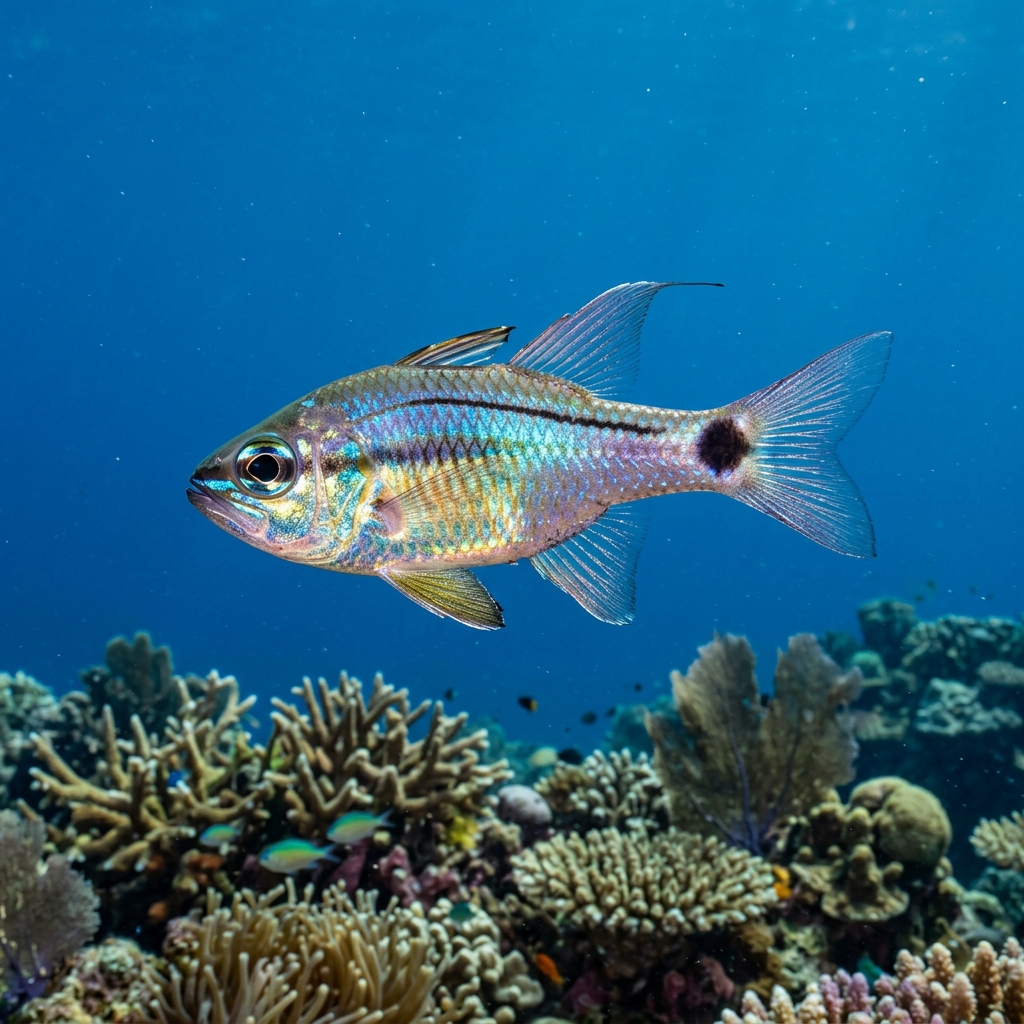
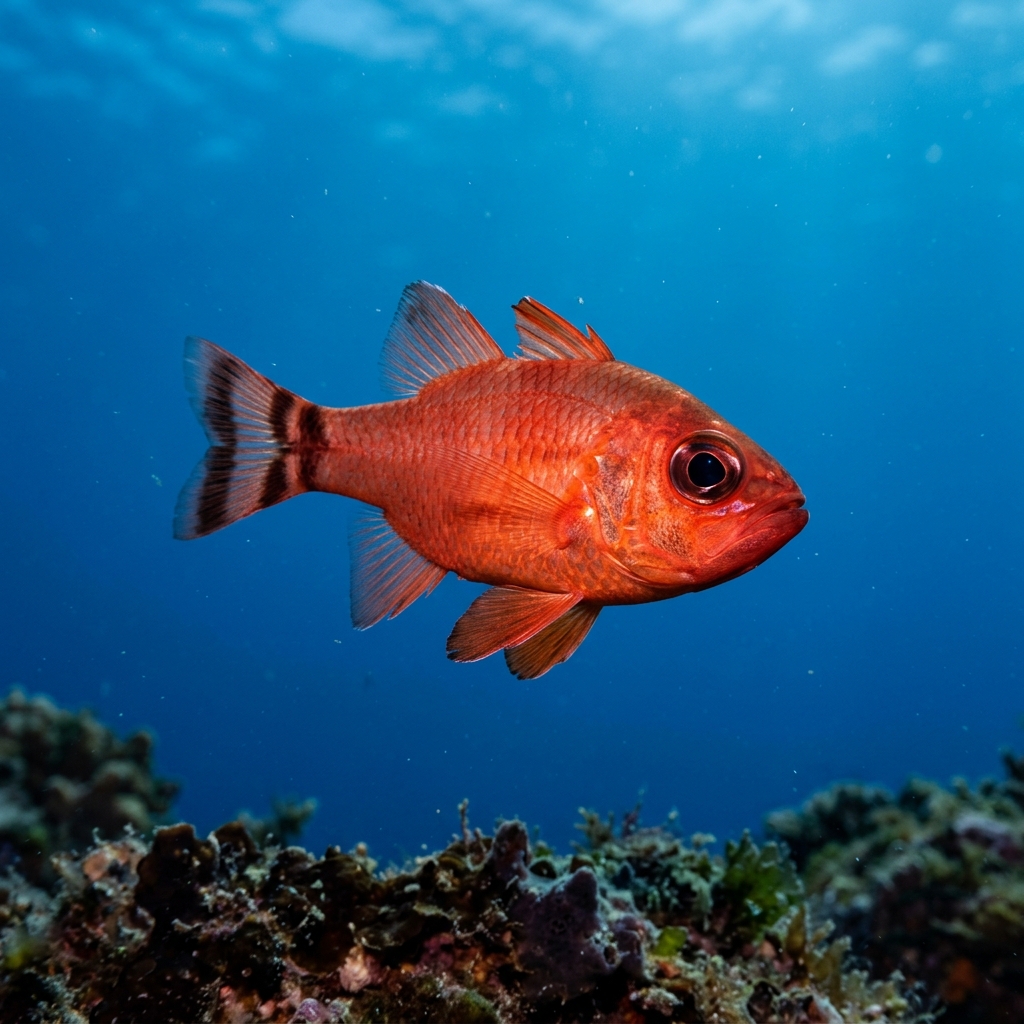
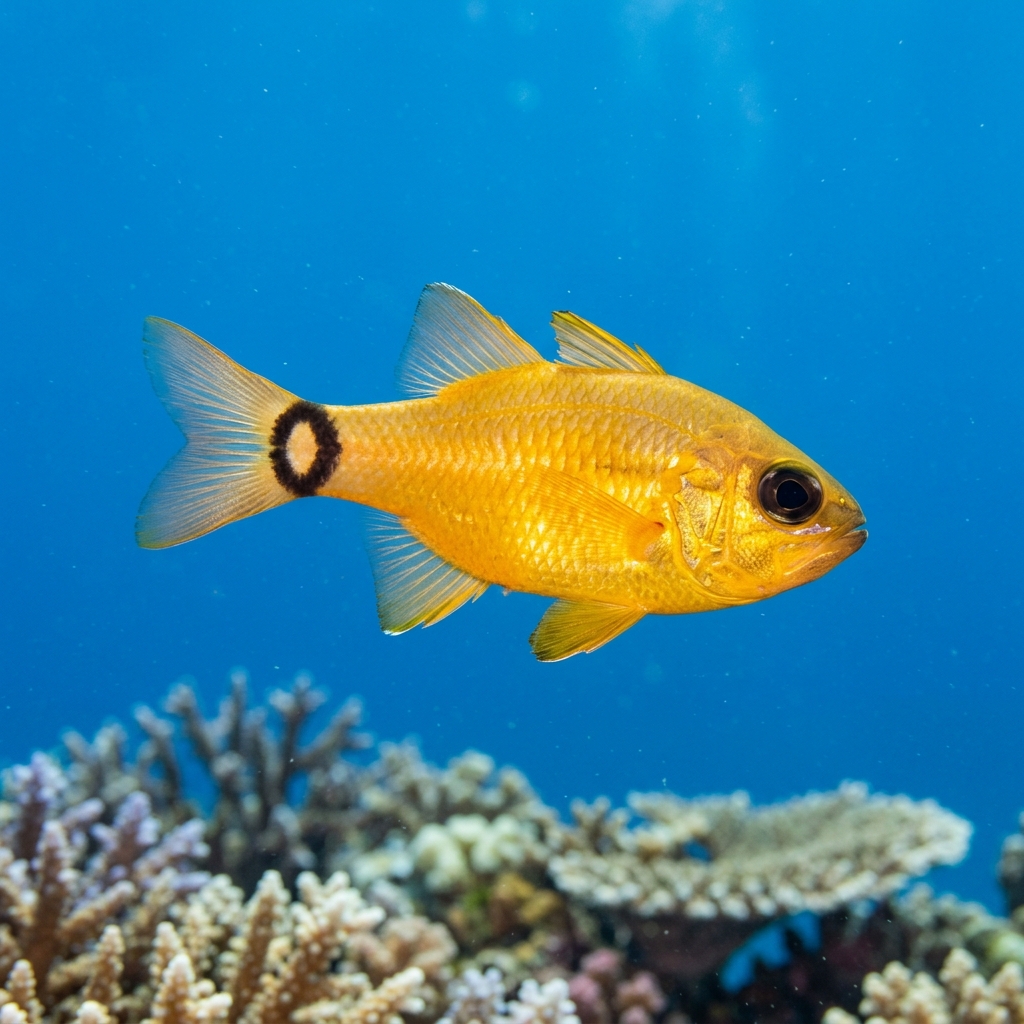
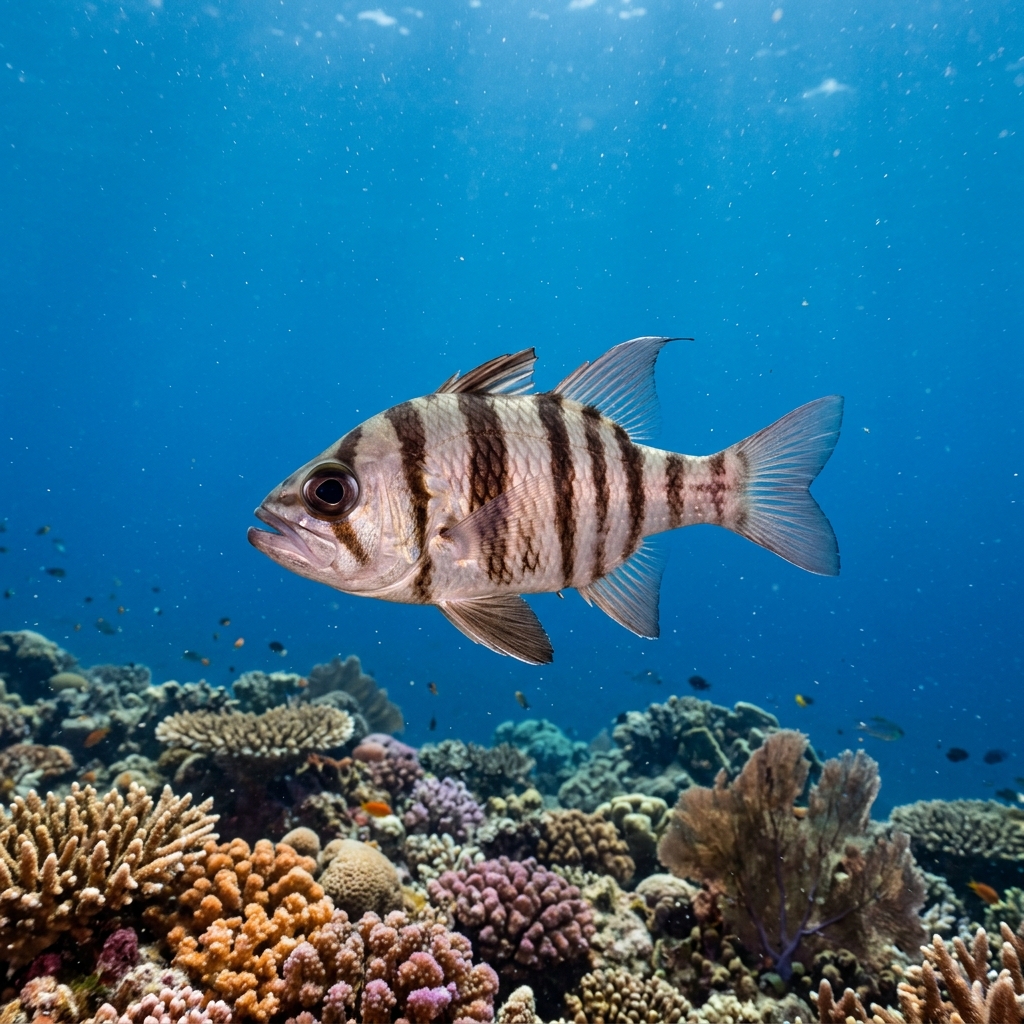
Most cardinalfish are small, deep-bodied fish, typically a few centimetres long, with notably large eyes and a distinctly large mouth relative to their head size. Colouration varies widely across the family, from plain translucent orange-red to boldly striped or spotted patterns, but that oversized eye is a reliable clue at any depth. They tend to hover almost motionless in small groups, often tucked into coral heads or under ledges, which makes them look more deliberate and less darty than similarly sized reef fish. Two dorsal fins (the front one spiny, the rear one soft-rayed) give the silhouette a slightly humped look when viewed from the side.
Cardinalfish are most active at night, but divers commonly find them during the day hovering in tight clusters among branching corals, inside crevices, or beneath table corals, essentially anywhere that offers shade and shelter. They are generally unfazed by slow-moving divers and will hold their position, making them easy to observe at close range. At dusk, groups begin to disperse and feed on small zooplankton (tiny floating invertebrates) in the water column, so a late-afternoon dive can offer livelier sightings.
Males of many cardinalfish species are mouthbrooders, after spawning, the male carries the entire egg mass inside his mouth until the eggs hatch, forgoing feeding for the duration. You can sometimes spot a brooding male by his noticeably distended jaw.
Present year-round in both hemispheres, there is no concentrated season. The family thrives in water between roughly 20 and 29 °C, which covers most tropical and warm-temperate reef systems throughout the year.
Reef neighbours a diver could mistake it for. Use the identification notes above to tell them apart.
Cardinalfish are most widely logged across the Philippines and Indonesia, with the Visayas, Sulawesi, Bali, and Maluku all producing strong sighting records. The Maldives and Malaysia are also reliable destinations, and divers regularly encounter them in the Egyptian Red Sea and along Australia's Western Australian reefs. In the United States, Florida and the Southeast coast account for the bulk of domestic sightings.
Mapping where Cardinalfish is logged…
Cardinalfish are logged across a huge range of sites worldwide. The Philippines, especially the Visayas, and Indonesia, including Sulawesi and Bali, lead the count. The Maldives, Malaysia, Egypt's Red Sea, and Australia's west coast are also strong destinations. Florida divers encounter them regularly too.
There is no best season, cardinalfish are present year-round in both hemispheres. They favour warm tropical and subtropical reefs where water temperatures stay broadly between 20 and 29 °C, so any time of year works on most of the top dive destinations.
Look for a small, somewhat stocky fish with disproportionately large eyes and a big upturned mouth, hovering nearly still in the shade of a coral head or crevice. Two separate dorsal fins and a slightly rounded body profile help distinguish them from similarly sized blennies or gobies. Colour ranges from plain reddish-orange to boldly striped depending on species.
Not at all. Cardinalfish pose no threat to divers. They are small, non-aggressive, and typically hold their ground rather than fleeing, making them relaxed subjects for observation and photography.
Most species in the family are quite small, the majority of what divers encounter are between 5 and 10 cm long, though a handful of species can reach around 15 cm. Their small size is part of why the large eye is such a useful identification feature: it looks very prominent on a compact body.
Yes, many species in the family practise paternal mouthbrooding. After the female lays eggs, the male takes the entire clutch into his mouth and carries it until the larvae hatch, sometimes for a week or more. He cannot eat during this time. A brooding male is identifiable by a visibly bulging, lumpy lower jaw.
Site and sighting data is aggregated from diver logs, iNaturalist and GBIF. For taxonomy and conservation status:
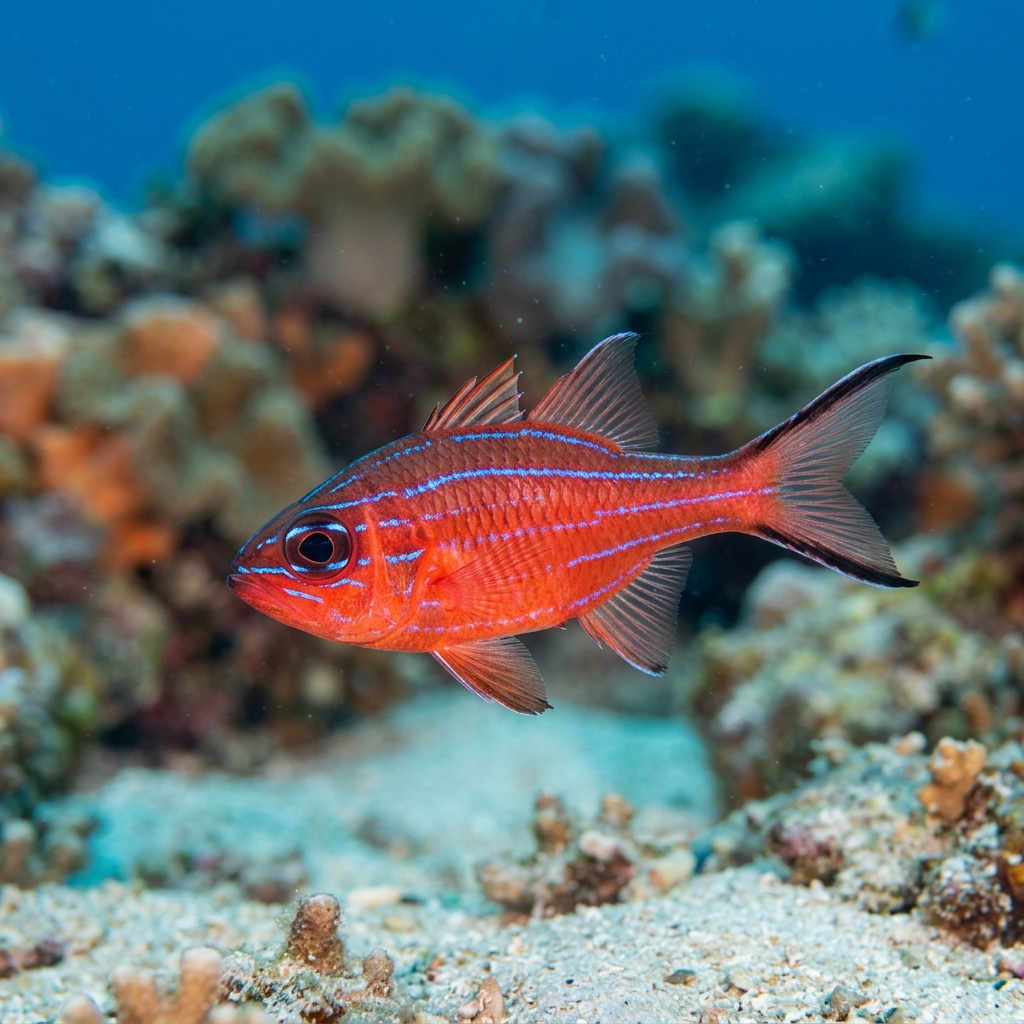
Ostorhinchus limenus
Ringtail Cardinalfish
1,384 sites