Dardanus megistos
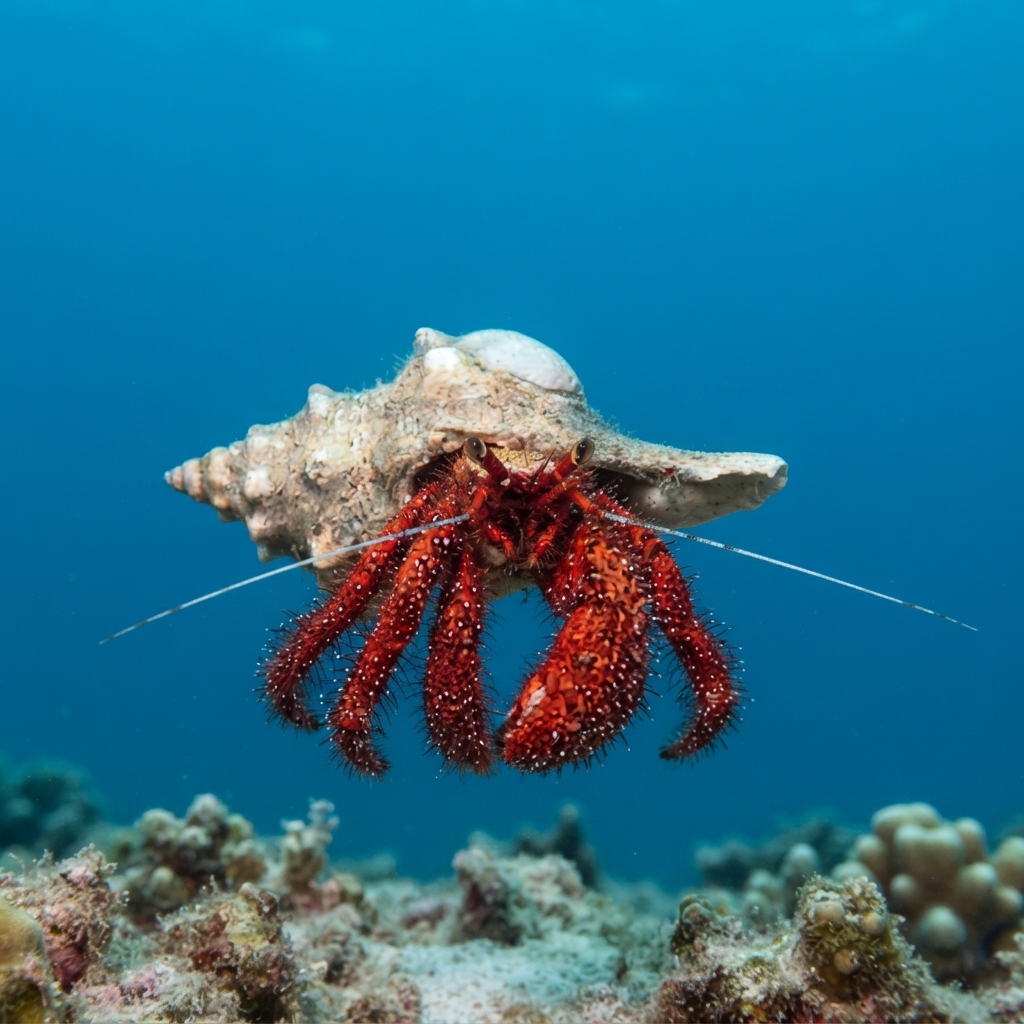
Bright red claws and white-spotted legs on a hermit crab the size of a fist, logged reliably across Okinawa, the Maldives and the Philippines.
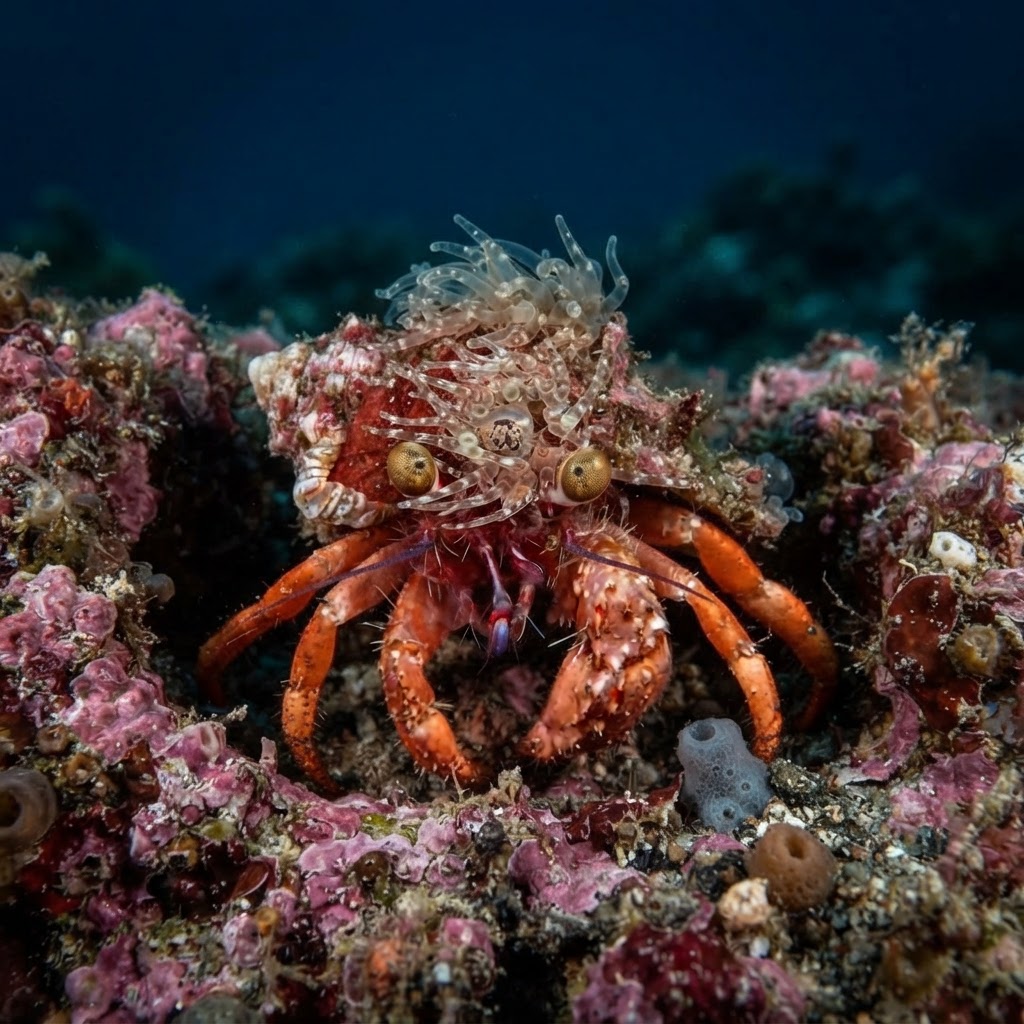
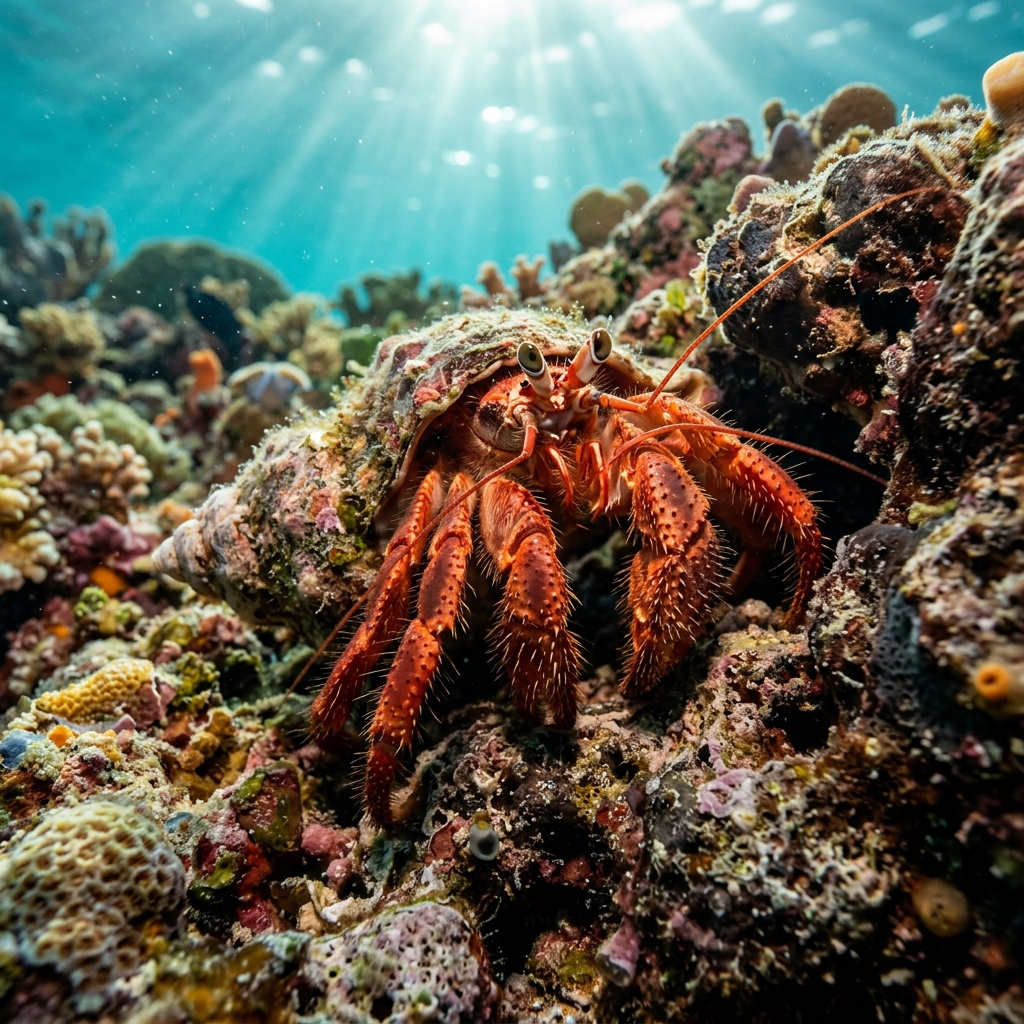
Bulky hermit crab, around 14 cm across the legs, dragging a large borrowed shell that often looks almost too small for it. Legs and claws are deep red to orange, covered in distinct white or cream spots and blotches that give it its name. The claws are thick and heavily armoured, and one is noticeably larger than the other, used to plug the shell opening when it withdraws.
Usually spotted plodding slowly across sand patches, rubble, or the reef base, often at night or tucked into shade during the day. It reacts to divers by freezing or retreating into its shell rather than fleeing, so a slow approach and a bit of patience usually gets a good look. Keep an eye on crevices and under ledges on shallower reef flats, where it tends to forage for scraps.
It outgrows its borrowed shell repeatedly through life and has to find and move into a larger one each time, a vulnerable moment when its soft abdomen is briefly exposed.
No clear season shows up in the sightings data, and its comfort range of 23.5 to 29.9 C covers most tropical reef conditions year-round, so any month works at its core sites.
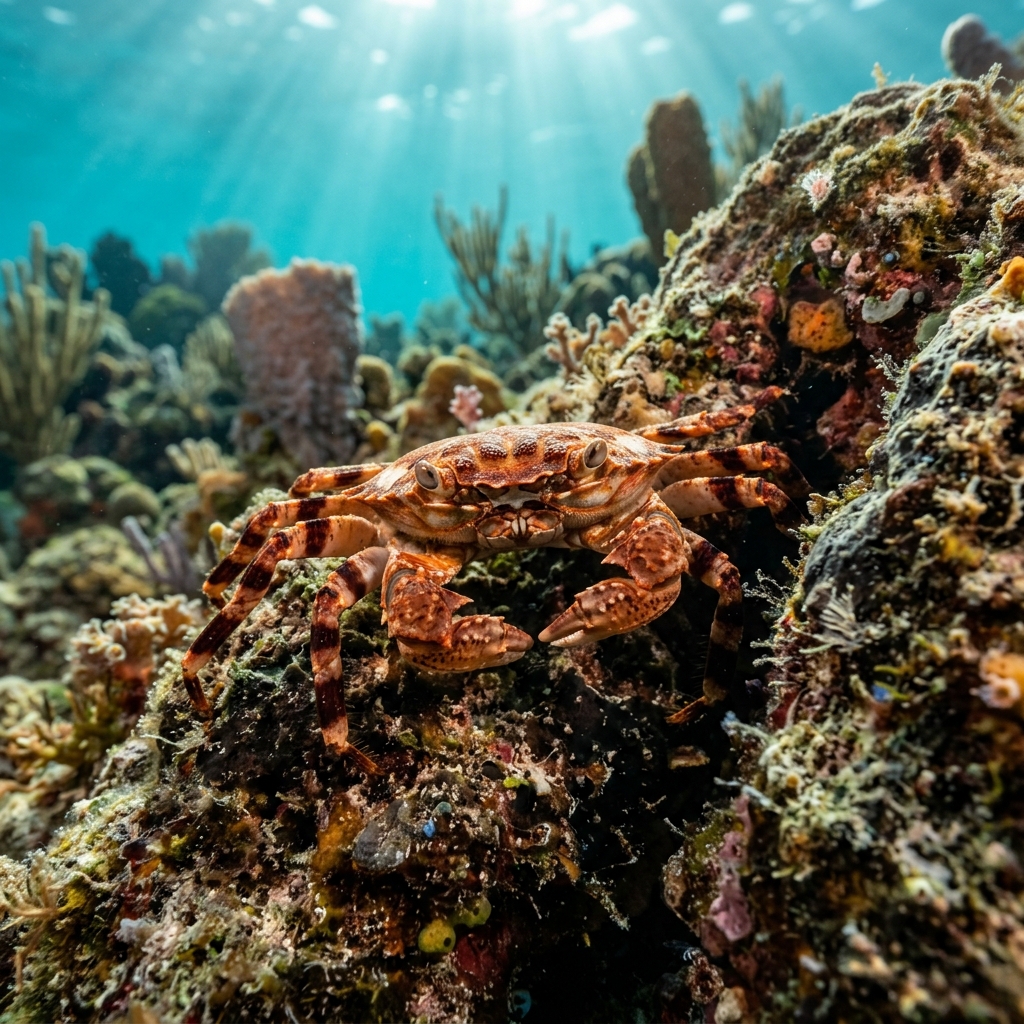
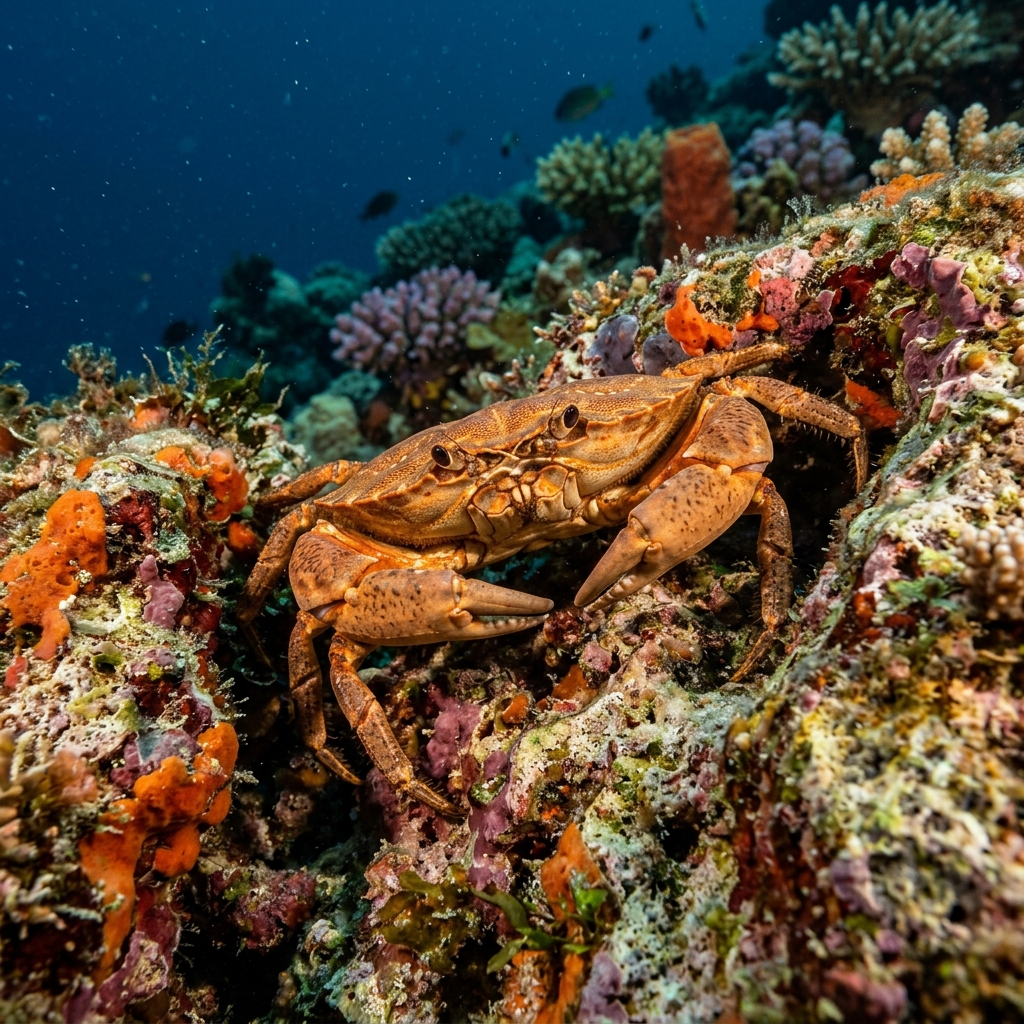
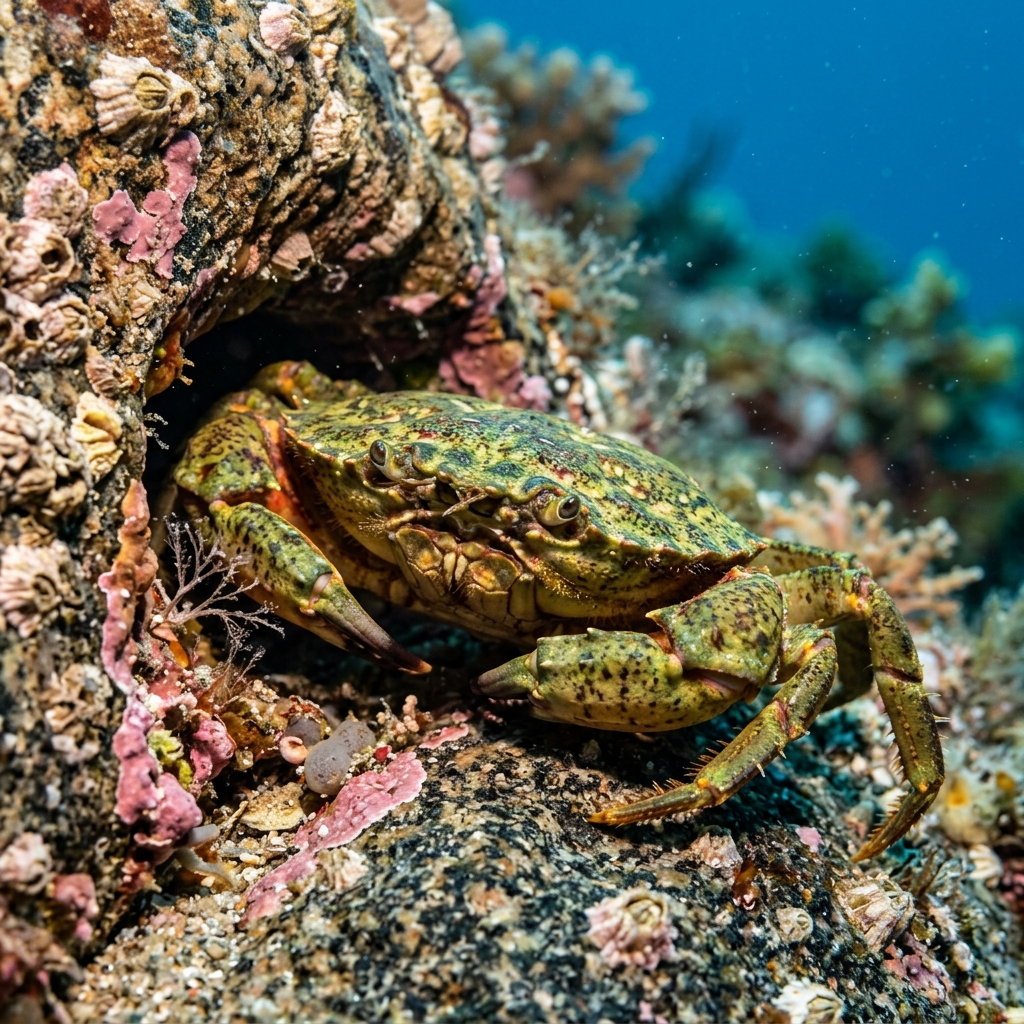
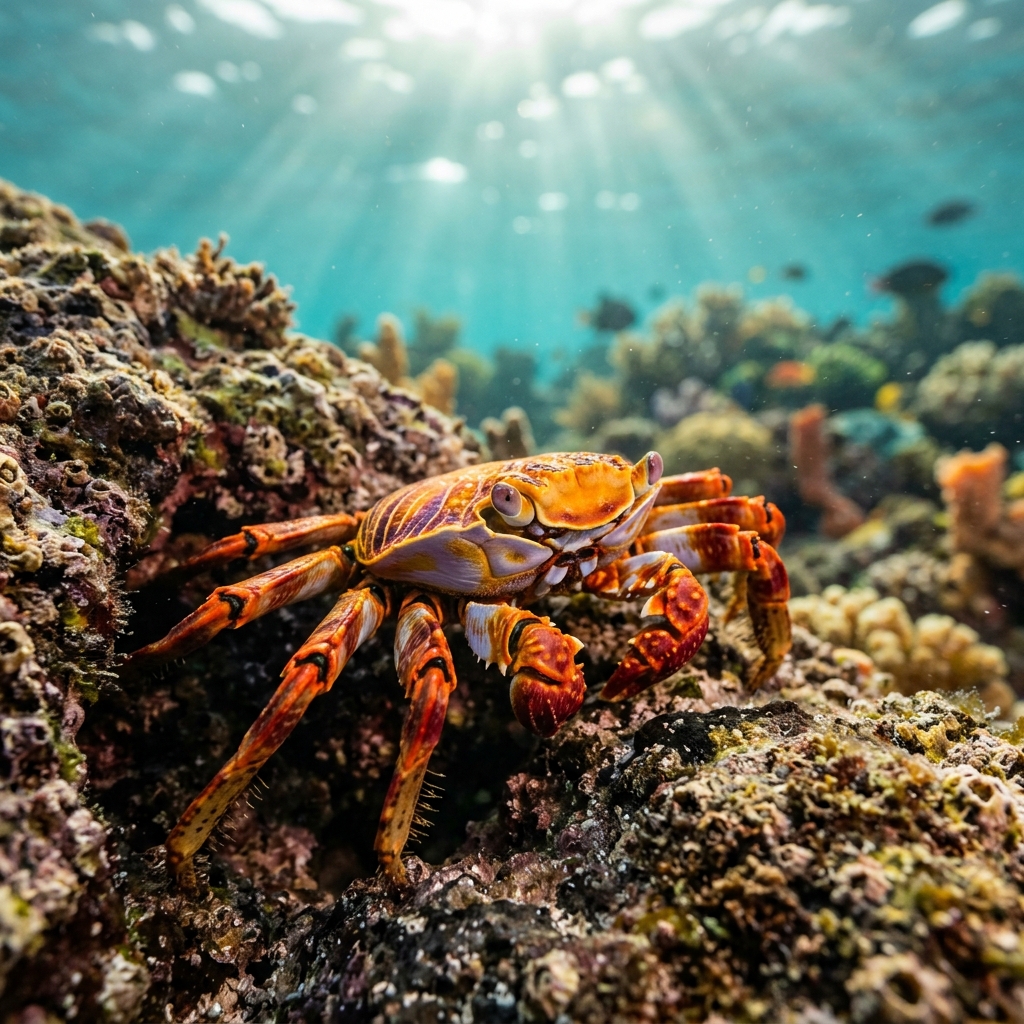
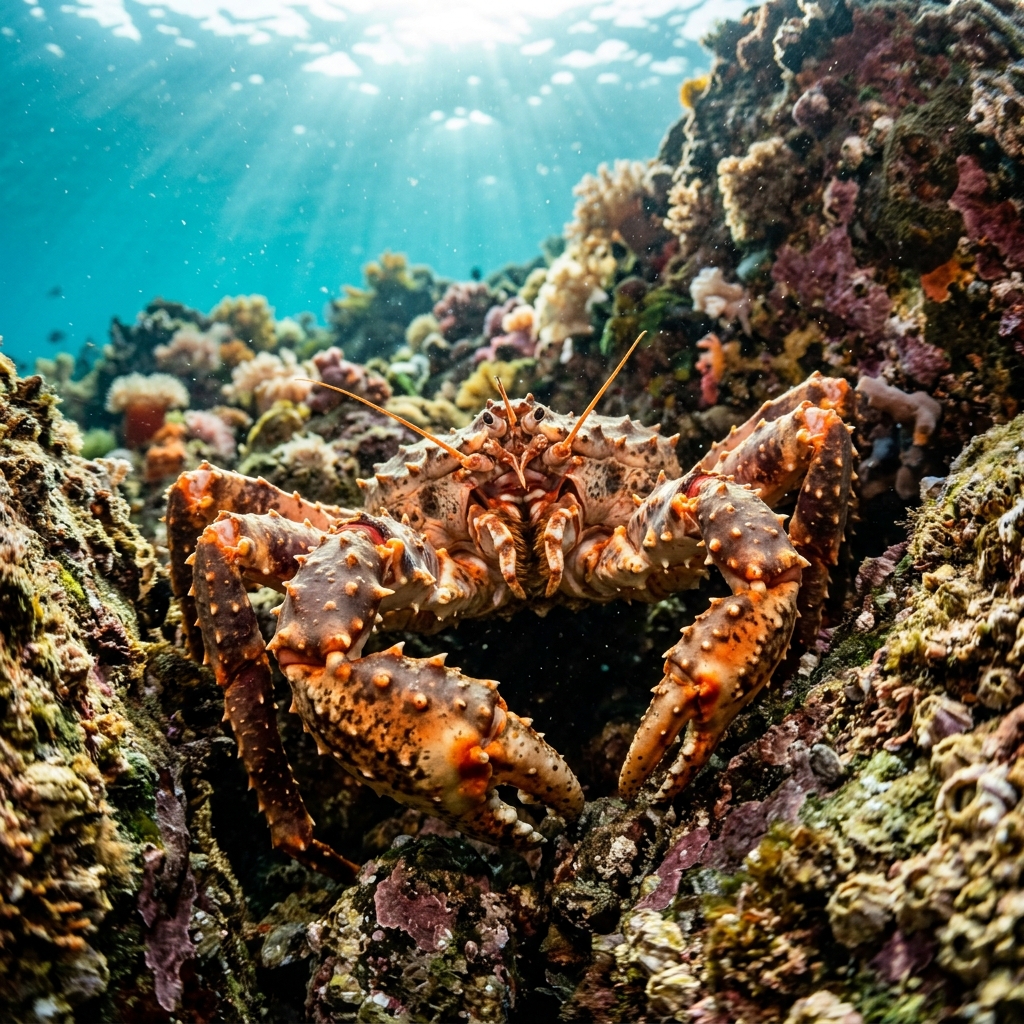
Reef neighbours a diver could mistake it for. Use the identification notes above to tell them apart.
Most reliably logged in Okinawa and the Ryukyu Islands in Japan, the Central Atolls of the Maldives, and across the Philippines in Luzon and the Visayas. Also a steady find on reefs in Queensland, Sabah in Malaysia, Bali, and the Andaman Islands in India, usually turning up as an uncommon but dependable sighting rather than a guaranteed one.
Mapping where Whitespotted Hermit is logged…
Strongest sightings come from Okinawa in Japan, the Central Atolls of the Maldives, and Luzon and the Visayas in the Philippines. It also shows up reliably in Queensland, Sabah, Bali, and the Andaman Islands.
There's no strong seasonal pattern in the sightings, and it tolerates a wide warm-water range, so it's a year-round find on tropical reefs rather than a seasonal target.
Look for a fist-sized hermit crab with red-orange legs covered in white spots, dragging a shell that looks slightly undersized. One claw is noticeably larger and used to seal the shell entrance when it retreats.
They reach around 14 cm across the legs, making them one of the larger reef hermit crabs divers regularly encounter.
No. They're harmless to divers and tend to withdraw into their shell or freeze rather than react aggressively when approached.
As it grows, it has to abandon its shell and search for a bigger one, leaving its soft body briefly exposed during the switch, a risky moment in its life cycle.
Site and sighting data is aggregated from diver logs, iNaturalist and GBIF. For taxonomy and conservation status:
European Green Crab
2,469 sites