Paracirrhites hemistictus
Perched on coral in Rarotonga and the Tuamotus, whitespot hawkfish sit tight in warm 25-29C water year-round. Here's how to spot one.
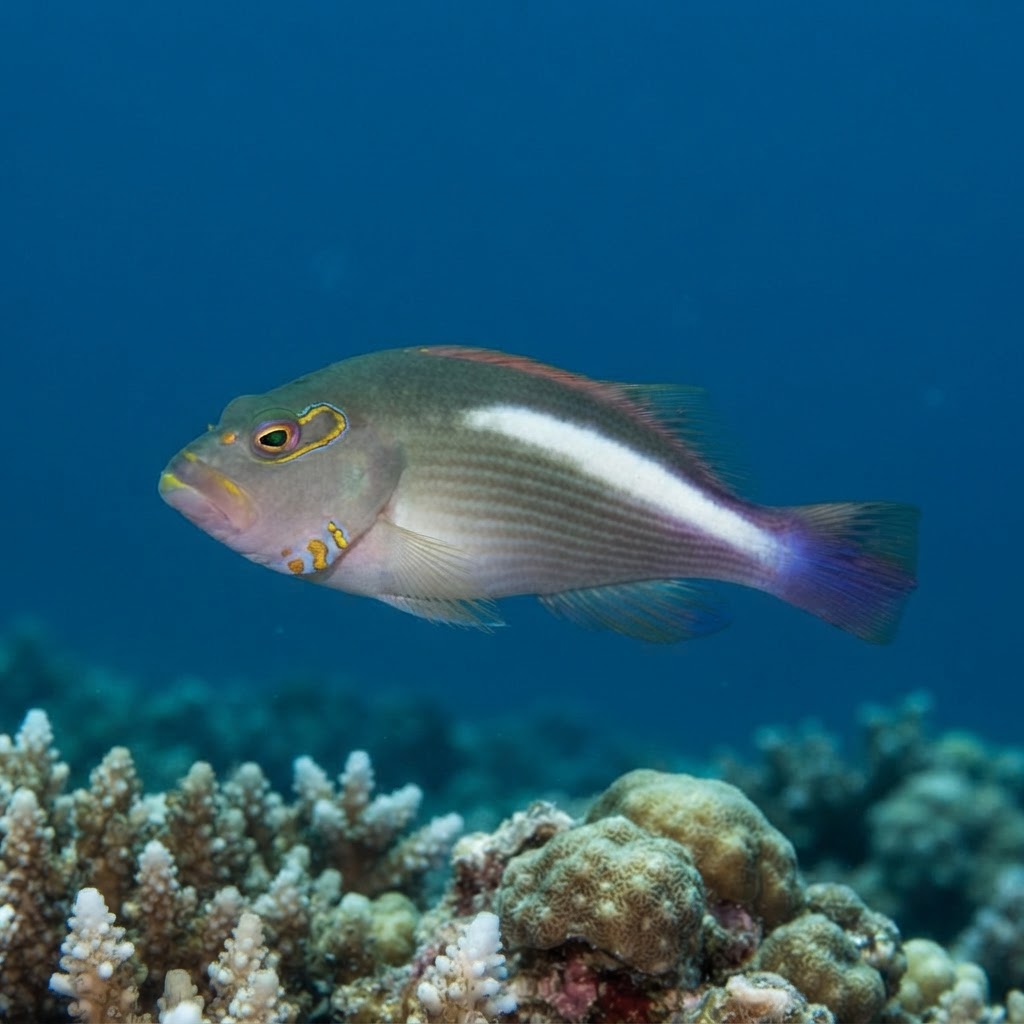
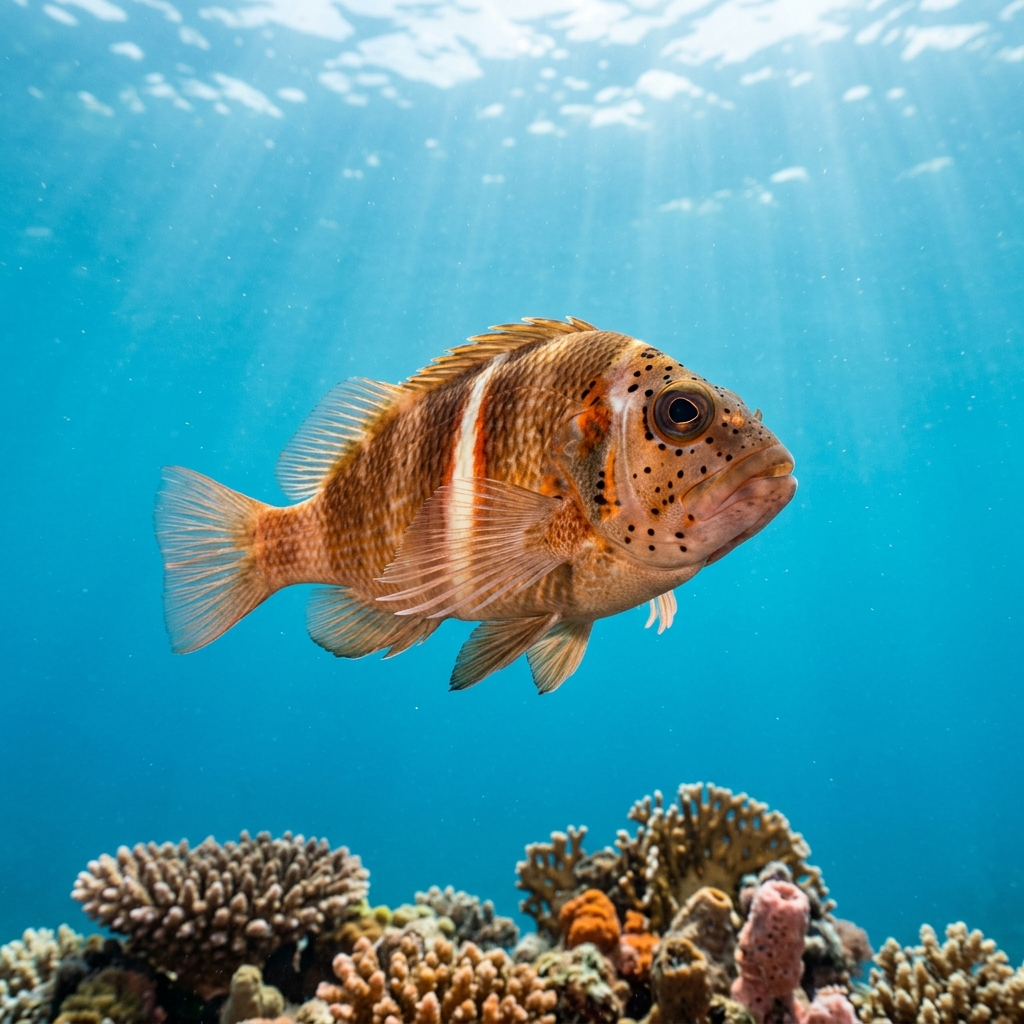
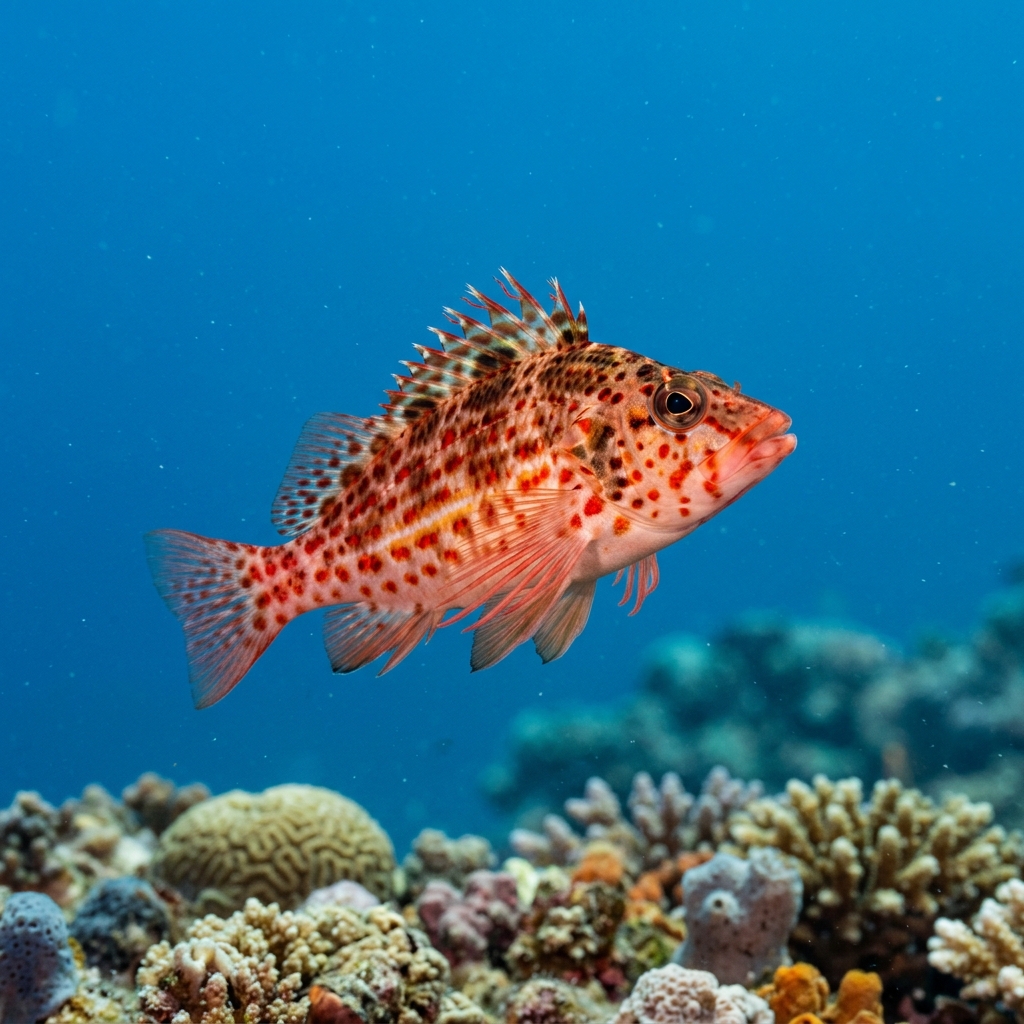
Chunky, perch-shaped body around 20 cm long, mottled brown to reddish overall with a scatter of small white spots across the head and upper flanks. Look for the tufted tips on the dorsal fin rays, a hawkfish family trait, and its habit of propping itself on stiff pectoral fins rather than swimming freely. The blocky head and heavy-set body separate it from the slimmer, more streamlined hawkfish species on the same reefs.
Spends most of its time perched motionless on coral heads or rubble, propped up on its pectoral fins while it scans the water around it, in classic hawkfish fashion. It's an ambush predator rather than a cruiser, darting out briefly to grab a passing shrimp or small fish before settling back onto its perch. Generally unbothered by divers who keep a respectful distance, making it an easy one to photograph once you spot it sitting still.
Like other hawkfish, it lacks a swim bladder, which is exactly why it perches on the reef instead of hovering in open water like most reef fish.
No clear seasonal pattern shows up in the sighting data, and with a comfortable temperature niche of 25.4 to 29.4C it's a year-round fixture on the reefs where it occurs.
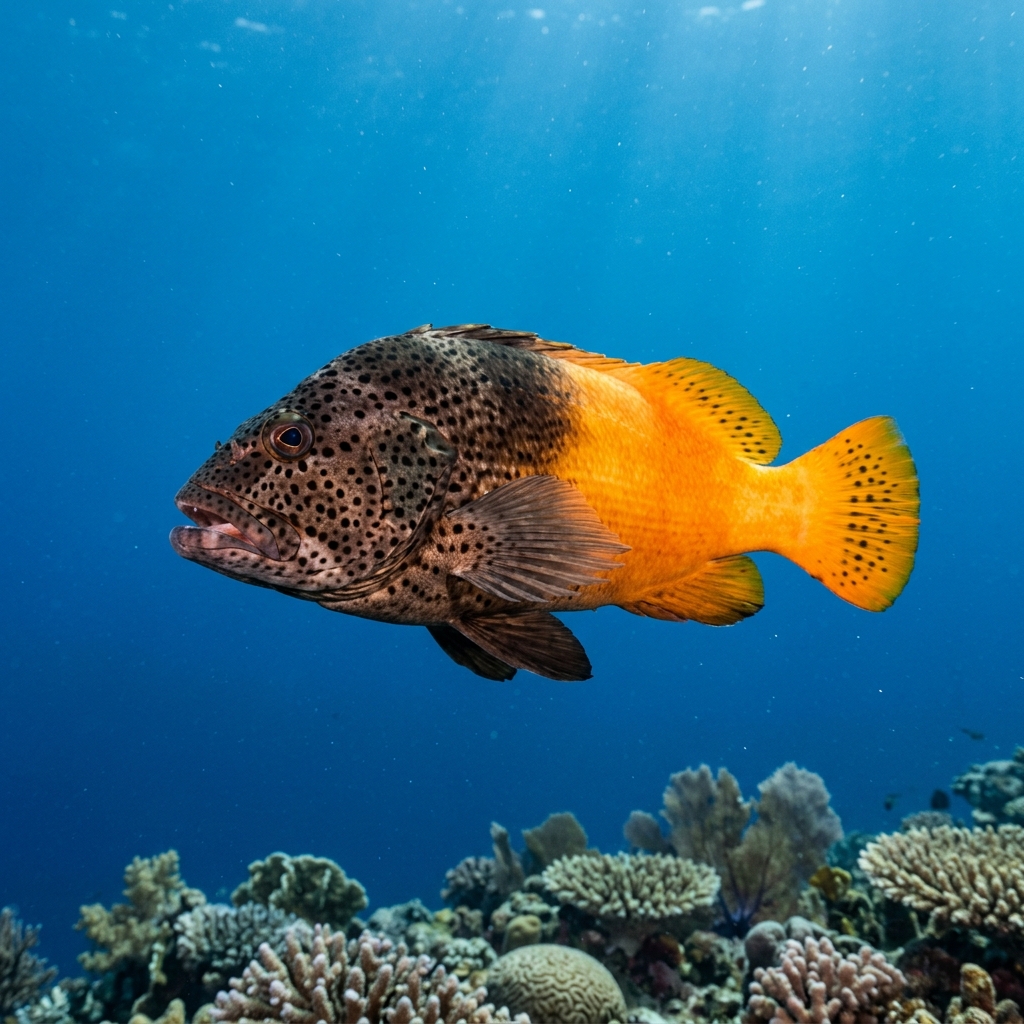
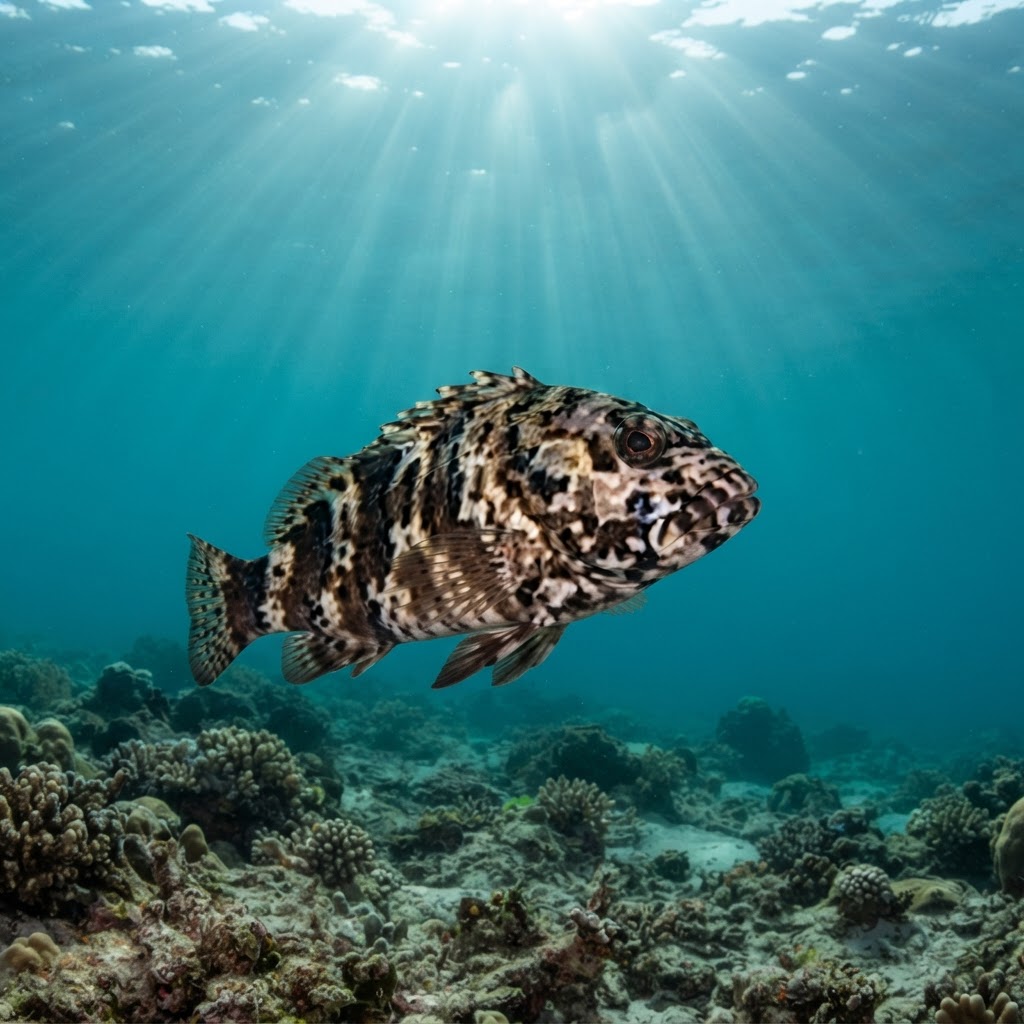
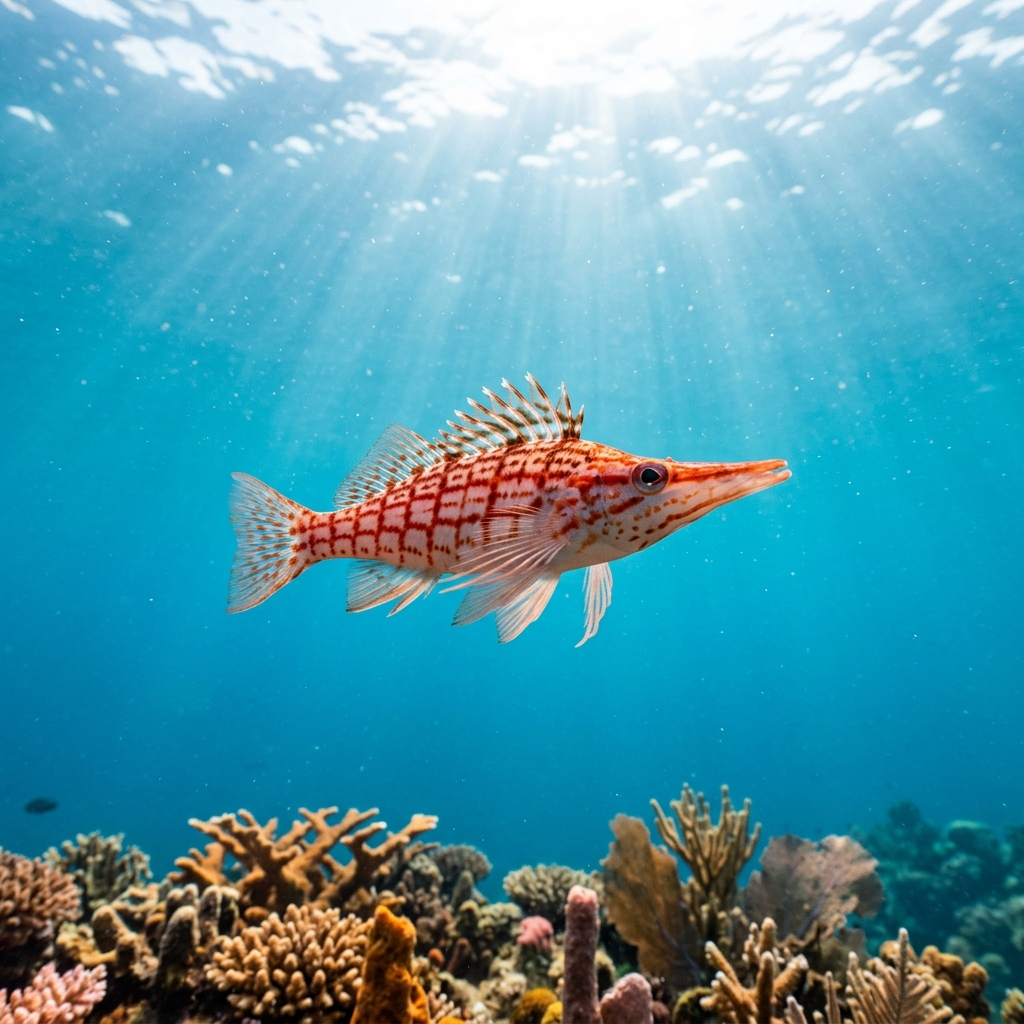
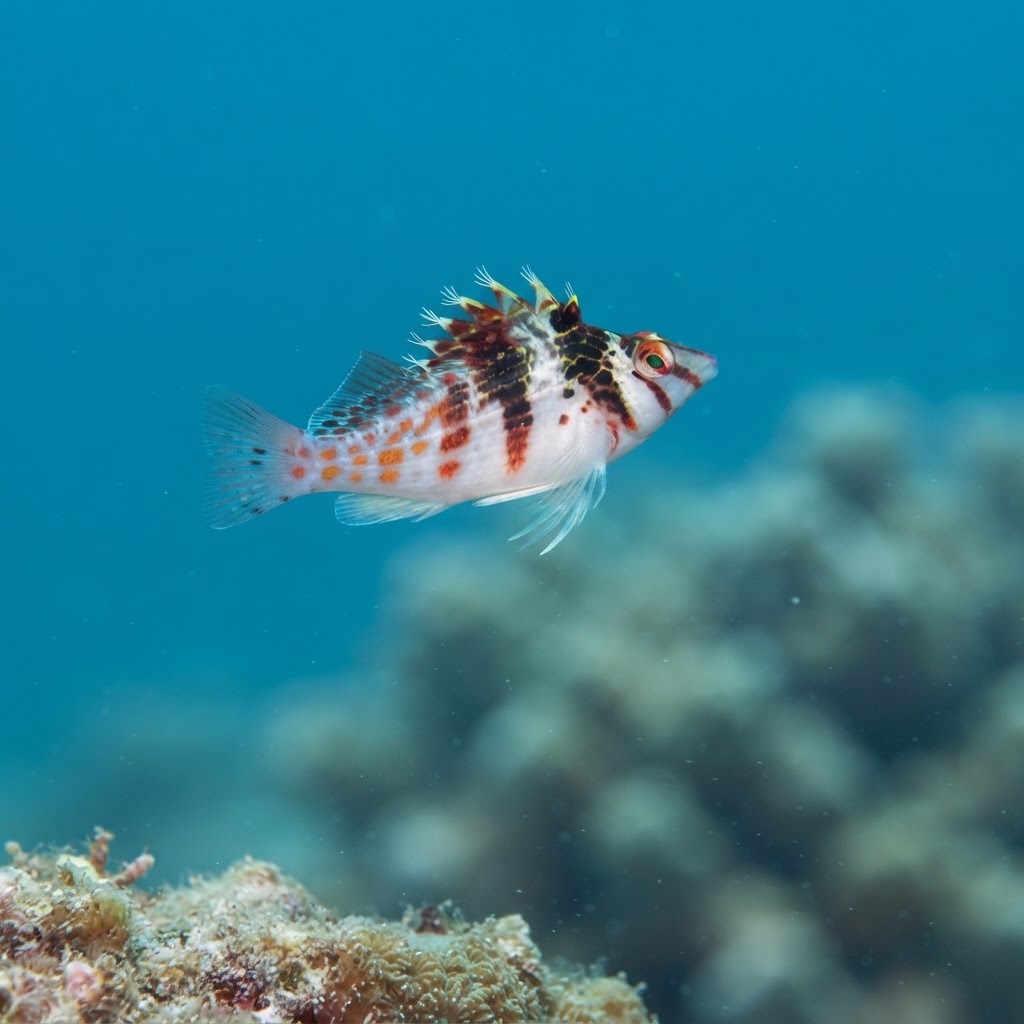
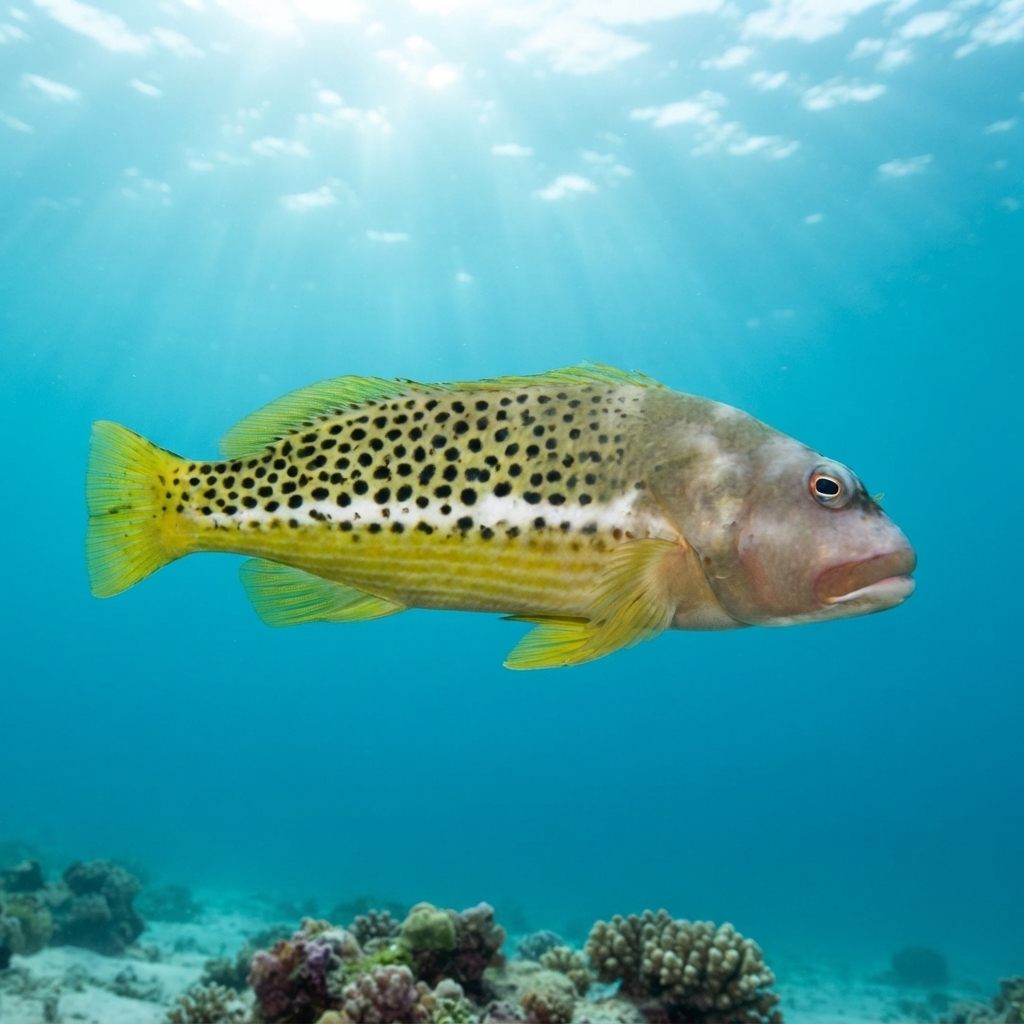
Reef neighbours a diver could mistake it for. Use the identification notes above to tell them apart.
Most reliably logged around Rarotonga in the Cook Islands and across the Tuamotu and Society Islands of French Polynesia, which together account for the bulk of sightings. Smaller numbers turn up in Apra Harbor in Guam, plus occasional sightings in Fiji's Lomaiviti region and Kwajalein Atoll in the Marshall Islands.
Mapping where Whitespot Hawkfish is logged…
Rarotonga in the Cook Islands and the Tuamotu and Society Islands of French Polynesia are the most consistent spots, with occasional sightings in Guam, Fiji and the Marshall Islands.
There's no strong season in the sighting data, so any time of year works. They favour warm reef water between roughly 25 and 29C, which holds steady year-round across their range.
Look for a stocky, brown to reddish body around 20 cm long with scattered small white spots on the head and back, plus tufted dorsal fin tips. It usually sits still on coral rather than swimming past.
They typically reach about 20 cm in length, making them one of the larger hawkfish species divers encounter on Pacific reefs.
It has no swim bladder, so instead of hovering in the water column like most fish it props itself on coral using its stiff pectoral fins and waits to ambush prey.
No, they pose no threat to divers. They tend to hold their perch and simply watch you pass rather than react defensively.
Site and sighting data is aggregated from diver logs, iNaturalist and GBIF. For taxonomy and conservation status:
Pixy Hawkfish
762 sites