Cirrhitus pinnulatus
Chunky, mottled and glued to the rocks in Hawaii, Marsa Alam and Taiwan's Orchid Island in 25-29C water, year-round.
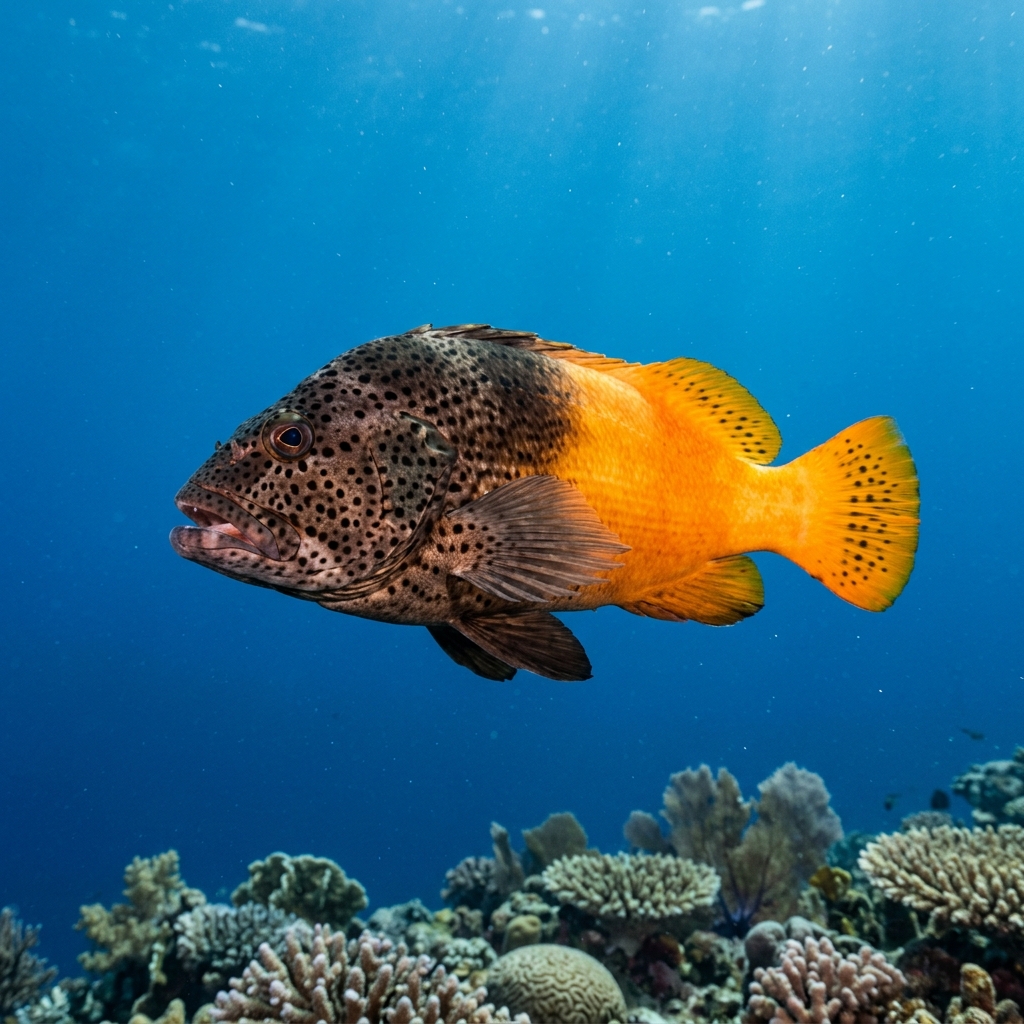
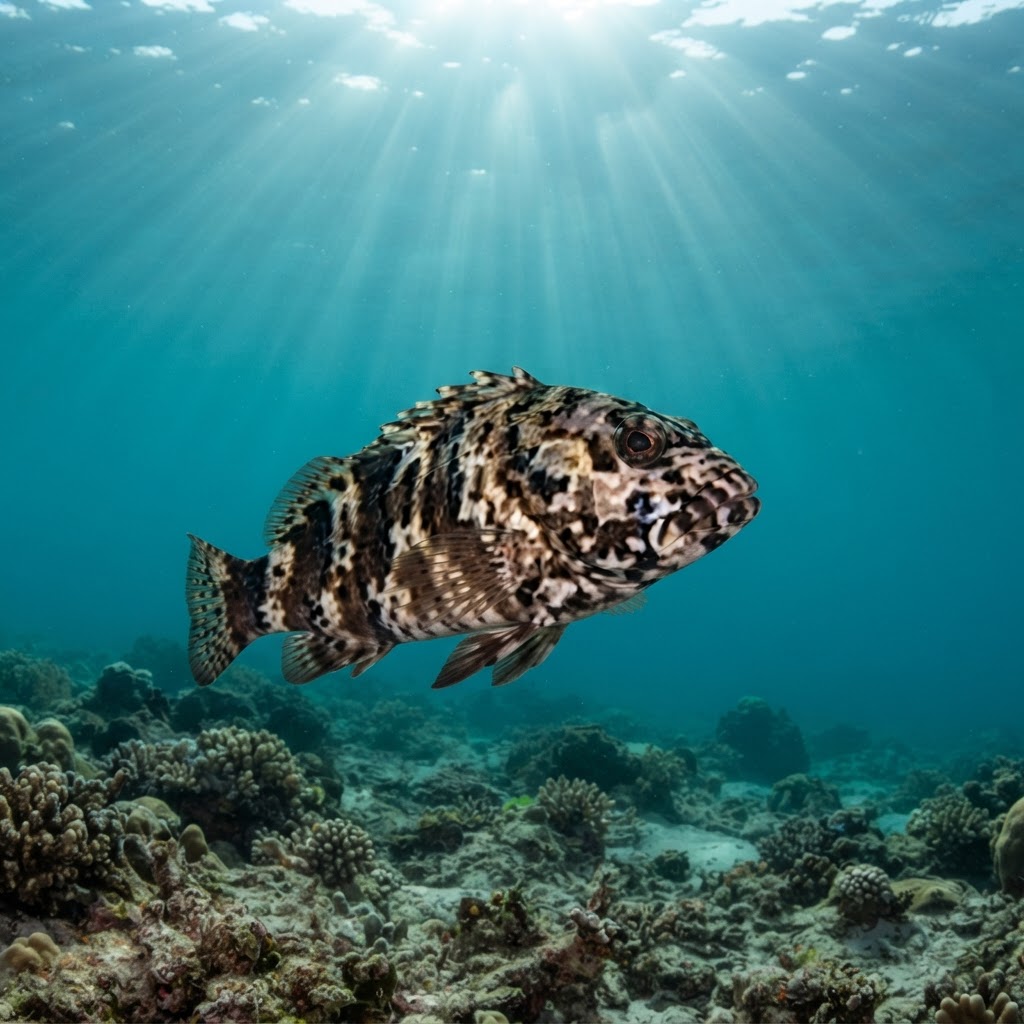
A thickset, heavy-bodied hawkfish around 21 cm, mottled in shades of reddish-brown, cream and white in a blotchy pattern that breaks up its outline against rock and dead coral. It props itself up on thickened lower fin rays, propped almost like elbows, rather than hanging in the water column. Tufted fin filaments (cirri) on the tips of the dorsal spines are visible up close, a trait shared across the hawkfish family but easiest to check on a fish sitting this still.
Look for it wedged into rocky crevices, ledges and shallow surge zones rather than open coral, often in the same spot dive after dive since it holds a home territory. It rests propped on its fins watching the reef rather than swimming freely, and tends to sit tight as divers pass rather than bolt, though it will dart back under cover if approached too fast. Most sightings come from shallower water within the top 10-15 metres, where wave energy keeps the rock structure it favours well oxygenated.
That stiff, propped posture isn't laziness, it's an ambush strategy: hawkfish lack a swim bladder, so rather than hover and cruise for food they perch on a perch and lunge at passing crustaceans and small fish.
No clear seasonal pattern in the sightings data, and it makes sense given its comfort range of roughly 25 to 29C: this is a year-round reef resident wherever tropical water stays warm.
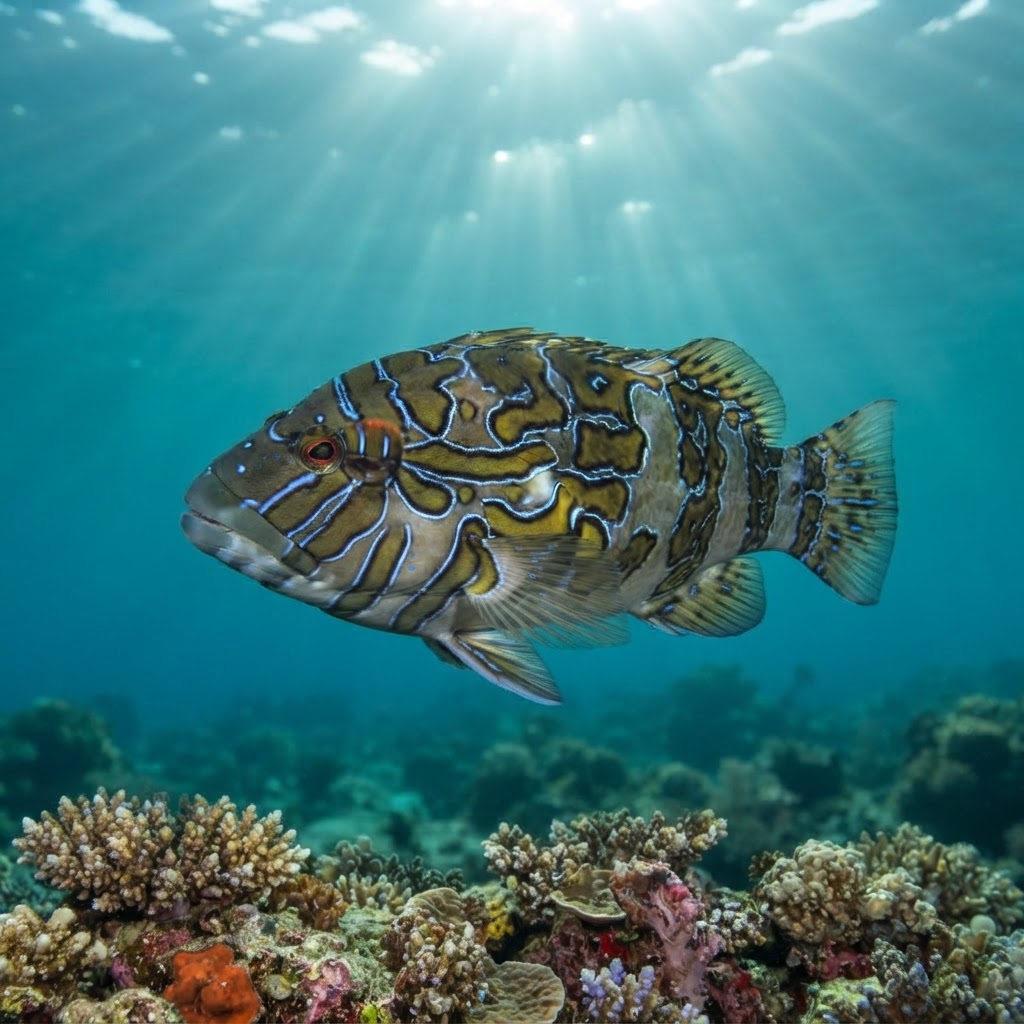
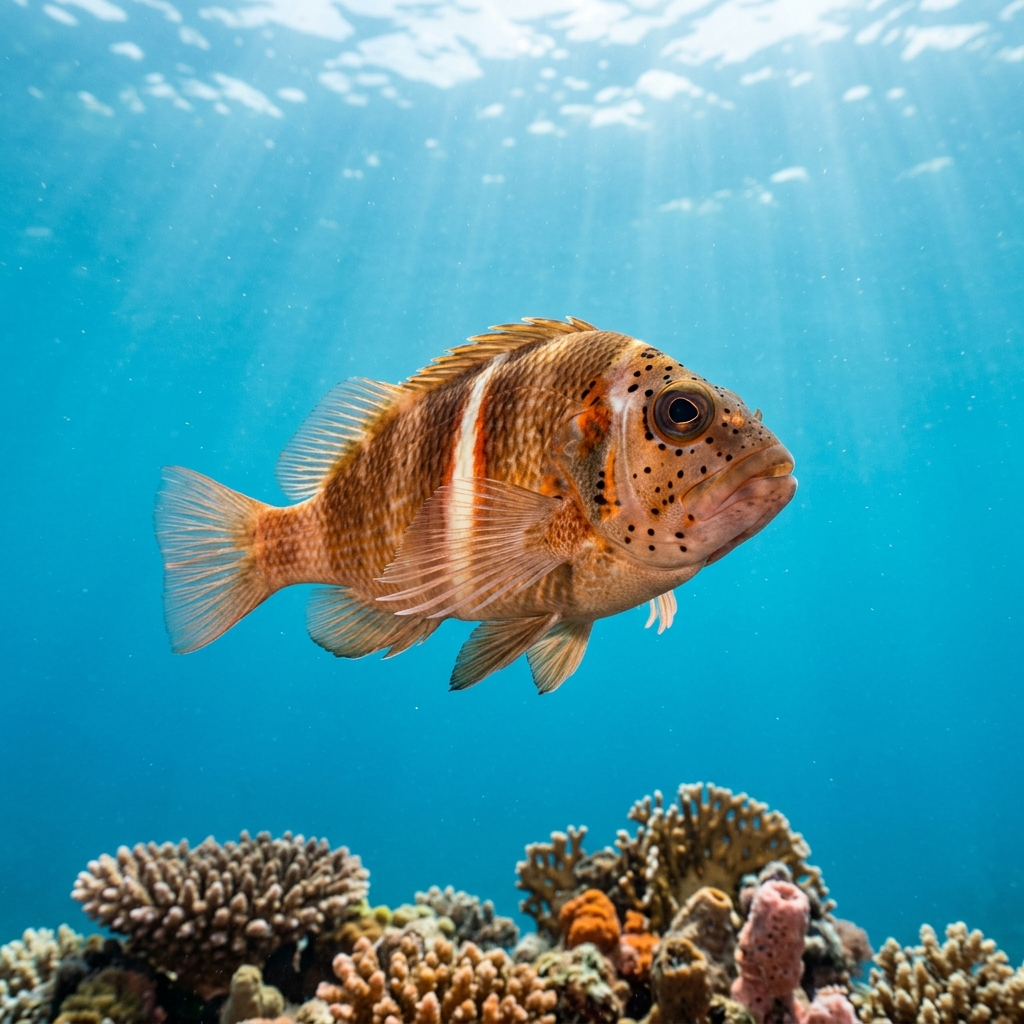
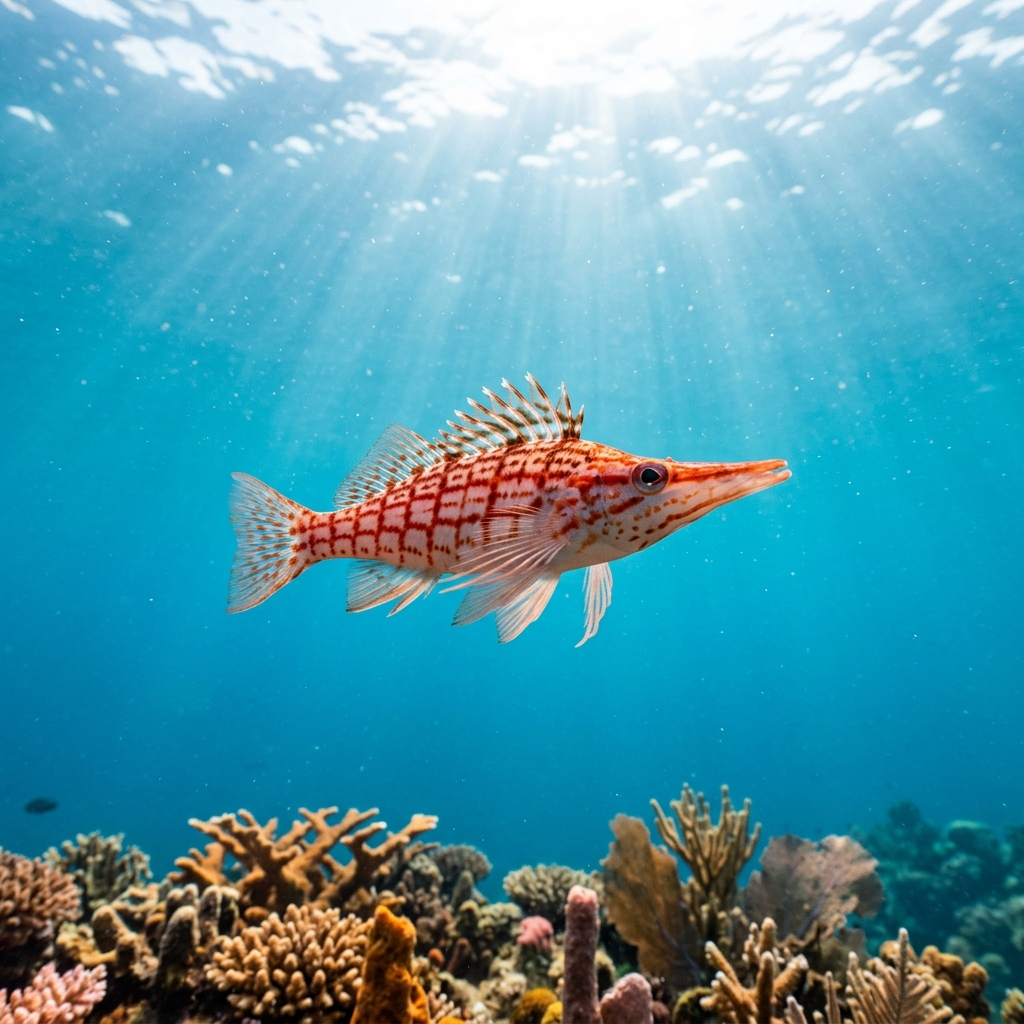
Reef neighbours a diver could mistake it for. Use the identification notes above to tell them apart.
Most reliably found on Hawaiian reefs, where it turns up at far more sites than anywhere else in the data, with further solid populations around Orchid Island in Taiwan and Egypt's Marsa Alam and Deep South region. It also shows up consistently in the Maldives' Central Atolls and in smaller numbers along Saudi Arabia's Red Sea coast, the UAE's East Coast and Guam's Tumon Bay.
Mapping where Stocky Hawkfish is logged…
Hawaii is by far the most consistent place to find them, followed by Taiwan's Orchid Island, Egypt's Marsa Alam and Deep South sites, and the Maldives' Central Atolls. Smaller but reliable populations also occur in Saudi Arabia, the UAE and Guam.
There's no detected season, they're logged year-round wherever the reef sits in that 25 to 29C comfort zone. Plan around the destination's general dive season rather than around this fish specifically.
Look for a thickset, blotchy reddish-brown and cream fish around 21 cm, propped on rocky ledges rather than swimming in open water. The mottled camouflage and fin-propped resting posture are the giveaways.
They reach about 21 cm, making them one of the larger, heavier-bodied members of the hawkfish family rather than a small reef fish.
No, they're harmless to divers and simply hold their ground on a rock ledge rather than approaching or reacting aggressively to people nearby.
Site and sighting data is aggregated from diver logs, iNaturalist and GBIF. For taxonomy and conservation status:
Pixy Hawkfish
762 sites