Cirrhitidae spp.
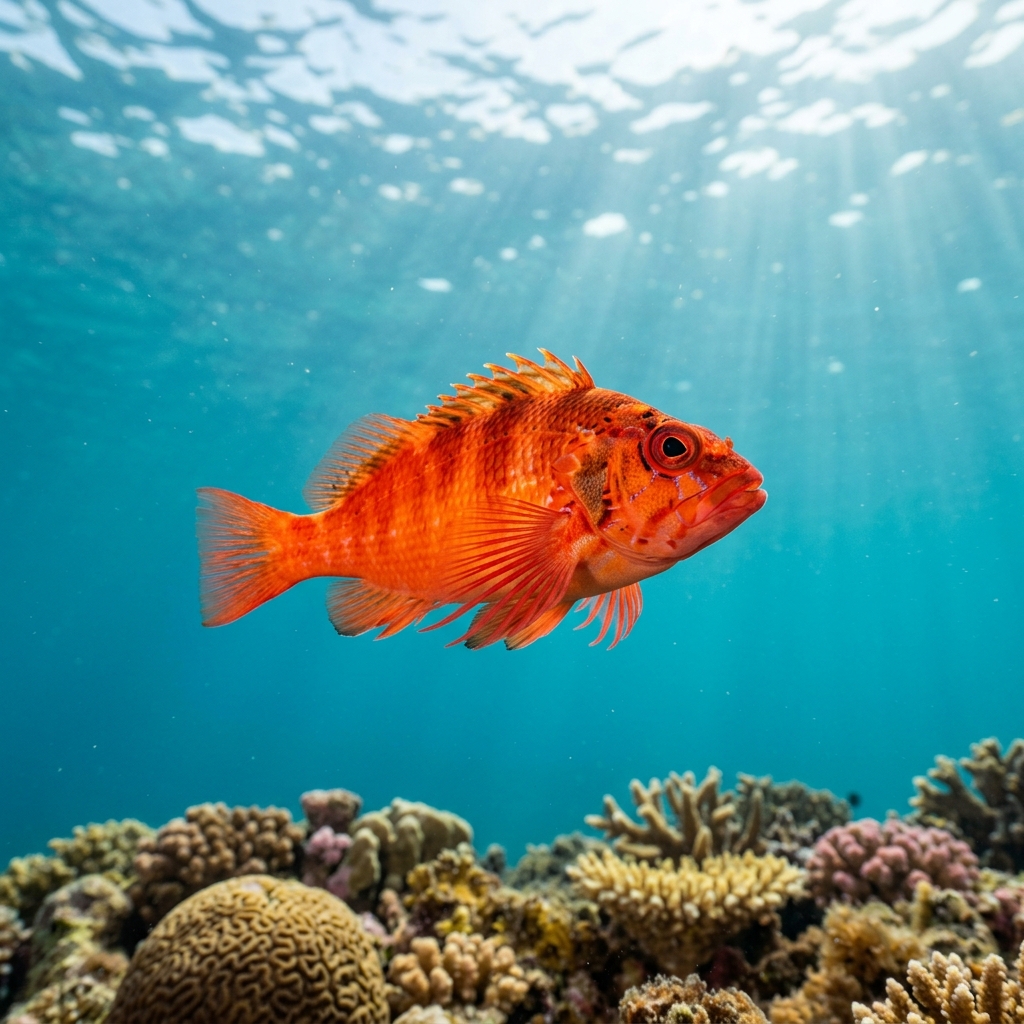
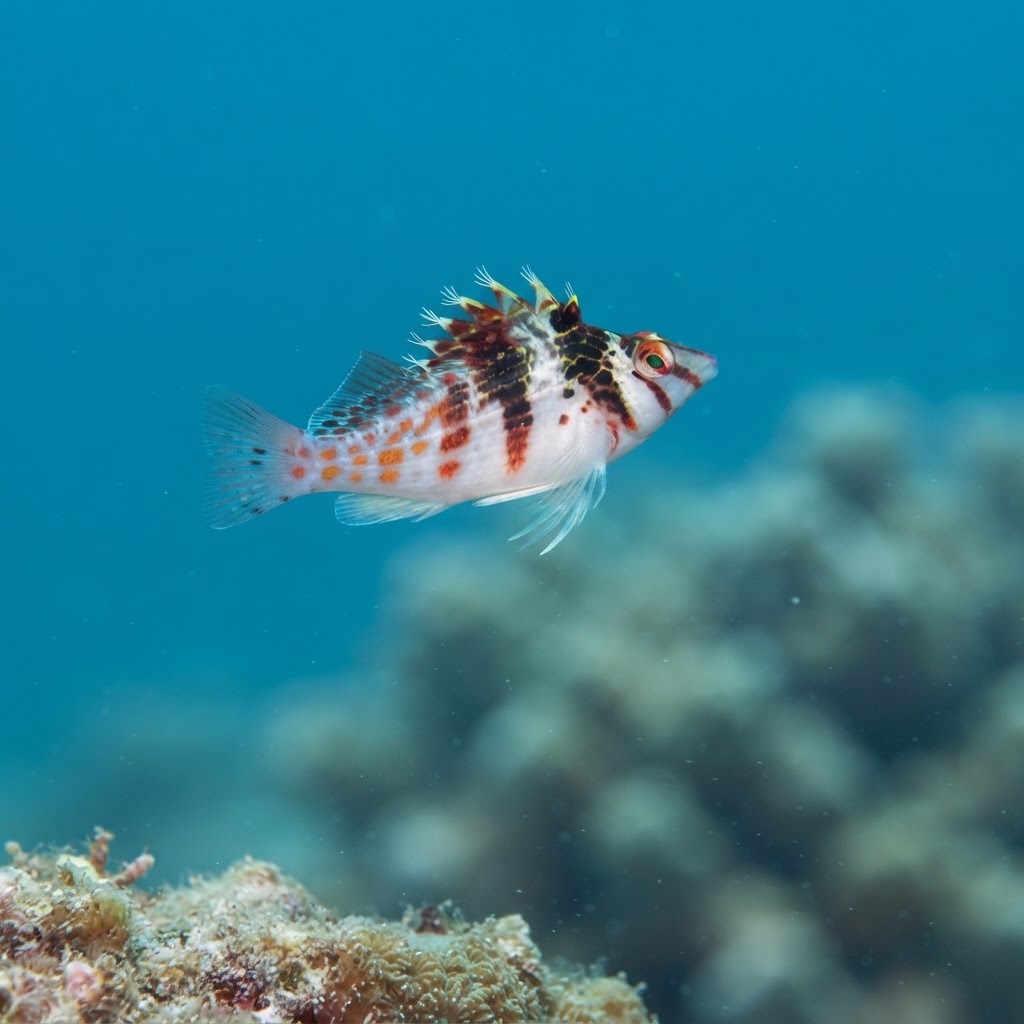
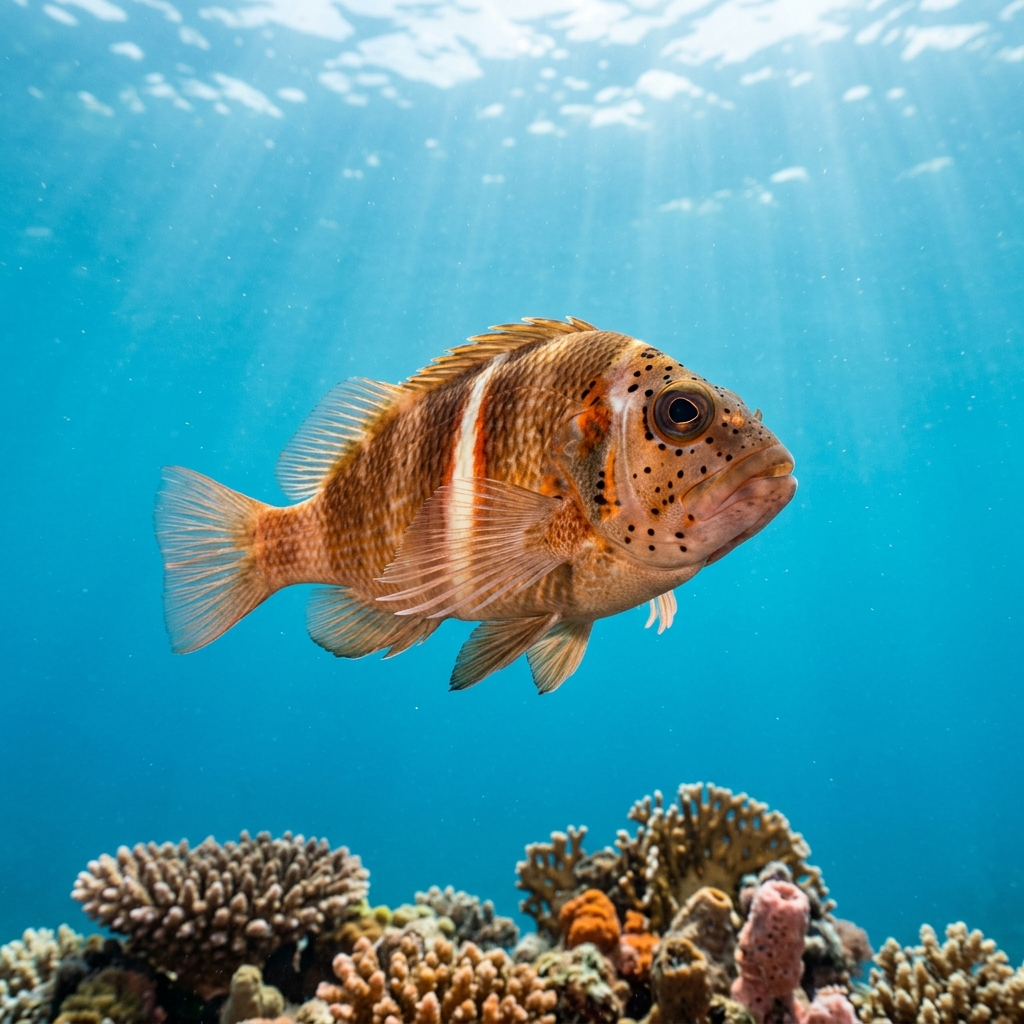
Spot hawkfish perching on coral across the Philippines, Indonesia and Hawaii. Present year-round in warm tropical waters from 24 to 29 °C.
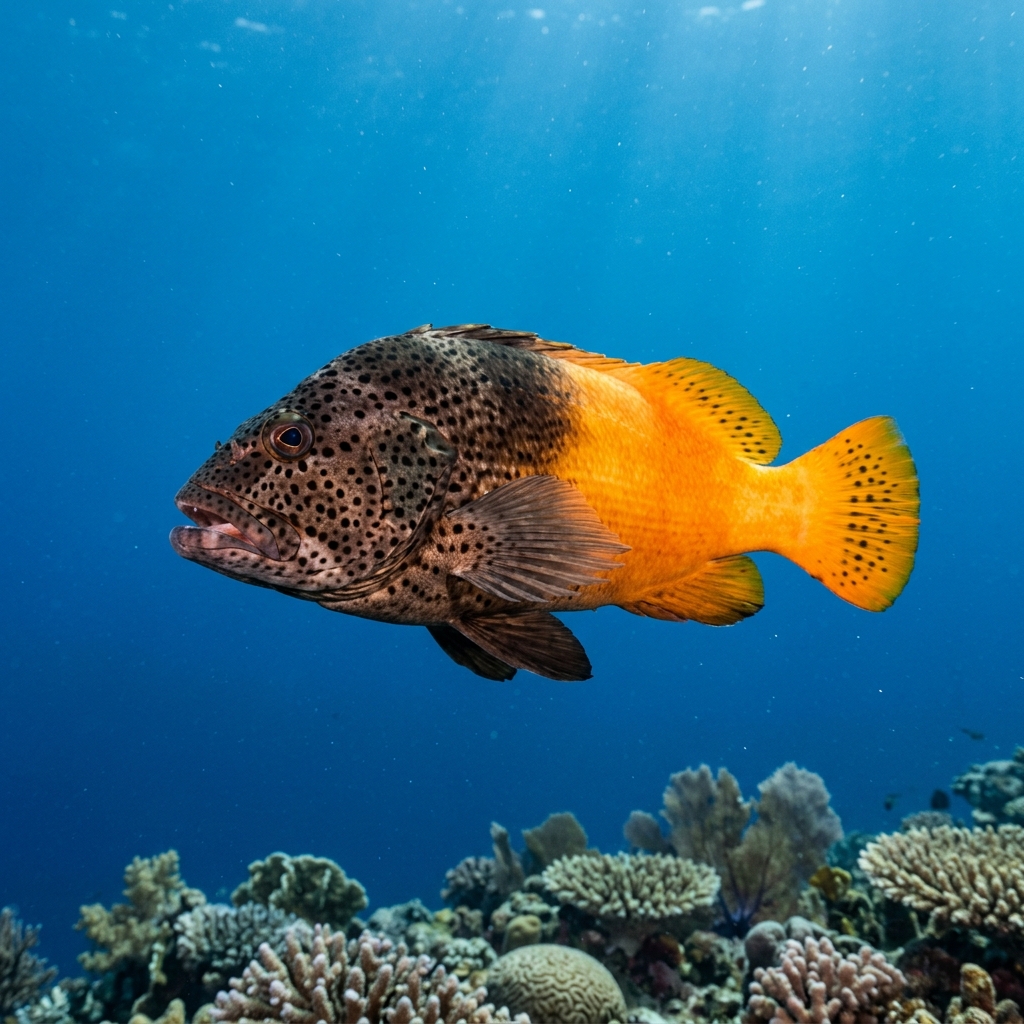
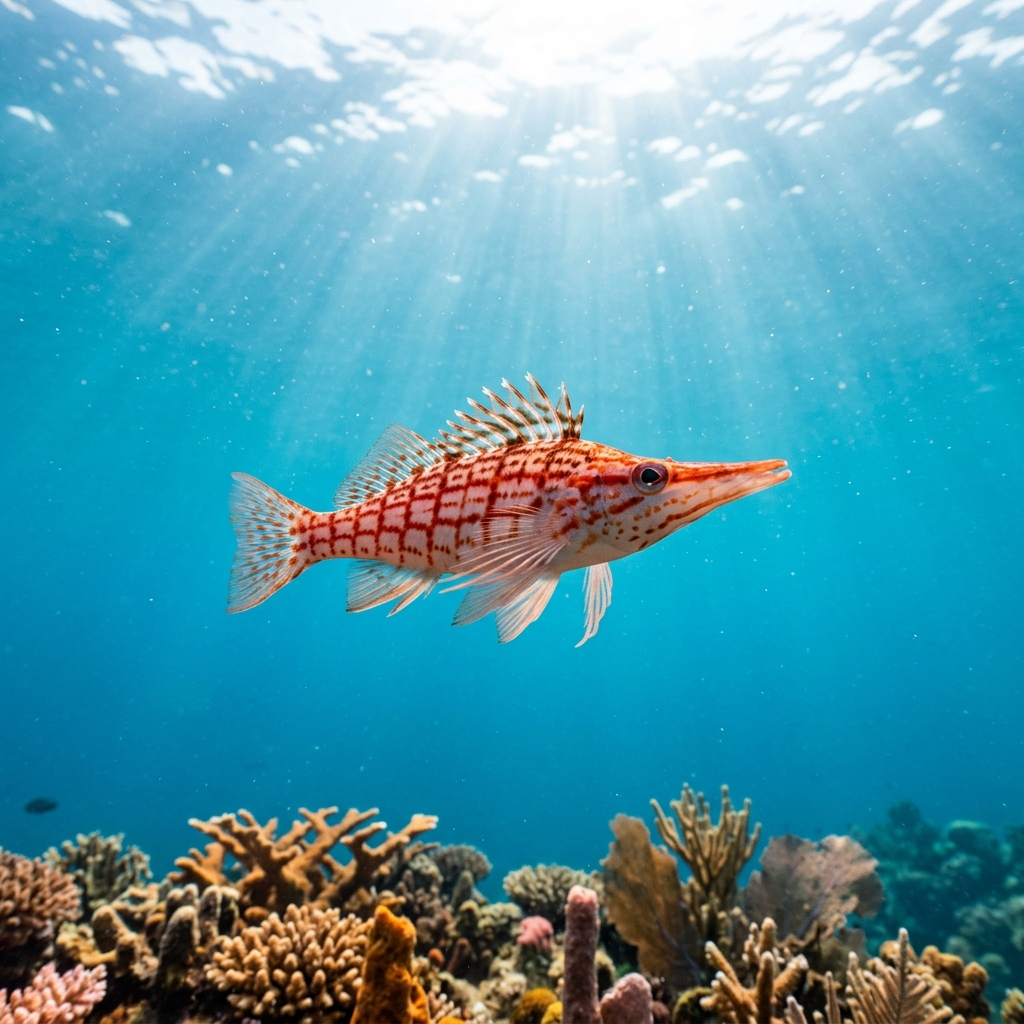
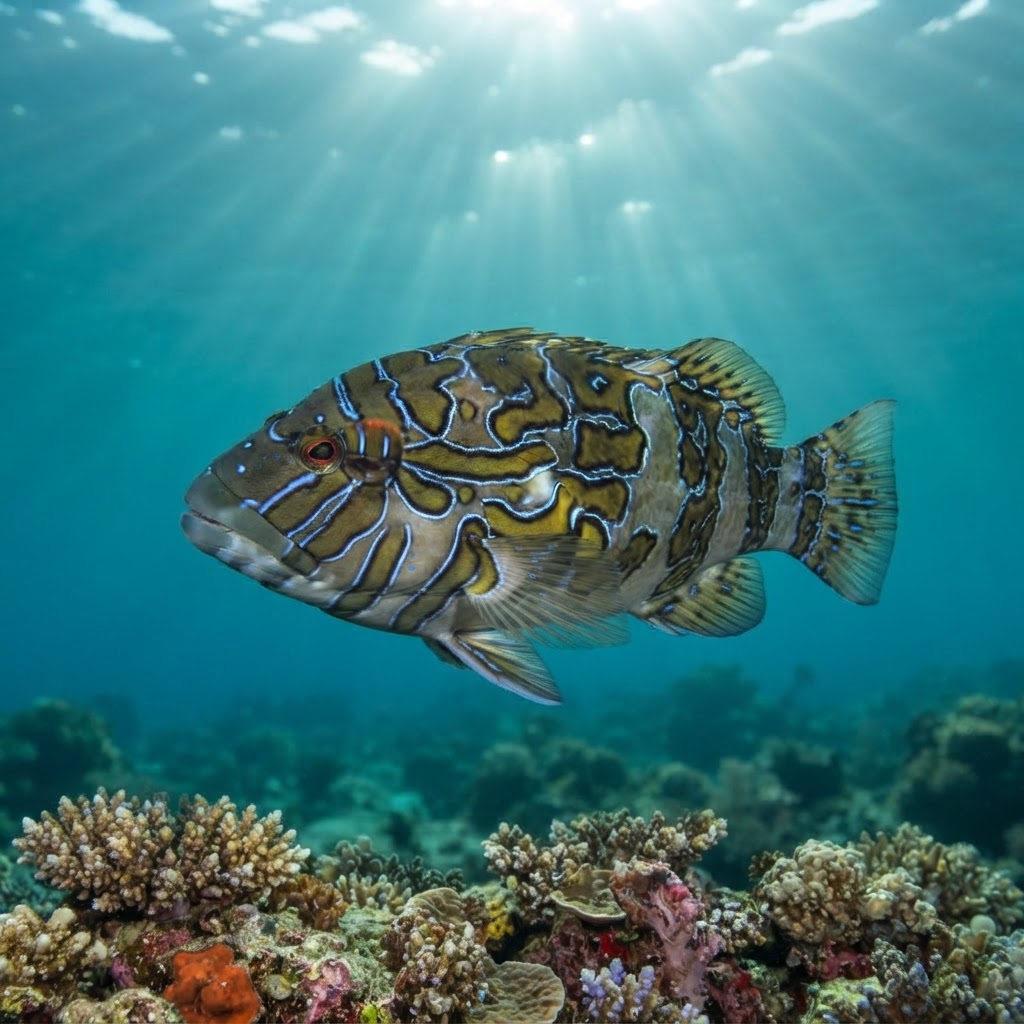
Hawkfish are compact, blunt-headed reef fish with thickened lower pectoral-fin rays (the stiff rays they use to prop themselves on coral), giving them an unmistakable perching posture rather than swimming freely in the water column. Most species are small enough to sit in your palm, and they tend to press flat against fan corals, stony heads, or rubble while they scan for prey. Colours vary widely across the family, from the vivid red-and-white grid of the longnose to the muted browns and spots of the freckled, but the stationary perching habit is the family's single best ID clue. A flash of white-tipped cirri (small hair-like filaments on the dorsal-fin spines) is visible on closer inspection and confirms the group.
Sit-and-wait ambush predators, hawkfish spend the vast majority of their time completely still, wedged into the structure of the reef using their stiffened pectoral fins as props. Divers typically spot them because they do not flee, they hold their position and watch you back with alert, mobile eyes, often allowing a close approach before making a short dart to a nearby perch. They are most active during daylight, and an individual will often defend the same small coral head or sea fan for days at a time.
Most hawkfish species are protogynous haremic hermaphrodites, meaning the dominant male controls a small territory of females and, if he disappears, the largest female can change sex and take his place.
Hawkfish are present year-round in both hemispheres with no concentrated season, which makes sense given their preference for water temperatures between 24 and 29 °C, a range maintained on tropical Indo-Pacific reefs throughout the calendar year.
Reef neighbours a diver could mistake it for. Use the identification notes above to tell them apart.
Hawkfish are most consistently logged across the Indo-Pacific, with the strongest site coverage in the Philippines (particularly the central Visayas and Luzon), Indonesia (Sulawesi and Bali), and the Maldives. Strong populations are also well recorded in Hawaii, Queensland, and throughout French Polynesia and Mexico, making them a realistic sighting on almost any warm-water reef dive in those regions.
Mapping where Hawkfish is logged…
Hawkfish are most reliably seen across the Indo-Pacific. The Philippines, Indonesia, Maldives, and Hawaii lead for logged sightings, and they are also well recorded in Queensland, French Polynesia, and Mexico. If you are diving any warm Indo-Pacific reef, hawkfish are a realistic find.
Hawkfish are resident on tropical reefs year-round in both hemispheres, with no season where sightings peak. They favour water temperatures between 24 and 29 °C, which is consistent across their Indo-Pacific range throughout the year, so timing your dive around them specifically is not necessary.
Look for a small, stocky fish sitting completely motionless on a coral head, fan coral, or rubble, that perching posture is the family's signature. Up close, look for stiffened lower pectoral fins propping it up and small hair-like cirri on the dorsal-fin spines. Colours vary by species but the behaviour is constant.
No. Hawkfish pose no threat to divers. They are small ambush predators focused entirely on tiny crustaceans and fish, and their usual response to a close approach is simply to stay put or shift a short distance to a new perch.
Many hawkfish are haremic sex-changers. A single male holds territory over a group of females, and if he dies or disappears, the dominant female can reverse sex and become a functional male. This flexibility is common across the family and means the social group never has to go without a breeding male.
Site and sighting data is aggregated from diver logs, iNaturalist and GBIF. For taxonomy and conservation status:
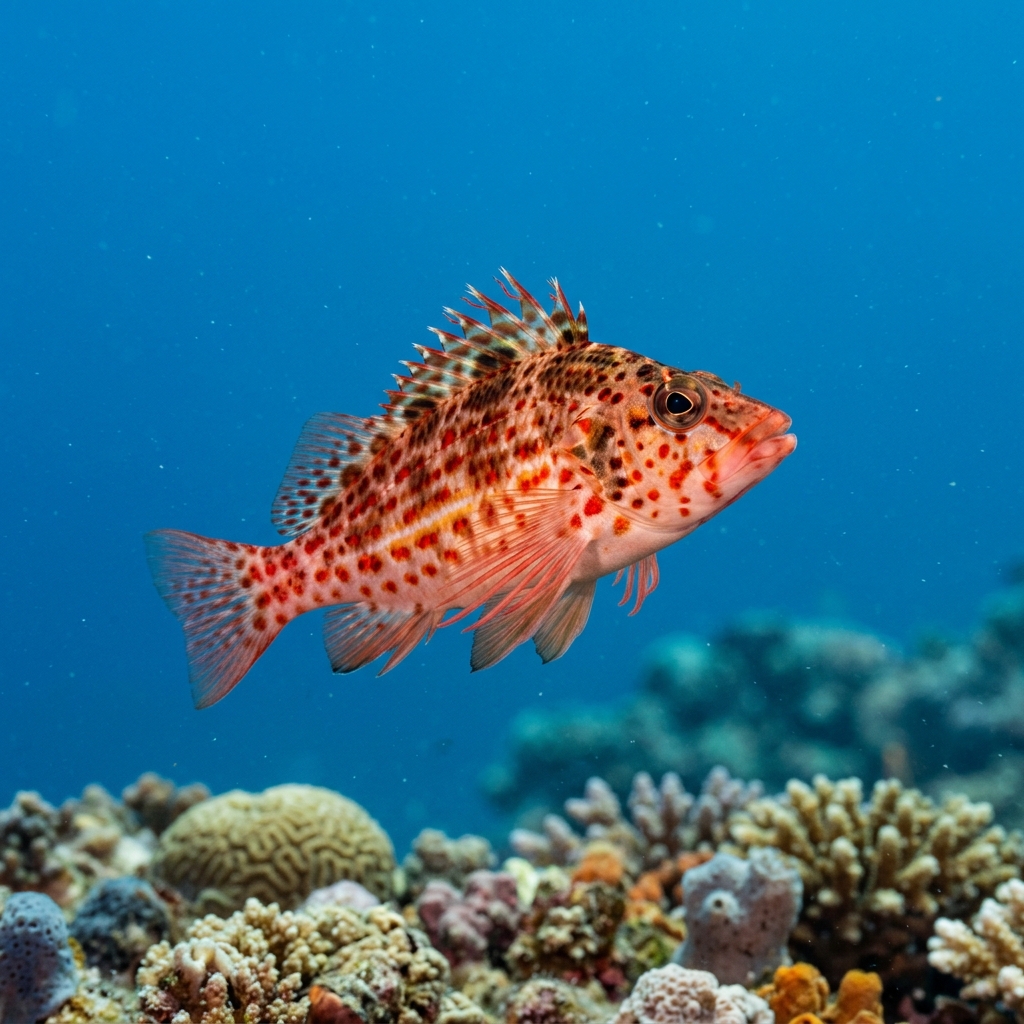
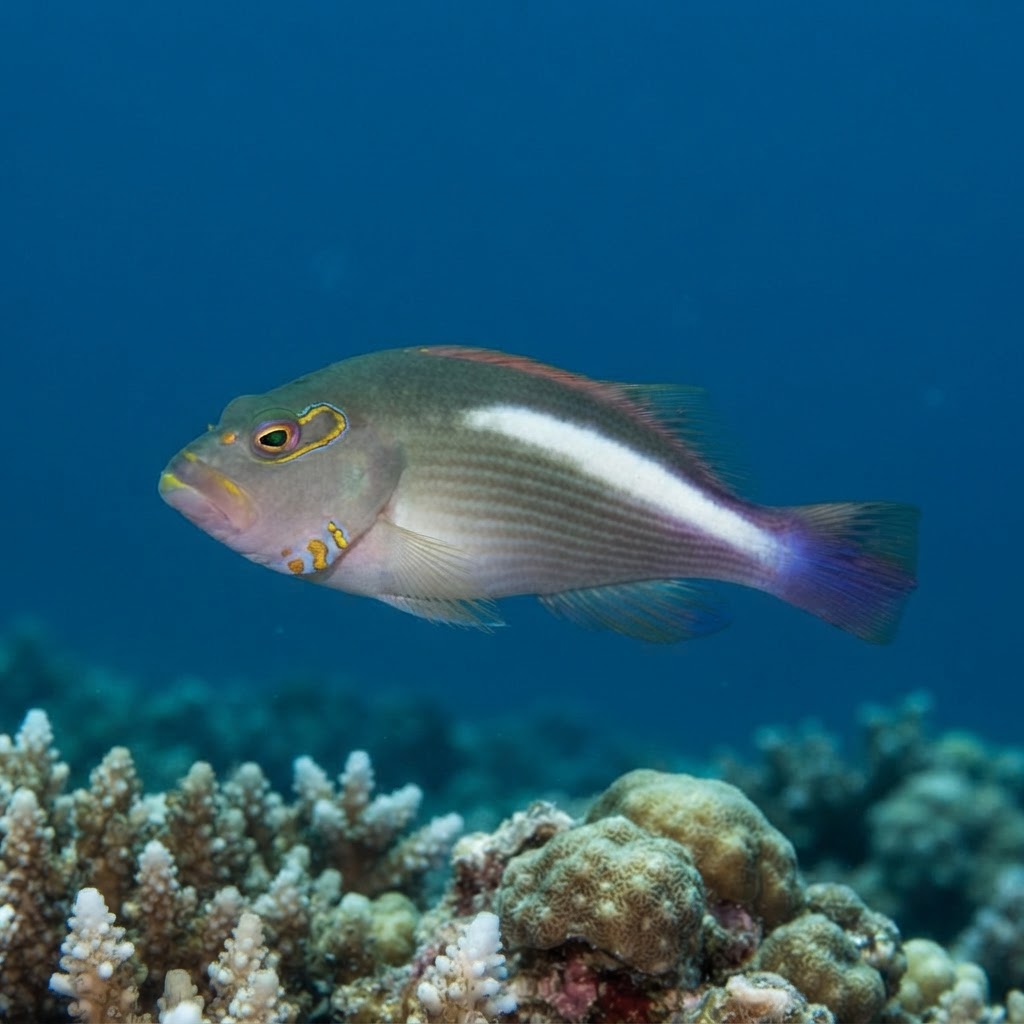
Cirrhitichthys oxycephalus
Arc-eye Hawkfish
651 sites