Paracirrhites arcatus
Look for a perched reddish-brown fish with a blue-ringed eye spot on reefs in Hawaii, Tahiti and Okinawa year-round in warm water.
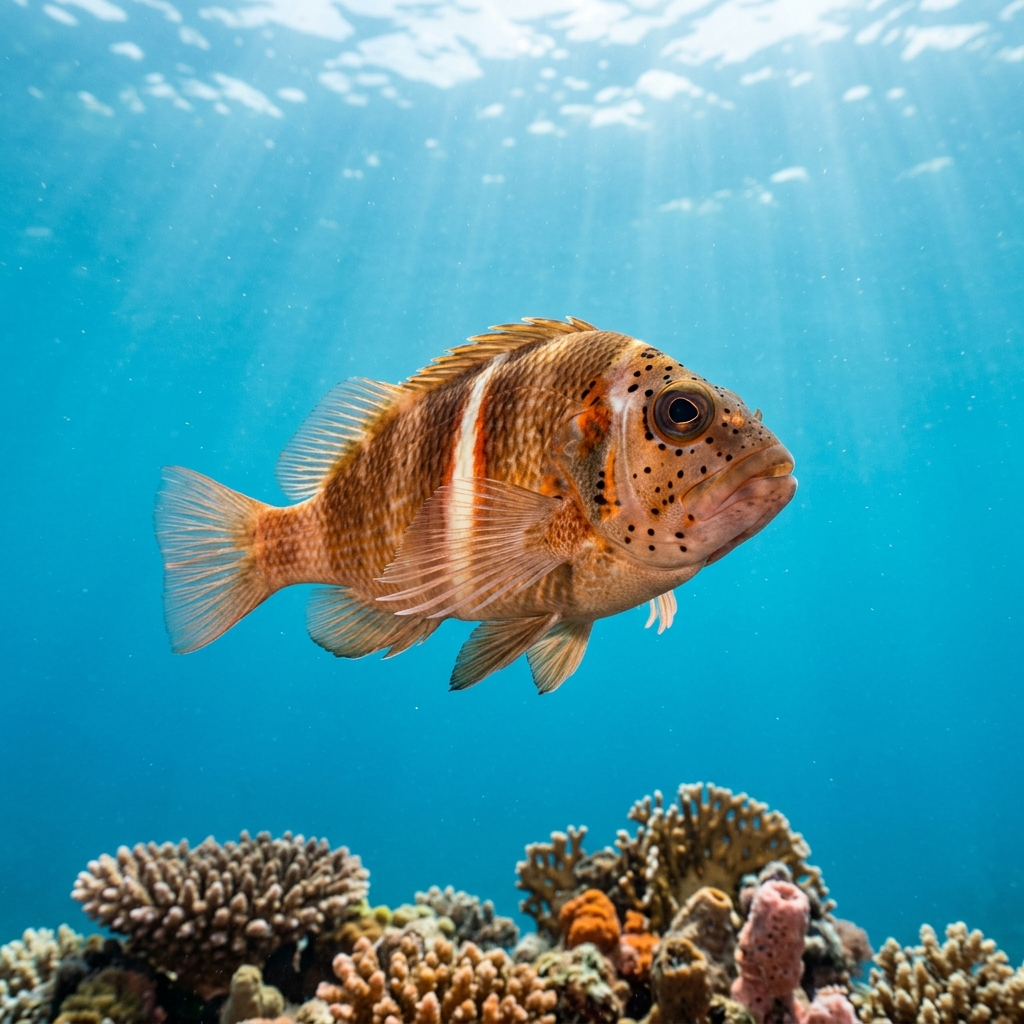
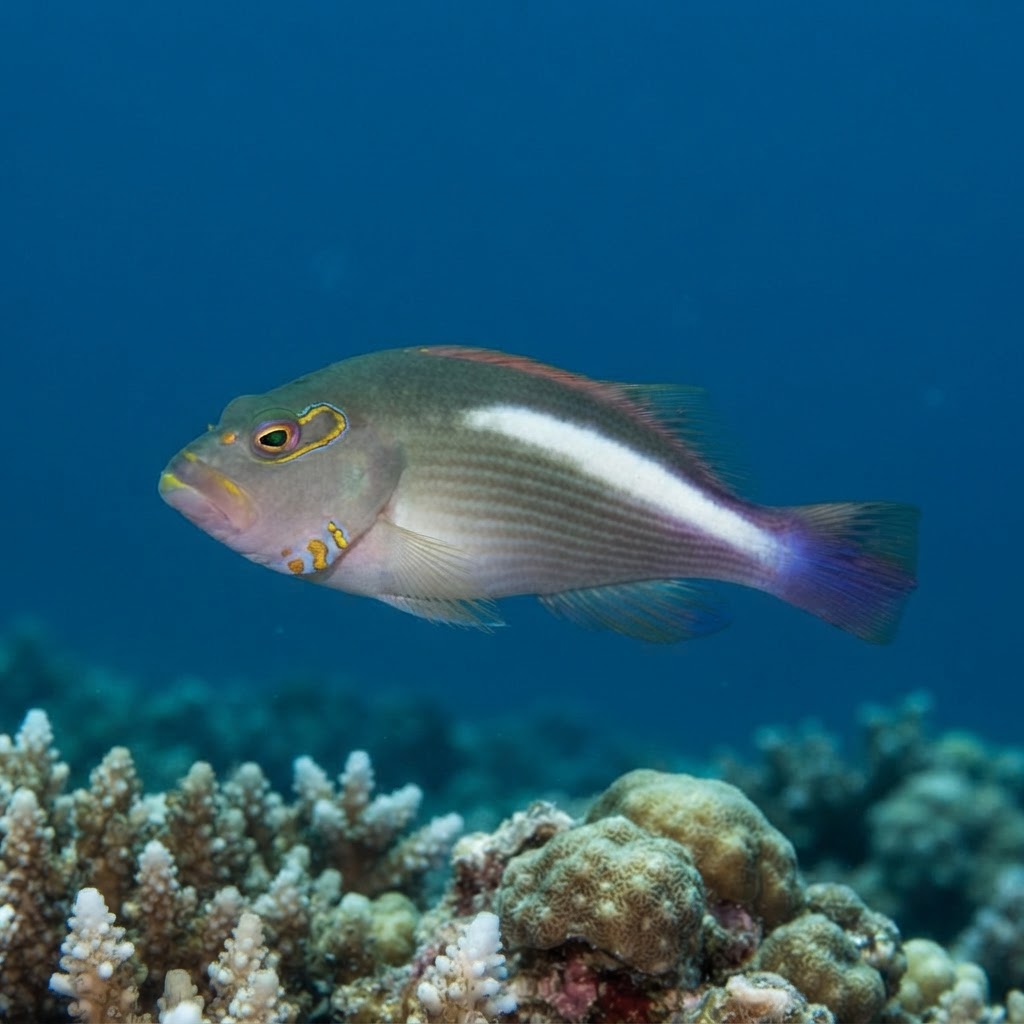
A small, chunky fish around 14 cm that perches motionless on coral heads rather than swimming in open water. Look for a reddish-brown to olive mottled body and the diagnostic pale blue crescent arcing behind the eye, which gives the fish its name. Its pectoral fins are often propped against the coral surface, tilting the body slightly upward as it watches for passing prey.
Spend most of a dive sitting still on top of coral heads or branching coral, using that raised perch to scan the water for small fish and crustaceans to ambush. Divers who hold steady and don't crowd the coral often get a long, close look, since it relies on staying still rather than fleeing at the first sign of movement. Most sightings are logged as uncommon rather than common, so it rewards divers who slow down and check coral heads carefully instead of just cruising past.
Like other hawkfish, it lacks a swim bladder, which is exactly why it perches on coral instead of hovering in midwater like most reef fish.
No clear seasonal pattern shows up in sightings, and with a comfortable range of roughly 24.5 to 28.8C it stays active on tropical reefs all year, so any month works for a dive trip built around finding one.
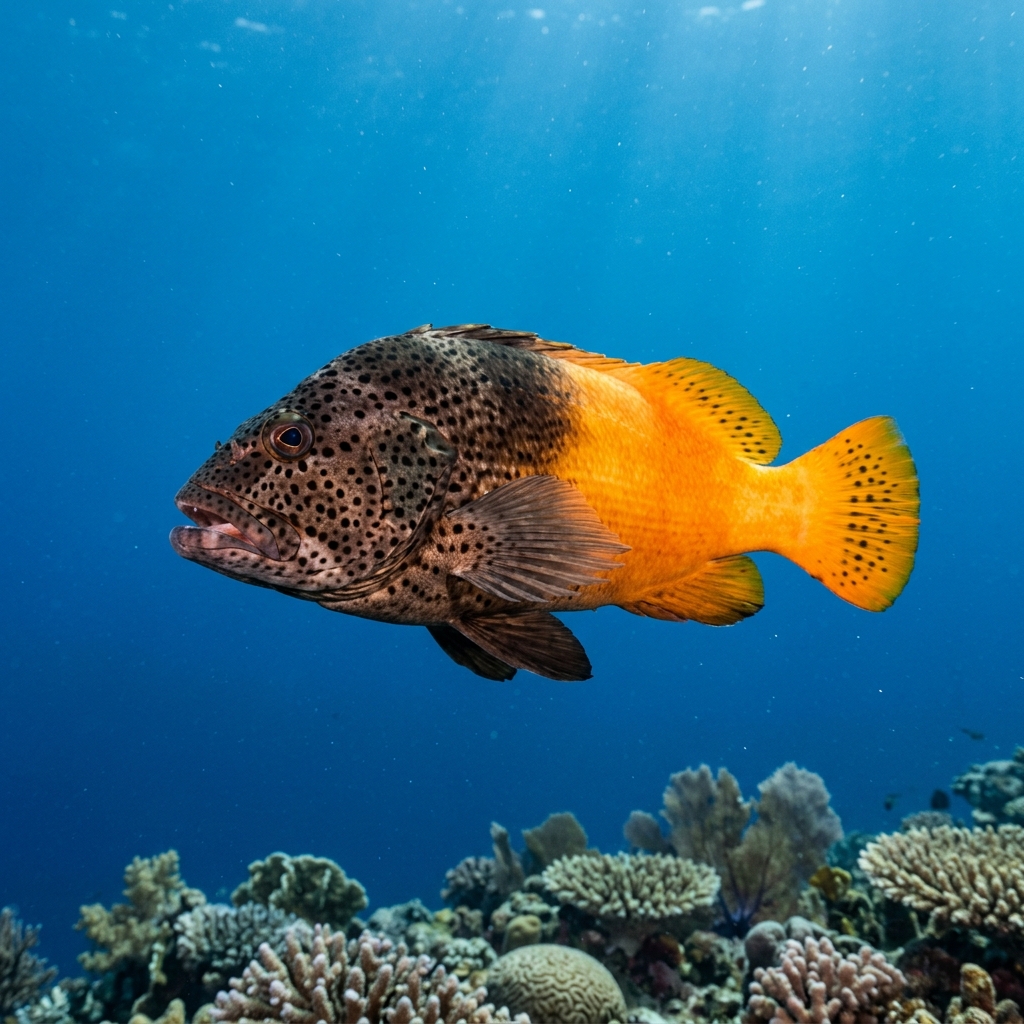
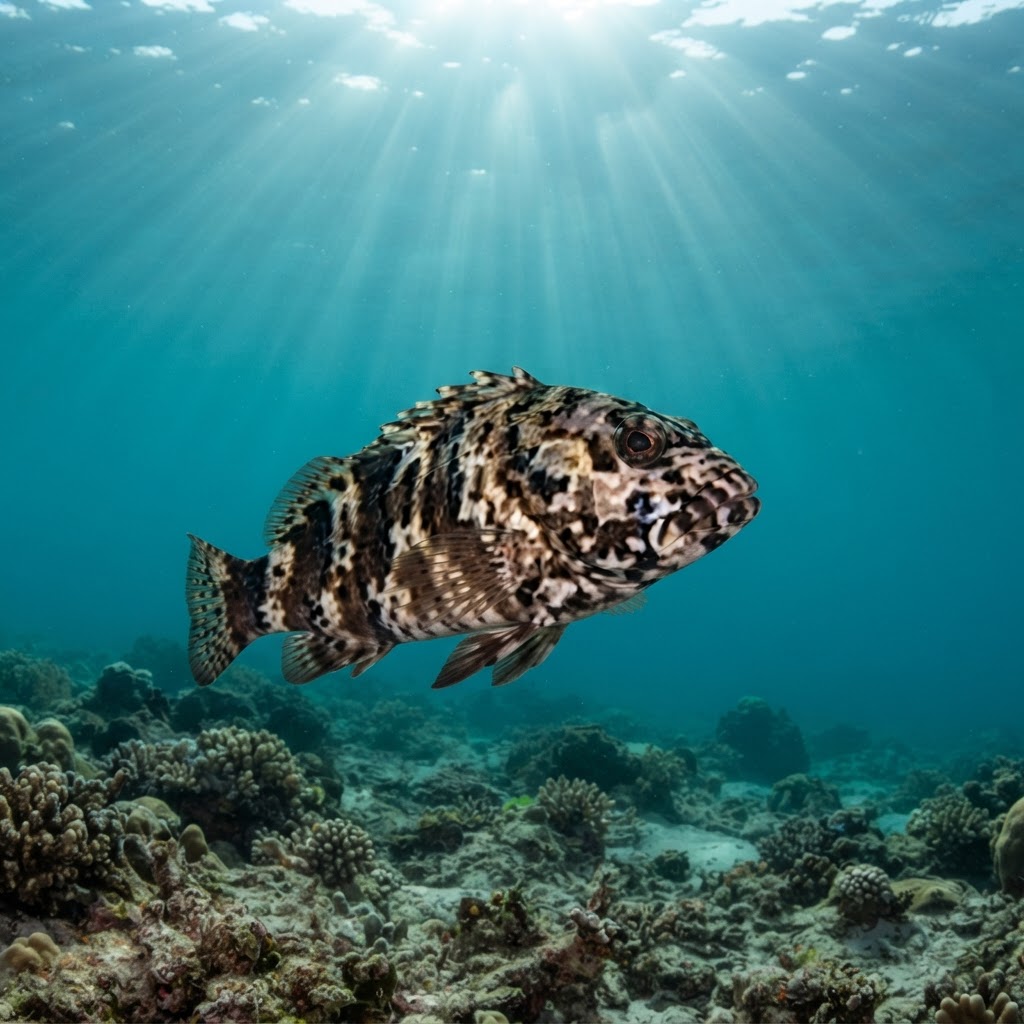
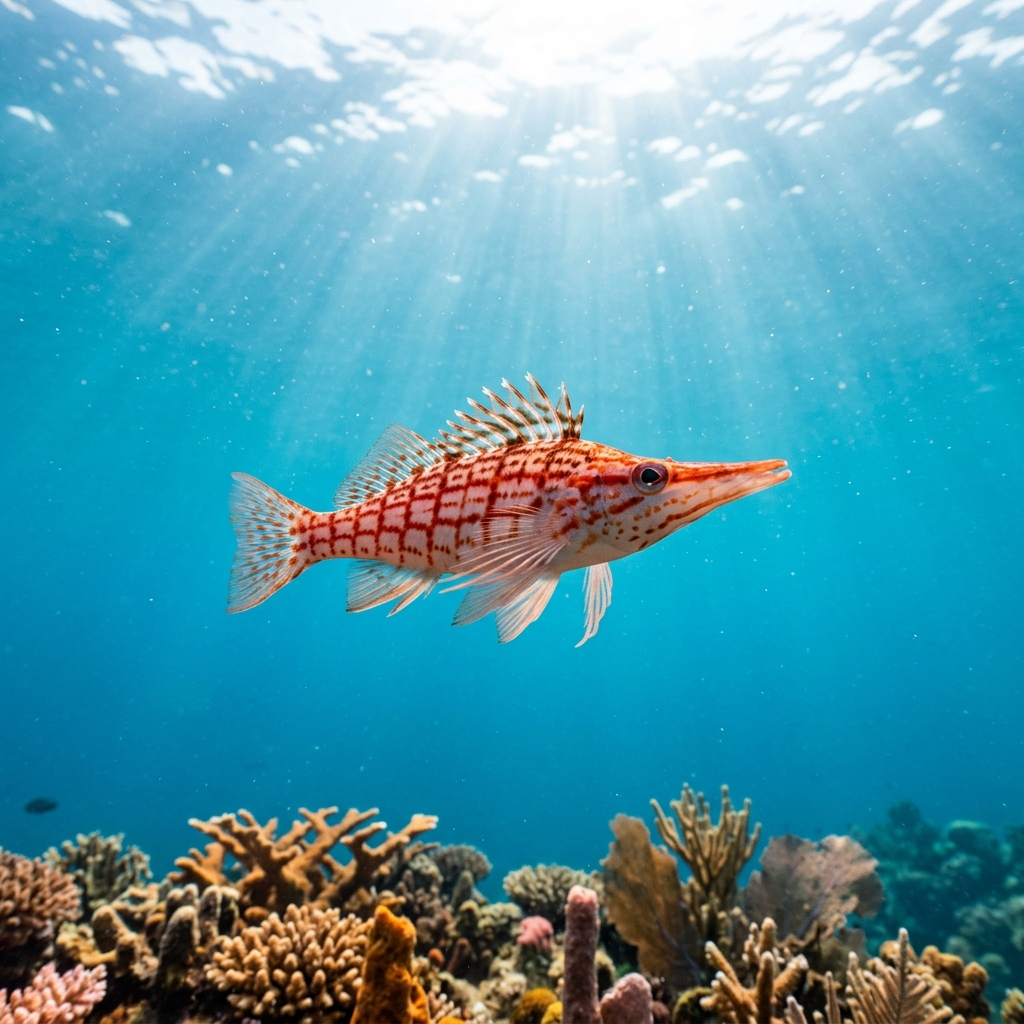
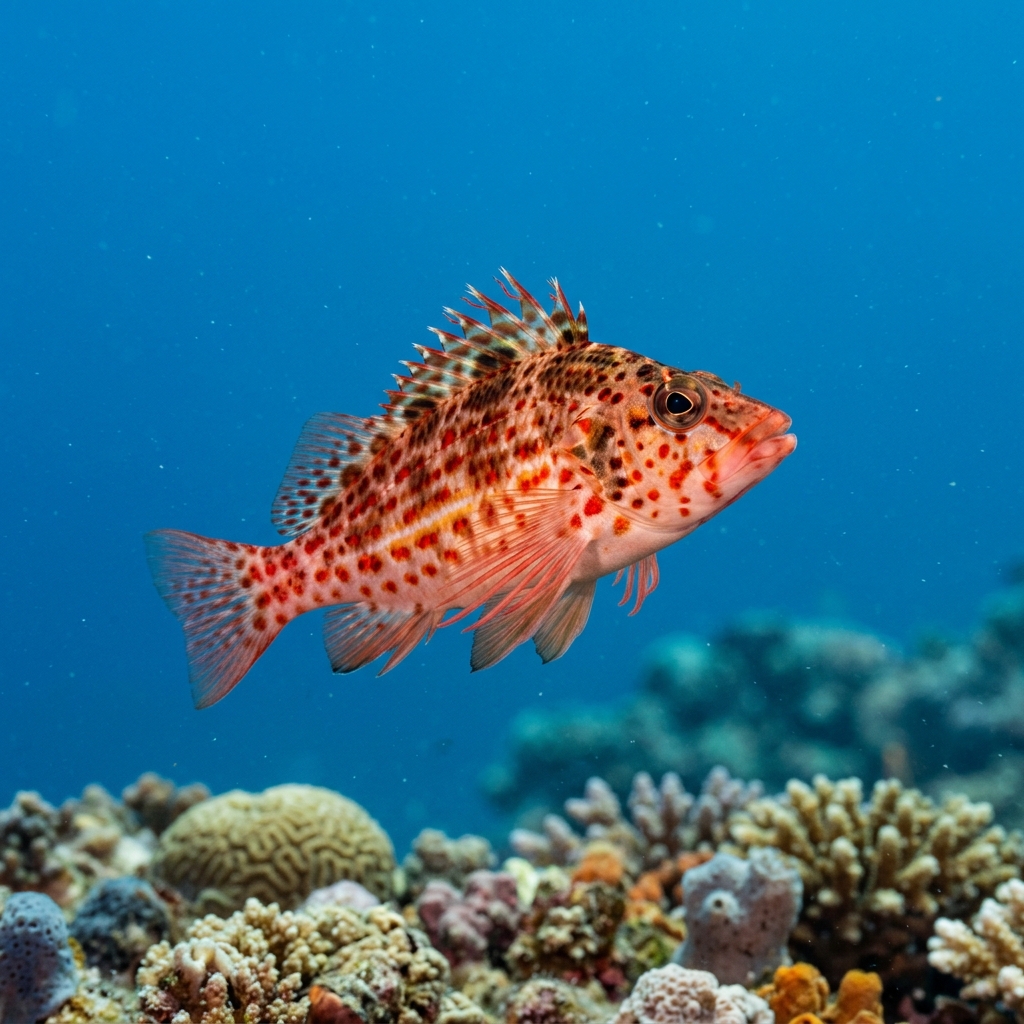
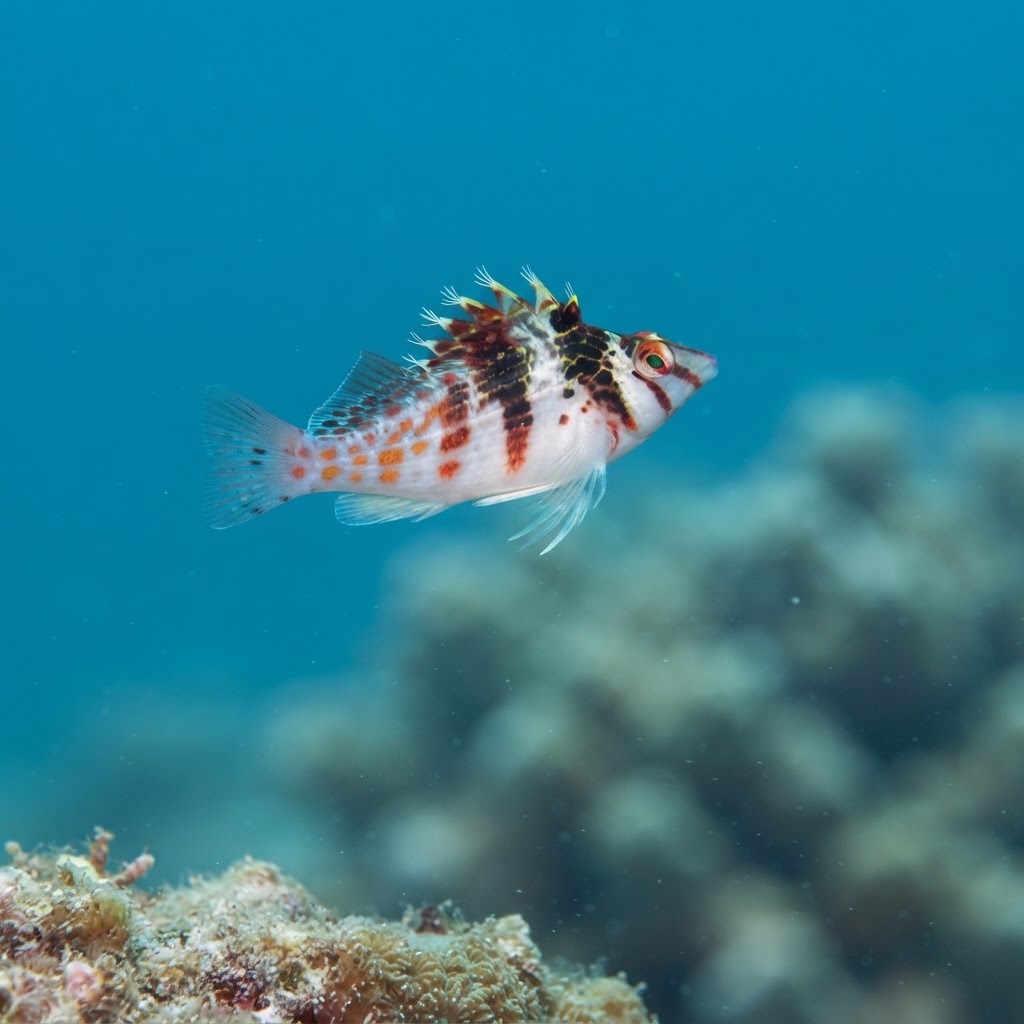
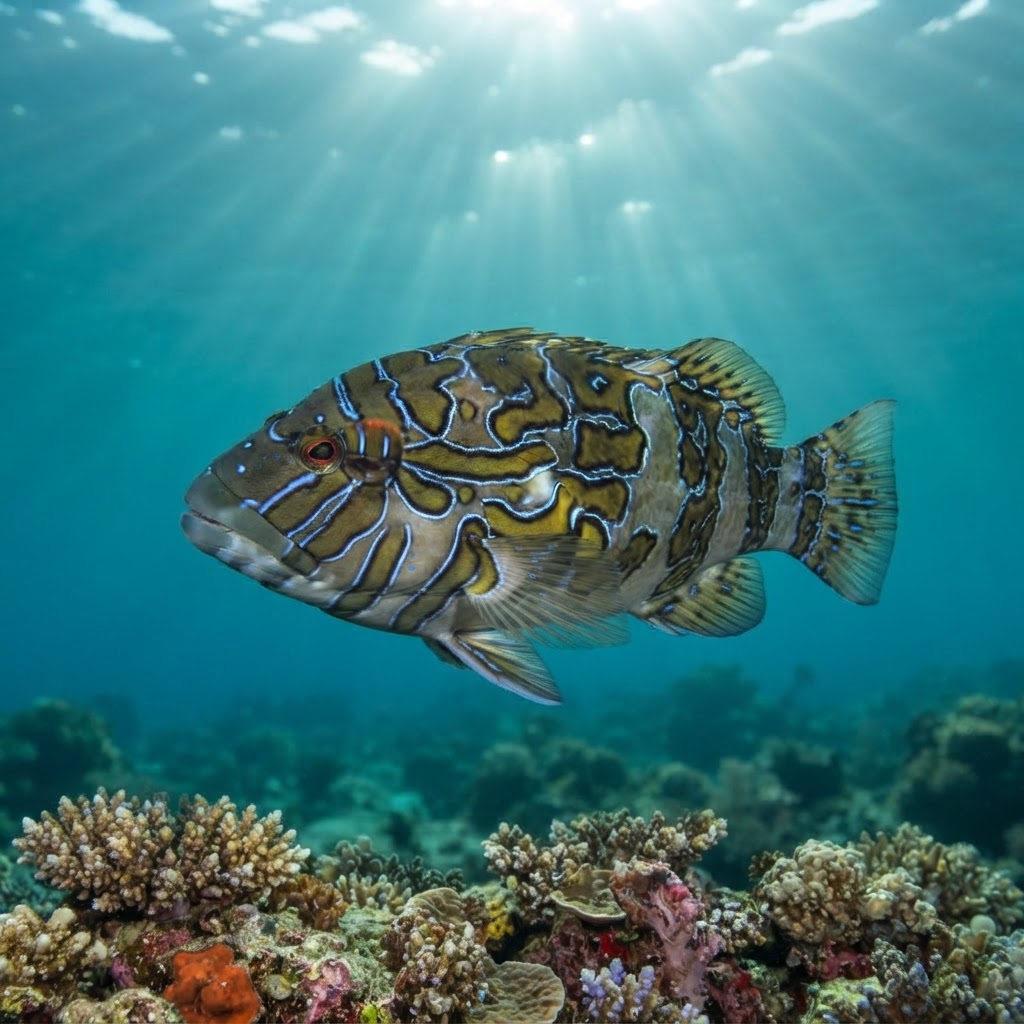
Reef neighbours a diver could mistake it for. Use the identification notes above to tell them apart.
Most commonly logged in Hawaii and across the Society Islands of French Polynesia, with strong numbers also reported from Queensland in Australia and Okinawa in Japan. It also turns up reliably on reefs in Mauritius, Reunion, Fiji, and KwaZulu-Natal in South Africa, making it a widespread find across Indo-Pacific and southwest Indian Ocean reef systems.
Mapping where Arc-eye Hawkfish is logged…
Hawaii and the Society Islands of French Polynesia have the strongest records, with good numbers also in Queensland, Australia, and Okinawa, Japan. Reunion, Mauritius, Fiji, and South Africa's KwaZulu-Natal coast are other reliable spots.
There's no strong seasonal pattern in sightings, and it tolerates a warm 24.5 to 28.8C range, so it's found on reefs year-round rather than during a particular season.
Check for a small, mottled reddish-brown fish perched still on top of coral rather than swimming, with a distinctive pale blue crescent arcing behind the eye. That eye marking is the giveaway feature to look for at close range.
They typically reach about 14 cm, a small, easily overlooked reef fish rather than anything you'd spot from a distance.
They lack a swim bladder, the internal organ most fish use to control buoyancy, so hovering in midwater costs them more energy. Perching on coral lets them ambush passing prey without wasting effort staying afloat.
Site and sighting data is aggregated from diver logs, iNaturalist and GBIF. For taxonomy and conservation status:
Pixy Hawkfish
762 sites